


Search results
Search for "energy" in Full Text gives 2056 result(s) in Beilstein Journal of Nanotechnology. Showing first 200.
Quantitative estimation of nanoparticle/substrate adhesion by atomic force microscopy
Beilstein J. Nanotechnol. 2026, 17, 1–14, doi:10.3762/bjnano.17.1

- , Leoben, Austria 10.3762/bjnano.17.1 Abstract Understanding nanoparticle adhesion to substrates is the key for their stability and performance in many applications, including energy systems, nanofabrication, catalysis, and electronic devices. In this study, we present a methodology for examining adhesion
- various fields such as energy storage [1], electronics [2], and catalysis [3]. These tiny particles, with sizes typically ranging from 1 to 100 nm, have fundamentally different properties compared to their bulk counterparts because of their large surface-to-volume ratio [4], as well as unique electronic
- NPs, deposited using different landing conditions, and a Si substrate. Cu NPs were synthesized via magnetron sputter inert gas condensation at different applied substrate bias voltages to vary their kinetic energy during landing at the substrate, thereby influencing their adhesion properties. AFM was



Internal 3D temperature mapping in biological systems using ratiometric light-sheet imaging and lipid-coated upconversion nanothermometers
Beilstein J. Nanotechnol. 2025, 16, 2306–2316, doi:10.3762/bjnano.16.159
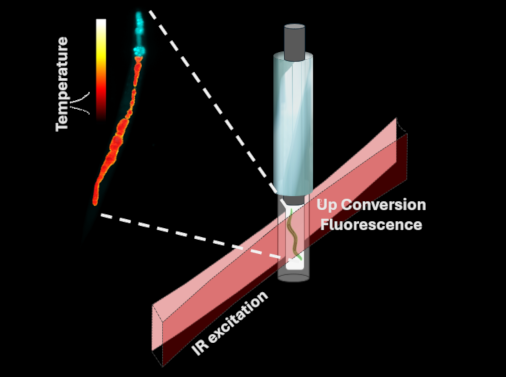
- -sheet microscopy; temperature mapping; upconversion fluorescent nanoparticles; Introduction Biological processes involving energy exchange often manifest as temperature fluctuations. Materials sought to measure such changes should exhibit high sensitivity, accuracy, high spatiotemporal resolution, good
- (UC) fluorescence, enabling the conversion of low-energy excitation (longer wavelengths) into high-energy emission (shorter wavelengths). This is particularly advantageous for biomedical applications, as it eliminates the need for ultraviolet or visible excitation, which can cause photobleaching and
- phototoxicity [38]. The ladder-like energy level structure of Ln3+ ions enable efficient photon UC of near-infrared (NIR) light, even with moderate excitation intensities (1–103 W·cm−2) attainable with gas-based lamps or continuous wave lasers [39]. Temperature measurements using Ln3+-doped nanomaterials have


Improving magnetic properties of Mn- and Zn-doped core–shell iron oxide nanoparticles by tuning their size
Beilstein J. Nanotechnol. 2025, 16, 2285–2295, doi:10.3762/bjnano.16.157
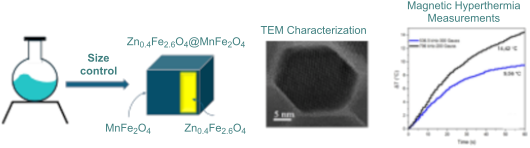
- , we report on the synthesis of polyhedral core–shell SPIONs. Their size was tuned to improve their magnetic properties. Furthermore, by hybridizing into a core–shell inorganic/inorganic structure, the nanoparticles can achieve significantly improved magnetic-to-thermal energy conversion efficiency (at
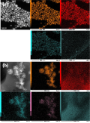
- on a JEOL JEM-ARM 200F cold-FEG microscope operating at 200 kV and equipped with a spherical aberration probe corrector (Cs). The chemical compositions were determined by energy-dispersive X-ray spectroscopy The elemental maps were recorded on a SDD, Jeol DRY SD 30 GV X-ray spectrometer. NP shapes
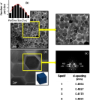
- table (inset in the figure) lists the d-spacing values (in nm), which are consistent with the spinel structure of ZnFe2O4. Elemental analysis using HRTEM with energy-filtered transmission electron microscopy (EELS) confirmed the elemental distribution within the core and shell of the NPs. As shown in



Geometry-controlled engineering of the low-temperature proximity effect in normal metal–superconductor junctions
Beilstein J. Nanotechnol. 2025, 16, 2265–2273, doi:10.3762/bjnano.16.155
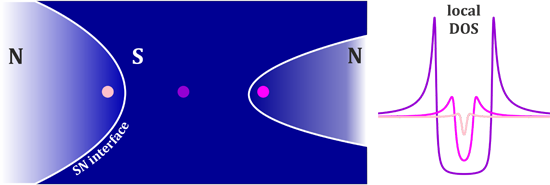
- repeated until convergence is reached at each site [51][52][53]. In the following, all energy values are given in terms of the hopping amplitude t, and all distances in terms of the lattice constant. To investigate the influence of NS junction geometry on the superconducting proximity effects, we consider
- the density of states (DOS) at low energies in the NM, that is, the proximity gap, induced by its proximity to the SC. The magnitude of the gap depends on the curvature parameter η. The proximity gap sets the lowest quasiparticle excitation energy scale in the NM region, crucial for coherence and


Chiral plasmonic nanostructures fabricated with circularly polarized light
Beilstein J. Nanotechnol. 2025, 16, 2245–2264, doi:10.3762/bjnano.16.154
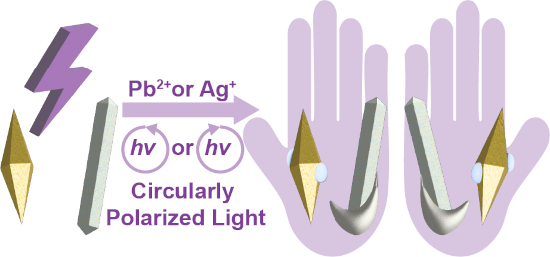
- energy stored in the plasmon polaritons can be re-emitted as light, while the rest decays into electron–hole pairs. These highly energetic hot carriers can be used to drive photochemical reactions. Unlike other photocatalysts, plasmonic nanostructures are very effective in redistributing photon energy in
- to PNSs immobilized on a substrate under unidirectional CPL [75][76][77][78]. Therefore, in most cases, PNSs are immobilized on a substrate. The second parameter to consider is the energy of the excitation CPL, as it affects the EM distribution and defines the energetics of hot carriers to modulate
- strength inside the metal. Therefore, the hot carrier generation rate profile is dictated by EM field distribution and can thus adopt a chiral geometry under CPL. However, “hot carriers” are dynamic and diffuse away from hot spots, with part of their kinetic energy lost (becoming “warm carriers”). As





Optical bio/chemical sensors for vitamin B12 analysis in food and pharmaceuticals: state of the art, challenges, and future outlooks
Beilstein J. Nanotechnol. 2025, 16, 2207–2244, doi:10.3762/bjnano.16.153
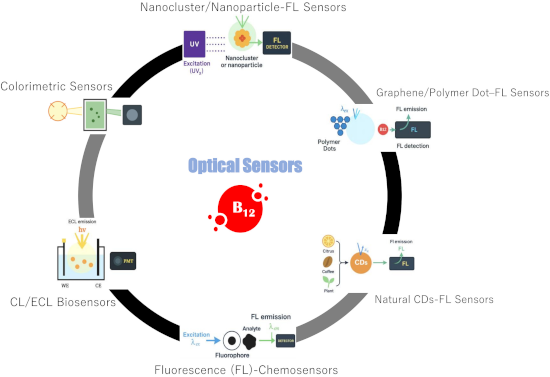
- biosensors into cellular bioimaging and the potential for non-invasive in vitro and in vivo analysis demonstrate their versatility and applicability across a broad spectrum of biomedical research, diagnostics, and nutrient analysis. Keywords: carbon dots; cobalamin; energy transfer; fluorescence sensor
- ]. This water-soluble micronutrient is essential for improving brain and nervous system functions, blood cell development, bone health improvement, energy and DNA production, fertility and embryo development, control of neurological symptoms (e.g., stress, depression, dementia, and visual disturbances
- , and the β-oxidation of odd-chain fatty acids [34]. This function of Ado-Cbl in the body supports energy production by facilitating the conversion of methylmalonyl-CoA to succinyl-CoA, a key step in the Krebs cycle, which is central to cellular energy generation [61]. The metabolic pathway of VB12 in


Hartree–Fock interaction in superconducting condensate fractals
Beilstein J. Nanotechnol. 2025, 16, 2177–2182, doi:10.3762/bjnano.16.150
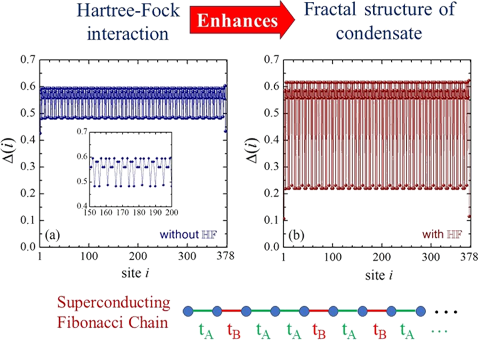
- state ν, σ, respectively. The quasiparticle wave functions obey the Bogoliubov–de Gennes equations where εν is the quasiparticle energy. As a result of the diagonalization, one obtains where fν is the Fermi–Dirac distribution of bogolons with the quasiparticle energy εν. The quantum number ν enumerates
- the quasiparticle states in ascending energy order. In our study, we employ the open-boundary conditions [5][8][22] for the quasiparticle wavefunctions uν(i) and vν(i), which corresponds to the physical scenario of electrons being quantum-confined within the chain. When using Equation 5 and Equation 7
- , the summation in Δ(i) is limited to the states in the Debye window around the Fermi level, that is, 0 ≤ εν ≤ ℏωD. However, in the current study, we assume that ℏωD is much larger than the half-bandwidth. This assumption renders the Debye energy constraint ineffective as all solutions of the Bogoliubov


Missing links in nanomaterials research impacting productivity and perceptions
Beilstein J. Nanotechnol. 2025, 16, 2168–2176, doi:10.3762/bjnano.16.149
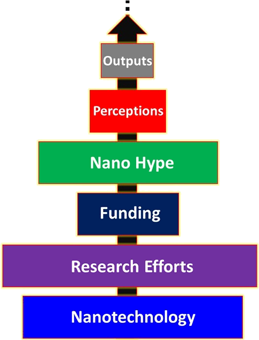
- working extensively in various aspects of nanotechnology, we find that the majority come from chemistry, physics, materials science, and metallurgy. Very few come from other fields such as mechanical, energy, electronics, biomedical engineering, and mathematics. The experts belonging to chemistry, physics
- [22]. Additionally, most nanomaterial fabrication methods are energy-intensive. Techniques such as combustion, arc deposition, solvothermal synthesis, chemical vapor deposition, mechanical milling, and wet chemical methods require high energy input and careful process control. The ultrahigh cost of
- due to the inherent instability of 0D, 1D, and 2D nanomaterials [23]. That is why, in most cases, nanomaterials require a specific medium and controlled environment for stability. In the same line, due their high surface energy, large surface area, and small size, nanomaterials naturally tend to
Microplastic pollution in Himalayan lakes: assessment, risks, and sustainable remediation strategies
Beilstein J. Nanotechnol. 2025, 16, 2144–2167, doi:10.3762/bjnano.16.148
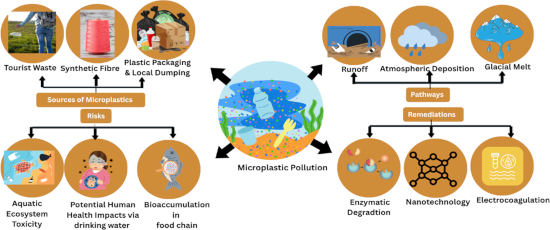
- methods are easy to implement and scalable but lack efficiency in open, natural environments such as Himalayan lakes and often require energy-consuming setups [43]. Research also indicates that sophisticated filtering systems, including granular activated carbon (GAC) filters, effectively capture small
- they frequently demand substantial energy input and can produce secondary pollutants [47]. Biological processes can utilize the natural ability of microorganisms to degrade synthetic polymers. Microorganisms such as Pseudomonas and Bacillus, which have enzymatic activity, can degrade plastics into
- -altitude pH variability. 6 Nanomaterial applications in microplastic remediation 6.1 Role of photocatalysis in degradation Photocatalysis uses nanomaterials to break down MPs by converting light energy, often UV or visible light, into ROS. These ROS, which include superoxide anions and hydroxyl radicals


Electron transport through nanoscale multilayer graphene and hexagonal boron nitride junctions
Beilstein J. Nanotechnol. 2025, 16, 2132–2143, doi:10.3762/bjnano.16.147
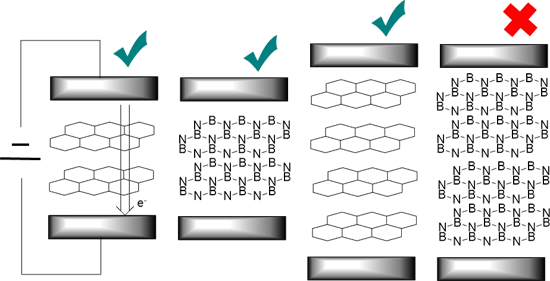
- Aleksandar Staykov Takaya Fujisaki International Institute for Carbon Neutral Energy Research (WPI-I2CNER), Kyushu University, Japan Faculty of Materials for Energy, Shimane University, Japan 10.3762/bjnano.16.147 Abstract In this study, we employ the non-equilibrium Green’s function (NEGF
- platinum is often used in the field of electrochemistry and energy materials. In addition, we implement two possible defects in multilayer graphene, namely, Stone–Wales defects and graphitic nitrogen substitution. In the case of h-BN, we perform simulations with Stone–Wales defects. We investigate devices
- linear combination of atomic orbitals (LCAO) DFT. The study aims to provide practical insights into the minimal thickness of h-BN at which the tunneling currents diminish and the material could be used as an electron blocking layer in energy-related devices. The fundamental aspect of the study is to


Toward clinical translation of carbon nanomaterials in anticancer drug delivery: the need for standardisation
Beilstein J. Nanotechnol. 2025, 16, 2092–2104, doi:10.3762/bjnano.16.144

- energy sectors (Figure 1). NMs have seen use as antimicrobial agents [1], catalysts [2], bioimaging agents [3][4][5][6], magnetic particle imaging agents [7], nanofluids [8], antiviral agents [9], photothermal convertors [10], and in environmental remediation [11]. Topically, the biomedical applications
- properties that make them attractive for a wide range of applications, including drug delivery, electronics, and energy storage [29]. However, the lack of standardised methods for their synthesis and characterisation can complicate their regulatory approval and limit their practical applications. One of the




Multifrequency AFM integrating PeakForce tapping and higher eigenmodes for heterogeneous surface characterization
Beilstein J. Nanotechnol. 2025, 16, 2077–2085, doi:10.3762/bjnano.16.142
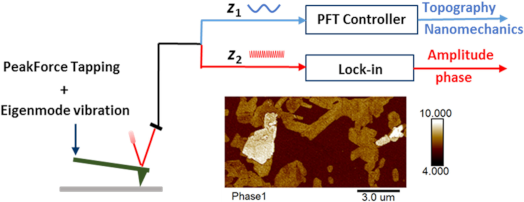
- these different areas (see Supporting Information File 1, Figure S2). Mechanistic insights and operational advantages The material contrast generated by the superposed eigenmode phase originates from the cantilever’s high sensitivity to the gradient of tip–sample interactions and energy dissipation


Molecular and mechanical insights into gecko seta adhesion: multiscale simulations combining molecular dynamics and the finite element method
Beilstein J. Nanotechnol. 2025, 16, 2055–2076, doi:10.3762/bjnano.16.141
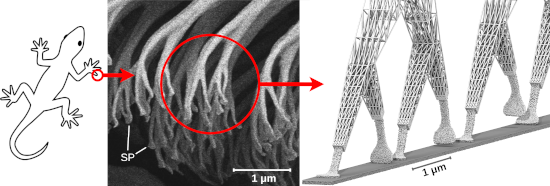
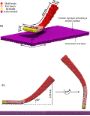
- -contact (snap-in) when near the substrate and absence of post-detachment wiggling. Consequently, a weak Berendsen thermostat [55] with a coupling time of 10 ps proved sufficient to maintain the temperature of the bridging domain while dissipating the kinetic energy introduced by load steps. Each AP
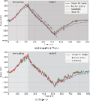
- detachment. Complete seta detachment occurred when the substrate reaction force dropped to zero due to all spatulae detaching at around 840–860 ns (load steps 600–615). Despite discrepancies arising from the energy exchange via thermostats in the MD domain and differences in how each force is computed and
- File 1. As individual spatulae detached, some slightly before and many after the seta-level force minima (peak adhesion) at ≈526 ns, they released stored elastic energy and accelerated rapidly. This sudden increase in velocity caused wiggling and rapid configurational changes within the MD domain. Due






Stereodiscrimination of guests in chiral organosilica aerogels studied by ESR spectroscopy
Beilstein J. Nanotechnol. 2025, 16, 2034–2054, doi:10.3762/bjnano.16.140
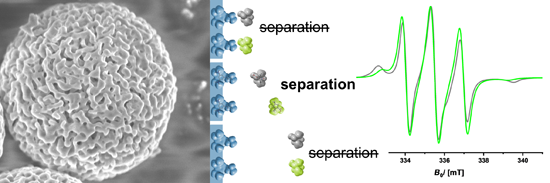
- more general relevance than just for chromatography. Transport processes in porous materials are fundamental phenomena that influence the behavior and performance of a wide range of natural and engineered systems. They are relevant in applications including catalysis, filtration, energy storage
- aerogels. After deprotection, one obtains SH-AlaNHzoSIL; the data is given in Supporting Information File 1, Figure S8. In particular, energy-dispersive X-ray spectroscopy analysis proves the presence of sulfur and, thus, the successful incorporation of the thiophenyl groups. The value of the thiol groups
- (Figure 8f). The thermal energy at T = 260 K is approximately 2 kJ·mol−1. The difference in interaction enthalpies of two enantiomers with a chiral surface depends on many factors, but it is exactly in the range of 1–2 kJ·mol−1 [18][67], which we could deduce from ESR spectroscopy. If (+)-3CP is more




The cement of the tube-dwelling polychaete Sabellaria alveolata: a complex composite adhesive material
Beilstein J. Nanotechnol. 2025, 16, 1998–2014, doi:10.3762/bjnano.16.138
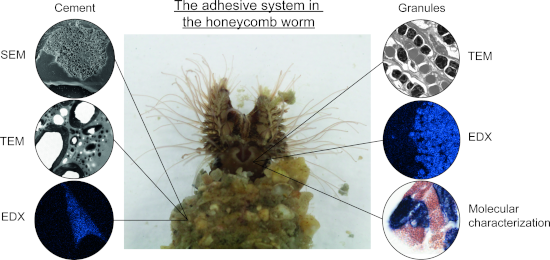
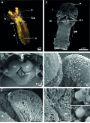
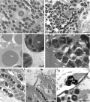
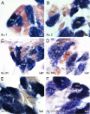
- resin (TEM samples) were used for the observation of cement gland secretory granules. All SEM images were acquired in low vacuum mode (50 Pa), with the backscattered electron detector. X-ray microanalysis and elemental mapping were performed using an Oxford X-MaxN energy-dispersive spectrometer (EDS
- composition of cement cell granules, we used energy-dispersive X-ray spectroscopy (EDS) coupled with scanning electron microscopy (SEM). Elemental composition was measured on four secretory granules of both types of cement cells in the parathoracic part of worms embedded in Spurr resin (TEM blocks). Using the
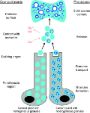
- to live in high-energy environments. During the secretion process, pockets of seawater could be trapped in the adhesive secretion, giving rise to the lacunae visible in TEM, as was suggested for the cement of P. californica [35]. Alternatively, these lacunae could be filled with a non-cross-linked



Laser ablation in liquids for shape-tailored synthesis of nanomaterials: status and challenges
Beilstein J. Nanotechnol. 2025, 16, 1963–1997, doi:10.3762/bjnano.16.137
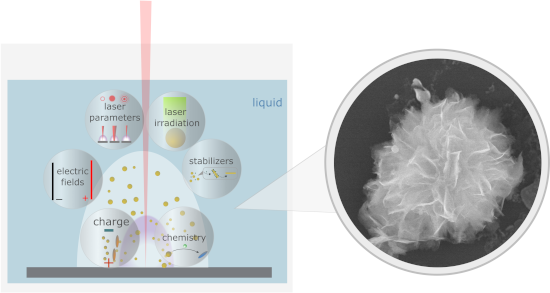
- development of such fields as energy generation and storage, sensing, and catalysis. Another application area of nonspherical NPs stems from the shape dependencies of their optical properties. The shift of plasmonic bands to the near-infrared spectral range observed for high-aspect-ratio nanostructures, such
- : thermal evaporation and explosive ejection [1]. According to the thermal evaporation mechanism, the action of a laser beam on the surface of a solid target initiates the absorption of the laser pulse energy. This results in initiation of melting and ionization with the formation of a plasma plume near the
- manipulating the formed seed NPs to induce their anisotropic growth and assembly. 1.2 Cavitation bubble formation, expansion, and collapse Since plasma plume is confined by a liquid, the subsequent processes involve plasma rapid expansion and cooling by energy transfer to the surrounding liquid, resulting in




Mechanical property measurements enabled by short-term Fourier-transform of atomic force microscopy thermal deflection analysis
Beilstein J. Nanotechnol. 2025, 16, 1952–1962, doi:10.3762/bjnano.16.136
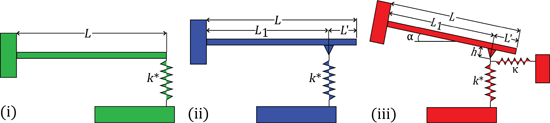
- reference material, rather than calculated directly from the dynamics models of the cantilever. We measured the cantilever displacement with very high sampling frequencies over the course of the experiment and captured its oscillations that result from thermal energy. Using short-term Fourier




Evaluating metal-organic precursors for focused ion beam-induced deposition through solid-layer decomposition analysis
Beilstein J. Nanotechnol. 2025, 16, 1942–1951, doi:10.3762/bjnano.16.135
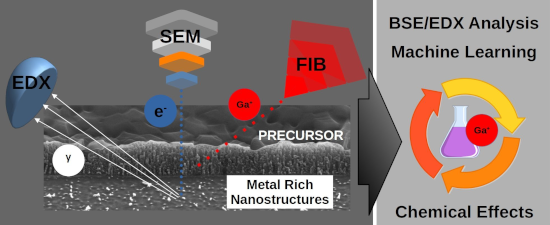
- new metal-organic precursors, in the form of supported thick layers, to the ion beam irradiation is studied through analysis of the chemical composition and morphology of the resulting structures. This is done using SEM backscattered electron/energy-dispersive X-ray spectroscopy along with machine
- irradiation differs from gas-phase deposition, we think that our method can be employed to optimize pre-screen and score new potential precursors for FIB applications by significantly reducing the time required and conserving valuable resources. Keywords: backscattered electrons (BSE); carboxylates; energy
- adsorbed on the surface, such as electron-stimulated desorption, high-resolution electron energy loss spectroscopy, and focused electron beam secondary ion mass spectrometry [5]. To characterize compounds in terms of their applicability in the FIBID process, comparisons are made with the FEBID process, and


Quantum circuits with SINIS structures
Beilstein J. Nanotechnol. 2025, 16, 1931–1941, doi:10.3762/bjnano.16.134
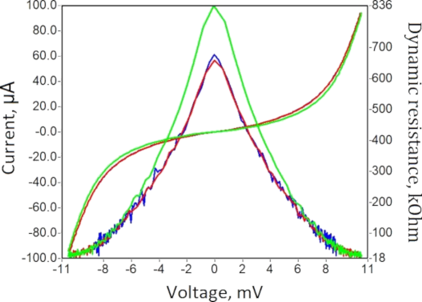
- contact. When tunneling from a normal metal into a superconductor, due to the presence of an energy gap (Δ), only electrons whose energy exceeds Δ can tunnel into the superconductor. Without applying an external voltage or in the case when eV < Δ (T = 0), tunneling does not occur. Accordingly, a tunnel
- the energy gap of the superconductor and kB is the Boltzmann constant. The differential resistance is expressed by the following formula: It should also be noted that, in addition to the tunnel current in NIS structures, the presence of a subgap (Andreev) current caused by the Andreev reflection
- are the thicknesses of the normal metal and superconductor films, respectively. Another feature of the tunnel–NIS junction is the phenomenon of electron cooling. This process is a transfer of heat from a normal metal to a superconductor and is caused by the fact that charge carriers with higher energy


Targeting the vector of arboviruses Aedes aegypti with nanoemulsions based on essential oils: a review with focus on larvicidal and repellent properties
Beilstein J. Nanotechnol. 2025, 16, 1894–1913, doi:10.3762/bjnano.16.132
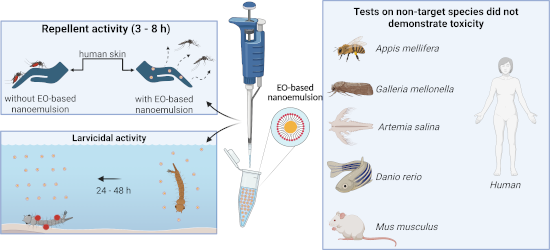
- through a low-energy method, using polysorbate 20 as a surfactant. The formulation presented an average droplet size ranging from 244.6 to 280.4 nm, a polydispersity index of less than 0.25, and a negative zeta potential (−15.7 to −18.6 mV), maintaining stability for 14 days. In the bioassays, fourth
- bicyclogermacrene, valerianol, β-pinene, and sesquirosefuran being the major substances in the essential oil of leaves (81.4%), suggesting a key role of this metabolites in larvicidal activity [113][115]. The oil was extracted using hydrodistillation and incorporated into the nanoemulsion by the low-energy method
- using a low-energy method with sorbitan monooleate 80 and polysorbate 20. The NE presented an average droplet size of 74.5 nm (±1.939) and a polydispersity index of 0.271 (±0.007), remaining physicochemically stable for up to 180 days. Larvicidal bioassays against third-stage Aedes aegypti larvae


Programmable soliton dynamics in all-Josephson-junction logic cells and networks
Beilstein J. Nanotechnol. 2025, 16, 1883–1893, doi:10.3762/bjnano.16.131

- JJ-based architectures face fundamental density constraints imposed by magnetic flux manipulation requirements and complex mutual inductive crosstalks. Circuits composed entirely of Josephson junctions (all-JJ circuits) [10][11][12][13][14][15][16] represent a promising platform for energy-efficient
- ) logic, the phase drop for the considered single kinetic soliton (SKS) occurs not on the relatively large connecting geometric inductors, but on the Josephson junctions. SKS is a propagating wave of phase change with kinetic energy limited from below; the corresponding current pulse “dissipates” if its
- normalized time, τ. Our simulations revealed a critical damping threshold at αcrit ≈ 0.8; below this value, stable soliton propagation is not supported. Also, under this condition, the energy dissipation rate is too high relative to the energy transfer between adjacent junctions, causing the soliton to decay


Low-temperature AFM with a microwave cavity optomechanical transducer
Beilstein J. Nanotechnol. 2025, 16, 1873–1882, doi:10.3762/bjnano.16.130
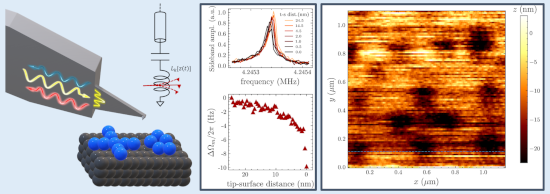
- power or energy stored in the cavity, expressed as the intracavity photon number nc. We control nc through the drive power of the pump Pin and the detuning from the cavity resonance frequency Δ = ωp − ω0. In principle, arbitrarily large responsivity α is achieved for arbitrary weak coupling G by


On the road to sustainability – application of metallic nanoparticles obtained by green synthesis in dentistry: a scoping review
Beilstein J. Nanotechnol. 2025, 16, 1851–1862, doi:10.3762/bjnano.16.128
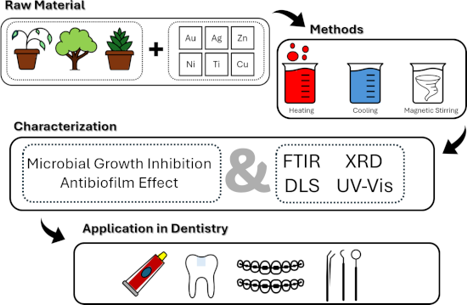
- activity and enhanced biocompatibility, achieved through phytochemically mediated synthesis. Conventional nanoparticle production often relies on toxic reagents and energy-intensive processes, posing environmental and clinical challenges. In contrast, green synthesis, using plant extracts, fungi, or
- energy consumption, and hazardous reducing agents; also, they result in environmental waste, in addition to producing nanoparticles that may be toxic and poorly biocompatible [3][7]. Given the limitations of conventional synthesis methods, the green synthesis of nanoparticles has emerged as a sustainable


Current status of using adsorbent nanomaterials for removing microplastics from water supply systems: a mini review
Beilstein J. Nanotechnol. 2025, 16, 1837–1850, doi:10.3762/bjnano.16.127
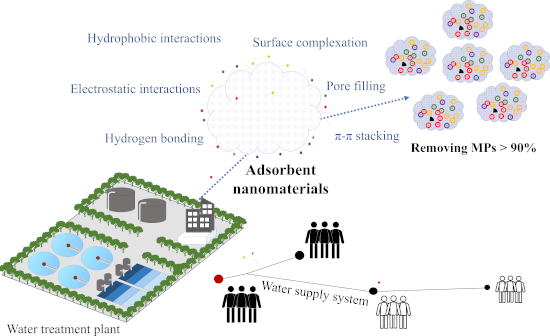
- aquatic ecosystems by interfering with feeding patterns (reduced ingestion rates), reproduction (lower egg production and fertilization success), and growth rates (lack of energy and tissue damage) in marine organisms [11][12]. Thus, the persistence of MPs threatens not only biodiversity and ecosystem
- , and decomposition at the end of use. The system boundaries are defined to capture the full life cycle, consisting of energy consumption, carbon emissions, and residual toxicity [113]. However, until now, in-depth LCAs conducted on nanomaterials are still relatively limited [117]. In addition, advances
- (a) the highest occupied molecular orbital (HOMO) and lowest unoccupied molecular orbital (LUMO) of chitosan (CS), bacterial cellulose (BC), crosslinked CS, and PS. (b) Energy gaps among PS, CS, BC, and crosslinked-CS. (c) scenarios of hardwood vessel-inspired chitosan-based sponges (BGCS)-120


Phytol-loaded soybean oil nanoemulsion as a promising alternative against Leishmania amazonensis
Beilstein J. Nanotechnol. 2025, 16, 1826–1836, doi:10.3762/bjnano.16.126

- via the low-energy emulsification method, as a novel potential pharmacological alternative for the treatment of cutaneous leishmaniasis. Results Phytol-loaded soybean-oil nanoemulsion Blank-NE and soybean oil nanoemulsions loaded with phytol (PHYT-NE) were successfully prepared using the phase
- demonstrate that the phytol-loaded nanoemulsion, developed through a low-energy PIC method, is a stable and physicochemical suitable system for topical and transdermal administration in the future. The PHYT-NE exhibited enhanced leishmanicidal activity against Leishmania amazonensis promastigotes in a time
- ). Nanoemulsion preparation and composition Nanoemulsions were prepared using the phase inversion composition method, a low-energy technique wherein the aqueous phase (AP) was gradually added dropwise to the oil phase (OP) under continuous magnetic stirring at 1500 rpm, using a magnetically stirrer (IKA® C-MAG





