


Search results
Search for "exciton" in Full Text gives 106 result(s) in Beilstein Journal of Nanotechnology.
Changes of the absorption cross section of Si nanocrystals with temperature and distance
Beilstein J. Nanotechnol. 2017, 8, 2315–2323, doi:10.3762/bjnano.8.231
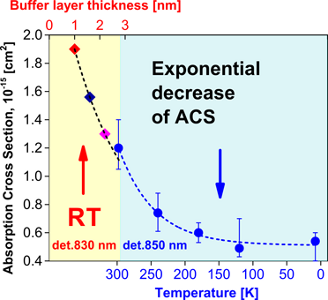
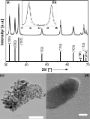
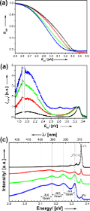
- calculations as it defines an upper limit of the exciton radiative lifetime of a NC [8]. Though the ACS is a very important quantity for practice it is not easily accessible experimentally, which explains a very limited number of reports in the literature. Recently we presented a comparative study of ACS
- (Figure 4a). On the other hand, in presence of exciton migration some neighboring NCs can work as antenna, because a NC can be excited either directly through photon absorption or indirectly through an energy transfer from a nearby NC. Therefore, an ACS enhancement is expected for the system of


Charge transfer from and to manganese phthalocyanine: bulk materials and interfaces
Beilstein J. Nanotechnol. 2017, 8, 1601–1615, doi:10.3762/bjnano.8.160
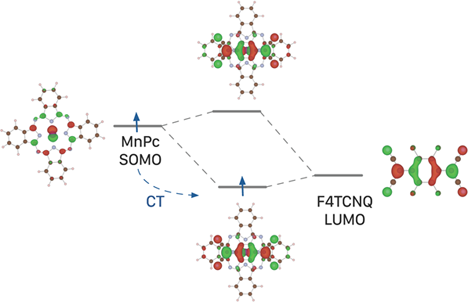
- of the others [17][18]. Furthermore, the exciton binding energy related to the lowest electronic singlet excitation is somewhat larger compared to, e.g., CuPc [18][19][20][23]. In Table 1 we summarize these values in comparison to CuPc, the most prominent and most extensively investigated transition
- compare the ionization potential (IP), the electron affinity (EA), the energy gap as seen in optical studies (), the transport energy gap (), and the exciton binding energy () of the lowest singlet excitation (see text for references). All values are given in eV. Acknowledgements We are grateful to R


Two-dimensional carbon-based nanocomposites for photocatalytic energy generation and environmental remediation applications
Beilstein J. Nanotechnol. 2017, 8, 1571–1600, doi:10.3762/bjnano.8.159
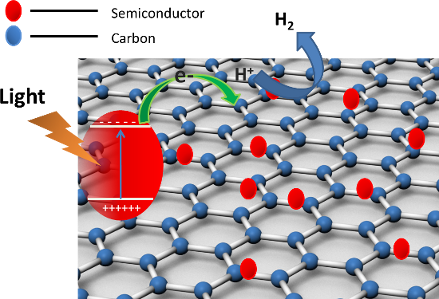
- various photocatalytic reactions. However, a very high exciton recombination rate limits the photocatalytic efficiency of BiVO4. Hence, to overcome this issue, the heterojunction formation with an ideal material like g-C3N4 is one of the promising strategies. The sulfur-doped g-C3N4-BiVO4 nanocomposite


Spin-chemistry concepts for spintronics scientists
Beilstein J. Nanotechnol. 2017, 8, 1427–1445, doi:10.3762/bjnano.8.143
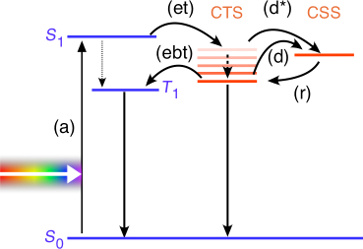
- of OSCs are shown in Figure 1. Ideally, singlet excitons in either donor or acceptor material are generated upon light absorption (a), here shown as S0→S1 transition. For sake of simplicity we just consider the absorption taking place in the donor: the singlet exciton can diffuse towards the
- disorder [38]. Two optimization strategies for improving the power conversion efficiency based on spin processes are singlet fission and triplet–triplet annihilation (TTA). Singlet fission is the spin allowed conversion of one spin singlet exciton to two spin triplet excitons, which can occur with high
- Figure 1). A singlet exciton is photogenerated in the triplet sensitizer molecule and converted to a triplet by intersystem crossing (ISC). When two of such triplet excitons are transferred to the triplet acceptor, they can undergo TTA to generate a higher energy singlet exciton. The latter can be



AgCl-doped CdSe quantum dots with near-IR photoluminescence
Beilstein J. Nanotechnol. 2017, 8, 1156–1166, doi:10.3762/bjnano.8.117
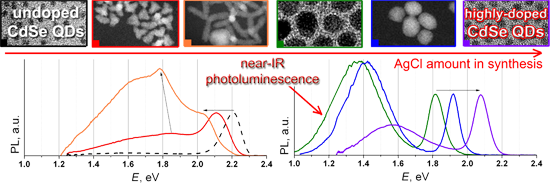
- , biolabels and for the sensibilization of Si-solar cells. But the optical properties of CdSe QDs are limited by the band-gap energy of the bulk material (Eg = 1.74 eV) [10][11], which makes exciton IR-PL impossible. Therefore, the development of new synthetic methods for CdSe QDs with non-excitonic IR-PL is
- at 10 K. Our previous work proposed an oleate-based method (the in situ colloidal synthesis) to synthesize Ag-doped CdSe QDs with a wide band in the near-IR region along with an exciton band. In addition, a low-energy band could be clearly observed even at room temperature [22]. However, for Ag-doped
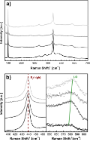
- The typical PL spectrum of undoped NPs (Figure 6, black dotted line) consists of two peaks, an exciton peak (2.21 eV) and a weak wide peak in the low-energy region (1.60 eV) (see semi-logarithmic plot in Supporting Information File 1, Figure S3), which is associated with structure defects. An addition


Ultrasmall magnetic field-effect and sign reversal in transistors based on donor/acceptor systems
Beilstein J. Nanotechnol. 2017, 8, 1104–1114, doi:10.3762/bjnano.8.112
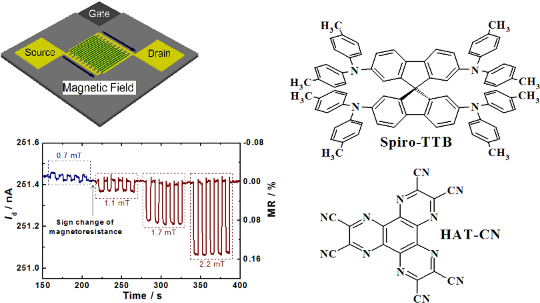
- pairs, coupled to nuclear spins [20][24][26]. Alternatively, the competition between the exciton or bipolaron formation and spin mixing serves as an explanation for USMF effects [22][27][28][29]. Both explanatory approaches have in common that they are applicable to neutral and charged spin pairs and
- explain both positive and negative magnetoresistance. The low B0 value of ≈2.1 mT is a typical characteristic for low-fields effects based on spin mixing due to the molecular hyperfine fields [22][25][30]. In principle, low-fields effects can be achieved with the electron–hole pair, exciton–polaron




Energy-level alignment at interfaces between manganese phthalocyanine and C60
Beilstein J. Nanotechnol. 2017, 8, 927–932, doi:10.3762/bjnano.8.94
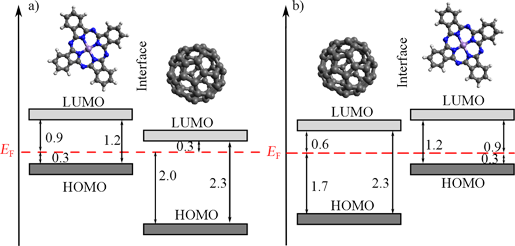
- states close to the Fermi energy, MnPc differs significantly from other transition-metal phthalocyanines, as it is characterized by the smallest ionization potential, the largest electron affinity, the smallest band gap and the largest exciton-binding energy [37][38][39][40][41][42]. Furthermore, it has


Synthesis of graphene–transition metal oxide hybrid nanoparticles and their application in various fields
Beilstein J. Nanotechnol. 2017, 8, 688–714, doi:10.3762/bjnano.8.74
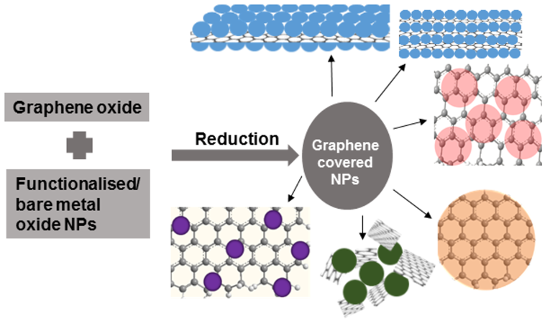
- oxide (ZnO)–graphene hybrids Most of the reports of graphene hybrid systems are related to ZnO NPs, as it is very easy to control the size and morphology of ZnO NPs as well as the properties of the material. ZnO is an important II–VI semiconductor with large direct band gap of 3.37 eV and large exciton
- photoluminescence (PL) band at 373 nm, which is due to the exciton recombination corresponding to the band edge emission, and a green emission peak is most commonly observed that arises from the defect of ZnO NPs such as oxygen vacancies, zinc vacancies, oxygen interstitials, and zinc interstitials [241]. Graphene






Tandem polymer solar cells: simulation and optimization through a multiscale scheme
Beilstein J. Nanotechnol. 2017, 8, 123–133, doi:10.3762/bjnano.8.13
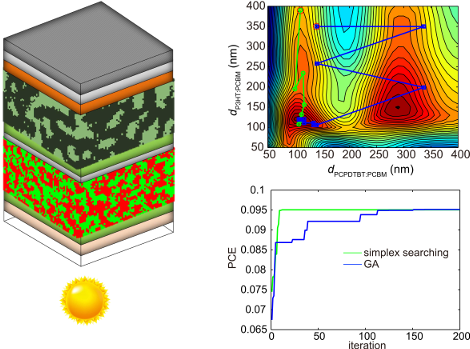
- . The MC simulation was realized through the first reaction method (FRM) (the flow chart of FRM is presented in Supporting Information File 1, Figure S2). The details of FRM are illustrated in Supporting Information File 1. Based on the simulation of exciton transportation, dissociation and extinction
- processes, exciton dissociation efficiency (EDE, defined in Equation 1) was obtained, which is crucial for the calculation of charge carrier generation rate in the active layers. Electron and hole mobility was related to the average domain size and the electric field in the active layers. Since charge




A dioxaborine cyanine dye as a photoluminescence probe for sensing carbon nanotubes
Beilstein J. Nanotechnol. 2016, 7, 1991–1999, doi:10.3762/bjnano.7.190
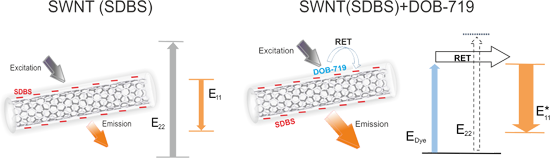
- the PL detection towards the nanotube diameters. The energy diagram shown at the right-hand side of Figure 2a represents a two-component system consisting of the anionic surfactant SDBS and the SWNTs in water, where the anionic surfactant forms micelles around the nanotubes having typical exciton
- the minimum shifts in E11 exciton energy are 32 and 25 meV, respectively (Table 2), which are lower than the average shifts of E11 = 55 meV obtained in [23]. On the other hand, the redshifts in Table 2 are much lower than the redshift (of a few millielectronvolts) achieved when the surfactant around


Role of RGO support and irradiation source on the photocatalytic activity of CdS–ZnO semiconductor nanostructures
Beilstein J. Nanotechnol. 2016, 7, 1684–1697, doi:10.3762/bjnano.7.161
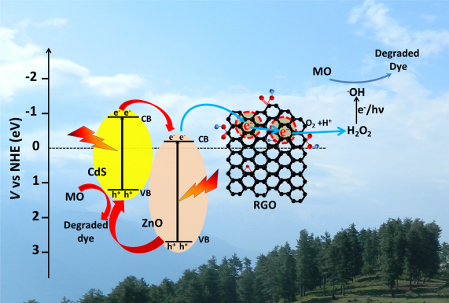
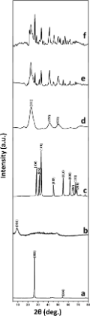
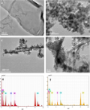
- longer electron life time than TiO2 [14][15][16]. Zinc oxide is a well-known semiconductor with a band gap energy of 3.37 eV and has been widely explored as photocatalytic material due to its non-toxic nature, high exciton binding energy (60 meV), photosensitivity and stability on exposure to high energy




A composite structure based on reduced graphene oxide and metal oxide nanomaterials for chemical sensors
Beilstein J. Nanotechnol. 2016, 7, 1421–1427, doi:10.3762/bjnano.7.133
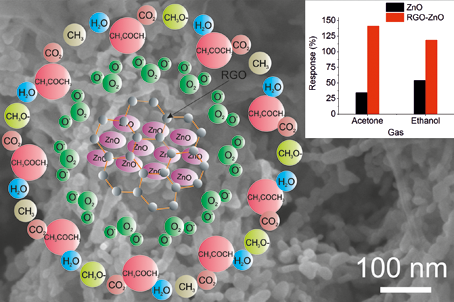
- consumption [7][8]. Metal oxide sensors can detect ethanol and acetone only at high operating temperatures (≥300 °C) [7][9][10]. ZnO is a extensively studied and inspiring material due to its unique properties, namely the wide bandgap and large exciton binding energy [11]. Most of the literature is focused on


Photocurrent generation in carbon nanotube/cubic-phase HfO2 nanoparticle hybrid nanocomposites
Beilstein J. Nanotechnol. 2016, 7, 1075–1085, doi:10.3762/bjnano.7.101
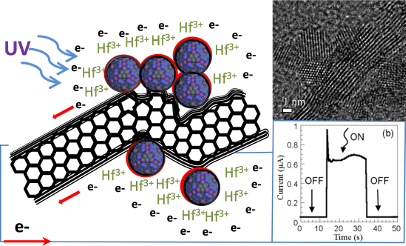
- * transitions, and the exciton peak σ* at 292 eV arises due to transitions to the antibonding σ*. As we approach the region of the CNT decorated by nanoparticles (point 2, Figure 4a), we observe that the σ* peak in Figure 4b is smeared out along with a decrease in the intensity of the π* 285 eV edge. This smear


Optical absorption signature of a self-assembled dye monolayer on graphene
Beilstein J. Nanotechnol. 2016, 7, 862–868, doi:10.3762/bjnano.7.78
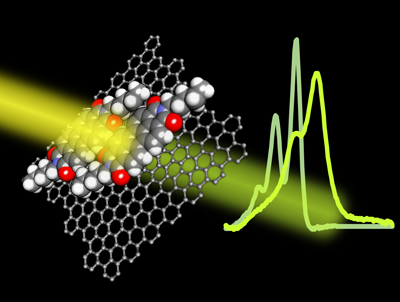
- present case, a fit of the absorption line accounting for the spectral broadening of the vibronic structures gives an increase of the 0–0 to 0–1 ratio of only about 20%, which is not consistent with the expected exciton delocalization. A substrate-induced planarization was invoked for hydrogen-bonded



Microwave solvothermal synthesis and characterization of manganese-doped ZnO nanoparticles
Beilstein J. Nanotechnol. 2016, 7, 721–732, doi:10.3762/bjnano.7.64
- oxides semiconductors. Zinc oxide (ZnO) is a II–VI semiconductor characterised by a wide band gap of 3.3 eV and a high exciton binding energy of circa 60 meV [4]. ZnO is used in optoelectronic devices, solar cells, data carriers, light emitting diodes (LEDs), gas sensors, thermoelectric devices


Bacteriorhodopsin–ZnO hybrid as a potential sensing element for low-temperature detection of ethanol vapour
Beilstein J. Nanotechnol. 2016, 7, 501–510, doi:10.3762/bjnano.7.44
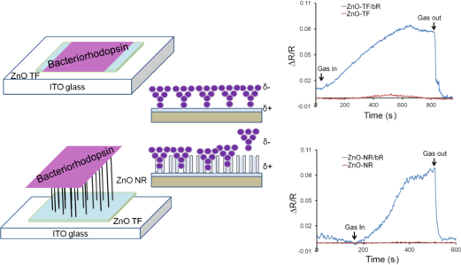
- absorbance spectra of ZnO-TF, ZnO-NR, bR solution in amphipol (bR/A8-35, inset figure) and the hybrid nanostructures. The UV–vis spectra of ZnO-TF and ZnO-NR show absorption near the band edge in the exciton absorption region at 372 nm and 347 nm, respectively [41]. These band edge absorptions have a similar
- the band edge emission, and the emission around 383 nm may be attributed to the recombination of free excitons through an exciton–exciton collision process [48][49]. Also, the peak positions were almost same in ZnO-TF and ZnO-TF/bR, whereas a red shift of 6 nm was observed in ZnO-NR and ZnO-NR/bR


Synthesis and applications of carbon nanomaterials for energy generation and storage
Beilstein J. Nanotechnol. 2016, 7, 149–196, doi:10.3762/bjnano.7.17
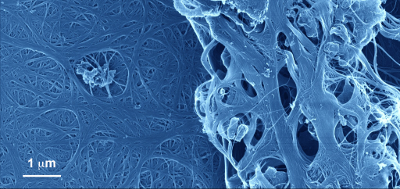
- with fullerene derivatives (electron acceptor material) [188]. The generation of a photocurrent due to light incident upon an organic solar cell device consists of three steps (Figure 32) [189][190]: Photon absorption in the conducting polymer (donor material). Creation of an exciton. An exciton is a
- bound state of an electron and a hole that are attracted to each other by the electrostatic Coulomb force. Its diffusion length is about 10 nm. Exciton separation at the interface between the donor and the acceptor. Because of the built-in electric field at the interface, the electron is transferred to















Dependence of lattice strain relaxation, absorbance, and sheet resistance on thickness in textured ZnO@B transparent conductive oxide for thin-film solar cell applications
Beilstein J. Nanotechnol. 2016, 7, 75–80, doi:10.3762/bjnano.7.9
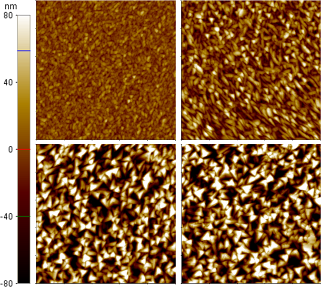
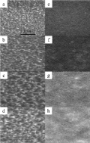
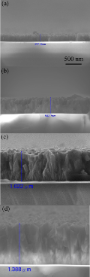
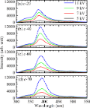
- oxide; textured ZnO; Introduction Thin-film solar cells require a transparent conductive oxide (TCO) to allow light to reach the absorber layers and create the electrical current. Due to its superior characteristics, including a wide band gap, high dielectric constant, high exciton binding energy (60



Blue and white light emission from zinc oxide nanoforests
Beilstein J. Nanotechnol. 2015, 6, 2463–2469, doi:10.3762/bjnano.6.255
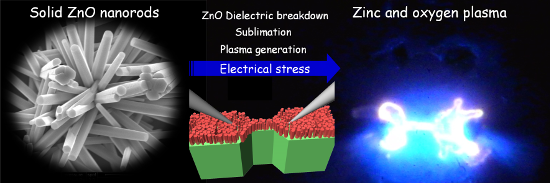
- gap semiconductor (≈3.4 eV) with large exciton binding energy (60 meV). ZnO nanowires have been shown to yield stimulated emission with optical pumping (e.g., nanowire laser) [4] and have been demonstrated as photodetectors [5]. ZnO films have also been used in transparent thin film transistors [6


A single-source precursor route to anisotropic halogen-doped zinc oxide particles as a promising candidate for new transparent conducting oxide materials
Beilstein J. Nanotechnol. 2015, 6, 2161–2172, doi:10.3762/bjnano.6.222
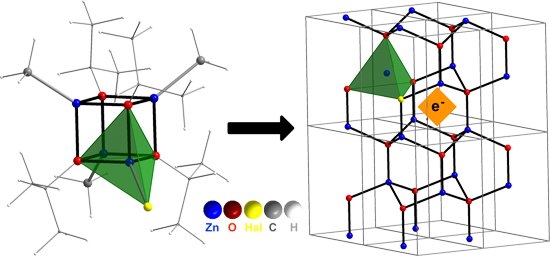
- (DAP) [71], although the energy is closer to the 3.31 eV free-to-bound transition reported by Schirra et al. [72]. With increasing Cl concentration the signal disappears. At the same time a transition, which can be assigned to bound exciton (D0X), becomes more intensive. The spectral position coincides
- , is assigned to a donor-bound exciton recombination at a structural defect [74]. The spectra of the 2.5% sample are dominated by the D0X shallow donor-bound exciton recombination with one phonon replica of the D0X visible. The low-temperature PL spectrum of the highest doped Cl@ZnO sample resembles



Current–voltage characteristics of manganite–titanite perovskite junctions
Beilstein J. Nanotechnol. 2015, 6, 1467–1484, doi:10.3762/bjnano.6.152
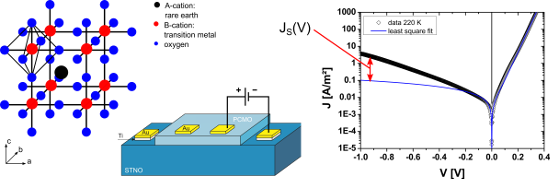
- fullerene C61-butyric acid methyl ester (PCBM) and µh = 5.0 × 10⁻⁷ cm2/V·s in the hole-doped polymer poly(2-methoxy-5-(3′,7′-dimethyloctyloxy)-p-phenylenevinylene) (MDMO–PPV) [2]. Absorption of photons leads to formation of tightly bound excitons that have a very low probability of dissociation. The exciton
- binding energy can be high due to the low dielectric constant of the organic semiconductors and can exceed 1 eV. Charge separation is typically hindered by a high exciton binding energy, however, it can be facilitated at a heterojunction due to formation of a more loosely bound exciton–polaron pair, which
- strongly on the exciton binding energy. Theoretical estimates show that increasing the binding energy, EB, from values of ≈kBT to 0.2 eV will increase the recombination rate by two orders of magnitude [2]. Typically, an experimental value for EB in polymer solar cells is in the range of 0.2–0.4 eV





Addition of Zn during the phosphine-based synthesis of indium phospide quantum dots: doping and surface passivation
Beilstein J. Nanotechnol. 2015, 6, 1237–1246, doi:10.3762/bjnano.6.127
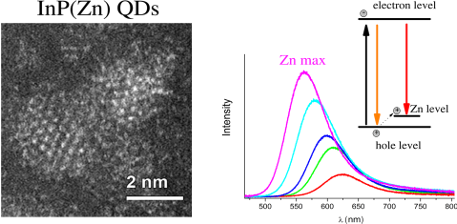
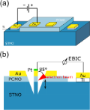
- effect takes place when the size of the particle is less than the exciton Bohr radius [23]. Besides, the strong confinement is fulfilled when the size of the particle is less than the Bohr radius for all types of charge carriers. According to the literature [5] the exciton Bohr diameter for bulk InP is


Electrical characterization of single molecule and Langmuir–Blodgett monomolecular films of a pyridine-terminated oligo(phenylene-ethynylene) derivative
Beilstein J. Nanotechnol. 2015, 6, 1145–1157, doi:10.3762/bjnano.6.116
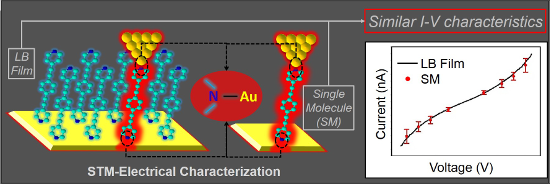
- molecular junctions [37][38], exciton migration control [39], top-contact metallization [24][40][41], optical and opto-electronic applications [42][43], modulation of the electrical properties of the junction [24], inclusion of a metal atom in the organic structure of a molecular wire [44], and electrical


Electronic interaction in composites of a conjugated polymer and carbon nanotubes: first-principles calculation and photophysical approaches
Beilstein J. Nanotechnol. 2015, 6, 1138–1144, doi:10.3762/bjnano.6.115
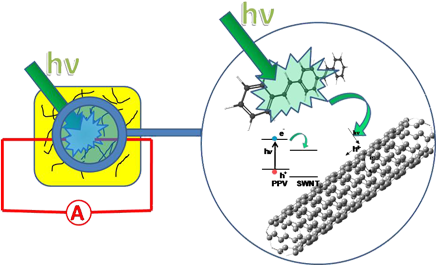
- exceed the exciton diffusion length [12], which is the case for ECP–fullerene-based solar cells in which fullerene molecules are able to capture the negative charges while the holes remain on the conjugated polymer [13]. Still, evidence for similar photoinduced charge-transfer or energy-transfer
- green-yellow range, and photoconduction under UV or blue light excitation. In this report we present an investigation of the photoexcitation and exciton migration processes in composites of PPV and single-walled carbon nanotubes (SWNT) by means of time-resolved photoluminescence (PL) and
- that these are ground state calculations and do not take into account the electron dynamics involved in exciton formation and separation, calculations that are unfortunately inaccessible with our available computing resources. The highest occupied molecular orbital (HOMO) and lowest occupied molecular


Characterization of nanostructured ZnO thin films deposited through vacuum evaporation
Beilstein J. Nanotechnol. 2015, 6, 971–975, doi:10.3762/bjnano.6.100
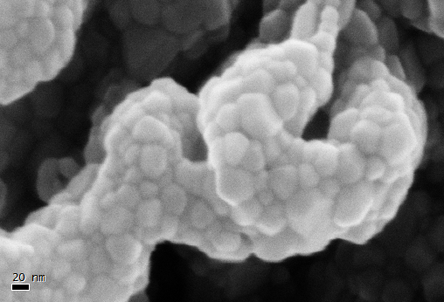
- nanodevices and nanosystems [1][2]. It has a wide band gap (3.37 eV), and a high exciton binding energy (60 meV) at room temperature, which allows for an efficient UV emission from the exciton, making it suitable for UV-emitting devices [3]. Depending on the form and the shape of the deposited thin films





