


Search results
Search for "feeding" in Full Text gives 58 result(s) in Beilstein Journal of Nanotechnology.
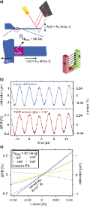
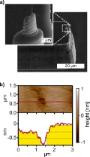
A scanning probe microscope for magnetoresistive cantilevers utilizing a nested scanner design for large-area scans
Beilstein J. Nanotechnol. 2015, 6, 451–461, doi:10.3762/bjnano.6.46
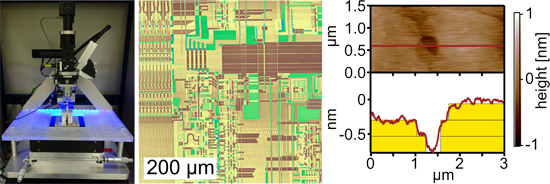
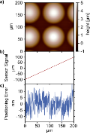
- scanner can be held on any position by feeding a constant control voltage to the closed loop controller while small-area scans are performed by the open loop scanner. A crucial precondition for a nested high resolution scanner design is the stability of the housing large-area scanner. The position


Aquatic versus terrestrial attachment: Water makes a difference
Beilstein J. Nanotechnol. 2014, 5, 2424–2439, doi:10.3762/bjnano.5.252
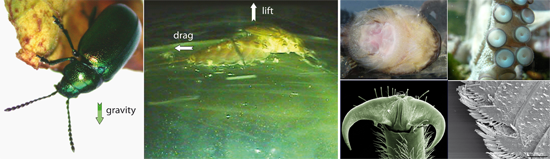
- , fixation of the whole animal, a locomotor structure, or eggs to the substrate, and forming a stable platform for copulation, feeding, phoresy, parasitism or predation [1][2]. Here we focus on attachment of animals to stiff, solid substrates under two biologically relevant conditions – in a dry or humid


Low-cost plasmonic solar cells prepared by chemical spray pyrolysis
Beilstein J. Nanotechnol. 2014, 5, 2398–2402, doi:10.3762/bjnano.5.249
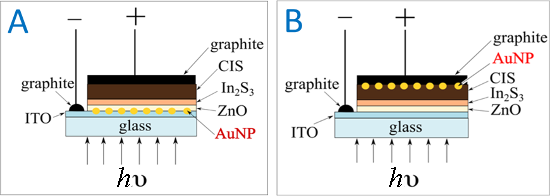
- pneumatically sprayed through air onto a substrate with a surface temperature of 260 °C. The solution volume was varied from 2.5 to 10 mL and the solution feeding rate was 1 mL/min. Current–voltage scans of the solar cells were used to obtain the principal characteristics of the solar cells: voltage at open


The gut wall provides an effective barrier against nanoparticle uptake
Beilstein J. Nanotechnol. 2014, 5, 2092–2101, doi:10.3762/bjnano.5.218
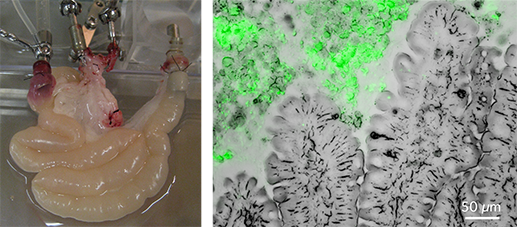
- NP entry. In the late 1990s, diverse animal feeding studies were conducted in order to quantify the amount of particles ranging from 50 nm to 20 µm in size that is taken up at different mucosal sites, such as the lymphoid- (Peyer’s patches) and non-lymphoid-associated tissue, of the digestive tract


Liquid fuel cells
Beilstein J. Nanotechnol. 2014, 5, 1399–1418, doi:10.3762/bjnano.5.153
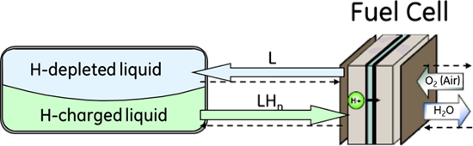
- with the same membrane fed with 0.5 M EG in 1.7 M triflic acid solution, the power density was 120 mW/cm2 and two major by-products (glycolic and oxalic acids) were identified [103]. Discharging without EG feeding consumed the by-products almost completely; this shows the possibility of a complete EG

Enhanced photocatalytic hydrogen evolution by combining water soluble graphene with cobalt salts
Beilstein J. Nanotechnol. 2014, 5, 1167–1174, doi:10.3762/bjnano.5.128
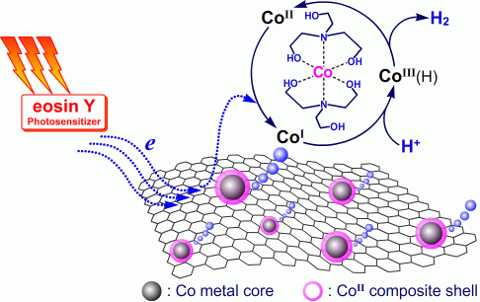
- (TEOA)2 complexes were on the surface of G-SO3, because ICP-MS measurements gave a cobalt content of 11.1%, which was much lower than the feeding ratio of 22.8%. Upon irradiation, the electrons of the EY•− radical anion generated from EY and TEOA, transfer to G-SO3 or directly to CoII(TEOA)2 to initiate


Molecular biology approaches in bioadhesion research
Beilstein J. Nanotechnol. 2014, 5, 983–993, doi:10.3762/bjnano.5.112
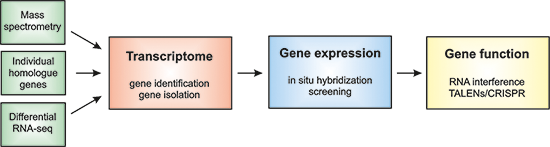
- organism by a variety of methods; the most common are soaking, ingestion and injection. In several aquatic organisms like Hydra, flatworms, planarians, nematodes, and shrimps, feeding or soaking are the most straightforward methodologies for delivering dsRNA. The organisms have to be immersed in a medium
- containing dsRNA. Another strategy is ingestion, by inducing target organisms to feed on other organisms like bacteria expressing the desirable dsRNA [69][82][83][84], or transgenic plants for feeding insects [85]. Also the combination of methods like the enrichment of natural diets, for example, liver paste


Grating-assisted coupling to nanophotonic circuits in microcrystalline diamond thin films
Beilstein J. Nanotechnol. 2013, 4, 300–305, doi:10.3762/bjnano.4.33
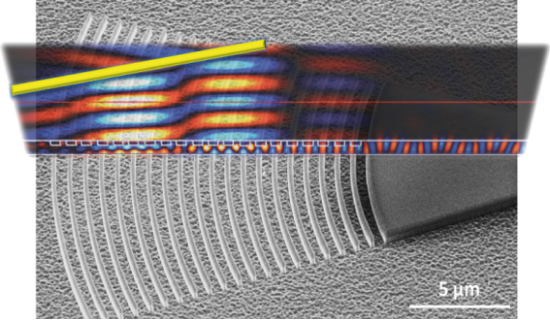
- cleaning and residual particle removal. After drying under nitrogen, the wafer is transferred into an ellipsoidal 915 MHz microwave plasma reactor [24]. Diamond films with a target thickness of 600 nm are grown at 1.8 kW microwave power. As feeding gas we employ a mixture containing 2% methane and 98


Other Beilstein-Institut Open Science Activities



