


Search results
Search for "filter" in Full Text gives 438 result(s) in Beilstein Journal of Nanotechnology. Showing first 200.
Lithium niobate on insulator: an emerging nanophotonic crystal for optimized light control
Beilstein J. Nanotechnol. 2024, 15, 1415–1426, doi:10.3762/bjnano.15.114
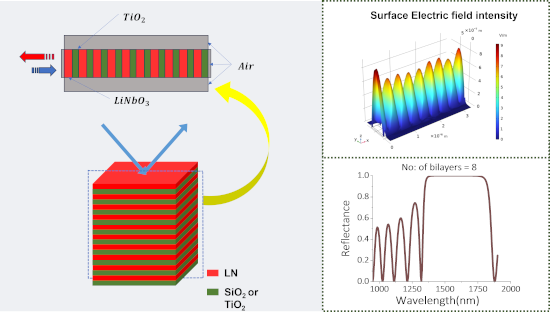
- to be used as a filter. At low contrast, the reflectance saturation is observed at a great number of bilayers and conversely, at high contrast, the reflectance saturation is observed at a low number of bilayers. It has been noted in low-loss infinite layered PhC that the significant reflection
- , but careful design, advanced fabrication, and interface engineering are crucial for success. Conclusion One-dimensional photonic crystals with lithium niobate (LN) were demonstrated using COMSOL simulation. The LN-SiO2 structure is suitable as a bandpass filter in the microwave regime. The reflectance


A biomimetic approach towards a universal slippery liquid infused surface coating
Beilstein J. Nanotechnol. 2024, 15, 1376–1389, doi:10.3762/bjnano.15.111
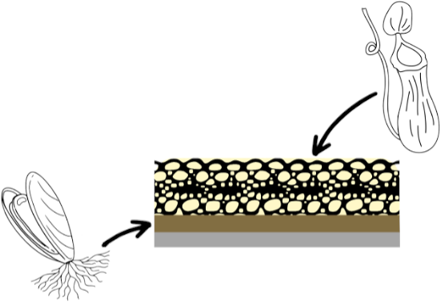
- processing and analysis of the collected scans included a lowpass filter and took place in the “NanoScope analysis” software. Sum frequency generation vibrational spectroscopy The SFG setup used an EKSLPA Nd:YAG laser operated at 50 Hz to generate a fixed visible (532 nm−1) and tunable infrared beam (1000




Green synthesis of carbon dot structures from Rheum Ribes and Schottky diode fabrication
Beilstein J. Nanotechnol. 2024, 15, 1369–1375, doi:10.3762/bjnano.15.110
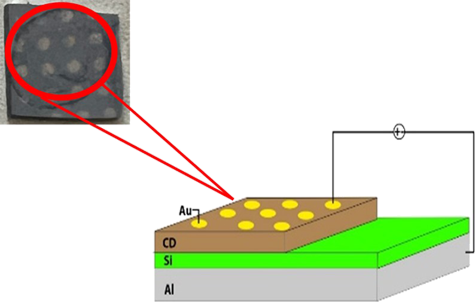
- autoclave and hydrothermal synthesis was carried out at 125 °C for 12 h. After the reaction was completed, the aqueous suspension was brought to room temperature and filtered with ordinary filter paper. The filtrate was passed through a 0.22 µm membrane filter and centrifuged at 10000 rpm for 30 min. The




A low-kiloelectronvolt focused ion beam strategy for processing low-thermal-conductance materials with nanoampere currents
Beilstein J. Nanotechnol. 2024, 15, 1197–1207, doi:10.3762/bjnano.15.97

- current, 1 µs dwell time, 128 frames integration filter and 1024 × 882 pixel resolution with an Everhart–Thornley detector. FIB TEM-lamella preparation and TEM analysis To verify if the collagen was heat-damaged when processing the sample using nanoampere range currents and different incident ion energies



Effect of wavelength and liquid on formation of Ag, Au, Ag/Au nanoparticles via picosecond laser ablation and SERS-based detection of DMMP
Beilstein J. Nanotechnol. 2024, 15, 1054–1069, doi:10.3762/bjnano.15.86

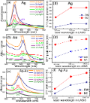
- -dispersive X-ray spectroscopy. Furthermore, NPs of various sizes ranging from 6 to 35 nm were loaded onto a filter paper by a simple and effective drop-casting approach to achieve flexible surface-enhanced Raman spectroscopy (SERS) substrates/sensors. These substrates were tested using a simple, portable
- substrates is the central aspect of the sensing field because of its simple sample collection from any rough surface [36][40]. Filter paper (FP) SERS substrates are rigorously investigated for the detection of hazardous dye molecules such as crystal violet (CV) and malachite green (MG) on fish [41
- ], pesticides on vegetables, dals [42], fruit surfaces [43], and explosives on rough surfaces [44][45]. In the last few years, our group has been continuously working on developing a flexible SERS substrate for the detection of various types of hazardous molecules: aggregated Ag and Au NPs on filter paper [46


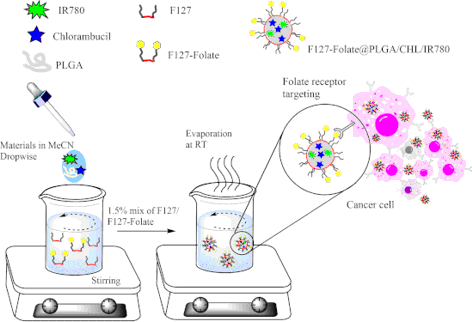
Therapeutic effect of F127-folate@PLGA/CHL/IR780 nanoparticles on folate receptor-expressing cancer cells
Beilstein J. Nanotechnol. 2024, 15, 954–964, doi:10.3762/bjnano.15.78
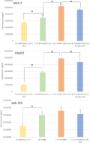
- , respectively (Table 1), which is acceptable for systemic administration. According to a review, these negative charges could reduce kidney excretion. The endothelial glycocalyx layer, glomerular basement membrane, and podocyte glycocalyx layer have negative charges, which filter positive nanoparticles faster



Synthesis of silver–palladium Janus nanoparticles using co-sputtering of independent sources: experimental and theorical study
Beilstein J. Nanotechnol. 2024, 15, 808–816, doi:10.3762/bjnano.15.67
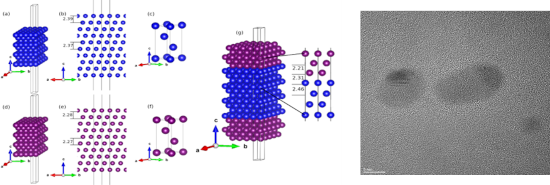
- % purity; the sputtered atoms traveled to the second chamber, where a shower of Pd atoms was generated on the second magnetron from a palladium target with 99.99% purity. The BNPs generated by condensation passed through a quadrupole mass filter for size selection and were finally deposited on holey carbon
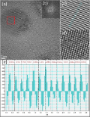
- connected by a Ag3Pd interface (Ag/AgPd/Pd model). Size distribution profiles determined using a quadrupole mass filter. HRTEM micrographs of AgPd nanoparticles. (a) Janus-type structure. (b) Janus-type structure. Calculation of interplanar distances in silver–palladium nanoparticles. (a) HRTEM micrograph




Electron-induced ligand loss from iron tetracarbonyl methyl acrylate
Beilstein J. Nanotechnol. 2024, 15, 797–807, doi:10.3762/bjnano.15.66
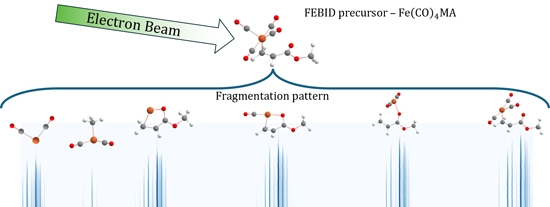
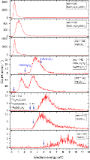
- , kept at around 25 °C, in a glass container through the gas inlet system. Electrostatic ion optics lenses extract and guide all produced anions from the interaction region towards a quadrupole mass filter that only lets pass anions with a given mass-to-charge ratio (m/z). Selected anions are then
- et al. [10] was recorded with a quadrupole mass filter) one has to keep in mind possible mass-dependent transmissions; however, for iron pentacarbonyl, the strong dominance of Fe+ and FeCO+ is also visible in all of the older mass spectra (e.g., in the data recommended by NIST [35]). In this sense



Electrospun polysuccinimide scaffolds containing different salts as potential wound dressing material
Beilstein J. Nanotechnol. 2024, 15, 781–796, doi:10.3762/bjnano.15.65
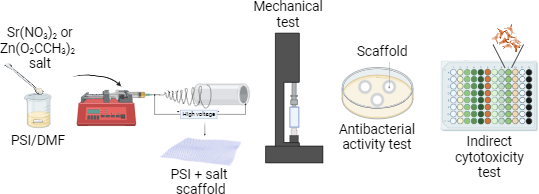
- pellet was filtered and washed using a vacuum filter to remove the phosphoric acid catalyst and the unreacted ʟ-aspartic acid monomeric molecules. Then, the pellet was mixed in distilled water for 10 min. This step was repeated until the pH of the filtrate changed from acidic to neutral. Finally, the PSI



Functional fibrillar interfaces: Biological hair as inspiration across scales
Beilstein J. Nanotechnol. 2024, 15, 664–677, doi:10.3762/bjnano.15.55
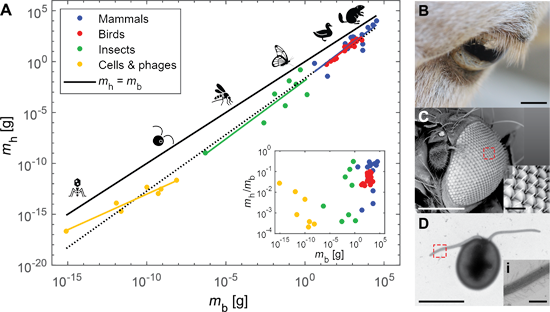
- classifications. Future research linking form and function in microbial hairs may lead to a better understanding of their evolution, as well as providing inspiration for the development of functional fibrillar structures at the micrometer and nanometer scales. Filter feeding Locomotion is key for searching for
- food, and hairs may also serve crucial roles in feeding, particularly via filtering. Filter feeding uses a porous material to capture prey and nutrients in fluid flows. Dense arrays of hairs may serve as the porous material that captures the food, separating it from the surrounding flow or from other
- fibers, or baleen, in their mouths instead of teeth to filter and capture prey [117][118][119]. When feeding, the whales use three different strategies, depending on their species. Bowhead and right whales (Balaenidae) use ram filter feeding where they continuously swim through groups of prey with their


Stiffness calibration of qPlus sensors at low temperature through thermal noise measurements
Beilstein J. Nanotechnol. 2024, 15, 580–602, doi:10.3762/bjnano.15.50
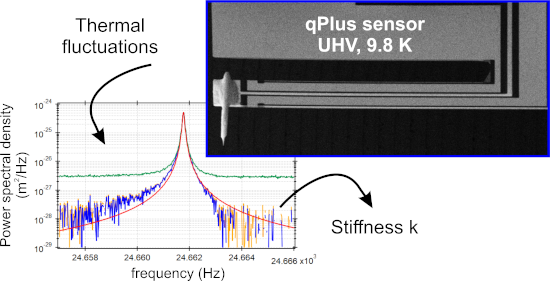
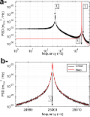
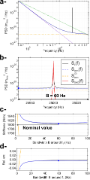
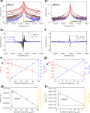
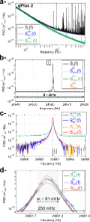
- a thermostat. The PSD of the stochastic thermal force giving rise to the fluctuations of the SHO is derived as well, which is used in the numerical simulations. Supporting Information File 4 discusses the relevance of a digital antialiasing filter on the measured thermal noise PSD. Stiffness
- this signal. An analog low-pass filter in the OC4 acts as an antialiasing filter before digital conversion by an ADC. It is implemented as a third-order overall Butterworth filter with a Sallen–Key topology and with a fixed cut-off frequency of 5 MHz, meaning that dampening is 60 dB per decade. There
- is no additional filter in the analog part, and there is no antialiasing filter in the digital domain. Before thermal noise measurements, the qPlus deflections are accurately calibrated into metric units with a custom-made script implemented in the Nanonis MIMEA control unit that performs the

Directed growth of quinacridone chains on the vicinal Ag(35 1 1) surface
Beilstein J. Nanotechnol. 2024, 15, 556–568, doi:10.3762/bjnano.15.48
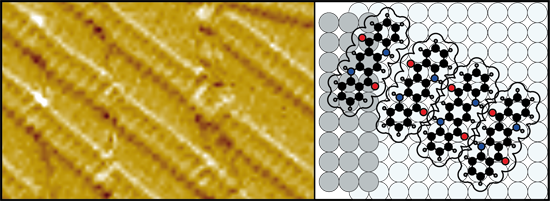
- SPIP [29], which included filtering out noise and an adjustment of the contrast. Additionally, to some images, a Prewitt or Roberts filter for edge enhancement was applied in order to enhance the visibility of the step edges. The structure models were drawn with the free software Graphics Layout Engine
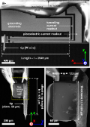
- = 25 pA) of QA on the Ag(35 1 1) surface deposited at a sample temperature of 400 K. It shows an area with several step edges running vertically through the image, which are highlighted by the dashed black lines. (b) The same STM image as in panel (a) with a Prewitt filter for better visibility of the


Cholesterol nanoarchaeosomes for alendronate targeted delivery as an anti-endothelial dysfunction agent
Beilstein J. Nanotechnol. 2024, 15, 517–534, doi:10.3762/bjnano.15.46
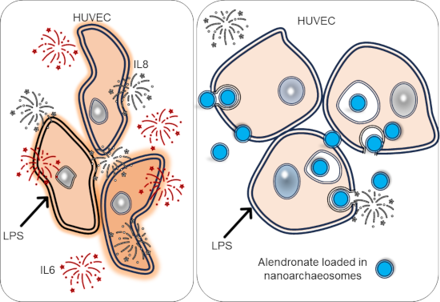
- 700g, and the first fraction of 250–300 μL was collected. The resultant nanovesicles were sterilized by passage through a 0.22 μm sterile filter and stored at 4 °C. ALN was quantified in the aqueous phase, while phospholipids were quantified in the chloroform phase after extraction of ALN using the
- plates by covering them with 10% formaldehyde in PBS for 15 min at room temperature (RT). After removing the fixing buffer carefully, cells were covered with fresh ORO working solution (6 mL of 5 mg/mL ORO in isopropanol stock solution) and 4 mL of distilled water filtered through a 3 μm pore size filter





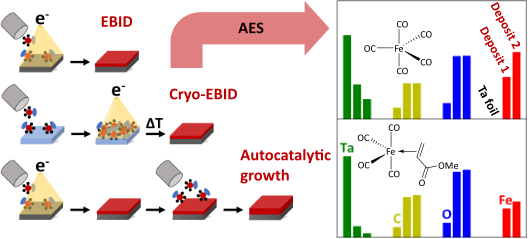
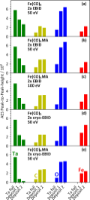
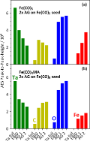
Electron-induced deposition using Fe(CO)4MA and Fe(CO)5 – effect of MA ligand and process conditions
Beilstein J. Nanotechnol. 2024, 15, 500–516, doi:10.3762/bjnano.15.45

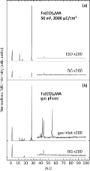
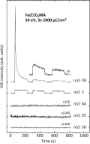
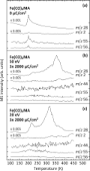

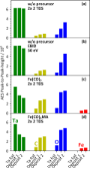

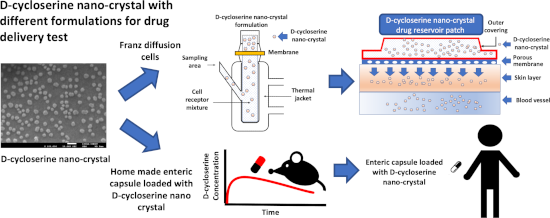
Fabrication of nanocrystal forms of ᴅ-cycloserine and their application for transdermal and enteric drug delivery systems
Beilstein J. Nanotechnol. 2024, 15, 465–474, doi:10.3762/bjnano.15.42
- was slowly added into 20 mL of tert-butanol (Merck-Millipore) and mixed with an ultrasonic cleaner (Creworks Co., Ltd.) at 40 kHz for 1 min. The mixed solution was filtered by suction filtration using a 0.2 μm filter membrane (Merck KGaA). The filtered solution was centrifuged at 10,000 rpm (Kubota Co
- nanocrystals were scanned in continuous mode from 5–40° (2θ) with a step size of 0.02° on a spinning stage at 40 kV and 40 mA with Cu Kα radiation. The incident beam path was equipped with a 0.2 mm divergence slit and a 0.02 mm air scattering screen. The diffracted beam was equipped with Ni-filter. The


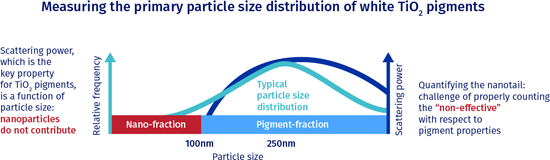
Comparative electron microscopy particle sizing of TiO2 pigments: sample preparation and measurement
Beilstein J. Nanotechnol. 2024, 15, 317–332, doi:10.3762/bjnano.15.29
- implemented definition. The new software package does not support the previously used watershed transform; instead, a morphological shape separator must be used. The better image quality allows one to reduce the size of the rank filter for noise reduction from five to two pixels. The differences are


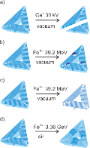
Ion beam processing of DNA origami nanostructures
Beilstein J. Nanotechnol. 2024, 15, 207–214, doi:10.3762/bjnano.15.20
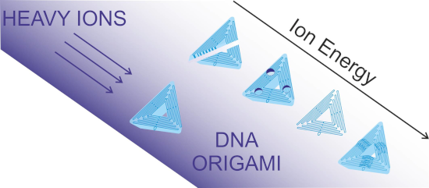
- for about 2 h. Afterwards, 100 μL of the synthesis mixture was filtered through 100 kDa MWCO Amicon centrifugal filter units to remove excess staple strands. This was done three times, each time adding 400 μL of FOB, at a relative centrifugal force of 4000g for 4 min. The filters were then flipped and


New application of bimetallic Ag/Pt nanoplates in a colorimetric biosensor for specific detection of E. coli in water
Beilstein J. Nanotechnol. 2024, 15, 95–103, doi:10.3762/bjnano.15.9
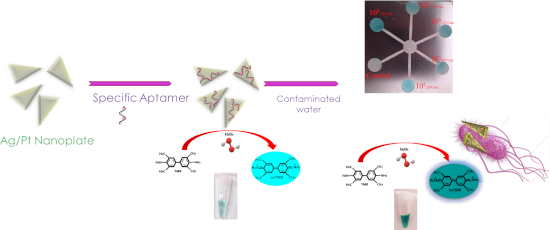
- incubation time. The peroxidase-like activity of the aptasensor was ultimately demonstrated in the presence of TMB and H2O2. Paper-based device Whatman filter paper No. 1 is considered as an appropriate paper for paper-based analysis. A PVC sheet was affixed to the back of each paper to prevent solution


Nanotechnological approaches in the treatment of schistosomiasis: an overview
Beilstein J. Nanotechnol. 2024, 15, 13–25, doi:10.3762/bjnano.15.2

- , Scopus, and Web of Science databases. These searches were conducted from March 31st, 2022, to March 31st, 2023, using the following search keywords: (nano* OR encapsul*) AND (treatment OR therap* OR activity OR chemotherapy) AND schistosomiasis. After obtaining the list of papers, a filter by type of


Fluorescent bioinspired albumin/polydopamine nanoparticles and their interactions with Escherichia coli cells
Beilstein J. Nanotechnol. 2023, 14, 1208–1224, doi:10.3762/bjnano.14.100
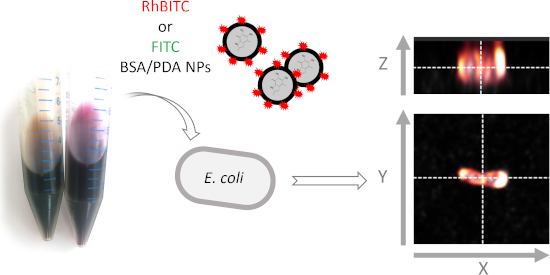
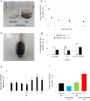
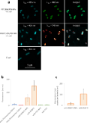
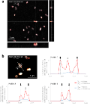
- solution to obtain a 20 mg/mL suspension of BSA/PDA NPs. This suspension was filtered in a microbiological safety cabinet with a 0.20 µm filter to eliminate possible contaminations and diluted in 9 mg/mL NaCl solution to prepare suspensions with NP concentrations of 0.5, 1, 2, 5, and 10 mg/mL. Finally, 10



Determination of the radii of coated and uncoated silicon AFM sharp tips using a height calibration standard grating and a nonlinear regression function
Beilstein J. Nanotechnol. 2023, 14, 1200–1207, doi:10.3762/bjnano.14.99
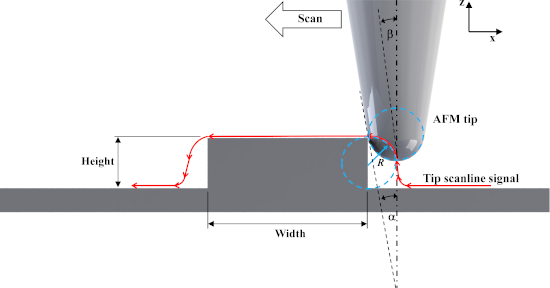
- moves over the corner edges. To achieve an accurate estimation of the radius, a reconstruction method for the tip scan profile has been developed by fitting the measured points to the morphological filter surface of the characterizer [13]. Yet, this reconstruction technique may not be applicable for
- mode with very light loading (0.01 nN) to prevent the tips from wear. The noise effect was not considered here, because the measurement was conducted inside the hood of a MFP-3D Origin (Asylum Research) with noise filter system. Considering the geometry of the nanostructure and the scanline signal


Dual-heterodyne Kelvin probe force microscopy
Beilstein J. Nanotechnol. 2023, 14, 1068–1084, doi:10.3762/bjnano.14.88
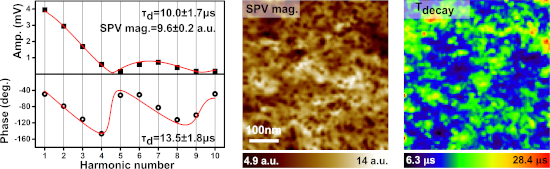
- spectroscopic images displayed in this figure have been treated by applying a Gaussian smooth filter. The raw data are shown in Supporting Information File 1, Figure S8, they display the same features, but with a higher noise level. Remember also that the reference phase (Φ0) is now measured for each pixel




Experimental investigation of usage of POE lubricants with Al2O3, graphene or CNT nanoparticles in a refrigeration compressor
Beilstein J. Nanotechnol. 2023, 14, 1041–1058, doi:10.3762/bjnano.14.86
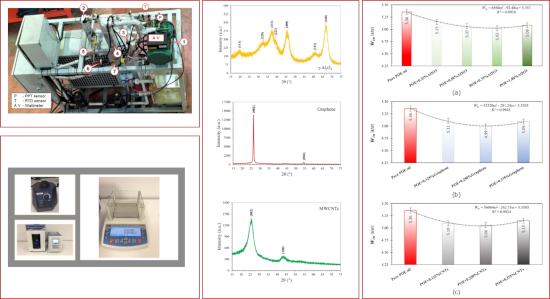
- . Condenser: ALFA LAVAL AC-30EQ-20H-F plate heat exchanger. 3. Expansion valve: DANFOSS ETS 6 electronic valve. 4. Evaporator: ALFA LAVAL AC-70X-20M-F plate heat exchanger. 5. Shut-off valve: DANFOSS GBC manual valve. 6. Filter-drier: DANFOSS DML device. 7. Sight glass: DANFOSS SGP device. The a) FE-SEM





Prediction of cytotoxicity of heavy metals adsorbed on nano-TiO2 with periodic table descriptors using machine learning approaches
Beilstein J. Nanotechnol. 2023, 14, 939–950, doi:10.3762/bjnano.14.77
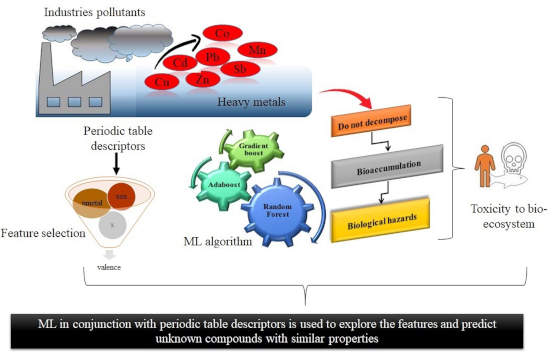
- results from the validation sets. Feature selection with random forest The goal of feature selection techniques is to find the best set of features that allows one to build optimized models. Feature selection using RF is an embedded method. Embedded methods combine the benefits of filter and wrapper


A wearable nanoscale heart sound sensor based on P(VDF-TrFE)/ZnO/GR and its application in cardiac disease detection
Beilstein J. Nanotechnol. 2023, 14, 819–833, doi:10.3762/bjnano.14.67
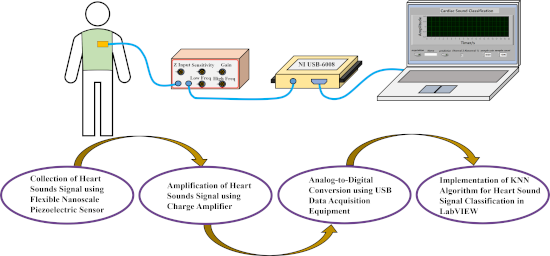
- filter and a 50 Hz notch filter, respectively, after which the processed heart sound signal waveform was displayed on the front panel. The band-pass filter of the acquisition system is an eigth-order ellipse filter, while the notch filter is a third-order Butterworth filter. The program also features the
- -pass filter and 50 Hz notch filter were generated using MATLAB's built-in “fdatool” tool, both of which use a third-order Butterworth filter. Since the amplitude of heart sound signals varies greatly due to the different devices used for collecting heart sound database data, the Z-Score function in





