


Search results
Search for "flow" in Full Text gives 945 result(s) in Beilstein Journal of Nanotechnology. Showing first 200.
Soft materials nanoarchitectonics: liquid crystals, polymers, gels, biomaterials, and others
Beilstein J. Nanotechnol. 2025, 16, 1025–1067, doi:10.3762/bjnano.16.77
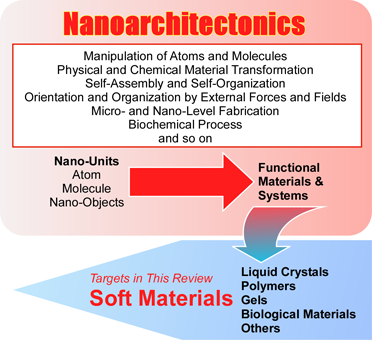
- , and polymer motion via Marangoni flow. It is possible to extend this series of photoresponsive properties to other photochromic molecules and polymers. This methodology will be of interest for a variety of smart molecular system devices and smart applications. Plastic crystals are materials that






Multifunctional properties of bio-poly(butylene succinate) reinforced with multiwalled carbon nanotubes
Beilstein J. Nanotechnol. 2025, 16, 1014–1024, doi:10.3762/bjnano.16.76
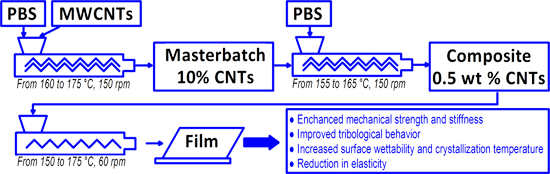
- into nanosizes and uniformly distributed within the polymer matrix. To investigate the effect of CNTs on the rheological properties of PBS, specifically its flowability, the melt mass-flow rate (MFR) of pure PBS and the PBS/CNT_0.5 nanocomposite was studied at different temperatures and loads (Figure 2
- important to note that the MFR of the PBS/CNT_10 masterbatch could not be determined under the given conditions, as its melt exhibited minimal flow through the plastometer capillary. Therefore, the MFR of the masterbatch was measured at 230 °C and a load of 21.6 kg, yielding approximately 0.04 g/10 min
- revealed that CNTs decreased the melt flow rate by 5–25% at lower temperatures (180–190 °C), while improving flowability by 5–12% at 200 °C. It is hypothesized that the observed decrease in crystallinity may contribute to enhanced biodegradability. These results suggest promising applications for PBS/MWCNT



Time-resolved probing of laser-induced nanostructuring processes in liquids
Beilstein J. Nanotechnol. 2025, 16, 968–1002, doi:10.3762/bjnano.16.74
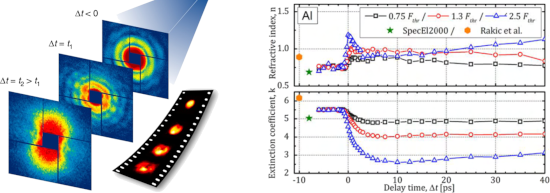
- formation via direct and near-field forces [24][25][26][27]. Furthermore, the application of TTM is hampered by the relatively high uncertainty of material parameters such as the temperature- or field-dependent interaction cross section or the non-linear heat capacities [28][29][30][31]. Heat flow and phase
- MeV-UED facility of SLAC National Accelerator Laboratory. This setup features a high brightness, femtosecond electron beam operating at 3–4 MeV energies, coupled with a rapid-flow liquid sheet jet system, which ensures that the sample is refreshed before each pump–probe shot sequence. The scattering


Focused ion beam-induced platinum deposition with a low-temperature cesium ion source
Beilstein J. Nanotechnol. 2025, 16, 910–920, doi:10.3762/bjnano.16.69
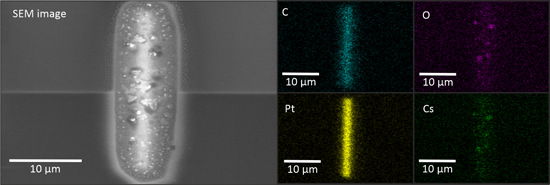
- standard ion columns from ThermoFisher [23]. Both the Cs+ and the Rb+ FIB are equipped with a standard Pt GIS. The same precursor trimethylplatinum, C5H4CH3Pt(CH3)3, was used for all FIBID-Pt experiments. The precursor was heated to 40 °C to create a gas flow through the GIS nozzle, with the exit of the
- limited gas flow, which leads to an overall lower increase in growth rate with increasing current density. This agrees with previous findings for Ga+ FIBID-Pt [25]. Also, for Cs+ at 5 kV, the deposition rate is lower. A possible explanation might be the broader beam diameter, which increases for lower
- average grain diameter grows from 1.9 to 5.8 nm when the beam energy increases from 2 to 16 kV. With larger grain diameters, the Pt-rich particles have larger surface areas in close contact. These larger surface areas help the current to flow more easily between the Pt deposits. Therefore, the deposit


Characterization of ion track-etched conical nanopores in thermal and PECVD SiO2 using small angle X-ray scattering
Beilstein J. Nanotechnol. 2025, 16, 899–909, doi:10.3762/bjnano.16.68
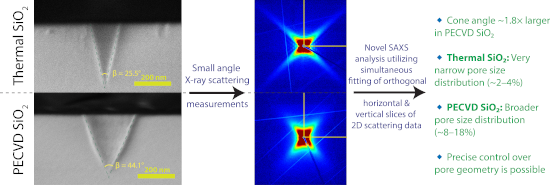
- thick) grown on a 300 μm thick, polished ⟨100⟩ Si substrates using an Oxford Plasmalab 100 PECVD system. PECVD deposition was performed at 650 °C with gas flow rates of 16 sccm SiH4, 980 sccm N2, and 14 sccm NH3. Ellipsometry measurements employing a Tauc–Lorentz model revealed a deposition rate of


Heat-induced transformation of nickel-coated polycrystalline diamond film studied in situ by XPS and NEXAFS
Beilstein J. Nanotechnol. 2025, 16, 887–898, doi:10.3762/bjnano.16.67
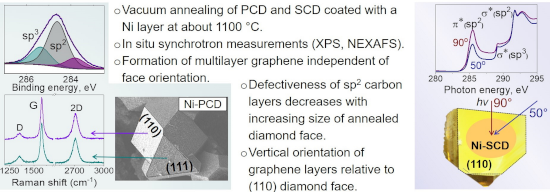
- hydrogen/acetone/air mixture. The deposition parameters were typical of those previously employed for an “Astex” system (2.45 GHz, 4.5 kW): a pressure of 115 Torr, hydrogen, acetone, and air flow rates of 500, 18, and 0.3 sccm, respectively, and substrate temperature in the range of 940–980 °C [28][37


Synchrotron X-ray photoelectron spectroscopy study of sodium adsorption on vertically arranged MoS2 layers coated with pyrolytic carbon
Beilstein J. Nanotechnol. 2025, 16, 847–859, doi:10.3762/bjnano.16.64
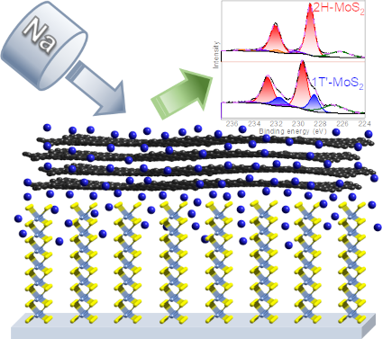
- , molybdenum was sputtered from a Mo target with a purity of 99.9% for 10 s at a magnetron power of 100 W and an argon partial pressure of 5.4 × 10⁻¹ Pa. The output pressure in the chamber was controlled by the argon flow. The MoS2 films were synthesized by sulfurization of molybdenum layers deposited on SiO2
- /Si substrates in a two-zone quartz reactor. The substrate was placed in the high-temperature zone and annealed there at 423 K for 30 min in an argon flow of 250 sccm. Then, this zone was heated to 873 K. 200 mg of sulfur powder (99.9% purity) were placed in a quartz crucible in the low-temperature
- reactor zone heated to 473 K. A flow of 24 sccm argon was passed through both reactor zones for 30 min at atmospheric pressure. After this time, sulfurization of the Mo layer was complete. Both zones were cooled to room temperature in a flow of 250 sccm argon. To remove polysulfide impurities and form a


Facile one-step radio frequency magnetron sputtering of Ni/NiO on stainless steel for an efficient electrode for hydrogen evolution reaction
Beilstein J. Nanotechnol. 2025, 16, 837–846, doi:10.3762/bjnano.16.63
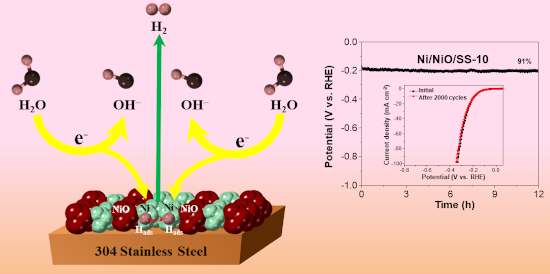
- . In this study, Ni/NiO nanolayers were prepared on stainless steel (SS) via a facile one-step radio frequency magnetron sputtering with various O2 flow rates. The O2 flow rate not only changed the crystal phase but also affected the morphology and atomic ratio of materials, leading to optimized HER
- preserved substrate are definite advantages. Although studies have recognized the effectiveness of magnetron sputtering, research has yet to systematically investigate the effect of the O2 flow rate on the HER efficiency of Ni/NiO catalysts. Commercial stainless steel (SS) costs less than other conductive
- route with various O2 flow rates, including 5, 10, 15, and 20 sccm. The electrode showed a higher HER efficacy than SS and Ni/SS, indicating the crucial role of NiO in water splitting. Moreover, the optimal sample Ni/NiO/SS-10 exhibited remarkable durability after 12 h of operation, suggesting great


Synthesis and magnetic transitions of rare-earth-free Fe–Mn–Ni–Si-based compositionally complex alloys at bulk and nanoscale
Beilstein J. Nanotechnol. 2025, 16, 823–836, doi:10.3762/bjnano.16.62
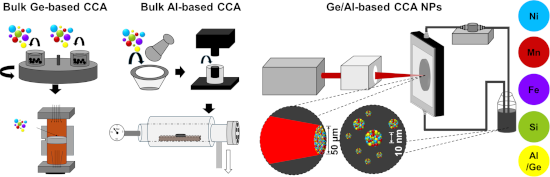
- 2.8 J·cm−2 [41]. Additionally, to increase the NP concentration and reduce the organic solvent use, a closed loop liquid flow system was employed. Size distribution, morphology, elemental composition, and crystal structure of the NPs from both CCA targets were examined using transmission electron
- followed by SPS. (b) Bulk Al-based CCA synthesized through a process of mixing elemental powders using mortar and pestle, followed by uniaxial pressing and vacuum oven sintering. (c) CCA NPs produced by picosecond-pulsed laser ablation of the CCA alloy targets in ethanol employing a closed loop liquid flow


Morphology and properties of pyrite nanoparticles obtained by pulsed laser ablation in liquid and thin films for photodetection
Beilstein J. Nanotechnol. 2025, 16, 785–805, doi:10.3762/bjnano.16.60
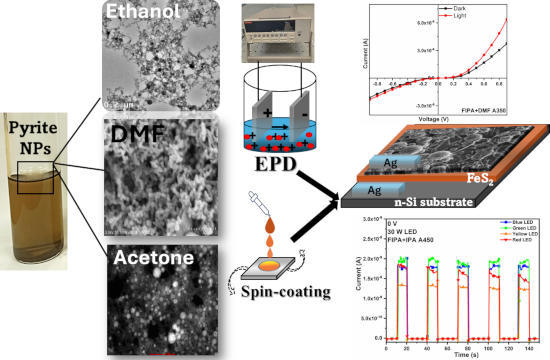
- of nitrogen flow prevented the samples from oxidizing or being contaminated during sulfurization. The heated samples were gradually cooled down to room temperature. Throughout the experiment, the flow of nitrogen gas was kept steady. The optimal conditions were determined through trials using varying
- phase, where the accumulation of minority carriers near the interface leads to recombination and electron flow into the surface. Over time, a steady state is reached when the rate of hole influx at the interface balances charge transfer and recombination, resulting in a stable photocurrent. When the






Serum heat inactivation diminishes ApoE-mediated uptake of D-Lin-MC3-DMA lipid nanoparticles
Beilstein J. Nanotechnol. 2025, 16, 740–748, doi:10.3762/bjnano.16.57
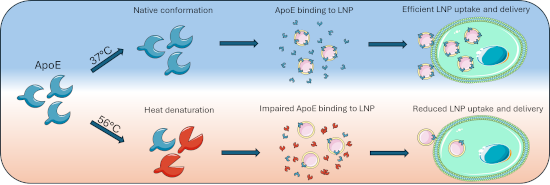
- to a flowrate of 4 mL/min and a flow rate ratio of 3:1 (aqueous to solvent phase) to mix the phases. For C12 LNPs, the flow rate ratio was set to 2:1 with a total flow rate of 9 mL/min. After mixing, the LNP suspensions were dialyzed against PBS overnight using a dialysis cassette (Thermo Scientific
- brands of FCS (B) or untreated (NHI) or heat treated (HI) FCS of brand B (C) as determined by flow cytometry. The concentration of fluorescent siRNA was 1.5 pmol per 150 µL and uptake was measured after 4 h (n = 3). Differences were considered statistically significant at p < 0.05 and were annotated as
- by magnetic beads after incubation in human serum, heat treated human serum and recombinant ApoE3 in PBS, as determined by flow cytometry (D) (n = 2). Differences were considered statistically significant at p < 0.05 and were annotated as ns = non-significant, * = p ≤ 0.05, ** = p ≤ 0.01, *** = p


Efficiency of single-pulse laser fragmentation of organic nutraceutical dispersions in a circular jet flow-through reactor
Beilstein J. Nanotechnol. 2025, 16, 711–727, doi:10.3762/bjnano.16.55
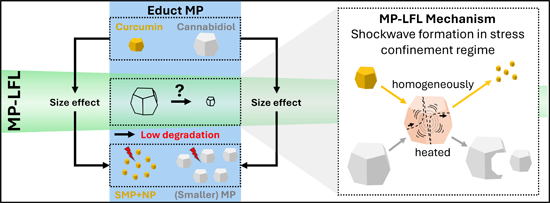
- nutraceuticals aiming at solubility enhancements. However, current discontinuously operated fragmentation setups suffer from chemical degradation by multipulse laser excitation at high fluence and do not allow for systematic studies of the fragmentation mechanisms. In this work, continuous-flow microparticle
- systematic studies of the fragmentation mechanism and reliable measures of fluence-dependent degradation and particle size. To compensate for this disadvantage, Lau et al. introduced a circular jet (CJ) flow-through reactor [15], which generates a hydrostatically driven free liquid jet that is
- perpendicularly irradiated by a focused laser beam (Figure 1). By matching the flow rate of the dispersion in the jet, which defines the residence time of the particles in the laser-excited volume, with the repetition rate of the laser, precise process control over the pulses per particle is possible [43]. Hence


High-temperature epitaxial growth of tantalum nitride thin films on MgO: structural evolution and potential for SQUID applications
Beilstein J. Nanotechnol. 2025, 16, 690–699, doi:10.3762/bjnano.16.53
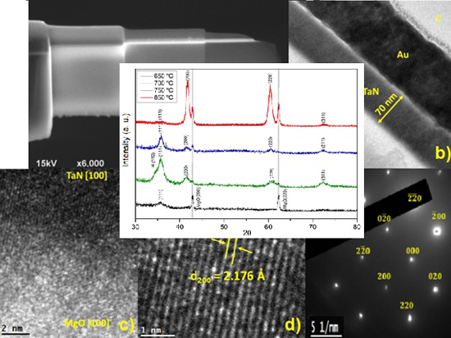
- peak at 25 eV. We found that increasing the nitrogen flow substantially reduces the amount of oxygen in the films (Table 1) compared to that reported by Quintanar-Zamora et al. [15]. The oxygen content remains almost invariable when increasing the temperature to 850 °C (Table 2). Although higher
- limited oxygen availability and the dominant role of nitrogen flow. The samples in Figure 1c,d present a stoichiometry closer to that of TaN than the smaples in Figure 1a,b; they have an atomic composition of Ta2O5, and the doublet shape is more defined. Table 2 shows the atomic composition of samples


The impact of tris(pentafluorophenyl)borane hole transport layer doping on interfacial charge extraction and recombination
Beilstein J. Nanotechnol. 2025, 16, 678–689, doi:10.3762/bjnano.16.52
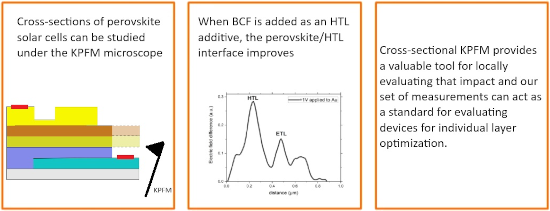
- biasing, we bypass the open-circuit conditions and have a continuous charge flow within our devices, which operate with an external source of voltage. Consequently, charge transport can be studied, which depends on the diode characteristics of the interfaces. By biasing our devices with a voltage value
- illuminated case and we have a sufficient diffusive current flowing through the two junctions, but smaller in magnitude compared to the current flowing through an ohmic contact. Therefore, the junction exhibiting the more pronounced rectifying behavior will still limit the current flow. For our model, the
- influence of the resistance of the active layer is omitted, as it remains the same for all devices tested. If the rectifying capability of the HTL/perovskite junction is poor, then under the applied bias, more current will readily flow through it and the voltage will mainly drop on the ETL interface, where


Colloidal few layered graphene–tannic acid preserves the biocompatibility of periodontal ligament cells
Beilstein J. Nanotechnol. 2025, 16, 664–677, doi:10.3762/bjnano.16.51
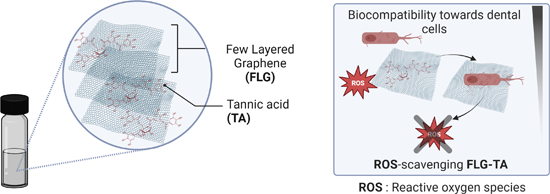
- patients during pre-operative appointments, and oral informed consent and non-opposition to the use of their biological waste for research reasons was obtained. Before use, the cells’ phenotypic characteristics were validated through flow cytometry, evaluating the expression of CD90, CD73, CD34, CD45, HLA




Aprepitant-loaded solid lipid nanoparticles: a novel approach to enhance oral bioavailability
Beilstein J. Nanotechnol. 2025, 16, 652–663, doi:10.3762/bjnano.16.50
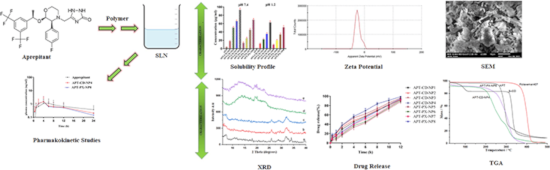
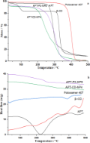
- , polymers, or formulated SLNs in aluminum crucibles were heated from 10 to 500 °C at 10 K/min with nitrogen purging at 20 mL/min flow rate. The TGA cell was calibrated using tin (232 °C) and indium (156 °C) as a melting points standard. In vitro drug release and kinetic modeling In vitro release of APT from
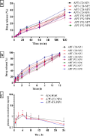
- drug content was determined via high-performance liquid chromatography at λmax = 210 nm. Analysis was performed by utilizing a C18 column (4.6 × 250 mm, 5 μm, Shim-pack Substance, Japan) at a flow rate of 1.5 mL/min and at 40 °C. Tests were performed utilizing a combination of 0.1% phosphoric acid in



A formulation containing Cymbopogon flexuosus essential oil: improvement of biochemical parameters and oxidative stress in diabetic rats
Beilstein J. Nanotechnol. 2025, 16, 617–636, doi:10.3762/bjnano.16.48
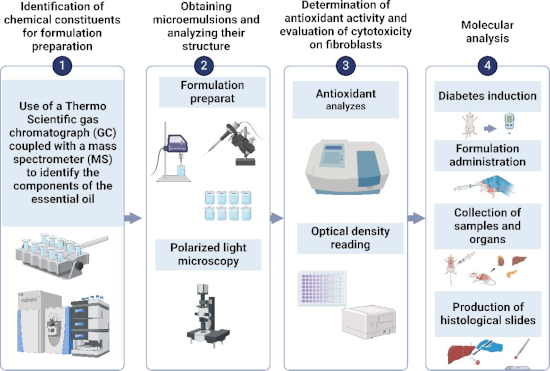
- Information File 1, Figure S1) through the visualization of a dark field. In general, microemulsions do not deflect the plane of polarized light since their optical properties are constant in all directions [18]. Rheology is the science that studies the flow characteristics and deformation of matter when
- stress, and n is the flow index. The flow curves showed a linear correlation (n close to 1). For 25 °C, n was 1.08, while for 37 °C, it was 0.99 (i.e., Newtonian behavior). R2 was greater than 0.996 for both tests, indicating that the data fit this model. This is expected for a microemulsion system [18
- , 0.25 μm film thickness) was used for compound separation, with helium as a 99.999% pure carrier gas (White Martins SA) at a flow rate of 1 mL/min and a split/splitless autoinjector. For the analysis, a solution of EOCF was prepared at a concentration of approximately 10 mg/mL using hexane as a solvent




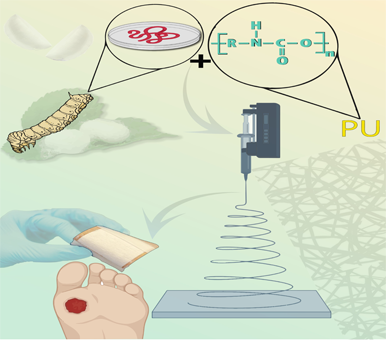
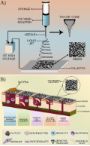
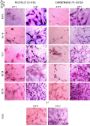
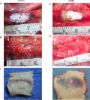
Polyurethane/silk fibroin-based electrospun membranes for wound healing and skin substitute applications
Beilstein J. Nanotechnol. 2025, 16, 591–612, doi:10.3762/bjnano.16.46



Feasibility analysis of carbon nanofiber synthesis and morphology control using a LPG premixed flame
Beilstein J. Nanotechnol. 2025, 16, 581–590, doi:10.3762/bjnano.16.45
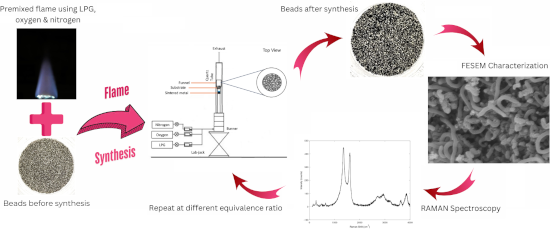
- Iftikhar Rahman Bishal Muhammad Hilmi Ibrahim Norikhwan Hamzah Mohd Zamri Mohd Yusop Faizuan Bin Abdullah I Putu Tedy Indrayana Mohd Fairus Mohd Yasin Department of Thermo-Fluids, Faculty of Mechanical Engineering, Universiti Teknologi Malaysia, 81310 Johor Bahru, Malaysia High Speed Reacting Flow
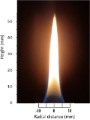
- varying equivalence ratios. The effects of flame equivalence ratio on the CNF morphology and crystallinity are then analyzed systematically. In the present study, a diffusion flame was used to check the stability of the flame at different flow rates, followed by establishing a premixed flat flame of LPG
- optimization of CNT/CNF synthesis in flame environments. An ethylene/air co-flow, non-premixed flame was used with a catalyst substrate of iron, nickel, and platinum wires of 0.1–0.25 mm diameter. The study found that carbon monoxide is a major contributor to CNT formation in flames, and the model also showed



Functionalized gold nanoflowers on carbon screen-printed electrodes: an electrochemical platform for biosensing hemagglutinin protein of influenza A H1N1 virus
Beilstein J. Nanotechnol. 2025, 16, 540–550, doi:10.3762/bjnano.16.42
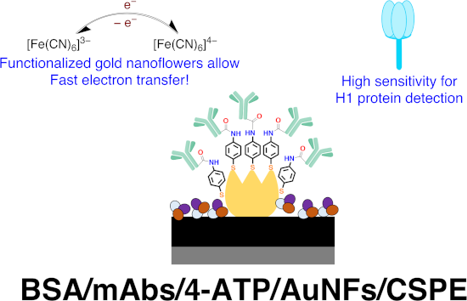
- HAuCl4 solution containing 6 mM HCl and 0.5 M sulfuric acid was added on top of the CSPE, and a potential of −0.25 V (vs Ag/AgCl) was applied for 60 s. The electrode was then rinsed with 25 mL deionized water, dried under a flow of N2, and stored at room temperature (RT) in dark. Functionalization with 4
- a flow of N2 gas and stored at 4 °C until use. Immobilization of mAbs The mAbs are essential in our biosensor and function as biorecognition element toward H1 protein. The mAbs were immobilized as described previously [58] with some modifications. Briefly, a reaction mixture of 300 μL was prepared
- electrode and incubated at 4 °C overnight. Afterwards, the mAb/4-ATP/AuNFs/CSPE was rinsed with 1 mL of PBS to remove unreacted species and dried under a flow of N2 gas. The surface of the electrode was blocked by adding 10 μL of 0.5% BSA solution in PBS and incubated at 4 °C for 2 h. Thereafter, the BSA


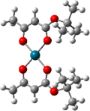
Electron beam-based direct writing of nanostructures using a palladium β-ketoesterate complex
Beilstein J. Nanotechnol. 2025, 16, 530–539, doi:10.3762/bjnano.16.41
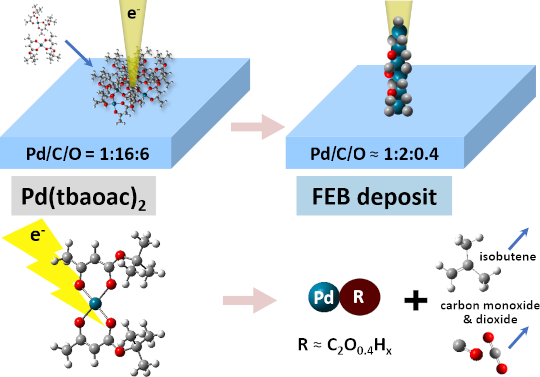
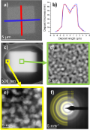
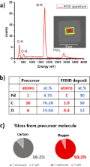
- flow rate in the deposited area was approximately about 2 × 10¹⁶ molecules·s−1 or 3.7 × 10³ molecules·nm−2·s−1. This was determined through measuring the difference in weight of the precursor before and after experiments inside the GIS. This is the amount of precursor consumed for the experimental


Zeolite materials with Ni and Co: synthesis and catalytic potential in the selective hydrogenation of citral
Beilstein J. Nanotechnol. 2025, 16, 520–529, doi:10.3762/bjnano.16.40
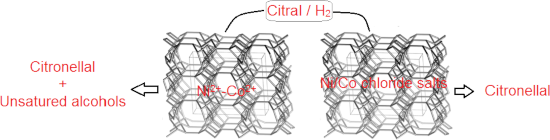
- profiles. In order to improve these results, the CoNiZIE catalyst was subjected to in situ reduction at 500 °C for 2 h under H2 flow prior to the catalytic test. However, this high reduction temperature resulted to be deleterious to the catalytic performance. While the catalytic performance of CoNiZIE in
- reduction (TPR) analyses were performed on an AutoChem 2910 instrument (Micromeritics, USA) equipped with a thermal conductivity detector (TCD). The procedure for TPR involved heating the sample in a 1.0 vol % H2/Ar gas mixture at a flow rate of 30 mL/min, from room temperature to 600 °C, at a ramp rate of


Water in nanoporous hexagonal boron nitride nanosheets: a first-principles study
Beilstein J. Nanotechnol. 2025, 16, 510–519, doi:10.3762/bjnano.16.39
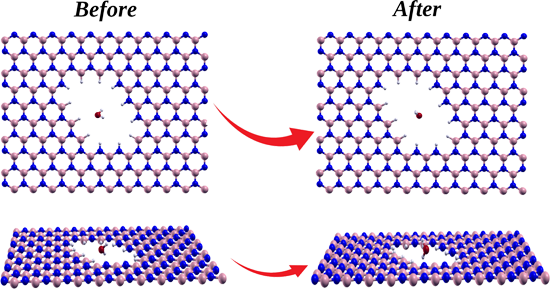
- that rhombic pores have a high affinity for water absorption, much higher than that of triangular pores. This suggests that the type of pore can significantly alter the hydrophobicity of h-BN and influence water flow through the membrane. Additionally, we observed that water molecules tend to form
- hydrogen bonds with the N–H-terminated surface in rhombic pores, but not with the B–N-terminated surface, potentially leading to asymmetries in water flow through the pore area. Overall, our study provides valuable insights into the interaction between nanoporous h-BN membranes and water. Keywords: boron
- in both water and ion flow [27]. h-BN membranes can feature pores of various types and sizes, which play a crucial role in the flow of water. The difference in the electroaffinity of B and N atoms gives these pores edges with asymmetric charge distributions, resulting in fields that affect the




N2+-implantation-induced tailoring of structural, morphological, optical, and electrical characteristics of sputtered molybdenum thin films
Beilstein J. Nanotechnol. 2025, 16, 495–509, doi:10.3762/bjnano.16.38
- resistivity of Mo thin films makes them desirable for integrated circuits, where they contribute to the efficient flow of electrical current [3]. Furthermore, their optical properties make them well suited for a use as a protective coating in energy storage and electronic devices [4][5]. Mo films deposited on
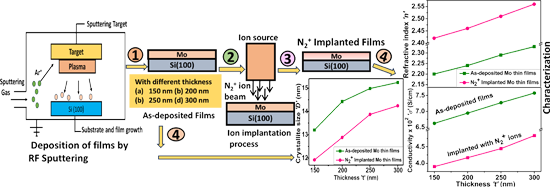
- this study, molybdenum thin films of varying thickness were deposited at room temperature on Si(100) substrates via RF sputtering using a pure 2″ diameter Mo target (99.99% purity) in Ar gas atmosphere with a flow rate of 10 sccm. The plasma was obtained by setting the RF power to 100 W, while careful
- to 300 nm. This can be ascribed to the increased conducting pathways in thicker films. These channels provide more pathways for electrons to flow, enhancing conductivity. Conversely, the conductivity of the thin molybdenum films tends to decrease after N2+ implantation for films with the same nominal


Performance optimization of a microwave-coupled plasma-based ultralow-energy ECR ion source for silicon nanostructuring
Beilstein J. Nanotechnol. 2025, 16, 484–494, doi:10.3762/bjnano.16.37

- extents of near-surface mass transport by the surface-confined ion-enhanced viscous flow [46]. Here, up to an ion incidence angle of 58°, the surface becomes unstable under 450 eV Ar-ion bombardment. Due to sputtering, a well-defined ripple formation is found after 1 h of 450 eV Ar-ion bombardment. With





