Search results
Search for "high sensitivity" in Full Text gives 207 result(s) in Beilstein Journal of Nanotechnology. Showing first 200.
Zinc oxide nanostructures for fluorescence and Raman signal enhancement: a review
Beilstein J. Nanotechnol. 2022, 13, 472–490, doi:10.3762/bjnano.13.40
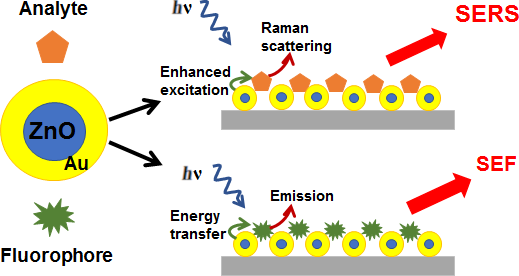
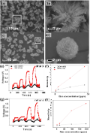
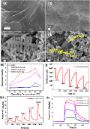
- Fluorescence detection is a powerful and effective tool for monitoring compounds with native fluorescence or labelled with an appropriate tag. For fluorescence-based detection, achieving high sensitivity via improving the signal-to-noise ratio is mandatory [104]. In order to increase the quantum yield and




Tunable superconducting neurons for networks based on radial basis functions
Beilstein J. Nanotechnol. 2022, 13, 444–454, doi:10.3762/bjnano.13.37
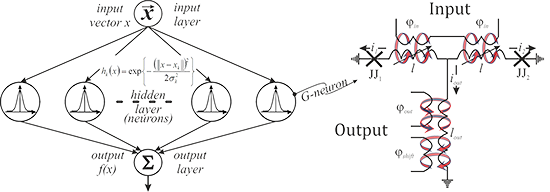
- ][25] as well as read-out circuits for quantum computing [26][27][28][29][30][31][32][33]. They realize a unique combination of a wide dynamic range and high sensitivity when receiving signals, with high performance and energy efficiency at the stage of the processing. It seems reasonable to implement


A non-enzymatic electrochemical hydrogen peroxide sensor based on copper oxide nanostructures
Beilstein J. Nanotechnol. 2022, 13, 424–436, doi:10.3762/bjnano.13.35
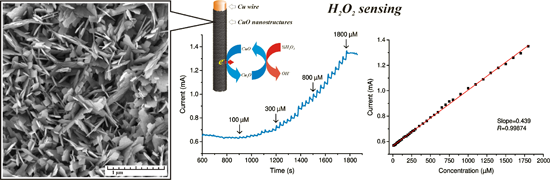
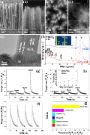
- response and, as a consequence, the selectivity of the sensor. This type of sensor is characterized by good reproducibility of measurement, low production cost, fast response, high sensitivity and selectivity, and chemical and mechanical stability in aggressive environments [40][41][42][43][44][45][46
- . The most important electrochemical measurements were carried out to determine H2O2 concentration in aqueous solutions using the obtained sensor. It is shown that the obtained non-enzymatic sensor has high sensitivity and selectivity toward H2O2. Experiments were also carried out to detect H2O2 in real
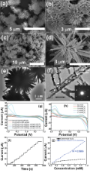
- . The measurements were carried out in 0.1 M NaOH buffer solution containing H2O2 at a concentration of 0–500 µM. The lowest considered concentration (33 μM) provides a noticeable electrochemical response, which indicates that the nanostructured CuO electrode has sufficiently high sensitivity. Figure 5b




A chemiresistive sensor array based on polyaniline nanocomposites and machine learning classification
Beilstein J. Nanotechnol. 2022, 13, 411–423, doi:10.3762/bjnano.13.34
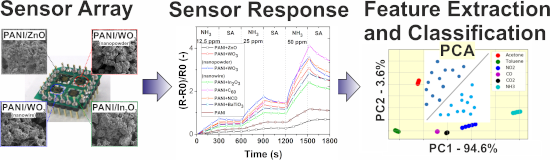
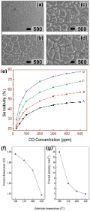
- are nearly three times lower than those to NH3. Due to the high sensitivity to NH3 gas, the sensing layers were also tested towards different concentrations of NH3 at room temperature (Figure 7). It is evident that all sensing layers demonstrate an enhancement in sensitivity to the highest gas




Morphology-driven gas sensing by fabricated fractals: A review
Beilstein J. Nanotechnol. 2021, 12, 1187–1208, doi:10.3762/bjnano.12.88
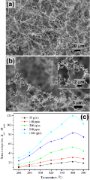
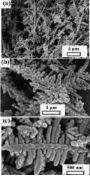
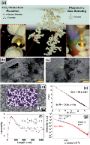
- method [81]. The as-prepared h-BiVO4 structure exhibited high sensitivity towards formaldehyde and ethanol. The formation of hyperbranched structures was found to be a function of different pH values, proton intercalation, and dissolution processes. The sensitivity in case of h-BiVO4 was found to be










Nanogenerator-based self-powered sensors for data collection
Beilstein J. Nanotechnol. 2021, 12, 680–693, doi:10.3762/bjnano.12.54
- can monitor the training status of athletes in real time and provide training suggestions [83]. TENGs have high sensitivity, and a slight strain can cause the output signal of TENGs to change. Self-powered sensors based on TENGs are feasible signal monitoring sensors for facial activity, breathing
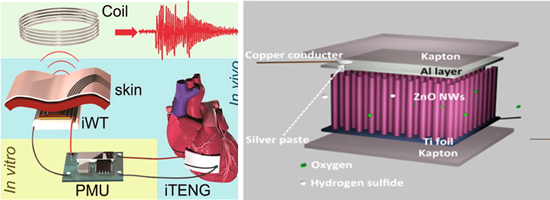
- (MOS) gas sensors, the PENG/TENG-based self-powered gas sensor has a lower power consumption, requires no heating, and exhibits high stability and high sensitivity. In 2013, Xue et al. proposed a ZnO NWs PENG-based self-powered gas sensor [18]. The response of the unpackaged PENG sensor was studied
- array showed high sensitivity and fast response [19]. At room temperature, the piezoelectric voltage of the NiO/ZnO NW array was reduced from 0.388 V (in dry air) to 0.061 V (at 1000 ppm H2S), and the response was approximately 10 times that of naked the ZnO NW array. An In2O3/ZnO heterostructure was




A review of defect engineering, ion implantation, and nanofabrication using the helium ion microscope
Beilstein J. Nanotechnol. 2021, 12, 633–664, doi:10.3762/bjnano.12.52
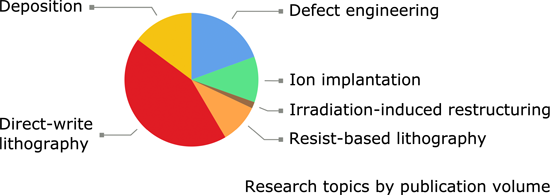
- the high sensitivity of the electronic transport properties of YBCO to point defects introduced into the lattice [43]. The same study also confirmed that minimal lateral scatter of the ions in the YBCO thin film occurs; even at the higher doses used to induce amorphisity, the irradiated channels
- ]. The high sensitivity to helium ions of the inorganic HafSOx resist (designed for EUV lithography) has been explored [117] and the unique potential to use HIBL to pre-screen EUV resists has been evaluated [118][119][120]. The advantages of HIBL have also been highlighted using a number of other novel


Paper-based triboelectric nanogenerators and their applications: a review
Beilstein J. Nanotechnol. 2021, 12, 151–171, doi:10.3762/bjnano.12.12
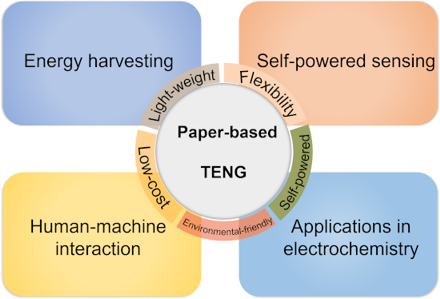
- TENG structure with a high sensitivity and a wide range of humidity detection. The corresponding mechanism of a self-powered GO P-TENG humidity sensor is displayed in Figure 8a. In general, GO P-TENG sensors respond to humidity due to the physical adsorption of water molecules on the surface of the GO
- that utilizes the output performances as sensing signals. The achieved high sensitivity of 500% (V/V-%RH) is useful for portable/wearable electronics and for potential industrial applications due to its flexibility and lightweight. Regarding height sensors, Xia et al. proposed a stacked 3D zigzag






Bulk chemical composition contrast from attractive forces in AFM force spectroscopy
Beilstein J. Nanotechnol. 2021, 12, 58–71, doi:10.3762/bjnano.12.5
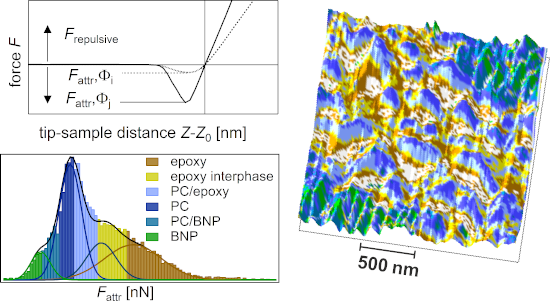
- spectroscopy needs to be overcome. Despite the fact that AFM, in general, has a high sensitivity for physical properties and physical material contrasts, it is usually considered to lack sensitivity to detect chemical or structural information. Therefore, the magnitude and extent of different material phases


Piezotronic effect in AlGaN/AlN/GaN heterojunction nanowires used as a flexible strain sensor
Beilstein J. Nanotechnol. 2020, 11, 1847–1853, doi:10.3762/bjnano.11.166
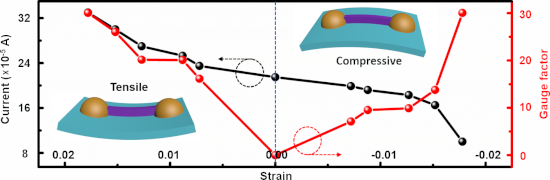
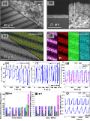
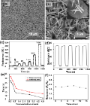
- the fabricated piezotronic strain sensor. The gauge factor is as high as 30 under compressive or tensile stress, which indicates a high sensitivity of the strain sensor. Periodic strain tests show the high stability and repeatability of the sensor. The working mechanism of the strain sensor is
- into electrical signals. They exhibit a potential for application in health-monitoring and motion-monitoring devices, and in artificial intelligence, for example [20][21][22]. However, high sensitivity (gauge factor ≥20) is key to detect a very small deformation of a given material [23][24]. Therefore
- % tensile strain, which shows its high sensitivity. Furthermore, the current increases with an increase in the tensile strain and decreases with an increase in the compressive strain along the c-axis. The current returns to its original value after release of the mechanical stress. At the same time, the


Piezoelectric sensor based on graphene-doped PVDF nanofibers for sign language translation
Beilstein J. Nanotechnol. 2020, 11, 1655–1662, doi:10.3762/bjnano.11.148
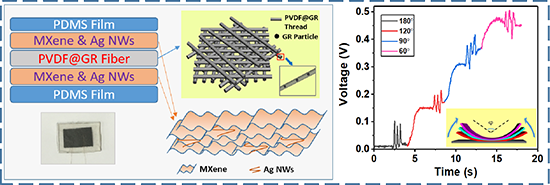
- a high sensitivity to pressing and bending, and there is a stable correlation between bending angle and piezoelectric voltage. The sensitivity can be adjusted by changing the doping concentration of GR. Also, when the PES contacts a source of heat, a pyroelectric signal can be acquired. The positive
- PVDF nanofibers. The fiber properties after electrospinning were measured, and a potential application of the PES in the translation of sign language was successfully demonstrated. The designed PES shows a high sensitivity regarding both pressure and bending. In particular, a stable angle mapping under


Selective detection of complex gas mixtures using point contacts: concept, method and tools
Beilstein J. Nanotechnol. 2020, 11, 1631–1643, doi:10.3762/bjnano.11.146
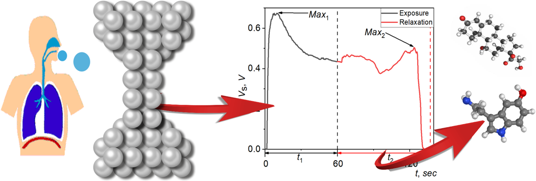
- point contacts enable the measurement of the electric conductance variations when they are equivalent to at least one conductance quantum. This guarantees an extremely high sensitivity of the point-contact sensors and the measurement of minute energy perturbations occurring during the interaction of the


![[Graphic 4]](/bjnano/content/inline/2190-4286-11-146-i8.svg?max-width=637&scale=1.18182) in th...
in th...

![[Graphic 7]](/bjnano/content/inline/2190-4286-11-146-i11.svg?max-width=637&scale=1.18182) in the...
in the...
A self-powered, flexible ultra-thin Si/ZnO nanowire photodetector as full-spectrum optical sensor and pyroelectric nanogenerator
Beilstein J. Nanotechnol. 2020, 11, 1623–1630, doi:10.3762/bjnano.11.145
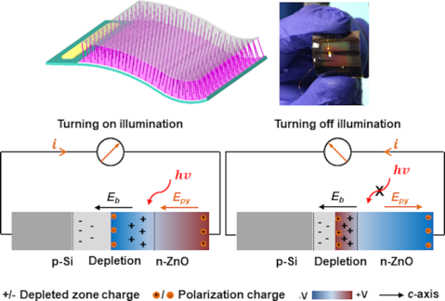
- effect based on the ZnO pyroelectric material. Moreover, response time and high sensitivity are almost the same at each wavelength, and the device exhibits excellent stability and repeatability in the UV–visible–NIR range. Therefore, the self-powered p-Si/n-ZnO NWs heterojunction device can be applied in


Fabrication of nano/microstructures for SERS substrates using an electrochemical method
Beilstein J. Nanotechnol. 2020, 11, 1568–1576, doi:10.3762/bjnano.11.139
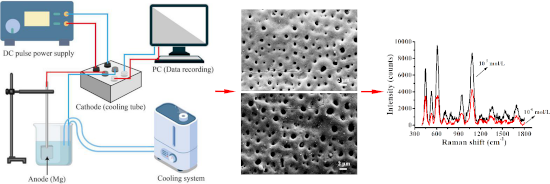
- can be used to detect low levels of proteins (10−6 mol·L−1). Due to its reliability, homogeneity, low cost and high sensitivity, the system described herein holds great promise for future protein detection and quantification applications. Schematic diagram of fabrication of the nanopores substrates


Optically and electrically driven nanoantennas
Beilstein J. Nanotechnol. 2020, 11, 1542–1545, doi:10.3762/bjnano.11.136

- configurations with increasing control over their optical performance [1][2][3][4]. The strong local near-field enhancement by plasmonic nanoantennas is being harnessed for high sensitivity, high-resolution optical nanospectroscopy techniques [5], such as surface-enhanced or tip-enhanced Raman spectroscopy (SERS
Helium ion microscope – secondary ion mass spectrometry for geological materials
Beilstein J. Nanotechnol. 2020, 11, 1504–1515, doi:10.3762/bjnano.11.133
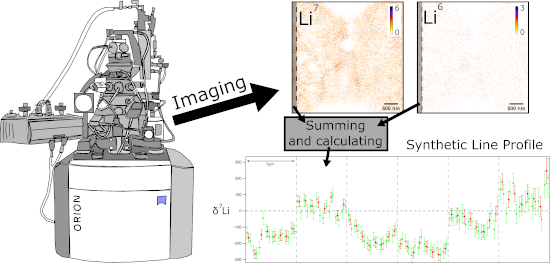
- . This combined HIM–SIMS instrument has intriguing possibilities for geological materials as, unlike previous SIMS techniques limited by the probe size of the primary beam, the small beam size theoretically allows for chemical mapping at high sensitivity with the spatial resolution controlled only by



A wideband cryogenic microwave low-noise amplifier
Beilstein J. Nanotechnol. 2020, 11, 1484–1491, doi:10.3762/bjnano.11.131
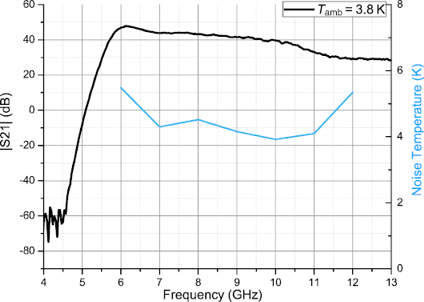
- has a gain of more than 30 dB and a noise temperature lower than 6 K and is suitable for any high-sensitivity experiments in the presented frequency range. It is also necessary to mention that, during the qubit measurements with the implemented cLNA, the cryostat operating parameters, that is, the




Triboelectric nanogenerator based on Teflon/vitamin B1 powder for self-powered humidity sensing
Beilstein J. Nanotechnol. 2020, 11, 1394–1401, doi:10.3762/bjnano.11.123
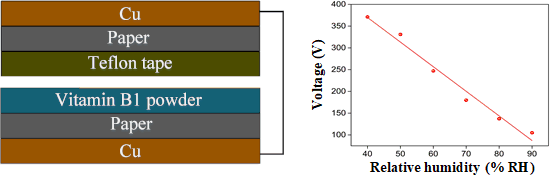
- ]. Recently, TENG-based sensors have attracted increased attention [34][35][36][37][38][39][40][41]. In 2014, Ga-doped ZnO was used for the fabrication of piezo-humidity sensors with a high sensitivity and a fast response [42]. In 2018, Vivekananthan et al. proposed sustainable energy harvesting and battery




Ultrasensitive detection of cadmium ions using a microcantilever-based piezoresistive sensor for groundwater
Beilstein J. Nanotechnol. 2020, 11, 1242–1253, doi:10.3762/bjnano.11.108
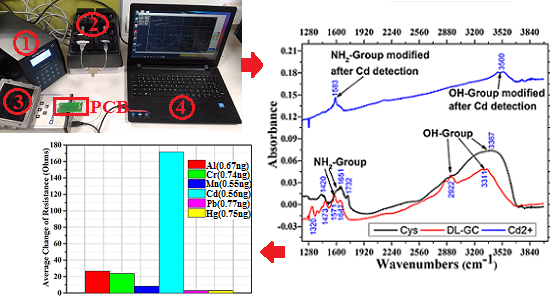
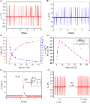
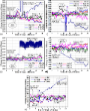
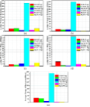
- ] for the ultrasensitive sensing of Cd(II) with cysteamine-functionalized ᴅʟ-glyceraldehyde (Cys-DL-GC) using the advanced MEMS-based piezoresistive platform. The MEMS-based sensor has very high sensitivity compared to any other technique. The complete process flow and the sensing scheme for the




Gas-sensing features of nanostructured tellurium thin films
Beilstein J. Nanotechnol. 2020, 11, 1010–1018, doi:10.3762/bjnano.11.85
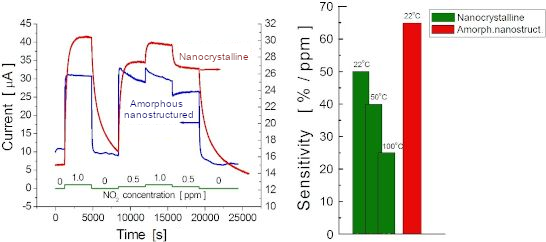
- ] started to thoroughly investigate the use of Te thin films as an active element in gas sensor manufacturing. They showed that microcrystalline Te thin films, grown by thermal vacuum evaporation, exhibit high sensitivity to low concentrations (ppm range) of nitrogen dioxide (NO2) even at room temperature


Nanoarchitectonics: bottom-up creation of functional materials and systems
Beilstein J. Nanotechnol. 2020, 11, 450–452, doi:10.3762/bjnano.11.36
- prostate-specific antigen biomarker was expedited by application of advanced data processing and computational tools [34]. The molecular architecture plays a crucial role for obtaining high sensitivity and specificity in immunosensors, thus tools which speed up the ability to analyze the large amounts of

Using gold nanoparticles to detect single-nucleotide polymorphisms: toward liquid biopsy
Beilstein J. Nanotechnol. 2020, 11, 263–284, doi:10.3762/bjnano.11.20
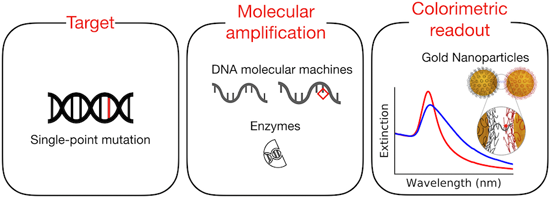
- formation of DNA circuits and include hybridization chain reaction (HCR), catalytic hairpin assembly (CHA) and entropy-driven catalysis [64]. These mechanisms have shown a great potential for developing biosensors of high sensitivity and high selectivity since the target DNA itself is used as a catalyst to
- current state-of-the-art in genotyping techniques in SNP determination, especially in the context of conceptual novelty. Tumor-specific aberrations containing SNP Because the fraction of circulating DNA that is derived from the tumor can range between 0.01% and 93% [41], analytical techniques of high
- sensitivity are currently implemented to obtain reliable information on tumor-associated genetic modifications and to follow tumor dynamics [4][16][46][56]. These techniques are mainly modifications of the well-known polymerase chain reaction (PCR), establishing thus the state-of-the-art in clinics in the




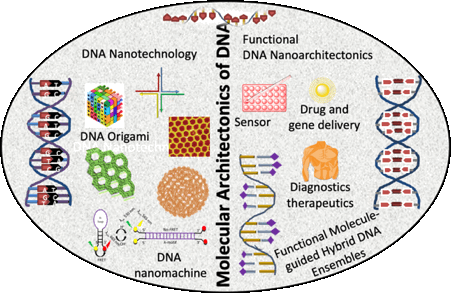
Molecular architectonics of DNA for functional nanoarchitectures
Beilstein J. Nanotechnol. 2020, 11, 124–140, doi:10.3762/bjnano.11.11
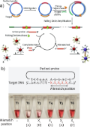
- condition, and therefore monitoring physiological pH values with high sensitivity is required. Our group designed a molecular beacon (LMB) DNA device appended with a FRET pair as pH sensing probe in cells [19]. The remarkable feature of the LMB probe was the structural transition from a closed (molecular


Plasmonic nanosensor based on multiple independently tunable Fano resonances
Beilstein J. Nanotechnol. 2019, 10, 2527–2537, doi:10.3762/bjnano.10.243
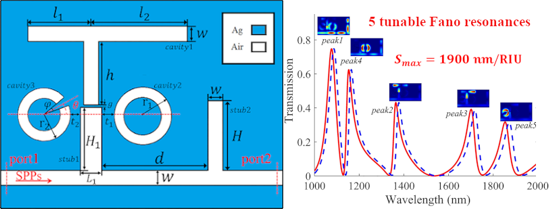
- light within sub-wavelength dimensions. Many plasmonic structures, such as high-sensitivity refractive index sensors [2], enhanced biochemical sensors [3], switches and filters [4], have been designed based on the concept of Fano resonance by utilizing a MDM waveguide [3][5][6]. Due to the interference
- . Next, we selected typical structures published in recent years for comparison [28][29], and the results are shown in Table 1 below. Obviously, the structure we propose has the most resonance peaks, covering a wavelength range of about 1000–2000 nm in the near-infrared region with relatively high
- sensitivity and FOM. Although, the FOM value is less than the outstanding values in previous reports, it is worth noting that our structure has the best independent tunability among the structures. It is worth noting that this structure not only displays excellent performance in refractive index sensing, but




Synthesis and acetone sensing properties of ZnFe2O4/rGO gas sensors
Beilstein J. Nanotechnol. 2019, 10, 2516–2526, doi:10.3762/bjnano.10.242
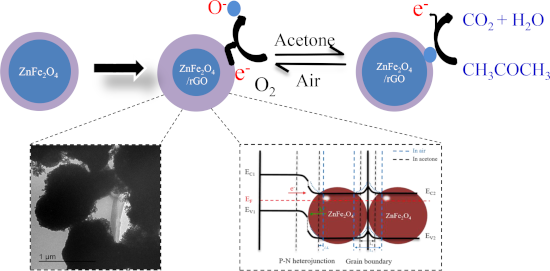
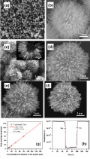
- about 600–1000 nm. The gas sensing test revealed that the introduction of rGO improved the performance of the sensing of acetone to low concentration, and the ZnFe2O4/rGO composite gas sensor containing 0.5 wt % of rGO exhibited a high sensitivity in sensing test using 0.8–100 ppm acetone at 200 °C. The