


Search results
Search for "hydrothermal" in Full Text gives 241 result(s) in Beilstein Journal of Nanotechnology. Showing first 200.
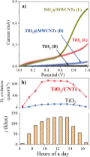
A TiO2@MWCNTs nanocomposite photoanode for solar-driven water splitting
Beilstein J. Nanotechnol. 2022, 13, 1520–1530, doi:10.3762/bjnano.13.125
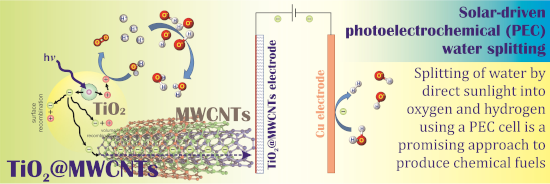
- evolution of 450 µmol·h−1. Reddy et al. loaded TiO2 particles on MWCNTs via a simple hydrothermal method [13]. However, the MWNTs/TiO2 nanocomposite showed photoactivity only under UV irradiation due to the high bandgap of 3.1 eV. To the best of our knowledge, there are only a few studies on TiO2@MWCNTs
- nanocomposites as photoanode material for photoelectrochemical water splitting. Furthermore, the preparation of TiO2/MWCNTs nanocomposite derived from TiO2 precursors and functionalized MWCMTs for photoelectrochemical water splitting is based on complicated and time-consuming hydrothermal and sol–gel methods



Structural studies and selected physical investigations of LiCoO2 obtained by combustion synthesis
Beilstein J. Nanotechnol. 2022, 13, 1473–1482, doi:10.3762/bjnano.13.121
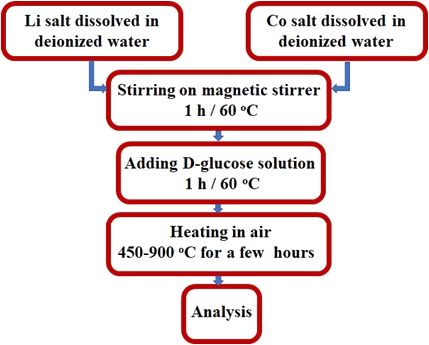
- produced in the form of powders, fibers, and films by using various processing techniques including wet chemical synthesis, such as the sol–gel method [33][34][35], precipitation [36], hydrothermal [37][38][39] and spray pyrolysis [40][41]. Also, solid-state synthesis methods, such as mechanical synthesis


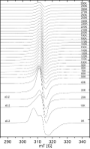


Near-infrared photoactive Ag-Zn-Ga-S-Se quantum dots for high-performance quantum dot-sensitized solar cells
Beilstein J. Nanotechnol. 2022, 13, 1337–1344, doi:10.3762/bjnano.13.110
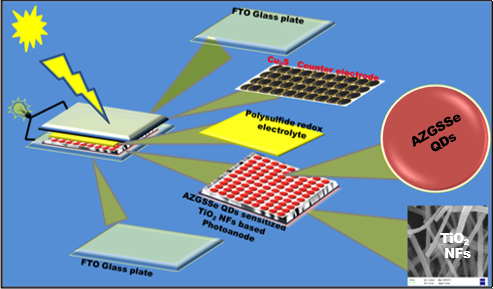
- [2][19][20]. Hence, in this work Cu2S was chosen as the CE material. The CE was fabricated as described in [8]. At first, Cu2S NPs were prepared by a hydrothermal method using ʟ-cysteine and copper(II) chloride. Then the Cu2S paste containing 95% of Cu2S and 5% of PVdF in NMP was coated onto FTO


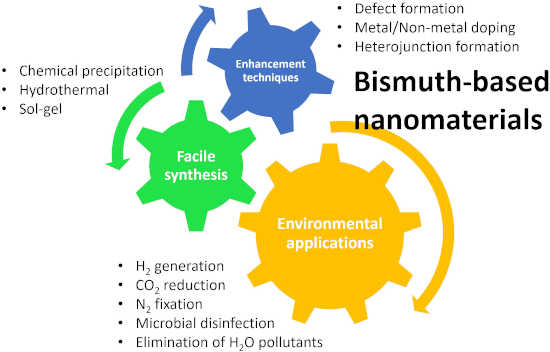
Recent trends in Bi-based nanomaterials: challenges, fabrication, enhancement techniques, and environmental applications
Beilstein J. Nanotechnol. 2022, 13, 1316–1336, doi:10.3762/bjnano.13.109
- research has shown that it is possible to generate H2 or reduce CO2 by carefully controlling the production procedure of ultrathin photocatalysts based on Bi. Compared to Bi2WO6 formed using a solid-state reaction, single-unit-cell layers of Bi2WO6, synthesized using a hydrothermal process, offered three
- considerations [52]. Bi-based photocatalysts may currently be synthesized using various methods, the most common of which are hydrothermal synthesis, solid-state reaction, and design and optimization. Today, NaBiO3·2H2O, Bi2O3, Bi(NO3)3·5H2O, BiCl3, and Bi are the most common Bi-based semiconductor
- photocatalysts. The hydrothermal process is one of the most frequent and widely utilized synthesis methods. Morphology, facets, size, surface flaws, and dimensionality of Bi-based photocatalysts are all susceptible to change when the synthesis conditions are altered. Generally, the hydrothermal technique yield a




Enhanced electronic transport properties of Te roll-like nanostructures
Beilstein J. Nanotechnol. 2022, 13, 1284–1291, doi:10.3762/bjnano.13.106
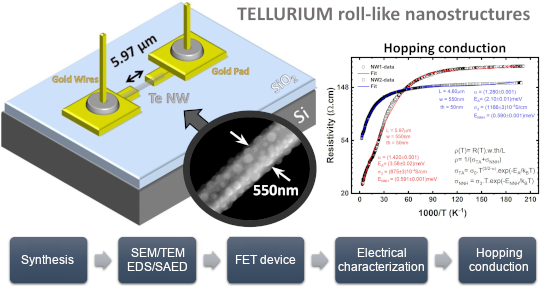
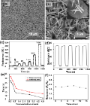
- charges have been studied in p-type Te NBs [13]. In this work, we have studied the electronic transport properties of a distinct one-dimensional t-Te nanostructure with a roll-like morphology, which resembles cinnamon sticks. The nanostructures were obtained by a facile PVP-assisted hydrothermal route
- chemical composition of the nanostructures. This morphology has not been reported for the hydrothermal synthesis of Te nanostructures. Though, similar morphologies have been observed in Te scroll-like nanostructures grown by reflux processes [20] or Te shuttle-like scrolled nanostructures produced by amino
- acid-controlled hydrothermal growth [21]. However, the typical seed at the center of the scroll-like nanostructures grown by reflux processes was not observed in our case, nor was the characteristic sharp tip at both ends of the shuttle-like scrolled Te NTs. Figure 2 shows TEM images and the




Recent advances in green carbon dots (2015–2022): synthesis, metal ion sensing, and biological applications
Beilstein J. Nanotechnol. 2022, 13, 1068–1107, doi:10.3762/bjnano.13.93
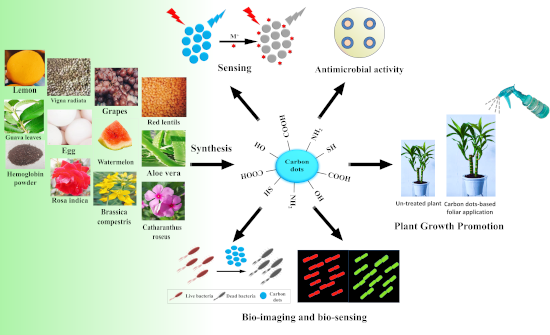
- , and ultrasonic synthesis. In the bottom-up methods, CDs are formed from molecular precursors by various techniques such as hydrothermal treatment [25][26][27][28][29], microwave synthesis [30], and pyrolysis [31]. A tremendous amount of work has been done regarding the synthesis and different
- . Using diverse raw materials, CDs with different structures and properties can be obtained. Usually, a temperature of 100–200 °C is required, which is much lower than that required in the traditional methods, and the synthesis is carried out in aqueous media. Generally, hydrothermal or solvothermal
- treatments, ultrasonication, microwave irradiations, and microwave-assisted hydrothermal/pyrolysis are used in the green synthesis of CDs [41]. Hydrothermal methods convert the raw material into carbonized matter. Although relatively simple, the procedure takes several hours. Microwave irradiation, in




Spindle-like MIL101(Fe) decorated with Bi2O3 nanoparticles for enhanced degradation of chlortetracycline under visible-light irradiation
Beilstein J. Nanotechnol. 2022, 13, 1038–1050, doi:10.3762/bjnano.13.91
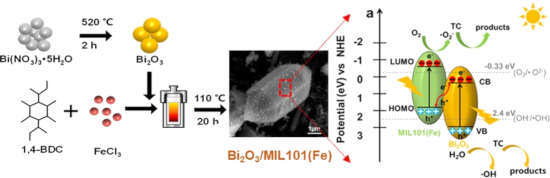
- iron and bridged terephthalic acid molecules. It has high hydrothermal stability, low cost, good hydrophilicity, non-toxicity, and environmental friendliness [20][34]. Most importantly, MIL101(Fe) contains abundant iron-oxo (Fe-O) clusters, which makes it a photocatalyst with visible-light response [19


Nanoarchitectonics of the cathode to improve the reversibility of Li–O2 batteries
Beilstein J. Nanotechnol. 2022, 13, 689–698, doi:10.3762/bjnano.13.61
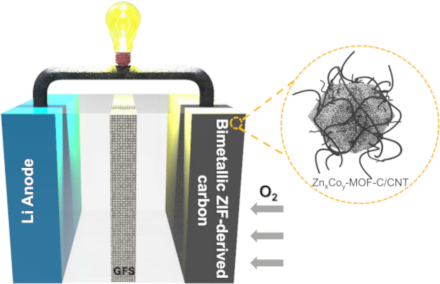
- bimetallic ZIF–carbon/CNT composites has been thoroughly investigated for their practical use as potential cathode materials for high-performance LOBs. Results and Discussion In pursuit of improving the reversibility of LOBs, a bimetallic ZIF (ZnxCoy) was designed and grown on CNTs via hydrothermal synthesis
- using Zn and Co acetates, together with 2-methylimidazolate, as described in Figure 1a. The hydrothermal process is beneficial for facilitating the nucleation and growth of bimetallic ZIF as well as reducing the synthesis time. The chemical composition of ZnxCoy particles was controlled by adjusting the
- cathode materials for high-performance LOBs. Experimental Material preparation In a manner similar to our previous works [12][41], bimetallic ZIFs (ZnxCoy) with various Zn/Co ratios were grown on CNTs via hydrothermal synthesis, where x/y was chosen to be 1/4, 1/1, and 4/1, respectively (corresponding to



Sodium doping in brookite TiO2 enhances its photocatalytic activity
Beilstein J. Nanotechnol. 2022, 13, 599–609, doi:10.3762/bjnano.13.52
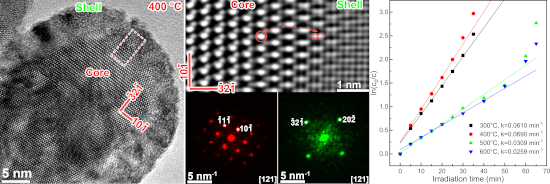
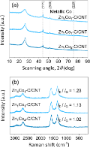
- brookite TiO2 changes with the preparing details is still unclear. The varied local structures of brookite can affect its electronic structure and hence its photocatalytic performance. Here, we report that Na-doped brookite NaxTi1−xO2 was synthesized by a hydrothermal reaction of tetrabutyl titanate
- behavior. This report shows that sodium can be doped in brookite TiO2 by the conventional hydrothermal method, meaning that other alkali anions are also expected to form the brookite AxTi1−xO2 (A = Na, K, Ca). We suggest giving more attention to the local atomic structure and the chemical composition of
- and solvents were used without further purification. Hydrothermal synthesis of the Na-doping brookite In a typical synthesis procedure, 1.27 g of oxalic acid dihydrate was dissolved into 50 mL of N,N-dimethylformamide (DMF) solvent to obtain a colorless and transparent solution under vigorous stirring


Influence of thickness and morphology of MoS2 on the performance of counter electrodes in dye-sensitized solar cells
Beilstein J. Nanotechnol. 2022, 13, 528–537, doi:10.3762/bjnano.13.44
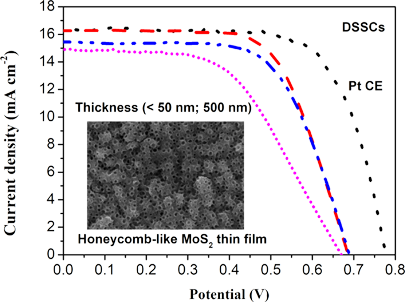
- investigated using various techniques such as chemical bath deposition [1], sputtering [2], hydrothermal synthesis [10][11][12][13], wet chemistry [14], thermal reduction [15], and electrodeposition (ED) [20]. Among these methods, ED shows many advances thank to its simplicity and rapidity. Additionally, it


Zinc oxide nanostructures for fluorescence and Raman signal enhancement: a review
Beilstein J. Nanotechnol. 2022, 13, 472–490, doi:10.3762/bjnano.13.40
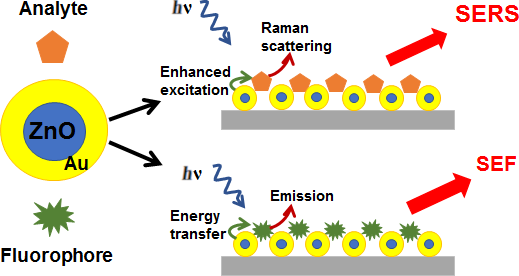
- conditions involved in the hydrothermal synthesis of ZnO make it an attractive growth method, widely used in recent years. A comprehensive review indicating the morphology of ZnO nanostructures grown using this method is given in [30]. Successful examples of ordered ZnO nanorods [6], one of most common ZnO
- ordered hybrid nanostructured substrates, ranging from more expensive and laborious ones, such as pulsed laser deposition or hydrothermal growth, followed by sputtering processes [31] or electron beam lithography to more cost-efficient and simple ones, such as photochemical deposition of metallic NPs or a
- include hydrothermal method [42], controlled wet chemistry using spin coating, which can deposit, for example, uniform Ag NPs onto ZnO nanowhiskers and nanocolumns [43], photochemical deposition, which allows the formation of different Au shapes depending on the type of additive added into the




A non-enzymatic electrochemical hydrogen peroxide sensor based on copper oxide nanostructures
Beilstein J. Nanotechnol. 2022, 13, 424–436, doi:10.3762/bjnano.13.35
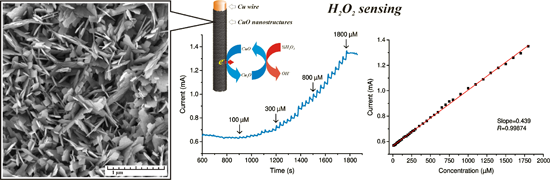
- nanostructures were obtained by a one-step hydrothermal oxidation method. The resulting coating is uniform and dense and shows good adhesion to the wire surface. Structure, surface, and composition of the obtained samples were studied using field-emission scanning electron microscopy along with energy-dispersive
- , such as thermal oxidation of copper electrodes in an oxygen atmosphere [72][73], hydrothermal chemical oxidation of copper surfaces [56], and hydrothermal synthesis using various precursors containing copper ions [74][75]. Copper oxide nanostructures can also be obtained as a powder and then applied to
- electrodes without additional treatments such as surface modification or enzyme immobilization. This article describes the process of obtaining wire electrodes with nanostructured CuO coatings by a one-step chemical hydrothermal oxidation method and their application in electrochemical measurements for the





Tin dioxide nanomaterial-based photocatalysts for nitrogen oxide oxidation: a review
Beilstein J. Nanotechnol. 2022, 13, 96–113, doi:10.3762/bjnano.13.7
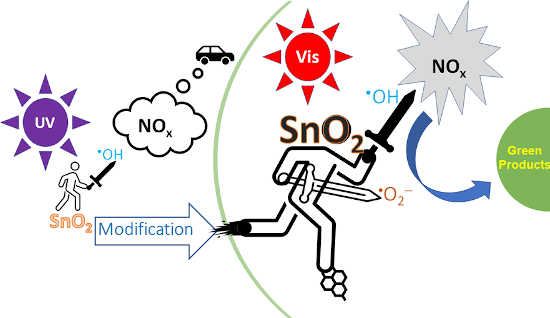
- , hydrothermal, and microwave synthesis [49][50][51]. The formation and concentration of OVs depend on particle size, synthesizing temperature, and morphology of SnO2. The OVs play the role of an electron donor and provide free electrons, making SnO2 an n-type semiconductor [52]. Guoliang Xu et al. indicated
- , nanobelts, and nanotubes. These morphologies can be controllably obtained by using polyvinylpyrrolidone (PVP), sodium dodecyl sulfonate (SDS), cetyl trimethyl ammonium bromide (CTAB), or tetrapropyl ammonium bromide (TPAB) as surfactants in a hydrothermal method [56][57][58][59]. The difference of
- al. on using Ag@SnO2 NPs for removing NO, taking advantage of plasmonic-induced photocatalysis [72]. The Ag@SnO2 NPs were fabricated by a simple and green approach using hydrothermal growth and photoreduction deposition. The introduction of Ag induced a bending of the band structure of SnO2 NPs


Morphology-driven gas sensing by fabricated fractals: A review
Beilstein J. Nanotechnol. 2021, 12, 1187–1208, doi:10.3762/bjnano.12.88
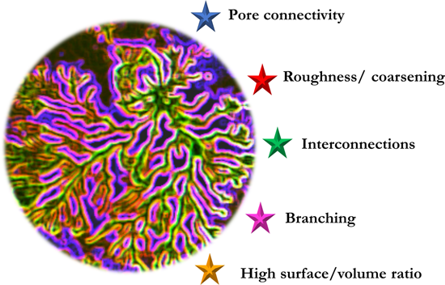
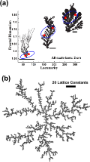
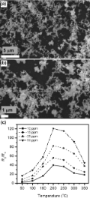
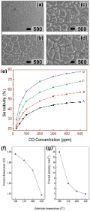
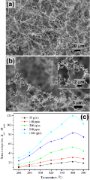
- to some excellent articles on hierarchical gas sensors that address such geometries [8][30][33][37]. Tin oxide-based fractals Yin et al. reported SnO2 nanoparticles with and without platinum (Pt) decoration synthesized using a sol–gel hydrothermal technique for gas sensing applications [63]. Figure
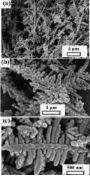
- had minimum influence. Thus, better interaction between NO2 and the sensor surface was achieved. The SnO2 DNWs were estimated to have a fractal dimension of 1.82. In 2017, Zang et al. fabricated SnO2 leaf-like hierarchical structures by hydrothermal synthesis [67]. Figure 7a–f shows SEM images of SnO2
- structures were estimated to have D values in the range of 1.19–1.61. In a similar study, Liu et al. reported on flower-like ZnO hierarchical superstructures synthesized using urea through a low-temperature hydrothermal technique [76]. The obtained 3D flower-like ZnO structures had highly dendritic










Self-assembly of amino acids toward functional biomaterials
Beilstein J. Nanotechnol. 2021, 12, 1140–1150, doi:10.3762/bjnano.12.85
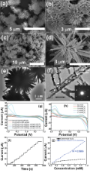
- alcohol dehydrogenase may be incorporated into Cys microspheres, resulting in hybrid microspheres with photocatalytic and biocatalytic activities. In addition, Cys/Zn microspheres were modified with CO32−-doped ZnS nanocrystals by a hydrothermal treatment, and then glutamic acid dehydrogenase was

Revealing the formation mechanism and band gap tuning of Sb2S3 nanoparticles
Beilstein J. Nanotechnol. 2021, 12, 1021–1033, doi:10.3762/bjnano.12.76
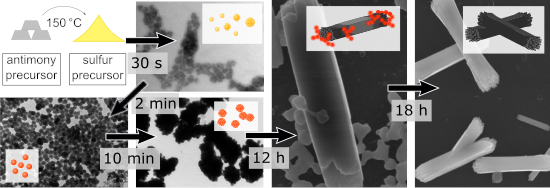
- -black, crystalline form, known as the mineral stibnite [7][8]. Sb2S3 nanomaterials with a diverse morphology and a broad distribution of band gap values were synthesized by solvothermal [9], hydrothermal [10], and sonochemical [11] approaches, as well as by chemical bath [12] and chemical vapor


Comprehensive review on ultrasound-responsive theranostic nanomaterials: mechanisms, structures and medical applications
Beilstein J. Nanotechnol. 2021, 12, 808–862, doi:10.3762/bjnano.12.64


9.1% efficient zinc oxide/silicon solar cells on a 50 μm thick Si absorber
Beilstein J. Nanotechnol. 2021, 12, 766–774, doi:10.3762/bjnano.12.60
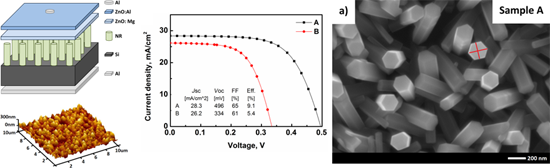
- % for planar structures, respectively. The work, therefore, describes an environmentally friendly technology for PV architecture with surface textures increasing the efficiency of PV cells. Keywords: atomic layer deposition; hydrothermal method; photovoltaics; silicon; solar cell; zinc oxide
- (ZnONR) were grown via a hydrothermal method (HT) to create a rough surface morphology. Sample B was placed into the ALD growth chamber without modification of the surface morphology. During HT growth, sample B was kept under nitrogen atmosphere. After the HT process, both samples were transferred to the
- ALD reactor. Hydrothermal growth Sample A was placed into the ALD growth chamber to deposit nanoseeds of ZnO. Nanoseeds were obtained by repeating the ALD cycle for 13 times (see below in Table 1). The temperature was set to 100 °C. In the process, diethylzinc (DEZ, CAS Number 557-20-0) and deionized


High-yield synthesis of silver nanowires for transparent conducting PET films
Beilstein J. Nanotechnol. 2021, 12, 624–632, doi:10.3762/bjnano.12.51
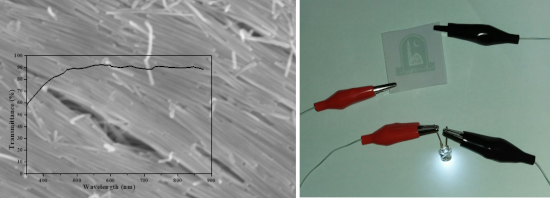
- effective synthetic method is still needed for high yields of impurity-free AgNWs. In order to synthesize silver nanowires several methods have been successfully developed, including ultraviolet irradiation, salt-free solution-based, salt-mediated solution-based, photo reduction, hydrothermal, wet-chemical


The preparation temperature influences the physicochemical nature and activity of nanoceria
Beilstein J. Nanotechnol. 2021, 12, 525–540, doi:10.3762/bjnano.12.43
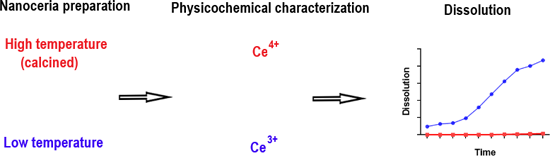
- Research Centre Institute for Health and Consumer Protection repository of reference materials from the OECD sponsorship program. The solvothermally synthesized nanoceria material was prepared using a hydrothermal method [34]. Briefly, 0.25 M cerium chloride heptahydrate and 0.25 M citric acid monohydrate




Solution combustion synthesis of a nanometer-scale Co3O4 anode material for Li-ion batteries
Beilstein J. Nanotechnol. 2021, 12, 424–431, doi:10.3762/bjnano.12.34
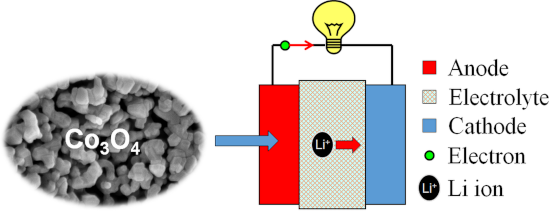
- been proposed including sol–gel methods [4][6][13][14][15], sol–electrospinning techniques [16][17][18][19], hydrothermal and solvothermal syntheses [20][21][22][23][24][25][26][27][28], precipitation and co-precipitation [29][30][31], chemical thermal decomposition and pyrolysis [32][33][34][35][36


A review on the green and sustainable synthesis of silver nanoparticles and one-dimensional silver nanostructures
Beilstein J. Nanotechnol. 2021, 12, 102–136, doi:10.3762/bjnano.12.9
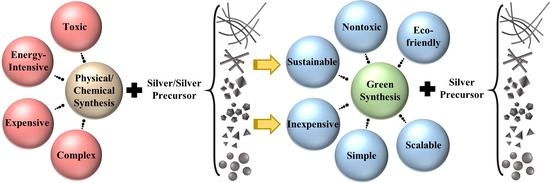
- with various combinations (i.e. hybrid compounds), allowing the process to be adjusted accordingly in order to yield the desired complex product with tuned physiochemical characteristics [146]. In addition, combined with the hydrothermal approach (synthesis in a hot aqueous environment under high


Bulk chemical composition contrast from attractive forces in AFM force spectroscopy
Beilstein J. Nanotechnol. 2021, 12, 58–71, doi:10.3762/bjnano.12.5
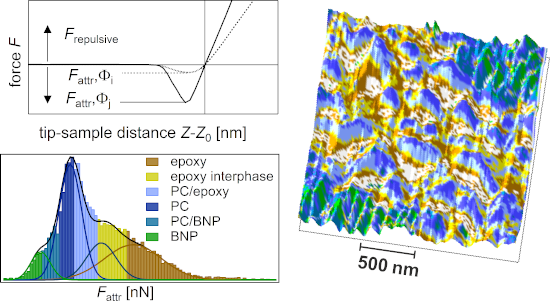
- different sources was used. For the second sample, boehmite was hydrothermally synthesized from elementary Al. The hydrothermal route is described elsewhere [16][37]. For the third sample, commercially available boehmite NP (HP14, Sasol) with an average primary size of 20 nm was acquired. The boehmite NP


ZnO and MXenes as electrode materials for supercapacitor devices
Beilstein J. Nanotechnol. 2021, 12, 49–57, doi:10.3762/bjnano.12.4
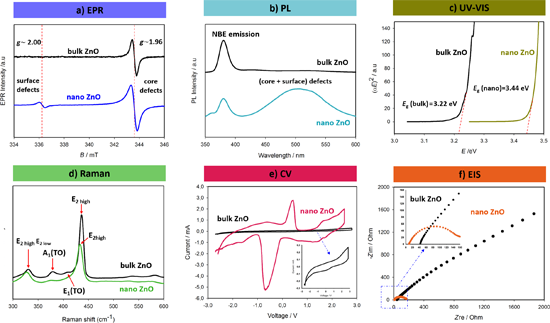
- specific capacitance of the resultant composites was twice as high as that of Co(OH)2 nanosheets [17]. Liu et al. synthesized a MXene/nickel sulfide (NiS) nanocomposite using a basic hydrothermal technique and measured a specific capacitance of 857.8 F·g−1. NiS has advantages such as good conductivity and
- increased capacitance of 226 F·g−1 at 1 A·g-1 [22]. Xia et al. used a Ti3C2Tx MXene electrode decorated with nickel oxide (NiO) nanosheets. The electrode was synthesized via a hydrothermal method. The electrode used in a supercapacitor showed an excellent specific capacitance of 80 F·g−1 and an energy
Unravelling the interfacial interaction in mesoporous SiO2@nickel phyllosilicate/TiO2 core–shell nanostructures for photocatalytic activity
Beilstein J. Nanotechnol. 2020, 11, 1834–1846, doi:10.3762/bjnano.11.165
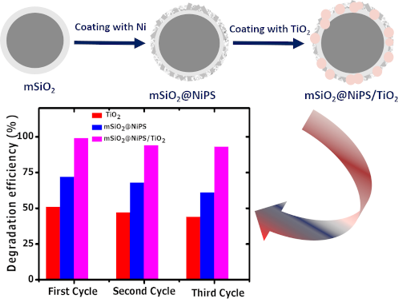
- phyllosilicate can be obtained either by a hydrothermal method or a deposition-precipitation method, the 2:1 nickel phyllosilicate is only formed under hydrothermal conditions [32][33][34]. Recently, several researchers have reported on the generation of nickel phyllosilicate catalysts for hydrogenation
- reactions, methane reforming, and hydrogen evolution [35][36][37][38][39][40]. Wang et al. [38] reported the growth of nickel phyllosilicate by simultaneous reaction of a silica precursor (tetraethylorthosilicate), nickel chloride, water, and urea in a hydrothermal reactor at 210 °C for 12 h. They obtained
- obtained via a hydrothermal treatment method using solid SiO2 spheres, urea, and nickel nitrate hexahydrate. Although NiPS compounds are extensively used as catalysts, to our knowledge, reports on the use of core–shell based nickel–phyllosilicate composites in dye photodegradation are yet to be reported





