


Search results
Search for "ion irradiation" in Full Text gives 58 result(s) in Beilstein Journal of Nanotechnology.
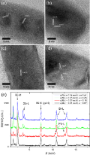
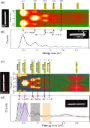
Microstructural and plasmonic modifications in Ag–TiO2 and Au–TiO2 nanocomposites through ion beam irradiation
Beilstein J. Nanotechnol. 2014, 5, 1419–1431, doi:10.3762/bjnano.5.154
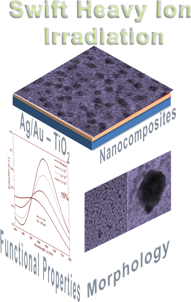
- chosen matrix was silica because of the fact that the effect of swift heavy ion irradiation of silica in terms of creating an ion track is well understood [27][28][29]. To summarize, the nanoparticles grow in size if they are close to each other and their sizes are smaller than the diameter of ion track
- result in reduction, growth, or elongation of nanoparticles in a controlled manner and thereby facilitating the tuning of the SPR wavelength of the nanocomposite system. In the scenario described here, the aim was to study the swift heavy ion irradiation of noble metal nanoparticles embedded in a matrix
- been reported but such studies about metal–TiO2 nanocomposites would be very interesting. Titania is a wide band gap semiconductor, and the tuning of the SPR in such a matrix by ion beam irradiation is another aim of the present work. Hence, the effects of swift heavy ion irradiation on metal–TiO2


Fabrication of carbon nanomembranes by helium ion beam lithography
Beilstein J. Nanotechnol. 2014, 5, 188–194, doi:10.3762/bjnano.5.20
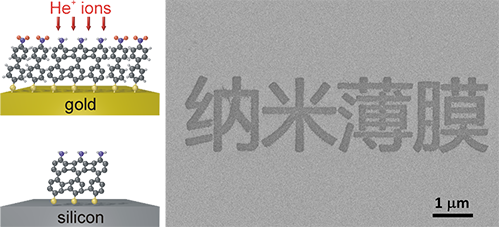
- revealed the dose-dependent coverage, i.e., the relative monolayer area, whose density of cross-links surpassed a certain threshold value, as a function of the exposure dose. A complete cross-linking of aromatic SAMs by He+ ion irradiation requires an exposure dose of about 850 µC/cm2, which is roughly 60
- formed is still missing. Further modification and patterning of SAMs have been achieved by using ion irradiation (e.g. Ar+, Ga+, Si+, etc.), which leads to the desorption and the fragmentation of molecules [14][15]. High energy helium ions passing through polymer films modify the macroscopic properties
- that an excessive exposure to He+ ions (>4000 µC/cm2) leads to a damage of the CNMs, which is attributed to the swelling of the Au substrate from ion implantation [24]. A complete cross-linking of NBPT SAMs by He+ ion irradiation requires an exposure dose of approximately 850 µC/cm2, which is roughly


Synthesis of embedded Au nanostructures by ion irradiation: influence of ion induced viscous flow and sputtering
Beilstein J. Nanotechnol. 2014, 5, 105–110, doi:10.3762/bjnano.5.10
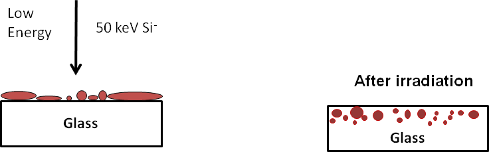
- 10.3762/bjnano.5.10 Abstract The ion-irradiation induced synthesis of embedded Au nanoparticles (NPs) into glass from islands of Au on a glass substrate is studied in the context of recoiling atoms, sputtering and viscous flow. Cross sectional transmission electron microscopy studies revealed the
- formation of Au NPs embedded in the glass substrates by the 50 keV Si− ion irradiation of irregularly shaped Au nanostructures on the glass surfaces at a fluence of 3 × 10¹⁶ ions/cm2. The depth profiles of Au in the samples were obtained from high-resolution Rutherford backscattering spectrometry studies
- mechanisms. Several methods are used for the fabrication of nanostructures. Among them, ion irradiation and ion implantation are two well established tools for the synthesis of nanostructures on the surface or embedded NPs [6][7][8][9][10][11]. The atom beam sputtering technique has been used in our group


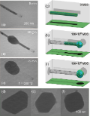
Characterization and properties of micro- and nanowires of controlled size, composition, and geometry fabricated by electrodeposition and ion-track technology
Beilstein J. Nanotechnol. 2012, 3, 860–883, doi:10.3762/bjnano.3.97
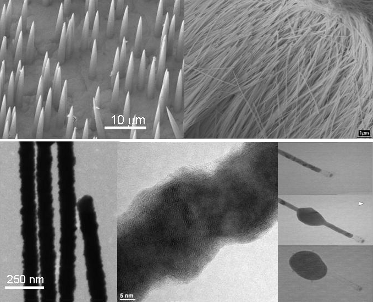
- Maria Eugenia Toimil-Molares Materials Research Department, GSI Helmholtz Centre for Heavy Ion Research, Planckstr. 1, 64291 Darmstadt, Germany 10.3762/bjnano.3.97 Abstract The combination of electrodeposition and polymeric templates created by heavy-ion irradiation followed by chemical track
- , including investigations on electrical resistivity, surface plasmon resonances, and thermal instability. Keywords: electrodeposition; etched ion-track membrane; finite-size effects; heavy ion irradiation; nanowire; radiation-induced nanostructures; Introduction During the past decade, nanowires have
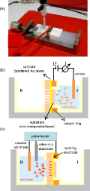
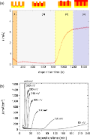
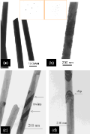
- ion-track dissolution and formation of channels by chemical etching. Control over the irradiation and etching conditions enables the production of various membranes with channels of predefined geometries, sizes and aspect ratios. 1.1.1 Swift heavy-ion irradiation: Swift heavy-ion beams are provided at








Nano-structuring, surface and bulk modification with a focused helium ion beam
Beilstein J. Nanotechnol. 2012, 3, 579–585, doi:10.3762/bjnano.3.67
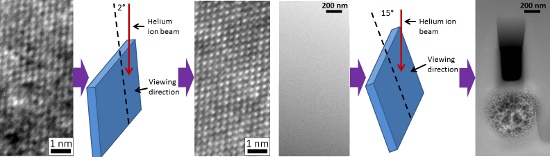
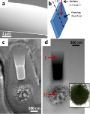
- focused helium ion beam to selectively modify and mill materials. The sub nanometer probe size of the helium ion microscope used provides lateral control not previously available for helium ion irradiation experiments. At high incidence angles the helium ions were found to remove surface material from a
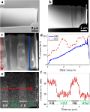
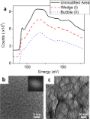
- observe the extended effects of the modification process. Figure 4c is a bright field TEM image of the area of the sample after controlled sidewall modification by helium ion irradiation. Figure 4d is a HAADF image of the same area. A rectangular hole is observed at the center of the image, this was
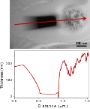
- the thickness map. This profile shows the sloping thickness of the wedge fabricated by helium ion irradiation, followed by the hole where the beam penetrated the lamella. Finally, the circular feature is observed to have rapidly varying thickness. The hole has a non-zero thickness due to the


Nanolesions induced by heavy ions in human tissues: Experimental and theoretical studies
Beilstein J. Nanotechnol. 2012, 3, 556–563, doi:10.3762/bjnano.3.64
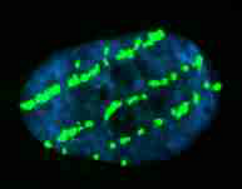
- after single-ion irradiation. The left-hand image shows the aimed targeting of chromo centers (red crosses) for single-ion irradiation by using Hoechst 33342 (grey scale) as a marker in the nuclei of living MEF cells. The right-hand image shows the same nucleus after fixation at 5 min after irradiation



Formation of precise 2D Au particle arrays via thermally induced dewetting on pre-patterned substrates
Beilstein J. Nanotechnol. 2011, 2, 318–326, doi:10.3762/bjnano.2.37
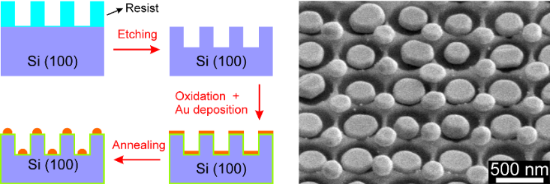
- laser heating [12][13][14][15][16][17][18][19][20], ion irradiation [21][22][23][24], and electron irradiation [25]. Dewetting proceeds by surface diffusion even in the solid state well below the melting temperature of the film [9][10][11]. In addition, metals such as Ni, Ag, Co, and Au have a weak





Preparation and characterization of supported magnetic nanoparticles prepared by reverse micelles
Beilstein J. Nanotechnol. 2010, 1, 24–47, doi:10.3762/bjnano.1.5






Other Beilstein-Institut Open Science Activities



