Search results
Search for "junction" in Full Text gives 316 result(s) in Beilstein Journal of Nanotechnology. Showing first 200.
Observation of collective excitation of surface plasmon resonances in large Josephson junction arrays
Beilstein J. Nanotechnol. 2022, 13, 1578–1588, doi:10.3762/bjnano.13.132
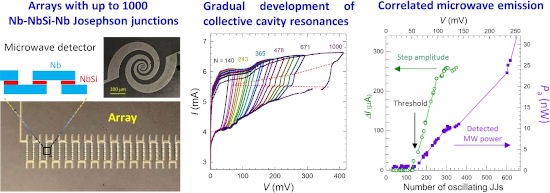
- as a common external resonator, facilitating long-range phase-locking of large junction arrays with sizes larger than the emitted wavelength. Keywords: cavity modes; Josephson junctions; synchronization mechanism; THz radiation; Introduction Terahertz sources of electromagnetic waves (EMWs) in the
- due to the presence of long-range stray fields [28]. Indirect coupling is caused by interaction of JJs with a common external resonator [7][8][29][30][31][32][33][34][35]. The resonator imprints the phase order onto the junction array and, thus, can synchronize JJs without direct interjunction
- . Each segment contains eight overlap-type JJs with the area 6 × 6 μm2. This can be seen from the close-up shown in the left panel of Figure 1a. The distance between nearby junction centers is 12 μm. A cross section of the junctions is sketched in the bottom-left panel of Figure 1c. The linear array




Coherent amplification of radiation from two phase-locked Josephson junction arrays
Beilstein J. Nanotechnol. 2022, 13, 1445–1457, doi:10.3762/bjnano.13.119
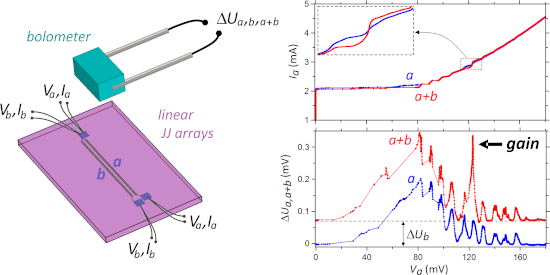
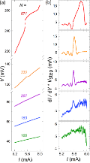
- , but also improved synchronization of junctions inside each array. Our conclusion is supported by numerical modelling. Keywords: coherent radiation; Josephson junction arrays; numerical modelling; single-strip line; synchronization; Introduction A Josephson junction (JJ) has the unique ability to
- substrate with the thickness 0.38 mm. It contains three closely located straight strips with a separation of only 4 μm. Each strip has the length L = 5 mm and the width w = 14 μm and contains 332 JJs distributed uniformly along the strip. The junction area is 8 × 8 μm2. Contact electrodes are connected to
- significantly larger separation of 238 μm between the adjacent linear arrays. In total, it contains 17 similar lines with 380 JJs and a total length of L = 5.7 mm. The junction area is 6 × 6 μm2. Below, we will show data for the case when the rightmost “array-a” is biased with a variable dc current and the


Density of states in the presence of spin-dependent scattering in SF bilayers: a numerical and analytical approach
Beilstein J. Nanotechnol. 2022, 13, 1418–1431, doi:10.3762/bjnano.13.117
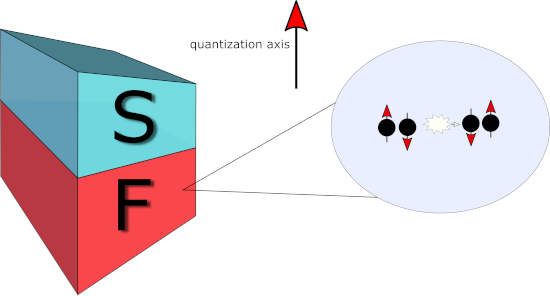
- resistance. In the regime of a fully transparent junction, γB = 0, the proximity effect is the strongest, and the θ functions are continuous at the SF interface while γB ≫ 1 corresponds to the tunnel junction limit, that is, there is no mutual impact between superconducting layer S and ferromagnetic layer F
- mentioned in the previous section. In this paper we consider two cases of the junction transparency: (i) intermediate interface transparency (γB ≥ 1) and (ii) low interface transparency (γB ≫ 1). In both cases, we fix the thickness of the F layer to df = 0.5ξf. Focusing on these cases allows us to discuss
- features is the examination of the current–voltage characteristics. Utilizing the Werthamer expression for the quasiparticle current in tunneling junctions, we can calculate the I–V curves for an SFIFS junction. The current then reads Here, Nf1,2(E) is the density of states (DOS) in the corresponding


Recent trends in Bi-based nanomaterials: challenges, fabrication, enhancement techniques, and environmental applications
Beilstein J. Nanotechnol. 2022, 13, 1316–1336, doi:10.3762/bjnano.13.109
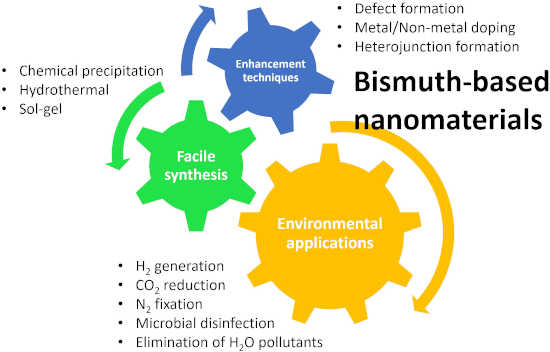
- , Huang et al. reported that BiOI microspheres served as self-sacrificing templates for in situ phase transformation and formation of phase junctions [81]. Different bismuth oxyiodides were formed as a result of this. Hierarchical BiOI, Bi4O5I2, Bi4O5I2–Bi5O7I phase-junction, and Bi5O7I may be synthesized
- levels of Bi2O3 and Bi2S3 equilibrate at the p–n junction, was also proposed. Bi2S3, which has a smaller bandgap than Bi2O3, is excited when it is exposed to visible light, while Bi2O3 is not. The photogenerated holes stay in the p-type Bi2S3 VB, while the excitons in the p-type Bi2S3 CB migrate to the n




Nonlinear features of the superconductor–ferromagnet–superconductor φ0 Josephson junction in the ferromagnetic resonance region
Beilstein J. Nanotechnol. 2022, 13, 1155–1166, doi:10.3762/bjnano.13.97
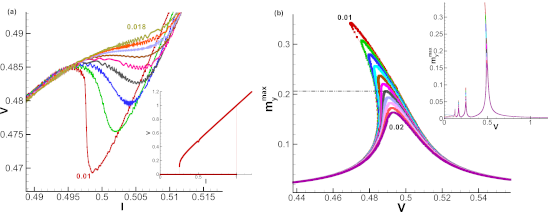
- characteristics of a φ0 Josephson junction in the ferromagnetic resonance region. We show that at small values of the system parameters damping, spin–orbit interaction, and Josephson-to-magnetic energy ratio, the magnetic dynamics is reduced to the dynamics of a scalar Duffing oscillator driven by the Josephson
- different approximations. Finally, we demonstrate the negative differential resistance in the I–V characteristics and its correlation with the fold-over effect. Keywords: Duffing oscillator; Josephson junction; Landau–Lifshitz–Gilbert equation; Introduction The coupling of the superconducting phase
- difference with the magnetic moment of a ferromagnet in a φ0 junction leads to a number of unique features important for superconducting spintronics and modern information technology [1][2][3][4][5]. It allows one to control the magnetization precession by the superconducting current and affects the current


![[Graphic 14]](/bjnano/content/inline/2190-4286-13-97-i38.svg?max-width=637&scale=1.18182) at differ...
at differ...


![[Graphic 18]](/bjnano/content/inline/2190-4286-13-97-i42.svg?max-width=637&scale=1.18182) (V) on α in the damping parameter interval [0.001–0.12]....
(V) on α in the damping parameter interval [0.001–0.12]....

Efficiency of electron cooling in cold-electron bolometers with traps
Beilstein J. Nanotechnol. 2022, 13, 896–901, doi:10.3762/bjnano.13.80
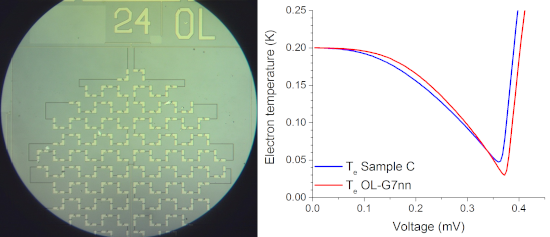
- , and the coefficient β shows how much of PS comes back to the absorber. PA = IAV is the power due to Andreev heating current, V is the voltage drop across the NIS junction, and Pleak = V2/Rleak is the power associated with the leakage current. The quasi-particle tunneling current is written as: where V
- is the NIS junction voltage, Te and Ts are the electron temperatures in the normal metal and the superconductor, is the density of states in the superconductor, Δ is the superconducting gap, and kB is the Boltzmann constant. Using the integral of the tunneling current through the NIS junction
- , τm is the magnetic scattering parameter that is found from the fit. W = W0ξ0/d is the effective tunneling parameter for planar tunnel junctions used in our CEB, W0 = R(ξ0)/RN is the tunneling parameter, RN is the normal resistance of the junction, and R(ξ0) is the resistance of Al/Fe absorber with


Numerical modeling of a multi-frequency receiving system based on an array of dipole antennas for LSPE-SWIPE
Beilstein J. Nanotechnol. 2022, 13, 865–872, doi:10.3762/bjnano.13.77
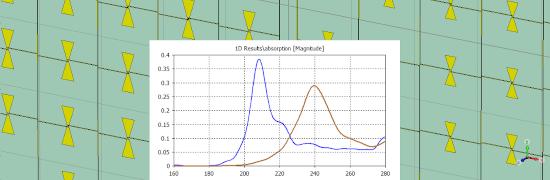
- current noise of 4–10 pA/Hz1/2. To optimize the receiver for better noise characteristics, we consider optimized CEBs with a single superconductor–insulator–normal (SIN) tunnel junction and a single superconductor–normal (SN) contact [12]. Combined together, they form a SINS structure. This solution can
- help reaching better noise characteristics than those of CEBs with two SIN tunnel junctions due to several reasons. First, the responsivity is increased by a factor of two due to hot electrons tunneling only through one SIN junction. Second, the bolometer resistance is decreased twice, which helps in
- junction suppresses the Coulomb blockade, so the absorber volume can be decreased by a factor of four, leaving the capacitance unchanged. Therefore, the current responsivity is increased from 40–45 nA/pW to 80–100 nA/pW. Thus, the total NEP for this CEB concept should also be two times better than the


Hierachical epicuticular wax coverage on leaves of Deschampsia antarctica as a possible adaptation to severe environmental conditions
Beilstein J. Nanotechnol. 2022, 13, 807–816, doi:10.3762/bjnano.13.71
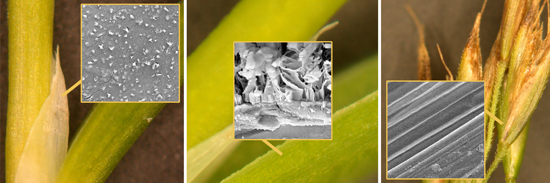
- abaxial side of the ligule (a membrane on the adaxial side of the junction of the leaf sheath and leaf blade); and (ii) generative organs, namely the pedicel (a stalk of a single spikelet (collection of flowers (florets) in a grass inflorescence)) and the abaxial surface of the outer, lower glume (a bract





A superconducting adiabatic neuron in a quantum regime
Beilstein J. Nanotechnol. 2022, 13, 653–665, doi:10.3762/bjnano.13.57
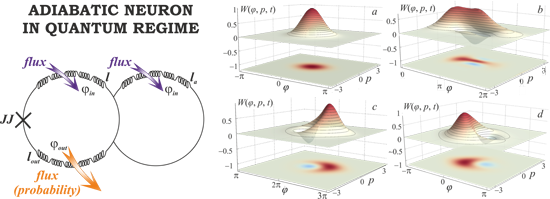
- obtained results indicate the conditions under which the neuron possesses the required sigmoid activation function. Keywords: Josephson junction; quantum neuron; quantum-classical neural networks; superconducting quantum interferometer; Introduction The implementation of machine learning algorithms is
- model and basic equations A single-junction superconducting interferometer with normalized inductance l, a Josephson junction without resistive shunting (JJ), an additional inductance la, and an output inductance lout (see Figure 1b) are the basis of the quantum neuron. This circuit has been presented
- in [46] when considering the classical mode of this system. Inductances are normalized to (2πIc/Φ0), where Ic is the critical current of the Josephson junction and Φ0 is the magnetic flux quantum. The inertial properties of the system are due to the junction capacitance, which, along with the


Approaching microwave photon sensitivity with Al Josephson junctions
Beilstein J. Nanotechnol. 2022, 13, 582–589, doi:10.3762/bjnano.13.50
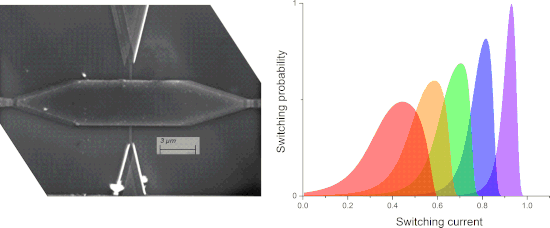
- , Russia Lobachevsky State University of Nizhny Novgorod, 603950, Nizhny Novgorod, Russia Chalmers University of Technology, 41296, Gothenburg, Sweden 10.3762/bjnano.13.50 Abstract Here, we experimentally test the applicability of an aluminium Josephson junction of a few micrometers size as a single
- of three and more photons, with a dark count time above 0.01 s. Keywords: Josephson junction; microwave photons; single photon counter; thermal activation; Introduction The development of a single photon counter (SPC) for microwave frequencies of tens of gigahertz has been required for several
- counter can be made on their basis. We use the metastable quasi-equilibrium state of a Josephson junction, which, at low temperatures, is stable enough for thermal fluctuations and quantum tunneling, but can be easily destroyed by absorption of a single photon. We demonstrate few-photon sensitivity of our


Zinc oxide nanostructures for fluorescence and Raman signal enhancement: a review
Beilstein J. Nanotechnol. 2022, 13, 472–490, doi:10.3762/bjnano.13.40
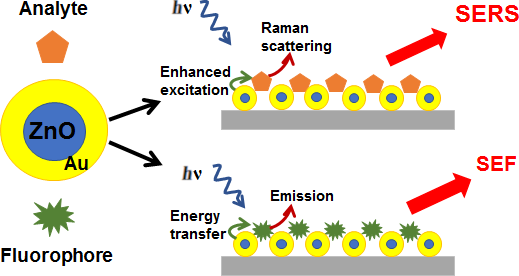
- degradation due to higher surface area and the presence of a metal–semiconductor junction by this 3D hybrid structure [68]. Additionally, it was observed that metal-based substrates did not exhibit any catalytic degradation, while those that incorporated ZnO led to a significant decrease in the SERS intensity




Tunable superconducting neurons for networks based on radial basis functions
Beilstein J. Nanotechnol. 2022, 13, 444–454, doi:10.3762/bjnano.13.37
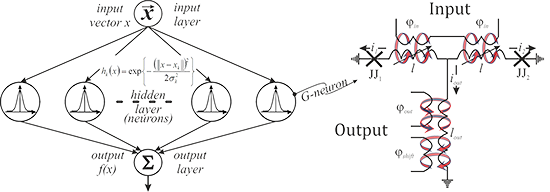
- the flux quantum Φ0; currents are normalized to the critical current of the Josephson junctions IC; inductances are normalized to the characteristic inductance 2πLIC/Φ0, times are normalised to the characteristic time tC = Φ0/(2πVC) (VC is the characteristic voltage of a Josephson junction). Equations
- operation of the cell (tRF up to 8000tC, where tC is the characteristic time for the Josephson junction). The dissipation during the operation of the Gauss-neuron remains small, which justifies classifying the proposed cell as adiabatic (Figure 4b). Realization of tunability: adjustable kinetic inductance
- junction (RSJ) model. A typical approach to obtain the equations of motion for Josephson systems is to write the Kirchhoff and phase constraints. From Figure 1b), it follows: Let us sum up the second and third equations of the system in Equation 10, taking into account the first equation, and dividing the


Electrostatic pull-in application in flexible devices: A review
Beilstein J. Nanotechnol. 2022, 13, 390–403, doi:10.3762/bjnano.13.32
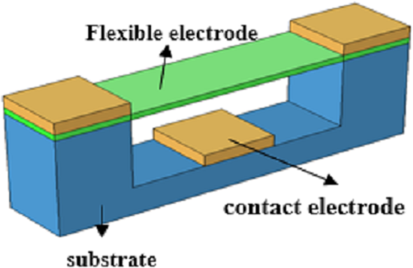
- driving voltage. ESD circuits ESD protection is an indispensable part of integrated circuit (IC) design. Traditional in silico PN-junction-based on-chip ESD protection will cause parasitic capacitance, leakage, noise, a large consumption of silicon area, and other negative effects. This is unacceptable in


A broadband detector based on series YBCO grain boundary Josephson junctions
Beilstein J. Nanotechnol. 2022, 13, 325–333, doi:10.3762/bjnano.13.27
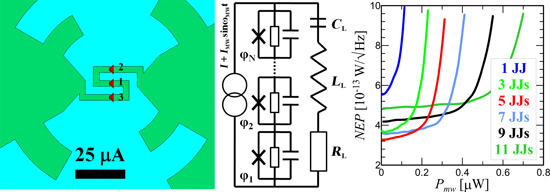
- –frequency characteristic, beam pattern, and fraction of the absorbed power in each Josephson junction were investigated. Based on the obtained results, a numerical simulation of one-dimensional arrays was carried out. The dc characteristics of the detector were calculated, that is, current–voltage
- ; electromagnetic modeling; log-periodic antenna; RCSJ model; series Josephson junctions; YBaCuO Josephson junction; Introduction High-temperature superconducting (HTSC) Josephson junctions (JJs) have great potential as promising materials for creating high-frequency devices, such as microwave generators [1][2
- for each junction can be used [20], but the development of a broadband detector requires the use of spiral [4], log-periodic [3], or other types of broadband antennas. In this case JJs are integrated into the single receiving system. This is the case considered in our article. The aim of this work is



Engineered titania nanomaterials in advanced clinical applications
Beilstein J. Nanotechnol. 2022, 13, 201–218, doi:10.3762/bjnano.13.15
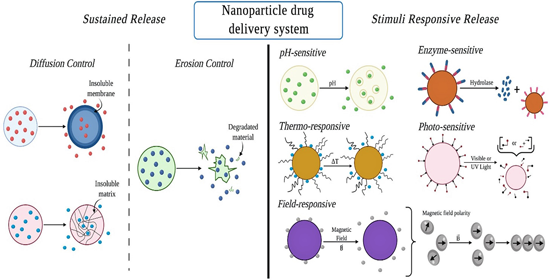
- small size of nanomaterials enables them to permeate through biological barriers in the body, such as the blood–brain barrier, the pulmonary system, and through the tight junction of endothelial cells of the skin. The main goal of loading drugs on nanomaterials is the delivery to specific target cells


Topographic signatures and manipulations of Fe atoms, CO molecules and NaCl islands on superconducting Pb(111)
Beilstein J. Nanotechnol. 2022, 13, 1–9, doi:10.3762/bjnano.13.1
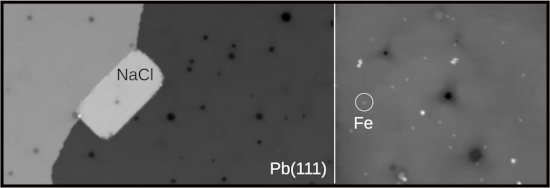
- tip [66][67] to intentionally form dimers and trimers and measure their apparent STM heights. To do so, the STM tip was positioned above a single Fe atom. The resistance of the STM junction was then decreased from about 50 GΩ (imaging) to 3 GΩ (manipulation) in order to trap the Fe atom in the STM
- junction [68]. Upon lateral tip displacements with a velocity of about 500 pm·s−1, the trapped Fe atom is successfully displaced over the surface. During this process, a so-called “atom manipulation image” [69] can be obtained from such dragging of the Fe atom over Pb(111) (Figure 4b). The geometric
- ). (b) Topographic STM image during the manipulation of a single Fe atom trapped in the STM junction. (c) Models of the Pb(111) corresponding to the STM image of panel (b). The red dashed parallelogram refers to the Pb(111) lattice. (d–f) Series of STM images of Fe adatoms and their successive lateral


Design aspects of Bi2Sr2CaCu2O8+δ THz sources: optimization of thermal and radiative properties
Beilstein J. Nanotechnol. 2021, 12, 1392–1403, doi:10.3762/bjnano.12.103
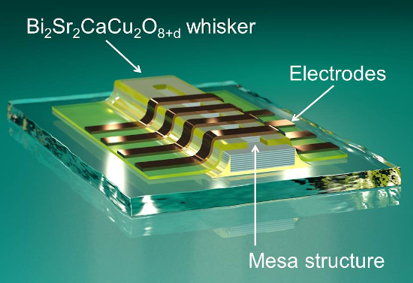
- an inherently tunable oscillation frequency, fJ = (2e/h)V, where e is electron charge and V is the bias voltage per junction. The frequency is limited only by the superconducting energy gap, which can be in excess of 30 THz for Bi-2212 [27][28]. A broad range tunability of emission in the whole THz


Nonmonotonous temperature dependence of Shapiro steps in YBCO grain boundary junctions
Beilstein J. Nanotechnol. 2021, 12, 1279–1285, doi:10.3762/bjnano.12.95
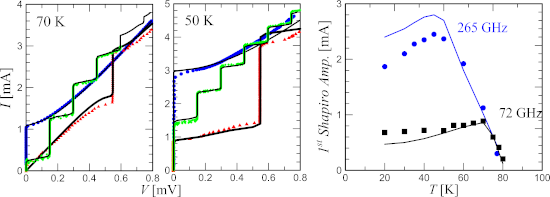
- University of Nizhny Novgorod, Nizhny Novgorod, Russia 10.3762/bjnano.12.95 Abstract The amplitudes of the first Shapiro steps for an external signal with frequencies of 72 and 265 GHz are measured as function of the temperature from 20 to 80 K for a 6 μm Josephson grain boundary junction fabricated by
- are in agreement with the calculations based on the resistively–capacitively shunted junction model and Bessel theory. The emergence of the receiving optima is explained by the mutual influence of the varying critical current and the characteristic frequency. Keywords: characteristic frequency
- ; Shapiro steps; temperature dependence; YBaCuO Josephson junction; Introduction High-temperature superconducting (HTSC) Josephson junctions (JJs) are of great interest since many physical properties can be observed in dynamics during the changing the temperature within a wide range from nitrogen


Morphology-driven gas sensing by fabricated fractals: A review
Beilstein J. Nanotechnol. 2021, 12, 1187–1208, doi:10.3762/bjnano.12.88
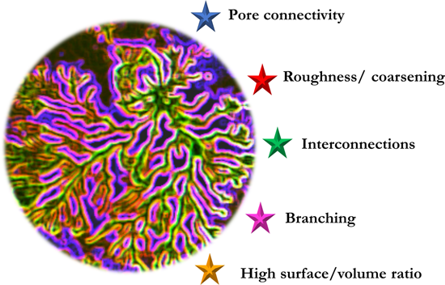
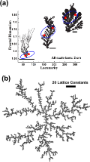
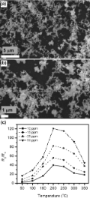
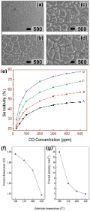
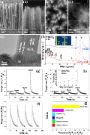
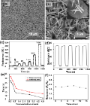
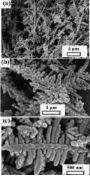
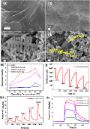
- resulting in more interaction sites at which analyte and sensor can interact. The authors termed the mechanism “random tunneling junction network”. Here, electron transport across the fractal structures is assumed to occur via tunneling. Different fractal dimensions lead to different Schottky barrier
- concentrations of ethanol. The SnO2 with NDs showed enhanced ethanol sensing in comparison to SnO2 NWs without NDs, which was attributed to a higher surface-to-volume ratio, more grain boundaries, and the presence of junction barriers at the ND–NW interfaces. The estimated D for the SnO2 nanodendrites was 1.88










Assessment of the optical and electrical properties of light-emitting diodes containing carbon-based nanostructures and plasmonic nanoparticles: a review
Beilstein J. Nanotechnol. 2021, 12, 1078–1092, doi:10.3762/bjnano.12.80
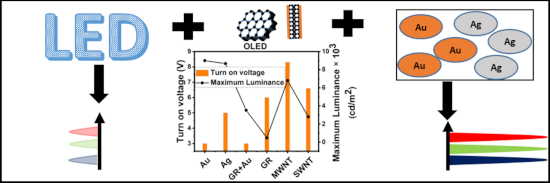
- their sizes [92]. Generally, a QD-based EML is sandwiched between a polymer-based ETL and HTL. Carbon-based nanomaterials such as SWNT have also been investigated as EML in OLED. Firstly, a SWNT p–n junction on a Si substrate has been investigated by Lee et al. [93]. Further, Mueller et al., with some


A Au/CuNiCoS4/p-Si photodiode: electrical and morphological characterization
Beilstein J. Nanotechnol. 2021, 12, 984–994, doi:10.3762/bjnano.12.74
- carriers with high energy passing easily the barrier between metal and semiconductor. Also, more charge carriers are generated with increasing light power, and thus diffusion of the charges from the barrier occurs [27]. The junction resistance (Rj) is another diode parameter to evaluate the fabricated Au



Comprehensive review on ultrasound-responsive theranostic nanomaterials: mechanisms, structures and medical applications
Beilstein J. Nanotechnol. 2021, 12, 808–862, doi:10.3762/bjnano.12.64
- -junction and flow-focusing are the two major methods for microfluidic production of MBs. In the T-junction approach, the two flows (liquid and gas) are perpendicular to each other, whereas in the flow-focusing method, one flow is surrounded by the other flow when they emerge from a small orifice


9.1% efficient zinc oxide/silicon solar cells on a 50 μm thick Si absorber
Beilstein J. Nanotechnol. 2021, 12, 766–774, doi:10.3762/bjnano.12.60
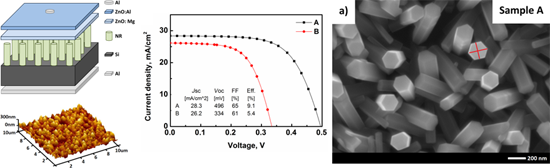
- sample B. In the infrared region (850–1200 nm) the largest losses in EQE were observed. Photons with a low energy have a reduced absorption probability. Hence, low-energy photons generate e–h pairs mostly deep in the junction. Such pairs (excitons) should pass through the cell before reaching the
- junction where they are effectively separated or recombined at the rear contact. Generally, in the infrared region absorption coefficient is low for silicon substrates [20]. Moreover, the electron–hole pairs generated deep in a cell are strongly attracted by the rear contact, and these pairs recombine
- difference is related to the presence of ZnONR in the structure. Zinc oxide nanorods are monocrystalline and form a better junction with the silicon substrate (with less defects, i.e., less recombination centers). The impact of ZnONR on recombination can be observed considering the Rsh value. If Rsh


A review of defect engineering, ion implantation, and nanofabrication using the helium ion microscope
Beilstein J. Nanotechnol. 2021, 12, 633–664, doi:10.3762/bjnano.12.52
- of the HIM, junction barriers of width 1–2 nm were created, that is, narrow enough for the tunneling current to propagate. An overview of the sample and a schematic outlining the irradiation approach are shown in Figure 2d. The electronic properties of the junction barrier can be continuously tuned
- structures [45]. The performance of Josephson junctions in YBCO thin films fabricated using the HIM has been further evaluated in [46]. Cross-sectional STEM analysis of helium line irradiations of YBCO has shown that the crystallinity of the Josephson junction barriers is essentially preserved, highlighting


Impact of GaAs(100) surface preparation on EQE of AZO/Al2O3/p-GaAs photovoltaic structures
Beilstein J. Nanotechnol. 2021, 12, 578–592, doi:10.3762/bjnano.12.48
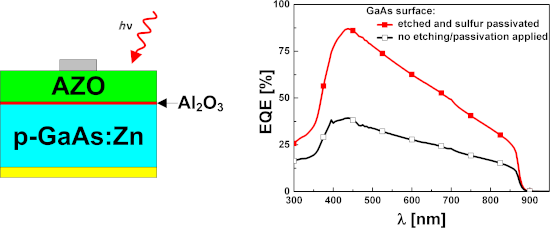
- . Lesker PVD75). It should also be underscored that the utilized structure was quite simplified and not optimized for the best performance in terms of junction properties, absorber and window layers, doping/thickness, or metallization used. Measurement equipment The morphology of the structures was