


Search results
Search for "manipulation" in Full Text gives 230 result(s) in Beilstein Journal of Nanotechnology. Showing first 200.
A comprehensive review on electrospun nanohybrid membranes for wastewater treatment
Beilstein J. Nanotechnol. 2022, 13, 137–159, doi:10.3762/bjnano.13.10
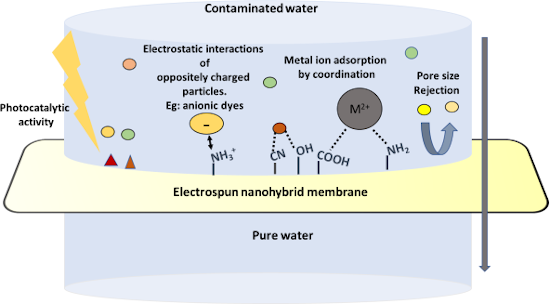
- high porosity, interconnected pore structures, and the easy manipulation of membrane morphology and mechanical strength has made electrospun membranes a viable substitute for conventional membranes. Most of the membrane development researches have focused on the alleviation of fouling of the membranes




Effect of lubricants on the rotational transmission between solid-state gears
Beilstein J. Nanotechnol. 2022, 13, 54–62, doi:10.3762/bjnano.13.3
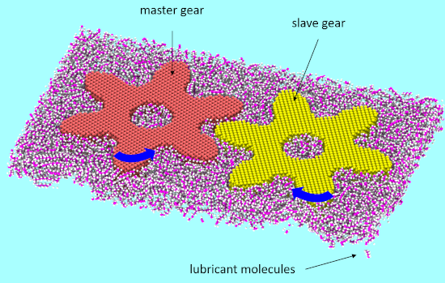
- situation becomes very different since a continuum description of the materials might not be sufficient. The development of the atomic force microscope (AFM) [19] and the scanning tunneling microscope (STM) [20][21] has allowed for visualization and manipulation of nanoscale gears [22]. Those gears can be


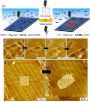
Topographic signatures and manipulations of Fe atoms, CO molecules and NaCl islands on superconducting Pb(111)
Beilstein J. Nanotechnol. 2022, 13, 1–9, doi:10.3762/bjnano.13.1
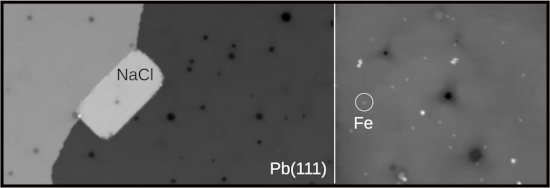
- demonstrated. We show a general propensity of these adsorbates to diffuse at low temperature under gentle scanning conditions. Our findings provide new insights into high-resolution probe microscopy imaging with terminated tips, decoupling atoms and molecules by NaCl islands or tip-induced lateral manipulation
- of iron atoms on top of the prototypical Pb(111) superconducting surface. Keywords: carbon monoxide (CO); lateral manipulation; NaCl; scanning tunneling microscopy; superconductivity; Introduction The most exciting manifestation of topological superconductivity [1][2][3] is the Majorana zero mode
- is, however, astonishing that most recent advances in manipulation experiments or contrast enhancement with functionalized tips are hitherto at their infancy, when studying a superconducting surface by STM/AFM. Although the earliest proposal for observing MZMs suggested to reposition Fe adatoms one


Impact of electron–phonon coupling on electron transport through T-shaped arrangements of quantum dots in the Kondo regime
Beilstein J. Nanotechnol. 2021, 12, 1209–1225, doi:10.3762/bjnano.12.89
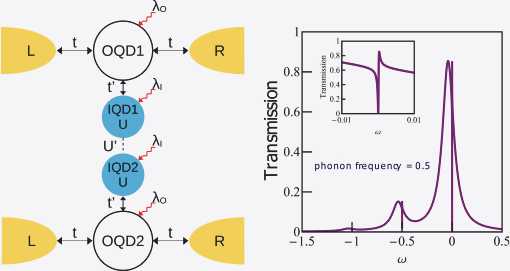
- embedded in a freestanding GaAs/AlGaAs membrane [44][45][46][47][48]. It has been shown that morphology manipulation of semiconductor QDs such as size, shape, strain distribution, or inhomogenities can influence the coupling strength of electron–phonon (e–ph) interactions [49]. The phononic effects appears


Self-assembly of amino acids toward functional biomaterials
Beilstein J. Nanotechnol. 2021, 12, 1140–1150, doi:10.3762/bjnano.12.85
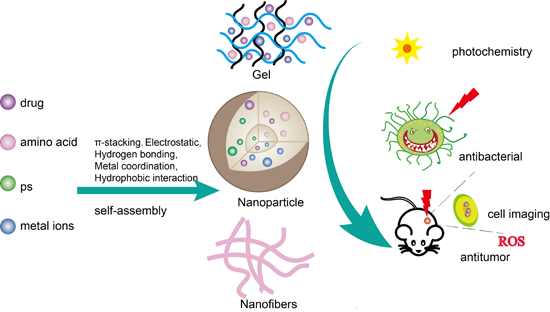
- as functional materials it can be difficult to arrange assembled nanostructures at both microscopic and macroscopic scales [10]. Also, fine manipulation of noncovalent interactions and corresponding peptide and protein nanostructures remains a huge challenge [24]. Amino acids are the major components

Molecular assemblies on surfaces: towards physical and electronic decoupling of organic molecules
Beilstein J. Nanotechnol. 2021, 12, 950–956, doi:10.3762/bjnano.12.71

- assemblies physically and electronically from a (strongly) interacting support is briefly reviewed. The molecule–substrate decoupling can either be achieved by suitable molecular design or manipulation of the molecular building blocks, or passivation of the substrate. Molecular engineering approaches include
- tip of a scanning probe microscope and mechanically lifted from the metallic surface such that they hang freely between metal contacts. This manipulation technique allows for measuring, amongst others, the electronic conductance, magnetic properties, reversible switching, and electroluminescence of
- free-standing molecules [12][13][14][15][16]. Physical decoupling strategies involving the design or manipulation of the molecular building block significantly limit the selection of building blocks and often hinder probing molecular properties with intramolecular resolution. Therefore, modifications
The role of deep eutectic solvents and carrageenan in synthesizing biocompatible anisotropic metal nanoparticles
Beilstein J. Nanotechnol. 2021, 12, 924–938, doi:10.3762/bjnano.12.69
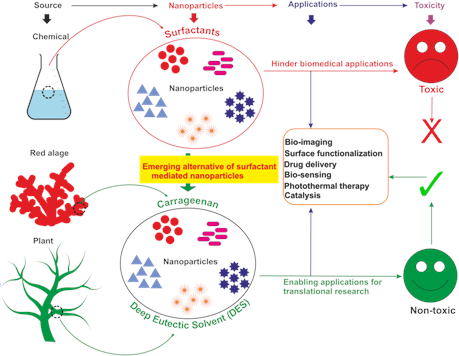
- of DESs facilitates rapid nucleation yielding tiny particles that undergo Ostwald ripening through a slow process, allowing for the manipulation on the nanoscale with controlled crystal growth. Plasmonic metal nanoparticle synthesis using DESs Plasmonic metal nanoparticles, such as gold, silver, and


The role of convolutional neural networks in scanning probe microscopy: a review
Beilstein J. Nanotechnol. 2021, 12, 878–901, doi:10.3762/bjnano.12.66







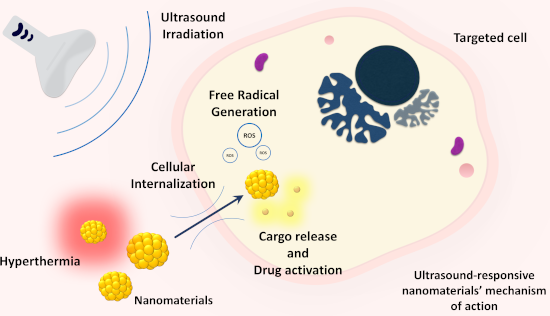
Comprehensive review on ultrasound-responsive theranostic nanomaterials: mechanisms, structures and medical applications
Beilstein J. Nanotechnol. 2021, 12, 808–862, doi:10.3762/bjnano.12.64


Recent progress in actuation technologies of micro/nanorobots
Beilstein J. Nanotechnol. 2021, 12, 756–765, doi:10.3762/bjnano.12.59
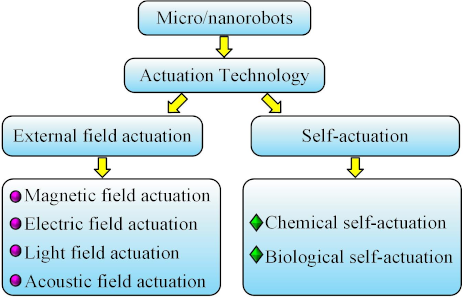
- a magnetically actuated robotic system capable of fully automated manipulation of cells and microbeads and prepared a magnetic U-shaped robot, which was actuated with five electromagnetic coil controllers to generate a gradient magnetic field. In order to prepare a magnetic U-shaped robot, magnetic
- cancer, Wang et al. [22] developed a new type of micro/nanorobot, which can observe the state of cancer. This robot uses multi-stage magnetic tweezers for manipulation, which can precisely move in living cells. The multi-stage magnetic tweezers are composed of six magnetic poles and six coils, installed
- ultrasonic actuation mechanism. By generating an acoustic radiation force in a standing wave to capture and move particles, it was possible to realize drug particle/cell manipulation and micro/nanorobot actuation in clinical biology and medicine. An ultrasonic transducer and an electric linear platform were


Recent progress in magnetic applications for micro- and nanorobots
Beilstein J. Nanotechnol. 2021, 12, 744–755, doi:10.3762/bjnano.12.58
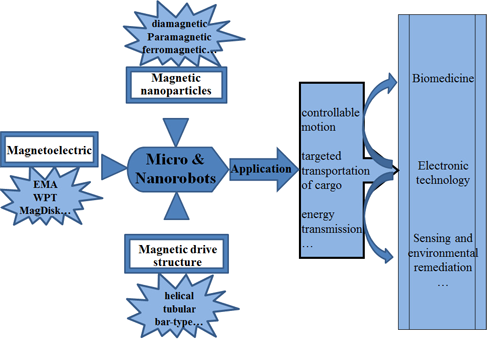
- iron oxide nanoparticles [46] has advantages over magnetic surface coatings, such as cobalt or nickel. Diamagnetic nanoparticles Applying an external magnetic force to manipulate the MNRs has become a frontier field of research. Uvet et al. [47] proposed a new microrobot manipulation technology based
- trigger drug release. The fabrication method of Chen’s team yielded not only easily adjustable length and diameter of the nanowires, but also excellent interface coupling between the piezoelectric and magnetostrictive phases. It enabled precise magnetic manipulation on patterned surfaces and 3D swimming


A review on nanostructured silver as a basic ingredient in medicine: physicochemical parameters and characterization
Beilstein J. Nanotechnol. 2021, 12, 440–461, doi:10.3762/bjnano.12.36
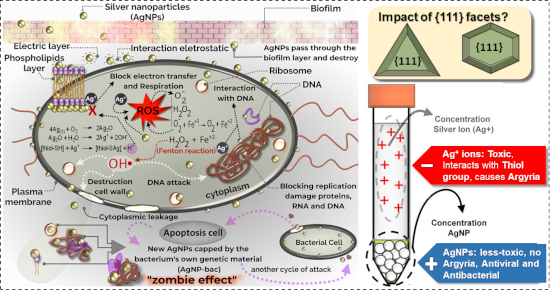
- biomedical applications, such as in therapies that involve magnetic manipulation with photothermal effect promoting a localized bactericidal activity [42][47][48][49]. Properties and oxidative dissolution The oxidative dissolution of AgNPs occurs by the oxidation of silver to silver oxide (Ag2O), with


Colloidal particle aggregation: mechanism of assembly studied via constructal theory modeling
Beilstein J. Nanotechnol. 2021, 12, 413–423, doi:10.3762/bjnano.12.33
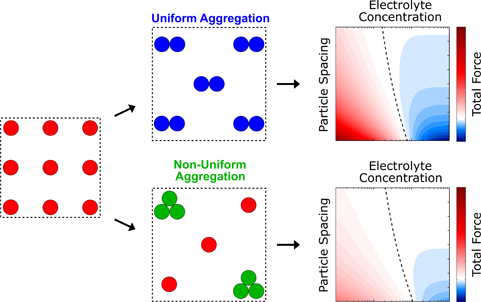
- variety of applications, including plasmonic/photonic devices, metamaterials, biomaterials and coatings, energetic materials, and high-strength ceramics [15][16][17][18][19][20][21][22][23][24][25]. Most applications, however, require precise manipulation of the particle placement, spacing, and


The patterning toolbox FIB-o-mat: Exploiting the full potential of focused helium ions for nanofabrication
Beilstein J. Nanotechnol. 2021, 12, 304–318, doi:10.3762/bjnano.12.25
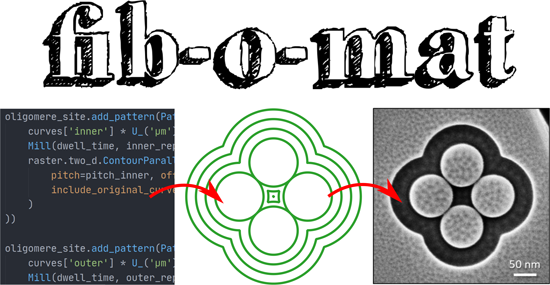
- with the automation tool of the NPVE software controlling the He ion microscope according to the FIB-o-mat patterns. No further manipulation of the patterns by the user is required. Hence, FIB-o-mat is technically not necessary for this task but constitutes a significant time-saver. 2 Mechanical


Extended iron phthalocyanine islands self-assembled on a Ge(001):H surface
Beilstein J. Nanotechnol. 2021, 12, 232–241, doi:10.3762/bjnano.12.19
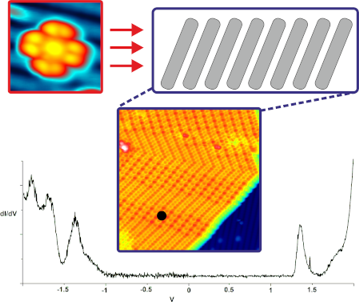
- , DBs or DBDs [25]. Manipulation of single FePc molecules It is worth noting that the STM appearance of the individual flat-lying FePc molecules is different from that of the molecules in the FePc island. This finding suggests that the molecules are probably trapped at some surface defects and that the
- manipulation when the molecule marked by the dashed circle suddenly appeared on a perfectly hydrogenated Ge(001):H surface area. This could be inferred from that fact that the image shows the molecule only in the upper part of the scan, whereas the lower part of the topography presents the perfectly
- or the ligands are recorded [24]. The above findings indicate that the FePc molecules stay intact upon deposition on the Ge(001):H surface and that they are decoupled from the germanium substrate by the passivating hydrogen layer. Moreover, the manipulation event allows for the identification of the
TiOx/Pt3Ti(111) surface-directed formation of electronically responsive supramolecular assemblies of tungsten oxide clusters
Beilstein J. Nanotechnol. 2021, 12, 203–212, doi:10.3762/bjnano.12.16
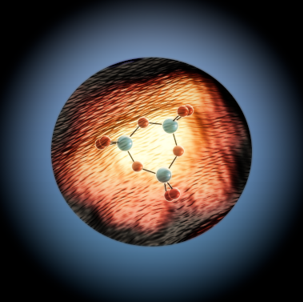
- field-triggered electronic manipulation of nanoscopic W3O9 clusters. Depending on the operating conditions, two different stable oxide phases, z’-TiOx and w’-TiOx, were produced. These phases show a strong effect on the adsorption characteristics and reactivity of W3O9 clusters, which are formed as a
- observed. The findings boost progress toward template-directed nucleation, growth, networking, and charge state manipulation of functional molecular nanostructures on surfaces using operando techniques. Keywords: atom manipulation; scanning tunneling microscopy; supramolecular self-assemblies; titanium
- controlled manipulation of single W3O9 clusters. The power of the STM approach for molecular switches has been demonstrated several times. For example, Cui et al. recently showed the reversible switching of a large discoid polyaromatic salt as a function of the applied bias voltage [27]. By that, we were



A review on the biological effects of nanomaterials on silkworm (Bombyx mori)
Beilstein J. Nanotechnol. 2021, 12, 190–202, doi:10.3762/bjnano.12.15
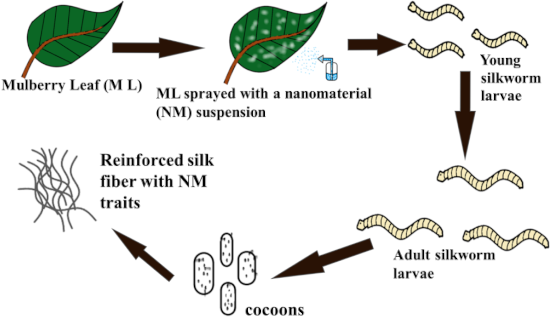
- numerous advantages in using silkworm as a model organism. These animals require less sophisticated infrastructure for rearing, are prolific breeders, have a short life cycle, a moderate body size which allows for an easy manipulation of genes and organs, a clear genetic background, and abundant mutation


Electrokinetic characterization of synthetic protein nanoparticles
Beilstein J. Nanotechnol. 2020, 11, 1556–1567, doi:10.3762/bjnano.11.138
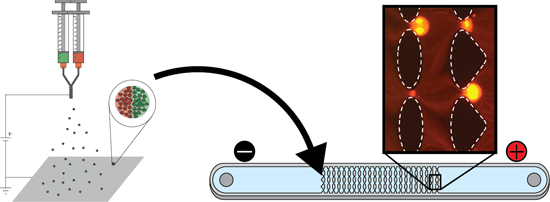
- developed. In the last decade, the area of microfluidics, which is the field of science that studies the manipulation of minute volumes of fluids (i.e., from microliters to picoliters) [17], has experienced a significant growth in bioanalytical applications [17][18]. Electrokinetics (EK) and electric-field
- combination of electrophoresis (EP), dielectrophoresis (DEP), and EO flow effects [22], allowing for additional parameters to fine-tune a separation process. Particle characterization and manipulation with EK techniques offer the potential for developing novel separation schemes for the sorting and enrichment
- methods, although more recently it has been reported that the major phenomena controlling the particles in these systems is the EP of the second kind [25][26]. The use of DEP for protein manipulation via dielectrophoresis chromatography was first reported in 1994 by Washizu et al. [35]. Since then, other



Design of V-shaped cantilevers for enhanced multifrequency AFM measurements
Beilstein J. Nanotechnol. 2020, 11, 1525–1541, doi:10.3762/bjnano.11.135
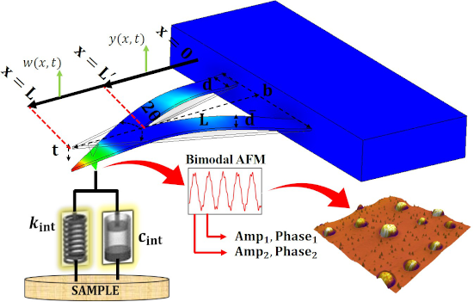
- spring constant, quality factor, and resonant frequencies. Research has been conducted to improve AFM cantilevers in terms of manipulation, approximating material property, and images contrast. V-shaped and triangular cantilevers are widely employed in AFM imaging techniques due to their stability
- essential for successful manipulation by AFM and there are many studies focused on this subject [16][17]. It is known that the torsional spring constant of a cantilever should be minimized in order to make it more sensitive to forces [18]. It is also known that V-shaped cantilevers are more sensitive to


![[Graphic 4]](/bjnano/content/inline/2190-4286-11-135-i26.svg?max-width=637&scale=1.18182) = 15 µm, bref = 8...
= 15 µm, bref = 8...


![[Graphic 17]](/bjnano/content/inline/2190-4286-11-135-i39.svg?max-width=637&scale=1.18182) ) of V-shaped cantilevers for...
) of V-shaped cantilevers for...


Protruding hydrogen atoms as markers for the molecular orientation of a metallocene
Beilstein J. Nanotechnol. 2020, 11, 1432–1438, doi:10.3762/bjnano.11.127
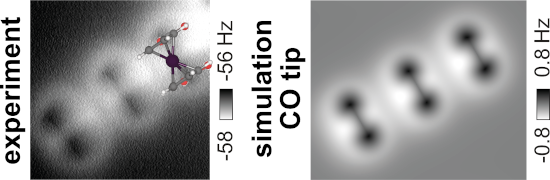
- strongly bonded to the substrate to withstand manipulation due to lateral forces exerted by the approaching tip. (2) The tip atomic arrangement is characterised by a deep minimum of total energy preventing a rearrangement of tip atoms or disintegration if the tip is strained by the interaction with the
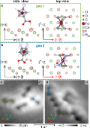


![[Graphic 10]](/bjnano/content/inline/2190-4286-11-127-i10.svg?max-width=637&scale=1.18182) row of FDCA molecules in geo 2. (a–c) Constant-height frequency-shi...
row of FDCA molecules in geo 2. (a–c) Constant-height frequency-shi...
Growth of a self-assembled monolayer decoupled from the substrate: nucleation on-command using buffer layers
Beilstein J. Nanotechnol. 2020, 11, 1291–1302, doi:10.3762/bjnano.11.113
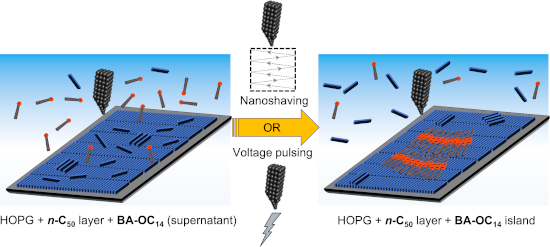
- layer. We discovered that the self-assembly on top of the buffer layer allows better control over the nanoscale manipulation of the self-assembled networks. Using the influence of the STM tip, we could initiate the nucleation of small isolated domains of the benzoic acid on-command in a reproducible


An atomic force microscope integrated with a helium ion microscope for correlative nanoscale characterization
Beilstein J. Nanotechnol. 2020, 11, 1272–1279, doi:10.3762/bjnano.11.111
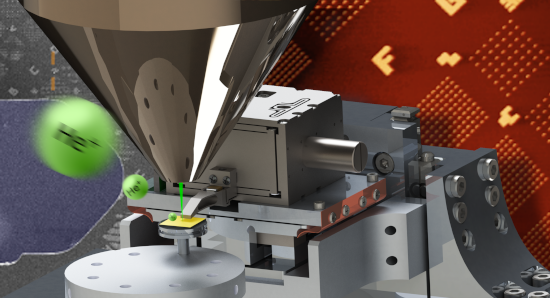
- spreading resistance microscopy (SSRM) [45]). While the implementation of these different imaging modes will require some additional modifications to our existing instrument, the path towards achieving such a truly multi-physics characterization and manipulation tool by combining advanced AFM with HIM can


Proximity effect in [Nb(1.5 nm)/Fe(x)]10/Nb(50 nm) superconductor/ferromagnet heterostructures
Beilstein J. Nanotechnol. 2020, 11, 1254–1263, doi:10.3762/bjnano.11.109
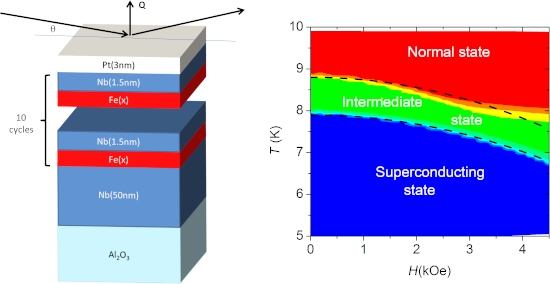
- controlled via the manipulation of the magnetic order in the F subsystem [21][22][23][24][25][26]. One possible way to exert such a control is via interaction of superconductivity and interlayer exchange coupling (IEC) of F layers through a normal metal (NM) spacer. The IEC in a F/N/F system can be tuned by


![[Graphic 13]](/bjnano/content/inline/2190-4286-11-109-i17.svg?max-width=637&scale=1.18182) ) substrate, (b) the Pt cap layer, and the Nb buffer layer grown at...
) substrate, (b) the Pt cap layer, and the Nb buffer layer grown at...


![[Graphic 16]](/bjnano/content/inline/2190-4286-11-109-i20.svg?max-width=637&scale=1.18182) (T) for the samples s4 (black) and s3 (red) in the vicinity of the superconducting transition m...
(T) for the samples s4 (black) and s3 (red) in the vicinity of the superconducting transition m...
Thermophoretic tweezers for single nanoparticle manipulation
Beilstein J. Nanotechnol. 2020, 11, 1126–1133, doi:10.3762/bjnano.11.97
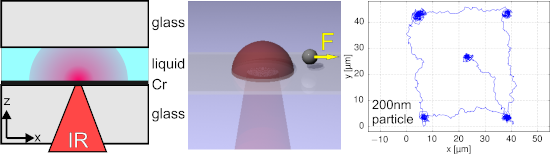
- Jost Stergar Natan Osterman Faculty of Mathematics and Physics, University of Ljubljana, Jadranska 19, Ljubljana, Slovenia J. Stefan Institute, Jamova 39, Ljubljana, Slovenia 10.3762/bjnano.11.97 Abstract We present the trapping and manipulation of a single nano-object in an aqueous medium by
- modeling gives a quantitative prediction of the effect. Traps can be dynamically created and relocated, which we demonstrate by the controlled independent manipulation of two nanoparticles. Keywords: laser; microfluidics; nano-manipulation; thermophoresis; trapping; tweezers; Introduction In science and
- technology, there is an incessant need, or at least a desire, for a (contactless) manipulation of small objects, such as nanoparticles, molecules, or even single atoms. In this work we present an approach to the thermophoretic trapping of particles in dynamic temperature gradients induced through laser


Wet-spinning of magneto-responsive helical chitosan microfibers
Beilstein J. Nanotechnol. 2020, 11, 991–999, doi:10.3762/bjnano.11.83
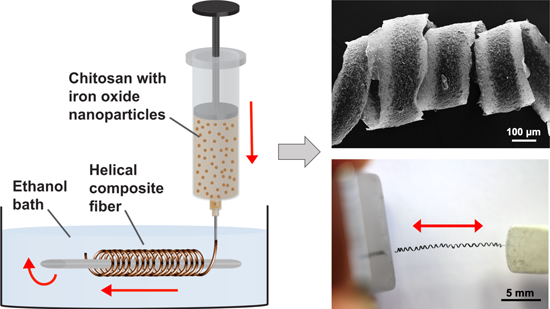
- rotating needle with a stainless steel core, which simultaneously performed a translational movement to achieve a helical fiber shape. Supporting Information Supporting Information File 31: Additional experimental data. Supporting Information File 32: Video showing the magnetic manipulation of a helical
- chitosan fiber. Magnetic manipulation of a wet-spun helical chitosan fiber with embedded IOPs using a neodymium magnet. Funding The authors thank the MAPEX initiative at the University of Bremen for financial support. D.B. and N.S. gratefully acknowledge funding by the Emmy Noether program of the German





