Search results
Search for "metal-organic frameworks" in Full Text gives 69 result(s) in Beilstein Journal of Nanotechnology.
Magnetic and luminescent coordination networks based on imidazolium salts and lanthanides for sensitive ratiometric thermometry
Beilstein J. Nanotechnol. 2018, 9, 2775–2787, doi:10.3762/bjnano.9.259
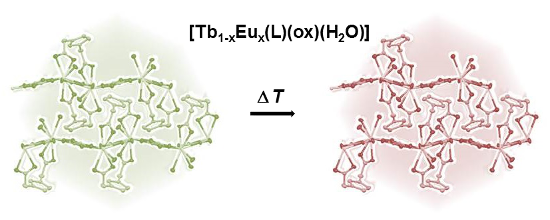
- metal-organic frameworks, operative in the physiological range with a maximum sensitivity of 1.38%·K−1 at 340 K. Keywords: coordination network; imidazolium salt; lanthanides; magnetism; thermometry; Introduction Metal-organic coordination networks have been the subject of considerable research in the
- sensitivities in the range of 250–340 K with maximum relative sensitivities, Sm, of 1.14% and 1.38%·K−1 at 340 K, respectively. For Δ1, Sm is only 0.18%·K−1. The Sr values obtained for Δ3, in particular, are among the highest reported for metal-organic frameworks or MOF-based luminescent thermometers operative

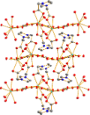


SO2 gas adsorption on carbon nanomaterials: a comparative study
Beilstein J. Nanotechnol. 2018, 9, 1782–1792, doi:10.3762/bjnano.9.169

- , e.g., for flue gas scrubbing applications. These include, but are not limited to, various zeolites [3][4], metal-organic frameworks [5][6][7][8], mesoporous silica [9][10][11] and carbon nanomaterials [12][13][14][15]. Due to its higher stability against moisture and corrosive gases (typical flue gas


Uniform cobalt nanoparticles embedded in hexagonal mesoporous nanoplates as a magnetically separable, recyclable adsorbent
Beilstein J. Nanotechnol. 2018, 9, 1770–1781, doi:10.3762/bjnano.9.168
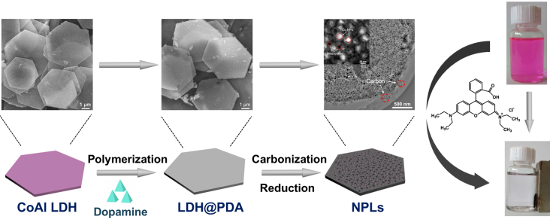
- metal-organic frameworks (MOFs) with tunable cavities and tailorable chemistry have been demonstrated as precursors to generate TM-MCNs with various morphologies [16][17], it is still a significant challenge to prepare two-dimensional (2D) TM-MCNs derived from MOFs. TM-MCNs with 2D morphology are of


Nanoporous silicon nitride-based membranes of controlled pore size, shape and areal density: Fabrication as well as electrophoretic and molecular filtering characterization
Beilstein J. Nanotechnol. 2018, 9, 1390–1398, doi:10.3762/bjnano.9.131
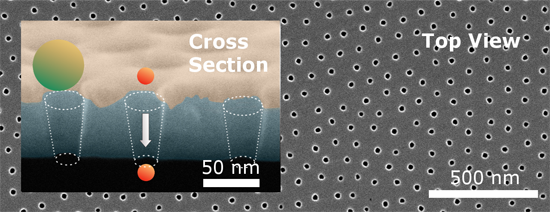
- generation of nanometer-size pores is limited to the sequential fabrication of pores [1][2][3]. But sub-nanometer pores in atomically thin graphene membranes, zeolites, two dimensional polymers, or metal-organic frameworks for the selective filtering of ions and gases can now be prepared with parallel


Review on nanoparticles and nanostructured materials: history, sources, toxicity and regulations
Beilstein J. Nanotechnol. 2018, 9, 1050–1074, doi:10.3762/bjnano.9.98

- nanofibers) or more complicated structures, such as a metal-organic frameworks. The composites may be any combinations of carbon-based, metal-based, or organic-based NMs with any form of metal, ceramic, or polymer bulk materials. NMs are synthesized in different morphologies as mentioned in Figure 1


Tailoring the nanoscale morphology of HKUST-1 thin films via codeposition and seeded growth
Beilstein J. Nanotechnol. 2017, 8, 2307–2314, doi:10.3762/bjnano.8.230
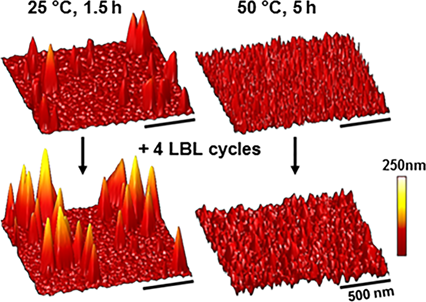
- Landon J. Brower Lauren K. Gentry Amanda L. Napier Mary E. Anderson Hope College, Department of Chemistry, Holland, MI 49422, United States 10.3762/bjnano.8.230 Abstract Integration of surface-anchored metal-organic frameworks (surMOFs) within hierarchical architectures is necessary for potential
- controllable nanoscale dimensions can be designed and fabricated for integration of MOF systems directly into device architectures and sensor platforms. Keywords: atomic force microscopy; copper(II) 1,3,5-benzenetricarboxylate; ellipsometry; surface-anchored metal-organic frameworks; Introduction Metal
- -organic frameworks (MOFs), composed of both metal ions and organic ligands, represent a class of extremely porous, crystalline materials with high surface area. Research has investigated their integration as thin films, namely surface-anchored metal-organic frameworks (surMOFs), into a wide variety of


Efficient electron-induced removal of oxalate ions and formation of copper nanoparticles from copper(II) oxalate precursor layers
Beilstein J. Nanotechnol. 2016, 7, 852–861, doi:10.3762/bjnano.7.77
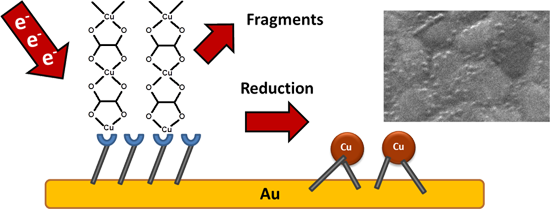
- ][12][13] and molten [5] metal salts or their aqueous solutions [6][8] as well as in polymers loaded with metal salts [14][15][16][17], metal-organic frameworks [18] and spin-coated assemblies [19]. Independent of the width and energy of the electron beam, the purity of the deposited material [18][20
- applications [23]. Layer-by-layer deposition processes employing repeated dipping steps lead to materials of well-defined thickness, an example being surface-mounted metal-organic frameworks (SurMOFs) [24]. In such materials, the metal ion surface density can be precisely controlled [25] which, in turn, should


Molecular materials – towards quantum properties
Beilstein J. Nanotechnol. 2015, 6, 1485–1486, doi:10.3762/bjnano.6.153

- or Prussian blue nano-arrays. Complementary, quantum chemical calculations have addressed lanthanide complexes and metal-organic frameworks. This Thematic Series is part of a subsession of the same title, which took place at the E-MRS spring meeting in May 2014 in Lille, France. I would like to
Advanced atomic force microscopy techniques II
Beilstein J. Nanotechnol. 2014, 5, 2326–2327, doi:10.3762/bjnano.5.241
- growth of metal-organic frameworks have been created and analyzed by a nanografting technique by using an AFM as a structuring tool [10]. The effect of Cu intercalation at the interface of self-assembled monolayers and a Au(111)/mica substrate was analyzed by STM [11] as well as the growth behavior of
Experimental techniques for the characterization of carbon nanoparticles – a brief overview
Beilstein J. Nanotechnol. 2014, 5, 1760–1766, doi:10.3762/bjnano.5.186
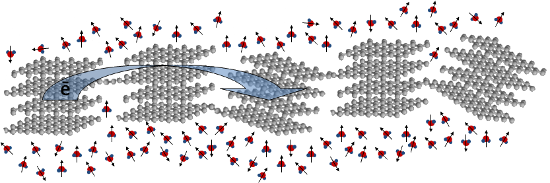
- to control the charge carrier transport (“tunable electrical conductivity”) was shown in porous metal-organic frameworks (MOFs) with adsorbed guest molecules [9]. It was also shown that by appropriate choice of guest molecules, it is possible to control the charge (spin) transport in the nano


Quasi-1D physics in metal-organic frameworks: MIL-47(V) from first principles
Beilstein J. Nanotechnol. 2014, 5, 1738–1748, doi:10.3762/bjnano.5.184
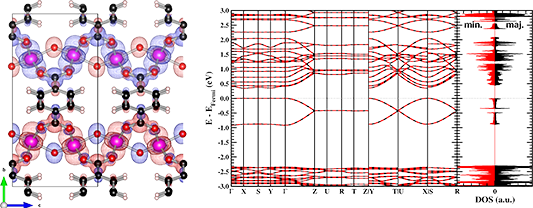
- dispersion along the the direction of the VO6 chains, similar as for other quasi-1D materials. Keywords: band structure; density functional theory (DFT); low-dimensional electronics; metal-organic frameworks (MOFs); MIL-47; Introduction Metal-organic frameworks (MOFs) present a class of materials located


Magnesium batteries: Current state of the art, issues and future perspectives
Beilstein J. Nanotechnol. 2014, 5, 1291–1311, doi:10.3762/bjnano.5.143
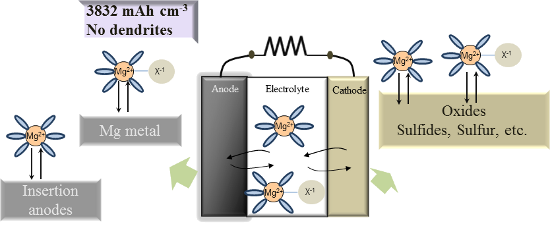
- study proposed using coordinatively unsaturated metal-organic frameworks (MOFs) as nano media to immobilize magnesium phenolate and/or Mg(TFSI)2/triglyme electrolytes (phenolates were found to be more soluble in triglyme than in tetrahydrofuran) [50]. As the phenolates were strongly interacting with the


Purification of ethanol for highly sensitive self-assembly experiments
Beilstein J. Nanotechnol. 2014, 5, 1254–1260, doi:10.3762/bjnano.5.139
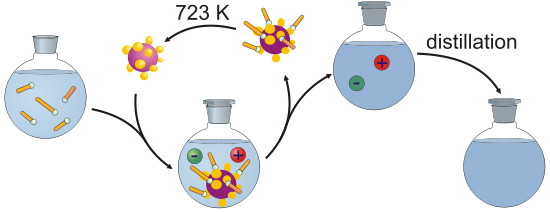
- modification [4], e.g., as etch resist for microfabrication [5][6], as support for molecular systems like metal-organic frameworks or biomolecules [7], or for the tuning of electronic properties of metal surfaces [8][9][10][11][12], to mention just a few. One reason for the popularity of SAMs is their ease of

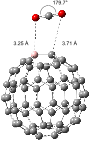
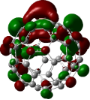
Neutral and charged boron-doped fullerenes for CO2 adsorption
Beilstein J. Nanotechnol. 2014, 5, 413–418, doi:10.3762/bjnano.5.49
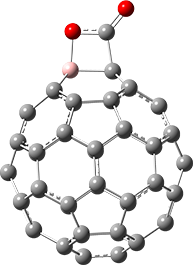
- years metal organic frameworks (MOFs) have emerged as solid CO2 adsorbent materials due to their tuneable chemical and physical properties. Particularly, there is growing interest for metal free carbon-based nanomaterials for gas adsorption. Carbon-based nanomaterials such as fullerene, carbon nanotubes



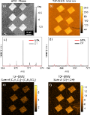
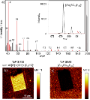
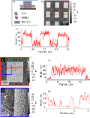
Site-selective growth of surface-anchored metal-organic frameworks on self-assembled monolayer patterns prepared by AFM nanografting
Beilstein J. Nanotechnol. 2013, 4, 638–648, doi:10.3762/bjnano.4.71
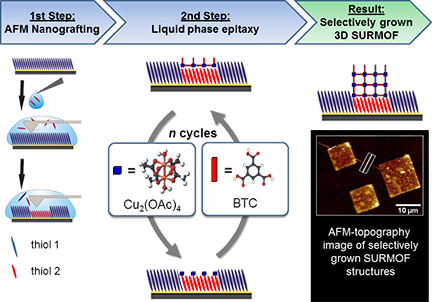
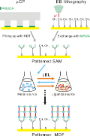
- of Technology (KIT), Hermann-von-Helmholtz-Platz 1, 76344 Eggenstein-Leopoldshafen, Germany 10.3762/bjnano.4.71 Abstract Surface anchored metal-organic frameworks, SURMOFs, are highly porous materials, which can be grown on modified substrates as highly oriented, crystalline coatings by a quasi
- grown via LPE were investigated and characterized by atomic force microscopy and Fourier-transform infrared microscopy. Keywords: atomic force microscopy (AFM); metal-organic frameworks; nanografting; nanoshaving; SURMOF; Introduction Metal organic frameworks (MOFs) are highly crystalline three
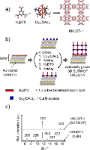
- recently developed that produces very smooth, homogeneous MOF-coatings. These surface anchored metal–organic frameworks (SURMOFs) exhibit a uniform layer thickness and are fabricated using a novel layer-by-layer (LBL) method [16][17][18][19][20]. This procedure is schematically shown in Figure 1b. First, a





The oriented and patterned growth of fluorescent metal–organic frameworks onto functionalized surfaces
Beilstein J. Nanotechnol. 2012, 3, 570–578, doi:10.3762/bjnano.3.66
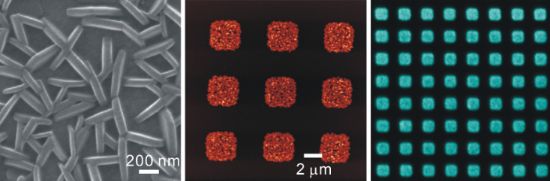
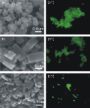
- -assembled monolayer; surface-attached metal–organic framework; Introduction Metal–organic frameworks (MOFs) are a fascinating class of organic–inorganic hybrid materials with nanometer-sized pores. The size and density of the pores renders these materials with extraordinary large free volumes and inner





Radiation-induced nanostructures: Formation processes and applications
Beilstein J. Nanotechnol. 2012, 3, 533–534, doi:10.3762/bjnano.3.61
- –liquid–solid approach and the preparation of monolayers of metal–organic frameworks attached to the functional groups of a self-assembled monolayer (see, e.g., [1][2][3][4]). Not as wide-spread, but rapidly developing, is the technique of focused electron beam induced deposition (FEBID) [5]. In this
Micro- and mesoporous solids: From science to application
Beilstein J. Nanotechnol. 2011, 2, 774–775, doi:10.3762/bjnano.2.85
- , geometry and pore dimensions make these materials outstanding with respect to, e.g., catalytic reaction processes, in the area of sensorics, photonics and gas storage (Figure 1). In the realm of gas storage, mesoporous metal–organic frameworks (MOFs) appeared on the scene a couple of years ago and have

On the reticular construction concept of covalent organic frameworks
Beilstein J. Nanotechnol. 2010, 1, 60–70, doi:10.3762/bjnano.1.8
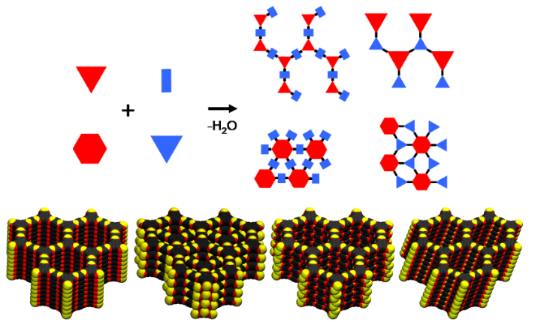
- preservation throughout the assembly process are the key factors that lead to the design and synthesis of reticular structures. One of the first families of materials synthesized using reticular chemistry were the so-called Metal-Organic Frameworks (MOFs) [4]. They are composed of metal-oxide connectors, which