Search results
Search for "micelles" in Full Text gives 117 result(s) in Beilstein Journal of Nanotechnology.
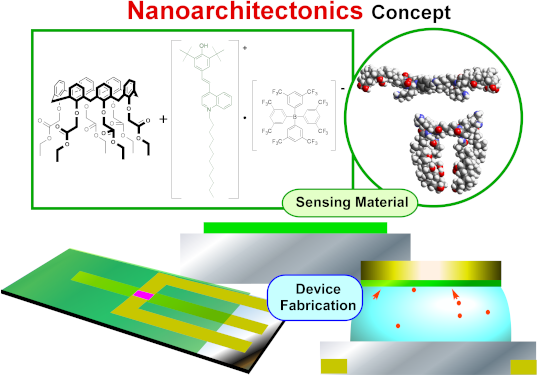
Review of advanced sensor devices employing nanoarchitectonics concepts
Beilstein J. Nanotechnol. 2019, 10, 2014–2030, doi:10.3762/bjnano.10.198
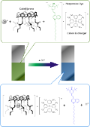
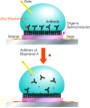
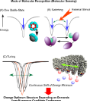
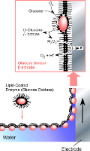
- disadvantageous in the formation of host–guest complexes. However, the incorporation of guanidinium functionality into molecular assemblies such as aqueous micelles and lipid bilayers to place recognition sites at a mesoscopic interface increased the binding constants between guanidinium and phosphate to 102–104





Gold-coated plant virus as computed tomography imaging contrast agent
Beilstein J. Nanotechnol. 2019, 10, 1983–1993, doi:10.3762/bjnano.10.195
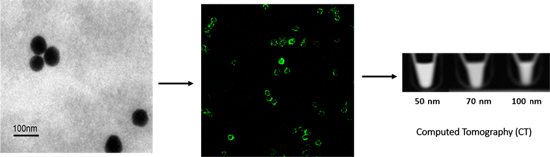
- contrast agents including gold nanoparticles (AuNPs) [13], bromine [14], platinum [15], ytterbium [16], gadolinium [4], and tungsten [15]. Many of the systems are made up of a core that is coated with a polymeric material such as liposomes [17], micelles [13], lipoproteins or polymeric nanoparticles [18
- ]. One of the first examples of such NP-based systems was reported by Caride et al. using brominated phospholipids packaged into liposomes and administered to dogs. Contrast enhancement signals of 40 HU were observed in the liver of imaged animals [14]. Two hours after injection, micelles loaded with


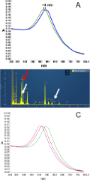


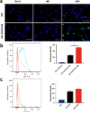
Engineered superparamagnetic iron oxide nanoparticles (SPIONs) for dual-modality imaging of intracranial glioblastoma via EGFRvIII targeting
Beilstein J. Nanotechnol. 2019, 10, 1860–1872, doi:10.3762/bjnano.10.181
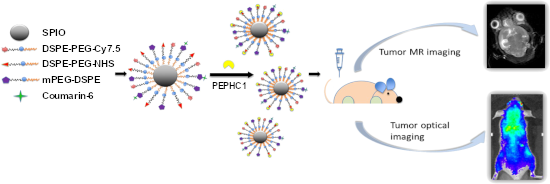
- -coated iron oxide nanoparticles to target tumor-associated macrophages [36] and D-AE-peptide-modified micelles as a multitarget drug delivery system [37], the benefits of the nanoprobe in this study are described as follows. First, the nanoprobe has a diameter of around 100 nm and can directly pass




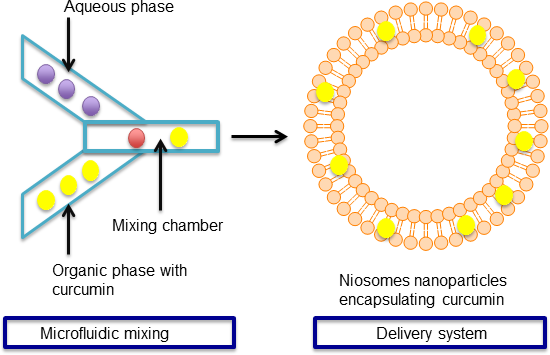
Microfluidic manufacturing of different niosomes nanoparticles for curcumin encapsulation: Physical characteristics, encapsulation efficacy, and drug release
Beilstein J. Nanotechnol. 2019, 10, 1826–1832, doi:10.3762/bjnano.10.177
- unwanted side effects [8][9]. Liposomes, solid lipid nanoparticles, dendrimers, micelles, polymeric nanoparticles, gold nanoparticles, and carbon nanotubes are among the most common types of nanoparticle delivery systems [10]. These efforts have been reported in several studies. For example, Guo et al


Materials nanoarchitectonics at two-dimensional liquid interfaces
Beilstein J. Nanotechnol. 2019, 10, 1559–1587, doi:10.3762/bjnano.10.153
- guanidinium-functionalized aqueous micelles and lipid bilayers reaches values of 102 to 104 M−1. Surprisingly, the binding constant of the same recognition pair further increases to 106 to 107 M−1 when a macroscopic less dynamic interface, the air–water interface, is used as the recognition medium [157][158













Tailoring the stability/aggregation of one-dimensional TiO2(B)/titanate nanowires using surfactants
Beilstein J. Nanotechnol. 2019, 10, 1024–1037, doi:10.3762/bjnano.10.103
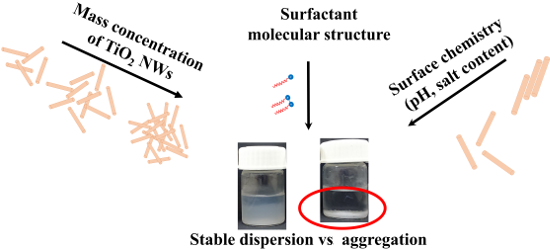
- in aqueous solutions. In order to fill this void, in this study, the effect of monomers and micelles of (a) monomeric dodecyltrimethylammonium bromide (DTAB), and (b) its corresponding gemini, bis(N,N-dimethyl-N-dodecyl)ethylene-1,2-diammonium dibromide (12-2-12) quaternary ammonium surfactant
- micelles) on the stability of TNWs was assessed in two media, water and aqueous electrolyte solution of sodium bromide, thus increasing the complexity of the investigated systems. The observed effects were quantified by surface complexation modeling (SCM) in order to describe the TNW behavior when
- tension with increase of surfactant concentration up to almost constant σ values, indicating the formation of micelles. As expected, 12-2-12 exhibited considerably lower σ values as well as a lower critical micelle concentration (cmc) than DTAB (Table S1 in Supporting Information) indicating its greater


Self-assembly and wetting properties of gold nanorod–CTAB molecules on HOPG
Beilstein J. Nanotechnol. 2019, 10, 696–705, doi:10.3762/bjnano.10.69
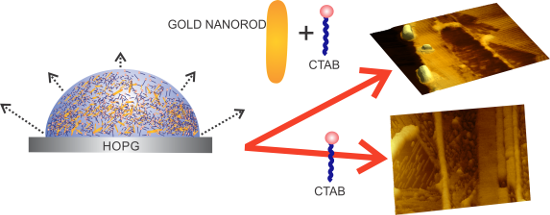
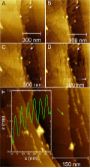
- surface. The self-assembled layers of CTAB molecules on the HOPG terraces prior to nanorod deposition were shown to change the wettability of the surface, and as a result, gold nanorod deposition takes place on nonwetting HOPG terraces. Keywords: CTAB; gold nanorods; micelles; self-assembly; wettability
- ; Introduction In the last few decades there have been many studies that focused on hard colloidal particles and micelles, covering a length scale ranging from nanometers to micrometers. The focus of nanoscience and nanotechnology is increasingly shifting from synthesis to assembly into larger superstructures
- that CTAB surfactant molecules can self-assemble on a highly ordered pyrolytic graphite (HOPG) surface in the form of hemi-cylindrical micelles [43][44][45]. The surface of HOPG is hydrophobic [46][47], while the CTAB molecules have a hydrophilic end group and a hydrophobic tail [48]. Therefore, to


pH-mediated control over the mesostructure of ordered mesoporous materials templated by polyion complex micelles
Beilstein J. Nanotechnol. 2019, 10, 144–156, doi:10.3762/bjnano.10.14
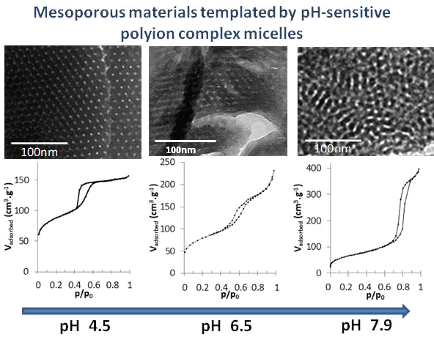
- Coulomb, UMR 5221 CNRS – Université de Montpellier, 34095 Montpellier, France 10.3762/bjnano.10.14 Abstract Ordered mesoporous silica materials were prepared under different pH conditions by using a silicon alkoxide as a silica source and polyion complex (PIC) micelles as the structure-directing agents
- . PIC micelles were formed by complexation between a weak polyacid-containing double-hydrophilic block copolymer, poly(ethylene oxide)-b-poly(acrylic acid) (PEO-b-PAA), and a weak polybase, oligochitosan-type polyamine. As both the micellization process and the rate of silica condensation are highly
- ; hybrid organic–inorganic interface; mesoporous materials; nanostructured materials; polyion complex micelles; polyion electrostatic complexation; Introduction Due to their unique physicochemical properties originating from their uniform pore size and periodically arranged network at the mesoscale


Enhanced antineoplastic/therapeutic efficacy using 5-fluorouracil-loaded calcium phosphate nanoparticles
Beilstein J. Nanotechnol. 2018, 9, 2499–2515, doi:10.3762/bjnano.9.233
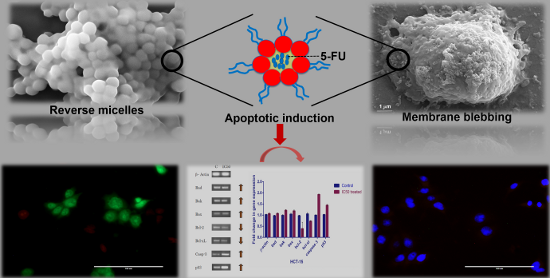
- –surfactant molar ratio (MW). By restricting the water–surfactant molar ratio up to 10 (i.e., MW < 10) the reverse micelles can be readily formed with narrow size distribution in a synthetic reaction system [23]. The water molecules restricted inside hydrophilic core resulted in swollen micelles that were


High-throughput micro-nanostructuring by microdroplet inkjet printing
Beilstein J. Nanotechnol. 2018, 9, 2372–2380, doi:10.3762/bjnano.9.222
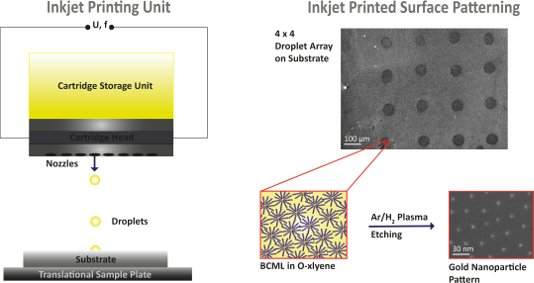
- densities is highly important in many fields, ranging from nano-optics to biosensor technologies and biomaterials. A well-established method to fabricate quasi-hexagonal patterns of metal nanoparticles is block copolymer micelle nanolithography, which relies on the self-assembly of metal-loaded micelles on
- surfaces by a dip-coating or spin-coating process. Using this method, the spacing of the nanoparticles is controlled by the size of the micelles and by the coating conditions. Whereas block copolymer micelle nanolithography is a high-throughput method for generating well-ordered nanoparticle patterns at
- spacing between a few tens to several hundreds of nanometers is block copolymer micelle nanolithography (BCML) [8]. This technique is based on the self-assembly of metal-containing micelles on surfaces during dip-coating or spin-coating. BCML is very efficient in coating large areas with nanoparticles in


Block copolymers for designing nanostructured porous coatings
Beilstein J. Nanotechnol. 2018, 9, 2332–2344, doi:10.3762/bjnano.9.218
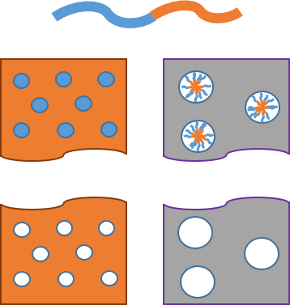
- micelles, reverse micelles as well as worm-like structures, lamellar sheets, and vesicles (Figure 5). As mentioned previously, the thermodynamic incompatibility between the blocks forming the polymer chains is the driving force behind the formation of such nanostructures [4][35]. In this context, this


Nanoconjugates of a calixresorcinarene derivative with methoxy poly(ethylene glycol) fragments for drug encapsulation
Beilstein J. Nanotechnol. 2018, 9, 2057–2070, doi:10.3762/bjnano.9.195
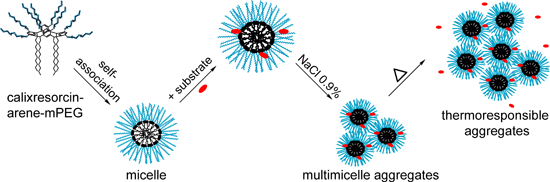
- nanoassociates that are able to encapsulate organic substrates of different hydrophobicity, including drugs (doxorubicin, naproxen, ibuprofen, quercetin). The micelles of the macrocycle slowed down the release of the hydrophilic substrates in vitro. In physiological sodium chloride solution and phosphate
- -buffered saline, the micelles of the macrocycle acquire thermoresponsive properties and exhibit a temperature-controlled release of doxorubicin in vitro. The combination of the low toxicity and the encapsulation properties of the obtained calixresorcinarene–mPEG conjugate shows promising potential for the
- various therapeutics and nanomaterials due to a number of benefits among which its low toxicity the most important [23][24]. PEG has good solubility in water and organic solvents. When being a component of polymeric micelles, it forms the outer hydrophilic shell of the micelle, contributes the colloidal


Self-assembled quasi-hexagonal arrays of gold nanoparticles with small gaps for surface-enhanced Raman spectroscopy
Beilstein J. Nanotechnol. 2018, 9, 1977–1985, doi:10.3762/bjnano.9.188
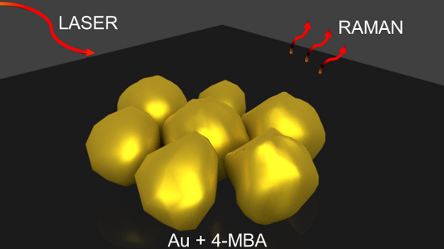
- /mL and stirred for 2 days. The micelles were loaded with chlorauric acid (HAuCl4, loading parameter (L = 0.5), Sigma-Aldrich) and stirred again for 2 days. Spin-coating was applied to cover the substrate with a monolayer of the gold-loaded micelles (30 s at 2000 rpm). Electroless deposition A quartz
- block [23]. The hydrophobic PS forms the shell, and the hydrophilic P2VP the core of the spherically shaped micelles [24]. Within their core gold salt can be assembled, which is bonded by protonization or complexation [25]. The loaded spherical micelles form a hexagonal array when being deposited on a
- substrate. Exposing them to an aqueous environment promotes a morphological change of the spherical micelles [18]. In the next step, the micelles are treated with UV irradiation, which causes the gold salt particles in the center to grow bigger by photochemical growth [18]. To enlarge the metal precursor



Nanoporous silicon nitride-based membranes of controlled pore size, shape and areal density: Fabrication as well as electrophoretic and molecular filtering characterization
Beilstein J. Nanotechnol. 2018, 9, 1390–1398, doi:10.3762/bjnano.9.131
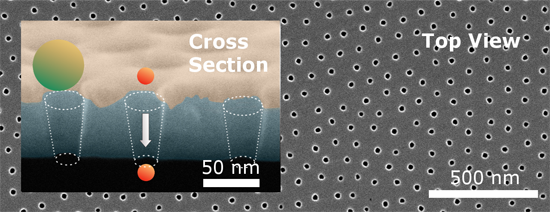
- . 12 nm) are deposited on the silicon oxide layer with a quasi-hexagonal order by self-organization. This is realized by dip-coating from a solution of Au salt-loaded PS–P2VP diblock copolymer micelles directly on the upper membrane face (coating is done without preceding deposition of appropriate
- self-organization of Au-loaded diblock copolymer micelles followed by plasma treatments. (b) Applying a photochemical growth process the Au NP size can be enlarged in a controlled way. (c) The resulting NP mask is exploited to etch nanopillars by RIE, (d) a Cr layer (black) is evaporated, (e) and the


A simple extension of the commonly used fitting equation for oscillatory structural forces in case of silica nanoparticle suspensions
Beilstein J. Nanotechnol. 2018, 9, 1095–1107, doi:10.3762/bjnano.9.101
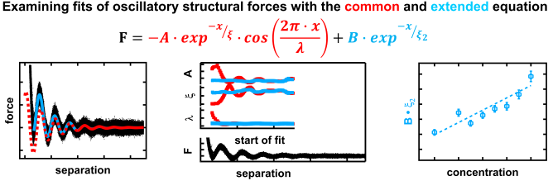
- , aggregates or micelles tend to form a well-ordered layer in close proximity to a confining surface (henceforth called wall) with a density that is higher than that of the bulk. Since the molecules cannot penetrate each other, this layer of increased density is bordering on a region of lower density of


Review on nanoparticles and nanostructured materials: history, sources, toxicity and regulations
Beilstein J. Nanotechnol. 2018, 9, 1050–1074, doi:10.3762/bjnano.9.98

- structures such as dendrimers, micelles, liposomes and polymer NPs. (iv) Composite-based nanomaterials: Composite NMs are multiphase NPs and NSMs with one phase on the nanoscale dimension that can either combine NPs with other NPs or NPs combined with larger or with bulk-type materials (e.g., hybrid


Optical orientation of nematic liquid crystal droplets via photoisomerization of an azodendrimer dopant
Beilstein J. Nanotechnol. 2018, 9, 870–879, doi:10.3762/bjnano.9.81
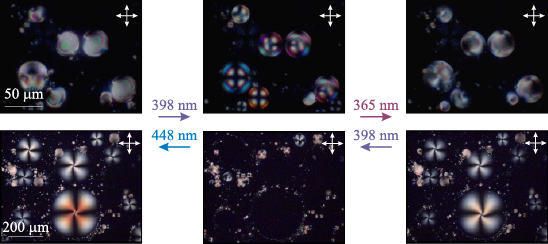
- different kinds of soft matter, such as light-driven polymers [5][6], elastomers [7][8][9] microgel particles [10][11], micelles [12][13], nematic liquid crystals (NLCs) [7][14], liquid-crystalline (LC) polymers [15][16][17][18] and Langmuir–Blodgett films [19][20] with light-controllable supramolecular


The role of ligands in coinage-metal nanoparticles for electronics
Beilstein J. Nanotechnol. 2017, 8, 2625–2639, doi:10.3762/bjnano.8.263
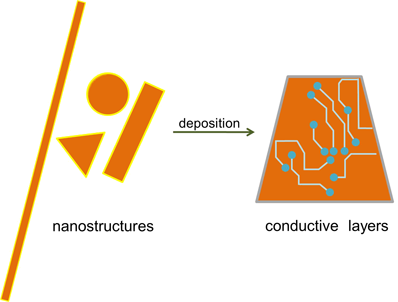
- particular facets [2]. Their structure-directing action is due to a combination of thermodynamic driving forces (energy differences in facets) and transport modulation, where ligand coverage adjusts diffusion of monomers to the facets [2]. Some ligands also form micelles that can act as templates during the


Fabrication of carbon nanospheres by the pyrolysis of polyacrylonitrile–poly(methyl methacrylate) core–shell composite nanoparticles
Beilstein J. Nanotechnol. 2017, 8, 1897–1908, doi:10.3762/bjnano.8.190

- nanospheres were first fabricated by Kowaleski et al. [31] via successive shell crosslinking, oxidization and carbonization of the micelles resulting from the self-assembly of PAN-b-poly(acrylic acid) (PAA) block copolymer in water. The crosslinked shell can retain the micelle structure during the heat
- treatments, and thus is very crucial to obtain discrete carbon nanospheres after pyrolysis. Jérom et al. [32] obtained discrete carbon nanocapules after pyrolysis of stable PAN-b-PAA micelles with Au-nanoparticle-crosslinked cores. However, the difficulty in synthesis of the block copolymers and the low
- observed in the cavitation of non-covalently-connected micelles composed of carboxyl-ended polybutadiene cores and crosslinked poly(vinyl alcohol) shells in THF/water (9/1, v/v) mixture [44]. It was very possible that the size of PAN chains was too large to diffuse out of the PMMA shell, thus, the



Self-assembly of chiral fluorescent nanoparticles based on water-soluble L-tryptophan derivatives of p-tert-butylthiacalix[4]arene
Beilstein J. Nanotechnol. 2017, 8, 1825–1835, doi:10.3762/bjnano.8.184
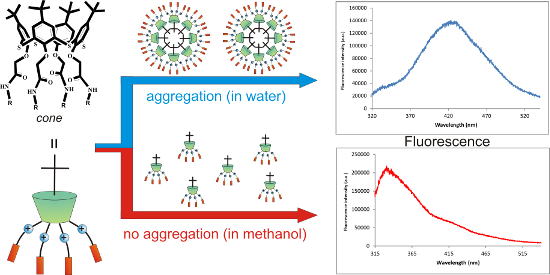
- agreement was observed between the DLS data and the microscopy measurements in the case of the compounds 8 and 10 in cone conformation. This is due to the structure of the macrocycles, which formed spherical charged particles (micelles) with inwardly directed hydrophobic parts (thiacalixarene) and outwardly
- oriented hydrophilic positively charged fragments in the solution (Figure 1). The charge on the micelles prevents them from aggregating when we concentrate the solutions for preparation of the SEM experiment. This leads to the preservation of individual particles of similar size to those that exist in



Two-dimensional carbon-based nanocomposites for photocatalytic energy generation and environmental remediation applications
Beilstein J. Nanotechnol. 2017, 8, 1571–1600, doi:10.3762/bjnano.8.159
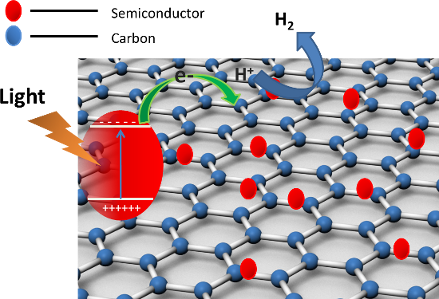
- , an anionic surfactant gets adsorbed on the surface of graphene sheets and helps in the dispersion of graphene sheets. Then, the surfactant micelles with graphene sheets bind with metal cations and hence act as building block for self-assembly of metal oxides. Finally metal oxides become crystallized


Spin-chemistry concepts for spintronics scientists
Beilstein J. Nanotechnol. 2017, 8, 1427–1445, doi:10.3762/bjnano.8.143


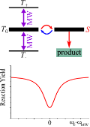
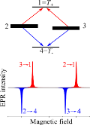
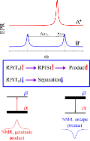

Synthesis of [Fe(Leq)(Lax)]n coordination polymer nanoparticles using blockcopolymer micelles
Beilstein J. Nanotechnol. 2017, 8, 1318–1327, doi:10.3762/bjnano.8.133
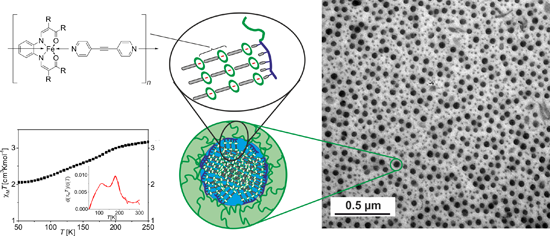
- -poly(4-vinylpyridine) (PS-b-P4VP) block copolymer (BCP) micelles as template. Variation of the solvent (THF and toluene) and the rigidity of the axial ligand Lax (Lax = 1,2-di(pyridin-4-yl)ethane) (bpea), trans-1,2-di(pyridin-4-yl)ethene (bpee), and 1,2-di(pyridin-4-yl)ethyne) (bpey); Leq = 1,2
- dynamic light scattering (DLS) in solution, transmission electron microscopy (TEM) and powder X-ray diffraction (PXRD) in the solid. The hydrodynamic diameter of the polymeric micelles loaded with the CP measured by DLS is constant within the error of the measurement throughout all measured samples with
- the measurement, the NP core size is in the same order of magnitude for all samples with an average size of 45 nm (Table 1), demonstrating the excellent size control by the micelles themselves. The NP core size is independent of the number of cycles and independent of the used coordination polymer



The longstanding challenge of the nanocrystallization of 1,3,5-trinitroperhydro-1,3,5-triazine (RDX)
Beilstein J. Nanotechnol. 2017, 8, 452–466, doi:10.3762/bjnano.8.49
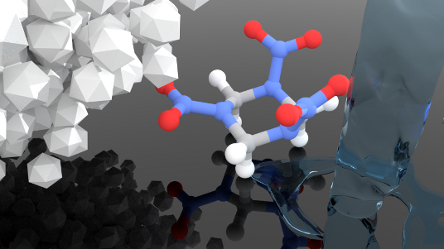
- substitution using reverse micelles Dabin et al. [22] have developed an ingenious method to prepare nanometer-scale RDX using a simple technique. The crystallization is triggered by a solvent substitution, and the nanometer scale material is obtained by restricting the reactor volume using reverse micelles
- . NaAOT (sodium 1,4-bis(2-ethylhexoxy)-1,4-dioxobutane-2-sulfonate) with isooctane was used to form reverse micelles. Then RDX in dimethylformamide (DMF) is added to one solution containing these micelles, and water to another solution of micelles. Both are finally mixed together to form the n-RDX with a


Nanoscale isoindigo-carriers: self-assembly and tunable properties
Beilstein J. Nanotechnol. 2017, 8, 313–324, doi:10.3762/bjnano.8.34
- and hydrogen bonding. Another strategy is the use of soft matter (micelles, emulsions, dendrimers, nanospheres, solid lipid nanoparticles or liposomes) as the delivery vehicle. These studies have been encouraged by the possibility to prevent side effects, to increase drug bioavailability, to decrease
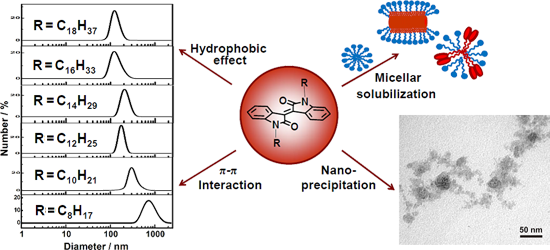
- [66]: Data in Table S3 (Supporting Information File 1) show that packing parameters (P) are 0.25 and 0.12 for compounds 1g and 3, respectively, which makes it plausible to assume the occurrence of spherical normal micelles. For derivatives 2a–h P values are close to 0.5, which indicates the formation
- hydropohobic solutes including drugs. Furthermore, the solubilization of organic hydrophobic dyes makes it possible to detect the formation of micelles in solution [67]. In Figure 4a, the dependence of the absorbance of hydrophobic dye (Sudan I) on the concentration of isoindigo derivatives 2g and 2h is shown