


Search results
Search for "mobility" in Full Text gives 473 result(s) in Beilstein Journal of Nanotechnology. Showing first 200.
Emerging strategies in the sustainable removal of antibiotics using semiconductor-based photocatalysts
Beilstein J. Nanotechnol. 2025, 16, 264–285, doi:10.3762/bjnano.16.21
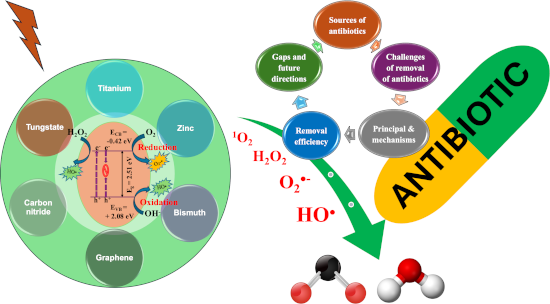
- particularly high when the dipole moment exceeds 2.0 D. The hybridization of halogens does not impact electron mobility. However, it does lead to a decrease in hole mobility while possibly enhancing the separation of charge carriers [94]. In order to enhance the photocatalytic activity of BiOX, significant
- sites, slow kinetics of surface reactions, and the reduced mobility of charges, resulting in electron delocalization [99][100]. The molecular rearrangement of g-C3N4 has been the subject of recent research because of its potential to alter the surface chemistry and textural structure [101]. This
- capabilities in degrading CIP (82.6% within 2 h) and generating hydrogen from rainwater. The effective separation and mobility of photogenerated charge carriers were credited to the role of Ag nanoparticles as electron mediators. There are some other observations, which are shown below in Table 4. Graphene



Recent advances in photothermal nanomaterials for ophthalmic applications
Beilstein J. Nanotechnol. 2025, 16, 195–215, doi:10.3762/bjnano.16.16
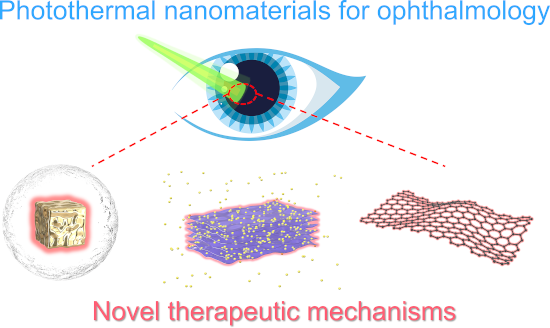
- treatment of chronic ocular diseases, as well as the “explosive release” of passive drug delivery systems [116]. Furthermore, photothermal drug delivery systems can be surface-modified to prolong drug residence time, improve mobility, avoid trapping, and provide targeting capabilities, which helps to


A review of metal-organic frameworks and polymers in mixed matrix membranes for CO2 capture
Beilstein J. Nanotechnol. 2025, 16, 155–186, doi:10.3762/bjnano.16.14
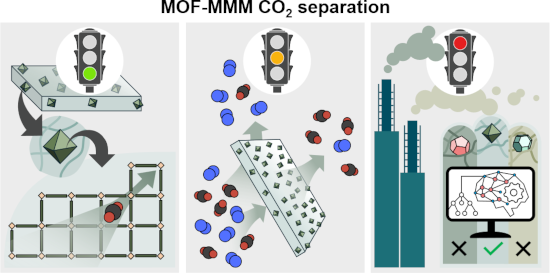
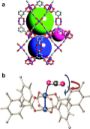
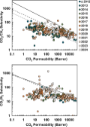
- al. [117], it was demonstrated that existing MMM models consistently overestimated gas permeability in molecular sieve-integrated membranes, a discrepancy attributed to reduced polymer chain mobility at the polymer–sieve interface region, as evidenced by independent observations of increased glass
- reduce the rigidified polymer formation. The overall rigidity of the polymer also has a large impact on the MOF–polymer interface. Rubbery polymers tend to reduce the propensity for interface defects, as the polymer chain mobility enables better confinement to the MOF surface [114][116]. However, as
- stated, the more flexible the polymer, the less selective, yet more permeable, it becomes. In contrast, glassy polymers, characterized by low chain mobility and increased rigidity, have the benefit of restricting the movement of gas molecules, but at the cost of reduced permeability and MOF compatibility




Comparison of organic and inorganic hole transport layers in double perovskite material-based solar cell
Beilstein J. Nanotechnol. 2025, 16, 119–127, doi:10.3762/bjnano.16.11
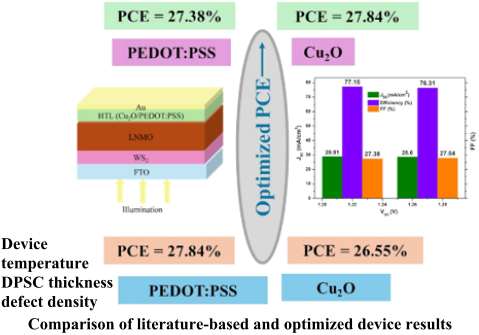
- PEDOT:PSS are the two HTLs that are analyzed concerning the double perovskite material LNMO. The HTL needs better conductivity, better electron blocking, and more hole mobility for better carrier transportation at the perovskite/HTL interface. It is hydrophobic with a wider bandgap and does not easily
- deteriorate. Inorganic HTLs proved to perform better. Some examples of inorganic HTLs are CuI, Cu2O, and CuSCN. Organic HTLs consist of polymers or complex molecules, which affect the photovoltaic properties of the device in terms of light absorption and carrier mobility. Some examples of organic materials
- both HTL materials (Table 3 and Figure 3). The increase of the PCE with Cu2O signifies a better absorption of light with minimum reflection and, hence, increased carrier transportation across the interface. Cu2O is inorganic, and the high temperature leads to improved hole mobility and better charge


Bioinspired nanofilament coatings for scale reduction on steel
Beilstein J. Nanotechnol. 2025, 16, 25–34, doi:10.3762/bjnano.16.3

- silicone nanofilaments on steel surfaces, a novel application that has not been previously reported. The results indicate that SNF coatings can effectively render steel surfaces super-hydrophobic, as evidenced by high contact angles, high droplet mobility, and stable morphology under shear stress and


Mechanistic insights into endosomal escape by sodium oleate-modified liposomes
Beilstein J. Nanotechnol. 2024, 15, 1667–1685, doi:10.3762/bjnano.15.131
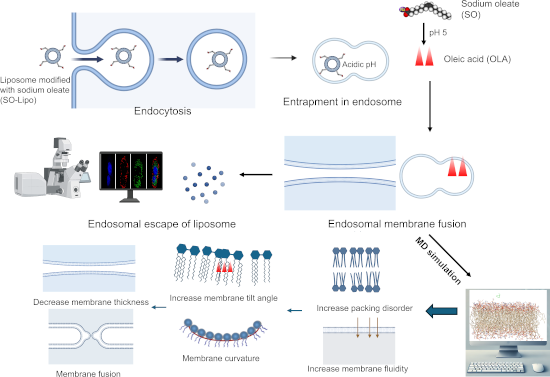
- rather than deep penetration into the hydrophobic core. The MSD analysis (Figure 8f) reveals that OLA significantly enhances the lateral mobility of lipids within the bilayer, indicative of a fluidizing effect. This increased mobility likely results from OLA’s ability to disrupt lipid packing through its
- lipid disorder. This was evidenced by changes in the SCD, reflecting disruption in the orderly packing of lipid acyl chains. The incorporation of OLA disrupts this packing, contributing to increased membrane fluidity. Simultaneously, the simulations revealed enhanced lateral mobility of lipids, as




Ultrablack color in velvet ant cuticle
Beilstein J. Nanotechnol. 2024, 15, 1554–1565, doi:10.3762/bjnano.15.122

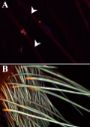
- occurs in forested habitats adjoining open landscapes. Demonstrating remarkable mobility, it covers significant distances in pursuit of hosts on the ground. While sightings may occur throughout the day, peak activity typically coincides with the early morning and late afternoon, during periods of subdued



The round-robin approach applied to nanoinformatics: consensus prediction of nanomaterials zeta potential
Beilstein J. Nanotechnol. 2024, 15, 1536–1553, doi:10.3762/bjnano.15.121
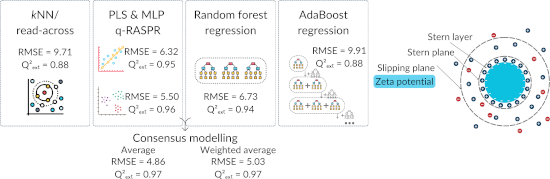
- of nanoinformatics, various consensus approaches have been proposed over the past years for the prediction of different NM endpoints, such as NMs’ cellular uptake [20], zeta potential (ZP) [16], and electrophoretic mobility [21]. The complexity of predictive models requires the development of


Out-of-plane polarization induces a picosecond photoresponse in rhombohedral stacked bilayer WSe2
Beilstein J. Nanotechnol. 2024, 15, 1362–1368, doi:10.3762/bjnano.15.109
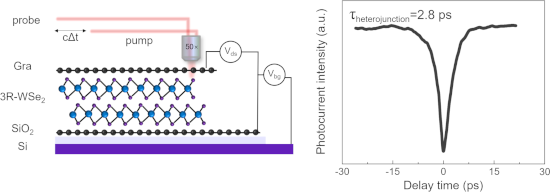
- consistent, demonstrating that the high-speed heterojunction photodetector can work under various conditions. Comparison of TRPC in the heterojunction and graphene regions We then considered the intrinsic response time of graphene within the heterojunction. Because of its high carrier mobility and broadband


Hymenoptera and biomimetic surfaces: insights and innovations
Beilstein J. Nanotechnol. 2024, 15, 1333–1352, doi:10.3762/bjnano.15.107
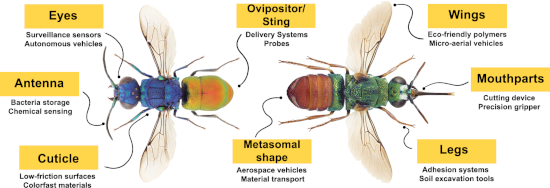
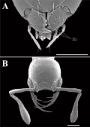
- applications in environmental monitoring, food safety, and medical diagnostics [98]. The mobility of the antennae of long-horned bees (e.g., Eucera longicornis) are used by males to court females by gently grasping and pressing their antennae (Figure 1C). The antennae of long-horned bees and other
- are movable and exhibit an elastic base to ensure the high mobility of wings [124]. The coordinated movement of wings facilitated by this mechanism enables synchronized action and improved aerodynamic performance, while also allowing for decoupling during periods of rest, thereby avoiding aerodynamic
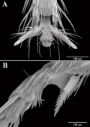
- on the uneven surfaces of host eggs [134]. These examples highlight the potential for biomimetic applications of such structures in developing advanced adhesive technologies and improving robotic mobility on uneven terrain and in microgravity environments [135]. Corbicula: Several bee species (e.g




Quantum-to-classical modeling of monolayer Ge2Se2 and its application in photovoltaic devices
Beilstein J. Nanotechnol. 2024, 15, 1153–1169, doi:10.3762/bjnano.15.94
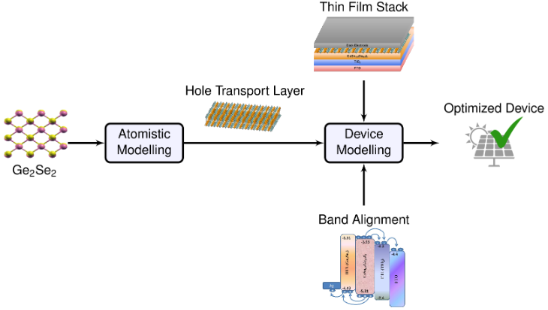
- -scale production more feasible [9]. Also, the mechanical robustness and flexibility of the 2D materials will give extra room to design the PSCs for a wide range of applications areas [10]. The high carrier mobility and enhanced optoelectronic characteristics can improve the device performance of
- valleys provides extra carrier pockets for transportation, further increasing carrier mobility. Also, the larger valley degeneracy will increase the density of states (DOS) effective mass without influencing the carrier mobility. We have also calculated the total DOS to understand and justify the band
- ), conduction/valence band density of states, electron/hole mobility, electron affinity, and work function can be derived from the initial band energy calculation. We calculated the effective masses of electrons and holes as = 0.167me and = 0.1768me, respectively, which are very close to the values ( = 0.17me




Direct electron beam writing of silver using a β-diketonate precursor: first insights
Beilstein J. Nanotechnol. 2024, 15, 1117–1124, doi:10.3762/bjnano.15.90

- increased mobility of the metallic clusters leading to Ostwald ripening were assumed to play an important role [9]. In order to achieve practicable vertical growth rates, new precursors are being searched for that allow for lower process temperatures. Here, we employ the compound (hfac)AgPMe3 (cf
- or Hhfac, removing most of the ligand elements. A second important factor here could be the thermal energy input from the elevated stage temperature of 60 °C, which increases the mobility of the formed silver atoms and clusters in the carbonaceous matrix. Finally, collisional momentum transfer from
- , this implies again a strong mobility of silver, which most probably migrates from the pillar volume and enriches as an interfacial layer at the bottom. Finally, a helix with a radius of 500 nm and one turn was deposited by scanning the electron beam in a circular path with a pitch of 10−4 nm and a


Unveiling the potential of alginate-based nanomaterials in sensing technology and smart delivery applications
Beilstein J. Nanotechnol. 2024, 15, 1077–1104, doi:10.3762/bjnano.15.88
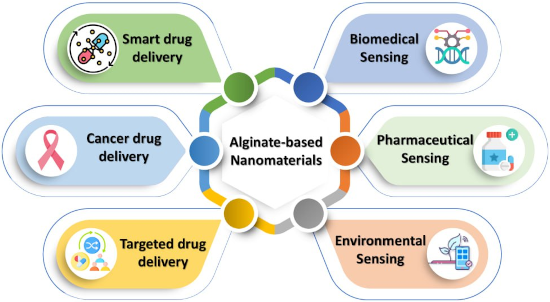
- a monolayer of gas coverage. The surface area of nanomaterials can also be determined by X-ray photoelectron spectroscopy and secondary ion mass spectroscopy [64][65]. Zeta potential: The zeta potential of nanoparticles can be calculated from the electrophoretic mobility of particles in a particular


Entry of nanoparticles into cells and tissues: status and challenges
Beilstein J. Nanotechnol. 2024, 15, 1017–1029, doi:10.3762/bjnano.15.83
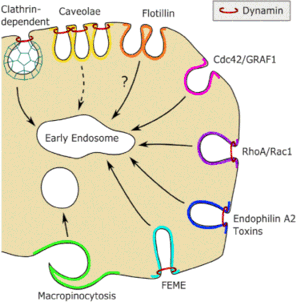
- fact, there are flat caveolin-coated areas at the plasma membrane where caveolin seems to prevent endocytic uptake of cholera toxin and autocrine mobility factor (AMF) [55]. Caveolin clearly has effects not related to caveolae [56], and the same is the case for its partner cavin [57]. Another


Atomistic insights into the morphological dynamics of gold and platinum nanoparticles: MD simulations in vacuum and aqueous media
Beilstein J. Nanotechnol. 2024, 15, 995–1009, doi:10.3762/bjnano.15.81
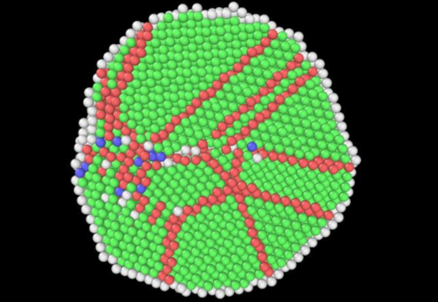
- are in a supercooled amorphous, and not liquid, state. The temperature dependence of the Berry parameter, δ, of the Au and Pt NPs is shown in Figure 3a and Figure 3b, respectively. The NP diameters vary from 1 to 8 nm. The Berry parameter quantifies the mobility of the atoms in the NPs by measuring
- first-order transition is identified. The temperature where the transition occurs is approximately 200 K smaller than the melting temperature of bulk crystalline Au, which is close to 1100 K. This difference stems from the higher mobility of the Au atoms in a finite-size cluster placed in vacuum
- compared to the atomic mobility in a dense crystal/amorphous bulk material. For the Au NP with a diameter of 2 nm, a similar steep drop takes place at even lower temperatures of 500 and 600 K. This large shift in the transition temperature indicates that the NP diameter of 2 nm is smaller than a critical


Water-assisted purification during electron beam-induced deposition of platinum and gold
Beilstein J. Nanotechnol. 2024, 15, 884–896, doi:10.3762/bjnano.15.73
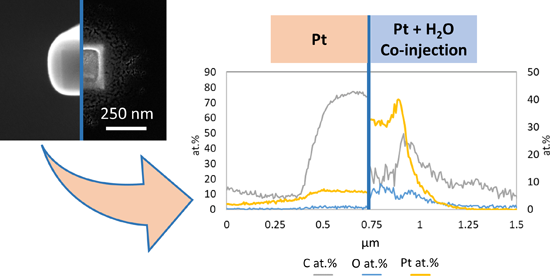
- , isolated grains are visible. Also, several gaps are present in the lines, where the grains apparently did not connect to each other. A FIB cross section of the line revealed that the gaps extend down to the substrate surface. The gaps and the granularity may arise from the high mobility of Pt, and
- of migrating Pt species and particle coalescence than by the adsorption of precursor molecules. Furthermore, PtCx FEBID deposits exposed to e-beam curing showed an increase of Pt granule size, also indicating Pt mobility [60]. The presence of a multilayer of water on the substrate during deposition
- is a factor that should be considered when comparing the obtained data with other studies of Pt nanoparticle mobility on surfaces. While the lines obtained at circa 0.5 nA approach a closed structure, lines deposited at higher currents show more substantial cracking and lack of continuity. This





A review on the structural characterization of nanomaterials for nano-QSAR models
Beilstein J. Nanotechnol. 2024, 15, 854–866, doi:10.3762/bjnano.15.71
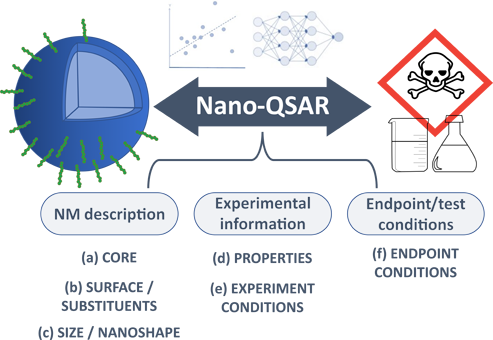
- group the data into categories [60]. Related measures are the isoelectric point, which corresponds to the pH at which a nanoparticle suspension has zero zeta potential [15][17], the surface charge [31][36][63], the conductivity [77], and the electrophoretic mobility [77]. Magnetic properties are also


Reduced subthreshold swing in a vertical tunnel FET using a low-work-function live metal strip and a low-k material at the drain
Beilstein J. Nanotechnol. 2024, 15, 713–718, doi:10.3762/bjnano.15.59
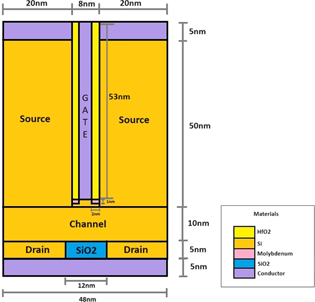
- compared to the VTFET in [12] to demonstrate the effects of the low-work-function live strip and the low-k material. The device parameters used are listed in Table 1. Reference [12] used bandgap narrowing, Shockley–Read–Hall recombination, Lombardi's mobility model, and band-to-band (non-local) modeling


Directed growth of quinacridone chains on the vicinal Ag(35 1 1) surface
Beilstein J. Nanotechnol. 2024, 15, 556–568, doi:10.3762/bjnano.15.48
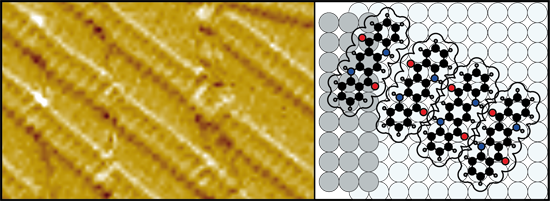
- found a hole mobility of 0.1 cm2·V−1·s−1 and a photocurrent of about 1 mA·cm−2. These observations were both attributed to a close packing of the molecules due to strong intermolecular H-bonds. The empirical formula of QA is C20H12N2O2, and a structural formula and a hard-sphere model of QA are
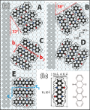
- of orientations A and C (which exhibit equivalent adsorption geometries at the Ag step edges, see Figure 1) adapt more favorable adsorption sites than those in orientations B and D. Hence, the nuclei of orientations A and C are more stable. In addition, it may be possible that the increased mobility
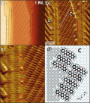
- . This is supported by the fact that an increased mobility of QA molecules (i.e., during deposition at a sample temperature of 400 K instead of 300 K) promotes the formation of chains with orientation E. QA chain growth across Ag step edges As stated above, at 300 K, the QA chains are capable of growing


Electron-induced deposition using Fe(CO)4MA and Fe(CO)5 – effect of MA ligand and process conditions
Beilstein J. Nanotechnol. 2024, 15, 500–516, doi:10.3762/bjnano.15.45
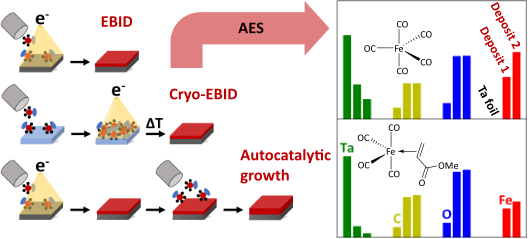
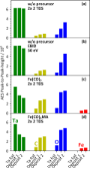
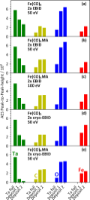
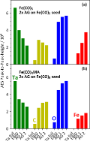
- ]. Autocatalytic growth (AG) of high-purity deposits leads to formation of individual crystallites as a consequence of precursor surface mobility at room temperature [21][24][25]. This mobility is suppressed when the surface is held at sufficiently low temperature. This was demonstrated by UHV experiments that
- elements (referred to herein as scenario A) [54][55]. Therefore, we must first critically reflect upon the validity of composition and thickness data derived from the deposition experiments described herein. According to earlier results [21][24][25], surface mobility of the precursor at room temperature in
- reflect the decrease of uncovered Ta substrate area than an increase of the deposit thickness [27]. In contrast, a more homogeneous deposit is anticipated at cryogenic temperature, where surface mobility is lower [21]. As the situation in reality most likely lies somewhere between scenarios A and B, a



Heat-induced morphological changes in silver nanowires deposited on a patterned silicon substrate
Beilstein J. Nanotechnol. 2024, 15, 435–446, doi:10.3762/bjnano.15.39
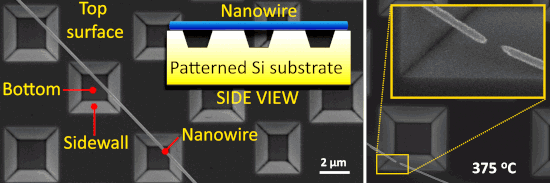
- , especially considering the greatly reduced mobility of Ag atoms at lower temperatures preventing slippage of the NW relative to the Si substrate. As a result, defects and necking develop in the middle of the suspended part, which agrees with the experimentally observed necking in scheme 1 (Figure 4). As


Controllable physicochemical properties of WOx thin films grown under glancing angle
Beilstein J. Nanotechnol. 2024, 15, 350–359, doi:10.3762/bjnano.15.31
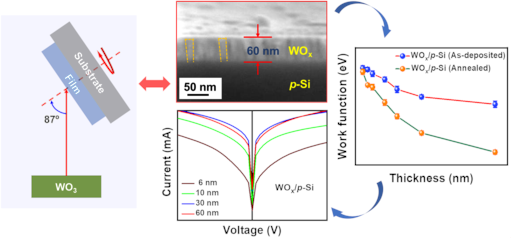
- fascinating optical and electrical properties [1]. WOx is a wide-bandgap oxide semiconductor with a large excitonic binding energy of 0.15 eV and a high optical absorption coefficient (≥104 cm−1 in the UV region) [2]. These, in conjunction with decent carrier mobility (12 cm2·V−1·s−1), make this material an


Modification of graphene oxide and its effect on properties of natural rubber/graphene oxide nanocomposites
Beilstein J. Nanotechnol. 2024, 15, 168–179, doi:10.3762/bjnano.15.16
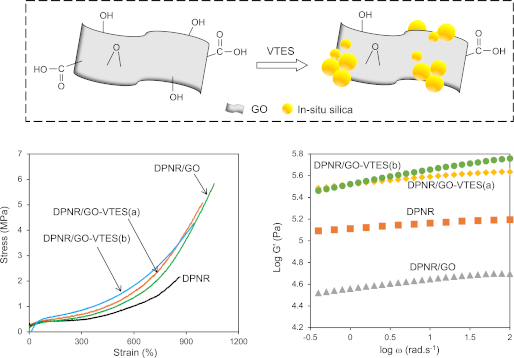
- modification with VTES, was not well chemically linked to rubber particles, resulting in a decrease in the reinforcement effect for NR. The giant silica structure on the GO surface, as proposed in Figure 9, may hinder the mobility of GO to interact with rubber particles during radical graft copolymerization






CdSe/ZnS quantum dots as a booster in the active layer of distributed ternary organic photovoltaics
Beilstein J. Nanotechnol. 2024, 15, 144–156, doi:10.3762/bjnano.15.14
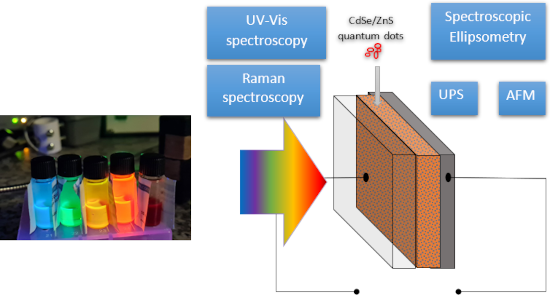
- -transporting layers [24], active absorbing layers, and other components [25][26]. Inorganic quantum dots are considered substitutes for fullerene acceptors. Their biggest advantages are a tunable band gap, various absorption spectra, and comparatively high mobility of carriers [27][28]. The application of




Development and characterization of potential larvicidal nanoemulsions against Aedes aegypti
Beilstein J. Nanotechnol. 2024, 15, 104–114, doi:10.3762/bjnano.15.10
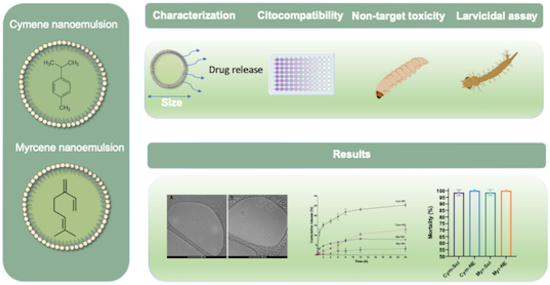
- were evaluated over a period of 60 days using dynamic light scattering, and the zeta potential was determined via electrophoretic mobility in a Zetasizer 3000 HSA (Malvern Instruments) device, using a 10 mW HeNe laser operated at 633 nm with a detection angle of incidence of 173° at 25 °C. Data
- , melanization, or loss of mobility, in response to the treatment. Death was considered when there was no physical reaction after stimulation. The samples were tested at concentrations of 250, 500, and 1000 mg/kg, with controls including trauma control (puncture only, TC), death control (100% methanol, DC





