


Search results
Search for "molecular structure" in Full Text gives 150 result(s) in Beilstein Journal of Nanotechnology.
Molecular architectonics of DNA for functional nanoarchitectures
Beilstein J. Nanotechnol. 2020, 11, 124–140, doi:10.3762/bjnano.11.11
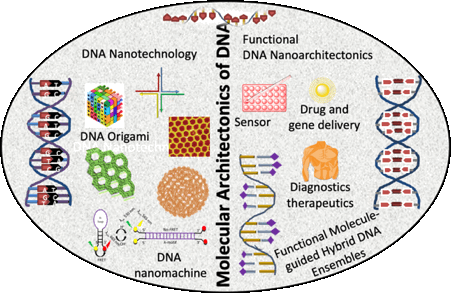
- the key biomolecule central to almost all processes in living organisms. The eccentric idea of utilizing DNA as a material building block in molecular and structural engineering led to the creation of numerous molecular-assembly systems and materials at the nanoscale. The molecular structure of DNA is
- assemblies, while with dA10, the formation of a P-type helix was preferred. pH-dependent circular dichroism (CD) measurements showed the collapse of the double-helical zipper assemblies at pH < 6 (Figure 4b). Remarkably, the nanofiber (molecular) structure of the individual double-helical zipper assembly


Mobility of charge carriers in self-assembled monolayers
Beilstein J. Nanotechnol. 2019, 10, 2449–2458, doi:10.3762/bjnano.10.235
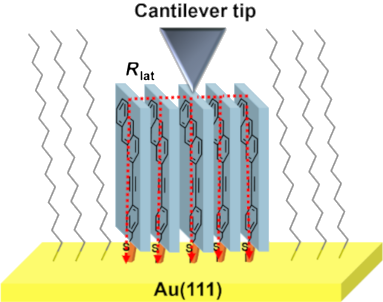
- -charge limited regime. (a), (b) and (c) show STM height images of a PAT SAM on gold at different magnifications describing the molecular structure of the SAM. The unit cell is marked as a parallelogram in (c) with a single domain with the structure (2√3 × 4√3)R30°. (d) The height profiles along the two


Microbubbles decorated with dendronized magnetic nanoparticles for biomedical imaging: effective stabilization via fluorous interactions
Beilstein J. Nanotechnol. 2019, 10, 2103–2115, doi:10.3762/bjnano.10.205
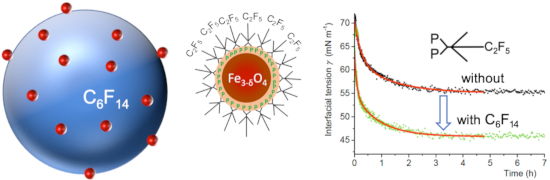
- by the tip. The analysis of the images was conducted in the integrated software. At least three different samples were analyzed and several positions were scanned on the silicon wafer for each sample. The error on measurements along the z-axis was estimated at ±0.5 nm. a) Molecular structure of the


Layered double hydroxide/sepiolite hybrid nanoarchitectures for the controlled release of herbicides
Beilstein J. Nanotechnol. 2019, 10, 1679–1690, doi:10.3762/bjnano.10.163
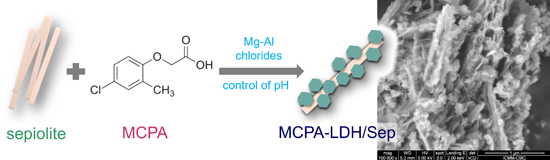
- concentration of the released herbicide. After the analysis, the collected solution was returned to the initial solution to keep the volume constant. All experiments were performed in triplicate. Schematic representations of (A) sepiolite and (B) layered double hydroxide structures, (C) molecular structure of 2


Chiral nanostructures self-assembled from nitrocinnamic amide amphiphiles: substituent and solvent effects
Beilstein J. Nanotechnol. 2019, 10, 1608–1617, doi:10.3762/bjnano.10.156
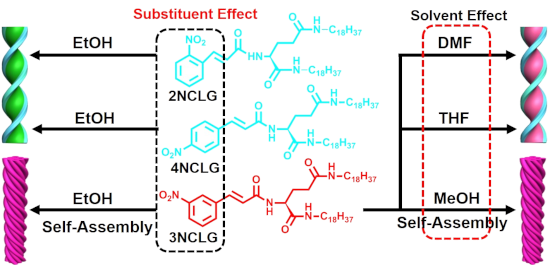
- model compounds to investigate the effect of molecular structure on the chiral sense of self-assembled structures. In our previous study [27], three isomeric pyridine-containing ʟ-glutamic amphiphiles have been found to self-assemble into different nanostructures including nanofibers, nanotwists and
- TENSOR-27 spectrophotometer. The testing range was 400–4000 cm−1 and the wavenumber resolution was 4 cm−1 at room temperature. Molecular structure of three nitrocinnamic amide-containing ʟ-glutamic amphiphiles and photographs of their self-assembled molecules in ethanol. SEM images of NCLG assemblies in




A biomimetic nanofluidic diode based on surface-modified polymeric carbon nitride nanotubes
Beilstein J. Nanotechnol. 2019, 10, 1316–1323, doi:10.3762/bjnano.10.130
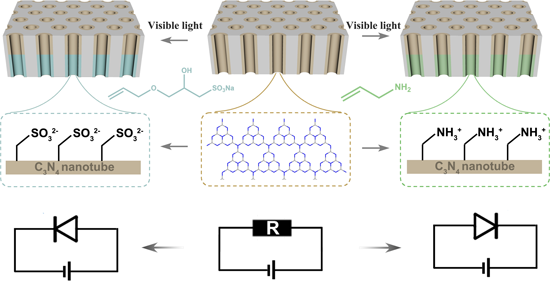
- fabricated by thermally induced polycondensation, the CNNM has a planar one-dimensional molecular structure based on NH-bridged tri-s-triazine units [25]. Meanwhile, the diameter of CNNMs can be well adjusted by controlling the amount of precursor (Figure S1, Supporting Information File 1). CNNMs fabricated
- –polymerization. (c) Schematic diagram of AAO substrate, carbon nitride nanotubes and molecular structure of the carbon nitride nanotubes. Carbon nitride nanotube properties. (a) SEM images of AAO substrate, carbon nitride nanotubes grown in the AAO substrate after polymerization, and carbon nitride nanotubes


A silver-nanoparticle/cellulose-nanofiber composite as a highly effective substrate for surface-enhanced Raman spectroscopy
Beilstein J. Nanotechnol. 2019, 10, 1270–1279, doi:10.3762/bjnano.10.126
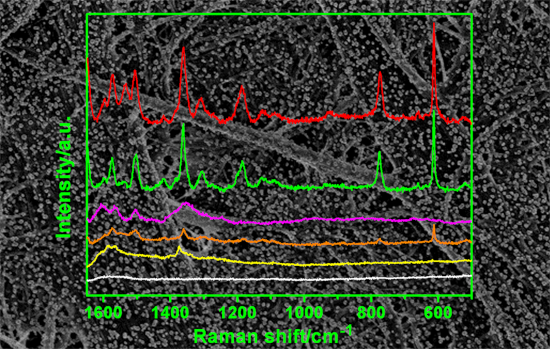
- randomly selected locations on each of the samples. The inset of (a) is the molecular structure of R6G. Electric field intensity distributions (indicated by the color bar) of the silver nanoparticles (diameter 70 nm) with different inter-particle spacings of 15 nm (a), 5 nm (b), 1 nm (c), and aggregated


Pure and mixed ordered monolayers of tetracyano-2,6-naphthoquinodimethane and hexathiapentacene on the Ag(100) surface
Beilstein J. Nanotechnol. 2019, 10, 1188–1199, doi:10.3762/bjnano.10.118
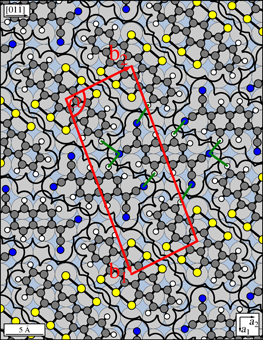
- ]. These authors [20][21] also noted that HTPEN is a one-dimensional semiconductor when it is synthesized in the form of nanowires. These nanowires exhibit a molecular structure similar to that of the bulk crystal with the primary growth direction along the [100] direction. These wires are considered to


Scavenging of reactive oxygen species by phenolic compound-modified maghemite nanoparticles
Beilstein J. Nanotechnol. 2019, 10, 1073–1088, doi:10.3762/bjnano.10.108
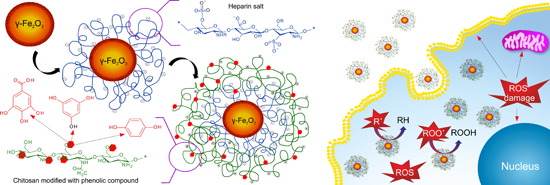
- phenolic compounds Physicochemical characterization The effect of the AA/H2O2 redox system and the phenolic compounds on the molecular structure of chitosan was investigated using ATR-FTIR and 1H NMR spectroscopy. The ATR-FTIR spectra of CS and of chitosans modified with phenolic compounds differed from
- of the chitosans modified with phenolic compounds notably decreased, reaching approximately the same values, which was accompanied by a reduction in the viscosity of the solution. Based on the results, it was assumed that the molecular structure of the modified chitosans was mainly determined by the





Tailoring the stability/aggregation of one-dimensional TiO2(B)/titanate nanowires using surfactants
Beilstein J. Nanotechnol. 2019, 10, 1024–1037, doi:10.3762/bjnano.10.103
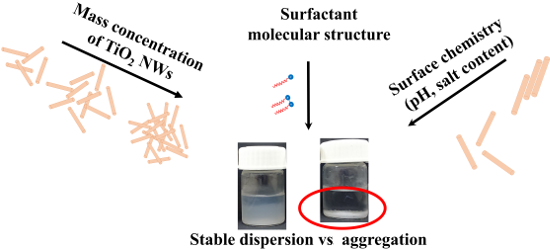
- environmental impact. Due to their high abundance in aqueous environments and their rich technological applicability, surfactants are among the most interesting compounds used for tailoring the stability. The aim of this paper is to determine the influence of surfactant molecular structure on TNW stability
- research and industrial applications. Gemini surfactants possess a unique molecular structure involving two hydrophobic moieties connected by a hydrophobic or hydrophilic spacer at the level of the head groups. Consequently, these surfactants display superior physicochemical properties and distinctly
- conclusion that the stabilization effect of the surfactants on TNWs is strongly dependent on the composition of the media (pH, ionic strength), TNW mass concentration as well as the molecular structure of the surfactants used. pH Titrations and surface complexation modelling The influence of pH on the TNW


Tungsten disulfide-based nanocomposites for photothermal therapy
Beilstein J. Nanotechnol. 2019, 10, 811–822, doi:10.3762/bjnano.10.81
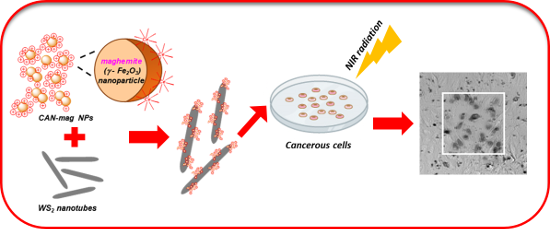
- chalcophylic metal ions (nickel, iron, ruthenium) and leaving parts of the ion coordination sites free for docking to the chalcogen layer. The molecular structure of both NTA and TerPy enables performing versatile chemistry on the ligand. Cerium is a metal of the lanthanide series with versatile coordinative






Outstanding chain-extension effect and high UV resistance of polybutylene succinate containing amino-acid-modified layered double hydroxides
Beilstein J. Nanotechnol. 2019, 10, 684–695, doi:10.3762/bjnano.10.68
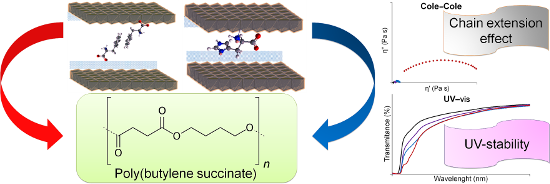
- , b) molecular structure of L-histidine, dimensions and corresponding surface area per unit charge calculated by considering a rectangular parallelepiped shape. a) Structural model for Mg2Al/PHE, b) molecular structure of L-phenylalanine, dimensions and surface area per unit charge calculated by


Quantification and coupling of the electromagnetic and chemical contributions in surface-enhanced Raman scattering
Beilstein J. Nanotechnol. 2019, 10, 549–556, doi:10.3762/bjnano.10.56
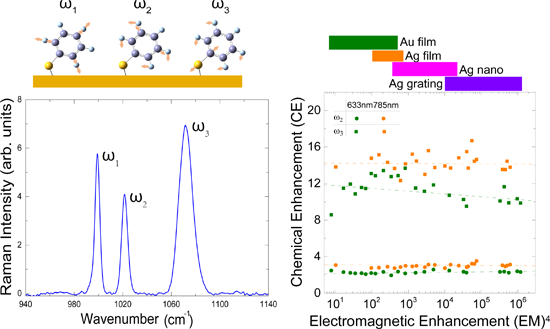
- metal substrate [11][12]. Depending on the degree of EM enhancement the signal simply scales linearly in intensity. In contrast, CE in addition can give rise to changes in the spectral response in terms of peak position and line shape due to modifications in molecular structure when the molecule


Ceria/polymer nanocontainers for high-performance encapsulation of fluorophores
Beilstein J. Nanotechnol. 2019, 10, 522–530, doi:10.3762/bjnano.10.53
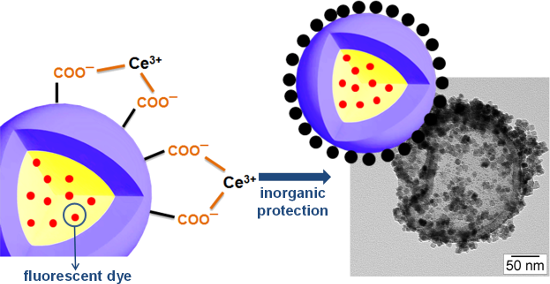
- polyoxyethanyl α-tocopheryl sebacate [37] significantly reduces oxygen quenching. Last but not least, another possibility is to attach an oxygen scavenger (e.g., diphenylanthracene moieties) to the emissive dye itself [38]. Decoration of the molecular structure of cyanine dyes including a cyclodextrin complex
- -tetramethylbutyl)phenoxy]terrylene-3,4,11,12-bis(dicarboximide) (TDI) was synthesized according to [26] (molecular structure and absorption/fluorescence emission spectra are given in Supporting Information File 1, Figures S1 and S2, respectively). The prepared TDI was dissolved in sufficient amounts of THF and


Recent highlights in nanoscale and mesoscale friction
Beilstein J. Nanotechnol. 2018, 9, 1995–2014, doi:10.3762/bjnano.9.190
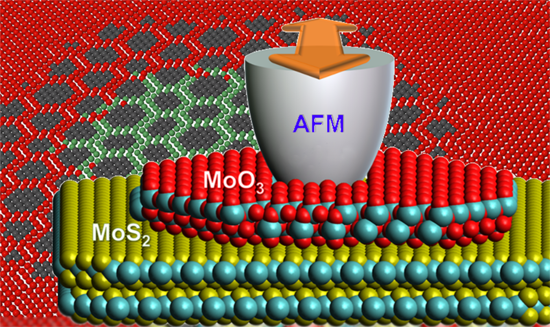
- interlocking of the RTIL molecular structure with the surface corrugation, but also by the surface charge, which is tunable (within reason) by the application of electric fields, with the effect of modifying the ordering of the boundary layers. Sliding in a confined geometry has been investigated with the
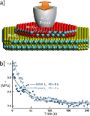
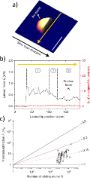
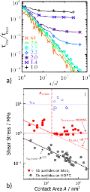
- porphyrin molecule functionalized by two meso-(3,5-dicyanophenyl) and two meso-(3,5-di-tert-butylphenyl) peripheral rings to the AFM apex, which was then dragged over the surface, as sketched in Figure 6a. Despite the complex molecular structure attached to the tip, atomic-scale patterns and sawtooth


Atomic-level characterization and cilostazol affinity of poly(lactic acid) nanoparticles conjugated with differentially charged hydrophilic molecules
Beilstein J. Nanotechnol. 2018, 9, 1328–1338, doi:10.3762/bjnano.9.126
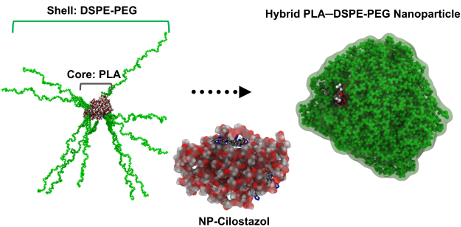
- selected as the best poses. Results and Discussion Poly(lactic acid) core Radius of gyration The radius of gyration (Rg) is related to the mean distance of atoms in a molecular structure with respect to its center of mass [49]. The radius of gyration is a good indicator of the spatial conformation of the
- ; oxygen–red) except the head, tail and chiral atoms. Evaluation of optimal separation distance between PLA chains. The energy was evaluated for two 20-monomer PLA chains at 3, 4, 5, 6, 7, 8, 9 and 10 Å. Molecular structure of DSPE–PEG(2000) carboxy-terminated, methoxy-terminated and amino-terminated


Chemistry for electron-induced nanofabrication
Beilstein J. Nanotechnol. 2018, 9, 1317–1320, doi:10.3762/bjnano.9.124

- may be removed more easily than previously anticipated, as exemplified by the electron-induced dissociation of benzene–Cr(CO)3 [17] and by FEBID using the fluorine-free precursor Cu(tbaoac)2 [18]. The most elegant approach to precursor design yet is to use a bimetallic molecular structure to predefine
Formation and development of nanometer-sized cybotactic clusters in bent-core nematic liquid crystalline compounds
Beilstein J. Nanotechnol. 2018, 9, 1288–1296, doi:10.3762/bjnano.9.121
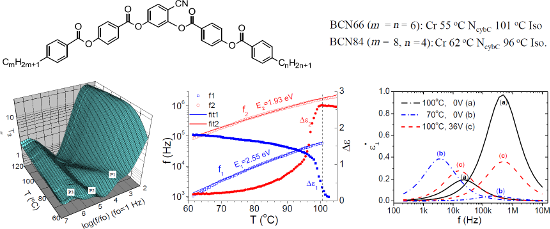
- are members of a homologous series of 4-cyanoresorcinol. The molecular structure and the phase sequence of the compounds are shown in Figure 1. The first compound (BCN66) with a large flexoelectric polarization [52] is a member of the homologue series consisting of a bent core of five aromatic rings
- , enabling this finding to be used in practical devices. The molecular structure and phase transitions of two bent-core liquid crystal samples: BCN66 (m = n = 6): Cr 55 °C [37.1] NcybC 101 °C [0.5] Iso [52] and BCN84 (m = 8, n = 4): Cr 62 °C NcybC 96 °C Iso [51]. The transition temperatures were obtained on


Towards the third dimension in direct electron beam writing of silver
Beilstein J. Nanotechnol. 2018, 9, 842–849, doi:10.3762/bjnano.9.78
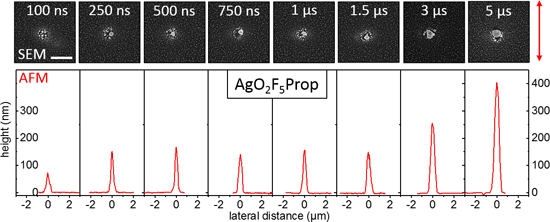
- molecular structure of the precursors used. AgO2F5Prop contains only half of the amount of carbon compared to AgO2Me2Bu but a large portion of fluorine instead. Besides that the molecular structure is very similar, which leads to the expectation that also AgO2F5Prop will show a strong sensitivity to
- . Even though the molecular structure of the compounds is very similar, by varying dwell times and currents distinct differences in the deposition became obvious. AgO2Me2Bu showed strong depletion in the beam center for currents around 500 pA and no correlation of the deposit heights with the dwell time


Synthesis and characterization of two new TiO2-containing benzothiazole-based imine composites for organic device applications
Beilstein J. Nanotechnol. 2018, 9, 721–739, doi:10.3762/bjnano.9.67
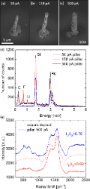
- confirm the molecular structure of investigated SP1 and SP2 compounds, FT-MIR spectroscopy was carried out at room temperature. In the case of SP1, the most intensive bands in the IR spectrum are located at 1263 and 1099 cm−1 and correspond to stretching modes ν(C–O) within the RCOOR ester and C–O–C ether






Tuning adhesion forces between functionalized gold colloidal nanoparticles and silicon AFM tips: role of ligands and capillary forces
Beilstein J. Nanotechnol. 2018, 9, 660–670, doi:10.3762/bjnano.9.61
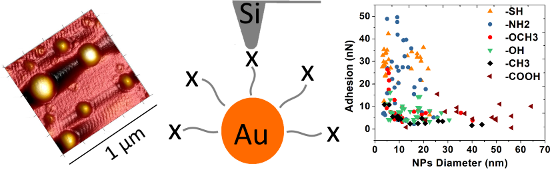
- of the present study. VdW calculation To validate our results, vdW force between the functionalized Au particles and AFM tip were calculated. The simulation of these dipole-induced forces involves a large number of molecular structure-specific variables. Therefore, only thiol as an example tail group


Engineering of oriented carbon nanotubes in composite materials
Beilstein J. Nanotechnol. 2018, 9, 415–435, doi:10.3762/bjnano.9.41
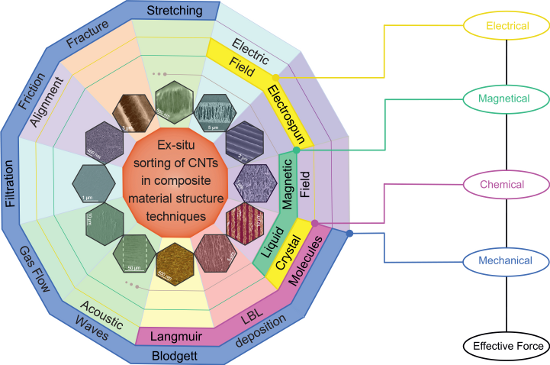
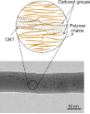
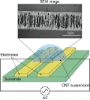
- molecular structure of the liquid crystal (LC) (i.e., that it can be simply oriented in the direction of an applied electric or magnetic field) the alignment and dispersion of the CNTs in a solution of liquid crystals is also achievable (Figure 15). The biggest advantage of this method is that small fields








Design of polar self-assembling lactic acid derivatives possessing submicrometre helical pitch
Beilstein J. Nanotechnol. 2018, 9, 333–341, doi:10.3762/bjnano.9.33
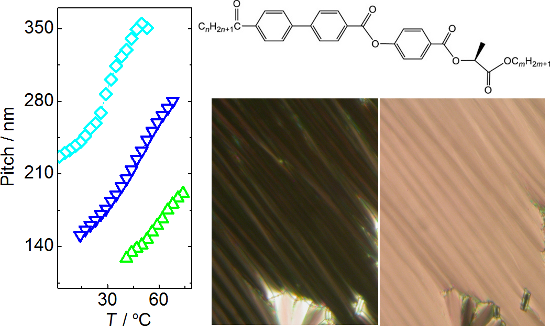
- recrystallized from methanol. The molecular structure was checked for all synthesised compounds by 1H NMR spectra recorded on a Varian VNMRS 300 instrument, where deuteriochloroform (CDCl3) served as a solvent. The signal of the solvent was used as an internal standard. The purity of the final compounds was


Wafer-scale bioactive substrate patterning by chemical lift-off lithography
Beilstein J. Nanotechnol. 2018, 9, 311–320, doi:10.3762/bjnano.9.31
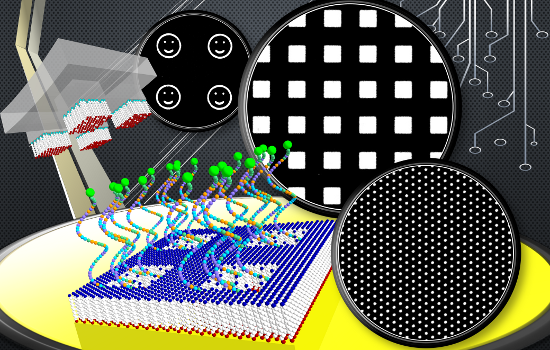
- created. This post lift-off region is found to be suitable for insertion of a variety of biological probes, which allows for the creation of different types of bioactive substrates. Depending on the modifications to the experimental conditions, the processes of direct probe insertion, molecular structure


Liquid-crystalline nanoarchitectures for tissue engineering
Beilstein J. Nanotechnol. 2018, 9, 205–215, doi:10.3762/bjnano.9.22
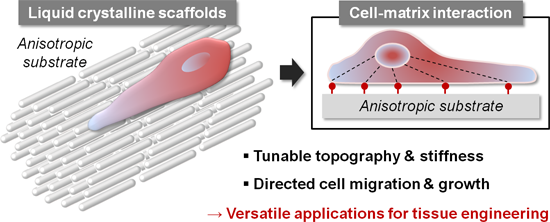
- induced 2D and 3D aligned cell growth in response to the lamellar molecular structure of LCE matrices, with tunable porosity and crosslinking density [99][100][101]. In addition, the 3D anisotropic cell scaffolds can be fabricated by using nematic LCE microspheres as building blocks by tuning elastic





