Search results
Search for "nanocomposite" in Full Text gives 204 result(s) in Beilstein Journal of Nanotechnology. Showing first 200.
Hierarchical Bi2WO6/TiO2-nanotube composites derived from natural cellulose for visible-light photocatalytic treatment of pollutants
Beilstein J. Nanotechnol. 2022, 13, 745–762, doi:10.3762/bjnano.13.66
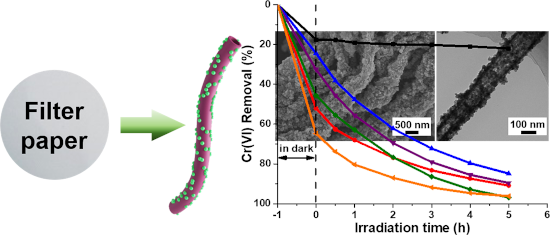
- photocatalytic reduction of Cr(VI), while hydroxyl radicals and reactive holes contributed to the photocatalytic degradation of rhodamine B. Keywords: biomimetic synthesis; cellulose; nanoarchitectonics; nanocomposite; nanotubes; photocatalysis; pollutants; Introduction The direct emission of untreated
- and Bi2WO6 phases. Meanwhile, the relationships between structure and activity of the nanocomposite, reasons for the enhancement of the photocatalytic performances, and possible photocatalytic mechanism of Bi2WO6/TiO2-NT nanocomposites were explored and discussed. Experimental Chemicals Toluene
- solvothermal reaction was conducted at 160 °C (heating rate: 5 °C/min) for 12 h, and the obtained powder sample was washed several times with ethanol and then dried at 37 °C in vacuum, yielding the 70%−Bi2WO6/TiO2-NT nanocomposite (Figure 1f). Preparation of control materials In order to further investigate


A chemiresistive sensor array based on polyaniline nanocomposites and machine learning classification
Beilstein J. Nanotechnol. 2022, 13, 411–423, doi:10.3762/bjnano.13.34
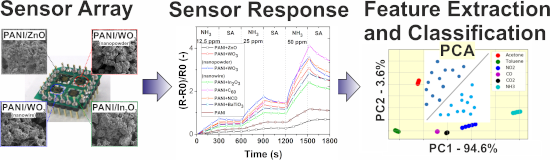
- (carbon nanotubes (CNT), SnO2, TiO2) materials in a gas sensors based on nanocomposite layers with good sensitivity, temperature stability, reversibility, which was operating at room temperature. Herein, we extended our study by applying other nanocomposite sensing layers, namely PANI/ZnO, PANI/WO3
- (nanopowder), PANI/WO3 (nanotubes), PANI/In2O3, PANI/C60 (fullerene), PANI/nanocrystalline diamond (NCD), and PANI/BaTiO3, deposited on a flexible sensor array platform with a new design. Seven different nanocomposite sensing layers deposited on the array were exposed to six different gases (ammonia, carbon
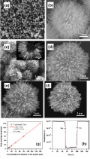
- FERA3 GM), as shown in Figure 1a–h. All nanocomposite active layers, that is, PANI/ZnO, PANI/WO3 (nanopowder), PANI/WO3 (nanowires), PANI/In2O3, PANI/C60, PANI/NCD, and PANI/BaTiO3 have similar morphological features with a uniform distribution of additives in polyaniline. We can observe small ZnO




Micro- and nanotechnology in biomedical engineering for cartilage tissue regeneration in osteoarthritis
Beilstein J. Nanotechnol. 2022, 13, 363–389, doi:10.3762/bjnano.13.31
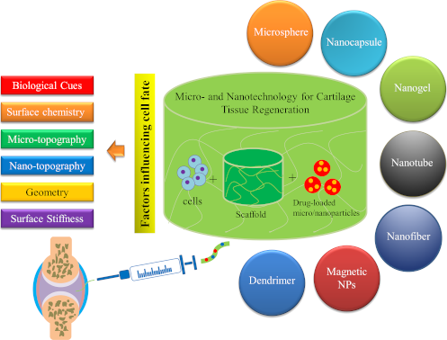
- maleilated chitosan hydrogel containing micro-/nanoparticles of methacrylated silk fibroin, a natural fibrous protein mimicking the collagen structure, improved the mechanical properties of nanocomposites fabricated for cartilage TE [60]. The development of a magnetic nanocomposite hydrogel from poly(vinyl
- alcohol) (PVA), nanoscale hydroxyapatite, and magnetic NPs (Fe2O3) has also shown that the incorporation of NPs enhances the mechanical properties of the scaffold and regulates the behavior of cells seeded in the nanocomposites [61]. A magnetic hydrogel-based nanocomposite can provide a promising scaffold
- cultures, and nanocomposite scaffolds showed no detrimental effects on the chondrocyte viability and promoted the expression of articular cartilage-specific ECM proteins [125]. In addition, functionalized SWCNTs improved the biomechanical properties of cell-laden nanocomposite structures compared with the


Engineered titania nanomaterials in advanced clinical applications
Beilstein J. Nanotechnol. 2022, 13, 201–218, doi:10.3762/bjnano.13.15
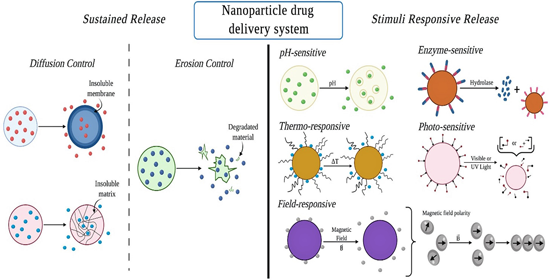
- by DOX exposure directly to healthy cells and tissues [108]. In another study, gentamicin was loaded onto nanostructures (nanotubes and nanopores) of a titanium/zirconium alloy nanocomposite (TiZr) coated with chitosan. This composite system followed the Lindner–Lippold mechanism of drug release. The


A comprehensive review on electrospun nanohybrid membranes for wastewater treatment
Beilstein J. Nanotechnol. 2022, 13, 137–159, doi:10.3762/bjnano.13.10
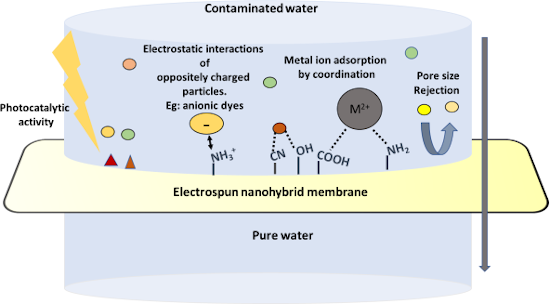
- bioactive products. Patel et al. fabricated bioactive electrospun nanocomposite scaffolds of poly(lactic acid) for bone tissue engineering by incorporating cellulose nanocrystals and observed that the nanohybrid has excellent properties in terms of mechanical strength and thermal stability compared to the
- particulate matter. Ge et al. developed an electrospun nanocomposite with rare earth-fused polyurethane to adsorb volatile organic compounds, which are air pollutants [16]. Al-Attabi et al. fabricated a nanohybrid for the submicrometer aerosol particle size filtration by doping wrinkled silica into PAN via




Tin dioxide nanomaterial-based photocatalysts for nitrogen oxide oxidation: a review
Beilstein J. Nanotechnol. 2022, 13, 96–113, doi:10.3762/bjnano.13.7
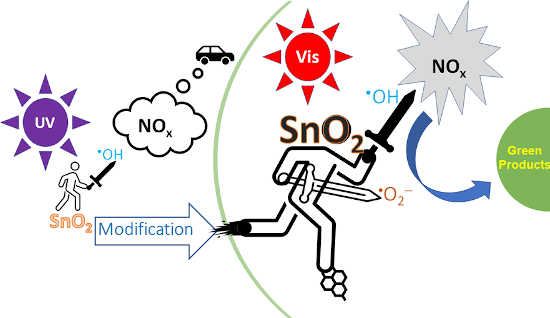
- new insights into the underlying mechanism of heterojunction photocatalysts, especially those with Z-shaped interfaces [76]. Polyaniline (PANI) is a conducting polymer and compared to g-C3N4, PANI is inexpensive and easy to synthesize. Bui et al. [35] presented a SnO2/PANI nanocomposite for
- photocatalytic mechanisms, and the polymer photodegradation of the resulting nanocomposite using DFT techniques. The results confirmed that the interaction between NO and PANI is indeed a hydrogen bond and photogenerated holes serve as the primary factor of the photocatalytic NO removal [35]. Moreover, this


Sputtering onto liquids: a critical review
Beilstein J. Nanotechnol. 2022, 13, 10–53, doi:10.3762/bjnano.13.2







Enhancement of the piezoelectric coefficient in PVDF-TrFe/CoFe2O4 nanocomposites through DC magnetic poling
Beilstein J. Nanotechnol. 2021, 12, 1262–1270, doi:10.3762/bjnano.12.93
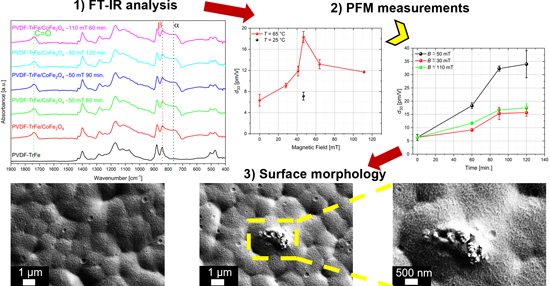
- temperatures. This process, usually referred to as electrical poling, requires the deposition of contact electrodes on the sample surface and the use of high-voltage apparatus. In the present work, in order to overcome these constraints, we have produced, characterized, and studied a polymer nanocomposite
- the use of a top electrode or of high magnetic fields (the maximum value of d33 was obtained at 50 mT, using a current of 0.4 A) making the PVDF-TrFE/CoFe2O4 nanocomposite suitable for the fabrication of highly efficient devices for energy harvesting and wearable sensors. Keywords: CoFe2O4; magnetic
- originating from the interaction between the magnetic field and the CoFe2O4 nanoparticles. As a result, a very high β phase content (up to 95%) has been measured in the PVDF nanocomposite with 5 wt % CoFe2O4. However, the authors limited the analysis to the β phase content and it was not clear if the β phase


Morphology-driven gas sensing by fabricated fractals: A review
Beilstein J. Nanotechnol. 2021, 12, 1187–1208, doi:10.3762/bjnano.12.88
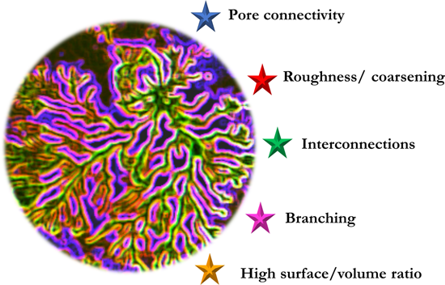
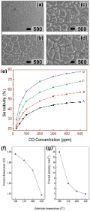
- fractal dimension of 1.79. Tungsten oxide-based fractals A very recent study on the sensing of NO2, acetone, and carbon monoxide was reported by Simon and co-workers. They used Ni nanoparticles to decorate a reduced graphene oxide/WO3 nanocomposite [78]. The WO3 sample annealed at 600 °C shows the










Assessment of the optical and electrical properties of light-emitting diodes containing carbon-based nanostructures and plasmonic nanoparticles: a review
Beilstein J. Nanotechnol. 2021, 12, 1078–1092, doi:10.3762/bjnano.12.80
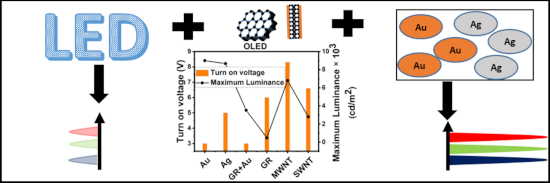
- were 3.5 (ITO), 6.2 (graphene), and 4.8 V (Ni on graphene). However, for UV LED, the observed operating voltage reduced significantly from 13.2 (graphene) to 7.1 V (Ni on graphene). Even though the ITO anode remained superior, the Ni–graphene nanocomposite nevertheless displayed 83% of the EL intensity
- HTL in OLED with the configuration ITO/PEDOT:PSS/SWNT–PVK nanocomposite/DCM-doped Alq3/Li:Al [47]. An efficient electron transport was also obtained from the Li:Al cathode (with work function of 2.9 eV) to the Alq3 layer due to its higher LUMO level (3.2 eV) in comparison to the Li:Al work function
- , therefore, reduces the hole injection barrier, which in turn creates a more efficient transfer to the HTL. In the device configuration of Figure 6a, a graphene oxide–Au nanocomposite HIL inserted between ITO and NPB was used to enhance the EL of Alq3-based OLED [51]. The correlation between the wavelength


Uniform arrays of gold nanoelectrodes with tuneable recess depth
Beilstein J. Nanotechnol. 2021, 12, 957–964, doi:10.3762/bjnano.12.72
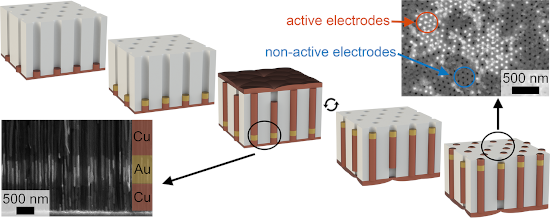
- ]. Moreover, thin AAO templates with highly ordered porous structure (and, as a consequence, small quantity of the branched pores) can be used [27][32][33]. One more useful approach that can be applied for the increase in the number of contacting nanowires is planarization of the nanocomposite surface using
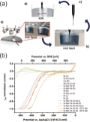
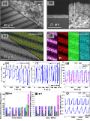
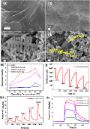
- collector and the first Cu segment. Cross-sectional SEM images of AAO/Cu/Au/Cu nanocomposite, schematically shown in panel (c), illustrating the full thickness of the template (e) and the bottom part with two short segments of Cu and Au (f). Electrochemical responses recorded during the electrodeposition of


The role of deep eutectic solvents and carrageenan in synthesizing biocompatible anisotropic metal nanoparticles
Beilstein J. Nanotechnol. 2021, 12, 924–938, doi:10.3762/bjnano.12.69
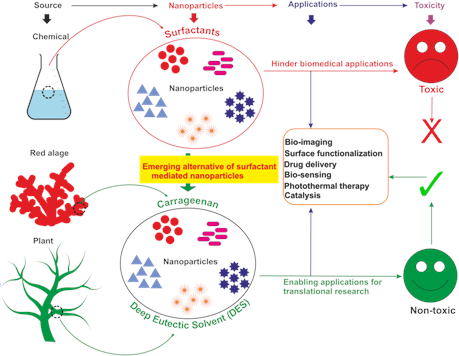
- carrageenan gel retaining the antibacterial property [85]. A study based on an injectable composite of carrageenan and nanoscale hydroxyapatite as an injectable bone substitute showed good adhesion properties with no cytotoxicity in vitro, as shown in Figure 6 [116]. The nanocomposite also exhibited
- International Licence, http://creativecommons.org/licenses/by/4.0/. (A) A κ-carrageenan-stabilized hydroxyapatite rod-shaped nanocomposite. (B) Antibacterial study using E. coli, S. aureus, B. subtilis, P. aeruginosa showing the bactericidal properties of the nanocomposite. (C) The nanocomposite shows


Comprehensive review on ultrasound-responsive theranostic nanomaterials: mechanisms, structures and medical applications
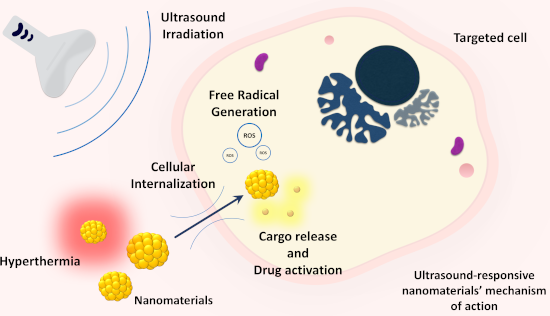
Beilstein J. Nanotechnol. 2021, 12, 808–862, doi:10.3762/bjnano.12.64


Silver nanoparticles nucleated in NaOH-treated halloysite: a potential antimicrobial material
Beilstein J. Nanotechnol. 2021, 12, 798–807, doi:10.3762/bjnano.12.63
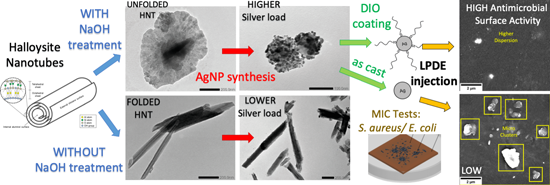
- with NaOH to improve Ag-NP nucleation into the clay substrate. The resulting nanocomposite was evaluated in terms of chemical composition, morphology, and antimicrobial properties, while the nucleation process was characterized in terms of thermal behaviour and structural changes. We also investigated




Recent progress in magnetic applications for micro- and nanorobots
Beilstein J. Nanotechnol. 2021, 12, 744–755, doi:10.3762/bjnano.12.58
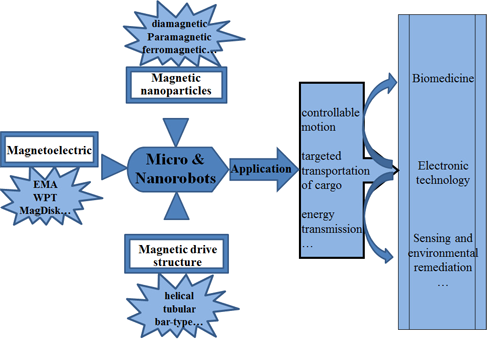
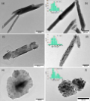
- . The structure provided the magnetic torque of motion through biologically functionalized superparamagnetic iron oxide nanoparticles and environmentally responsive microswimmers of 3D-printed nanocomposite magnetic precursors. Due to the characteristics of the double helix, the rotational motion and


Nickel nanoparticle-decorated reduced graphene oxide/WO3 nanocomposite – a promising candidate for gas sensing
Beilstein J. Nanotechnol. 2021, 12, 343–353, doi:10.3762/bjnano.12.28
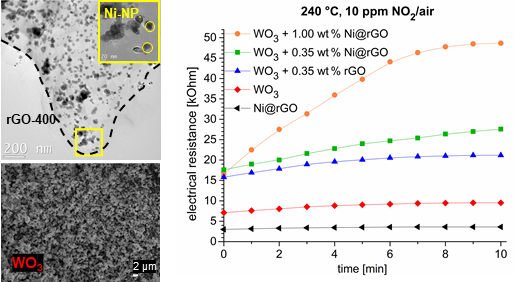
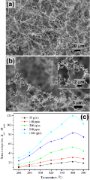
- nanocomposite was synthesized and tested in comparison to pure WO3 and rGO@WO3 regarding the response to the oxidizing gas NO2 (10 ppm in air) and the VOC acetone (35,000 ppm in air). Gas response to CO and recovery times were also determined. An examination of the influence of different gas concentrations on


A review on the green and sustainable synthesis of silver nanoparticles and one-dimensional silver nanostructures
Beilstein J. Nanotechnol. 2021, 12, 102–136, doi:10.3762/bjnano.12.9
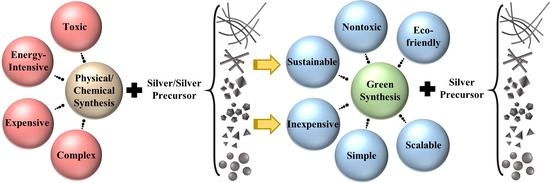
- precursor for this purpose [241]. An important advantage of this technique is the establishment of a silver-metal-oxide (e.g. SiO2 or TiO2) nanocomposite coating using only one deposition step [241]. The CVD method also provides many opportunities for the synthesis of silver-coated materials with varying


Bulk chemical composition contrast from attractive forces in AFM force spectroscopy
Beilstein J. Nanotechnol. 2021, 12, 58–71, doi:10.3762/bjnano.12.5
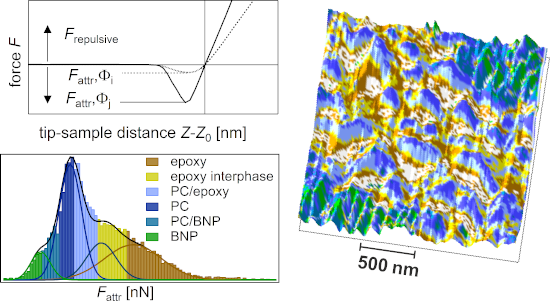
- field is applied. Khorasani and coworkers identified nanoparticles (exposed and subsurface) in an epoxy/boehmite nanocomposite by measuring the surface potential by means of KPM [9]. A disadvantage of KPM is that, in addition to the apex of the tip, the sides of the tip are also interacting. This leads
- obtained nanocomposite fiber mat contained 20 wt % of taurine-modified boehmite NPs (Supporting Information File 1, Figure S2). The mat was embedded in the epoxy system and cured at 80 °C for 4 h, followed by a post-curing process at 120 °C for another 4 h. The sample was cut with a microtome for


ZnO and MXenes as electrode materials for supercapacitor devices
Beilstein J. Nanotechnol. 2021, 12, 49–57, doi:10.3762/bjnano.12.4
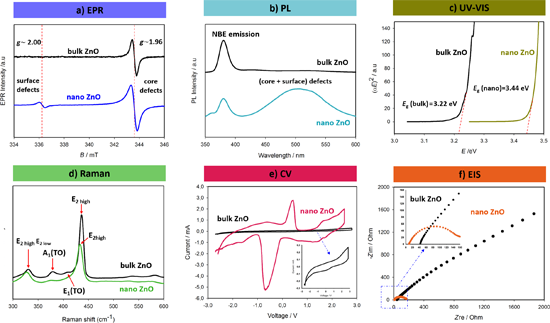
- specific capacitance of the resultant composites was twice as high as that of Co(OH)2 nanosheets [17]. Liu et al. synthesized a MXene/nickel sulfide (NiS) nanocomposite using a basic hydrothermal technique and measured a specific capacitance of 857.8 F·g−1. NiS has advantages such as good conductivity and
Unravelling the interfacial interaction in mesoporous SiO2@nickel phyllosilicate/TiO2 core–shell nanostructures for photocatalytic activity
Beilstein J. Nanotechnol. 2020, 11, 1834–1846, doi:10.3762/bjnano.11.165
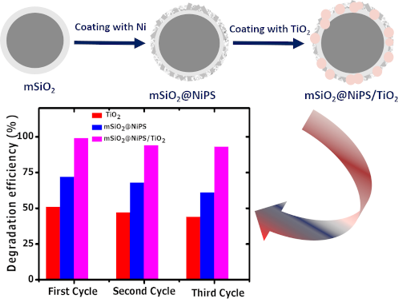
- /ammonia) [45][46][49]. In addition, the pore size distribution of the mSiO2@NiPS core–shell nanocomposite was broader (2–15 nm) than that of mSiO2 (Figure 2b). During the formation of the mSiO2@NiPS/TiO2 composite, the pore diameter slightly increased to 7.7 nm, indicating the presence of interparticle


Molecular dynamics modeling of the influence forming process parameters on the structure and morphology of a superconducting spin valve
Beilstein J. Nanotechnol. 2020, 11, 1776–1788, doi:10.3762/bjnano.11.160
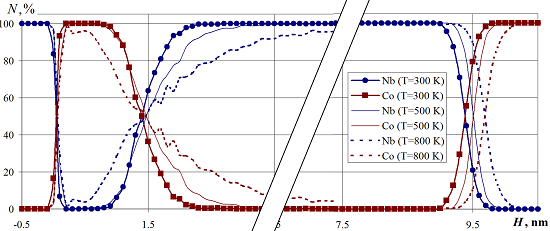
- Figure 7. The spatial distribution of the coordination number in the formed multilayer nanocomposite, illustrated in Figure 7, characterizes its structure in more detail. The dashed lines in Figure 7 indicate the locations of the parallel sections shown in Figure 7b and Figure 7c. The sections correspond
- , was carried out by reducing the evaporation zone of the starting materials shown in the upper region of this figure. The spray flow area was reduced four times from the original value. Also, nanocomposite formation modeling was performed on a scale reduced by four times. In this case, the number of
- calculations, a four-fold decrease in the volume of the nanosystem did not affect the nanocomposite layer composition. The layers are connected at the same places, and the proportion of niobium and cobalt differ slightly from the main part of the sample. The obtained data indicate that the initially selected


Antimicrobial metal-based nanoparticles: a review on their synthesis, types and antimicrobial action
Beilstein J. Nanotechnol. 2020, 11, 1450–1469, doi:10.3762/bjnano.11.129
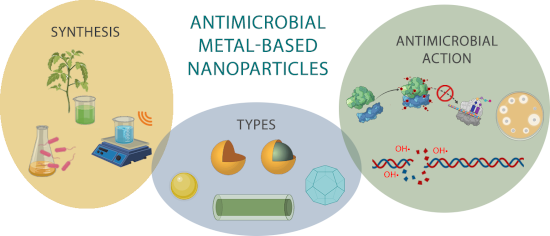
- antibacterial activities against E. coli, P. aeruginosa, methicillin-sensitive and resistant S. aureus [117]. Suganya et al. (2018) developed a potent antifungal nanocomposite with NiO NPs against the Aspergillus niger strain. The authors attributed the excellent antifungal properties to the physical process
- ]. Matsuda et al. (2019) have developed a fluoride-containing ZnO–CuO nanocomposite which inhibited the bacterial growth of Streptococcus mutans, showing a potential use in dental materials [124]. CuO nanorods (110 nm in length and 10 nm in diameter) were obtained by the precipitation process. The


Photothermally active nanoparticles as a promising tool for eliminating bacteria and biofilms
Beilstein J. Nanotechnol. 2020, 11, 1134–1146, doi:10.3762/bjnano.11.98
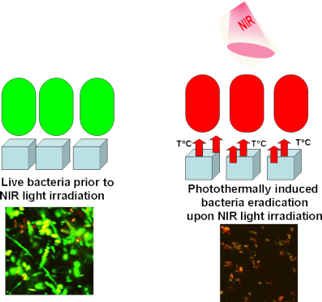
- , nanoparticle-based surfaces and nanocomposite materials to bacteria and biofilm ablation. This is a relatively recent approach and that could be applied as a promising alternative to existing antibacterial treatments. The state-of-the art and future perspectives are highlighted here. Review Photothermally
- application of gold-nanoparticle-coated surfaces and nanocomposite materials for antibacterial treatments. Gold nanoshells functionalized with carboxylate-terminated organosulfur ligands were attached to the surface of a model catheter and their effectiveness in eliminating adhering E. faecalis bacteria was
- irradiation was reported [67]. The antibacterial activity was measured on both Gram-positive and Gram-negative strains, including clinically isolated multidrug-resistant pathogens. The authors found that the fabricated nanocomposite showed pronounced antimicrobial activity against tested pathogenic


Gram-scale synthesis of splat-shaped Ag–TiO2 nanocomposites for enhanced antimicrobial properties
Beilstein J. Nanotechnol. 2020, 11, 1119–1125, doi:10.3762/bjnano.11.96

- specifically, Ag NPs have been widely used in many fields, such as dental filling, wound dressing, water treatment and textile fabrics [12][13]. However, issues have been raised concerning Ag-associated genotoxicity and cytotoxicity in human cells [14]. To solve these toxicity problems, nanocomposite materials
- activity of the as-prepared nanocomposites was investigated against Gram-positive S. aureus and Gram-negative E. coli. Experimental Synthesis of the Ag–TiO2 nanocomposite A hydrothermal method was used to prepare the Ag–TiO2 nanocomposite on a gram-scale. 1.25 mol/L of a 16.0 mL titanium sulfate solution
- -well plates containing DMEM medium supplemented with 10% FBS in a humidified atmosphere with 5% CO2 at 37 °C. The cells cultivated in the same plate without the nanocomposites were used as control. The concentration of the nanocomposite solutions was adjusted to 100 µL by adding DMEM. Next, the media


Plant growth regulation by seed coating with films of alginate and auxin-intercalated layered double hydroxides
Beilstein J. Nanotechnol. 2020, 11, 1082–1091, doi:10.3762/bjnano.11.93
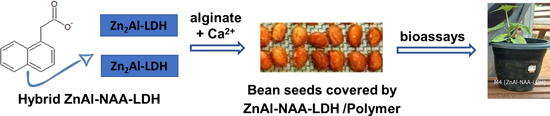
- this material in agriculture promotes a modified release of the intercalated species and/or a greater auxin stability against the biotic and abiotic factors of the medium, since the synthesized nanocomposite ZnAl-NAA-LDH was added to the seed in a single step together with the polymeric coating with