


Search results
Search for "nanocomposites" in Full Text gives 248 result(s) in Beilstein Journal of Nanotechnology. Showing first 200.
Metal-organic framework-based nanomaterials as opto-electrochemical sensors for the detection of antibiotics and hormones: A review
Beilstein J. Nanotechnol. 2023, 14, 631–673, doi:10.3762/bjnano.14.52
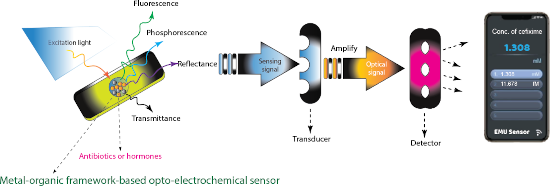
- nanocomposites. Because of their large surface area, ordered structure, tunable physico-chemical properties, and good absorbability, MOFs exhibit high potential among the various materials used for electrochemical sensor electrodes [63]. Strong interactions between the functional groups of MOFs and the target


ZnO-decorated SiC@C hybrids with strong electromagnetic absorption
Beilstein J. Nanotechnol. 2023, 14, 565–573, doi:10.3762/bjnano.14.47
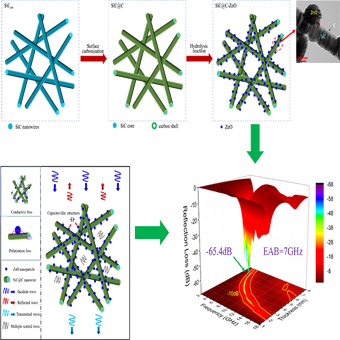
- graphene) may be easier because of the abundance of oxygen functional groups (e.g., carboxyl or hydroxy groups) on the carbon surface [26][31][32], in comparison to pure SiC. The introduction of carbon may help to further adjust the electromagnetic parameters and performance of SiC@ZnO nanocomposites


Carbon nanotube-cellulose ink for rapid solvent identification
Beilstein J. Nanotechnol. 2023, 14, 535–543, doi:10.3762/bjnano.14.44
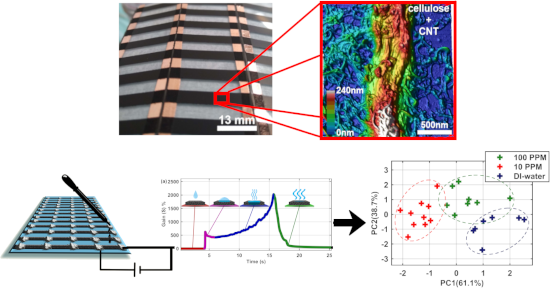
- sensing, as electromagnetic shielding, and as thermoelectric material [32][33][34][35][36][37][38]. Also, Qi et al. reported a liquid-water sensor based on carbon nanotube–cellulose composite films, and, more recently, Goodman et al. reported the scalable manufacturing of nanocomposites for liquid sensing


Nanoarchitectonics to entrap living cells in silica-based systems: encapsulations with yolk–shell and sepiolite nanomaterials
Beilstein J. Nanotechnol. 2023, 14, 522–534, doi:10.3762/bjnano.14.43
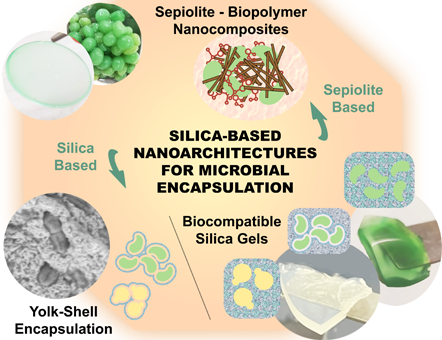
- biocompatible nanocomposites by assembly to diverse biopolymers [5][27][28] that can be of crucial advantage for entrapment and viability of the cells. Initial entrapping trials using sepiolite clay derivatives have yielded encouraging results. Hence, this approach has been considered here [29]. On the other
- been disinfected with alcohol and sterilized with the ultraviolet light attached to the hood. Biohybrid sepiolite–biopolymer nanocomposites materials have been prepared adapting a protocol developed in-house previously [8]. A sepiolite slurry (10% w/v clay/water) was mixed with a concentrated
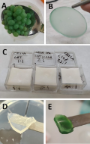
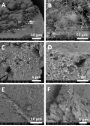
- bright-field mode were recorded. UV–vis spectroscopic measurements were conducted on a Shimadzu UV-1201 UV–vis spectrophotometer. Macroscopic view of prepared biohybrid materials. (A–C) Sepiolite–biopolymer nanocomposites entrapping cyanobacteria (Synechococcus elongatus PCC 7942) in diverse


Plasmonic nanotechnology for photothermal applications – an evaluation
Beilstein J. Nanotechnol. 2023, 14, 380–419, doi:10.3762/bjnano.14.33
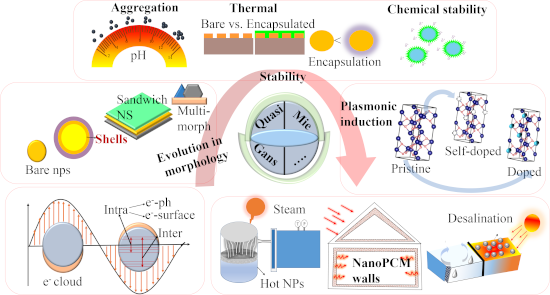
- nanocomposites. A detailed investigation of the essential, but often ignored, concept of thermal, chemical, and aggregation stability of nanoparticles is another part of this review. The challenges that remain, as well as prospective directions and chemistries, regarding nanomaterials for PT conversion are




Quercetin- and caffeic acid-functionalized chitosan-capped colloidal silver nanoparticles: one-pot synthesis, characterization, and anticancer and antibacterial activities
Beilstein J. Nanotechnol. 2023, 14, 362–376, doi:10.3762/bjnano.14.31
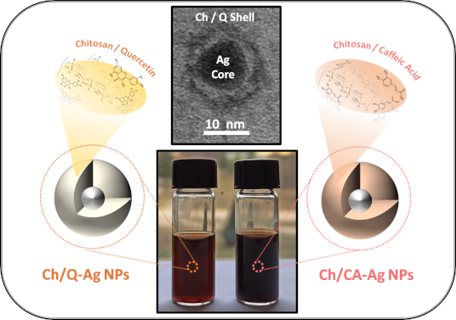
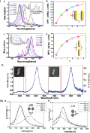
- , especially chitosan–silver nanocomposites, which yield a new type of nanoparticles, has raised more attention regarding eco-friendly properties and applications in nanomedicine and environmental remediation. Syntheses of chitosan, silver, and quercetin alone or in binary combinations, that is, chitosan
- –silver [46][47], chitosan–quercetin [48][49], and silver–quercetin nanoparticles [50][51], are well known. For instance, chitosan–silver nanocomposites, which have been synthesized through bio-inspired and photosynthesis, exhibited significant antioxidant, photocatalytic, and antibacterial activities, in


Bismuth-based nanostructured photocatalysts for the remediation of antibiotics and organic dyes
Beilstein J. Nanotechnol. 2023, 14, 291–321, doi:10.3762/bjnano.14.26
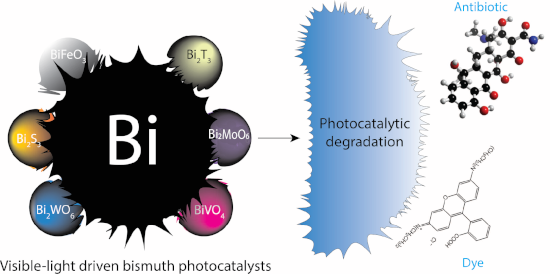
- -scheme photocatalytic system. Li et al. [42] constructed spindle-shaped BiVO4-RGO-g-C3N4 Z-scheme photocatalysts for the highly effective degradation of antibiotics. The 1-D Z-scheme ternary nanocomposites had a very high photooxidation response. According to the authors, ciprofloxacin and tetracycline
- turn improves the photocatalytic activity of the nanocomposites. Additionally, to maximise the effectiveness of the transfer/separation of photogenerated carriers, noble metals (such as Pt, Ag, and Au) are typically used to induce surface plasmon resonance effects in photocatalysts [146]. However
- , the Schottky potential barrier, and efficiently separated photoinduced charge carriers. Table 8 provides a summary of the research on heterojunction photocatalysts for the degradation of antibiotics. Bismuth nanocomposites: A nanocomposite is a multiphase material (typically a solid) with one to three


Cyclodextrins as eminent constituents in nanoarchitectonics for drug delivery systems
Beilstein J. Nanotechnol. 2023, 14, 218–232, doi:10.3762/bjnano.14.21
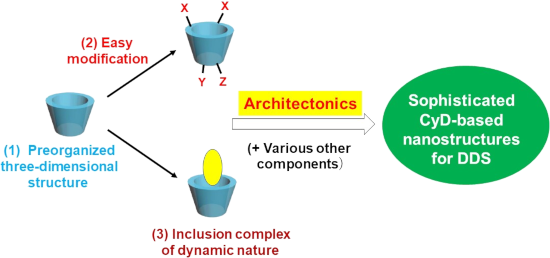
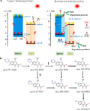
- light is converted to the light of shorter wavelength, which is absorbed by the arylazopyrazole. Resultant isomerization of this dye from the trans form to the cis form breaks down the β-CyD inclusion complex, and induces the decomposition of nanocomposites (blue balls) to release the siRNA. Figure 5





Antimicrobial and mechanical properties of functionalized textile by nanoarchitectured photoinduced Ag@polymer coating
Beilstein J. Nanotechnol. 2023, 14, 95–109, doi:10.3762/bjnano.14.11
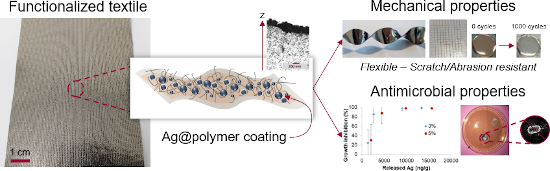
- nanocomposites exhibited remarkable microbial growth inhibitory effects. Keywords: antimicrobial properties; C. albicans fungus; E. coli bacteria; photoinduced functionalized textile; silver/polymer nanomaterials; Introduction The proliferation of microorganisms is a major concern for health organizations
- nanocomposites are prepared via ex situ or in situ approaches, in which MNPs are either synthesized beforehand and subsequently added to a polymer matrix or directly generated inside the polymer film. Ex situ methods include grafting [34], electrostatic [35] or polyol processes [36], but remain relatively
- forces, which ultimately extends the lifetime of the functionalized textile. The antimicrobial properties of MNP-polymer composites have been extensively investigated [42][43][44] and research has gone into functionalizing textile fibers with the nanocomposites in situ [45][46]. Few studies seem to have



The influence of structure and local structural defects on the magnetic properties of cobalt nanofilms
Beilstein J. Nanotechnol. 2023, 14, 23–33, doi:10.3762/bjnano.14.3
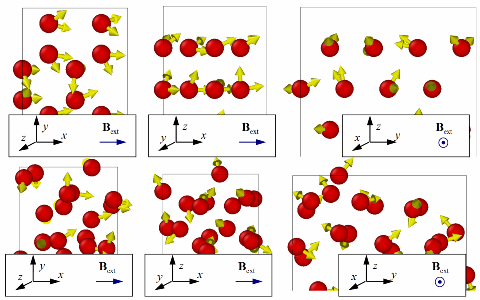
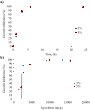
- materials; molecular dynamics; nanocomposites; nanofilms; spintronics; Introduction The analysis of phase transitions and related critical phenomena in condensed media is a complex, time-consuming, and often a high-cost process from a technological point of view [1][2][3]. On the one hand, this is due to
- presence of structural heterogeneities and features, but also to formulate the main laws of their origin and development. This work is devoted to solving an important problem regarding the relationship between the magnetic properties of multilayer nanocomposites and their structure. The problem of studying
- nanocomposite manufacturing were simulated and systematized. This was done to establish the dependence of the structure and characteristics of the nanocomposites on the production parameters, to check the presence of target functional aspects, and to determine controllable properties (i.e., those properties


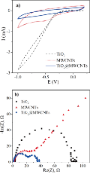
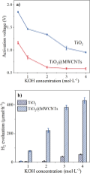
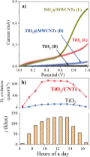
A TiO2@MWCNTs nanocomposite photoanode for solar-driven water splitting
Beilstein J. Nanotechnol. 2022, 13, 1520–1530, doi:10.3762/bjnano.13.125
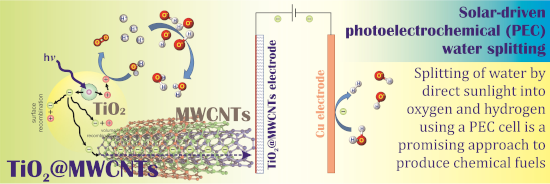
- nanocomposites as photoanode material for photoelectrochemical water splitting. Furthermore, the preparation of TiO2/MWCNTs nanocomposite derived from TiO2 precursors and functionalized MWCMTs for photoelectrochemical water splitting is based on complicated and time-consuming hydrothermal and sol–gel methods



Hydroxyapatite–bioglass nanocomposites: Structural, mechanical, and biological aspects
Beilstein J. Nanotechnol. 2022, 13, 1490–1504, doi:10.3762/bjnano.13.123
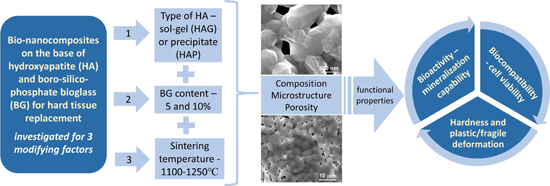
- , Romania Nicolae Testemitanu State University of Medicine and Pharmacy, 165 Stefan cel Mare si Sfant ave., MD-2004, Chisinau, Republic of Moldova 10.3762/bjnano.13.123 Abstract This research work focuses on the fabrication and study of a series of nanocomposites consisting of two types of hydroxyapatite
- , which exhibits a strong correlation with porosity, as well as on the mineralization capability and cell viability due to the different dissolution rate. Keywords: bioactivity; hardness; microstructure; nanocomposites; porosity; Introduction Within the last decades increasing emphasis is placed on the
- of nanocomposites with two types of hydroxyapatite, obtained by precipitate (HAP) or sol–gel (HAG) methods, and a boro-silico-phosphate glass in their composition were synthesized and studied. The influence of the type of hydroxyapatite (HAP and HAG), glass content (5% and 10%), and sintering
Rapid and sensitive detection of box turtles using an electrochemical DNA biosensor based on a gold/graphene nanocomposite
Beilstein J. Nanotechnol. 2022, 13, 1458–1472, doi:10.3762/bjnano.13.120
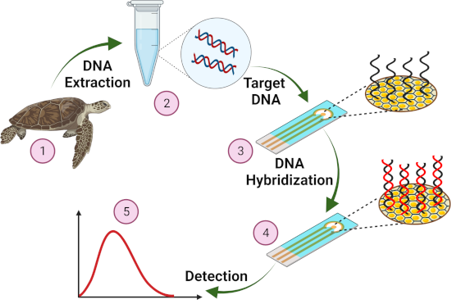
- nanoparticles (AuNPs) [32] based nanocomposites are well established [41] due to their excellent performance. In particular, self-decorated AuNPs in the honeycomb-structured graphene lattice could facilitate the accommodation of a greater number of recognition probes. In addition, Gr is a nanomaterial with a
- the immobilisation of DNA. Supporting Information File 1, Table S1 illustrates the major peaks and their shifting after each modification of the nanocomposites. Modified effective surface area of screen-printed carbon electrodes Cyclic voltammetry (CV) was employed to measure SPCE and modified SPCE at
- Gr/SPCE surface, which was then labelled as AuNPs/Gr/SPCE. Morphological and structural studies of nanomaterials The surface morphology of the nanoparticles and their nanocomposites were analysed using a field-emission scanning electron microscope (model SU8030 Hitachi, Japan), equipped with an



Recent trends in Bi-based nanomaterials: challenges, fabrication, enhancement techniques, and environmental applications
Beilstein J. Nanotechnol. 2022, 13, 1316–1336, doi:10.3762/bjnano.13.109
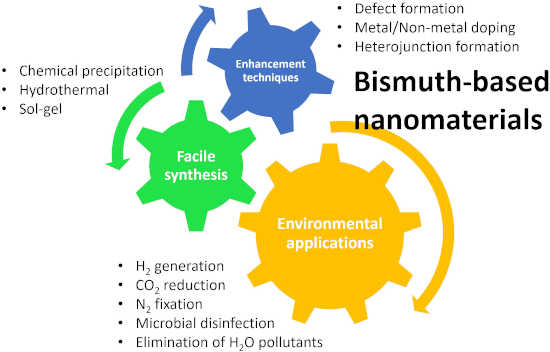
- synthesizing and applying a semiconductor photocatalyst have been published in recent years. A survey on bismuth-based nanocomposites with the search keywords "Bismuth-based nanoparticles for environmental remediation" from 2011 to 2021 yields roughly 15,995 articles. This data illustrates the interest of the
- [84][85]. Using a straightforward hydrothermal procedure, Hu et al. produced iron-doped Bi2WO6 nanocomposites [84]. In comparison to pristine Bi2WO6, Fe-doped Bi2WO6 exhibits superior visible-light photoabsorption, a considerably increased number of oxygen vacancies, and a noticeably improved capacity
- ] demonstrated the synthesis of a new direct Z-scheme photocatalyst made of ultrathin Bi2O3 and Bi2MoO6 microspheres. For the effective production of Bi2O3/Bi2MoO6 nanocomposites, researchers adopted a simple in situ alkali treatment of Bi2MoO6 followed by calcination. As a substrate for the production of Bi2O3




Biomimetic chitosan with biocomposite nanomaterials for bone tissue repair and regeneration
Beilstein J. Nanotechnol. 2022, 13, 1051–1067, doi:10.3762/bjnano.13.92
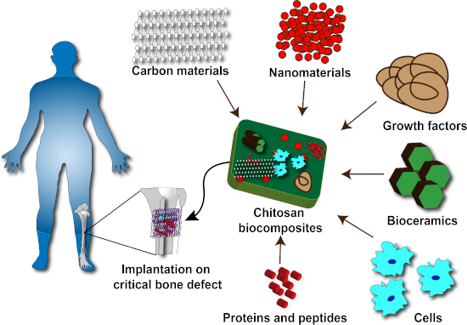
- , researchers have tried several ways to develop different materials using chitosan-based nanocomposites of silver, copper, gold, zinc oxide, titanium oxide, carbon nanotubes, graphene oxide, and biosilica. The combination of materials helps in the expression of ideal bone formation genes of alkaline
- formation on rat calvaria defects indicate a strong healing effect and new bone formation on chitosan/absorbable collagen sponges [51]. Chitosan with metal nanomaterials for bone tissue engineering Chitosan–silver nanocomposites Silver nanoparticles (AgNPs) have gained much attention in bone-related implant
- . Further, the developed material shows apatite formation in SBF and it stimulates the growth of MG-63 osteoblast-like cells. In addition, antibacterial activity was discovered against Staphylococcus aureus [85]. Chitosan–gold nanocomposites Gold nanoparticles (AuNPs) have been extensively studied for
Hierarchical Bi2WO6/TiO2-nanotube composites derived from natural cellulose for visible-light photocatalytic treatment of pollutants
Beilstein J. Nanotechnol. 2022, 13, 745–762, doi:10.3762/bjnano.13.66
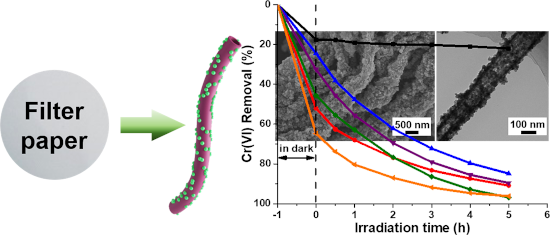
- prepared by utilizing natural cellulose (e.g., laboratory filter paper) as the structural template. The obtained nanoarchitectonics, namely Bi2WO6/TiO2-NT nanocomposites, displayed three-dimensionally interwoven structures which replicated the initial cellulose template. The composite Bi2WO6/TiO2-NT
- visible light together with an accelerated separation and transfer of the photogenerated electron–hole pairs of the nanocomposites, which resulted in increased effective amounts of photogenerated carriers for the photocatalytic reactions. It was demonstrated that the photoinduced electrons dominated the
- fabricated by depositing Bi2WO6 nanoparticles on hierarchically interwoven TiO2 nanotubes via the solvothermal method, and the densities of Bi2WO6 nanoparticles in the composites were regulated by the concentrations of the precursors. When the Bi2WO6/TiO2-NT nanocomposites were used for the photocatalytic


A nonenzymatic reduced graphene oxide-based nanosensor for parathion
Beilstein J. Nanotechnol. 2022, 13, 730–744, doi:10.3762/bjnano.13.65
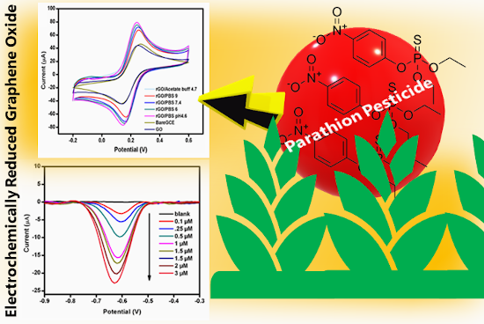
- nanoribbons doped with silver nanoparticles, rGO doped with ZrO2, and CuO–TiO2 hybrid nanocomposites were proposed to detect methyl parathion [19][20][21][22]. Rajaji et al. (2019) modified glassy carbon electrodes with graphene oxide encapsulated 3D porous chalcopyrite (CuFeS2) nanocomposites to detect
- , enhanced electron transport facility, excellent mechanical, thermal, and electrical stability [11][25][26][27]. The electronic structure and surface physicochemistry of graphene are beneficial for electron transfer. Several graphene-based nanocomposites based on complex synthesis processes are reported as


Zinc oxide nanostructures for fluorescence and Raman signal enhancement: a review
Beilstein J. Nanotechnol. 2022, 13, 472–490, doi:10.3762/bjnano.13.40
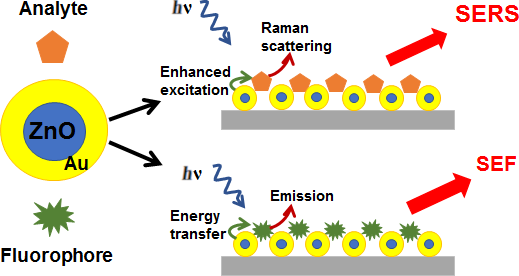
- , enhanced Raman scattering for periodic ZnO-elevated Au dimer nanostructures [12] and enhanced fluorescence emission signals from Al-doped ZnO films [13] were obtained. The development of hybrid nanocomposites based on ZnO and noble metals for fluorescence and Raman signal enhancement has recently attracted
- applications [13]. This review article seeks to present the fabrication methods and applications of zinc oxide nanostructures enhancing the photoluminescence emission or the Raman signal of analyte molecules. First, we focus on a wide range of synthesis methods of ZnO nanostructures and nanocomposites based on
- ZnO–metal hybrid nanoparticles. Moreover, we consider the physical phenomena governing both the Raman and fluorescence enhancement using ZnO nanostructures. Review Fabrication of ZnO–noble metal nanocomposites Synthesis of ZnO nanostructures Among the exhaustive list of available physical and chemical




A chemiresistive sensor array based on polyaniline nanocomposites and machine learning classification
Beilstein J. Nanotechnol. 2022, 13, 411–423, doi:10.3762/bjnano.13.34
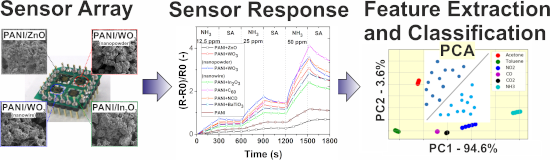
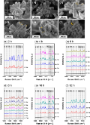
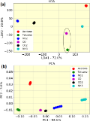
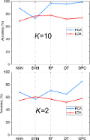
- 1999/2, 182 21 Prague, Czech Republic 10.3762/bjnano.13.34 Abstract The selective detection of ammonia (NH3), nitrogen dioxide (NO2), carbon oxides (CO2 and CO), acetone ((CH3)2CO), and toluene (C6H5CH3) is investigated by means of a gas sensor array based on polyaniline nanocomposites. The array
- coefficient. The resistivity of these nanocomposites depends on the p–n depletion layer width on the interface between the n-type nanoparticles and the surrounding p-type PANi molecules. Gas sensing analysis The gas sensing characterizations of sensitive layers were performed using a custom-built apparatus




Micro- and nanotechnology in biomedical engineering for cartilage tissue regeneration in osteoarthritis
Beilstein J. Nanotechnol. 2022, 13, 363–389, doi:10.3762/bjnano.13.31

- biomimetic nanocomposites to imitate pseudostratified features of the ECM to develop bioinspired scaffolds [47][48][49]. 3.1.2.1 Nanoparticles (NPs). In recent years, NPs have been increasingly used in regenerative medicine (Table 1) and other medical areas. NPs have been successfully developed for drug
- hyaline cartilage [58]. In addition to providing a scaffold with controlled release properties, the incorporation of NPs eliminates the need for external and intermittent supplements used to develop nanocomposites and enhances the mechanical properties of hydrogels. The fabrication of a photopolymerized
- maleilated chitosan hydrogel containing micro-/nanoparticles of methacrylated silk fibroin, a natural fibrous protein mimicking the collagen structure, improved the mechanical properties of nanocomposites fabricated for cartilage TE [60]. The development of a magnetic nanocomposite hydrogel from poly(vinyl


Engineered titania nanomaterials in advanced clinical applications
Beilstein J. Nanotechnol. 2022, 13, 201–218, doi:10.3762/bjnano.13.15
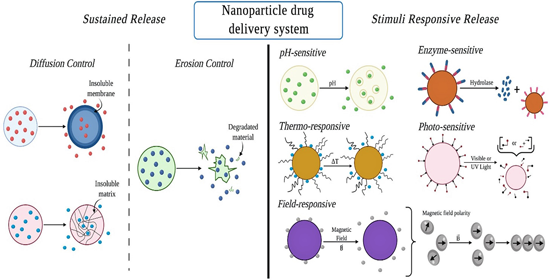
- incubation [94]. According to a recent study, nanocomposites could be highly effective in the removal of biofilm and killing of pathogenic bacteria in comparison to pure TiO2 nps without harming healthy human cells. In this context, Baig et al. demonstrated the disinfecting properties of copper oxide
- /titanium dioxide nanocomposites against biofilm-forming and methicillin-resistant strains of Staphylococcus aureus and Pseudomonas aeruginosa [95]. In another novel approach, dip pen nanolithography and soft lithography were used to form a micropattern of a silica sol modified with TiO2 (5% and 10


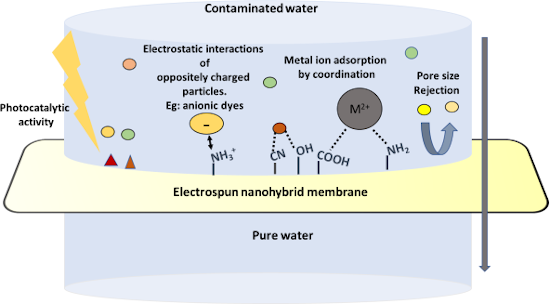
A comprehensive review on electrospun nanohybrid membranes for wastewater treatment
Beilstein J. Nanotechnol. 2022, 13, 137–159, doi:10.3762/bjnano.13.10





Tin dioxide nanomaterial-based photocatalysts for nitrogen oxide oxidation: a review
Beilstein J. Nanotechnol. 2022, 13, 96–113, doi:10.3762/bjnano.13.7
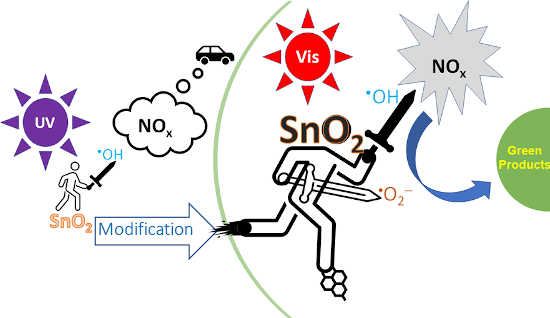
- time of SnO2 NPs (a) and Ag@SnO2 (b). Figure 16 was reprinted from [72], Catalysis Communications, vol. 136, by Bui, D. P.; Nguyen, M. T.; Tran, H. H.; You, S.-J.; Wang, Y.-F.; Van Viet, P. “Green synthesis of Ag@SnO2 nanocomposites for enhancing photocatalysis of nitrogen monoxide removal under solar


Sputtering onto liquids: a critical review
Beilstein J. Nanotechnol. 2022, 13, 10–53, doi:10.3762/bjnano.13.2

- SoL is presented including monometallic and alloy NPs, oxide NPs, thin films, and nanocomposites and their promising optical, luminescence, and catalytic properties. Review 1 Theoretical background 1.1 Techniques available for the synthesis of NPs The mass production of NPs with controlled






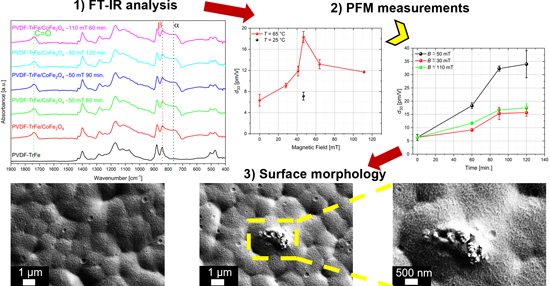
Enhancement of the piezoelectric coefficient in PVDF-TrFe/CoFe2O4 nanocomposites through DC magnetic poling
Beilstein J. Nanotechnol. 2021, 12, 1262–1270, doi:10.3762/bjnano.12.93
- poling; piezoelectric effect; piezoresponse force microscopy (PFM); poly(vinylidene fluoride-co-trifluoroethylene); PVDF-TrFe; PVDF-TrFe nanocomposites; Introduction In the last years, innovative energy harvesting systems based on the piezoelectric effect, able to convert vibrational mechanical energy
- . These included mechanical stretching [19][20], spin coating [21], quenching [22], a combination of the latter two techniques [2], and the addition of external additives to the PVDF matrix, such as metal nanocomposites [14][23], ceramic filler [24], and graphene nanoplatelets (GNPs) and their combination
- piezoelectric response of the PVDF-TrFe/CoFe2O4 nanocomposites we performed PFM. Three different regions of each sample were measured to determine an average piezoelectric coefficient (d33), through a procedure developed to quantitatively evaluate d33 [2][3][31]. For neat PVDF-TrFe we obtained d33 = 4.32 ± 1.07





