


Search results
Search for "nanofiber" in Full Text gives 76 result(s) in Beilstein Journal of Nanotechnology.
Electrospun one-dimensional nanostructures: a new horizon for gas sensing materials
Beilstein J. Nanotechnol. 2018, 9, 2128–2170, doi:10.3762/bjnano.9.202
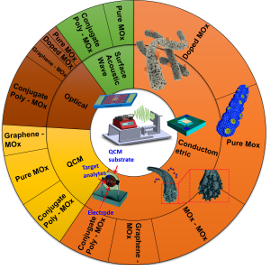
- shown in Figure 1. A nanofiber film has a surface area approximately twice that of a continuous thin film. This property means that nanofibers are excellent candidates for gas sensing applications. Moreover, nanofibers derived from a variety of materials, such as polymers, metals, metal-oxides and
- depends on the connectivity of the grains in highly crystalline nanofiber [113][114]. An opposite trend for crystal size is reported by Landau et al. [142] and Choi et al. [111] who obtained a higher response toward CO and NO2 with larger grain fibers. Moreover, the interparticle distance is also a key






Biomimetic and biodegradable cellulose acetate scaffolds loaded with dexamethasone for bone implants
Beilstein J. Nanotechnol. 2018, 9, 1986–1994, doi:10.3762/bjnano.9.189
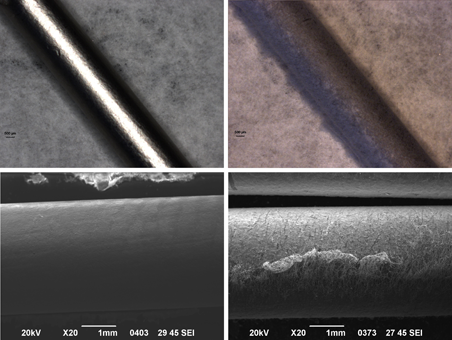
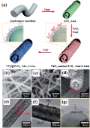
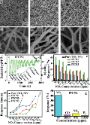
- implant failure after a total hip replacement [20][21]. Long-term treatment with glucocorticoid drugs together with anti-inflammatory and immunosuppressive agents such as dexamethasone (dexam) is applied to face this challenge [22]. Non-woven CA nanofiber meshes drug-loaded with dexam were produced


Sheet-on-belt branched TiO2(B)/rGO powders with enhanced photocatalytic activity
Beilstein J. Nanotechnol. 2018, 9, 1550–1557, doi:10.3762/bjnano.9.146
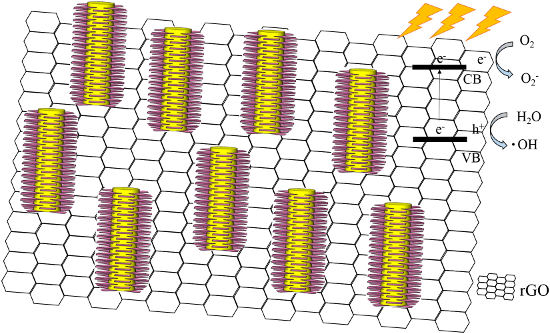
- nanocrystals on TiO2(B) single-crystal fibrils by a two-step process [23]. Li et al. prepared a biphase TiO2 core/shell nanofiber with anatase core and TiO2(B) shell [24]. Kandiel et al. used a hydrothermal technique to synthesize TiO2(B) nanofibers simultaneously decorated with anatase nanoparticles [25]. The


Review on nanoparticles and nanostructured materials: history, sources, toxicity and regulations
Beilstein J. Nanotechnol. 2018, 9, 1050–1074, doi:10.3762/bjnano.9.98

- -object with three external nanoscale dimensions. The terms nanorod or nanoplate are employed, instead of nanoparticle (NP) when the longest and the shortest axes lengths of a nano-object are different. Nanofiber: When two similar exterior nanoscale dimensions and a third larger dimension are present in a
- nanomaterial, it is referred to as nanofiber. Nanocomposite: Multiphase structure with at least one phase on the nanoscale dimension. Nanostructure: Composition of interconnected constituent parts in the nanoscale region. Nanostructured materials: Materials containing internal or surface nanostructure. The use


Ultralight super-hydrophobic carbon aerogels based on cellulose nanofibers/poly(vinyl alcohol)/graphene oxide (CNFs/PVA/GO) for highly effective oil–water separation
Beilstein J. Nanotechnol. 2018, 9, 508–519, doi:10.3762/bjnano.9.49
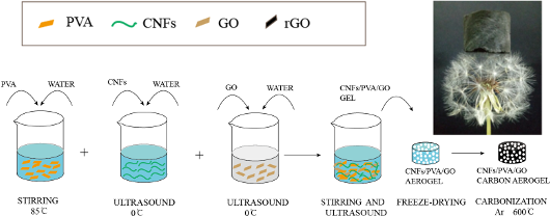
- ]. Therefore, CNFs can potentially be an excellent nanofiber for high-performance polymer nanocomposites, thereby presenting unprecedented opportunities for the development of durable engineering materials from a renewable resource for structural, consumer, and medical applications [11][12]. There is a long


Engineering of oriented carbon nanotubes in composite materials
Beilstein J. Nanotechnol. 2018, 9, 415–435, doi:10.3762/bjnano.9.41
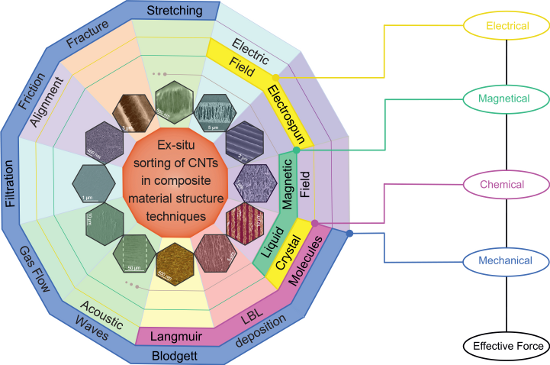
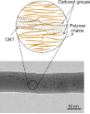
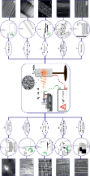
- and production ability of the fibers in semi-industrial quantities [44]. The two methods commonly used to make CNT/nanofiber are described below. Electrospinning: Electrospinning (ES) can be used to produce fibers from a viscous solution of polymer/CNTs, it is also employed for aligning CNTs in the
- fibers. In this method, a high voltage DC current (about 25 kV) is used between a charged polymer and a metallic collector to produce continuous filaments. Experiments revealed that the functionalized CNTs are aligned in the direction of the axis of the nanofiber polymers [45][46][47]. Figure 7 shows a
- can be effective in developing the method [111]. The magnetic field strength and sample size are the limiting parameters of this method. Moreover, as previously mentioned, the CNTs are aligned in the direction of the axis of electrospun nanofiber polymers. In new research, well-aligned electrospun








Dry adhesives from carbon nanofibers grown in an open ethanol flame
Beilstein J. Nanotechnol. 2017, 8, 2719–2728, doi:10.3762/bjnano.8.271
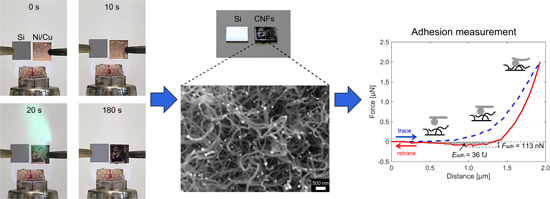
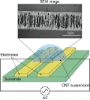
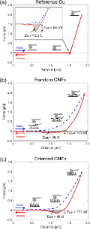
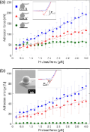
- fabricated arrays of carbon nanofibers with different degrees of orientation. Inspired by the dry adhesive system of geckos we investigated the adhesive properties of such carbon nanofiber arrays with ordered and random orientation. AFM-based force spectroscopy revealed that adhesion force and energy rise
- linear with preload force. Carbon nanofibers oriented by a magnetic field show a 68% higher adhesion (0.66 N/cm2) than the randomly oriented fibers. Endurance tests revealed that the carbon nanofiber arrays withstand 50.000 attachment/detachment cycles without observable wear. Keywords: adhesion; atomic
- growth of CNFs in an open flame as discussed below. Randomly oriented CNFs were observed when no magnetic field was applied (Figure 3a). The catalytic particles can be seen at the end of each nanofiber, indicating a tip-growth mechanism of the CNFs. The bright points in the SEM images most likely


Fabrication of carbon nanospheres by the pyrolysis of polyacrylonitrile–poly(methyl methacrylate) core–shell composite nanoparticles
Beilstein J. Nanotechnol. 2017, 8, 1897–1908, doi:10.3762/bjnano.8.190

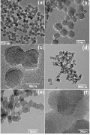
- carbonization treatments, polyacrylonitrile (PAN) can be converted into carbon. High-performance carbon fibers, carbon nanofiber membranes, 3D-ordered carbon materials, and carbon nanoparticles have been fabricated from various PAN precursors [28][29][30][31][32][33][34][35]. Discrete and well-defined carbon



Oxidative stabilization of polyacrylonitrile nanofibers and carbon nanofibers containing graphene oxide (GO): a spectroscopic and electrochemical study
Beilstein J. Nanotechnol. 2017, 8, 1616–1628, doi:10.3762/bjnano.8.161
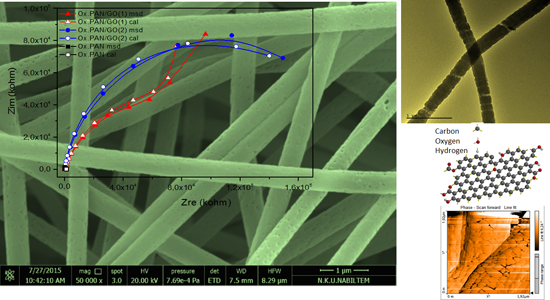
- during carbonization. Thus, the understanding of the oxidation mechanism is an essential part of the production of CNF. The oxidation process of polyacrylonitrile was studied and nanofiber webs containing graphene oxide (GO) are obtained to improve the electrochemical properties of CNF. Structural and
- interior pores filled with electrolyte. Keywords: carbon nanofiber; graphene oxide; oxidized polyacrylonitrile (PAN); Introduction Carbon nanofibers are of great interest because of their chemical similarity to fullerenes and carbon nanotubes. Carbon nanofibers (CNF) have promising electrochemical and
- micrometers and exhibit a high surface area and a high electrical conductivity. Also, nanofibers can be used with polymeric structures to generate composite materials to improve the electrochemical properties of polymeric structures [1][2][3]. Nanofiber-reinforced polymeric structures present improved


Fabrication of hierarchically porous TiO2 nanofibers by microemulsion electrospinning and their application as anode material for lithium-ion batteries
Beilstein J. Nanotechnol. 2017, 8, 1297–1306, doi:10.3762/bjnano.8.131
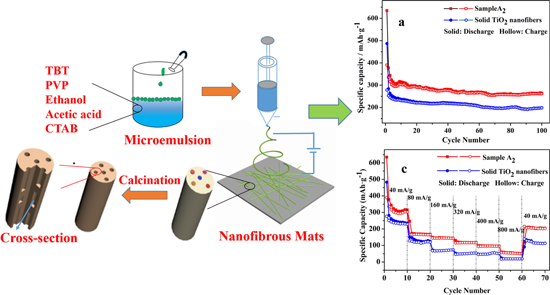
- electrospun into nanofibers by a custom-made electrospinning setup consisting of a high voltage power supply, a syringe pump and a grounded nanofiber collector covered with aluminium foil. During electrospinning, a positive voltage of 20 kV was applied between the needle tip and grounded collector at a
- the number of channels in each nanofiber decreased as the content of paraffin oil increased. This is because the pores stemmed from the vacancies of oil droplets after calcination, and a larger oil droplets were formed when more paraffin oil was added into the microemulsion [31]. The SEM image of
- unmodified TiO2 nanofibers in Figure 4g reveals solid structures without pores in the cross-section. This sample was used as reference in the following investigation. As shown in Figure 4h, a representative TEM image of a single porous nanofiber confirms that the pores inside the fibers were oriented and




Needs and challenges for assessing the environmental impacts of engineered nanomaterials (ENMs)
Beilstein J. Nanotechnol. 2017, 8, 989–1014, doi:10.3762/bjnano.8.101


Nano- and microstructured materials for in vitro studies of the physiology of vascular cells
Beilstein J. Nanotechnol. 2016, 7, 1620–1641, doi:10.3762/bjnano.7.155
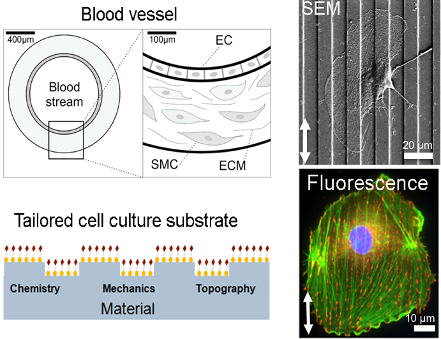
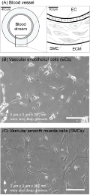
- responsive polymer (e-beam resist) in order to obtain a pattern for further processing. Like focused-ion beam nanolithography, the e-beam nanolithography can also deposit materials at the nanoscale level [68]. Electrospinning is a technique that allows for the fabrication of a nanofiber-based meshwork. A



Development of adsorptive membranes by confinement of activated biochar into electrospun nanofibers
Beilstein J. Nanotechnol. 2016, 7, 1556–1563, doi:10.3762/bjnano.7.149
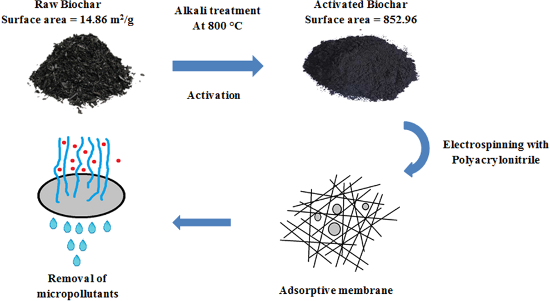
- mass spectrometer (Thermo Finnigan, USA). The daughter ions identified for CTC in LDTD were 464 and 444 Da. The detailed method was explained elsewhere by Pulicharla et al. [23]. Results and Discussion Nanofiber morphology The SEM micrographs of fabricated nanofibrous membrane with different contents
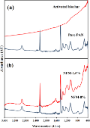
- structure [26][30]. The shift of the exothermic peak to lower temperatures from pure PAN powder to PAN nanofiber (NFM-0%) suggests that cyclization is more easily initiated due to molecular rearrangement during electrospinning that resulted in an improved orientation in molecular chains. On the other hand




Ammonia gas sensors based on In2O3/PANI hetero-nanofibers operating at room temperature
Beilstein J. Nanotechnol. 2016, 7, 1312–1321, doi:10.3762/bjnano.7.122
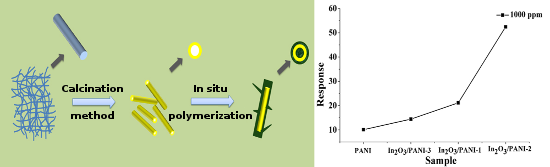
- In2O3/PANI nanofibers with reliable sensing properties towards NH3 were synthesized by electrospinning, calcination and in situ polymerization. The gas sensors based on In2O3/PANI nanofibers exhibited a higher sensitivity than pure PANI. The In2O3/PANI-2 nanofiber sensor exhibited the best sensitivity
- to NH3 vapor at room temperature, and this sensor was further investigated for its selectivity by interfering with methanol, ethanol and acetone vapors. The results indicated that the In2O3/PANI-2 nanofiber sensor had excellent selectivity, good repeatability and reversibility. The enhancement of gas
- sensing performance of In2O3/PANI nanofiber sensor may be attributed to formation of a p–n junction between In2O3 and PANI, which existence is confirmed by the I–V characteristics. Schematic of the preparation of In2O3/PANI composite nanofibers. a) XRD pattern of In2O3 nanofibers. FTIR spectra of b) In


Improved lithium-ion battery anode capacity with a network of easily fabricated spindle-like carbon nanofibers
Beilstein J. Nanotechnol. 2016, 7, 1289–1295, doi:10.3762/bjnano.7.120
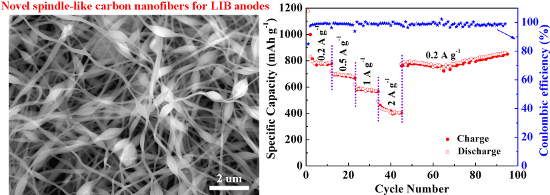
- capacity of 875.5 mAh g−1 after 200 cycles and 1005.5 mAh g−1 after 250 cycles with a significant coulombic efficiency of 99.5%. Keywords: carbon nanofiber network; electrospinning; lithium-ion battery; manganese oxide; nitrogen modification; Introduction Lithium-ion batteries (LIBs) have been identified
- that the major component of the obtained beaded nanofiber network is amorphous carbon with a small amount of MnO, which is in accordance with the XRD results. Moreover, an XPS investigation was performed to clarify the elements and their chemical states on the surface of the samples. All the XPS
- %, respectively. The electrochemical performance of the beaded nanofiber carbon network anchored with MnO and N was investigated as a working electrode of CR2032-type coin cell with lithium foil as the counter and reference electrodes. Figure 3a shows the typical cyclic voltammetry (CV) curves of the initial


Reasons and remedies for the agglomeration of multilayered graphene and carbon nanotubes in polymers
Beilstein J. Nanotechnol. 2016, 7, 1174–1196, doi:10.3762/bjnano.7.109
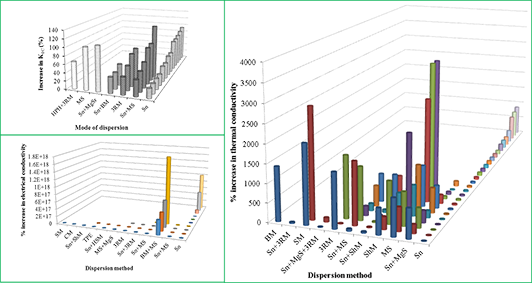
- in poly(phenylene benzobisoxazole (PBO) matrix and found an improvement of mechanical properties [137]. Along with an increase of tensile strength, SWNTs can increase the strain prior to failure. Nanofiber alignment is suitable to improve strength and modulus. However, it was observed that results


Hierarchical coassembly of DNA–triptycene hybrid molecular building blocks and zinc protoporphyrin IX
Beilstein J. Nanotechnol. 2016, 7, 697–707, doi:10.3762/bjnano.7.62
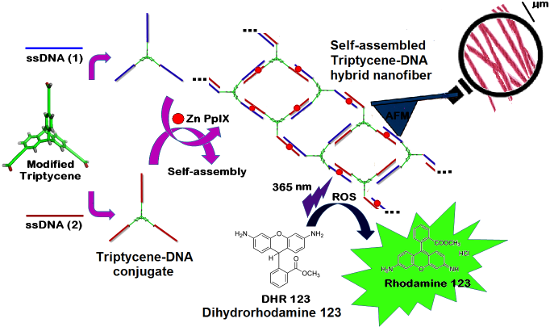
- block of the nanofibers. A notable change in photocatalytic efficiency of Zn PpIX was observed when it was inside the TPA–DNA scaffold. The significant increase in ROS generation by Zn PpIX when trapped in this biocompatible DNA–TPA hybrid nanofiber may be an effective tool to explore photodynamic
- constant for all the measurements. The percentage of enhancement in degree of oxidation (% EDO) of DHR 123 in the presence of DNA–TPA Zn PpIX nanofiber at λmax = 500 nm and λem = 534 nm was determined by using the equation as follows: where I0 is the absorption or the fluorescent intensity of oxidized DHR
- 123 by free Zn PpIX, and I is the fluorescent or absorption intensity in the presence of DNA–Zn PpIX and DNA–Zn PpIX nanofiber upon 2 min UV irradiation. Computational study In order to resolve the formation of higher ordered structures from assemblies of triconjugated DNA–TPA system, we conducted


Novel roles for well-known players: from tobacco mosaic virus pests to enzymatically active assemblies
Beilstein J. Nanotechnol. 2016, 7, 613–629, doi:10.3762/bjnano.7.54
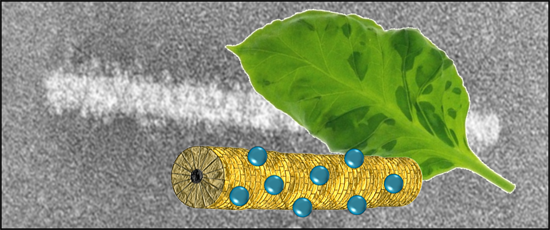
- addressable coupling sites exposed on their outer and sometimes inner surfaces, they offer intriguing possibilities for use as nanocontainers for the encapsidation or fabrication of compounds, or as nanofiber scaffolds for the immobilization and presentation of functional units. Most of the novel approaches


Nanofibers for drug delivery – incorporation and release of model molecules, influence of molecular weight and polymer structure
Beilstein J. Nanotechnol. 2015, 6, 1939–1945, doi:10.3762/bjnano.6.198
- these applications [8]. Although several methods of nanofiber preparation have been invented [9], electrospinning technique can be considered as a simple and versatile method for the production of continuous polymeric nanofibrous mats formed of nano- to micro-sized fibers [10][11][12][13][14]. Moreover
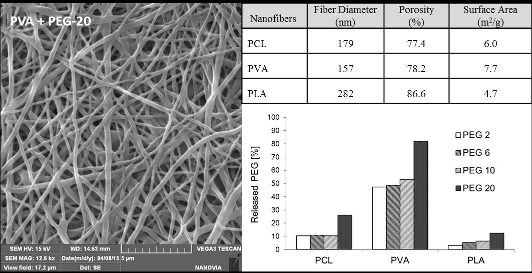
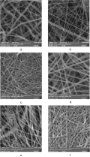
- , elemental analysis, IR spectroscopy and melting point measurements. The needle-free electrospinning process was optimized for each type of nanofiber with respect to the different physicochemical properties of polymers. SEM images revealed that the textures of all resultant samples were homogenous and free
- not noticeably influence the nanofiber structure. According to the results of morphological characterization, the nanofibrous structures remained similar to those of nanofibers without model molecules, even for nanofibers that contained PEG 20 (Figure 2d–f). Clusters or other artifacts were not



Tunable white light emission by variation of composition and defects of electrospun Al2O3–SiO2 nanofibers
Beilstein J. Nanotechnol. 2015, 6, 313–320, doi:10.3762/bjnano.6.29
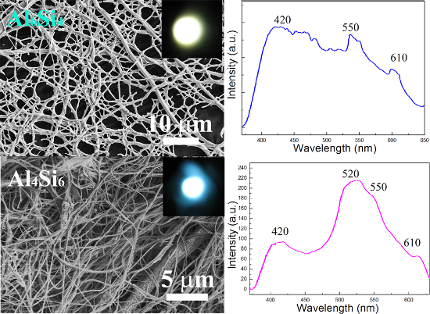
- . Strong light emission was observed from the Al2O3–SiO2 hetero-nanofibers with tunable emission from bluish-white to yellow-white. The possible origins of each PL band in this composite nanofiber were also discussed. Results and Discussion Crystalline structures Figure 1 shows the XRD patterns of the
- Figure 2d and Figure 2e, respectively) results in the coarsening of the surface of the fiber, further implying the precipitation of mullite nanocrystals from the inside to the surface of the fibers during the calcination. Comparably, the pure SiO2 nanofiber has a diameter of ≈100 nm with smooth surface


Boosting the local anodic oxidation of silicon through carbon nanofiber atomic force microscopy probes
Beilstein J. Nanotechnol. 2015, 6, 215–222, doi:10.3762/bjnano.6.20
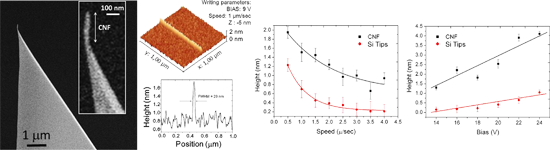
- -AFM, because it regulates the minimum feature size and the electric field. For instance, the feasibility of carbon nanotube (CNT)-functionalized tips showed great promise for LAO-AFM, yet, the fabrication of CNT tips presents difficulties. Here, we explore the use of a carbon nanofiber (CNF) as the
- of field-induced, chemical process efficiency. Keywords: carbon nanofiber; dynamic mode; local anodic oxidation; nanopatterning; Introduction Scanning probe lithography (SPL) is increasing its relevance among currently employed methods towards miniaturization and investigations at the nanometer
- control upon making CNT probes, as well as characteristic tip-to-tip differences, such as length, diameter, and operational complications, such as CNT buckling [15][16]. In this work, we explore the use of a carbon nanofiber (CNF) as the tip apex of AFM probes for the application of LAO-AFM on silicon


Controlled synthesis and tunable properties of ultrathin silica nanotubes through spontaneous polycondensation on polyamine fibrils
Beilstein J. Nanotechnol. 2013, 4, 793–804, doi:10.3762/bjnano.4.90
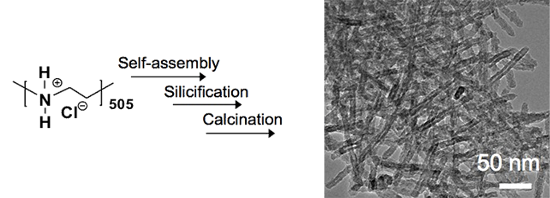
- ][23][24][25][26][27][28][29] or amine-modified polysaccharides [30] have been used as template for the formation of silica nanotubes. For example, Yuwono et al. [23] reported the use of peptide-amphiphile nanofiber templates in order to direct the synthesis of hollow silica nanotubes with outer


Electrospinning preparation and electrical and biological properties of ferrocene/poly(vinylpyrrolidone) composite nanofibers
Beilstein J. Nanotechnol. 2013, 4, 189–197, doi:10.3762/bjnano.4.19

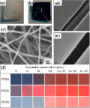
- nanofiber membrane, and we could see that the membrane is white. Figure 1b reveals that these nanofibers interdigitate to form a feltlike film. The surface morphologies of fibers are rough and the diameter distribution is from 70 to 100 nm and tens of microns in length. Compared with the blank PVP nanofiber
- membrane, Figure 1c shows the optical photograph of the composite Fc/PVP nanofiber membrane. The Fc was loaded at an amount of 45 wt % with respect to PVP mass in the nanofibers, and the membrane clearly changed to pale yellow, which was attributed to the presence of Fc. The surface morphologies of the
- fibers became porous and the diameter obviously increased with the distribution ranging from 100 to 200 nm (Figure 1d). The high surface-to-volume ratio improved the antibacterial activity of the composite Fc/PVP nanofiber membrane. As seen from the presented SEM micrographs (Figure 1d), no Fc crystals


Surface functionalization of aluminosilicate nanotubes with organic molecules
Beilstein J. Nanotechnol. 2012, 3, 82–100, doi:10.3762/bjnano.3.10
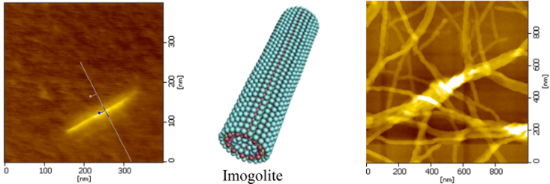
- introducing a phosphonic acid group to the corresponding molecules. The optical and photophysical properties of these conjugated-molecule-decorated imogolite nanotubes were characterized. Moreover, poly(3-hexylthiophene) (P3HT) chains were further hybridized with HT3P modified imogolite to form a nanofiber
- imogolite surface [61]. In addition, the absence of the 1004 cm–1 band, which is assigned to P–O–H groups [62][63], was another indication that HT3P molecules were chemisorbed onto the surface of the imogolite nanofiber. The FTIR spectrum of HT3OP/imogolite hybrid as shown in Figure 16b gives a similar
- negative charge to imogolite, which restricts the effective motion of positively charged species on the imogolite surface. Poly(3-hexyl thiophene)/imogolite nanofiber hybrid Polythiophenes are one of the well-known families of conductive polymers, and their physicochemical properties, such as their


Approaches to nanostructure control and functionalizations of polymer@silica hybrid nanograss generated by biomimetic silica mineralization on a self-assembled polyamine layer
Beilstein J. Nanotechnol. 2011, 2, 760–773, doi:10.3762/bjnano.2.84
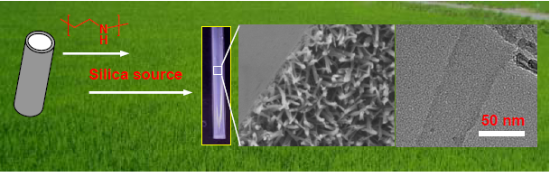
- and facilely functionalized makes our nanograss potentially important for device-based application in microfluidic, microreactor and biomedical fields. Keywords: biomimetic silica mineralization; linear polyethyleneimine; nanofiber; nanograss; thin film; Introduction Silica-based, one-dimensional





