


Search results
Search for "plasmon resonance" in Full Text gives 226 result(s) in Beilstein Journal of Nanotechnology. Showing first 200.
Zinc oxide nanostructures for fluorescence and Raman signal enhancement: a review
Beilstein J. Nanotechnol. 2022, 13, 472–490, doi:10.3762/bjnano.13.40
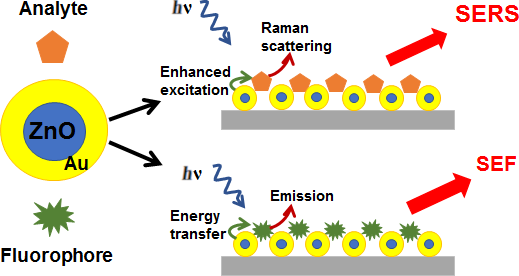
- nanorods (NRs) and Au seeds alone. The results showed a stronger SERS signal in the case of Au–ZnO NRs compared to Au nanoscale seeds. The SERS signal enhancement is due to the increased charge transfer effect of ZnO, which is greatly improved by the localized surface plasmon resonance of Au seeds. For the
- plasmon resonance of metallic nanostructures [99][100], as well as to charge transfer-induced electron–hole recombination. In the case of metal NP-decorated ZnO NRs [96][101], the UV emission enhancement mechanism is attributed to the recombination between holes in the VB and the electrons in the CB
- , consequently, to increase the sensitivity of fluorophores, the use of metallic nanostructures was proposed due to their localized surface plasmon resonance [105]. The improvement in the fluorescence detection efficiency can be achieved using fluorophores in the proximity of nanosubstrates, a technique named




Impact of device design on the electronic and optoelectronic properties of integrated Ru-terpyridine complexes
Beilstein J. Nanotechnol. 2022, 13, 219–229, doi:10.3762/bjnano.13.16
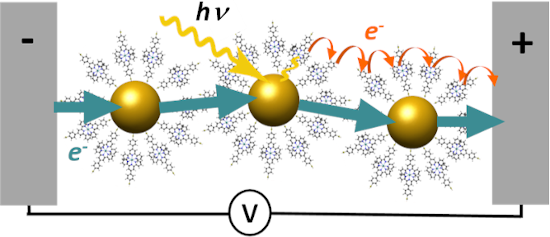
- irradiation with light of wavelengths larger than 520 nm corresponding to the surface plasmon band (see Supporting Information File 1, Figure S13), while no current increase is recorded at the wavelength corresponding to the MLCT band. The local surface plasmon resonance of the Ru(MPTP)2–AuNP is found at 533
- to the AuNP surfaces is possible. Such a plasmon-induced resonance energy transfer is likely if a spectral overlap between the plasmon resonance and a molecular resonance, ideally of shorter wavelength, exists [41]. The transferred energy leads to the excitation of the redox center of the Ru(MPTP)2


Sputtering onto liquids: a critical review
Beilstein J. Nanotechnol. 2022, 13, 10–53, doi:10.3762/bjnano.13.2

- nuclei of the final NPs [94][95]. Because silver clusters absorb light at different wavelengths than the surface plasmon resonance (SPR) band of Ag NPs (which is used for monitoring of NP growth kinetics by UV–vis spectroscopy) one can spot the induction period on the sigmoidal kinetic curves. Noteworthy






Plasmon-enhanced photoluminescence from TiO2 and TeO2 thin films doped by Eu3+ for optoelectronic applications
Beilstein J. Nanotechnol. 2021, 12, 1271–1278, doi:10.3762/bjnano.12.94
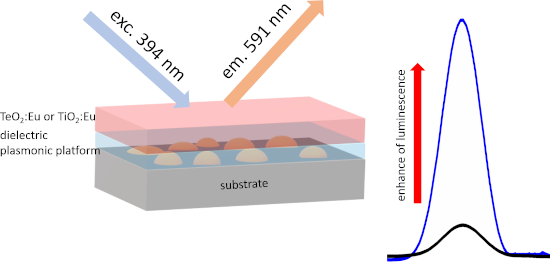
- candidates as phosphors in white LEDs. Keywords: gold nanostructures; luminescence; plasmon resonance; Introduction The rapid development of optoelectronics leads to challenges in the search for new luminescence materials. Especially the fabrication of white LEDs requires more efficient phosphors
- enhance the luminescence by plasmon resonance. These nanostructures could find practical applications, for example, as phosphor material in LEDs. Experimental Corning 1737 glass was chosen as a substrate for film deposition. The substrates were gently cleaned with warm acetylacetone, then rinsed in
- nanostructure with a diameter of ca. 50 nm is not perfectly spherical, but flattened on the substrate side. An exemplary transmittance spectrum recorded for the plasmonic platform is presented in Figure 3. A strong transmittance minimum, corresponding to plasmon resonance is observed at about 530 nm. The rapid


Assessment of the optical and electrical properties of light-emitting diodes containing carbon-based nanostructures and plasmonic nanoparticles: a review
Beilstein J. Nanotechnol. 2021, 12, 1078–1092, doi:10.3762/bjnano.12.80
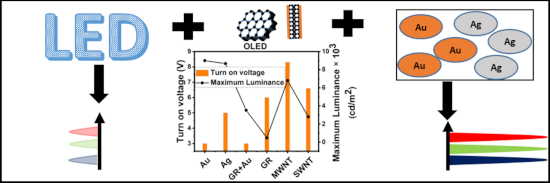
- employed in display applications and lighting systems. Further research on LED that incorporates carbon nanostructures and metal nanoparticles exhibiting surface plasmon resonance has demonstrated a significant improvement in device performance. These devices offer lower turn-on voltages, higher external
- as the emissive layer (EML), the hole transport layers (HTL), the electron transport layers (ETL), the cathode, and the anode [17][18][19][20][21]. Enhancement in LED properties via surface plasmon resonance (SPR) of metal nanoparticles (MNP) such as Au and Ag have also been reported [22][23]. This
- current injections of 100 mA have shown clear enhancements for both types of AuNP in Figure 4a and Figure 4b. Surface plasmon resonance absorbance tends to blueshift with decreasing sizes of the NP. Therefore, the 2 nm AuNP were able to enhance the blue emission from the LED. A similar effect was also


The role of deep eutectic solvents and carrageenan in synthesizing biocompatible anisotropic metal nanoparticles
Beilstein J. Nanotechnol. 2021, 12, 924–938, doi:10.3762/bjnano.12.69
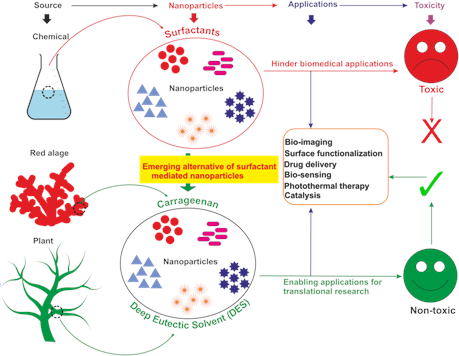
- characteristics, such as interesting plasmonic, optical and catalytic properties, and facile surface modification with tunable size and morphology [1]. Among these properties, the ability of surface plasmon resonance (SPR) at visible to near-infrared (NIR) wavelengths is the most striking characteristic feature
- of gold and silver nanoparticles. Surface plasmon resonance is an inherent property of plasmonic metal nanoparticles that is immensely employed as a tool for theranostics and is highly influenced by the size and shape of the nanoparticle [2]. The property of SPR has also been exploited for nanochips
- surfactant for synthesizing anisotropic nanoparticles with high yield and monodispersity. The surfactant induces anisotropy during the growth of nanoparticles and enables NIR absorption capability due to longitudinal surface plasmon resonance (LSPR) [11]. However, despite the superior plasmonic properties


High-yield synthesis of silver nanowires for transparent conducting PET films
Beilstein J. Nanotechnol. 2021, 12, 624–632, doi:10.3762/bjnano.12.51
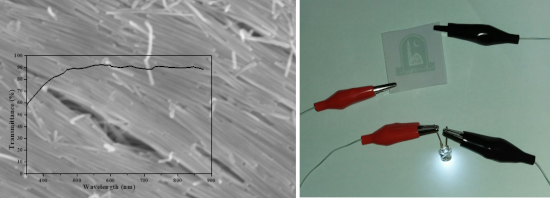
- electrical conductivity [12]. AgNWs are important as they offer a possibility to overcome light–matter interaction in the visible region. The optical properties of AgNWs are determined by localized surface plasmon resonance (LSPR), which depends on shape, size, and environment of the material [13]. AgNWs
- second peak at 373 nm is attributed to the longitudinal plasmon resonance of AgNWs. It is also noted that no other peak was observed, which shows that the final product was free from contamination of any other nanostructures, such as silver nanoparticles or nanocubes. The SEM results also confirm the


On the stability of microwave-fabricated SERS substrates – chemical and morphological considerations
Beilstein J. Nanotechnol. 2021, 12, 541–551, doi:10.3762/bjnano.12.44
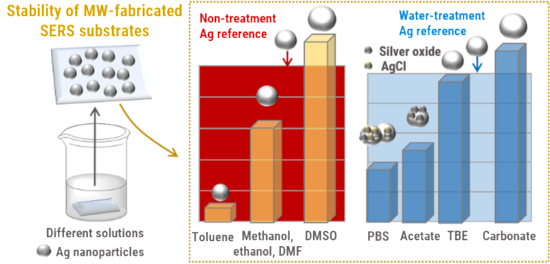
- laser excitation was set to 532 nm which overlaps with the plasmon resonance of the SERS substrates [24]. After an incubation time of eight minutes, the intensity of the characteristic peak of 4-ATP located at 1442 cm−1 reached a maximum intensity which did not further increase after longer incubation


Rapid controlled synthesis of gold–platinum nanorods with excellent photothermal properties under 808 nm excitation
Beilstein J. Nanotechnol. 2021, 12, 462–472, doi:10.3762/bjnano.12.37
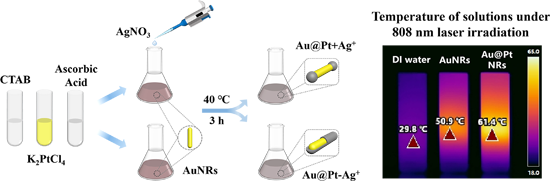
- conversion efficiency (PCE) due to local surface plasmon resonance (LSPR). Studies on different gold–platinum (Au–Pt) bimetal nanoparticles exhibiting the LSPR effect have provided a new idea for the synthesis of excellent PTAs. But there is no simple and scalable method for the controllable synthesis of Au
- . Keywords: AuNRs; local surface plasmon resonance (LSPR); photothermal conversion efficiency; photothermal transduction agents; platinum; Introduction On the surface of noble metal nanoparticles, when the wavelength of incident light resonates with the light absorption wavelength of the nanoparticles, a


A review on nanostructured silver as a basic ingredient in medicine: physicochemical parameters and characterization
Beilstein J. Nanotechnol. 2021, 12, 440–461, doi:10.3762/bjnano.12.36
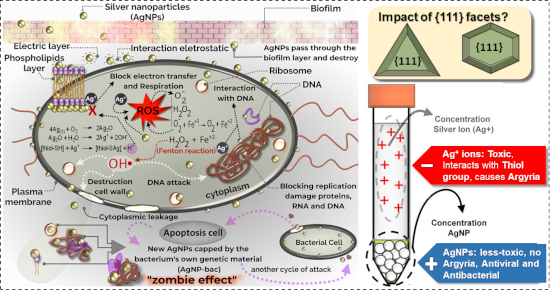
- AgNPs with light leads to surface plasmon resonance (SPR) effect when the incident light frequency coincides with the frequency of the oscillating electrons on the surface. The surface of AgNPs stores the conducting electrons inside the particles and establishes a restorative force which creates a
- –NIR absorption spectroscopy: Metallic nanoparticles are known to emit characteristic colors in the visible region of the electromagnetic spectrum due to a phenomenon known as surface plasmon resonance. The color of a colloidal nanoparticle solution is mainly dependent on the size and shape of the
- particles aggregate and the conducting electrons closer to each particle surface are relocated and shared between neighboring particles. This causes a change in surface plasmon resonance which can be observed from the absorption spectrum. It is also conceivable to evaluate a possible dissolution of AgNPs


Doxorubicin-loaded gold nanorods: a multifunctional chemo-photothermal nanoplatform for cancer management
Beilstein J. Nanotechnol. 2021, 12, 295–303, doi:10.3762/bjnano.12.24
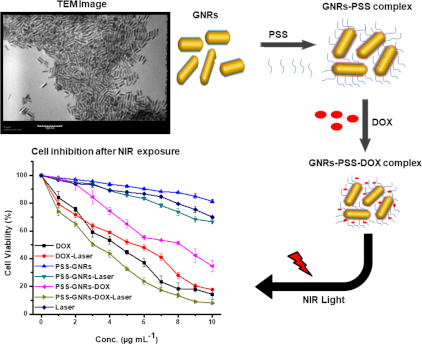
- -dispersion. A CTAB bilayer remained non-covalently bound onto the GNRs surface to maintain the stability of the final product. The longitudinal localized plasmon resonance (LSPR) and the transverse plasmon resonance (TSPR) of the prepared GNRs were found to be 780 and 526 nm, respectively. TEM images display


A review on the green and sustainable synthesis of silver nanoparticles and one-dimensional silver nanostructures
Beilstein J. Nanotechnol. 2021, 12, 102–136, doi:10.3762/bjnano.12.9
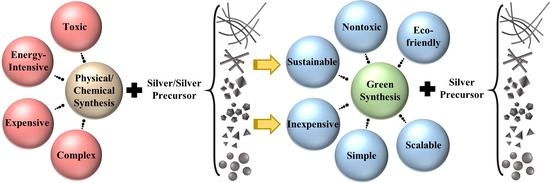
- -field effect and localized surface plasmon resonance (LSPR) [32]. There are several applications in which use of 1D silver nanostructures such as nanowires (NWs) and nanorods (NRs) (at the same concentration) are preferred to other nanostructures due to stronger conductivity. For instance, 1D silver
- [80][81][82]. For instance, the utilization of AgNPs in bone cement is meant to prevent bacterial infection while sustaining the mechanical strength of the cement connected to the prosthesis [82]. AgNPs have also demonstrated significant optical properties. They possess substantial surface plasmon
- resonance (SPR) and generally have a broad absorption spectrum [83]. This enables applications in optoelectronics and surface-enhanced Raman scattering [84][85]. AgNPs were also applied effectively in solar cell matrices [32][86][87]. AgNPs can enhance the current density in solar cells due to their far


Photothermally active nanoparticles as a promising tool for eliminating bacteria and biofilms
Beilstein J. Nanotechnol. 2020, 11, 1134–1146, doi:10.3762/bjnano.11.98
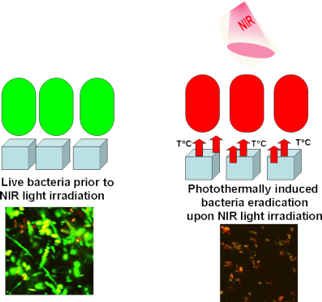
- gold nanoparticle aggregation was implemented [54]. According to this strategy, the spherical nanoparticles, with a typical localized surface plasmon resonance (LSPR) absorption at 520 nm, aggregated in situ at the surface of the bacterial membrane. The gold nanoparticle aggregation induced a change in


Straightforward synthesis of gold nanoparticles by adding water to an engineered small dendrimer
Beilstein J. Nanotechnol. 2020, 11, 1110–1118, doi:10.3762/bjnano.11.95
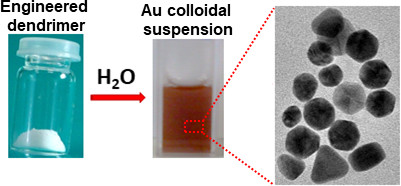
- gold nanoparticles since this color corresponds to the surface plasmon resonance wavelength. This is a well-known phenomenon observed in gold nanoparticles [56]. Considering that the gold nanoparticles are spherical, the maximum intensity of the visible spectrum at 545 nm should correspond to a mean
- size of ≈50 nm for the gold nanoparticles [57][58]. The shoulder detected at ≈630 nm corresponds to the longitudinal surface plasmon resonance, and it is characteristic of the presence of non-spherical gold NPs, in particular rod-like or triangular NPs [59][60]. The presence of this shoulder shifted


Highly sensitive detection of estradiol by a SERS sensor based on TiO2 covered with gold nanoparticles
Beilstein J. Nanotechnol. 2020, 11, 1026–1035, doi:10.3762/bjnano.11.87
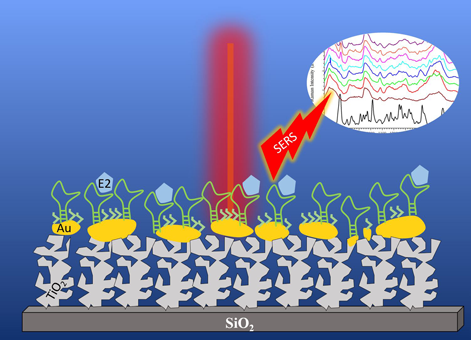
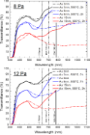
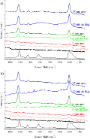
- µM, 100 µM, and 1 mM. Samples were left in the E2 solutions for 1 h before being rinsed with RO water and blown dry. Figure 1 gives a schematic of the final system. Optical and SERS measurements Plasmon resonance was evaluated via optical spectroscopy. For this purpose, transmission spectra were



Key for crossing the BBB with nanoparticles: the rational design
Beilstein J. Nanotechnol. 2020, 11, 866–883, doi:10.3762/bjnano.11.72
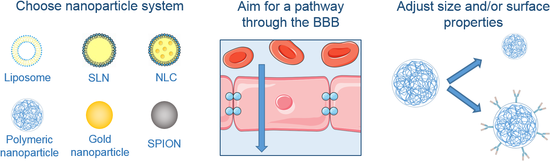
- targeting ligands, such as angiopep-2, TAT or EGF, allows their accumulation to be increased in these specific areas [70][78][107][176]. Although to a lower extent, gold nanorods (AuNRs) have also been used for brain delivery. AuNRs, like AuNPs, exhibit an optical feature called surface plasmon resonance


Effect of Ag loading position on the photocatalytic performance of TiO2 nanocolumn arrays
Beilstein J. Nanotechnol. 2020, 11, 717–728, doi:10.3762/bjnano.11.59
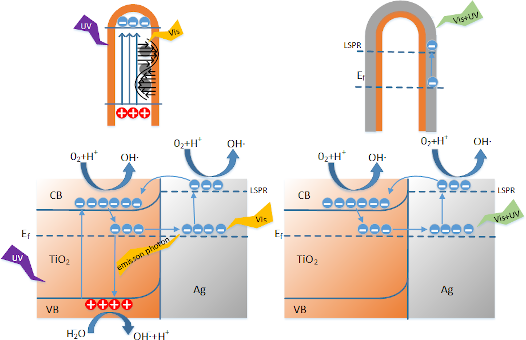
- efficiency of methylene blue (MB) compared with Ag-coated TiO2 (ACT) nanocolumn arrays and pure TiO2 nanocolumns arrays. Both experimental and theoretical simulation results demonstrated that the enhanced photocatalytic performance of AFT nanocolumn arrays was attributed to the surface plasmon resonance (SPR
- ) of Ag and the absorption of light by TiO2. These results represent a promising step forward to the development of high-performance photocatalysts for energy conversion and storage. Keywords: anodic aluminum oxide template; nanocolumn arrays; photocatalysis; surface plasmon resonance; Introduction
- resonance (SPR), which leads to strongly absorbed visible light and enhancement of local electromagnetic fields [14]. Among the noble metals, Ag nanostructures have been widely used as catalysts because of their reasonable cost and broad plasmon resonance in the visible region [15][16]. At present, the


Luminescent gold nanoclusters for bioimaging applications
Beilstein J. Nanotechnol. 2020, 11, 533–546, doi:10.3762/bjnano.11.42
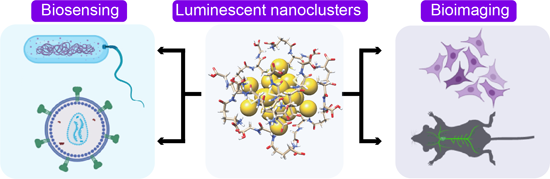
- single atom. Additionally, due to covalently bound ligands, the NCs show extraordinary stability under ambient conditions. While plasmonic AuNPs display size-dependent surface plasmon resonance (SPR), NCs display characteristic molecule-like electronic spectra. This is attributed to the small size and
- quantum confinement, and the evolution of continuous or quasicontinuous bands (of bulk gold) into discrete electronic states [40]. Another attractive property of AuNCs is photoluminescence (PL), a phenomenon that is much less understood than the surface plasmon resonance of plasmonic gold nanoparticles


Multilayer capsules made of weak polyelectrolytes: a review on the preparation, functionalization and applications in drug delivery
Beilstein J. Nanotechnol. 2020, 11, 508–532, doi:10.3762/bjnano.11.41
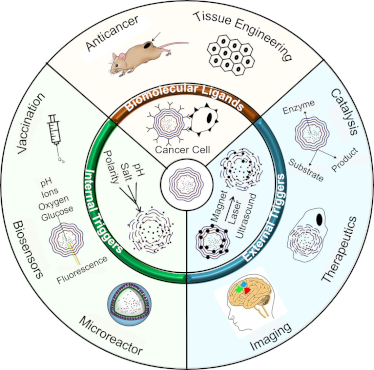
- charged silica NPs as well as the disulfide linkages between cysteine blocks and gold NPs resulted in two types of functionalities in the capsule. In a similar way, the capsules incorporated with noble metal NPs (e.g., gold and silver) respond to external light illumination by increased surface plasmon
- resonance of the outer shell electrons present in noble metals. The absorbed light is converted to heat energy, which causes layer damage, thereby opening the capsules and releasing the encapsulated material [83]. The parameters such as the preparation condition of capsules, the distribution and aggregation



Evolution of Ag nanostructures created from thin films: UV–vis absorption and its theoretical predictions
Beilstein J. Nanotechnol. 2020, 11, 494–507, doi:10.3762/bjnano.11.40
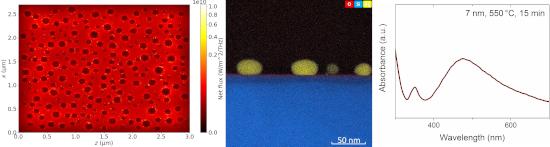
- quality of the nanostructures, in terms of their use as plasmonic platforms, is reflected in the UV–vis absorption spectra. The absorption spectrum is dominated by a maximum in the range of 450–500 nm associated with the plasmon resonance. As the initial layer thickness increases, an additional peak
- : dewetting; finite-difference time-domain (FDTD) method; plasmon resonance; silver (Ag) nanostructures; thin films; UV–vis absorption; Introduction In the last decade there has been significant development in sensor-related research regarding the application in optical, medical or biological areas [1][2][3
- ][4][5]. The principle of some of these sensors is the resonant enhancement of a local electromagnetic field as well as a sharp spectral absorption, which can be achieved by exploiting localized surface plasmon resonance (LSPR). This phenomenon is based on collective oscillations of free electrons




Preparation and in vivo evaluation of glyco-gold nanoparticles carrying synthetic mycobacterial hexaarabinofuranoside
Beilstein J. Nanotechnol. 2020, 11, 480–493, doi:10.3762/bjnano.11.39
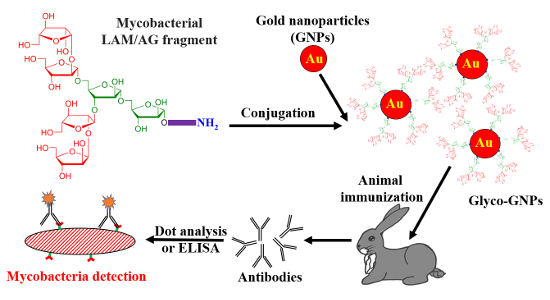
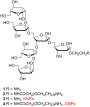
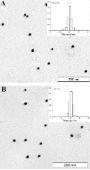
- . Another advantage of using these GNPs is their strong light absorption due to localized surface plasmon resonance (LSPR) around 520 nm while colloids of GNPs smaller than 3 nm do not exhibit an LSPR and are barely colored. It is known that the color of GNP colloids dramatically depends on size and shape


Synthesis and enhanced photocatalytic performance of 0D/2D CuO/tourmaline composite photocatalysts
Beilstein J. Nanotechnol. 2020, 11, 407–416, doi:10.3762/bjnano.11.31
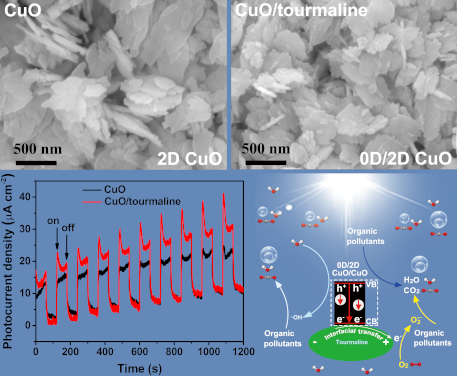
- spectra were collected to study the optical properties of the samples. As shown in Figure 5a, the CuO/tourmaline composite exhibited higher optical adsorption than that of pure CuO, due to the plasmon resonance of the tourmaline units [24]. The band gap of CuO and CuO/tourmaline composite was calculated


Using gold nanoparticles to detect single-nucleotide polymorphisms: toward liquid biopsy
Beilstein J. Nanotechnol. 2020, 11, 263–284, doi:10.3762/bjnano.11.20
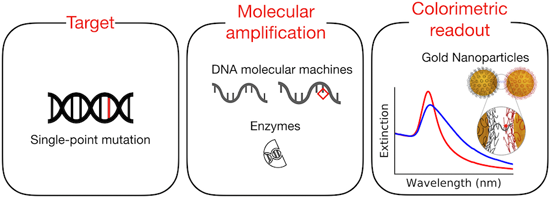
- giving rise to the so-called localized surface plasmon resonance (LSPR). The position and the bandwidth of the LSPR can be modulated by the shape of the nanocrystals and can vary between 400 and 2000 nm. The high absorption cross section (plasmonic nanoparticles absorb photons over a region about ten
- particles relative to each other are restricted, which imposes a colorimetric transition, i.e., a blueshift or redshift of the localized surface plasmon resonance [138]. It is reasonable to assume that development of biosensors for liquid biopsy will benefit from growing research on dynamic self-assembly of




Fabrication of Ag-modified hollow titania spheres via controlled silver diffusion in Ag–TiO2 core–shell nanostructures
Beilstein J. Nanotechnol. 2020, 11, 141–146, doi:10.3762/bjnano.11.12
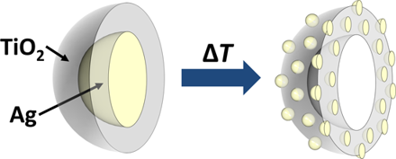
- silver diffusion in Ag–TiO2 core–shell nanostructures (CSNs). Our approach comprises three simple steps starting from the synthesis of the metallic core, through its coating with titania and finally annealing leading to plasmonic hollow nanostructures with plasmon resonance in a broad spectral range. SEM
- result, to a red-shift of the plasmon resonance [20]. As can be seen from curve A in Figure 4, Ag@TiO2 CSNs have a broad absorption in the UV–vis range. This is the characteristic absorption of these composites, which does not change remarkably with a change of the shell thickness. The annealing of Ag
- @TiO2 CSNs leads to nanostructures with significantly changed optical properties as can be seen from curves B–E in Figure 4. In all cases, a red-shift of the maximum of absorption and a strengthening and widening of the plasmon resonance bands were observed. It is significant that the Ag-modified TiO2



Label-free highly sensitive probe detection with novel hierarchical SERS substrates fabricated by nanoindentation and chemical reaction methods
Beilstein J. Nanotechnol. 2019, 10, 2483–2496, doi:10.3762/bjnano.10.239
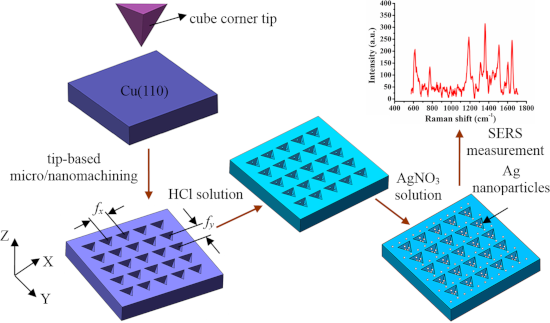
- chemical (CM) [5] and electromagnetic enhancement (EM) [6][7]. The CM enhancement is the main factor for charge transfer between the SERS substrate and probe molecule. The EM field enhancement is the main factor for localized surface plasmon resonance (LSPR) and significantly depends on the induced near





