


Search results
Search for "separation" in Full Text gives 802 result(s) in Beilstein Journal of Nanotechnology. Showing first 200.
The role of biochar in combating microplastic pollution: a bibliometric analysis in environmental contexts
Beilstein J. Nanotechnol. 2025, 16, 1401–1416, doi:10.3762/bjnano.16.102
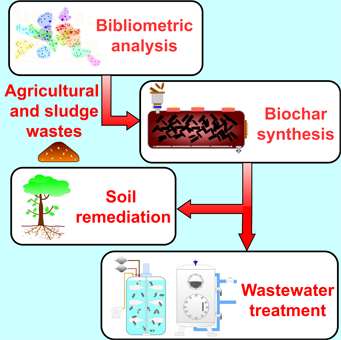
- techniques according to their treatment models, such as batch and fixed-column systems [22]. Modified biochars have been developed to enhance MP capture efficiency, including magnetic biochar, which facilitates easy separation from aqueous environments [22][23]. A comparative study by Mulindwa, et al. [24
- 64.46% and 80.11% efficiencies for PS and PVC (<100 µm), respectively [82]. While biochar and biocoagulation methods are environmentally friendly, their efficiency remains limited, particularly for MPs <10 µm. Furthermore, no studies have addressed the separation of biomass from MPs, whereas MP
- , biochar offers an environmentally sustainable alternative, leveraging agricultural waste while allowing for MP separation and biochar regeneration. These attributes highlight biochar's potential as a viable solution for MP remediation in diverse environmental contexts. Practical implications and policy



Parylene-coated platinum nanowire electrodes for biomolecular sensing applications
Beilstein J. Nanotechnol. 2025, 16, 1392–1400, doi:10.3762/bjnano.16.101
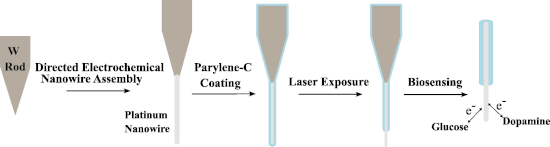
- voltages were 11 MHz and 9.5 V (−4.75 V to +4.75 V), respectively, for single nanowire growth. During the growth process, the electrode separation was adjusted. Initially, the separation was reduced to a few micrometers to initiate nanowire growth. As the platinum nanowire started growing, the separation


Ferroptosis induction by engineered liposomes for enhanced tumor therapy
Beilstein J. Nanotechnol. 2025, 16, 1325–1349, doi:10.3762/bjnano.16.97
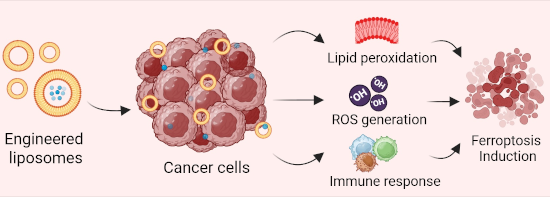
- the liposomes from the free drugs and enables the determination of the EE [110]. CE offers advantages, such as low sample and buffer consumption, short analysis times, and the possibility of investigating interactions between drugs and liposomes directly in the separation capillary [125]. The


Enhancing the photoelectrochemical performance of BiOI-derived BiVO4 films by controlled-intensity current electrodeposition
Beilstein J. Nanotechnol. 2025, 16, 1289–1301, doi:10.3762/bjnano.16.94
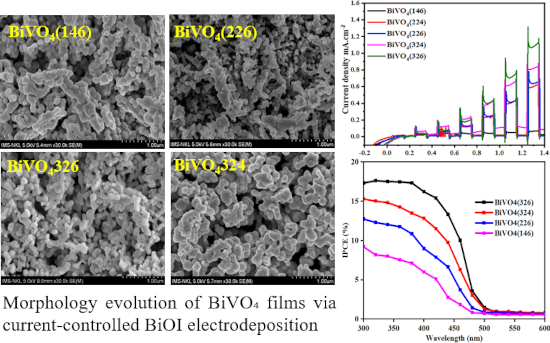
- in PEC performance. Our method offers a higher degree of control over both the intermediate BiOI layer and the final BiVO4 structure, thereby enabling enhanced charge separation and surface reaction kinetics. Furthermore, this approach provides a deeper understanding of the relationship between the
- )2 volumes, suggested improved charge separation and transport pathways. These voids facilitate the diffusion of the reactants and products, reducing the recombination rates and enhancing the water-splitting efficiency. The finer particle sizes and increased porosity, as observed for BiVO4(326
- promote the formation of active crystal facets, which are critical for PEC performance. These results align with the enhanced photoelectrochemical activity observed for BiVO4(326), as the improved vibrational characteristics reflect more efficient light absorption and charge separation



Acrocomia aculeata oil-loaded nanoemulsion: development, anti-inflammatory properties, and cytotoxicity evaluation
Beilstein J. Nanotechnol. 2025, 16, 1277–1288, doi:10.3762/bjnano.16.93
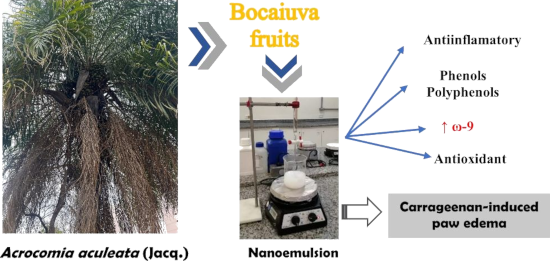
- under mechanical agitation [48]. Nevertheless, while these conditions favor the formation of smaller nanodroplets, temperatures above 60 °C may compromise emulsion stability, potentially triggering phase separation or degradation of labile components. This highlights the necessity for stringent


Better together: biomimetic nanomedicines for high performance tumor therapy
Beilstein J. Nanotechnol. 2025, 16, 1246–1276, doi:10.3762/bjnano.16.92
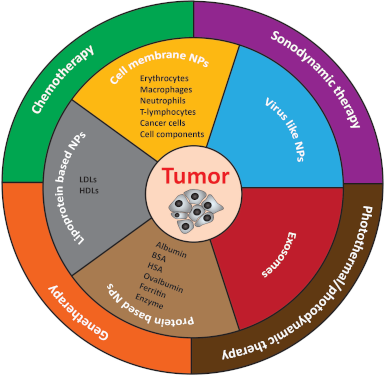
- commercial kits [107]. Microfluidic devices are now aiding the separation of exosomes by acoustic cell separation [108][109]. The drugs can be either directly load in exosomes or exosomes are sliced to remove contents and reassembled [110]. The interaction between exosomes and host cells is very complex






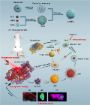

Functional bio-packaging enhanced with nanocellulose from rice straw and cinnamon essential oil Pickering emulsion for fruit preservation
Beilstein J. Nanotechnol. 2025, 16, 1234–1245, doi:10.3762/bjnano.16.91
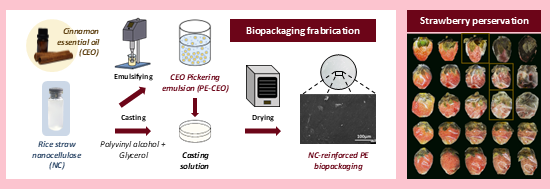
- mobility [43]. When CEO content exceeds 8%, WVP slightly increases to 5.27 × 10⁻¹² g·m−1·s−1·Pa−1, likely due to structural heterogeneity and phase separation within the polymer matrix [45]. These findings suggest that an optimal PE-CEO concentration exists to balance water resistance and mechanical



Mechanical stability of individual bacterial cells under different osmotic pressure conditions: a nanoindentation study of Pseudomonas aeruginosa
Beilstein J. Nanotechnol. 2025, 16, 1171–1183, doi:10.3762/bjnano.16.86
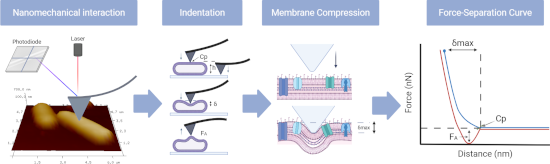
- from hypotonic to hypertonic solutions suggest a softening of the outer envelope, which we associate with intense dehydration and membrane separation between inner and outer envelopes. Application of a contact mechanics model to account for the minute differences in mechanical behavior upon deformation
- displacement by the piezoelectric element are gathered in order to maintain a constant cantilever deflection or amplitude while a surface is scanned line by line Conversely, in FV quantitative information is extracted after analysis of a force–separation curve obtained from a performed nanoindentation
- . The mentioned parameters derived from force–separation curves are analyzed and mapped in real time as shown below in Figure 1. In the present study, we investigated the mechanical response of the outer membrane of PA at the single bacterium level in FV mode when exposed to relevant osmolarity


Crystalline and amorphous structure selectivity of ignoble high-entropy alloy nanoparticles during laser ablation in organic liquids is set by pulse duration
Beilstein J. Nanotechnol. 2025, 16, 1141–1159, doi:10.3762/bjnano.16.84
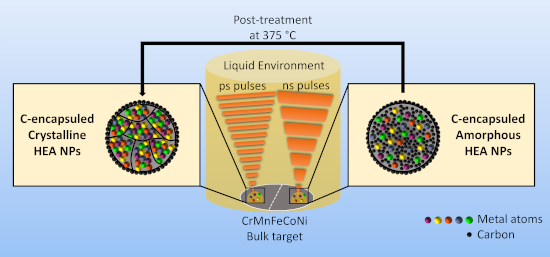
- correlations [18]. Furthermore, even though the size distributions reported in this work were not strictly monodisperse, size-separation techniques based on centrifugation are well established in the literature and could be applied to HEA NPs as well [109], even in a continuous operation mode using tubular




Influence of ion beam current on the structural, optical, and mechanical properties of TiO2 coatings: ion beam-assisted vs conventional electron beam evaporation
Beilstein J. Nanotechnol. 2025, 16, 1097–1112, doi:10.3762/bjnano.16.81
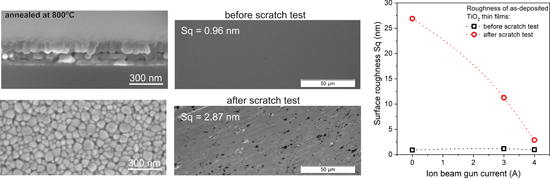
- with Iibg = 4 A revealed the formation of a bilayer, indicating the separation of grains into two distinct rows or layers. The width of the elongated grains in this case ranged from 90 to 115 nm. Yang et al. [6] mentioned that compared to conventional electron beam evaporation, ion bombardment provides
- an additional Iibg of 4 A, can be understood as the separation of grains into two distinct rows or layers. This phenomenon may be related to the deposition conditions and the post-process heat treatment of the titanium dioxide thin film. As the grains grow during annealing, the top row of grains may
- recrystallize differently from those near the substrate, forming a visible boundary. The separation between the two layers of grains may be related to the difference in the grain growth kinetics, which may be influenced by the annealing conditions. For optical coatings, amorphous, very smooth TiO2 layers with




Single-layer graphene oxide film grown on α-Al2O3(0001) for use as an adsorbent
Beilstein J. Nanotechnol. 2025, 16, 1082–1087, doi:10.3762/bjnano.16.79
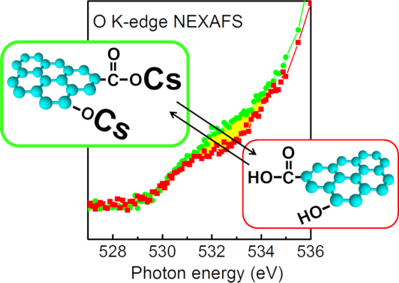
- imperative. Cs and Sr exhibit strong adsorption to particles of rocks and soils, resulting in their water insolubility and substantial volume. A viable method for the disposal of radioactive waste is the application of an acid treatment, which has been demonstrated to be effective in the efficient separation


Soft materials nanoarchitectonics: liquid crystals, polymers, gels, biomaterials, and others
Beilstein J. Nanotechnol. 2025, 16, 1025–1067, doi:10.3762/bjnano.16.77
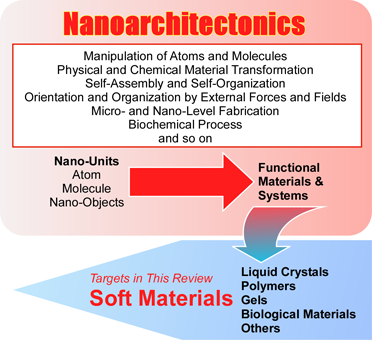
- self-organization at the molecular film level offers significant potential for a range of applications. The precise separation and alignment of π-conjugated discotic liquid crystal molecular nanowires represents an attractive area of research. Kumar, Nayak, and colleagues investigated an approach to
- . At a higher surface pressure of 40 mN·m−1, the nanowires exhibited a tendency to come closer together, resulting in the formation of a compact and uniform monolayer. The interfacial nanoarchitectonics method of separating nanowires will undoubtedly prove invaluable for the separation of other 1D






Time-resolved probing of laser-induced nanostructuring processes in liquids
Beilstein J. Nanotechnol. 2025, 16, 968–1002, doi:10.3762/bjnano.16.74
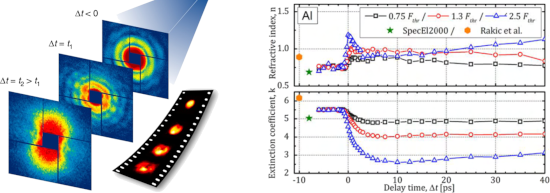
- the i-th and j-th atom, respectively, and ηi and ηj are their corresponding phases; rij is the internuclear separation between the i-th and j-th atoms. The interference term of the molecular scattering gives rise to the modulation feature of the total elastic scattering intensity, while the atomic
- solvated OH(H3O+) pair before separation. The experimental result showed that these features were short-lived and disappeared within ≈250 fs. This separation occurred because of the subsequent proton propagation from H3O+ to the outer-shell neutral water. The radical–cation pair dissociation process


Characterization of ion track-etched conical nanopores in thermal and PECVD SiO2 using small angle X-ray scattering
Beilstein J. Nanotechnol. 2025, 16, 899–909, doi:10.3762/bjnano.16.68
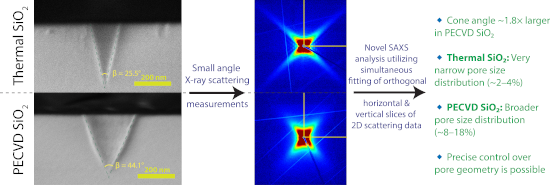
- attracted significant attention in the past decade because of their broad applicability in a variety of areas including biosensing, micro/ultrafiltration, desalination, ion and molecular separation, dialysis, battery technologies, blue energy generation, and nanofluidics [1][2][3][4][5][6][7][8][9][10][11


Heat-induced transformation of nickel-coated polycrystalline diamond film studied in situ by XPS and NEXAFS
Beilstein J. Nanotechnol. 2025, 16, 887–898, doi:10.3762/bjnano.16.67
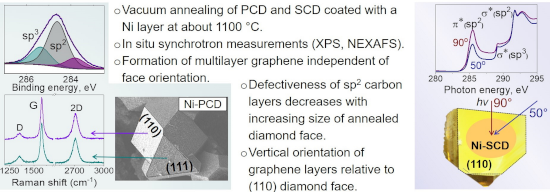
- dependence for highly oriented pyrolytic graphite [51], and is similar to the dependence for a film of vertically aligned carbon nanotubes [52]. In layered graphite, there is a separation of electron orbitals with respect to symmetry: σ orbitals lie in the basal plane of graphite, while π orbitals are


Ar+ implantation-induced tailoring of RF-sputtered ZnO films: structural, morphological, and optical properties
Beilstein J. Nanotechnol. 2025, 16, 872–886, doi:10.3762/bjnano.16.66
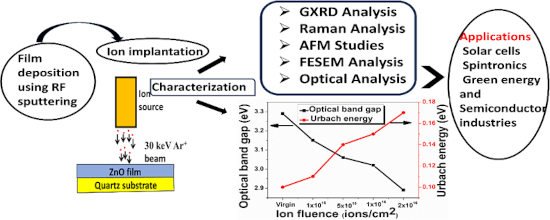
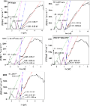
- acceptor level or donor levels present at the top of the valence band or at the bottom of the conduction band, respectively. This results in a decrease in the energy separation between the valence band and the conduction band. Also, the sub-bandgap values decrease with increase in ion fluence as shown in






Synthesis and magnetic transitions of rare-earth-free Fe–Mn–Ni–Si-based compositionally complex alloys at bulk and nanoscale
Beilstein J. Nanotechnol. 2025, 16, 823–836, doi:10.3762/bjnano.16.62
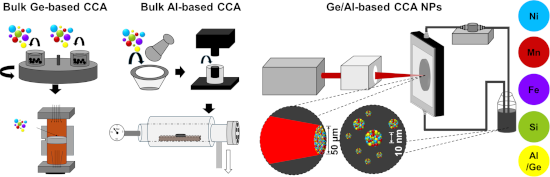
- immiscibility under equilibrium conditions, which leads to elemental segregation and phase separation [35]. Additionally, standard near-equilibrium heating methods are not suitable for synthesizing CCA NPs because of inherent thermodynamic limitations [36]. While high-temperature synthesis techniques have been


Morphology and properties of pyrite nanoparticles obtained by pulsed laser ablation in liquid and thin films for photodetection
Beilstein J. Nanotechnol. 2025, 16, 785–805, doi:10.3762/bjnano.16.60
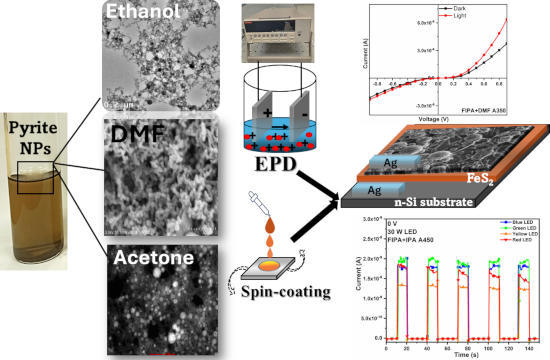
- , and rapid energy transfer from the plasma to the surrounding liquid. The target and liquid are heated during the shockwave propagation, which may aid in the separation of material from the crater. The plasma plume cools down and releases energy to the liquid solution as it expands. This event causes
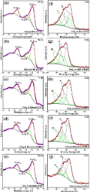
- argon ions is provided in Figure 7. The Fe 2p spectra of pyrite NPs in all solvents (Figure 7a–e) show two major peaks of Fe 2p3/2 and Fe 2p1/2 at 709 and 722 eV, respectively, which denotes the Fe2+ chemical state [44] with a separation ΔE of 13.1 eV. The peak fitting of the Fe 2p3/2 peak reveals a
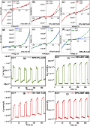
- as indicators of surface recombination. Peter et al. have explained this mechanism in semiconductor photoanodes [63]. When light is turned on, an immediate photocurrent appears due to the rapid separation of electron–hole pairs in the space charge region. This initial response is followed by a decay






Synthesis of a multicomponent cellulose-based adsorbent for tetracycline removal from aquaculture water
Beilstein J. Nanotechnol. 2025, 16, 728–739, doi:10.3762/bjnano.16.56
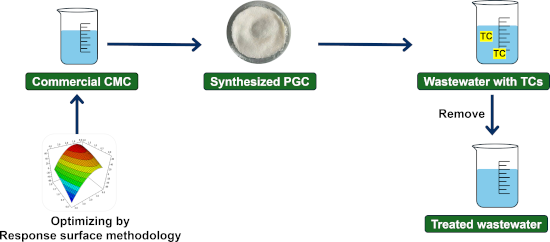
- their mechanical strength and hydrophobicity. Recent studies have revealed that inorganic salt mixtures, such as zinc chloride and calcium chloride, effectively dissolve cellulose, facilitating the fabrication of cellulose membranes for gas separation and organic pollutant removal [38][39]. Specifically


The impact of tris(pentafluorophenyl)borane hole transport layer doping on interfacial charge extraction and recombination
Beilstein J. Nanotechnol. 2025, 16, 678–689, doi:10.3762/bjnano.16.52
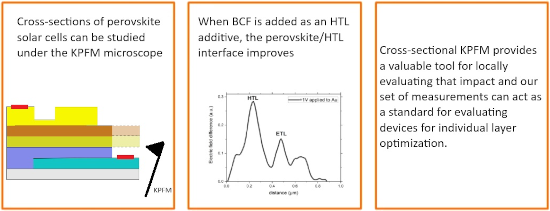
- distributions indicative of p-i-n junctions in all devices, with a lower CPD on the ETL side where the electrons accumulate under bias. Subtracting the first measurement from the second, we filter out all information from the data that does not pertain to potential changes due to charge separation and
- position of the built-in fields that enable charge separation. These profiles that are being referred to as “electric field difference” are presented in Figure 3i–l. To extract the electric field difference profiles, we applied the following equation: Here, E is the electric field difference, V is the
- -doped HTLs, exhibit one large drop at the perovskite/HTL interface, indicative of the dominant diode junction that exists there. In order to further understand charge separation within the solar cells, we can use these photopotential profiles in order to examine charge extraction and accumulation within


Nanoscale capacitance spectroscopy based on multifrequency electrostatic force microscopy
Beilstein J. Nanotechnol. 2025, 16, 637–651, doi:10.3762/bjnano.16.49

- the gradient of the energy, WC, stored in the tip–sample capacitor C with respect to the tip–sample separation z, as given by where Vtip−sample specifies the electrical voltage across the tip–sample gap. In conventional EFM with single-frequency excitation, Vtip−sample is given by Equation 2 [18
- together with the parameters of a regular EFM cantilever (NuNano SPARK 70 Pt) and an electrical drive of V = 2 V and a mechanical amplitude of Am = 10 nm. Comparing the graphs, we can immediately see that the total C′ signal retains a significant long-range contribution even at a tip–sample separation of
- total signal at a given distance z. At a typical tip–sample separation of 10 nm, the apex signal makes up more than 82% of the complete C″ signal, while the apex contribution to the first capacitance gradient only makes up less than 10% of the total C′ signal. In closer proximity of 1 nm distance to the




A formulation containing Cymbopogon flexuosus essential oil: improvement of biochemical parameters and oxidative stress in diabetic rats
Beilstein J. Nanotechnol. 2025, 16, 617–636, doi:10.3762/bjnano.16.48
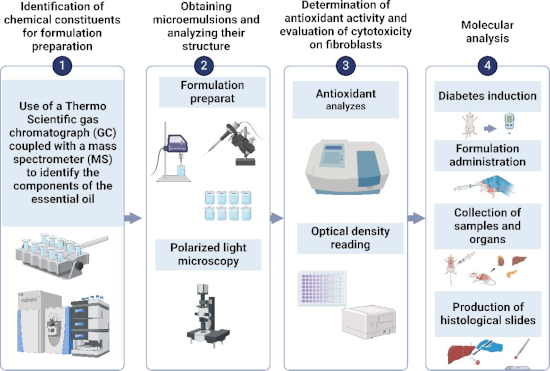
- . The structural alteration observed, marked by the separation of cells and loss of cohesion between them, compromised the integrity of the pancreatic parenchyma, which may indicate dysfunction in enzyme production and secretion, as well as an exacerbated inflammatory response. In addition, cell
- , 0.25 μm film thickness) was used for compound separation, with helium as a 99.999% pure carrier gas (White Martins SA) at a flow rate of 1 mL/min and a split/splitless autoinjector. For the analysis, a solution of EOCF was prepared at a concentration of approximately 10 mg/mL using hexane as a solvent




Polyurethane/silk fibroin-based electrospun membranes for wound healing and skin substitute applications
Beilstein J. Nanotechnol. 2025, 16, 591–612, doi:10.3762/bjnano.16.46



Functionalized gold nanoflowers on carbon screen-printed electrodes: an electrochemical platform for biosensing hemagglutinin protein of influenza A H1N1 virus
Beilstein J. Nanotechnol. 2025, 16, 540–550, doi:10.3762/bjnano.16.42
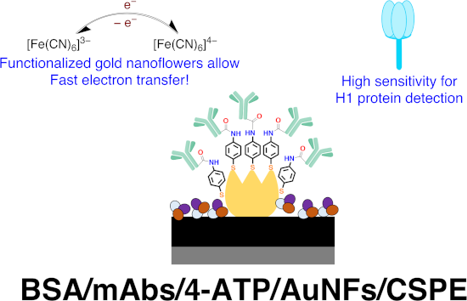
- could be seen experimentally (black curve of Figure 3), where the cyclic voltammetry (CV) analysis shows a large peak-to-peak separation of 0.72 V for the [Fe(CN)6]3−/4− redox pair. This differs significantly from the theoretical 0.057 V peak-to-peak separation in reversible redox processes that involve
- based on electrodeposition of gold nanoflowers increased the current response of the electrode because of the larger electroactive surface area compared to a CSPE (Figure 3). The CV analysis of the AuNFs/CSPE showed a peak-to-peak separation of 0.37 V. This value is smaller than in the commercial CSPE
- largest change in the CV was observed after the functionalization of the AuNFs with 4-ATP through stable Au–S bonds. In this case, the peak-to-peak separation for the 4-ATP/AuNFs/CSPE was 0.16 V, showing that the redox reversibility for the [Fe(CN)6]3−/4− pair and the current response of the electrode


N2+-implantation-induced tailoring of structural, morphological, optical, and electrical characteristics of sputtered molybdenum thin films
Beilstein J. Nanotechnol. 2025, 16, 495–509, doi:10.3762/bjnano.16.38
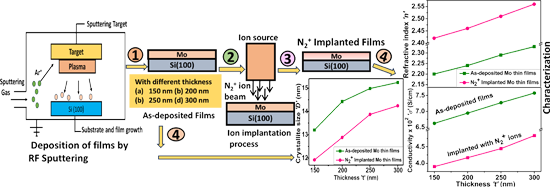
- separation, which aligns with the measured tensile stress. In the nitrogen-implanted films, all peaks are shifted to reduced 2θ values compared to the as-deposited films, indicating compressive stress. Nevertheless, the peak positions for the implanted films shifted towards increasing 2θ values as the film





