


Search results
Search for "silver nanoparticles" in Full Text gives 152 result(s) in Beilstein Journal of Nanotechnology.
Silver nanoparticles induce the cardiomyogenic differentiation of bone marrow derived mesenchymal stem cells via telomere length extension
Beilstein J. Nanotechnol. 2021, 12, 786–797, doi:10.3762/bjnano.12.62
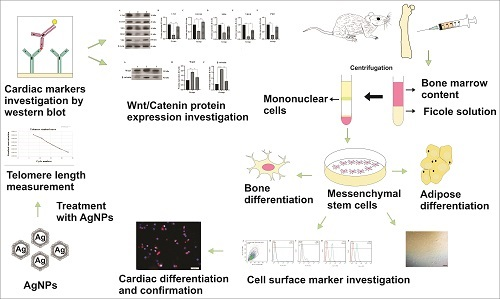
- possible combination of stem cells and nanotechnology in the treatment of diseases. This study aims to investigate the in vitro effect of silver nanoparticles (Ag-NPs) on the cardiomyogenic differentiation of bone marrow-derived mesenchymal stem cells (BM-MSCs) through detection of cardiac markers. For
- ; cardiomyogenic differentiation; silver nanoparticles; telomere length; Wnt3/β-catenin signaling pathway; Introduction Cardiac disorders that eventually lead to heart failure cause an increased loss of cardiac cells. There is strong evidence that the progression of heart failure is associated with reduction in
- attention. Novel nanomaterials are being developed to improve disease treatment processes via biopharmaceutical molecules as well as the surface treatment of biomaterials [8][9]. Among nanoparticles (NPs), silver nanoparticles (Ag-NPs) are successfully commercialized due to their well-known antiseptic


Fate and transformation of silver nanoparticles in different biological conditions
Beilstein J. Nanotechnol. 2021, 12, 665–679, doi:10.3762/bjnano.12.53
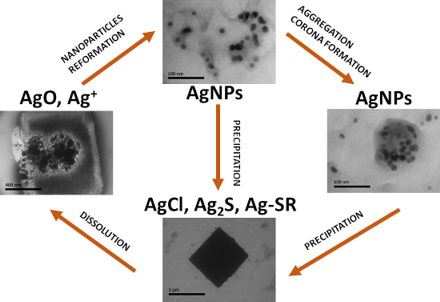
- de Zaragoza, Zaragoza 50009, Spain Centro de Investigación Biomédica en Red de Bioingeniería, Biomateriales y Nanomedicina (CIBER-BBN), Spain 10.3762/bjnano.12.53 Abstract The exploitation of silver nanoparticles (AgNPs) in biomedicine represents more than one third of their overall application
- vivo settings. Keywords: animal tissue; biological media; nanoparticle aggregation; nanoparticle dissolution; nanoparticle reformation; silver nanoparticles; Introduction The global consumption of silver nanoparticles (AgNPs) has been steadily increasing in the last decade and estimated to reach over
- images of freshly synthesized silver nanoparticles (AgNPs) coated with PLL, AOT, or PVP dispersed in ultrapure water at a concentration of 10 mg Ag/L. Scale bars are 100 nm. TEM images of liver obtained from (a) untreated and (b) treated healthy male Wistar rats. The rats were treated orally with a daily




High-yield synthesis of silver nanowires for transparent conducting PET films
Beilstein J. Nanotechnol. 2021, 12, 624–632, doi:10.3762/bjnano.12.51
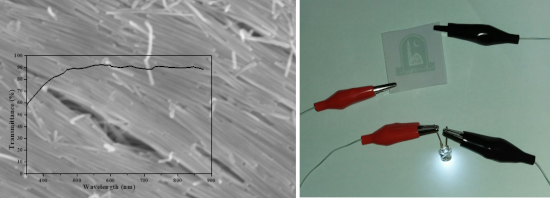
- performance below that of ITO films. Hence, there is a need to modify this polyol method to produce extra-large and highly ordered silver nanowires to outperform ITO films. It is important to note that the polyol synthesis yields impurities in the form of silver nanoparticles [29]. These nanoparticles formed
- presence of silver nanoparticles in the solution. The ratio between AgNO3 and PVP used in the reaction greatly affects the synthesis of silver nanowires [32]. In the present reaction, the ratio of PVP to AgNO3 was 4:1. The solution was then cooled to room temperature by the addition of 30 mL DI water. The
- second peak at 373 nm is attributed to the longitudinal plasmon resonance of AgNWs. It is also noted that no other peak was observed, which shows that the final product was free from contamination of any other nanostructures, such as silver nanoparticles or nanocubes. The SEM results also confirm the


On the stability of microwave-fabricated SERS substrates – chemical and morphological considerations
Beilstein J. Nanotechnol. 2021, 12, 541–551, doi:10.3762/bjnano.12.44
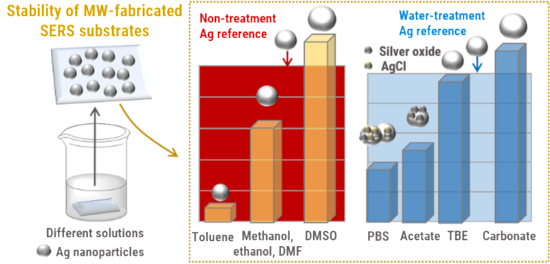
- on the SERS activity of the substrates and a carbonate buffer at pH 10 was found to even improve SERS performance. This study represents a guideline on the stability of microwave-fabricated SERS substrates or other SERS substrates consisting of non-stabilized silver nanoparticles for the application
- of different organic solvents and buffer solutions. Keywords: chemical stability; microwave synthesis; scanning electron microscopy; silver nanoparticles; surface-enhanced Raman spectroscopy; Introduction Surface-enhanced Raman spectroscopy (SERS) has been developed into a standard analytical tool
- glass capillaries or on scanning force microscopy tips) in a very economic and fast (less than five minutes) coating process. The formed substrates, which are coated with a monolayer of silver nanoparticles, have been demonstrated to be highly reproducible and to perform very well in the detection of


Surface-enhanced Raman scattering of water in aqueous dispersions of silver nanoparticles
Beilstein J. Nanotechnol. 2021, 12, 497–506, doi:10.3762/bjnano.12.40
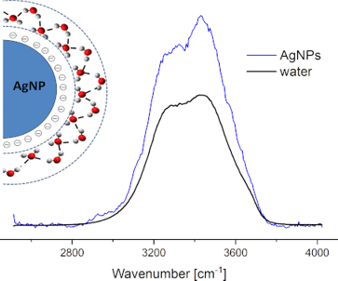
- Raman scattering (SERS) effect. In this work, we show the SERS effect for water molecules in the dispersion of silver nanoparticles (AgNPs) without any external electrical field. An enhancement factor was estimated to be (4.8 ± 0.8) × 106 for an excitation wavelength of 514.5 nm and for AgNPs with an
- effect weaker [20]. Silver nanoparticles (AgNPs) are gaining more and more popularity in various applications, such as electronics [22], photonics [23], and medicine [24]. Silver nanocolloids are also commonly used as an enhancing substrate in surface-enhanced Raman scattering (SERS) [25][26]. Since the
- , spontaneous and stimulated Raman surface enhancement of the signal of liquid water in an aqueous dispersion of silver nanoparticles [35]. High enhancement factors (in the magnitude of 106) were obtained for the results from both techniques. In this work, further investigations on the SERS effect for water


A review on nanostructured silver as a basic ingredient in medicine: physicochemical parameters and characterization
Beilstein J. Nanotechnol. 2021, 12, 440–461, doi:10.3762/bjnano.12.36
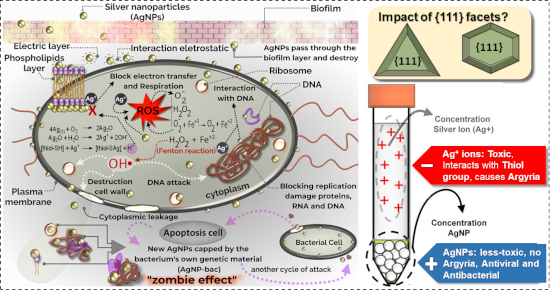
- . Thenhipalam 673635, Kerala, India National Institute for Quality Control in Health, Oswaldo Cruz Foundation (INCQS, FIOCRUZ), Rio de Janeiro, RJ, Brazil 10.3762/bjnano.12.36 Abstract Recent studies with silver nanoparticles (AgNPs) and the history of silver metal as a broad-spectrum bactericidal and
- studies of this promising agent in nanomedicine and in clinical practice. Keywords: bactericidal agent; {111} facets; mechanism of action; silver ion; silver nanoparticles; quality control; virucidal agent; Review Introduction Silver is one of the oldest bactericidal agents in history and is also
- , advised Alexander the Great (335 BC) to add silver to his water [1][2][3]. Since then, the bactericidal effect of silver nanoparticles (AgNPs) has been studied and several experimental evidences have greatly improved the understanding of its mechanism and effects on the human body and on the environment


Characterization, bio-uptake and toxicity of polymer-coated silver nanoparticles and their interaction with human peripheral blood mononuclear cells
Beilstein J. Nanotechnol. 2021, 12, 282–294, doi:10.3762/bjnano.12.23
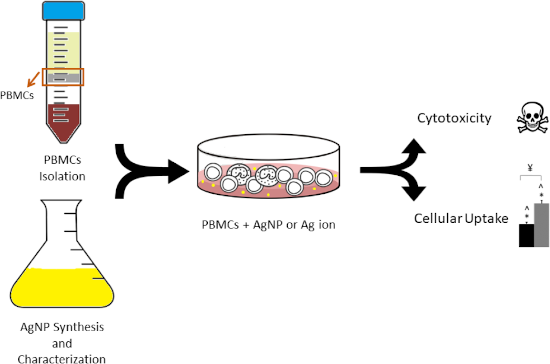
- , Columbia, SC, 29208, United States 10.3762/bjnano.12.23 Abstract Silver nanoparticles (AgNPs) are widely used in medical applications due to their antibacterial and antiviral properties. Despite the extensive study of AgNPs, their toxicity and their effect on human health is poorly understood, as a result
- applications [2]. NPs are present in numerous commercial products such as cosmetics, electronics, and textiles. Also, they are widely used in industry, including various biomedical and drug-delivery applications for the treatment of diseases [3][4][5][6]. Silver nanoparticles (AgNPs) are one of the most
- , characterization, and study of transformations to obtain a better understanding of NP uptake and toxicity. Statistical analysis indicated that there might be an individual variability in response to NPs, although more research is required. Keywords: human peripheral blood mononuclear cells; silver ions; silver



A review on the biological effects of nanomaterials on silkworm (Bombyx mori)
Beilstein J. Nanotechnol. 2021, 12, 190–202, doi:10.3762/bjnano.12.15
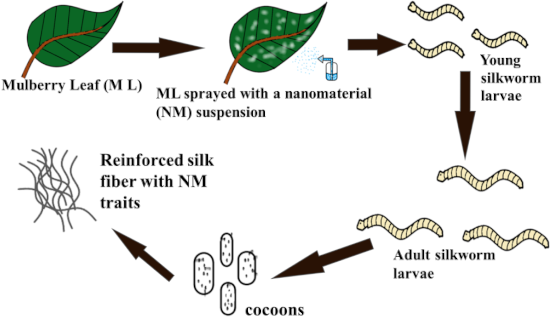
- ), graphene oxide, silver nanoparticles (Ag NPs) [24][25][26], quantum dots, and superparamagnetic particles [27] have been reported to have antibacterial properties against Streptococcus mutans [28] and Xanthomonas perforans, antifungal properties against Fusarium oxysporum [27] and Fusarium graminearum [29
- packaging [53]. There is a need to improve food packaging quality to reduce food spoilage caused by pests and also to enhance the shelf life of food products. Nanomaterials are used as an additive in food packaging [54]. Silver nanoparticles, for example, were used as an additive in the manufacture of food


A review on the green and sustainable synthesis of silver nanoparticles and one-dimensional silver nanostructures
Beilstein J. Nanotechnol. 2021, 12, 102–136, doi:10.3762/bjnano.12.9
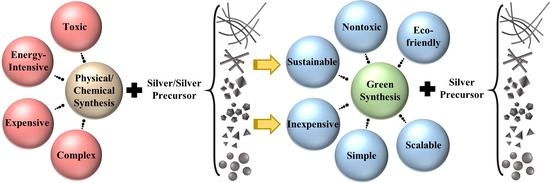
- characteristics including antimicrobial activity, electrical conductivity, thermal conductivity, optical characteristics, and mechanical properties. The antimicrobial characteristic of silver nanoparticles (AgNPs) has made them highly applicable in the biomedical and therapeutic fields [69][70][71]. Currently
- permeability and leads to bacterial death [71][76]. Another therapeutic approach lies in the bactericidal activity of functionalized silver nanoparticles coated on surfaces. This method is applicable in developing aseptic catheters to prevent catheter-related infections such as urinary tract and venous
- method is primarily used for large-scale production in a short amount of time [137]. The bottom-up approach, however, mostly relies on the use of reducing agents for the production of silver nanoparticles. This approach is also categorized into two distinguishable, but not completely disparate, set of


Antimicrobial metal-based nanoparticles: a review on their synthesis, types and antimicrobial action
Beilstein J. Nanotechnol. 2020, 11, 1450–1469, doi:10.3762/bjnano.11.129
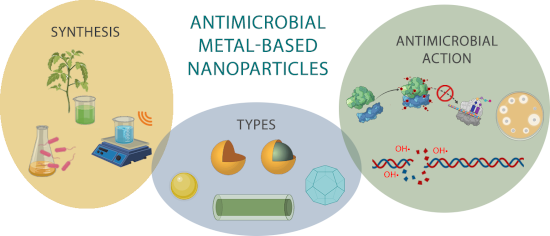
- irradiation time. For example, while Tan et al. [31] obtained spherical silver nanoparticles, Zhou et al. [32] obtained plate-like triangles. Another method used is the pulsed laser ablation technique which is used to synthesize colloidal solutions of Ag [33], Au [34], MgO [35], and ZnO [36] NPs, among others
- et al. (2019) used fruit peel waste to synthesize silver nanoparticles with antimicrobial activity against foodborne pathogens [93]. Ibrahim et al. (2015) have also synthesized spherical silver nanoparticles (23.7 nm) by using banana peels. These Ag NPs have exhibited antimicrobial activity against
- provide strong and extended antimicrobial activity at smaller dosages against a broad range of microorganisms due to their dimensions and shapes [96]. Table 3 shows some examples of potential antimicrobial metallic NPs. Silver nanoparticles have been considered one of the most interesting antimicrobial


Photothermally active nanoparticles as a promising tool for eliminating bacteria and biofilms
Beilstein J. Nanotechnol. 2020, 11, 1134–1146, doi:10.3762/bjnano.11.98
- results regarding antibacterial activity. The advances in the field of nanomaterials exhibiting antibacterial activity are well summarized in recent reviews [1][7][8][9]. In particular, the antibacterial properties of silver nanoparticles (Ag NPs) and Ag-NP-based polymeric materials are the most
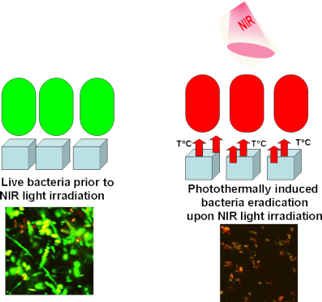
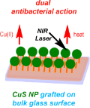
- nanoparticles are due to the resonant oscillation of the surface electrons, called surface plasmons (e.g., plasmonic gold and silver nanoparticles) [38], or they are due to the energy of the band transitions (e.g., Cu2+ d–d transition in CuS nanoparticles) [39]. Under visible–NIR light irradiation, these
- of the antibacterial ions can act synergistically with the NIR-induced hyperthermia to eliminate the bacteria and biofilm. Silver nanoparticles that absorb in the NIR spectral range can be used for the photothermal elimination of bacteria and this physical effect can be enhanced by both the release


Gram-scale synthesis of splat-shaped Ag–TiO2 nanocomposites for enhanced antimicrobial properties
Beilstein J. Nanotechnol. 2020, 11, 1119–1125, doi:10.3762/bjnano.11.96
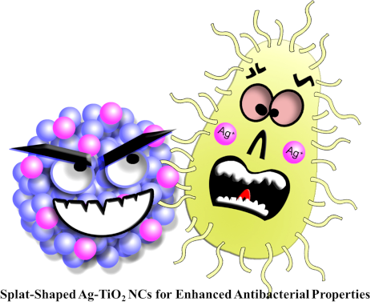
- . The improvement in the antibacterial activity was attributed to the synergistic effect of the hybrid nature of TiO2 nanoparticles in the presence of Ag. Keywords: antimicrobial properties; biomaterials; nanocomposites; silver nanoparticles; titanium dioxide; Introduction The rapid industrial


Applications of superparamagnetic iron oxide nanoparticles in drug and therapeutic delivery, and biotechnological advancements
Beilstein J. Nanotechnol. 2020, 11, 1092–1109, doi:10.3762/bjnano.11.94
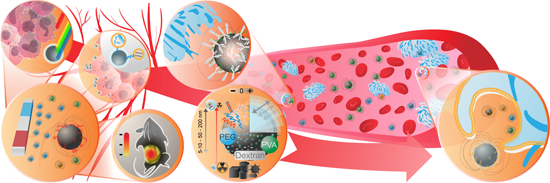
- microscopy (EM), iron oxide magnetic beads for the separation of cells and molecules, gold and silver nanoparticles as fiducials for EM, for immuno-EM labeling and surface-enhanced Raman spectroscopy, or for gene transfection, liposomes for drug delivery, and gadolinium or iron oxide nanoparticles for


Wet-spinning of magneto-responsive helical chitosan microfibers
Beilstein J. Nanotechnol. 2020, 11, 991–999, doi:10.3762/bjnano.11.83
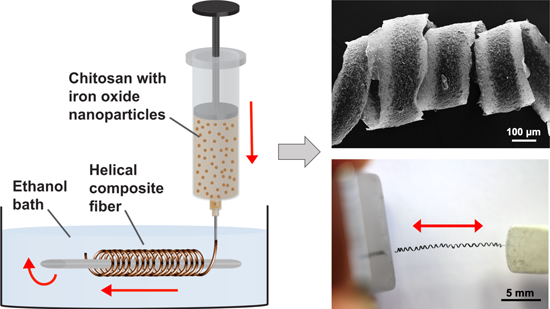
- ]. Additionally, by using either wet-spinning or electrospinning techniques, nanoparticles can be suspended into the viscous spinning solution and embedded into the fiber matrix. For example, silver nanoparticles have been incorporated into electrospun chitosan fibers enabling antibacterial activity in wound


Hexagonal boron nitride: a review of the emerging material platform for single-photon sources and the spin–photon interface
Beilstein J. Nanotechnol. 2020, 11, 740–769, doi:10.3762/bjnano.11.61
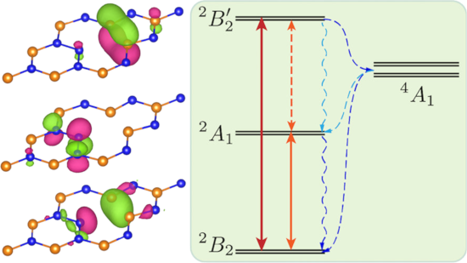




Silver-decorated gel-shell nanobeads: physicochemical characterization and evaluation of antibacterial properties
Beilstein J. Nanotechnol. 2020, 11, 620–630, doi:10.3762/bjnano.11.49
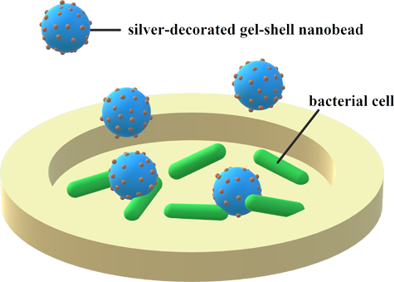
- of composite nanobeads with antibacterial properties. The particles consist of polystyrene cores that are surrounded by sulfonic gel shells with embedded silver nanoparticles. The nanocomposite beads are prepared by sulfonation of polystyrene particles followed by accumulation of silver ions in the
- layer producing silver nanoparticles but also transforms a fraction of sulfonic groups in the polymer to moieties with sulfur in a lower oxidation state, likely thiols. It is hypothesized that the generated thiol groups are anchoring the nanoparticles in the gel shell of the nanobeads stabilizing the
- inhibitory (MBIC) concentrations are comparable to those of non-incorporated silver nanoparticles. Keywords: Escherichia coli; gel-shell particles; minimum biofilm inhibitory concentration (MBIC); minimum inhibitory concentration (MIC); nanocomposites; Pseudomonas aeruginosa; silver nanoparticles


Evolution of Ag nanostructures created from thin films: UV–vis absorption and its theoretical predictions
Beilstein J. Nanotechnol. 2020, 11, 494–507, doi:10.3762/bjnano.11.40
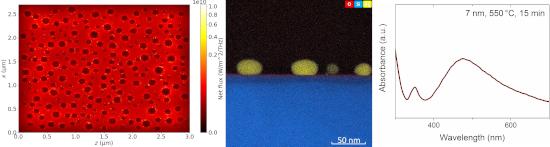
- three-dimensional simulation of electromagnetic field propagation through a selected sample (thickness 7 nm, annealed at 550 °C for 15 min) was performed using the FDTD method [14], implemented in the OmniSim package, produced by Photon Design, UK. Positions and sizes of the silver nanoparticles




Nanoparticles based on the zwitterionic pillar[5]arene and Ag+: synthesis, self-assembly and cytotoxicity in the human lung cancer cell line A549
Beilstein J. Nanotechnol. 2020, 11, 421–431, doi:10.3762/bjnano.11.33
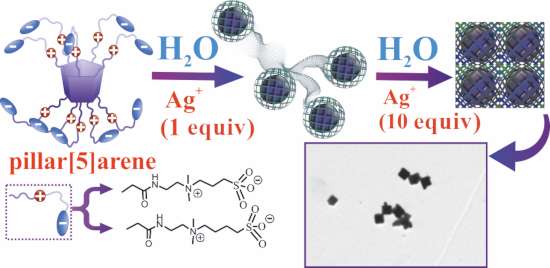
- thousands of years, the use of this metal has grown into an entire industry [1]. A separate area of this industry is the use of silver nanoparticles (AgNPs), which are the source of Ag+ ions in many commercial products, such as food packaging, odor-resistant fabrics, household appliances and medical devices




Gold and silver dichroic nanocomposite in the quest for 3D printing the Lycurgus cup
Beilstein J. Nanotechnol. 2020, 11, 16–23, doi:10.3762/bjnano.11.2
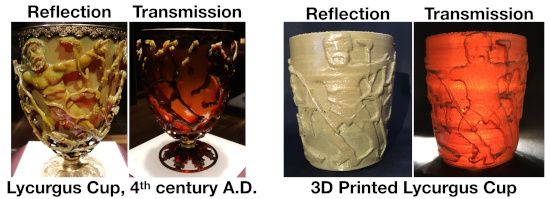
- nanoparticles present in the glass. In this research we show the synthesis of dichroic silver nanoparticles and their embedding in a 3D printable nanocomposite. The addition of gold nanoparticles to the silver nanoparticle composite, gave a 3D printable nanocomposite with the same dichroism effect of the
- scientists for centuries, was discovered to be due to the presence of nanoparticles in the glass. This effect was due to two different metallic nanoparticles: silver nanoparticles (AgNP) and gold nanoparticles (AuNP). While the latters are responsible for the red plasmonic colour, the silver nanoparticles
- variations, we found that reducing silver ions at room temperature immediately followed by an addition of a polyvinylpyrrolidone (PVP) solution formed dichroic silver nanoparticles in minutes. The addition of the reducing agent (NaBH4) to a silver nitrate solution forms nanoclusters, and the immediate


Advanced hybrid nanomaterials
Beilstein J. Nanotechnol. 2019, 10, 2563–2567, doi:10.3762/bjnano.10.247

- electronic devices” [29]. A combination of deposition techniques was used, chemical vapor deposition for parylene and RF-magnetron sputtering for silver nanoparticles. The content and size of the latter influences the dielectric characteristics of the resulting hybrid films. Such devices may find application
Label-free highly sensitive probe detection with novel hierarchical SERS substrates fabricated by nanoindentation and chemical reaction methods
Beilstein J. Nanotechnol. 2019, 10, 2483–2496, doi:10.3762/bjnano.10.239
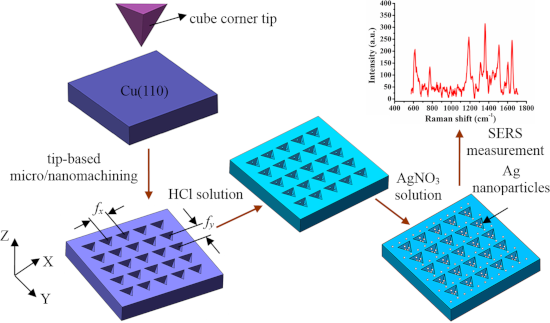
- on the Cu(110) plane by changing the period of the force signal and the machining feed. Ag nanoparticles were generated via redox on the cavities and pile-up of the Cu(110) surface. Different structures of silver nanoparticles and copper surfaces can be produced by changing the corrosion time, and
- V/m. The electric field intensity of a single silver particle in contact with the pile-up structure is increased by a factor of about three versus the individual silver nanoparticles on the copper surface. Figure 10b shows the electric field distribution of the hierarchical structures with a pile-up
- surface of single crystal copper. Compared with the single crystal copper surface, the internal cavities and pile-ups of cavities are more easily etched by AgNO3 solution. Therefore, the stress state affects the corrosion structure. Compared with the single crystal copper surface, more silver


The role of Ag+, Ca2+, Pb2+ and Al3+ adions in the SERS turn-on effect of anionic analytes
Beilstein J. Nanotechnol. 2019, 10, 2338–2345, doi:10.3762/bjnano.10.224
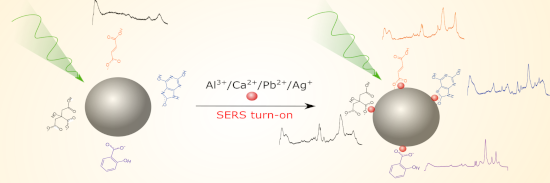
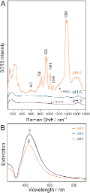
- uric acid, salicylic acid and fumaric acid could be recorded at a concentration of 50 µM only after activation of the colloidal silver nanoparticles by Ca2+, Pb2+ or Al3+ (50 µM). The chemisorption of the three anionic species to the silver surface occurs competitively and is enhanced with the anions
- . In the present study, we show that SERS spectra of anionic analytes can be obtained in the micromolar concentration range, by activating the AgNPs with cationic adions. Switch-on of the citrate capping agent SERS spectrum For this study we chose citrate-capped silver nanoparticles (cit-AgNPs) since
- acids is enhanced for the anions of higher affinities to the silver surface. More precisely, the following affinity order was observed: citrate < fumaric acid < salicylic acid < uric acid. Materials and Methods Synthesis of the citrate-capped silver nanoparticles (cit-AgNPs). All reagents were of


Porous silver-coated pNIPAM-co-AAc hydrogel nanocapsules
Beilstein J. Nanotechnol. 2019, 10, 1973–1982, doi:10.3762/bjnano.10.194
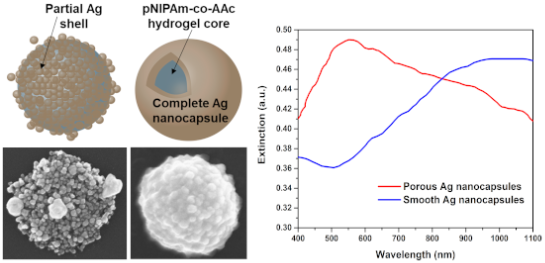
- hydrogel and polymer nanocomposites with silver nanoparticles [70][71][72][73]. However, to the best of our knowledge, there have been no reports of NIR-active porous silver nanocapsules containing thermo-responsive hydrogel (or any kind of polymer) cores. The methods described herein illustrate the
- existence of discontinuous nanocapsules; that is, there are multiple silver nanoparticles surrounding the hydrogel cores in these samples. The appearance of the extinction maximum for the complete silver nanocapsules at ≈950–1050 nm is consistent with that of a complete nanoshell [51][92][93]. The


Toxicity and safety study of silver and gold nanoparticles functionalized with cysteine and glutathione
Beilstein J. Nanotechnol. 2019, 10, 1802–1817, doi:10.3762/bjnano.10.175
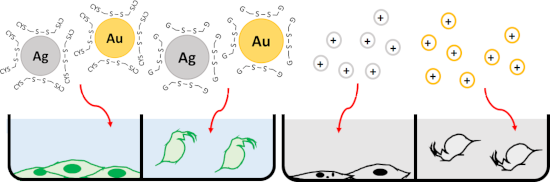
- Zagreb, Croatia 10.3762/bjnano.10.175 Abstract This study was designed to evaluate the nano–bio interactions between endogenous biothiols (cysteine and glutathione) with biomedically relevant, metallic nanoparticles (silver nanoparticles (AgNPs) and gold nanoparticles (AuNPs)), in order to assess the
- -chemical properties. Silver nanoparticles (AgNPs) are extensively used in antimicrobial coatings for medical devices, wound dressing, cosmetic products and food packaging due to their antimicrobial, antiangiogenic and anti-inflammatory properties [1][2][3][4][5]. Biomedical applications of gold


A silver-nanoparticle/cellulose-nanofiber composite as a highly effective substrate for surface-enhanced Raman spectroscopy
Beilstein J. Nanotechnol. 2019, 10, 1270–1279, doi:10.3762/bjnano.10.126
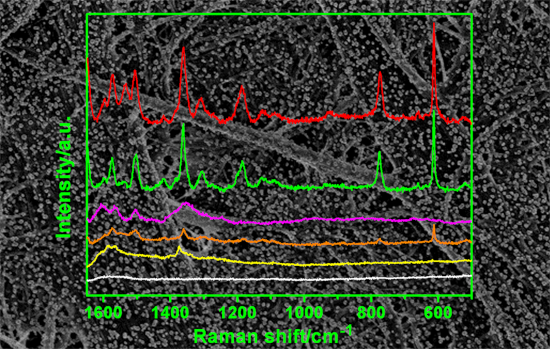
- Raman scattering (SERS) substrate was developed by facile deposition of silver nanoparticles onto cellulose fibers of ordinary laboratory filter paper. This was achieved by means of the silver mirror reaction in a manner to control both the size of the silver nanoparticles and the silver density of the
- substrate. This paper-based substrate is composed of a particle-on-fiber structure with the unique three-dimensional network morphology of the cellulose matrix. For such a SERS substrate with optimized size of the silver nanoparticles (ca. 70 nm) and loading density of silver (17.28 wt %), a remarkable
- composed of silver nanoparticles anchored on cellulose nanofibers was fabricated, which is shown to be a highly effective substrate for surface-enhanced Raman spectroscopy (SERS). SERS, a powerful molecular spectroscopy method, is widely used in the trace detection and characterization of various chemical





