Search results
Search for "sorption" in Full Text gives 81 result(s) in Beilstein Journal of Nanotechnology.
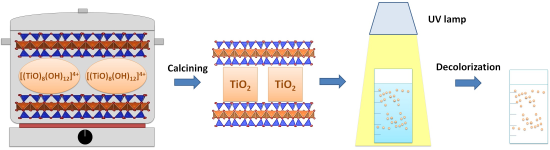
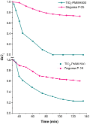
Photocatalytic and adsorption properties of TiO2-pillared montmorillonite obtained by hydrothermally activated intercalation of titanium polyhydroxo complexes
Beilstein J. Nanotechnol. 2018, 9, 364–378, doi:10.3762/bjnano.9.36
- nitrogen as an adsorbent [40][41]. At P/P0 ratios close to 1 the isotherms of the samples TiO2-PMMHx feature a sharp rise of the sorption curve indicating the presence of large pores in the pillared samples, which is confirmed by the average pore diameter data (Dav) (Table 5). The values of specific
- follows: where Ce (mg/L) is the equilibrium liquid phase concentration of the adsorbate; Qe (mg/g) the equilibrium solid phase concentration of adsorbate; qL (mg/g) is the maximum sorption capacity; KL (L/mg) and KF (mg/g) are the Langmuir and Freundlich constants, respectively; Qm (mg/g) and KS (L/mg






Bombyx mori silk/titania/gold hybrid materials for photocatalytic water splitting: combining renewable raw materials with clean fuels
Beilstein J. Nanotechnol. 2018, 9, 187–204, doi:10.3762/bjnano.9.21
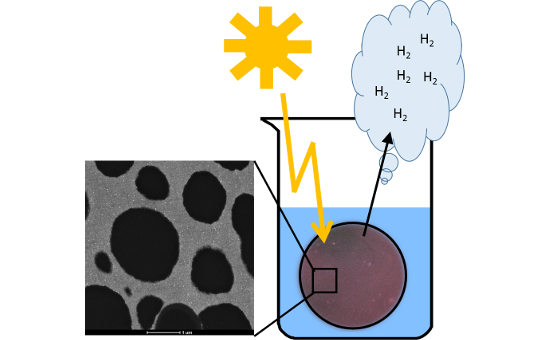
- equation was done using the HighScore Plus V.4.0 (4.0.0.19037) software from PANalytical B.V. Nitrogen sorption measurements were performed on a BELSORP-max with N2 at 77 K using 40 measurement points. Prior to all measurements, samples were ground and dried at 90 °C for at least 24 h until the weight
- , the fraction of TiO2 in TPS is ca. 8% higher than in TS. Figure 7 shows nitrogen sorption data obtained from the Au-free and Au-modified samples. All samples show a type IV(a) isotherm with a type H2(a) hysteresis loop; the hysteresis loop is typical for materials with pore diameters wider than 4 nm
- 170 m2/g (TS) and 180 m2/g (TS_Au2.5) respectively. Table 1 summarizes the surface areas and pore volumes. As SEM and TEM also show the presence of macropores, nitrogen sorption was complemented with Hg intrusion porosimetry. Figure 8 shows that TPS ground to a powder prior to the measurements has a




One-step chemical vapor deposition synthesis and supercapacitor performance of nitrogen-doped porous carbon–carbon nanotube hybrids
Beilstein J. Nanotechnol. 2017, 8, 2669–2679, doi:10.3762/bjnano.8.267
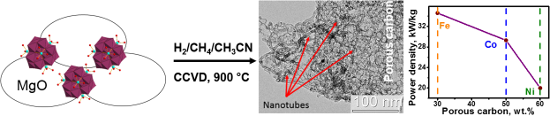
- Information File 1). Since the average pore size determined from the N2 sorption measurements was ≈12 nm for all samples, we conclude that this carbon material was templated by MgO nanoparticles. The nanotubes permeate the porous carbon (Figure 2a,c,f) and connect the flakes (Figure 2b). The supported metals


Preparation of thick silica coatings on carbon fibers with fine-structured silica nanotubes induced by a self-assembly process
Beilstein J. Nanotechnol. 2017, 8, 1145–1155, doi:10.3762/bjnano.8.116
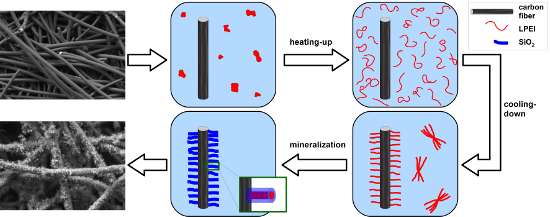
- sorption measurements. The overall morphology is more or less preserved for the immobilization of these modified aggregates on the carbon fiber surface. Addition of copper(II) ions leads to two-dimensional, fan like structures located on the fiber surface, whereas calcium(II) ions redirect the morphology
- analysis (TGA) was performed with a TA Instruments Q500 Thermogravimetric Analyzer. Nitrogen gas sorption isotherms of LPEI/silica composite particles at 77 K were recorded with a Quantachrome NOVA 2000 Series instrument. Prior to measurements, the samples were heated for 2 h in vacuum at 110 °C (LPEI


Needs and challenges for assessing the environmental impacts of engineered nanomaterials (ENMs)
Beilstein J. Nanotechnol. 2017, 8, 989–1014, doi:10.3762/bjnano.8.101


Modeling adsorption of brominated, chlorinated and mixed bromo/chloro-dibenzo-p-dioxins on C60 fullerene using Nano-QSPR
Beilstein J. Nanotechnol. 2017, 8, 752–761, doi:10.3762/bjnano.8.78
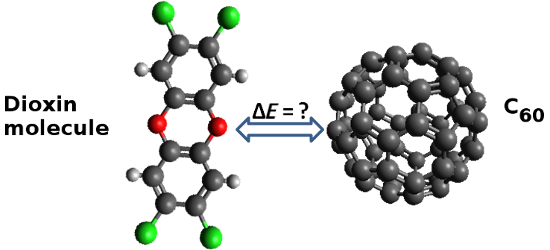
- unprecedented properties of such organic nanomaterials (in particular their large surface area) gained extensive attention for their potential use as organic pollutant sorbents. Sorption interactions can be very hazardous and useful at the same time. This work investigates the influence of halogenation by
- bromine and/or chlorine in dibenzo-p-dioxins on their sorption ability on the C60 fullerene surface. Halogenated dibenzo-p-dioxins (PXDDs, where X = Br or Cl) are ever-present in the environment and accidently produced in many technological processes in only approximately known quantities. If all
- (AhR) toxicity mechanism. Therefore, the effectiveness of fullerenes as sorbent agents may be underestimated as sorption could be less effective for toxic congeners than previously believed. Keywords: brominated; chlorinated; dioxins; fullerenes; QSPR; sorption; Introduction Dioxin congeners are



First examples of organosilica-based ionogels: synthesis and electrochemical behavior
Beilstein J. Nanotechnol. 2017, 8, 736–751, doi:10.3762/bjnano.8.77
- cycle. Heating and cooling cycles were repeated three times for reproducibility. Pore analysis. Nitrogen sorption experiments were carried out at 77 K on a Quantachrome Autosorb-1. Prior to measurements the samples were degassed in vacuum overnight at 80 °C. Surface areas were calculated via the
- Brunauer–Emmett–Teller (BET) method [34]. Determination of average pore diameters was done using the Barrett–Joyner–Halenda (BJH) approach using the desorption branch of the sorption isotherms [35]. X-ray scattering. Small angle X-ray scattering (SAXS) intensities were recorded at room temperature with a
- ) pattern. All SAXS patterns show a strong scattering signal with a typical q−4 behavior indicating an amorphous, mesoporous system with strong phase boundaries and cylindrical pores, but without ordered mesopores [37]. This is confirmed by nitrogen sorption measurements, Figure 6. All monoliths show a type








Tailoring bifunctional hybrid organic–inorganic nanoadsorbents by the choice of functional layer composition probed by adsorption of Cu2+ ions
Beilstein J. Nanotechnol. 2017, 8, 334–347, doi:10.3762/bjnano.8.36
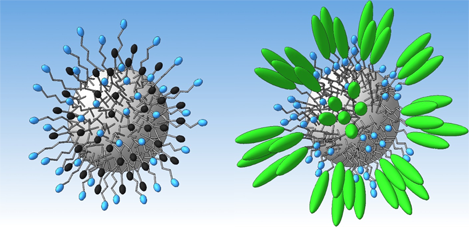
- molecular structure of the surfaces. It was demonstrated that the introduction of short hydrophobic (methyl) groups improves the kinetic characteristics of the samples during the sorption of copper(II) ions and promotes fixation of aminopropyl groups on the surface of silica microspheres. The introduction
- of long hydrophobic (perfluoroctyl) groups changes the nature of the surface, where they are arranged in alternately hydrophobic/hydrophilic patches. This makes the aminopropyl groups huddled and less active in the sorption of metal cations. The size and aggregation/morphology of obtained particles
- was optimized controlling the synthesis conditions, such as concentrations of reactants, basicity of the medium, and the process temperature. Keywords: copper(II) ions; methyl groups; N- and F-containing functional groups; silica nanospheres; sol–gel processes; sorption; surface chemistry


In situ formation of reduced graphene oxide structures in ceria by combined sol–gel and solvothermal processing
Beilstein J. Nanotechnol. 2016, 7, 1815–1821, doi:10.3762/bjnano.7.174
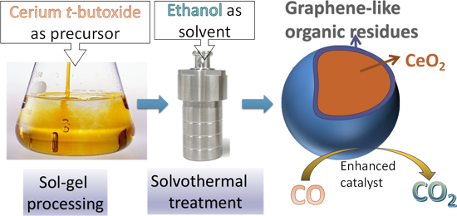
- TG 209 C in a platinum crucible in synthetic air with a heating rate of 10 °C/min. Nitrogen sorption measurements were performed on an ASAP 2020 (Micromeritics). The samples were degassed in vacuum at room temperature for at least 5 h prior to measurement. The total surface area was calculated




Influence of hydrothermal synthesis parameters on the properties of hydroxyapatite nanoparticles
Beilstein J. Nanotechnol. 2016, 7, 1586–1601, doi:10.3762/bjnano.7.153
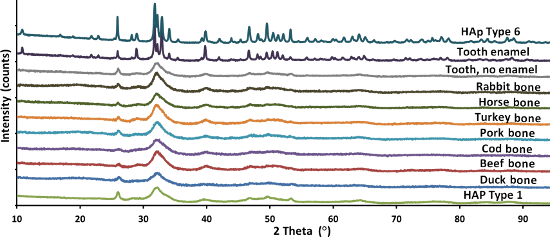
- management and catalyst production [13][14] because of HAp’s high sorption activity to numerous ions including several heavy metals and radionuclides [15]. A model compound reflecting bone mineral phase is a nonstoichiometric hydroxyapatite with a molar ratio different than 1.67. Nevertheless, regarding


Development of adsorptive membranes by confinement of activated biochar into electrospun nanofibers
Beilstein J. Nanotechnol. 2016, 7, 1556–1563, doi:10.3762/bjnano.7.149
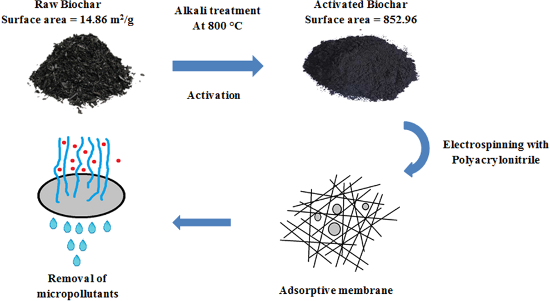
- 100–400 nm. The shift of the endothermic DSC peak and the onset temperature of NFM-1.5% compared to NFM-0% and pure PAN indicated interactions between polymer and activated biochar. The results of BET sorption test on fabricated membranes showed that at 1.5% biochar loading, the maximum surface area




Thickness dependence of the triplet spin-valve effect in superconductor–ferromagnet–ferromagnet heterostructures
Beilstein J. Nanotechnol. 2016, 7, 957–969, doi:10.3762/bjnano.7.88
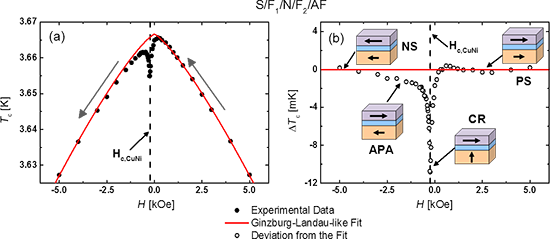
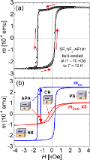
- To investigate the triplet SSV effect, resistance–temperature (R(T)) measurements of the superconducting transition were recorded at different magnetic fields applied parallel to the film plane. The measurements were performed in an Oxford Instruments Heliox sorption-pumped 3He insert, applying the





Cantilever bending based on humidity-actuated mesoporous silica/silicon bilayers
Beilstein J. Nanotechnol. 2016, 7, 637–644, doi:10.3762/bjnano.7.56
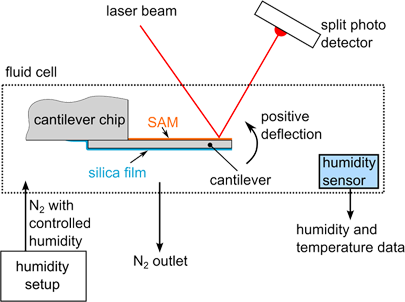
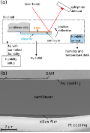
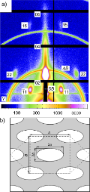
- humidity. We also investigate a similar film on bulk silicon substrate using grazing-incidence small-angle X-ray scattering (GISAXS), in order to determine nanostructural parameters of the film as well as the water-sorption-induced deformation of the ordered mesopore lattice. The strain of the mesoporous
- bending; grazing incidence small-angle X-ray scattering (GISAXS); mesoporous film; sorption-induced deformation; Introduction Because the bending of a microcantilever can be measured with extremely high accuracy, sensors utilizing this principle are in focus of recent research. Such sensors are able, for
- Switzerland) at a distance of 1502 mm. For the in situ water sorption measurements, a custom-built humidity cell with Kapton X-ray windows was used. The working principle is very similar to the humidity chamber for AFM described above with a humidity range between about 10 and 90% RH (for more information on


Chemiresistive/SERS dual sensor based on densely packed gold nanoparticles
Beilstein J. Nanotechnol. 2015, 6, 2498–2503, doi:10.3762/bjnano.6.259
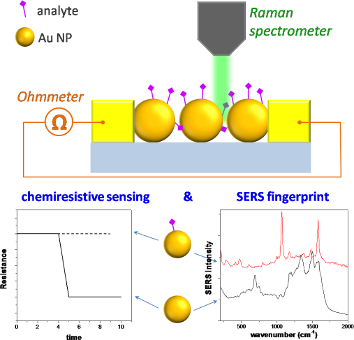
- capping molecules. By changing the molecular content of the interparticle gap both l and β can be expected to suffer modifications, which translate into changes of the macroscopic resistance. A decrease of the resistance upon analyte sorption has been already observed in chemiresistors based on rigidly


Green and energy-efficient methods for the production of metallic nanoparticles
Beilstein J. Nanotechnol. 2015, 6, 2354–2376, doi:10.3762/bjnano.6.243
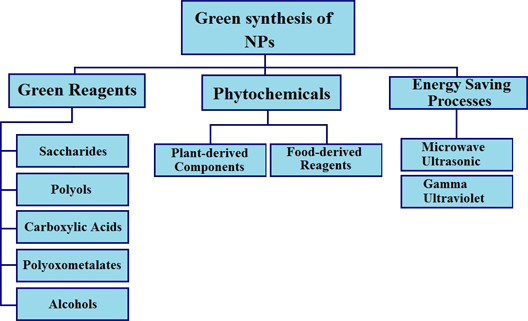
- and Au NPs through a green photochemical process using UV light source (365 nm wavelength) for 40 min. In this process, alginate can serve as both reducing and stabilizing agent. The particles had spherical morphology and their sizes were less than 10 nm for both Ag and Au. Their sorption experiment


Metal hydrides: an innovative and challenging conversion reaction anode for lithium-ion batteries
Beilstein J. Nanotechnol. 2015, 6, 1821–1839, doi:10.3762/bjnano.6.186
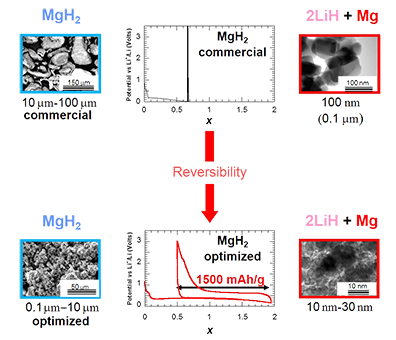
- technological difficulties is discussed with a focus on conversion reaction limitations in the case of MgH2. The influence of MgH2 particle size, mechanical grinding, hydrogen sorption cycles, grinding with carbon, reactive milling under hydrogen, and metal and catalyst addition to the MgH2/carbon composite on
- the lattice cell volume, allows one to change the thermodynamic stability of the hydrides, especially for the families AB5 and AB2. Depending of the nature of the hydrides a wide range of hydrogen sorption temperatures from −40 to 300 °C gives another argument to a tailor a negative electrode for the
- sizes and to accommodate the volume variation of the electrode can be considered and will be presented in the following paragraph: Effect of grinding on commercial hydride, effect of three hydrogen sorption, effect of grinding commercial hydride with carbon, effect of activation by sorption cycles










Nanomechanical humidity detection through porous alumina cantilevers
Beilstein J. Nanotechnol. 2015, 6, 1332–1337, doi:10.3762/bjnano.6.137
- increase of the experimental water surface coverage of about 8% within the experimental humidity levels. From the Langmuir sorption isotherm a humidity change from 10 to 22% should result in growth of the surface coverage by 8.9%, which fits well to the obtained value. However, despite the good agreement



Carbon nano-onions (multi-layer fullerenes): chemistry and applications
Beilstein J. Nanotechnol. 2014, 5, 1980–1998, doi:10.3762/bjnano.5.207
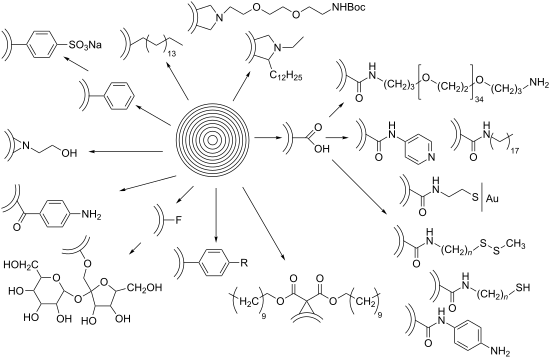
- CNO in environmental remediation was studied by Li group [54], who revealed that surface-oxidized CNO in aqueous suspensions have a high sorption capacity for heavy metal ions such as Pb2+, Cu2+, Cd2+, Ni2+ and Zn2+. The sorption capacity of oxidized CNOs was found to be up to ten times higher than


Quasi-1D physics in metal-organic frameworks: MIL-47(V) from first principles
Beilstein J. Nanotechnol. 2014, 5, 1738–1748, doi:10.3762/bjnano.5.184
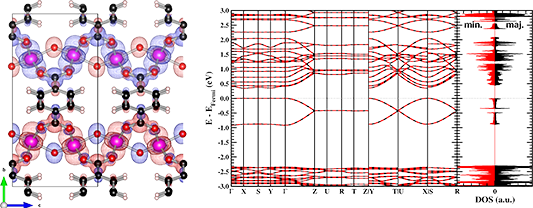
- [44]. Because of the rigid nature of MIL-47(VIV) under standard breathing conditions it is often used as a material for comparison in studies of breathing (due to sorption) of other MOFs [3][7][10][13][51][52]. In addition, the 1D pores of MIL-47(V) make this material well-suited for gas storage and


Non-covalent and reversible functionalization of carbon nanotubes
Beilstein J. Nanotechnol. 2014, 5, 1675–1690, doi:10.3762/bjnano.5.178
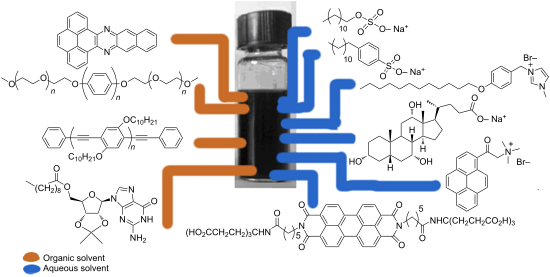
- . demonstrated that sorption of phenanthrene and naphtalene to CNTs is correlated to the hydrophobicity of the corresponding PAH [46]. Stable dispersions of SWCNTs in THF have been easily achieved by sonicating CNTs with diazapentacene at room temperature [47] (see Table 1). The adsorption is solely imputable to



Nanoporous composites prepared by a combination of SBA-15 with Mg–Al mixed oxides. Water vapor sorption properties
Beilstein J. Nanotechnol. 2014, 5, 1226–1234, doi:10.3762/bjnano.5.136

- porous composite, which displays a cauliflower morphology. This is an important microporosity contribution and micro and mesoporous surfaces coexist in almost the same proportion. Furthermore, the nanostructured mesoporous composites present an extraordinary water vapor sorption capacity. Such composites
- might be utilized as as acid-base catalysts, adsorbents, sensors or storage nanomaterials. Keywords: calcined Mg–Al hydrotalcite; nanoporous composites; SBA-15; vapor sorption; Introduction Multifunctional nanomaterials are designed to satisfy specific ranged sets of performance requirements. The
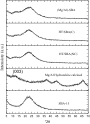
- sorption capacity. Results and Discussion Textural properties Table 1 summarizes the main textural results obtained by X-ray diffraction (Supporting Information File 1) and N2 adsorption–desorption isotherms (Figure 1A). All isotherms are Type IV according to IUPAC classification. Both post-synthesis



Shape-selected nanocrystals for in situ spectro-electrochemistry studies on structurally well defined surfaces under controlled electrolyte transport: A combined in situ ATR-FTIR/online DEMS investigation of CO electrooxidation on Pt
Beilstein J. Nanotechnol. 2014, 5, 735–746, doi:10.3762/bjnano.5.86
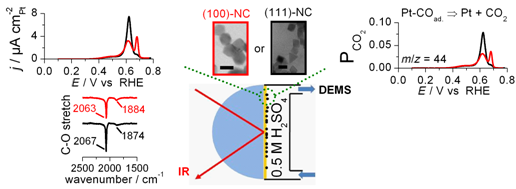
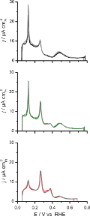
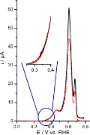
- hydrogen sorption peaks are convincing indicators for both a well ordered Pt nanocrystal surface structure and the cleanness of the experimental setup and procedures. The hydrogen-region voltammograms obtained for such samples are approximated as weighted sum of the respective features of extended low
- , and assuming a hydrogen saturation coverage of 0.77 at 0.05 V [47], independent of the Pt surface structure. The charge related to H adsorption can be determined from the Faradaic charge under the anodic part of the hydrogen region voltammogram, corrected for the charge associated to anion sorption




Mesoporous cerium oxide nanospheres for the visible-light driven photocatalytic degradation of dyes
Beilstein J. Nanotechnol. 2014, 5, 517–523, doi:10.3762/bjnano.5.60
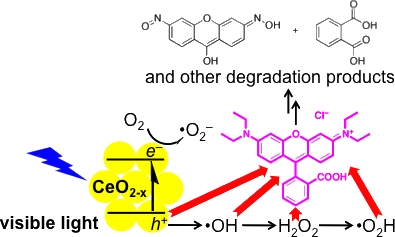
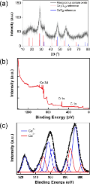
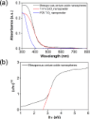
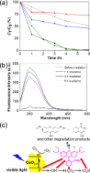
- photoelectron and UV–vis spectroscopy, and transmission electron microscopy. Together with N2 sorption experiments, the data confirms that the new cerium oxide material is mesoporous and absorbs visible light. The photocatalytic degradation of rhodamin B is investigated with a series of radical scavengers
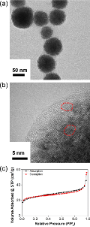
- dotted ring), that can be indexed to Ce7O12 and CeO2 (Figure 3b). Nitrogen sorption experiments were conducted to ascertain the average surface area and pore size distribution of the material. The nitrogen adsorption–desorption isotherm of the cerium oxide sample (Figure 3c) shows a type-II curve and the
- (NRF), Prime Minister’s Office, Singapore under its Campus for Research Excellence and Technological Enterprise (CREATE) programme. S.K. Muduli and H.S. Soo thank Nanyang Asst. Prof. Ling Xing Yi for the use of her solar simulator, and Nanyang Asst. Prof. Zhao Yanli for the use of his gas sorption

Controlled synthesis and tunable properties of ultrathin silica nanotubes through spontaneous polycondensation on polyamine fibrils
Beilstein J. Nanotechnol. 2013, 4, 793–804, doi:10.3762/bjnano.4.90
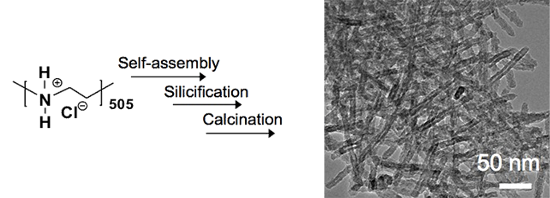
- to observation. Transmission electron microscopy (TEM) studies were conducted on a JEOL JEM-2200FS instrument operating at 200 kV. X-ray diffraction measurements (XRD) were carried out with a Rigaku RINT-TTR II diffractometer (Rigaku Co., Japan), using Cu Kα radiation (λ = 1.54 Å). Nitrogen sorption


Site-selective growth of surface-anchored metal-organic frameworks on self-assembled monolayer patterns prepared by AFM nanografting
Beilstein J. Nanotechnol. 2013, 4, 638–648, doi:10.3762/bjnano.4.71
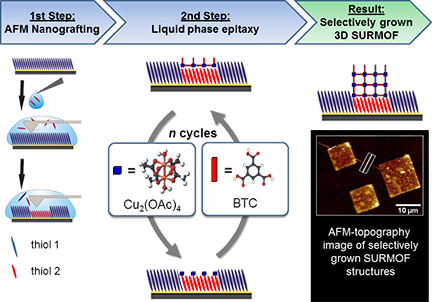
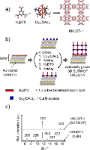
- from the surface of the SURMOF to the supporting substrate without hindrance. Therefore, SURMOFs can be used as model systems to gain a detailed understanding of, e.g., the kinetics of sorption/desorption processes or as active sites for sensor systems [16]. The high degree of orientation and the high