


Search results
Search for "spintronic" in Full Text gives 58 result(s) in Beilstein Journal of Nanotechnology.
Quasi-1D physics in metal-organic frameworks: MIL-47(V) from first principles
Beilstein J. Nanotechnol. 2014, 5, 1738–1748, doi:10.3762/bjnano.5.184
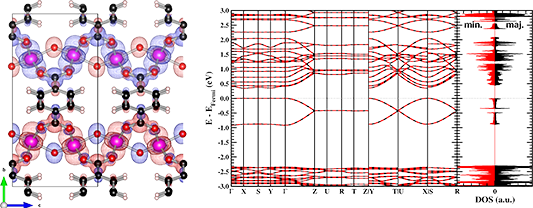
- ) cell used are shown in Figure 1b. For the configurations for which the total magnetization is non-zero (FM and SFM), majority and minority spin components have a different band gap, making them of interest for spintronic applications (cf. Table 4 and Figure 4a) [84]. In general, each of the


Designing magnetic superlattices that are composed of single domain nanomagnets
Beilstein J. Nanotechnol. 2014, 5, 956–963, doi:10.3762/bjnano.5.109
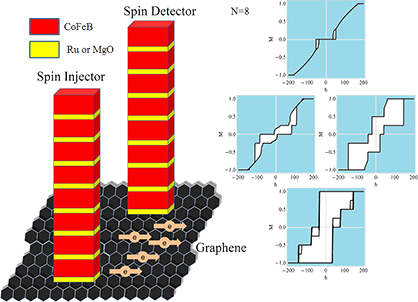
- useful when designing future spintronic devices, especially those manipulating the properties of CoFeB compounds. Keywords: hysteresis; nanoparticles; magnetic phases; superlattices; Introduction The development of highly ordered superlattices is of significant importance from a practical perspective
- particles. But the chaos is suppressed when the damping is suitably high, the case which we are considering here. With the emergence of new devices such as the magnetic ratchet for spintronic memory and logic in three-dimensions [25] and recent results for multisegmented nanowires [26] (where the shape
- detection devices for spintronics [27][28][29][30]. The ferromagnetic materials are ideal contacts for creating these spintronic devices on, for example, a single layer of graphene [29]. A magnetic ratchet device could be used to inject, at room temperature, a reservoir of spin-polarized electrons for


CoPc and CoPcF16 on gold: Site-specific charge-transfer processes
Beilstein J. Nanotechnol. 2014, 5, 524–531, doi:10.3762/bjnano.5.61
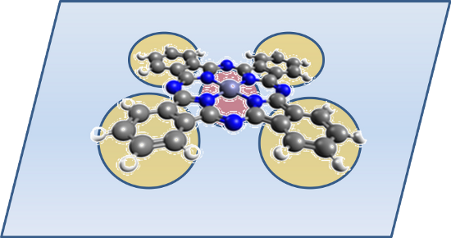
- light-emitting diodes, field-effect transistors, solar cells, and spintronic devices have been in the focus of research [1][2][3][4]. For several transition metal phthalocyanine (TMPc) layers on noble metal surfaces (e.g., Au and Ag) a charge transfer toward the central metal atom has been reported


Photovoltaic properties of ZnO nanorods/p-type Si heterojunction structures
Beilstein J. Nanotechnol. 2014, 5, 173–179, doi:10.3762/bjnano.5.17
- ][13][14]. ZnO has a 3.37 eV direct band gap at room temperature [15] and a high excitation binding energy of 60 meV. It is intensively studied for light emitters in the near-UV region of the spectrum [16][17], or for spintronic applications [18][19][20], since ferromagnetic thin films of ZnO can be



Antiferromagnetic coupling of TbPc2 molecules to ultrathin Ni and Co films
Beilstein J. Nanotechnol. 2013, 4, 320–324, doi:10.3762/bjnano.4.36
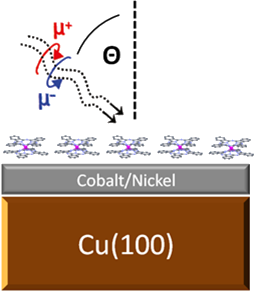
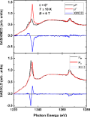
- absorption spectroscopy; Introduction Molecular spintronic devices as building blocks for future applications in information technology may be a big improvement and lead to higher efficiency [1][2][3][4][5][6][7][8][9]. Therefore several groups have studied the properties of potential organic molecules

Sub-10 nm colloidal lithography for circuit-integrated spin-photo-electronic devices
Beilstein J. Nanotechnol. 2012, 3, 884–892, doi:10.3762/bjnano.3.98
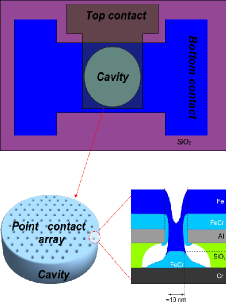
- various materials including metals, which enables a wide range of new applications in nanotechnology. Large-area, near-ballistic-injection point-contact arrays are used to demonstrate integration of the developed nanofabrication technique into new types of spintronic and photonic devices. Experimental


Highly ordered ultralong magnetic nanowires wrapped in stacked graphene layers
Beilstein J. Nanotechnol. 2012, 3, 846–851, doi:10.3762/bjnano.3.95
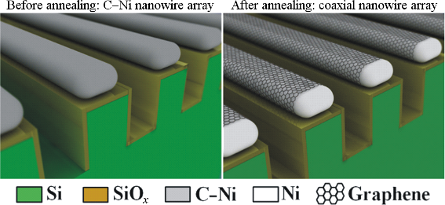
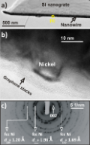
- the quality of the nickel nanowires after annealing attributed to a decrease of the roughness of the nickel surface and to a reduction of the defect density. This new type of graphene–ferromagnetic-metal nanowire appears to be an interesting building block for spintronic applications. Keywords
- , sensors, and energy-related devices [17][18][19]. The combination between the electrical properties of graphene and the magnetic properties of 1D ferromagnetic nanostructures would offer wide prospects for spintronic applications. Fabricating coaxial nanowires with ferromagnetic cores and graphene


Strong spin-filtering and spin-valve effects in a molecular V–C60–V contact
Beilstein J. Nanotechnol. 2012, 3, 589–596, doi:10.3762/bjnano.3.69
- . Keywords: fullerene; molecular spintronics; scanning tunneling microscopy; spin transport; Introduction Organic materials typically offer small spin–orbit and hyperfine interactions, which are prerequisites for spintronic applications, because they allow long spin lifetimes. Thus there is a great interest
- in organic building blocks for molecular spintronics [1][2][3][4], and a thorough understanding of spin transport and magnetism in these systems is called for. It is therefore important to establish model molecular spintronic systems where spin transport and magnetic interactions can be examined
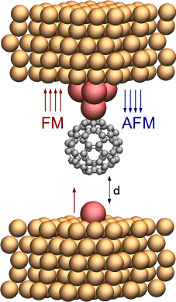
- the magnetic ligand atoms. Here, we employ first-principles calculations to predict the spin transport through a spintronic model system consisting of a C60 molecule contacted by magnetic atoms in an STM setup. In particular, we predict that vanadium is a magnetic material which will show pronounced



Other Beilstein-Institut Open Science Activities



