Search results
Search for "substrate" in Full Text gives 1420 result(s) in Beilstein Journal of Nanotechnology. Showing first 200.
Laser ablation in liquids for shape-tailored synthesis of nanomaterials: status and challenges
Beilstein J. Nanotechnol. 2025, 16, 1963–1997, doi:10.3762/bjnano.16.137
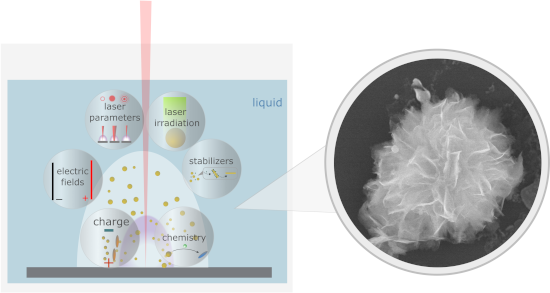
- way to the NPs discussed above [79]. This concept was introduced in the works of the A. Manshina group, who developed a remarkably different method of NP production at the target/liquid interface, where the continuous wave laser reduces the precursors at the substrate surface, resulting in the





Mechanical property measurements enabled by short-term Fourier-transform of atomic force microscopy thermal deflection analysis
Beilstein J. Nanotechnol. 2025, 16, 1952–1962, doi:10.3762/bjnano.16.136
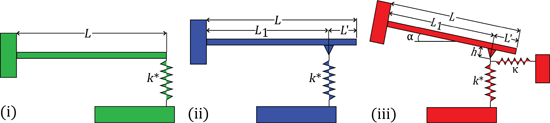
- their polymerization/deposition. The topography of the surface was measured before acquiring a force-versus-distance measurement to ensure that these measurements were acquired on clean and flat regions of the substrate. To observe how the resonant frequency of the AFM cantilever changes as the attached
- tip is pressed against a substrate, force-versus-distance measurements were conducted. In these measurements, the sample was moved up and down at a rate of approximately 100 nm·s−1 while recording the cantilever deflection over the course of the measurement. In addition to the AFM’s own control
- with the high-sample rate acquisition system for a soft silicon cantilever on a HOPG substrate. Both the normal force and the cantilever displacement values are shown as most AFM studies report normal force values, but the power spectrum calculation requires the cantilever displacement values. Figure




Evaluating metal-organic precursors for focused ion beam-induced deposition through solid-layer decomposition analysis
Beilstein J. Nanotechnol. 2025, 16, 1942–1951, doi:10.3762/bjnano.16.135
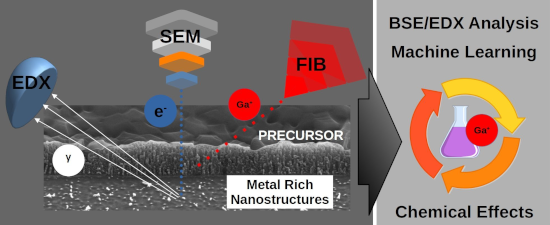
- duration of the electron or ion beam pulses. In FEBID and FIBID, volatile precursor molecules are delivered to the substrate surface via a gas injection system (GIS), where they adsorb and are subsequently decomposed by a focused electron or ion beam with energies in the kiloelectronvolt range. While
- masks, and resistance, with the flexibility of depositing materials on non-planar surfaces [4][5][14]. The FIBID method has several advantages compared to the FEBID technique in depositing thin films on substrates. First, ions generate more secondary electrons on the substrate surface than electrons
- significant beam-induced substrate defects (e.g., Ga atom implantation). Additionally, material growth is required to compete with the FIB milling process [4][9]. The use of ions instead of electrons, like in FEBID, offers several benefits, including enhanced film quality and adhesion, better control over the


Quantum circuits with SINIS structures
Beilstein J. Nanotechnol. 2025, 16, 1931–1941, doi:10.3762/bjnano.16.134
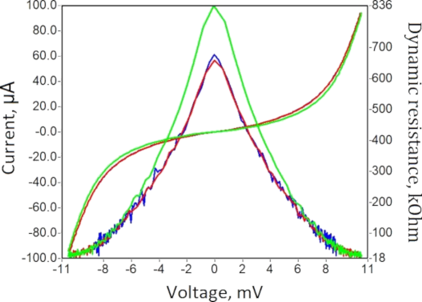
- with selective etching of superconducting and normal metal electrodes. Improvement in ultimate sensitivity is achieved by suspending the absorber above the substrate. Best responsivity of up to 30 electrons per photon at a frequency of 350 GHz, or 72000 A/W, and voltage responsivity up to 3.9 × 10⁹ V/W
- not very high reproducibility and stability. Another fabrication method is the Manhattan technology [28] with deep orthogonal groves in the resist, see Figure 1b,c. Both methods are based on thermal evaporation at different angles and rotation of substrate, requiring rather sophisticated and expensive
- is used before making of the insulator and sputtering of the normal metal (for details see [29]). An example of such a method is presented in Figure 1d,e. Besides SINIS structures with N-absorber on the substrate, we also developed devices with the absorber suspended above the substrate (Figure 1f


Low-temperature AFM with a microwave cavity optomechanical transducer
Beilstein J. Nanotechnol. 2025, 16, 1873–1882, doi:10.3762/bjnano.16.130
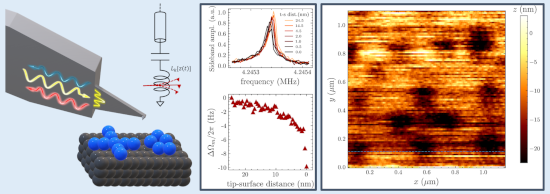
- Si–N plate released from a Si substrate. The microwave superconducting lumped-element resonant circuit consists of an interdigital capacitor in series with a meandering nanowire inductor, both fabricated from a single layer of Nb–Ti–N deposited on the Si–N. The nanowire meanders across the clamping
- on a silicon substrate. Each unit cell in the pattern contains different shapes as shown in the SEM image in Figure 6a. The tapered arms of crosses and ribbons shrink to reach a nominal minimum feature size of 20 nm. Figure 6b shows a FM-AFM image of the 1 µm × 1 µm scan area corresponding to the
- KIMEC detection principle allows for AFM imaging with increased pixel acquisition rate (measurement bandwidth) without degrading force sensitivity. (a–c) Scanning electron micrograph of the probe, featuring a Si–N triangular cantilever released from the Si substrate, hosting an integrated lumped-element


Self-assembly and adhesive properties of Pollicipes pollicipes barnacle cement protein cp19k: influence of pH and ionic strength
Beilstein J. Nanotechnol. 2025, 16, 1863–1872, doi:10.3762/bjnano.16.129
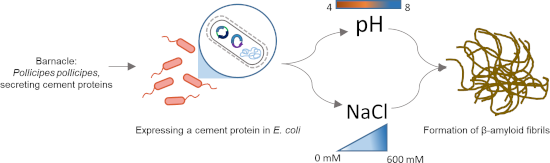
- has emerged as a key contributor to underwater adhesion [16][32]. We previously described recombinant production of the 19 kDa P. pollicipes cement protein (rPpolcp19k) and its adhesion on various substrate chemistries [21]. The protein self-assembled into intertwined amyloid fibres [22] and has the


Ambient pressure XPS at MAX IV
Beilstein J. Nanotechnol. 2025, 16, 1677–1694, doi:10.3762/bjnano.16.118
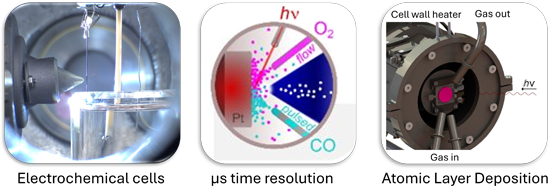
- reaction cell was designed to replicate commercial ALD conditions, including independent pulsing of precursor gases, laminar flow across the sample, and substrate heating. The setup allows for independent control of precursor and co-reactant exposure and supports a variety of chemistries [60]. ALD is a key





Venom-loaded cationic-functionalized poly(lactic acid) nanoparticles for serum production against Tityus serrulatus scorpion
Beilstein J. Nanotechnol. 2025, 16, 1633–1643, doi:10.3762/bjnano.16.115
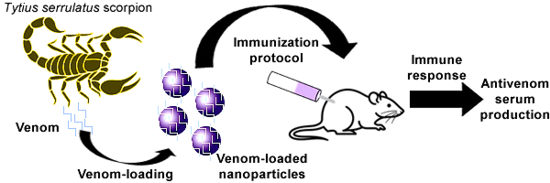
- the plate was incubated at 37 °C for 1 hour. The plate was washed and 50 µL/well of diluted detection antibodies was added and incubated for 3 h. The plate was then washed again, the substrate was added, and the plate was incubated at room temperature for 15 min. The reaction was stopped (H2SO4 4 M


Photocatalytic degradation of ofloxacin in water assisted by TiO2 nanowires on carbon cloth: contributions of H2O2 addition and substrate absorbability
Beilstein J. Nanotechnol. 2025, 16, 1567–1579, doi:10.3762/bjnano.16.111
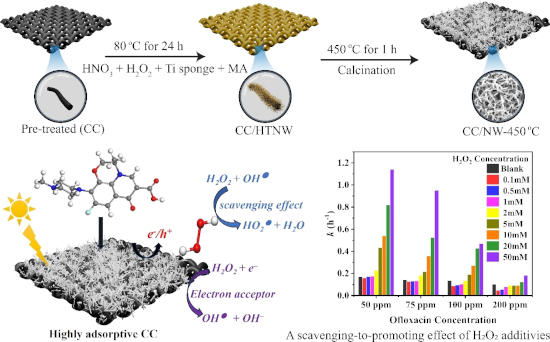
- amount, below which a negative effect is noted. This investigation demonstrates the potential of improving the photoactivity of one-dimensional TiO2 nanostructures by utilizing a highly adsorptive substrate, which can help mitigate the effects of hazardous materials in water. Keywords: carbon cloth
- controlled film thickness of 1.5–4.5 μm, on concurrently activated carbon cloth substrates. The composite film exhibited a high efficiency towards removal of rhodamine B and sulfosalicylic acid in water under UV light illumination, mainly thanks to the highly adsorptive substrate [16]. In the current
- than that of 10–20 ppm adopted by most studies, highlighting the advantages of the one-dimensional TiO2 material on an adsorptive substrate as a photocatalyst. Experimental Materials and reagents Carbon cloth with a purity of 99.8% was provided by Shanghai Hesen Industry Company Limited, China


Transient electronics for sustainability: Emerging technologies and future directions
Beilstein J. Nanotechnol. 2025, 16, 1545–1556, doi:10.3762/bjnano.16.109

- bioresorption in vivo [14]. Zinc has been proposed for use in bioabsorbable vascular stents, demonstrating ideal degradation behavior and mechanical integrity in animal models [51]. AZ31B, along with molybdenum and tungsten, have been investigated as a substrate and conductive layer in transient electronics due
- ) [63][73]. In this process, PI is first coated onto PMMA, followed by photolithographic patterning of the inorganic electronic materials. The PMMA layer is then dissolved, allowing the patterned structure, protected by the thin PI layer, to be transferred onto a desired target substrate. Since the
- electronic devices on a large-area substrate, such as a silicon wafer, followed by backside etching to remove the handle or box layers, thereby isolating the functional thin film for transfer onto a biodegradable substrate. This wafer-level technique offers a promising route to large-area, high-resolution


Cross-reactivities in conjugation reactions involving iron oxide nanoparticles
Beilstein J. Nanotechnol. 2025, 16, 1504–1521, doi:10.3762/bjnano.16.106
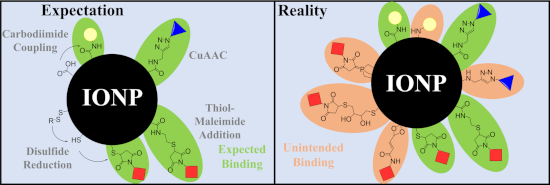
- majority of the bound CySH is either coordinated to surface Fe through the amine, or possibly bound to 3,4-DHBA quinones through its thiol. The presence of a higher binding energy feature in the S 2p spectra at >166 eV is attributed to a Si 2s plasmon loss peak, derived from the Si substrate (Supporting







Laser processing in liquids: insights into nanocolloid generation and thin film integration for energy, photonic, and sensing applications
Beilstein J. Nanotechnol. 2025, 16, 1428–1498, doi:10.3762/bjnano.16.104
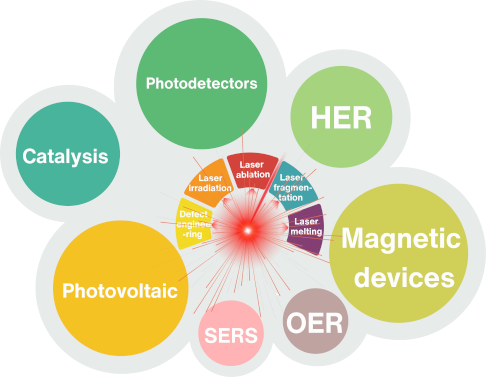
- comprehensive understanding of the process flow, from the laser-induced ejection of material into the gas phase, through its processing and movement in the plume, to its eventual deposition onto a substrate. Figure 1 shows key developments in thin film synthesis and laser-based processing from 1909 to 2025
- fabrication using nanocolloids synthesized by LPL is given in Figure 9. 2.1 Spin coating The pioneering analysis of spin coating dates back over fifty years to Emslie et al., who first studied the spreading of a thin axisymmetric film of Newtonian fluid on a rotating substrate [100]. In 1989, the method was
- ]. Figure 10a shows a photograph of a typical spin-coating setup, along with high-speed images capturing the dynamics of and film formation on a rotating substrate. Mono and bi-metallic Pt, Pd, and Pt80Pd20 NPs were synthesized using a Nd:YAG laser operating at λ = 1064 nm, a fluence of 5 J/cm2, and a






Photochemical synthesis of silver nanoprisms via green LED irradiation and evaluation of SERS activity
Beilstein J. Nanotechnol. 2025, 16, 1417–1427, doi:10.3762/bjnano.16.103
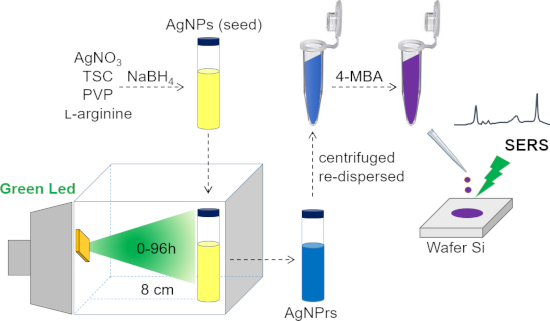
- cm−1 peak (Figure 9b) was found to be linear, following the equation y = −2216.3x + 20719, R2 = 0.9943. This linear correlation indicates that the lowest 4-MBA concentration detectable with this AgNPr-based SERS substrate was 10−9 M, confirming its potential for ultrasensitive SERS-based sensing
- SERS substrate enabled detection at concentrations as low as 10−9 M with a strong linear response. These results highlight the potential of LED-synthesized AgNPrs as high-performance, low-cost, and environmentally benign substrates for sensitive SERS applications in chemical and biosensing fields
- residue was re-dispersed in 1 mL of distilled water. 50 µL of 10−4 M 4-MBA solution was added to 450 µL of the re-dispersed sample and left for 1 h at room temperature. 20 µL of the resulting mixture was placed on the Si wafer substrate, allowed to dry at room temperature, and Raman measurements were


Synthesis and antibacterial properties of nanosilver-modified cellulose triacetate membranes for seawater desalination
Beilstein J. Nanotechnol. 2025, 16, 1380–1391, doi:10.3762/bjnano.16.100
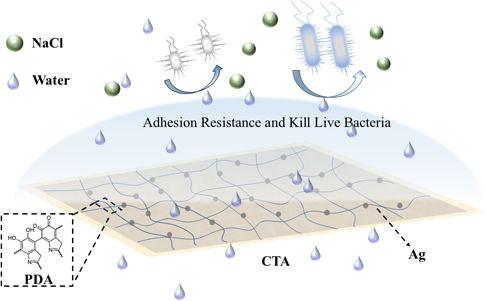
- , which can manifest as a metallic sheen when they are present on a substrate [47]. Surface alterations of the membranes are documented using scanning electron microscopy (SEM) (Figure 4). The CTA membrane’s surface appears smooth and uniform, devoid of visible defects (Figure 4a). Cross-sectional SEM
- the Ag@PCTA membrane illustrate a well-defined PDA layer that maintains its uniformity and adhesion to the underlying CTA substrate (Figure 4f). Notably, Ag nanoparticles are not discernible in the cross-sectional view, indicating their confinement within the PDA layer. The underlying CTA layer


Automated collection and categorisation of STM images and STS spectra with and without machine learning
Beilstein J. Nanotechnol. 2025, 16, 1367–1379, doi:10.3762/bjnano.16.99
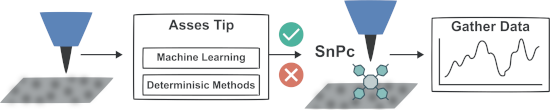
- automation of this process could result in a more rapid and reproducible method for performing spectroscopy measurements. To classify the state of the probe for STS experiments, spectra are usually taken over bare areas of a metallic substrate. On coinage metal surfaces, these spectra typically exhibit a
- addition to the lack of data, ML models require careful labelling and a high level of knowledge from the labeller to be able to train such a model. Switching to a new substrate system is likely to require retraining of the model, and furthermore, even after a successful training, it is still often unclear
- that a tip change did not occur during the scan. The obtained topograph is then analysed to find both a large area of clean metal substrate, over which I(V) spectra can be obtained, and to find the location of the molecules in various configurations, over which additional I(V) spectra are taken. After





Deep-learning recognition and tracking of individual nanotubes in low-contrast microscopy videos
Beilstein J. Nanotechnol. 2025, 16, 1316–1324, doi:10.3762/bjnano.16.96
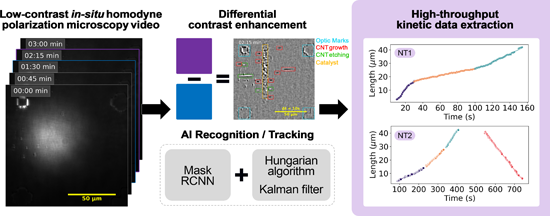
- , horizontally aligned carbon nanotubes (HA-CNTs) were synthesized inside a miniature chemical vapor deposition (CVD) cell with an optical window (Linkam TS1500). ST-cut quartz and iron nanoparticles served as substrate and catalyst, respectively. Ethanol and argon were, respectively, used as carbon precursor
- 400–2000 nm) provided white light excitation across the visible spectrum. Two crossed polarizers were employed, with a polarizer and analyzer used to enhance the scattered field from the nanotubes relative to the stronger reflected field from the substrate. A low-pass optical filter with a cutoff
- cut (ST) quartz substrate and from the fully processed video using (b) fixed-frame and (c) differential shading correction (with a 10 s delay). The thick vertical line in each image indicates the catalyst line. Optical markers (i.e., squares, crosses, and L-shapes) are visible in the corners. CNTs


Wavelength-dependent correlation of LIPSS periodicity and laser penetration depth in stainless steel
Beilstein J. Nanotechnol. 2025, 16, 1302–1315, doi:10.3762/bjnano.16.95
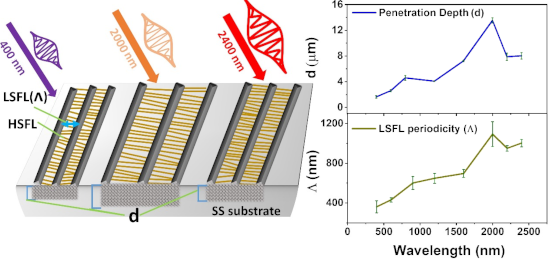
- wavelength and decreases with increasing metal conductivity [53]. In the literature, most researchers used high-intensity pulse lasers for works on laser welding and substrate melting [57][58][61][63][64][65][66][67]. However, we could not find any experimental works dedicated to unraveling the penetration
- this. Depth of the patterned substrate at different powers In this section, we investigated the penetration depth of irradiated stainless steel samples across different laser power values, employing a single wavelength of 800 nm. As the power is increased, it is well known that more material from the
- incident power at a wavelength of 800 nm. (a) 20 mW, (b) 150 mW, and (c) 300 mW. Showing the EDS elemental analysis for laser-treated and untreated stainless steel surface. (a) SEM image of laser-treated SS substrate, we picked three areas whose EDS spectra are shown in b, c, and d. (e) SEM image of bare




Enhancing the photoelectrochemical performance of BiOI-derived BiVO4 films by controlled-intensity current electrodeposition
Beilstein J. Nanotechnol. 2025, 16, 1289–1301, doi:10.3762/bjnano.16.94
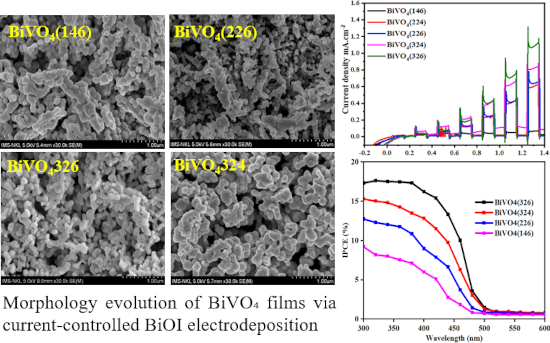
- of ethanol via ultrasonication for 30 min and added to the solution. The FTO glass substrates were cleaned with ethanol and distilled water via sequential ultrasonication. The BiOI film was electrochemically deposited onto the FTO substrate at various current deposition intensities (14, 22, and 32 mA
- of monoclinic BiVO4 (JCPDS PDF #14-0688) and fluorine-doped tin oxide (FTO) substrate (JCPDS PDF #46-1088) [21][22][23]. The peaks at approximately 28.9°, 30.6°, 34.6°, and 35.2° were assigned to the (110), (121), (040), (200), and (002) planes of monoclinic BiVO4, respectively. Notably, the (121



Better together: biomimetic nanomedicines for high performance tumor therapy
Beilstein J. Nanotechnol. 2025, 16, 1246–1276, doi:10.3762/bjnano.16.92


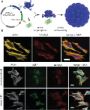



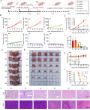

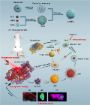

Mechanical stability of individual bacterial cells under different osmotic pressure conditions: a nanoindentation study of Pseudomonas aeruginosa
Beilstein J. Nanotechnol. 2025, 16, 1171–1183, doi:10.3762/bjnano.16.86
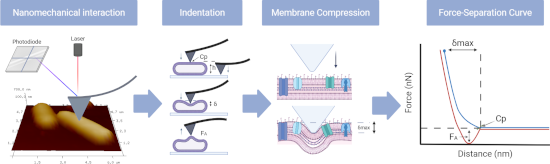
- . Sample preparation for atomic force microscopy For AFM, the sample was initially firmly adhered to a substrate for subsequent scanning, with the tip first used to identify the objects of study on the surface. In this case, PA in suspension was adhered to a solid mica substrate, previously cleaved with
- bacterial adhesion through short-range electrostatic and hydrophobic interactions. Before deposition on the PLL-coated substrate, the bacterial suspension was centrifuged at 2500 rpm for 3 min, and the resulting supernatant was removed. The bacteria were then resuspended in 150 μL of PBS to increase their
- concentration and before the previous deposition of 5 μL on the PLL-coated substrate. A liquid cell was assembled to measure changes in bacterial membrane rigidity response when transitioning between different solutions. Once inside the fluid cell chamber, bacteria were imaged and tested in PBS solution and


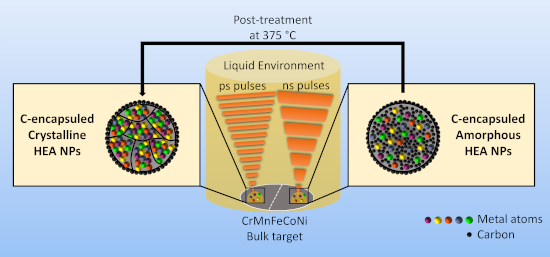
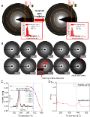
Crystalline and amorphous structure selectivity of ignoble high-entropy alloy nanoparticles during laser ablation in organic liquids is set by pulse duration
Beilstein J. Nanotechnol. 2025, 16, 1141–1159, doi:10.3762/bjnano.16.84




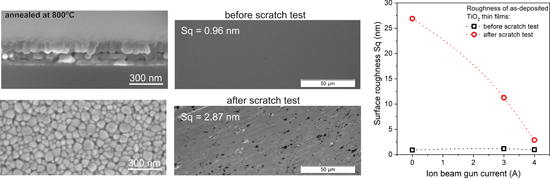
Influence of ion beam current on the structural, optical, and mechanical properties of TiO2 coatings: ion beam-assisted vs conventional electron beam evaporation
Beilstein J. Nanotechnol. 2025, 16, 1097–1112, doi:10.3762/bjnano.16.81
- are very high. The electron beam evaporation process uses the high kinetic energy of an electron beam to generate the thermal energy required to melt and then evaporate the source material to deposit it on the substrate [4]. Evaporation is an attractive deposition technique because of its many
- practice, additional heating of the substrates, reducing the pressure in the working chamber, applying additional electrical bias to the substrates, or using ion beam assistance are used. All of these methods lead to an increase in the total energy of the nucleating particles on the substrate. Ion beam
- migration. This can result in much better adhesion of the films to the substrate [11]. In addition, the advantage of using additional ion beam assistance in the EBE processes is an increased packing density of the coatings, making them more resistant to moisture [8][12]. Moreover, the IBAD technique has




Single-layer graphene oxide film grown on α-Al2O3(0001) for use as an adsorbent
Beilstein J. Nanotechnol. 2025, 16, 1082–1087, doi:10.3762/bjnano.16.79
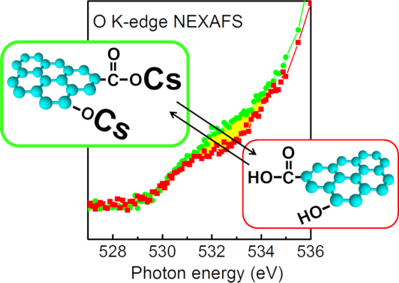
- drop-casting technique, wherein GO flakes dispersed in a solvent are cast onto a substrate [16][17]. This technique does not allow for the control of number of layers. Consequently, studies have been conducted to synthesize large-area and single-layer GO (SLGO) films. As mentioned above, GO films have
- typically been fabricated through casting small pieces of GO flakes onto a substrate. In this study, the SLGO film was synthesized by oxidizing single-layer graphene (SLG) grown by metal-free chemical vapor deposition (CVD) on a α-Al2O3(0001) substrate. The strong interface interaction between SLG and α
- -Al2O3(0001) can minimize peeling off of SLG from the α-Al2O3(0001) substrate following the oxidation process [18]. This allows us to obtain a large-area SLGO film, which can then be subjected to evaluation of the adsorption properties. Subsequent to the synthesis of SLGO/α-Al2O3(0001), further studies


Piezoelectricity of hexagonal boron nitrides improves bone tissue generation as tested on osteoblasts
Beilstein J. Nanotechnol. 2025, 16, 1068–1081, doi:10.3762/bjnano.16.78
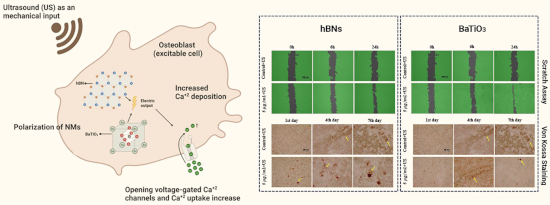
- such as low synthesis scalability, unavoidable defects, and inhomogeneity. Producing high-quality hBNs with controlled layer numbers depends heavily on precursor selection, ambient gas conditions, and substrate of choice [37]. Emerging solutions include both top-down (mechanical and chemical


Soft materials nanoarchitectonics: liquid crystals, polymers, gels, biomaterials, and others
Beilstein J. Nanotechnol. 2025, 16, 1025–1067, doi:10.3762/bjnano.16.77
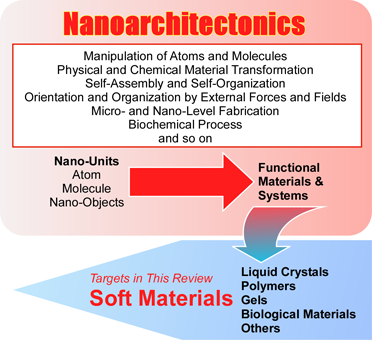
- photoisomerization of azobenzene monolayers can be amplified to the material level. Azobenzene molecules present at the molecular level on a substrate can alter the orientation of nematic liquid crystals over a micrometer-level thickness in the overlying liquid crystal cell (Figure 8B). As a consequence of this
- between the phosphate groups of the complexes and the positively charged ammonium groups of the polyelectrolyte. The alignment of lamellae in a parallel orientation to the substrate is significantly influenced by the percentage of surfactant present. An increase in surfactant concentration results in the
- substrate prepared by sulfonation (Figure 16). The material, which exhibits a bifunctional system of antioxidants and antibacterial properties on its surface, was employed as a model implant to effectively treat diabetic bone defects and restore the integration and remodeling of the implant and surrounding