Search results
Search for "surface tension" in Full Text gives 120 result(s) in Beilstein Journal of Nanotechnology.
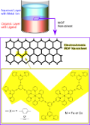
Materials nanoarchitectonics at two-dimensional liquid interfaces
Beilstein J. Nanotechnol. 2019, 10, 1559–1587, doi:10.3762/bjnano.10.153













Tailoring the stability/aggregation of one-dimensional TiO2(B)/titanate nanowires using surfactants
Beilstein J. Nanotechnol. 2019, 10, 1024–1037, doi:10.3762/bjnano.10.103
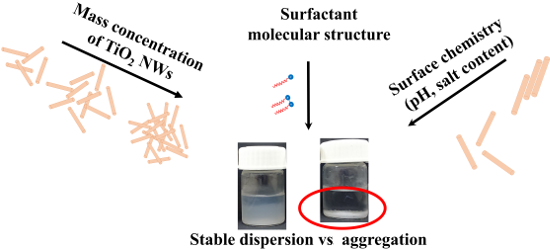
- adsorption efficiency and stronger aggregating ability. The obtained results are in good agreement with literature data [32][33]. Based on the surface tension measurements, the surfactant concentrations reflecting different aggregation states (monomers and micelles) were chosen. Characterization of TNWs The
- critical micelle concentration (micelles) were selected based on surface tension measurements (Figure S1, Table S1, Supporting Information File 1). It should be noted that in micellar surfactant solutions, monomers and micelles coexist in dynamic equilibrium [26]. In Table 3 the compositions of TNW
- surface tension (σ) measurements using the Du Noüy ring method (Interfacial Tensiometer K100, Krüss, Germany). The details can be found in Figure S1, Supporting Information File 1. Characterization of TNWs Powder diffraction data were collected by the PANalytical X’Pert XCharge diffractometer in the Bragg


Capillary force-induced superlattice variation atop a nanometer-wide graphene flake and its moiré origin studied by STM
Beilstein J. Nanotechnol. 2019, 10, 804–810, doi:10.3762/bjnano.10.80
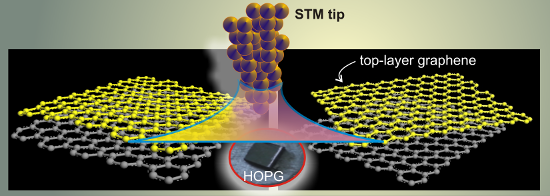
- scanning of STM tip. The capillary force between two objects of spherical and planar geometry can be approximated as F = 4πγR where R is the radius of the sphere (not the meniscus), and γ is the surface tension of the liquid [32][50], which is 39.1 mN/m for 1,2,4-trichlorobenzene. This is the maximum force
- capillary force is equal to the work done [51] when the surface tension lifts a liquid upward in a tube over a distance h. Here, unlike the rise of liquid in a capillary tube, most of the energy is utilized for rotation of the flake. So, we estimate the force required for the rotation and hence the spread


Features and advantages of flexible silicon nanowires for SERS applications
Beilstein J. Nanotechnol. 2019, 10, 725–734, doi:10.3762/bjnano.10.72
- ), and observed a significant increase of SERS intensity after immersion into the liquid. The surface tension of the liquid influences position and shape of the SiNWs. The SiNWs are displaced and pulled together in bundles. As a result, flexible hot spots with significantly increased SERS intensity occur
- . During the synthesis of flexible SiNWs the fabrication parameters are of a crucial importance. The small-diameter SiNWs synthesized and described in this paper are sensitive not only to the surface tension of the liquid. Their flexibility also depends on the metal plating [22]. The paper compares Ag
- water has a stronger impact than ethanol on the surface morphology. This can be explained by the higher average number of hydrogen bonds in water (ca. 3.8) than in ethanol (ca. 2) and the, consequently, stronger surface tension, 72.86 and 22.39 mN·m−1 at 20 °C, respectively [38][39]. SiNWs are captured


Deposition of metal particles onto semiconductor nanorods using an ionic liquid
Beilstein J. Nanotechnol. 2019, 10, 718–724, doi:10.3762/bjnano.10.71
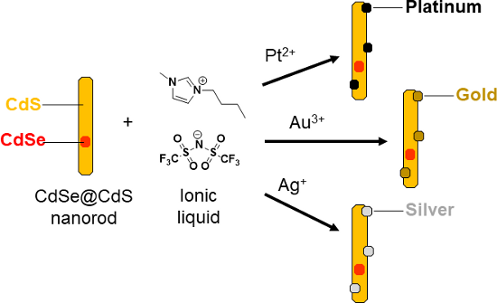
- ][15][16][17]. The low surface tension of ionic liquids causes high nucleation rates and allows for the synthesis of small nanoparticles with minimal Ostwald ripening [17]. Further, many ionic liquids consist of a large anion with diffuse negative charge; this lack of strongly binding anionic ligands


Pull-off and friction forces of micropatterned elastomers on soft substrates: the effects of pattern length scale and stiffness
Beilstein J. Nanotechnol. 2019, 10, 79–94, doi:10.3762/bjnano.10.8
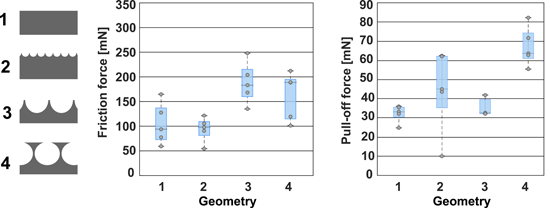
- are present is referred to as the elastocapillary length l, which is defined as l = γ/μ, where γ is the surface tension of the substrate and μ is the elastic shear modulus of the substrate [26]. If the length scale of the microscale features is in the order of the elastocapillary length, indentation
- is dominated by surface-tension effects, whereas for larger features, surface-tension effects are balanced by elasticity [25]. Summarizing, whereas for rigid substrates, adhesive micropatterns have been designed to gain a low Eeff, it remains to be investigated whether this design approach should
- PVA-18, respectively. The elastocapillary length of PVA (defined as l = γPVA/μPVA [26], with surface tension γPVA ≈ 50 kPa [32] and elastic shear modulus μPVA ≈ 12 kPa for PVA-12) is in the order of 400 nm. Similarly, the elastocapillary length of PVA-18 is in the order of 300 nm. Pull-off forces of





A new bioinspired method for pressure and flow sensing based on the underwater air-retaining surface of the backswimmer Notonecta
Beilstein J. Nanotechnol. 2018, 9, 3039–3047, doi:10.3762/bjnano.9.282
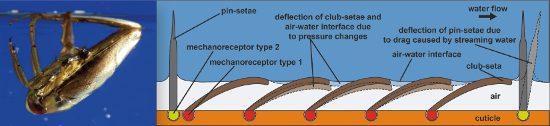
- Figure 7. Since water can be considered as incompressible, a pressure wave that impinges on an air layer compresses the air. If so, the air–water interface is deformed and the club-setae, i.e., the setae that hold the air layer, are deflected due to surface tension. The mechanosensitive cells at the base


Femtosecond laser-assisted fabrication of chalcopyrite micro-concentrator photovoltaics
Beilstein J. Nanotechnol. 2018, 9, 3025–3038, doi:10.3762/bjnano.9.281
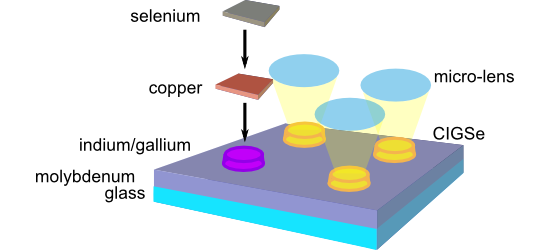
- islands and the associated contact angle were significantly influenced by the temperature during PVD. At higher temperatures the islands became flatter, probably due to the decrease in surface tension of the liquid indium. The deposition rate of indium, however, had little influence on the contact angle


Hydrogen-induced plasticity in nanoporous palladium
Beilstein J. Nanotechnol. 2018, 9, 3013–3024, doi:10.3762/bjnano.9.280
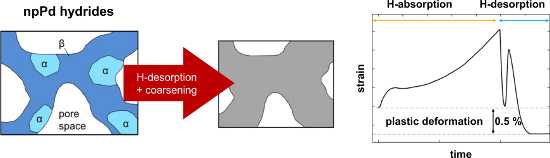
- on plasticity in nanoporous gold have pointed towards the surface tension (in units of energy per area) being the relevant capillary parameter for plastic deformation, rather than surface stress, which is only responsible for elastic contributions [47][48]. This is reflected in an asymmetric
- deformation behaviour in compression and tension as shown by Lührs et al. [48], where expansion under a tensile load is inhibited and a contraction under compressive force is promoted. Mameka et al. reported that surface-tension-driven deformation leads to changes in the total surface area, as supported by
- palladium. As pointed out in the discussion the actual driving force for plastic deformation is surface tension. From surface tension, which is a scalar quantity, it is not possible to determine a corresponding surface stress, which is a tensor quantity, without additional information. The surface stress


Low cost tips for tip-enhanced Raman spectroscopy fabricated by two-step electrochemical etching of 125 µm diameter gold wires
Beilstein J. Nanotechnol. 2018, 9, 2718–2729, doi:10.3762/bjnano.9.254
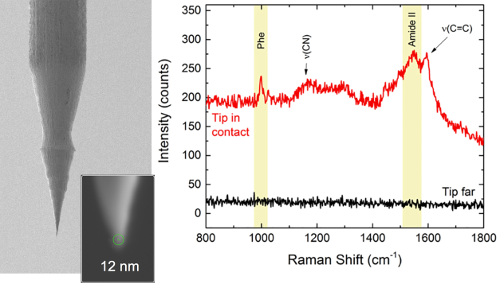
- Euler’s constant, g = 981 cm/s2 is the gravitational constant and is the capillary constant, where γ ≈ 30 dyn/cm and ρ = 0.98 g/cm3 are the surface tension and the density of the HCl/ethanol solution, respectively. In Figure 4b we plot the predicted values of the meniscus extension h as a function of the


Effect of electrospinning process variables on the size of polymer fibers and bead-on-string structures established with a 23 factorial design
Beilstein J. Nanotechnol. 2018, 9, 2466–2478, doi:10.3762/bjnano.9.231
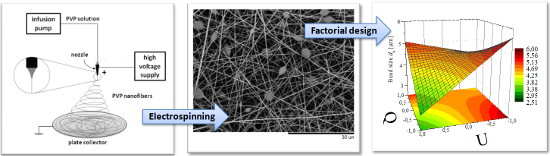
- ][8][9][10]. Not only do they concern the values but also the change of process parameters such as: polymer solution properties (type of polymer, type of solvent, solution viscosity [11], surface tension, conductivity [11][12], etc.) and process variables (electrical voltage delivered to the nozzle
- was also concluded that the properties of the polymer solution (concentration, viscosity and surface tension) had the biggest influence on the size of fibers obtained in the electrospinning process. In terms of solution concentration, the proportional relationship between the polymer concentration and


Surface energy of nanoparticles – influence of particle size and structure
Beilstein J. Nanotechnol. 2018, 9, 2265–2276, doi:10.3762/bjnano.9.211
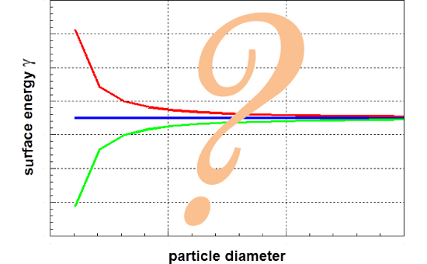
- Gibbs using the term “surface tension” [1][2]. In the meantime, it has become clear that in case of solids one has to distinguish between “surface energy” and “surface stress”. Both quantities are related by the Shuttleworth equation [3]. Since the surface stress, σ, exerts a pressure, p, on a curved
- this, the basic ideas of both approaches are explained in this paper. Approach based on classical thermodynamics and continuum considerations When Gibbs [1][2] introduced surface energy using the term surface tension he predicted a decrease of the surface energy with decreasing droplet size. As an
- , minor [3]. Based on this clarification, it is obvious that the lattice contraction data for small particles, abundant in the literature, may be used to calculate the size dependent surface stress, (see, e.g., [6][7][8]) but not, as it is done sometimes [9][10], to calculate the surface energy (“surface





Electrospun one-dimensional nanostructures: a new horizon for gas sensing materials
Beilstein J. Nanotechnol. 2018, 9, 2128–2170, doi:10.3762/bjnano.9.202
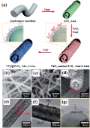
- droplet into a cone shape, where surface tension reduces the surface area by keeping it in a spherical shape. When the charged repulsive expansion exceeds surface tension based contraction, a charged jet of the solution is ejected from the tip of the Taylor cone and travels toward the target surface [48
- sensing platforms (i.e., micro-electromechanical systems (MEMs)). The electrospinning process is governed by various parameters such as viscosity, conductivity, molecular weight of fiber components, surface tension of polymer solution, electric potential, working distance, and flow rate. Each parameter






Interaction-tailored organization of large-area colloidal assemblies
Beilstein J. Nanotechnol. 2018, 9, 1582–1593, doi:10.3762/bjnano.9.150
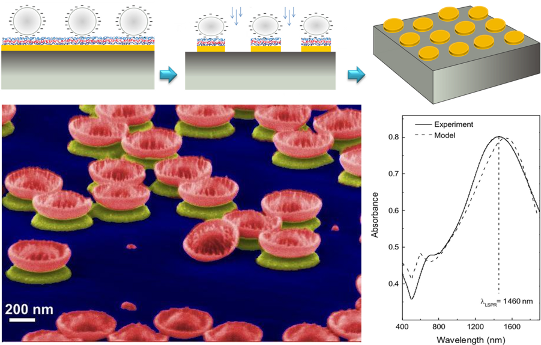
- are not completely fixed in their positions on the substrates [29]. It is worth noting that the intensity of capillary forces increases with the particle radius and as the distance between two particles in a liquid is reduced: Fcap ≈ 2πσrc2(sin2θ) / r where σ is the surface tension of the liquid, θ is


Tuning adhesion forces between functionalized gold colloidal nanoparticles and silicon AFM tips: role of ligands and capillary forces
Beilstein J. Nanotechnol. 2018, 9, 660–670, doi:10.3762/bjnano.9.61
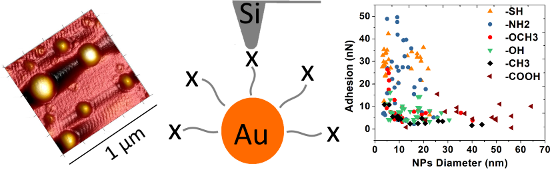
- ° and θTL = 60° [36] are the static contact angles of the liquid on substrate (–NH2) and tip, respectively and γLV = 7.28 × 10⁻² N/m is the liquid (water) surface tension. For the given values the capillary forces are around 7 nN. From Equation 2, it can be deduced that for the low humidity there is no


Optimisation of purification techniques for the preparation of large-volume aqueous solar nanoparticle inks for organic photovoltaics
Beilstein J. Nanotechnol. 2018, 9, 649–659, doi:10.3762/bjnano.9.60
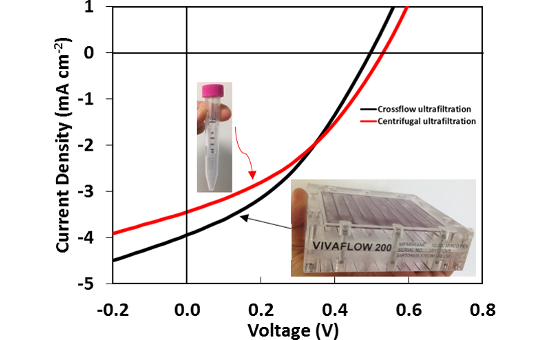
- spectroscopy-based method and by surface tension measurements of the nanoparticle ink filtrate; revealing that centrifugal ultrafiltration removed SDS at a higher rate than crossflow ultrafiltration even though a similar filter was applied in both cases (10,000 Da Mw cut-off). The influence of SDS
- at a dilution factor of 7.8 × 10⁴, while crossflow purified inks did not reach a maximum efficiency until a dilution factor of 6.1 × 10⁹. This difference was ascribed to the different wetting properties of the prepared inks and was further corroborated by surface tension measurements of the ASNP inks
- which revealed that the peak efficiencies for both methods occurred for similar surface tension values of 48.1 and 48.8 mN m−1. This work demonstrates that addressing the surface tension of large-volume ASNP inks is key to the reproducible fabrication of nanoparticle photovoltaic devices. Keywords


Ultralight super-hydrophobic carbon aerogels based on cellulose nanofibers/poly(vinyl alcohol)/graphene oxide (CNFs/PVA/GO) for highly effective oil–water separation
Beilstein J. Nanotechnol. 2018, 9, 508–519, doi:10.3762/bjnano.9.49
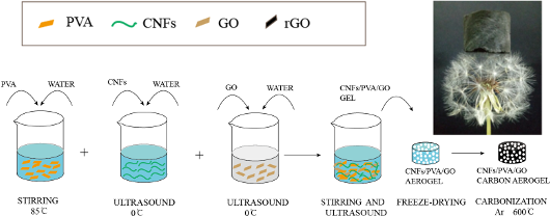
- aerogels with high porosity, small hole size and low surface energy. Obviously, the absorption capacity difference of the carbon aerogels was largely determined by the density of the carbon aerogel and surface tension of the solvents and oils. Additionally, the density, which demonstrates the quantity of


Engineering of oriented carbon nanotubes in composite materials
Beilstein J. Nanotechnol. 2018, 9, 415–435, doi:10.3762/bjnano.9.41
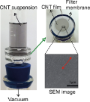
- polymer layer, manual alignment is preferred [41]. Based on the fundamental principles of this approach, another method for making thin films of CNTs has been developed using the same tools. Fluid containing CNTs is spread on a solid substrate using a spiral film applicator. The surface tension and






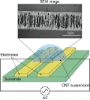


Periodic structures on liquid-phase smectic A, nematic and isotropic free surfaces
Beilstein J. Nanotechnol. 2018, 9, 342–352, doi:10.3762/bjnano.9.34
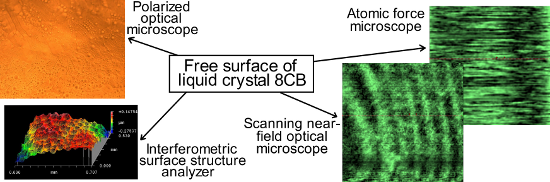
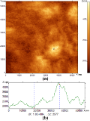
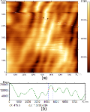
- liquid surface [16][17][18][19][20]. In the article [16], a case was considered where periodic stripe structures occur on the charged liquid helium surface as a result of competition between electrostatic forces and surface tension. Qualitatively, our problem is similar to this case and can be described









Bombyx mori silk/titania/gold hybrid materials for photocatalytic water splitting: combining renewable raw materials with clean fuels
Beilstein J. Nanotechnol. 2018, 9, 187–204, doi:10.3762/bjnano.9.21
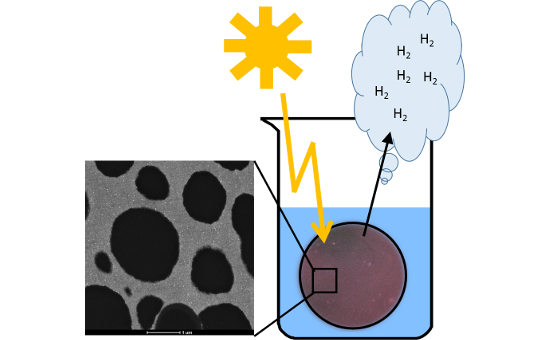
- instrument software (Sol.I.D.) was employed for calculations of results supporting Washburn’s equation. A mercury surface tension of 0.48 N/m and a contact angle of intruded mercury of 140° were assumed. Reflection solid-state UV–vis spectrometry was done on a Perkin-Elmer (PE) Lambda 950 UV–vis spectrometer




Hyperthermic intracavitary nanoaerosol therapy (HINAT) as an improved approach for pressurised intraperitoneal aerosol chemotherapy (PIPAC): Technical description, experimental validation and first proof of concept
Beilstein J. Nanotechnol. 2017, 8, 2729–2740, doi:10.3762/bjnano.8.272
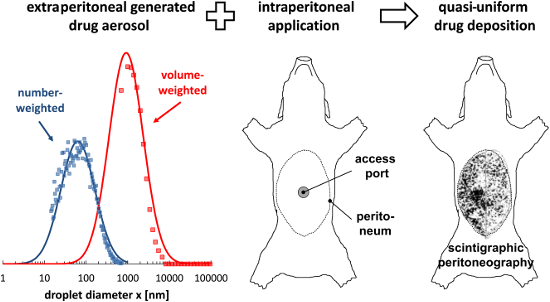
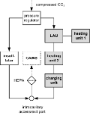
- temperature due to decreasing dynamic viscosity, density and surface tension of the liquid. To increase the droplet flux as well as the in-tissue drug penetration homogenously over the whole peritoneum, the HINAT-LAU aerosol is also unipolar-charged before entering the capnoperitoneum. For this purpose, an




Nanoprofilometry study of focal conic domain structures in a liquid crystalline free surface
Beilstein J. Nanotechnol. 2017, 8, 2544–2551, doi:10.3762/bjnano.8.254
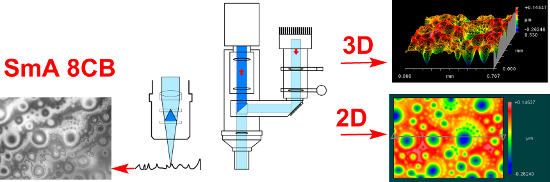
- the elastic moduli of liquid crystals. The shear modulus, G, is given as where C and C1 are scaling constants depending on surfactant, t is the relative temperature, γ is the surface tension coefficient of the free surface with FCDs, and L is the FCD dimension. This relation underlines that the
- is physically related to the domain size and surface tension. This is very important for the analysis of the stable director field configurations and mechanisms behind their destruction in LC displays. Even in the case of a homogeneous director field orientation on solid substrates, FCDs can occur




Surfactant-induced enhancement of droplet adhesion in superhydrophobic soybean (Glycine max L.) leaves
Beilstein J. Nanotechnol. 2017, 8, 2345–2356, doi:10.3762/bjnano.8.234
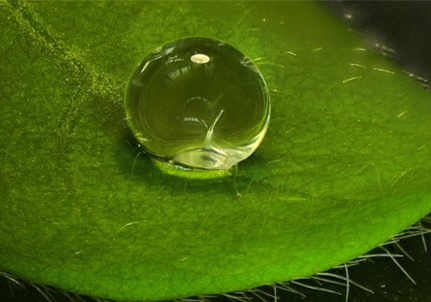
- roll off. Droplet adhesion can be improved by adding adjuvants, such as surfactants. Surfactants enhance the leaf surface wettability by reduction of the surface tension of applied liquids. Surfactants are amphiphilic molecules with a nonpolar, hydrophobic structural group together with a hydrophilic


Evaluation of preparation methods for suspended nano-objects on substrates for dimensional measurements by atomic force microscopy
Beilstein J. Nanotechnol. 2017, 8, 1774–1785, doi:10.3762/bjnano.8.179
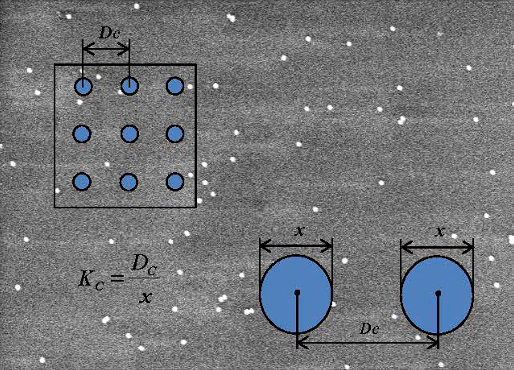
- in surface tension causes the liquid to flow away from regions of low surface tension associated with a strong recirculation in the droplet, which removes particles from the contact line and moves them along the free surface toward the droplet centre. Rinsing method: Apart from the interruption of


Collembola cuticles and the three-phase line tension
Beilstein J. Nanotechnol. 2017, 8, 1714–1722, doi:10.3762/bjnano.8.172
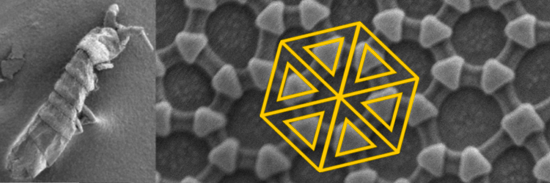
- wetting states with any value of θ0 [26], but such structures are not a universal trait in these animals [5][6]. The upper limit of θ0 is about 120° for real surfaces, observed on perfluorinated polymers, or 156 ° for a theoretical surface with no surface tension [27]. Insect waxes fall in the range of 90


![[Graphic 16]](/bjnano/content/inline/2190-4286-8-172-i22.png?max-width=637&scale=1.18182) . A system with θ0 = 105°, S = 0.1 μm a...
. A system with θ0 = 105°, S = 0.1 μm a...