


Search results
Search for "switching" in Full Text gives 260 result(s) in Beilstein Journal of Nanotechnology. Showing first 200.
Design aspects of Bi2Sr2CaCu2O8+δ THz sources: optimization of thermal and radiative properties
Beilstein J. Nanotechnol. 2021, 12, 1392–1403, doi:10.3762/bjnano.12.103
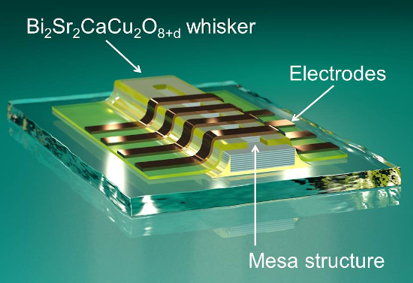
- multiple branches due to one-by-one switching of IJJs from the superconducting to the resistive state. The are N ≈ 200 and ≈300 IJJs in whisker and crystal mesas, respectively. Both the whisker and the crystal have a similar suppressed Tc ≈ 65–70 K and low critical current densities of IJJs, Jc ≈ 100 A/cm2
- results of in situ THz generation-detection experiment on a whisker-based device. We follow the procedure developed in [14], where details of the technique can be found. We use one mesa with the I–V like in Figure 2a as a generator, and another mesa on the same device as a switching current detector. The


Enhancement of the piezoelectric coefficient in PVDF-TrFe/CoFe2O4 nanocomposites through DC magnetic poling
Beilstein J. Nanotechnol. 2021, 12, 1262–1270, doi:10.3762/bjnano.12.93
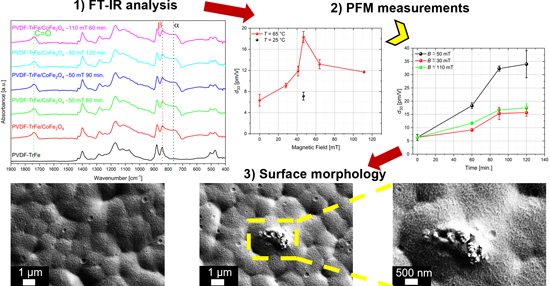
- piezoelectric and ferroelectric properties, high chemical resistance, high thermal stability, large polarization, short switching time, and mechanical flexibility. All these combined characteristics make it suitable for a wide range of advanced applications, from sensing to energy harvesting [8][9][10][11]. It


Electrical, electrochemical and structural studies of a chlorine-derived ionic liquid-based polymer gel electrolyte
Beilstein J. Nanotechnol. 2021, 12, 1252–1261, doi:10.3762/bjnano.12.92
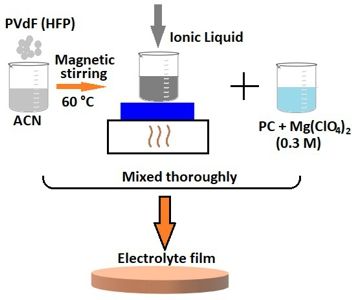
- the involvement of π-electrons responsible for the generation of charge carriers and their switching, which results in a reduction of the electron density of the overall system and an increase in the activation energy [10]. Simultaneously, there is also a decrease in the activation energy produced by



Two dynamic modes to streamline challenging atomic force microscopy measurements
Beilstein J. Nanotechnol. 2021, 12, 1226–1236, doi:10.3762/bjnano.12.90
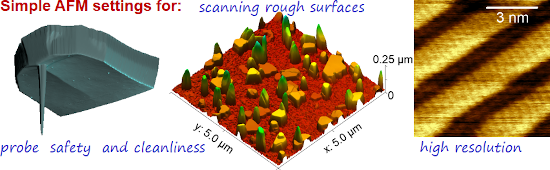
- amplitude [15]. The two possible resonant frequencies correspond to different distances between the probe and the sample. The condition under which the frequency shift is negative is called the net-attractive regime, and correspondingly, positive frequency shift is called net-repulsive regime. Switching
- from one regime to another is experimentally observed in the form of a sharp change in the phase of forced oscillations (Figure 1d). Hysteresis is often observed on the approach–retraction curve; switching of regimes occurs at different amplitudes depending on whether the probe approaches or retracts
- . There is a certain range of amplitudes within which the probe can be both in net-attraction and in net-repulsion (Figure 1c). Thus, under certain conditions, the unambiguous dependence between A and z is broken. If Asp falls within this range, then due to the random switching of the interaction regime


Assessment of the optical and electrical properties of light-emitting diodes containing carbon-based nanostructures and plasmonic nanoparticles: a review
Beilstein J. Nanotechnol. 2021, 12, 1078–1092, doi:10.3762/bjnano.12.80
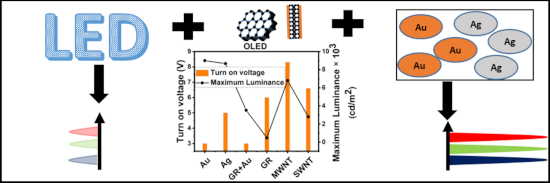
- light-emitting diodes (OLED) possess several interesting properties and are therefore gaining popularity [14]. Their low-cost and facile fabrication routes, wider viewer angle, higher resolution, lower-power consumption, lightweight, higher contrast, and faster switching characteristics give them


An overview of microneedle applications, materials, and fabrication methods
Beilstein J. Nanotechnol. 2021, 12, 1034–1046, doi:10.3762/bjnano.12.77
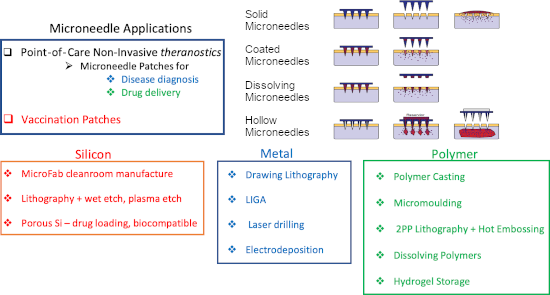
- ratio etches are achieved by multiplex switching of gas feed between SF6 + O2 (etch) and C4F8 (sidewall passivation) in the Bosch process [86][87]. Dry etching allows better control over microneedle density and geometry and the absence of crystal plane effects allows microneedles with cylindrical
- consecutive switching between isotropic and anisotropic etching from the front side of the wafer. Microneedles with heights between 310 and 400 μm with sharp tips were obtained [91]. Silicon microneedles are brittle and may break during insertion into the skin, which could result in foreign body reactions


A Au/CuNiCoS4/p-Si photodiode: electrical and morphological characterization
Beilstein J. Nanotechnol. 2021, 12, 984–994, doi:10.3762/bjnano.12.74
- photocapacitance behavior of the Au/CuNiCoS4/p-Si photodiode have been tested by transient measurements while switching the light on and off for different illumination power densities. The photocurrent transient results are given in Figure 13a, the photocapacitance transient graphs are indicated in Figure 13b. The



Molecular assemblies on surfaces: towards physical and electronic decoupling of organic molecules
Beilstein J. Nanotechnol. 2021, 12, 950–956, doi:10.3762/bjnano.12.71

- tip of a scanning probe microscope and mechanically lifted from the metallic surface such that they hang freely between metal contacts. This manipulation technique allows for measuring, amongst others, the electronic conductance, magnetic properties, reversible switching, and electroluminescence of
- . Among others, ultrathin dielectric layers of either alkali halides (e.g., NaCl [17]) or metal oxides (e.g., MgO [18], Al2O3 [19], and CuO [20]), or nitrides (CuN [21]) have been shown to be beneficial for successfully reducing or even completely switching off the unwanted interaction between the metal
- particular for preserving reversible switching capabilities [68][69], but also conformational [9][10][70], tautomeric [71], and charge state switching could be shown [56]. This Thematic Issue highlights recent experimental and theoretical developments in realizing and understanding physically and
In situ transport characterization of magnetic states in Nb/Co superconductor/ferromagnet heterostructures
Beilstein J. Nanotechnol. 2021, 12, 913–923, doi:10.3762/bjnano.12.68
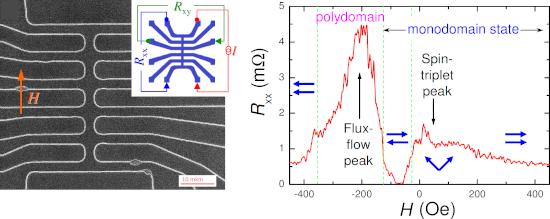
- min upon switching between targets. The deposition is performed at room temperature with a water-cooled sample stage. Thicknesses are defined using calibrated growth rates: 3.5 nm/s for Nb and 0.1 nm/s for Co. For every set of F-layers, three identical samples were prepared simultaneously, and some
- response, which indicates switching into some specific metastable magnetic states. There are two mechanisms for the appearance of hysteresis in the MLs [34][37]. The major hysteresis is associated with switching in and out from the magnetostatically stable AP state. Multiple smaller ones are associated
- with switching between different domain states, which are also metastable. Figure 3a shows longitudinal MR for the same horizontal bridge (hard axis orientation) at the S1 sample as in Figure 1e. The overall shape of Rxx(H) with a minimum at low fields and an additional maximum nearby is similar to


The role of convolutional neural networks in scanning probe microscopy: a review
Beilstein J. Nanotechnol. 2021, 12, 878–901, doi:10.3762/bjnano.12.66
- -topographical SPM technique is the study of ferroelectric switching [135]. This switching is a function of both reading and writing voltages, and can vary with experimental conditions such as time and temperature, and is further complicated by competing processes. The measurement technique was contact KPFM
- standard image analysis techniques such as interpolation in order to tweak out more information. Different types of switching were clearly grouped by principle components to capture changes in switching behavior at different temperatures and different curve types. A neural network was applied to these







A review of defect engineering, ion implantation, and nanofabrication using the helium ion microscope
Beilstein J. Nanotechnol. 2021, 12, 633–664, doi:10.3762/bjnano.12.52
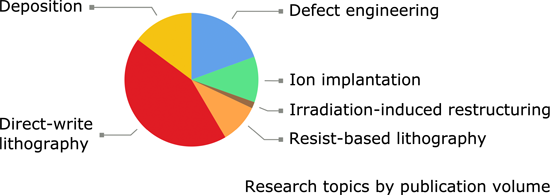
- has been used to modulate the local magnetic anisotropy, with multilevel switching achieved [54]. The neon ion beam of the HIM has also been used to tailor magnetic properties. The heavier ions were used to introduce chemical disorder into the target lattice through the local displacement of atoms in
- PbZr0.2Ti0.8O3 thin films at doses of 0.22 × 10¹⁵ to 1 × 10¹⁵ ions/cm2 has been demonstrated, and through site-selective direct-write patterning with variable dose, various nanostructures with novel ferroelectric-switching functionalities have been fabricated [33] (Figure 2f). Using similar doses, out-of-plane


Extended iron phthalocyanine islands self-assembled on a Ge(001):H surface
Beilstein J. Nanotechnol. 2021, 12, 232–241, doi:10.3762/bjnano.12.19
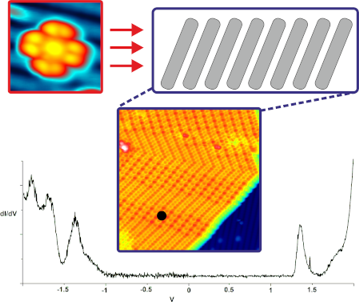
- ) indicate the area visualized in (b). Imaging conditions: bias voltage −2.0 V; tunneling current 30 pA. Supporting Information Supporting Information File 60: Additional information on single DB charge state switching on Ge(001):H. Funding We acknowledge financial support from the National Science Center
TiOx/Pt3Ti(111) surface-directed formation of electronically responsive supramolecular assemblies of tungsten oxide clusters
Beilstein J. Nanotechnol. 2021, 12, 203–212, doi:10.3762/bjnano.12.16
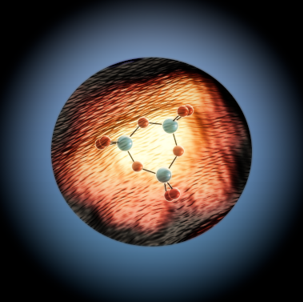
- applied potential [3], have shown great potential for next-generation information technologies. This change of the electrical resistance often faces local redox reactions inside the oxide layer [4]. From the chemical point of view, the active switching layer can be downsized to individual molecular units
- controlled manipulation of single W3O9 clusters. The power of the STM approach for molecular switches has been demonstrated several times. For example, Cui et al. recently showed the reversible switching of a large discoid polyaromatic salt as a function of the applied bias voltage [27]. By that, we were



Kondo effects in small-bandgap carbon nanotube quantum dots
Beilstein J. Nanotechnol. 2020, 11, 1873–1890, doi:10.3762/bjnano.11.169
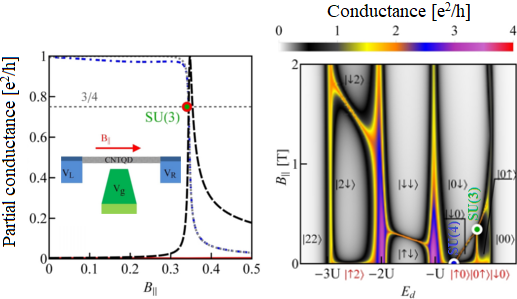
- degeneracy points and the gate dependence of degeneracy lines are interesting for quantum computing because they open the possibility of electric switching between different types of qubits (spin, valley, or valley–spin) and their higher-dimensional equivalents (qutrits [51][52], qudits [53][54]) in the same
- switching of physical quantities such as magnetic or orbital moments of the dots (examples of the maps of magnetic and orbital moments are given below in Figure 3c,d). The occurrence of points of different degeneracy and the ability to move between them by change of the gate voltage may have significance
- for quantum computing by providing a method for electrically switching, in the same nanoscopic system, between spin, valley, or spin–valley qubits, as well as between qubits and qutrites (threefold degeneracy) or qudits (fourfold degeneracy) of various types. For the analyzed nanotube C(24,21



![[Graphic 37]](/bjnano/content/inline/2190-4286-11-169-i52.svg?max-width=637&scale=1.18182) as a functio...
as a functio...


Molecular dynamics modeling of the influence forming process parameters on the structure and morphology of a superconducting spin valve
Beilstein J. Nanotechnol. 2020, 11, 1776–1788, doi:10.3762/bjnano.11.160
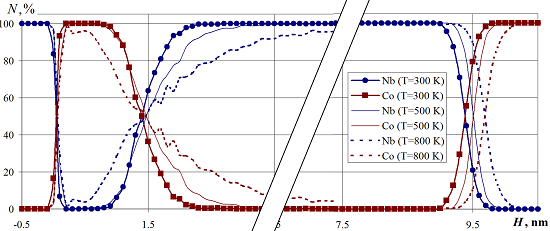
- structures are highly sensitivity to magnetic field switching and energy consumption is significantly reduced due to the absence of dissipation in such a valve in the ground (superconducting) state. Practice shows that the creation of multilayer S/F nanostructures with the required properties is an


Mapping of integrated PIN diodes with a 3D architecture by scanning microwave impedance microscopy and dynamic spectroscopy
Beilstein J. Nanotechnol. 2020, 11, 1764–1775, doi:10.3762/bjnano.11.159
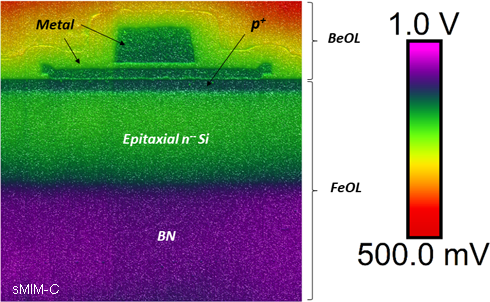
- diode components need to be electrically isolated. In our case, in order to electrically isolate the devices from one another, deep trenches were integrated in the process. For RF switching applications, a circular topology was chosen to avoid any right-angled corners that may induce edge effects in RF


Functional nanostructures for electronics, spintronics and sensors
Beilstein J. Nanotechnol. 2020, 11, 1704–1706, doi:10.3762/bjnano.11.152
- consumption, and at the same time, limits the clock frequency of semiconductor computers to 4–5 GHz. This frequency limit occurs due to temperature limitations posed at the integration level and the switching rate of transistors. It is important to realize that cryogenic cooling of semiconductor chips will
- superconductor digital technology (SDT) [4]. The switching energy of the SDT basic element is on the order of 10−19 J (including the power for cryogenic cooling of superconducting circuits), which demonstrates an energy efficiency of up to seven orders of magnitude as compared to the semiconductor analog [5
Amorphized length and variability in phase-change memory line cells
Beilstein J. Nanotechnol. 2020, 11, 1644–1654, doi:10.3762/bjnano.11.147
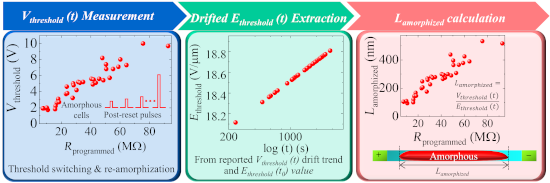
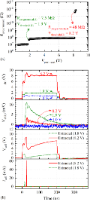
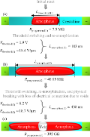
- read DC sweeps was applied. When a post-reset voltage pulse with sufficient amplitude was applied to a given cell, the measured current and the post-pulse resistance increased drastically, indicating that the cell re-amorphized after threshold switching, melting, and quenching. The amorphized length
- was calculated using the measured voltage at which the threshold switching occurred and the expected drifted threshold field at that time. The measured threshold voltage values and, hence, the extracted amorphized length, generally increase linearly with the programmed resistance levels. However
- unpredictable programming feature in phase-change memory devices can be utilized in hardware security applications. Keywords: amorphous materials; drift; electrical breakdown; electrical resistivity; phase-change memory; pulse measurement; stochastic processes; threshold switching; Introduction Phase-change




Optically and electrically driven nanoantennas
Beilstein J. Nanotechnol. 2020, 11, 1542–1545, doi:10.3762/bjnano.11.136
- a TERS setup, which has been rarely pursued so far. In the hot topic area of active plasmonics, reversible changes in the refractive index of the environment of a plasmonic system, for example, by liquid crystals or thermosensitive polymers, allow for actively switching the plasmonic properties [50
Controlling the proximity effect in a Co/Nb multilayer: the properties of electronic transport
Beilstein J. Nanotechnol. 2020, 11, 1336–1345, doi:10.3762/bjnano.11.118
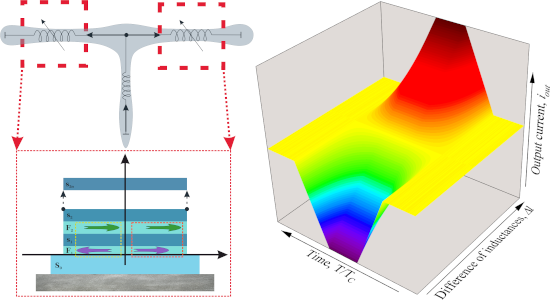
- the conditions at which switching from the parallel to the antiparallel alignment of the neighboring F-layers leads to a significant change of the superconducting order parameter in superconductive thin films. We experimentally study the transport properties of a lithographically patterned Nb/Co
- ferromagnetic (F) layers separated by thin superconducting layers, in which the superconducting order parameter is maintained due to the proximity to a thick superconducting bank (S-bank). Switching from the antiparallel (AP) to the parallel (P) alignment of neighboring F1 and F2 layers leads to a significant
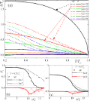
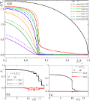
- parameter regions where the aforementioned switching between the P and AP orientations of the F1 and F2 layers is possible were found experimentally. In this work, we perform theoretical and experimental analyses of electronic properties of Nb/Co multilayers with different F1 and F2 thicknesses and several



Effect of localized helium ion irradiation on the performance of synthetic monolayer MoS2 field-effect transistors
Beilstein J. Nanotechnol. 2020, 11, 1329–1335, doi:10.3762/bjnano.11.117
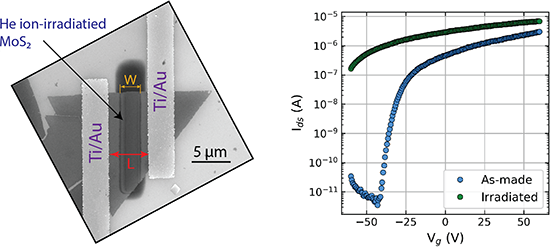
- exploration of nanometer-scale structural modifications of TMD devices [6][7][8]. The localized formation of defects by focused ion beam irradiation has been shown to induce unusual electronic properties in monolayer TMDs, such as pseudo-metallic phase transitions in MoS2 and WSe2 [9][10], resistive switching


Thermophoretic tweezers for single nanoparticle manipulation
Beilstein J. Nanotechnol. 2020, 11, 1126–1133, doi:10.3762/bjnano.11.97
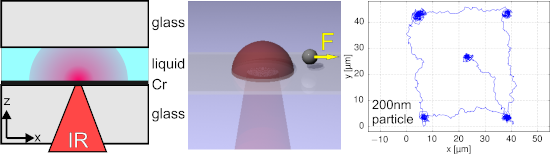
- multiple heating spots by time-sharing (switching frequency 100 kHz) of the beam. Behind the AODs, the laser beam is directed by mirrors and an afocal system towards a custom-built fluorescence microscope. Finally, it is focused with a long working distance IR objective (Mitutoyo M Plan Apo NIR, 50×, NA


Gas-sensing features of nanostructured tellurium thin films
Beilstein J. Nanotechnol. 2020, 11, 1010–1018, doi:10.3762/bjnano.11.85
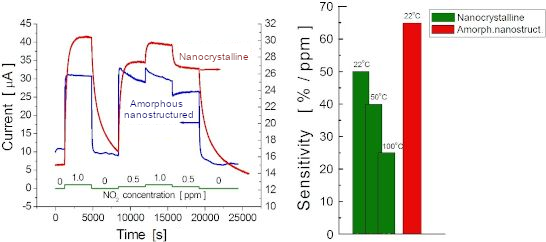
- acquisition board (National Instruments Inc., USA). Characteristic transient current response curves were collected at a constant applied voltage (5 V), using different NO2 concentrations at different temperatures. The switching between the mixture of NO2 vapor and reference gases was computer-controlled. The
- shows the current flow through a ≈100 nm thick nanocrystalline film submitted to repeated switching on–off cycles of the NO2 gas mixture at a constant bias voltage and 22 °C operating temperature. Square pulses of NO2 vapor at concentrations of 0 ppm, 0.5 ppm, and 1.0 ppm were applied. The dashed green
- line shows the switching profile. It is seen that the current follows the same pattern but the baseline strongly increases with temperature, as depicted in Table 1. Table 1 also shows the film sensitivity, which is calculated from the response kinetics to 1.0 ppm NO2, as a relative percent increase in


Electrochemical nanostructuring of (111) oriented GaAs crystals: from porous structures to nanowires
Beilstein J. Nanotechnol. 2020, 11, 966–975, doi:10.3762/bjnano.11.81
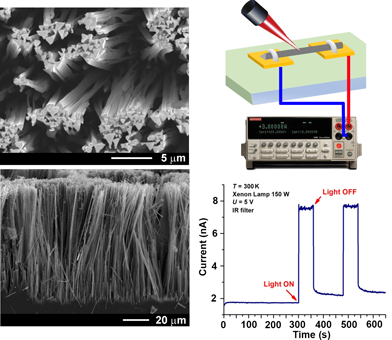
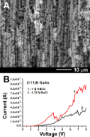
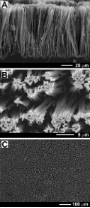
- propagation of pores was observed for the potentiostatic mode of anodization (Figure 1C). Switching the anodization voltage to 1 V stops the formation of the porous layer, since this value is below the pore nucleation potential (1.8 V) established from the I–V characteristic, which is in agreement with the





Microwave photon detection by an Al Josephson junction
Beilstein J. Nanotechnol. 2020, 11, 960–965, doi:10.3762/bjnano.11.80
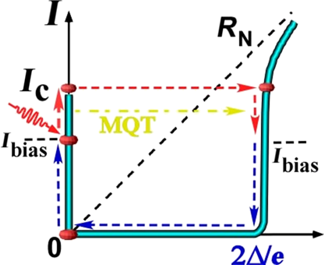
- value calculated from the gap, is experimentally investigated for application as a threshold detector for microwave photons. We present the preliminary results of measurements of the lifetime of the superconducting state and the probability of switching by a 9 GHz external signal. We found an
- anomalously large lifetime, not described by the Kramers’ theory for the escape time over a barrier under the influence of fluctuations. We explain it by the phase diffusion regime, which is evident from the temperature dependence of the switching current histograms. Therefore, phase diffusion allows for a
- significant improvement of the noise immunity of a device, radically decreasing the dark count rate, but it will also decrease the single-photon sensitivity of the considered threshold detector. Quantization of the switching probability tilt as a function of the signal attenuation for various bias currents





