Search results
Search for "targeted delivery" in Full Text gives 66 result(s) in Beilstein Journal of Nanotechnology.
Enhanced antineoplastic/therapeutic efficacy using 5-fluorouracil-loaded calcium phosphate nanoparticles
Beilstein J. Nanotechnol. 2018, 9, 2499–2515, doi:10.3762/bjnano.9.233
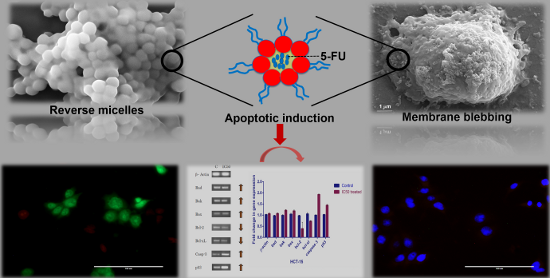
- for hepatoma targeted delivery of docetaxel with lactose as the targeting molecule [7]. Curcumin-loaded organically modified silica nanoparticles (ORMOSIL) were studied to check the potential anticancer property of ORMOSIL nanocarriers [8]. However, in some instances, after nanoparticle formation, the


Atomic-level characterization and cilostazol affinity of poly(lactic acid) nanoparticles conjugated with differentially charged hydrophilic molecules
Beilstein J. Nanotechnol. 2018, 9, 1328–1338, doi:10.3762/bjnano.9.126
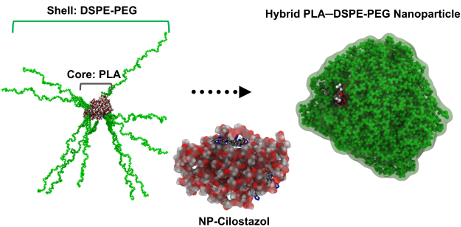
- , Talca, Chile INFIQC, CONICET, Departamento de Química Teórica y Computacional, Facultad de Ciencias Químicas, Universidad Nacional de Córdoba, XUA5000 Córdoba, Argentina Laboratory of Nanomedicine and Targeted Delivery, Center for Integrative Medicine and Innovative Science (CIMIS), Faculty of Medicine


Review on nanoparticles and nanostructured materials: history, sources, toxicity and regulations
Beilstein J. Nanotechnol. 2018, 9, 1050–1074, doi:10.3762/bjnano.9.98

- protein capsids were used to encapsulate drugs, genes, enzymes or proteins for targeted delivery with biocompatibility and bioavailability [128]. Recent research efforts have focused on using viral NPs as conjugation templates to produce novel nanostructures [129][130] and cages for compound encapsulation


A nanocomplex of C60 fullerene with cisplatin: design, characterization and toxicity
Beilstein J. Nanotechnol. 2017, 8, 1494–1501, doi:10.3762/bjnano.8.149
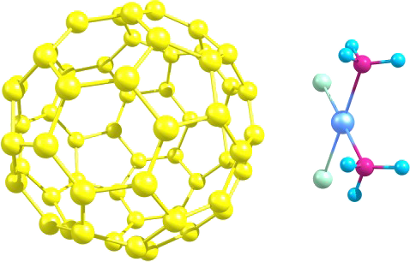
- ][18], including combination chemotherapy [19] and photodynamic therapy [20][21][22]. They are also applied for the targeted delivery of drugs into tumor cells [23][24][25]. However, there are several conflicting reports in the literature regarding the genotoxicity of C60 fullerene [26]. Thus, a strong



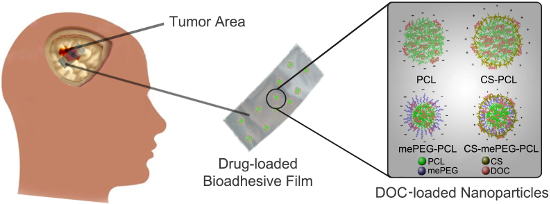
Cationic PEGylated polycaprolactone nanoparticles carrying post-operation docetaxel for glioma treatment
Beilstein J. Nanotechnol. 2017, 8, 1446–1456, doi:10.3762/bjnano.8.144
- increased the particle size and decreased the cellular uptake of nanoparticles [66]. Cationic core–shell nanoparticles are also quite suitable for the delivery of negatively charged gene and drug to tumor tissue. Wei et al. used cationic core–shell nanoparticles for the active targeted delivery of siRNA on




Dispersion of single-wall carbon nanotubes with supramolecular Congo red – properties of the complexes and mechanism of the interaction
Beilstein J. Nanotechnol. 2017, 8, 636–648, doi:10.3762/bjnano.8.68
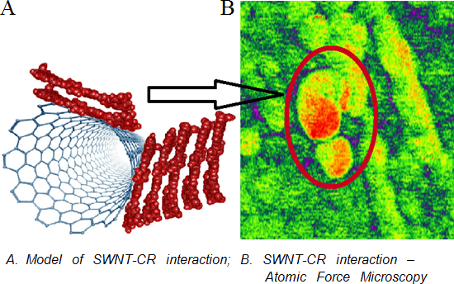
- . Nanotubes covered with CR constitute the high capacity system that provides the possibility of binding and targeted delivery of different drugs, which can intercalate into the supramolecular, ribbon-like CR structure. The study revealed the presence of strong interactions between CR and the surface of SWNTs


Straightforward and robust synthesis of monodisperse surface-functionalized gold nanoclusters
Beilstein J. Nanotechnol. 2016, 7, 1278–1283, doi:10.3762/bjnano.7.118
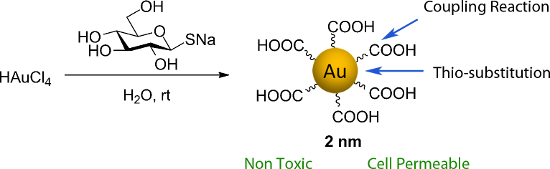
- carbohydrates [13], proteins [14], antibodies [15] and DNA [16] are commonly used as multivalent materials for biological studies. Gold nanoparticles have been used in vivo as radiotracers [15][17], for targeted delivery [18] and, when functionalized with carboxylic acids, inhibit β-amyloid fibril growth


Nanoinformatics for environmental health and biomedicine
Beilstein J. Nanotechnol. 2015, 6, 2449–2451, doi:10.3762/bjnano.6.253

- production. For example, nano-scaled systems have been designed and utilized for safe and effective targeted delivery of therapeutic agents, demonstrating the rapid advancements of nanotechnology in medical-treatment and diagnosis. At the same time, there is also mounting concern regarding the potential
Effects of surface functionalization on the adsorption of human serum albumin onto nanoparticles – a fluorescence correlation spectroscopy study
Beilstein J. Nanotechnol. 2014, 5, 2036–2047, doi:10.3762/bjnano.5.212
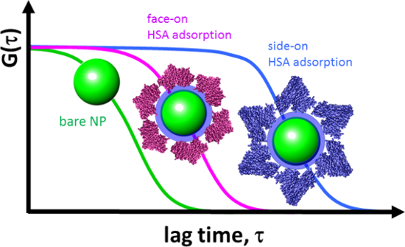
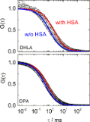
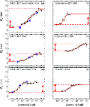
- the bare NP surface [2][18][19][20]. To control the biological effects of NPs (e.g., to accomplish targeted delivery to specific cells or tissues or to inhibit cellular uptake), it is extremely important to understand how the properties of the NP surface can control the structure and dynamics of the



Protein-coated pH-responsive gold nanoparticles: Microwave-assisted synthesis and surface charge-dependent anticancer activity
Beilstein J. Nanotechnol. 2014, 5, 1452–1462, doi:10.3762/bjnano.5.158
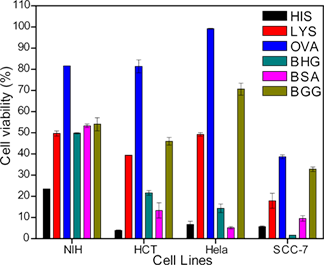
- delivery is a major concern, because their unspecificity hampers the growth of normal tissues and cells. The advent of nanotechnology offers a wide range of tools for the diagnosis and the treatment of this deadly disease, with new imaging techniques and the targeted delivery of therapeutic agents offering


PEGylated versus non-PEGylated magnetic nanoparticles as camptothecin delivery system
Beilstein J. Nanotechnol. 2014, 5, 1312–1319, doi:10.3762/bjnano.5.144
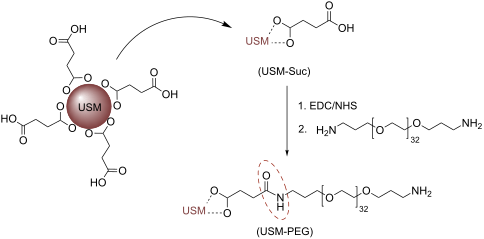
- different in vivo behaviour of PEGylated and non-PEGylated USM nanoparticles cannot be ruled out, as longer circulation times are expected for the PEGylated ones. Additionally, we envisage that the developed USM-PEG may form targeted-delivery systems by exploiting the free amine groups on their surface for


Nanodiamond-DGEA peptide conjugates for enhanced delivery of doxorubicin to prostate cancer
Beilstein J. Nanotechnol. 2014, 5, 937–945, doi:10.3762/bjnano.5.107
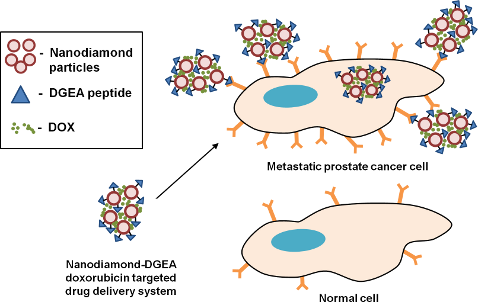
- efficacy of cancer treatments as stand-alone therapies and in combination with standard chemotherapeutic treatment regimens. The current standard of care for metastatic cancer, doxorubicin (DOX), is presented with challenges, namely toxicity due to a lack of specificity and targeted delivery. Nano-enabled
- toxicity by incorporating mechanisms for targeted delivery of chemotherapeutics. Nanomedicine has become a viable solution for the specificity and toxicity problems with current chemotherapy treatment regimens [6][7][8][9]. Nanoparticles have facilitated tumor targeting and drug delivery in a variety of


Optimizing the synthesis of CdS/ZnS core/shell semiconductor nanocrystals for bioimaging applications
Beilstein J. Nanotechnol. 2014, 5, 919–926, doi:10.3762/bjnano.5.105
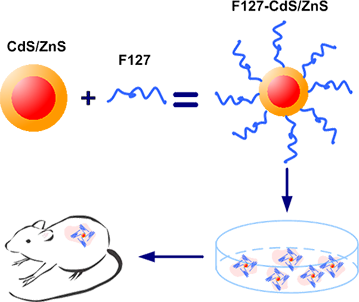
- for in vitro and in vivo studies. In addition, from our study of cell viability, the prepared ternary nanocrystals were shown to have a low cytotoxicity. Given their biocompatibility and the high efficiency in relation to targeted delivery, these nanoparticles have great potential to serve as a new


In vitro toxicity and bioimaging studies of gold nanorods formulations coated with biofunctional thiol-PEG molecules and Pluronic block copolymers
Beilstein J. Nanotechnol. 2014, 5, 546–553, doi:10.3762/bjnano.5.64
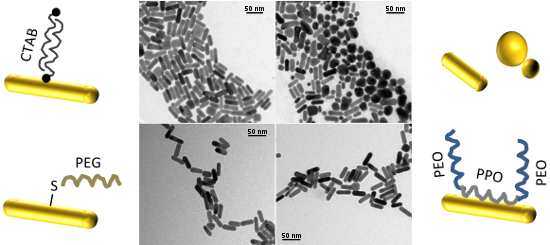
- the targeted delivery into biological cells. AuNRs with larger aspect ratios and smaller effective radii are excellent photo-absorbing nanoparticles, while those with a larger effective radius have a higher scattering contrast signal [2]. These remarkable absorption and scattering capabilities make
- or antigens to be linked to their surface for targeted delivery and imaging [16][17]. More importantly, one is not able to use CTAB-coated AuNRs as a carrier for drug delivery of water insoluble anti-cancer agents (e.g., doxorubicin, paclitaxel) to the cancerous area since their surface is
- gold nanoparticles formulation will be affected and this may impact their applications in sensing, imaging and targeted delivery. Thus, it is essential for the nanoparticle community to understand the effects of functionalizing PEG-SH or PEO–PPO–PEO molecules on the AuNRs surface and their


Magnetic-Fe/Fe3O4-nanoparticle-bound SN38 as carboxylesterase-cleavable prodrug for the delivery to tumors within monocytes/macrophages
Beilstein J. Nanotechnol. 2012, 3, 444–455, doi:10.3762/bjnano.3.51
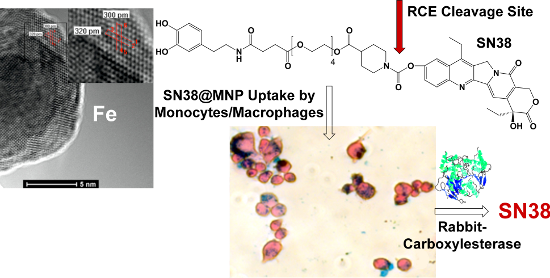
- State University, Anatomy & Physiology, Coles 228, Manhattan, KS 66506 Battelle Memorial Institute, 505 King Ave., Columbus, OH 43201 University of Kansas, KU Microscopy & Analytical Imaging Laboratory, 1043 Haworth, Lawrence, KS 66045 10.3762/bjnano.3.51 Abstract The targeted delivery of therapeutics
- to the surface of the MNPs via a carboxylesterase cleavable linker. This nanoplatform demonstrated high heating ability (SAR = 522 ± 40 W/g) in an AC-magnetic field. For the purpose of targeted delivery, this nanoplatform was loaded into tumor-homing double-stable RAW264.7 cells (mouse monocyte
- ) after targeted delivery by double-stable RAW264.7 monocyte/macrophage-like cells (Mo/Ma). A carboxylesterase-cleavable irinotecan-like SN38 prodrug was synthesized and attached to Fe/Fe3O4 magnetic nanoparticles. The prodrug concentration that was chemisorbed via dopamine-anchors to the Fe3O4 outer


Characterization of protein adsorption onto FePt nanoparticles using dual-focus fluorescence correlation spectroscopy
Beilstein J. Nanotechnol. 2011, 2, 374–383, doi:10.3762/bjnano.2.43
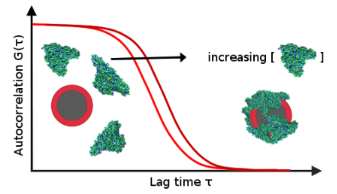
- issue for various fields including biotechnology (e.g., biosensors, bioanalytics) and biomedical devices (e.g., implants and catheters). To be able to control the biological effects of NPs, such as prevention of uptake or targeted delivery to specific cells or tissues, it is of utmost importance to