


Search results
Search for "thermal" in Full Text gives 1311 result(s) in Beilstein Journal of Nanotechnology. Showing first 200.
Advances of aptamers in esophageal cancer diagnosis, treatment and drug delivery
Beilstein J. Nanotechnol. 2025, 16, 1734–1750, doi:10.3762/bjnano.16.121
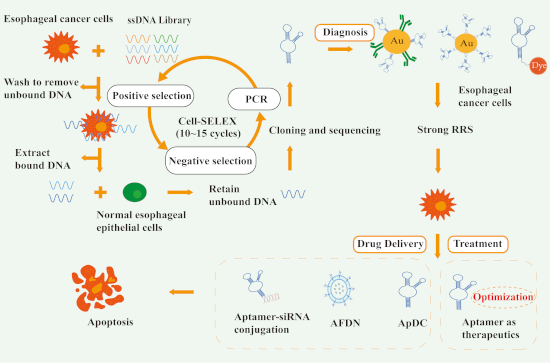
- , this synergistic strategy presents a promising approach to circumvent chemotherapy resistance in cancer treatment. In general, DNA aptamers have higher thermal stability, RNA aptamers are richer in secondary structure, and peptide aptamers are smaller in size and easier to enter cells [29]. Furthermore
- advantages of high thermal, pH, and enzyme stability of RNA nanocarriers [106]. Li et al. first confirmed abnormal expression of miR-375 and EGFR in ESCC tissues, and modified EGFR aptamers on the surface of RNA nanovectors to achieve high loading and active targeting of miR-375 and PTX. MiR-375


Multifunctional anionic nanoemulsion with linseed oil and lecithin: a preliminary approach for dry eye disease
Beilstein J. Nanotechnol. 2025, 16, 1711–1733, doi:10.3762/bjnano.16.120
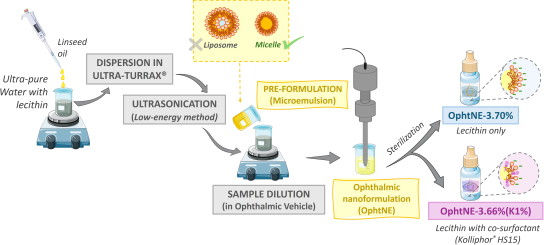
- bioactivity. No signs of oxidation or thermal degradation were observed at this temperature. TGA and DSC analyses confirm that degradation processes begin only above 340 °C, ensuring that the oil’s quality and functional properties are preserved during formulation. The optimal lecithin concentration was
- the titration of the LO sample (mL), VB is the volume of KOH solution required for blank solvent titration (mL), [KOH] is the concentration of ethanolic KOH solution (0.093 mol·L−1), MA is the mass of the LO sample used (g), and 56.1 g·mol−1 is the molecular weight of KOH. Thermal analysis
- Thermogravimetric (TG) and differential scanning calorimetry (DSC) analyses of LO (20.5 mg) were performed using a Simultaneous Thermal Analyzer (STA) 449 F3 Jupiter (NETZSCH, Germany). The samples were scanned from 25 to 700 °C at a heating rate of 10 K·min−1 under a nitrogen (N2) atmosphere with a flow rate of 50



Beyond the bilayer: multilayered hygroscopic actuation in pine cone scales
Beilstein J. Nanotechnol. 2025, 16, 1695–1710, doi:10.3762/bjnano.16.119
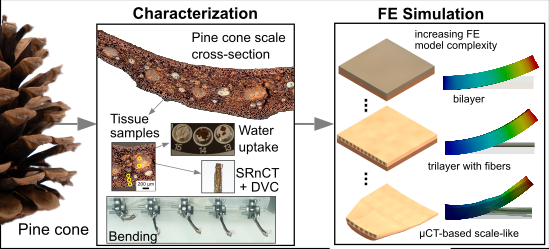
- FEA in Ansys (ver. 2024 R2, Ansys, Inc., Canonsburg, PA, USA). Expansion was modeled using thermal stress analysis (a combination of the steady-state thermal and static structural solvers). The thermal expansion coefficients of the three tissues involved (sclereid layer, sclerenchyma fibers, and brown
- , together with previously published bilayer models, show that the analytical analysis of such a complex drying movement is a sensitive system of selected expansion coefficients, mechanical properties, and geometric models. It should be noted that the modeling of sorption/desorption of water via thermal


Ambient pressure XPS at MAX IV
Beilstein J. Nanotechnol. 2025, 16, 1677–1694, doi:10.3762/bjnano.16.118
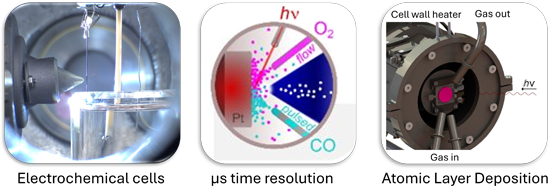
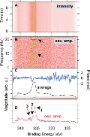
- ]. Four InAs samples with varying native (samples A, B, and C) or thermal oxide (sample G) layers were exposed to TDMAHf at ~200 °C under ~10−3 mbar pressure. Results showed that TDMAHf interacts with the surface oxide to produce HfO2 already in the first half-cycle, a “self-cleaning” effect that removes
- 11 shows high-resolution photoelectron spectra of As 3d, In 4d, and Hf 4f core levels before and after the first TDMAHf half-cycle on the four samples. The oxide peaks of As and In disappear for all the thermal oxide (samples A–C), and HfOx peaks emerge consistently across samples with differing





Nanotechnology-based approaches for the removal of microplastics from wastewater: a comprehensive review
Beilstein J. Nanotechnol. 2025, 16, 1607–1632, doi:10.3762/bjnano.16.114
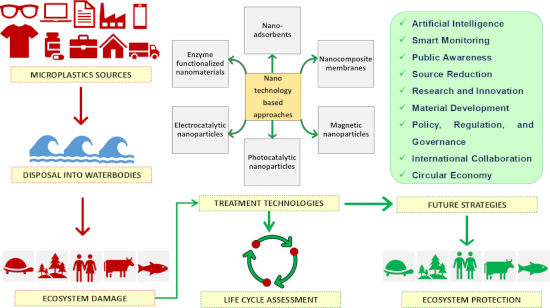
- consistent and efficient adsorption across reuse cycles. Layered double hydroxides (LDHs) are a distinctive group of 2D inorganic materials known for their remarkable physical and chemical characteristics. Their exceptional ion exchange ability, large surface area, high thermal stability, and customizable
- associated modules. The efficiency of a membrane system is primarily governed by the material used in its construction. Enhancing membranes with functional nanomaterials provides a promising path to boost permeability, reduce fouling, and increase both mechanical and thermal durability, while also enabling
- -dimensional nanomaterials, have received interest across scientific fields owing to their exceptional chemical and thermal stability. Their chemical formula is Mn+1XnTx (n = 1, 2, or 3), where M denotes an early transition metal such as titanium, molybdenum, or vanadium, while X denotes carbon and nitrogen


Bioinspired polypropylene-based functionally graded materials and metamaterials modeling the mistletoe–host interface
Beilstein J. Nanotechnol. 2025, 16, 1592–1606, doi:10.3762/bjnano.16.113
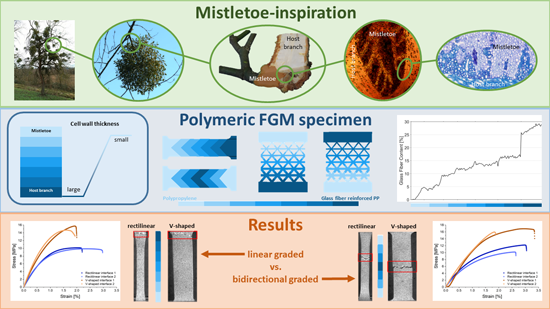
- , allows for thermal and mechanical stresses to be controlled locally, is known as functionally graded materials (FGMs). By means of a gradual composition and microstructure, FGMs can reduce interfacial stress, allowing for precise tailoring of mechanical properties such as stiffness, strength, and
- pressure during hot pressing also play a crucial role in the development of stable materials. The thermal conductivity is reduced by increasing the glass fiber content; thus, the molecular movement of the polymer is reduced, which affects the tensile modulus and the maximal strength of the material [41


Modeling magnetic properties of cobalt nanofilms used as a component of spin hybrid superconductor–ferromagnetic structures
Beilstein J. Nanotechnol. 2025, 16, 1557–1566, doi:10.3762/bjnano.16.110
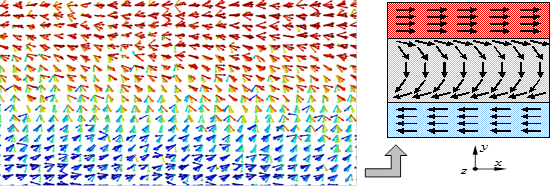
- quite a long time [24][25] that the fluctuations of thermal and magnetic energy of an atomistic system can be described in the framework of the Langevin theory. To solve stochastic differential equations, which are the basis of this theory, random forces χ(t) and η(t), characterized by the following


Transient electronics for sustainability: Emerging technologies and future directions
Beilstein J. Nanotechnol. 2025, 16, 1545–1556, doi:10.3762/bjnano.16.109

- layers are also increasingly expected to provide resistance against mechanical shocks, electromagnetic shielding, and thermal dissipation. The development of new material systems capable of fulfilling these multifunctional requirements is essential for expanding the practical utility of bioresorbable
- degradation. While polymeric and inorganic coatings have demonstrated partial success, a unified encapsulation platform capable of addressing water barrier performance, mechanical robustness, and multifunctional protection, such as electromagnetic shielding or thermal dissipation, remains an unmet need. To


Dendrimer-modified carbon nanotubes for the removal and recovery of heavy metal ions from water
Beilstein J. Nanotechnol. 2025, 16, 1522–1532, doi:10.3762/bjnano.16.107

- application in numerous fields [18][19][20][21][22][23]. CNTs are particularly attractive as support materials due to their high specific surface area, mechanical strength, and excellent electrical and thermal conductivity [24][25][26][27]. CNTs themselves have been utilized as adsorbents for removing heavy
- and 150 °C for the unfunctionalized CNTs, which is attributed to the release of physically adsorbed water. Moreover, bare CNTs exhibited thermal stability up to 800 °C with a residual weight of 97.80% suggesting the absence of organic functional groups. In contrast, CNTs functionalized with MA and EDA
- (CNTs-G0) exhibited a distinct thermal behavior displaying an initial weight loss around 150 °C, which is likely due to the loss of water, followed by significant thermal degradation around 500 °C, corresponding to the decomposition of carboxyl groups. The CNTs-G0 sample retained 81.58% of its weight at


Laser processing in liquids: insights into nanocolloid generation and thin film integration for energy, photonic, and sensing applications
Beilstein J. Nanotechnol. 2025, 16, 1428–1498, doi:10.3762/bjnano.16.104
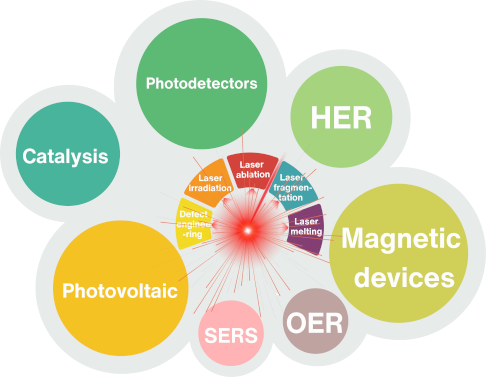
- pulse excitation (532 nm). The morphological changes induced by thermal and photochemical effects were found to influence the optical properties of these particles. Another commonly reported semiconductor material by LFL is zinc oxide (ZnO) [33][34]. The optical properties, particularly the UV emission
- proportional to the total energy input by the laser [54]. Using picosecond laser irradiation at a low fluence is an energy-efficient method for synthesizing SMSPs by PLML compared to nanosecond laser irradiation [55]. If the thermal diffusion length in particles during ultrafast laser heating is smaller than
- formation allowing better thermal management during nanoparticle synthesis. In PLML, the time between consecutive laser pulses must allow for particle solidification and cooling on a microsecond timescale to form spherical and crystalline submicrometer particles [43][53][62]. Laser fluence is a key factor






Synthesis and antibacterial properties of nanosilver-modified cellulose triacetate membranes for seawater desalination
Beilstein J. Nanotechnol. 2025, 16, 1380–1391, doi:10.3762/bjnano.16.100
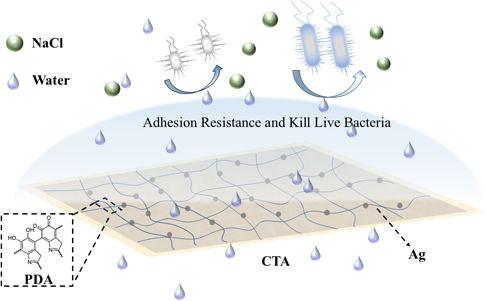
- can be broadly categorized into two groups, that is, thermal-ased technologies (e.g., multistage flash distillation (MSF) and multieffect distillation (MED)) and membrane-based technologies (e.g., forward osmosis (FO), reverse osmosis (RO), electrodialysis (ED), and nanofiltration (NF)) [10]. Among
- PDA peaks in the NMR spectra, resulting in the absence of observable characteristic peaks of PDA. Thermogravimetric analysis (TGA) was used to evaluate the membrane’s thermal stability, with the results presented in Figure 2b–d. The minimal differences observed among the three TGA curves also indicate
- the low content of the modifying agents (PDA and Ag) relative to the CTA matrix. This low concentration results in negligible changes in the overall thermal behavior of the composite materials, as detected by TGA. This observation also suggests that the interaction between Ag and CTA or between PDA


Ferroptosis induction by engineered liposomes for enhanced tumor therapy
Beilstein J. Nanotechnol. 2025, 16, 1325–1349, doi:10.3762/bjnano.16.97


Functional bio-packaging enhanced with nanocellulose from rice straw and cinnamon essential oil Pickering emulsion for fruit preservation
Beilstein J. Nanotechnol. 2025, 16, 1234–1245, doi:10.3762/bjnano.16.91
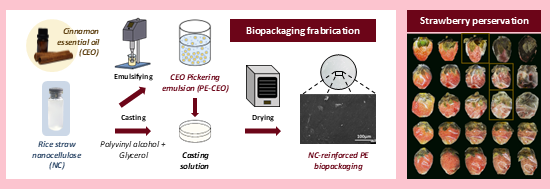
- matrix properties, including tensile strength, elasticity, and thermal stability, due to its high surface area, hydroxy groups forming hydrogen bonds, and excellent dispersion within the matrix [20][21]. This improvement is attributed to interaction between hydroxy groups in NC and PVA, effectively
- release [42]. At temperatures above 380 °C, carbonaceous residues decomposed. The addition of NC shifted the degradation onset temperature to a higher range, indicating improved thermal stability. This could be due to the rigid nature of NC particles, which enhance the structural integrity of the
- composite, delaying its decomposition [24]. CEO did not significantly alter the thermal degradation pattern, confirming that its incorporation did not compromise the thermal stability of the samples. These findings indicate that PVA-NC films are thermally suitable for applications like food packaging, where



Mechanical stability of individual bacterial cells under different osmotic pressure conditions: a nanoindentation study of Pseudomonas aeruginosa
Beilstein J. Nanotechnol. 2025, 16, 1171–1183, doi:10.3762/bjnano.16.86
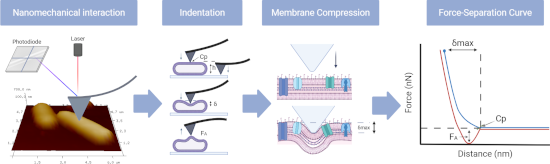
- minimum damage to the mechanical integrity of the cell membrane. Before each experiment in FV mode, the cantilever was calibrated using the thermal-noise method which is integrated in the multimode AFM software and is briefly described next. First, the optical-lever sensitivity (OLS) of the cantilever was
- extracted. A force–distance curve was taken on a clean (previously cleaved) mica surface and a linear fit to the approach trace within the region following contact was performed to obtain the OLS from its slope. Afterwards, the cantilever was withdrawn above the surface and a thermal tune was performed to


Crystalline and amorphous structure selectivity of ignoble high-entropy alloy nanoparticles during laser ablation in organic liquids is set by pulse duration
Beilstein J. Nanotechnol. 2025, 16, 1141–1159, doi:10.3762/bjnano.16.84
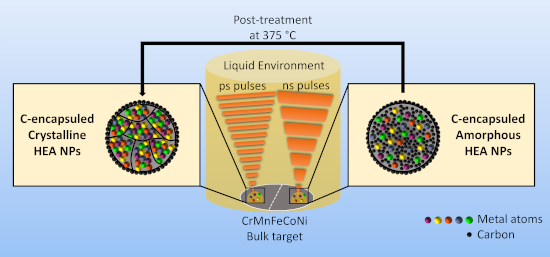
- occur coincidentally but are a reproducible observation (shown in Supporting Information File 1, Section S11). Thermal stability of the amorphous HEA nanoparticles Finally, we aimed to examine the temperature stability of the amorphous HEA NPs. Thereto, we conducted in situ heating experiments in TEM as
- of the FWHM in Figure 4C starts, and the required thermal energy kBT is achieved to overcome the activation energy. Note that for the determination of the plot in Figure 4C, more temperature steps were considered than those shown in Figure 4B. However, for clarity reasons, the full data set of 94
- ), related to the conditions of stress and thermal confinement of the deposited laser energy. Conversely, in ns-LAL the energy of the laser pulse is transferred deeper into the bulk target, and peak temperature and pressure are significantly lower (about 5000–8000 K and 4.8 GPa). It is important to note that




Influence of ion beam current on the structural, optical, and mechanical properties of TiO2 coatings: ion beam-assisted vs conventional electron beam evaporation
Beilstein J. Nanotechnol. 2025, 16, 1097–1112, doi:10.3762/bjnano.16.81
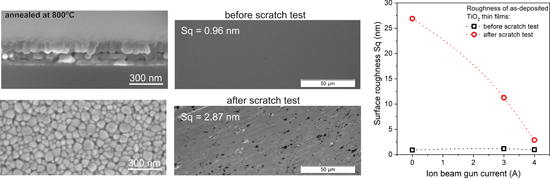
- are very high. The electron beam evaporation process uses the high kinetic energy of an electron beam to generate the thermal energy required to melt and then evaporate the source material to deposit it on the substrate [4]. Evaporation is an attractive deposition technique because of its many
- ][10][11][12]. Electron beam evaporation is very effective for preparing transparent titanium dioxide thin films, such as optical coatings for a large variety of applications. Due to its desirable structural, optical, and electrical properties, high thermal and chemical stability, relatively low price
- such as substrate temperature, deposition rate, substrate biasing, and ion beam gun settings. Moreover, post-process annealing can lead to a reduction in thermal stress due to the difference in thermal expansion coefficients between the film and the substrate and can also affect internal stress by




Piezoelectricity of hexagonal boron nitrides improves bone tissue generation as tested on osteoblasts
Beilstein J. Nanotechnol. 2025, 16, 1068–1081, doi:10.3762/bjnano.16.78
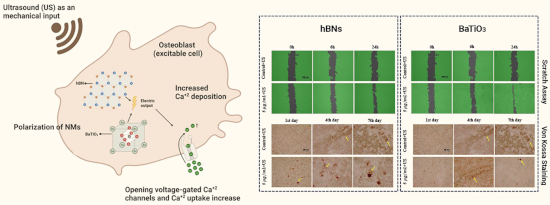
- -dimensional (2D) material, structurally similar to graphene, consisting of alternating boron and nitrogen atoms arranged in a hexagonal lattice. It is well known for its excellent thermal stability, electrical insulation, chemical inertness, and mechanical strength. Importantly, hBN exhibits piezoelectric
- hBN. The materials were characterized using spectroscopic, imaging, and thermal techniques, followed by assessment of their piezoelectric properties via piezoresponse force microscopy (PRFM). In vitro studies on human osteoblasts (HOb) under ultrasound (US) exposure examined proliferation, cellular


Soft materials nanoarchitectonics: liquid crystals, polymers, gels, biomaterials, and others
Beilstein J. Nanotechnol. 2025, 16, 1025–1067, doi:10.3762/bjnano.16.77
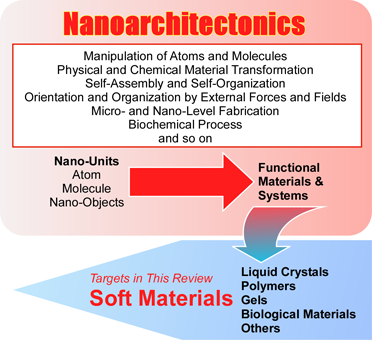
- plastic crystals exhibits exceptional thermal stability, electrochemical stability, and ionic conductivity, making it a promising option. Yoshizawa-Fujita and co-authors investigated the impact of anion species and Mg salt concentration on the characteristics of pyrrolidinium-based organic ionic plastic
- magnesium salt concentrations, and their thermal and electrochemical properties were subsequently evaluated. The utilization of the bis(fluorosulfonyl)amide anion is pivotal to the reversible redox reaction of Mg. The employment of bis(fluorosulfonyl)amide as the anion in both the organic ionic plastic
- , Li7La3Zr2O12 (LLZO), into the organic ionic plastic crystal N,N-diethylpyrrolidinium bis(fluorosulfonyl)amide [249]. The fabricated organic–inorganic hybrid solid electrolyte underwent a series of evaluations, including thermal, mechanical, and electrochemical analyses, with the objective of elucidating the






Multifunctional properties of bio-poly(butylene succinate) reinforced with multiwalled carbon nanotubes
Beilstein J. Nanotechnol. 2025, 16, 1014–1024, doi:10.3762/bjnano.16.76
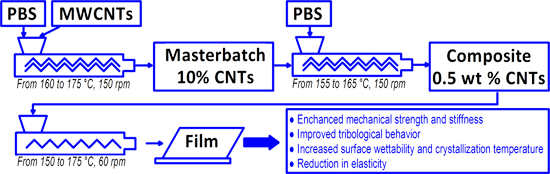
- strength, thermal stability, and biodegradability. However, to broaden its range of applications, certain properties require enhancement, including mechanical performance, thermal and electrical conductivity, biodegradation rate, and barrier properties [1][2][3][4][5]. The limited biodegradability of PBS
- morphology and properties of the polymer matrix by altering its structure, crystallinity, thermal stability, and mechanical behavior [9][10][11]. CNTs can be classified into two basic types, namely, single-walled carbon nanotubes (SWCNTs) and multiwalled carbon nanotubes (MWCNTs). SWCNTs exhibit slightly
- many researchers [9][10][11][12][13][14][15][16]. Regarding PBS-based nanocomposites, most studies focus on the influence of CNTs (including modified CNTs) on their thermal behavior [17][18][19], crystallization [20][21][22], structure [14][17][21][22][23], and biodegradability [12]. PBS/CNT



Time-resolved probing of laser-induced nanostructuring processes in liquids
Beilstein J. Nanotechnol. 2025, 16, 968–1002, doi:10.3762/bjnano.16.74
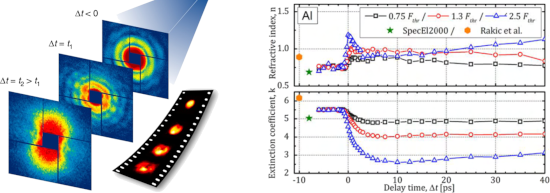
- of ablation, fragmentation or colloidal fusion may look macroscopically different in each application, the underlying fundamental mechanisms are always the same cascade of laser interaction with matter, non-thermal or thermal energy deposition, phase transitions, and the subsequent structure
- demanding studies that eventually show convergence with experimental results. Generally, the classification of the mechanisms in LSPC identifies three main pathways that are pictured schematically in Figure 1: (i) thermal processes, where the condensed matter is heated to high lattice temperatures, leading
- to melting, reshaping (Figure 1B,C), evaporation, and phase explosion near the critical point (Figure 1H) [39][46][47][48]; (ii) stress-induced decompositions, where competition between heating and expansion leads to spallation or cavitation [36][49][50] (Figure 1I); (iii) non-thermal processes


Tendency in tip polarity changes in non-contact atomic force microscopy imaging on a fluorite surface
Beilstein J. Nanotechnol. 2025, 16, 944–950, doi:10.3762/bjnano.16.72
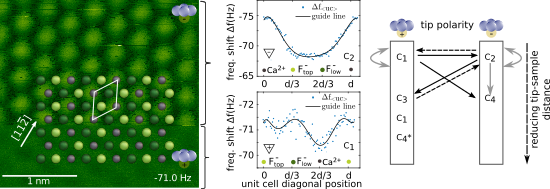
- structure elucidation and identification of surface sites. However, this approach is presently not feasible for measurements performed at room temperature as the required control over the tip termination is challenged by thermal motion. For room-temperature measurements, it is common practice to bring the


Structural and magnetic properties of microwave-synthesized reduced graphene oxide/VO2/Fe2O3 nanocomposite
Beilstein J. Nanotechnol. 2025, 16, 921–932, doi:10.3762/bjnano.16.70
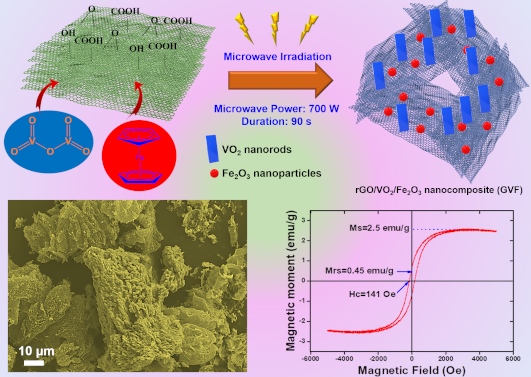
- in a honeycomb fashion enabled this special class of materials to exhibit desirable characteristics, such as enhanced electrical conductivity, higher mechanical strength, elevated surface area, and high thermal and chemical stability. Owing to such improved characteristics, graphene materials
- ternary NCs of graphene materials, several conventional approaches, such as sol–gel, hydrothermal/solvothermal, calcination/thermal annealing, chemical vapor deposition, liquid-phase exfoliation, and freeze-drying have been reported. However, the MW-assisted synthetic approaches are found to be superior



Focused ion beam-induced platinum deposition with a low-temperature cesium ion source
Beilstein J. Nanotechnol. 2025, 16, 910–920, doi:10.3762/bjnano.16.69
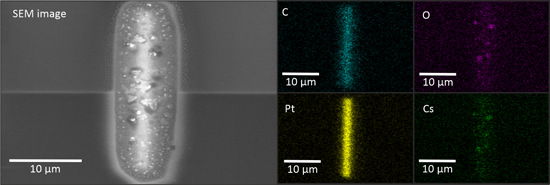
- major role is played by the primary ion beam, together with a thermal heat spike, excited surface atoms (ESA), or secondary electrons (SE). According to Hlawacek et al. [8], the number of ESA is proportional to the nuclear stopping power, so for heavier ions this mechanism dominates the deposition. The


Characterization of ion track-etched conical nanopores in thermal and PECVD SiO2 using small angle X-ray scattering
Beilstein J. Nanotechnol. 2025, 16, 899–909, doi:10.3762/bjnano.16.68
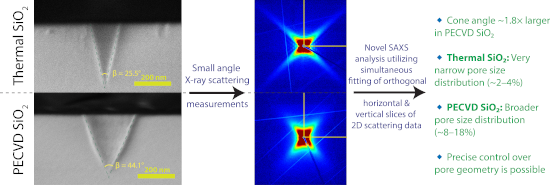
- nanopores in thermal and plasma-enhanced chemical vapor-deposited (PECVD) SiO2 using synchrotron-based small-angle X-ray scattering (SAXS). The nanopores were fabricated by irradiating the samples with 89 MeV, 185 MeV, and 1.6 GeV Au ions, followed by hydrofluoric acid etching. We present a new approach for
- differences between the nanopores in thermal and PECVD SiO2. The track-to-bulk etching rate ratio is significantly different for the two materials, producing nanopores with cone angles that differ by almost a factor of two. Furthermore, thermal SiO2 exhibits an exceptionally narrow size distribution of only 2
- -etched nanopores in two types of silicon dioxide, namely, one produced by wet thermal oxidation of Si (thermal SiO2) and another deposited by plasma-enhanced chemical vapor deposition (PECVD). Thermally grown SiO2 is of high quality and stoichiometric, however, requires high temperatures for growth, and


Heat-induced transformation of nickel-coated polycrystalline diamond film studied in situ by XPS and NEXAFS
Beilstein J. Nanotechnol. 2025, 16, 887–898, doi:10.3762/bjnano.16.67
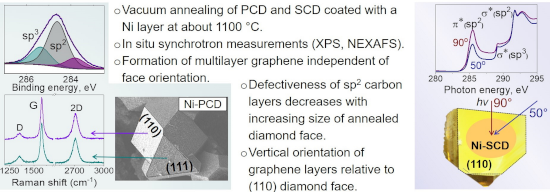
- thin nickel film deposited by thermal evaporation. The graphitization of diamond with and without a nickel coating as a result of high-vacuum annealing at a temperature of about 1100 °C was studied in situ using synchrotron-based X-ray photoelectron spectroscopy (XPS) and near-edge X-ray absorption
- diamond surfaces is initiated at 750 °C. A temperature of about 1500 °C is needed for the formation of extended graphene-like layers, and temperatures higher than 2000 °C are required for the complete conversion of the diamond (111) surface to graphitic layers [10][11]. Thermal stability of diamond
- crystalline quality in the PCD film at the micron scale (Supporting Information File 1, Figure S2). Thermal evaporation of nickel and its deposition on the PCD film surface resulted in the formation of a uniform metallic layer with a thickness of about 40 nm (Supporting Information File 1, Figure S1d). The





