


Search results
Search for "thermal conductivity" in Full Text gives 132 result(s) in Beilstein Journal of Nanotechnology.
High-temperature resistive gas sensors based on ZnO/SiC nanocomposites
Beilstein J. Nanotechnol. 2019, 10, 1537–1547, doi:10.3762/bjnano.10.151
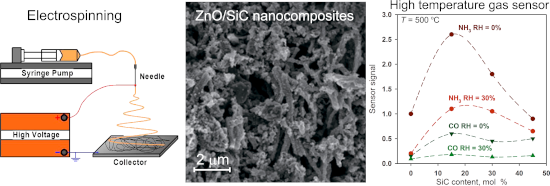
- composite nanomaterials using highly dispersed silicon carbide (SiC). The unique physical and chemical properties of silicon carbide – wide band gap (Eg = 2.4–3.2 eV), high Debye temperature 1400 K, high thermal conductivity of 4.9 W/cm·K, low reactivity to oxygen and water vapor – ensure the stability of



Direct observation of oxygen-vacancy formation and structural changes in Bi2WO6 nanoflakes induced by electron irradiation
Beilstein J. Nanotechnol. 2019, 10, 1434–1442, doi:10.3762/bjnano.10.141
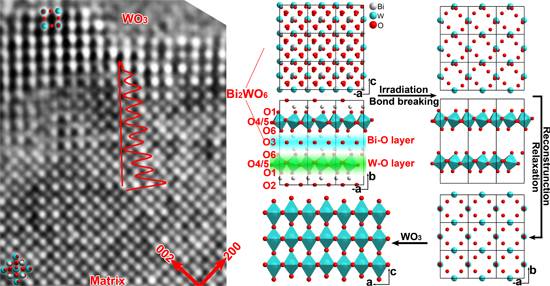
- temperature increase through electron-beam irradiation was calculated according to the following formula [31]: where I, k, e, b, r0, and ΔE are the beam current, thermal conductivity, electron charge, sample radius, beam radius, and the total energy loss per electron in a sample of thickness d, respectively


Kelvin probe force microscopy of the nanoscale electrical surface potential barrier of metal/semiconductor interfaces in ambient atmosphere
Beilstein J. Nanotechnol. 2019, 10, 1401–1411, doi:10.3762/bjnano.10.138
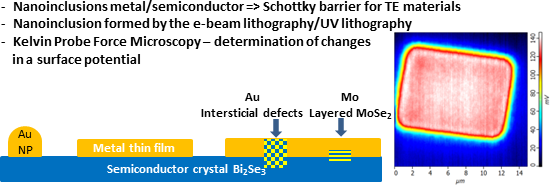
- efficiency of the material could be expressed in terms of figure-of-merit, ZT, defined as dimensionless quantity ZT = S2·σ·T/κ , where S is the thermopower (Seebeck coefficient), σ is the electrical conductivity, T is the absolute temperature and κ is the thermal conductivity. There were many concepts for
- (NIs/NPs) into the bulk semiconducting matrices has been proposed [4][5][6] and supported in theoretical works [7][8][9]. Such NIs or NPs are able to enhance ZT via a reduction of the thermal conductivity by phonon scattering [10][11][12][13][14], by modulated carrier doping or by the carrier energy
- material [19][20][21]; ii) by mapping of the different surface contact potential values by Kelvin probe force microscopy (KPFM) in the semicontact mode [19][22][23][24][25], or iii) by measuring the differences in thermal conductivity by scanning thermal microscopy (SThM) [19][20][26]. Shape, size


Enhancement in thermoelectric properties due to Ag nanoparticles incorporated in Bi2Te3 matrix
Beilstein J. Nanotechnol. 2019, 10, 634–643, doi:10.3762/bjnano.10.63
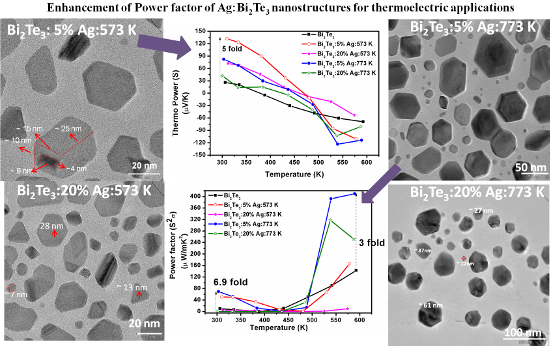
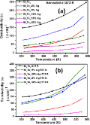
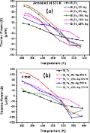
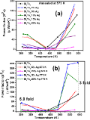
- = S2σT/k) and to enhance figure of merit (ZT), one needs to increase the power factor (S2σ, where S is the Seebeck coefficient or thermopower, σ is the electrical conductivity) or to decrease thermal conductivity (k). In bulk, all three parameters (S, σ, k) are interdependent. In bulk Bi2Te3, ZT is close
- applications but these materials are not very efficient because of their low ZT [8][9]. To increase ZT, nanostructures play an important role in the simultaneous increase in power factor and reduction in phonon thermal conductivity (kph) [10]. Recently, Faleev et al. [11] and Zebardaji et al. [12] performed
- is ca. 6.3-times for 10% Ag at 300 K and 1.3-times for 2% Ag at 600 K. The nanoparticles in the semiconductor matrix also lead to a reduction of thermal conductivity through phonon scattering at the interfaces, which in turn increases the figure of merit. The present work shows that during the



Mo-doped boron nitride monolayer as a promising single-atom electrocatalyst for CO2 conversion
Beilstein J. Nanotechnol. 2019, 10, 540–548, doi:10.3762/bjnano.10.55
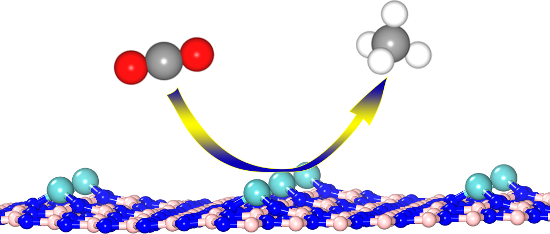
- efficiency. As an analogue of graphene, boron nitride (BN) nanomaterials have sparked worldwide interest in exploring their applications in many fields, both experimentally and theoretically, due to their excellent properties, such as high chemical stability, thermal conductivity, oxidation resistance and


Reduced graphene oxide supported C3N4 nanoflakes and quantum dots as metal-free catalysts for visible light assisted CO2 reduction
Beilstein J. Nanotechnol. 2019, 10, 448–458, doi:10.3762/bjnano.10.44
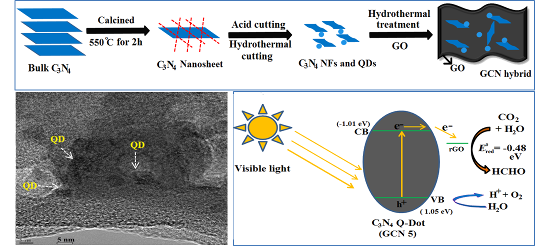
- absorbance spectra were measured using a UV–visible spectrophotometer (Thermo Fisher Scientific). Gas chromatography coupled with mass spectrometry (GC–MS) was carried out on an Agilent 7890A instrument with both a thermal conductivity detector and a flame ionization detector and using helium as a carrier





Graphene–graphite hybrid epoxy composites with controllable workability for thermal management
Beilstein J. Nanotechnol. 2019, 10, 95–104, doi:10.3762/bjnano.10.9
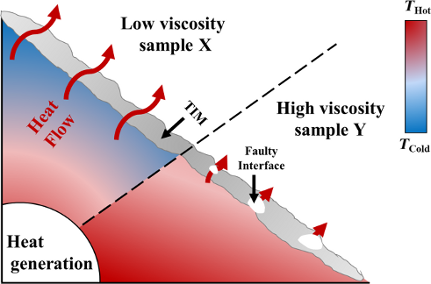
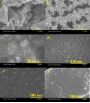
- , these additives enhance the thermal conductivity of the composite, but on the other hand, they increase the viscosity of the composite and hence impair its workability. This in turn could negatively affect the device–matrix interface. To address this problem, we suggest a tunable composite material
- comprising a combination of two different carbon-based fillers, graphene nanoplatelets (GNPs) and graphite. By adjusting the GNP:graphite concentration ratio and the total concentration of the fillers, we were able to fine tune the thermal conductivity and the workability of the hybrid polymer composite. To
- facilitate the optimal design of materials for thermal management, we constructed a ‘concentration–thermal conductivity–viscosity phase diagram’. This hybrid approach thus offers solutions for thermal management applications, providing both finely tuned composite thermal properties and workability. We



Femtosecond laser-assisted fabrication of chalcopyrite micro-concentrator photovoltaics
Beilstein J. Nanotechnol. 2018, 9, 3025–3038, doi:10.3762/bjnano.9.281
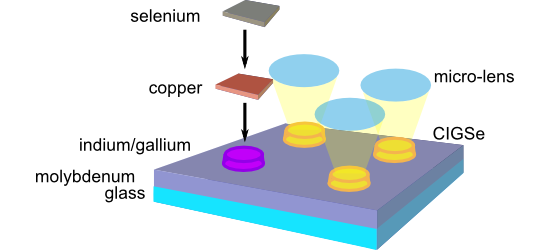
- electrical and high thermal conductivity, the photoresist SU8 was used for this purpose. In order to apply the photoresist, a precursor solution was distributed evenly on the sample via spin coating (Figure 12b). Subsequently, this solution was photochemically converted into SU8 and cured by means of thermal


Time-resolved universal temperature measurements using NaYF4:Er3+,Yb3+ upconverting nanoparticles in an electrospray jet
Beilstein J. Nanotechnol. 2018, 9, 2916–2924, doi:10.3762/bjnano.9.270
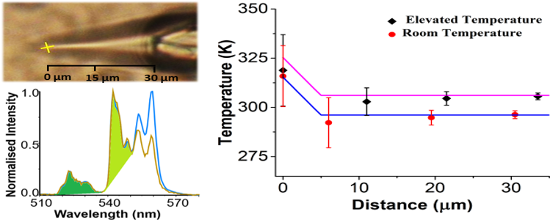
- conduction. Equation 1 can be simplified to where the rate of energy absorption, A, is and the rate of heat release, B, depends upon the size of the heated object [42][43]: Here, T* is equal to the temperature change (T − T0), kw is the thermal conductivity of water (0.6 W·m−1·K−1), CP,w is the heat


Computational exploration of two-dimensional silicon diarsenide and germanium arsenide for photovoltaic applications
Beilstein J. Nanotechnol. 2018, 9, 1247–1253, doi:10.3762/bjnano.9.116
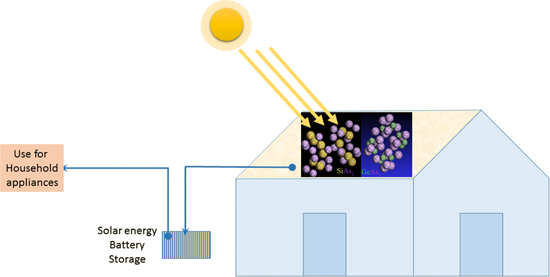
- calculations and are in agreement with experimental observations. A recently reported computational study on 2D GeAs2 was performed to investigate its thermal conductivity and its suitability for thermoelectric applications [10]. In order to further study GeAs2 and to compare it with a similar material from


Review on nanoparticles and nanostructured materials: history, sources, toxicity and regulations
Beilstein J. Nanotechnol. 2018, 9, 1050–1074, doi:10.3762/bjnano.9.98

- , wettability, electrical and thermal conductivity, catalytic activity, light absorption and scattering resulting in enhanced performance over their bulk counterparts. A nanometer (nm) is an International System of Units (Système international d'unités, SI) unit that represents 10−9 meter in length. In


A review of carbon-based and non-carbon-based catalyst supports for the selective catalytic reduction of nitric oxide
Beilstein J. Nanotechnol. 2018, 9, 740–761, doi:10.3762/bjnano.9.68
Ultralight super-hydrophobic carbon aerogels based on cellulose nanofibers/poly(vinyl alcohol)/graphene oxide (CNFs/PVA/GO) for highly effective oil–water separation
Beilstein J. Nanotechnol. 2018, 9, 508–519, doi:10.3762/bjnano.9.49
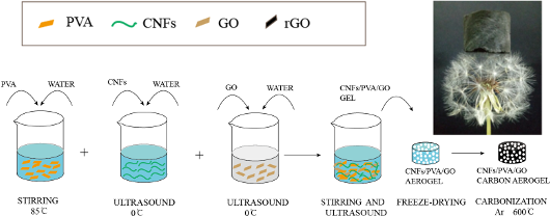
- environment, CNFs with a high aspect ratio and high surface area have potential for forming a 3D network structure. As a result, research on cellulose aerogels has attracted more and more attention because of its outstanding properties such as high porosity, low thermal conductivity and low density [9][10


Facile synthesis of ZnFe2O4 photocatalysts for decolourization of organic dyes under solar irradiation
Beilstein J. Nanotechnol. 2018, 9, 436–446, doi:10.3762/bjnano.9.42
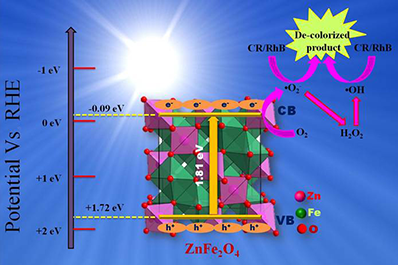
- magnetic in nature [10][11][12][13]. Among different metal ferrite materials, zinc ferrite (ZnFe2O4) plays a significant role because of its low band gap (1.88 eV), high thermal conductivity, good chemical stability, higher specific strength, magneto-resistive and magneto optical properties and low


Engineering of oriented carbon nanotubes in composite materials
Beilstein J. Nanotechnol. 2018, 9, 415–435, doi:10.3762/bjnano.9.41
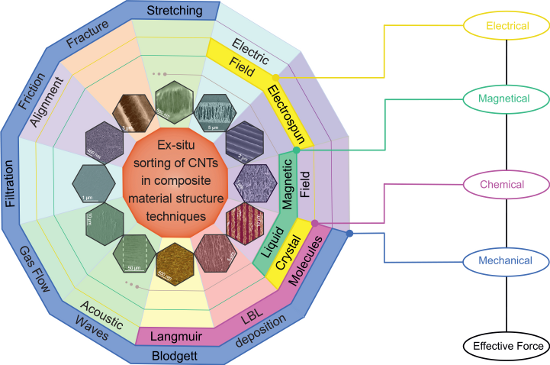
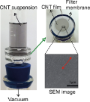
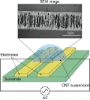
- fabricated with a smaller average diameter have significantly better mechanical properties. Gulotty et al. have reported that CNTs with a longer and larger diameter more efficiently improve the thermal conductivity of polymer composites [10]. Furthermore, it has been shown that for biological applications








Review: Electrostatically actuated nanobeam-based nanoelectromechanical switches – materials solutions and operational conditions
Beilstein J. Nanotechnol. 2018, 9, 271–300, doi:10.3762/bjnano.9.29
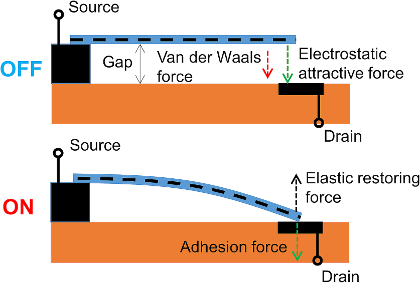
- Si. SiC is a wide bandgap (2.4–3.3 eV) semiconductor with a bulk Young’s modulus of 400–500 GPa [136] and high thermal conductivity on the order of 330 W∙m−1∙K−1 for bulk 3C–SiC [137], a larger than 1 MV cm−1 breakdown electric field as well as a high melting temperature. Regarding its elastic
- current flow through the contact causes immediate strengthening of the nanocontact, which gradually develops until the current density of 10−3–10−2 nA/nm2 (Figure 9b) is reached. Self-heating behaviour in the switching element/electrode contact is determined by a combination of its electrical and thermal
- conductivity [10][96][99]. If there is a low current density in the contact (in the range of 1 pA/nm2) and a good thermal contact, the temperature changes modestly (ΔT < 30 K) and almost no Joule heating occurs [10]. However, even at current densities as low as 3 pA/nm2, energy dissipation in the contact may


BN/Ag hybrid nanomaterials with petal-like surfaces as catalysts and antibacterial agents
Beilstein J. Nanotechnol. 2018, 9, 250–261, doi:10.3762/bjnano.9.27
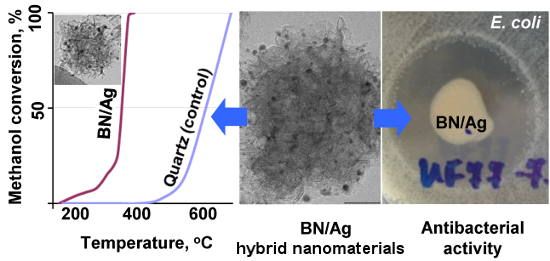
- effects of different nanocomponents. In recent years, BN nanostructures have been in the focus due to advantageous combination of properties, such as high tensile strength and elastic modulus, superb chemical stability, biocompatibility, high thermal conductivity and perfect electrical insulation. This
- explains their rich functionality in reinforcement of ultralight metals and ceramics, improvement of thermal conductivity and mechanical strength of diverse polymers, production of transparent superhydrophobic films, and quantum electronic and photonic devices [1][2][3][4]. BN nanomaterials have also been





Combined scanning probe electronic and thermal characterization of an indium arsenide nanowire
Beilstein J. Nanotechnol. 2018, 9, 129–136, doi:10.3762/bjnano.9.15
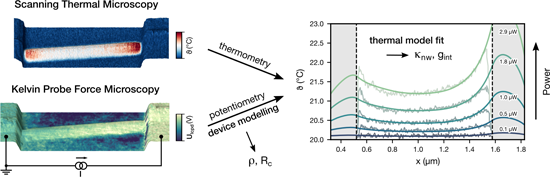
- transfer lengths below 1 μm. With the KFM measurement and data analysis, we were able to extract all key parameters describing the electronic behaviour of the nanowire device. This model allows us to also predict the thermal behaviour and to compare with SThM measurements, given the thermal conductivity of
- temperature beneath them inaccessible to SThM.) The thermal conductivity of the InAs nanowire, κ = (3.0 ± 1.4) W·m−1·K−1, is in good agreement with measurements of similar InAs nanowires in microelectromechanical heater/sensor setups [31][32], or with measurements of a 40 nm thick InAs nanofilm [33]. Note
- that stacking faults perpendicular to the growth direction limit the thermal conductivity of our nanowire [31][34], compared to higher-quality crystalline InAs nanowires [35]. We calculate the interfacial thermal conductivity to the substrate and electrodes along the perimeter of the nanowire from the


Design of photonic microcavities in hexagonal boron nitride
Beilstein J. Nanotechnol. 2018, 9, 102–108, doi:10.3762/bjnano.9.12
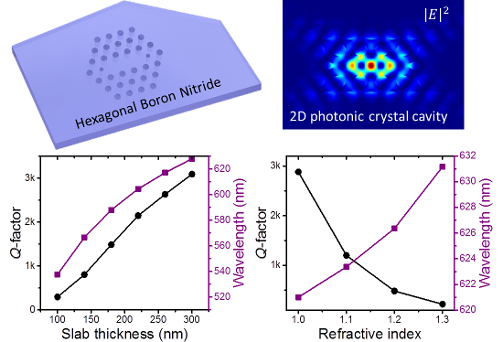
- -resonators such as a high chemical stability and an excellent thermal conductivity [22][23]. In this work, we propose to use hBN for the fabrication of photonic crystal cavities (PCCs). We design two dimensional (2D) PCCs and show that they have high quality-factor (Q-factor) resonances in the visible


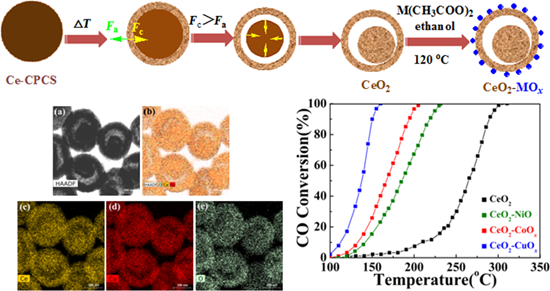
Fabrication of CeO2–MOx (M = Cu, Co, Ni) composite yolk–shell nanospheres with enhanced catalytic properties for CO oxidation
Beilstein J. Nanotechnol. 2017, 8, 2425–2437, doi:10.3762/bjnano.8.241
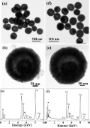
- analyzed by inductively coupled plasma mass spectrometry (ICP-MS, Agilent NWR 213-7900). Hydrogen temperature programmed reduction (H2-TPR) experiment was performed on a PCA-1200 instrument, equipped with a thermal conductivity detector (TCD) to detect H2 consumption. Typically, 50 mg of the sample was





In situ controlled rapid growth of novel high activity TiB2/(TiB2–TiN) hierarchical/heterostructured nanocomposites
Beilstein J. Nanotechnol. 2017, 8, 2116–2125, doi:10.3762/bjnano.8.211
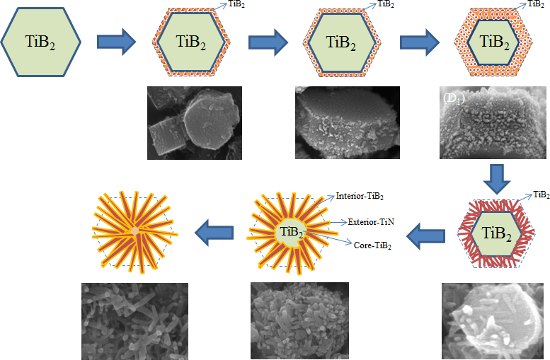
- stability, as well as excellent electrical and thermal conductivity [4][5][6]. On the other hand, titanium nitride (TiN) has some attractive properties, such as high hardness, low electrical resistivity, excellent wear and corrosion resistance [1][2][7]. Therefore, it is expected that these unique


Freestanding graphene/MnO2 cathodes for Li-ion batteries
Beilstein J. Nanotechnol. 2017, 8, 1932–1938, doi:10.3762/bjnano.8.193
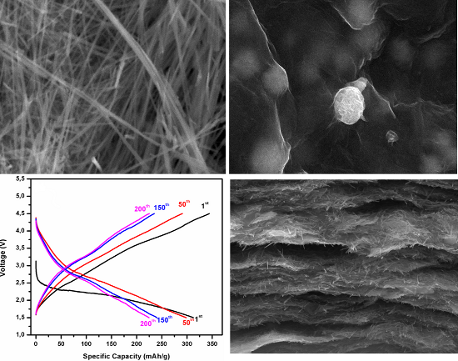
- these carbon materials graphene has become one the most attractive carbon support materials with its extraordinary properties. Graphene is a two-dimensional (2D) atomic-scale honeycomb lattice made of carbon atoms. Its unique properties such as high electrical and thermal conductivity, high chemical


Process-specific mechanisms of vertically oriented graphene growth in plasmas
Beilstein J. Nanotechnol. 2017, 8, 1658–1670, doi:10.3762/bjnano.8.166
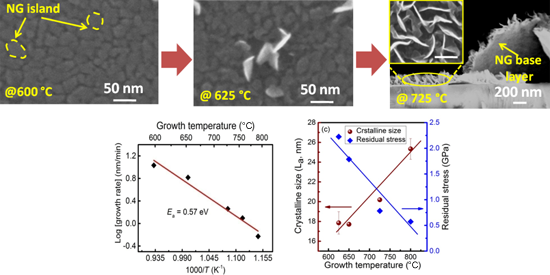
- contribute to the defect band intensity through graphite structure amorphization and growth orientation [27][47]. The substrate properties such as surface energy, thermal conductivity and atomic density play a major role in determining the structure and morphology of substrate-supported VGNs [24]. In general


Two-dimensional carbon-based nanocomposites for photocatalytic energy generation and environmental remediation applications
Beilstein J. Nanotechnol. 2017, 8, 1571–1600, doi:10.3762/bjnano.8.159
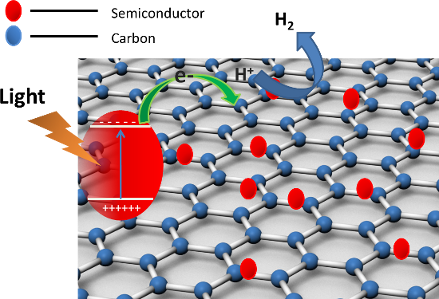
- thin layer to form a 2D hexagonal honeycomb-like structure [42]. The π-conjugated structure in graphene provides ultrafast electron transfer (200,000 cm2·V−1·s−1), very high specific surface area (2600 m2·g−1), and high thermal conductivity (5000 W·w−1·K−1) [43]. In addition to this, graphene possesses


3D continuum phonon model for group-IV 2D materials
Beilstein J. Nanotechnol. 2017, 8, 1345–1356, doi:10.3762/bjnano.8.136
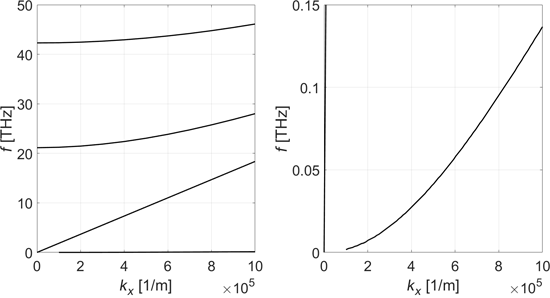
- the in-plane and out-of-plane modes due to the mirror symmetry of graphene, leading to fewer scattering channels and, therefore, a higher thermal conductivity compared to, e.g., silicene. Our model reveals that such mode coupling, even when present, would occur for large kz values (due to the small


![[Graphic 19]](/bjnano/content/inline/2190-4286-8-136-i109.png?max-width=637&scale=1.18182) phonon modes of single-layer MoS2. The right plot is a ...
phonon modes of single-layer MoS2. The right plot is a ...



