


Search results
Search for "thiol" in Full Text gives 179 result(s) in Beilstein Journal of Nanotechnology.
Fully amino acid-based hydrogel as potential scaffold for cell culturing and drug delivery
Beilstein J. Nanotechnol. 2019, 10, 2579–2593, doi:10.3762/bjnano.10.249
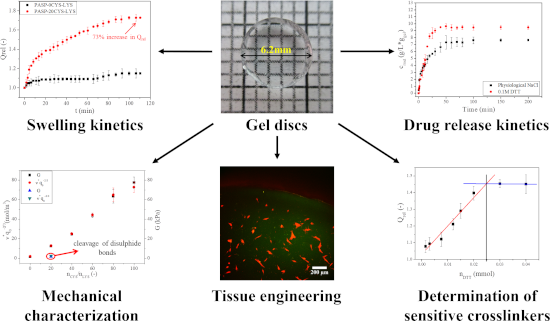
- concentration of the elastically active chain were determined. After reduction of the disulfide bonds of CYS, the presence of thiol side groups was also detected. To determine the concentration of the reactive cross-linkers in the hydrogels, a new method based on the examination of the swelling behavior was
- established. Using metoprolol as a model drug, cell proliferation and drug release kinetics were studied at different LYS contents and in the presence of thiol groups. The optimal ratio of cross-linkers for the proliferation of periodontal ligament cells was found to be 60−80% LYS and 20−40% CYS. The
- untransformed cells. In the present study, derivatives based exclusively on amino acids, namely, on lysine-methylester (LYS) and CYS, were used as cross-linkers for preparing PASP-based hydrogels. CYS is biologically active and can provide free thiol groups under reductive conditions, while the advantage of LYS


Long-term stability and scale-up of noncovalently bound gold nanoparticle-siRNA suspensions
Beilstein J. Nanotechnol. 2019, 10, 2568–2578, doi:10.3762/bjnano.10.248
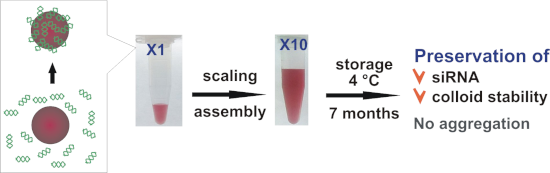
- structures usually consists of a AuNP, where siRNA is covalently bound to the NP surface through the thiol group, and the core is covered with a lipid or polymer shell [10][11][12][13]. Covalent bonding of siRNA to the surface of AuNPs is carried out in two stages: (1) covalent attachment of one chain of a


Bombesin receptor-targeted liposomes for enhanced delivery to lung cancer cells
Beilstein J. Nanotechnol. 2019, 10, 2553–2562, doi:10.3762/bjnano.10.246
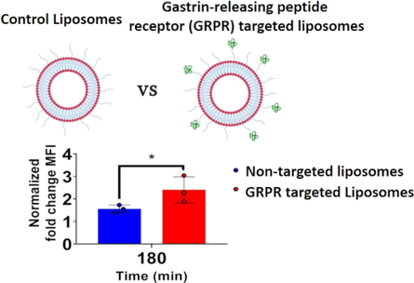
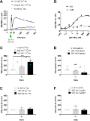
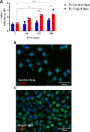
- manner – a key feature of a targeting ligand to enable high tumour localisation. Formulation of a GRP-targeted liposomal carrier Having validated GRPR as a functional target on the surface of SCLC cells we next prepared a targeted liposomal carrier. The presence of a single thiol group in the cystabn
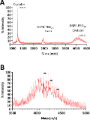
- peptide affords facile functionalisation of DSPE-PEG2000-maleimide thorough thiol coupling chemistry. Successful conjugation of the peptide was confirmed by MALDI–TOF mass spectrometry (Figure 2a,b). The most abundant mass peak of DSPE-PEG2000-cystabn (calculated mass: 4137.41 Da, assuming perfect

Evaluation of click chemistry microarrays for immunosensing of alpha-fetoprotein (AFP)
Beilstein J. Nanotechnol. 2019, 10, 2505–2515, doi:10.3762/bjnano.10.241
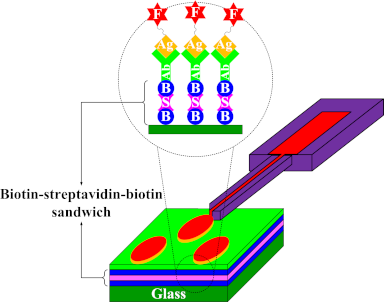
- sensitive fluorescent immunosensor for AFP detection. Three types of functionalized glasses (dibenzocyclooctyne- (DBCO-), thiol- and epoxy-terminated surfaces) were biotinylated by employing the respective adequate click chemistry counterparts (biotin–thiol or biotin–azide for the first class, biotin
- –maleimide or biotin–DBCO for the second class and biotin–amine or biotin–thiol for the third class). The anti-AFP antibody was immobilized on the surfaces via a biotin–streptavidin–biotin sandwich technique. To evaluate the sensing performance of the differently prepared surfaces, fluorescently labeled AFP
- –biotin sandwich strategy as well as the high selectivity of antigen–antibody interactions. Six different fabrication routes based on dibenzocyclooctyne- (DBCO-), thiol- and epoxy-functionalization of glasses and click chemistry attachment of biotinylated molecules (Figure 1) were used to obtain



Mobility of charge carriers in self-assembled monolayers
Beilstein J. Nanotechnol. 2019, 10, 2449–2458, doi:10.3762/bjnano.10.235
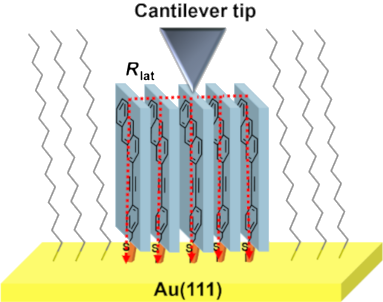
- of charge carriers has been observed in field-effect transistors (FET) made from this compound [32]. Anthracene-2-thiol, obtained by functionalization of anthracene with a thiol group, was used to fabricate SAMs on the top of Au bottom electrodes, which resulted in a beneficial effect on the
- thiol, we used the nanografting technique introduced by G.-y. Liu et al. [37]. HDT was used as the insulating thiol to decouple the PAT islands. Starting from a high quality PAT SAM, in well-defined PAT areas the OSC-based thiol was replaced by HDT using nanografting carried out in a liquid cell of an
- a function of island diameter. The black line shows the result of a fit in the diameter interval 20–160 nm by using Equation 1. a) Simple model of resistance within a single thiol molecule on the gold(111) surface. b) Model of charge transfer within a continuous SAM. The number of parallel resistors


Multiwalled carbon nanotube based aromatic volatile organic compound sensor: sensitivity enhancement through 1-hexadecanethiol functionalisation
Beilstein J. Nanotechnol. 2019, 10, 2364–2373, doi:10.3762/bjnano.10.227
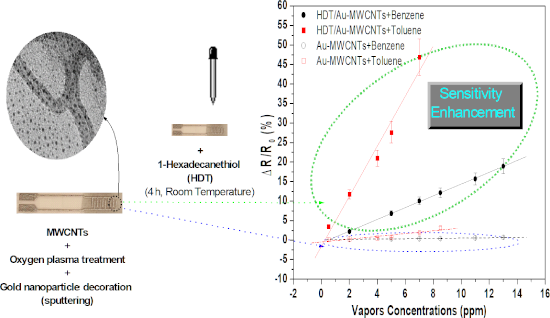
- temperature toluene and benzene sensor based on multiwall carbon nanotubes (MWCNTs) decorated with gold nanoparticles and functionalised with a long-chain thiol self-assembled monolayer, 1-hexadecanethiol (HDT). High-resolution transmission electron microscopy (HRTEM) and Fourier transform infrared
- spectroscopy (FTIR) were performed to characterize the gold nanoparticle decoration and to examine the thiol monolayer bonding to the MWCNTs. The detection of aromatic vapours using Au-MWCNT and HDT/Au-MWCNT sensors down to the ppm range shows that the presence of the self-assembled layer increases the
- -assembled monolayer of 1-hexadecanethiol (HDT). The sensor functionalisation was undertaken through its immersion for 4 hours at room temperature in a solution of 5 mM of HDT diluted in ethanol. The sensor was then rinsed with ethanol to wash off the unbound thiol molecules and dried under a nitrogen stream


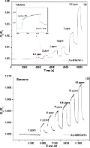
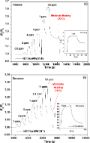
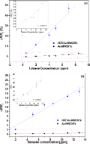


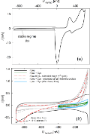
Adsorption and desorption of self-assembled L-cysteine monolayers on nanoporous gold monitored by in situ resistometry
Beilstein J. Nanotechnol. 2019, 10, 2275–2279, doi:10.3762/bjnano.10.219
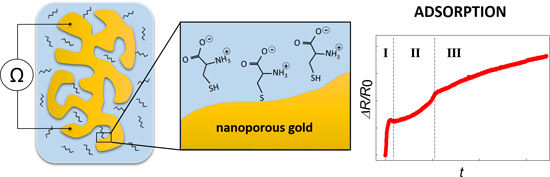
- using the well-known spontaneous formation of self-assembled monolayers (SAMs) on gold substrates [5]. These layers usually consist of three groups: a thiol as the head group, a carbon chain as the backbone and an end group that can be chosen according to the requirements for subsequent application. For

Toxicity and safety study of silver and gold nanoparticles functionalized with cysteine and glutathione
Beilstein J. Nanotechnol. 2019, 10, 1802–1817, doi:10.3762/bjnano.10.175
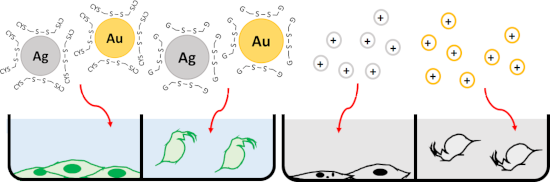
- lead to the formation of thiol-coated AgNPs [48]. New clusters consisting of Ag2S can be created from free Ag+ [47]. This process, known as sulfidation, affects AgNP behavior in the biological system [49], most notably by reducing their toxicity [47][50]. The binding of thiols to AuNP surfaces has been
- metallic NPs, was applied to evaluate small changes in the chemical environment around NPs, which resulted in chemical shifts in the NMR spectra. Several studies have been published that confirm the validity of this technique in confirming thiol–NP interactions [51][59][60][61]. In a typical experiment


Novel hollow titanium dioxide nanospheres with antimicrobial activity against resistant bacteria
Beilstein J. Nanotechnol. 2019, 10, 1716–1725, doi:10.3762/bjnano.10.167
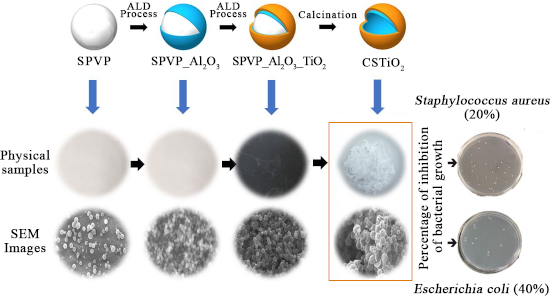
- reactive oxygen species (ROS) generation and disruption of bacteria cell walls in the case of E. coli, and release and reactions of ions with thiol groups belonging to proteins of the bacterial membrane of S. aureus [48][49]. Probably, CSTiO2 presented better affinity and greater contact area with Gram


Alloyed Pt3M (M = Co, Ni) nanoparticles supported on S- and N-doped carbon nanotubes for the oxygen reduction reaction
Beilstein J. Nanotechnol. 2019, 10, 1251–1269, doi:10.3762/bjnano.10.125
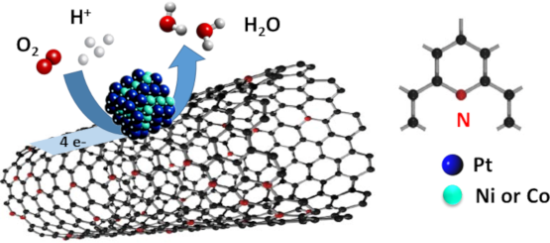
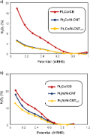
- –C (≈163.5 eV), R–S–C (≈164.5 eV), and S–O (≈168.0 eV) were observed (Supporting Information File 1, Figure S3) [42][43]. The intense peak at 163.5 eV indicated the doping of CNTs with mainly thiol surface groups (Table 2). The peak at 164.5 eV could arise from the presence of sulfur in the carbon







Enhanced inhibition of influenza virus infection by peptide–noble-metal nanoparticle conjugates
Beilstein J. Nanotechnol. 2019, 10, 1038–1047, doi:10.3762/bjnano.10.104
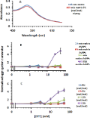
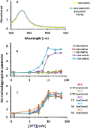
- Sephadex G25, as they eluted in the void volume and their UV–vis spectrum in PBS was indistinguishable from that of control mixed-matrix silver nanoparticles (Figure 5A). When challenged by a small thiol, DTT, the silver nanoparticles passivated by the mixed-matrix ligand shell were somewhat more prone to




Experimental study of an evanescent-field biosensor based on 1D photonic bandgap structures
Beilstein J. Nanotechnol. 2019, 10, 967–974, doi:10.3762/bjnano.10.97
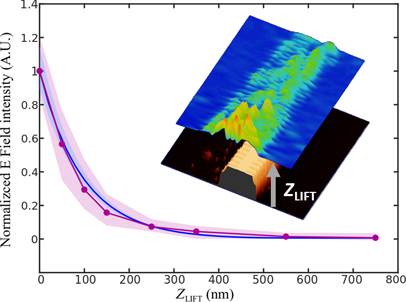
- biorecognition layer, we have developed a light-assisted biofunctionalization approach that allows for the covalent immobilization of thiol-terminated bioreceptors onto a vinyl-terminated surface [13]. Half-antiBSA-antibodies (haBSA) have been used as bioreceptors in this work, which reduces even more the
- represent the standard deviation of the intensity along the PBG structure. Schematic representation of the light-assisted immobilization of haBSA having free thiol moieties onto the vinyl-functionalized surface of the PBG sensing structures. Time evolution of the PBG sensing response during the BSA


Structural and optical properties of penicillamine-protected gold nanocluster fractions separated by sequential size-selective fractionation
Beilstein J. Nanotechnol. 2019, 10, 955–966, doi:10.3762/bjnano.10.96
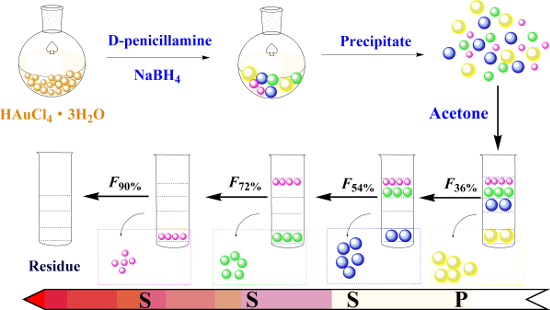
- properties of AuNCs may be altered in the presence of excess thiol ligand; hence, it is necessary to develop a convenient, efficient, and stringent method for the purification of crude monolayer-protected NCs samples. The purification of AuNCs is a very challenging task due to the similar solubility of water
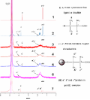
- that the AuNCs have an anisotropic crystalline structure. This result is similar to that obtained by Lakshminarayanan for the diffraction characteristic of 1–3 nm thiol-monolayer-protected clusters [21]. As for the fractions F72% and F90%, the {111} and {200} planes appear blurrier and the {220}, {311
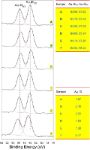
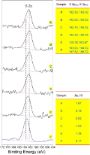
- more positively charged than those of the former. Although there are only few reports of positively charged thiol-protected AuNCs, the chemical oxidation of [Au25(SC6H13)18]0 described in [33] yielded positively charged AuNCs. The Au 4f7/2 binding energy in the residue fraction (F0%), however, is




Features and advantages of flexible silicon nanowires for SERS applications
Beilstein J. Nanotechnol. 2019, 10, 725–734, doi:10.3762/bjnano.10.72

- temperature and thickness were reported in [26]. 4-MPBA was chosen as a SERS test molecule because of the strong affinity between the thiol group and metal surfaces (Ag or Au) as well as because of the easy formation of self-assembled monolayers (SAMs) [27]. Furthermore, the benzene ring is orientation


Hydrophilicity and carbon chain length effects on the gas sensing properties of chemoresistive, self-assembled monolayer carbon nanotube sensors
Beilstein J. Nanotechnol. 2019, 10, 565–577, doi:10.3762/bjnano.10.58
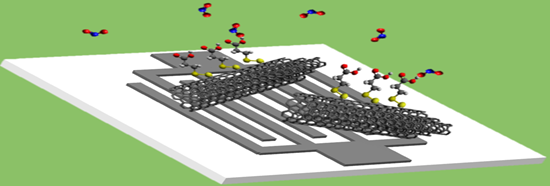
- attributed to the interaction, via strong hydrogen bonding, of the polar molecules tested to the polar surface of hydrophilic thiols. The approach discussed here could be extended further by combining hydrophilic and hydrophobic thiol SAMs in Au-MWCNT sensor arrays as a helpful strategy for tuning sensor
- ); self-assembled monolayer (SAM); thiol; Introduction Carbon nanotubes were first observed by Sumio Iijima in 1991 [1] and since then, this nanostructure has been widely used in chemoresistive gas sensors [2][3][4][5] due to the possibility to engineer its sensitivity towards chemicals present in a
- approach, carbon nanotubes act as support and charge transport transducing elements while the recognition function is performed by grafted molecules. Two examples of this have consisted of obtaining thiol-functionalized carbon nanotube buckypapers [27] or self-assembled monolayers (SAMs) of thiol molecules


Targeting strategies for improving the efficacy of nanomedicine in oncology
Beilstein J. Nanotechnol. 2019, 10, 168–181, doi:10.3762/bjnano.10.16
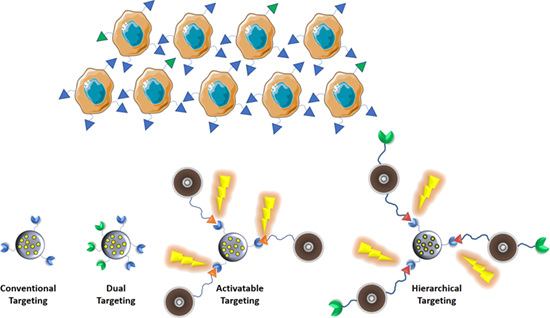
- techniques as carbodiimide coupling chemistry [28]. An alternative is the introduction of certain functional groups on specific positions of the antibody, which allows the utilization of bio-orthogonal chemical strategies, such as azide-strained alkyne or thiol–maleimide reaction, for carrying out the
- specifically designed for binding to the epidermal growth factor receptors (EGFR) have been anchored on the surface of hollow gold nanospheres [39]. The thiolated version of these aptamers was anchored on the gold surface through the thiol groups producing an average anchorage yield of 250 aptamers per


Colloidal chemistry with patchy silica nanoparticles
Beilstein J. Nanotechnol. 2018, 9, 2989–2998, doi:10.3762/bjnano.9.278
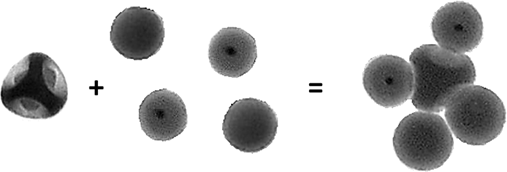
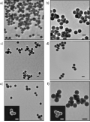
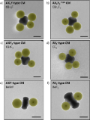
- , i.e., well-calibrated silica nanospheres or core–shell nanoparticles, were obtained according to a seeded-growth protocol [22] and a method using methoxy poly(ethylene glycol)-thiol as a coupling agent [23], respectively. Their surface functionalization with carboxylic acid groups was performed by a


High-throughput micro-nanostructuring by microdroplet inkjet printing
Beilstein J. Nanotechnol. 2018, 9, 2372–2380, doi:10.3762/bjnano.9.222
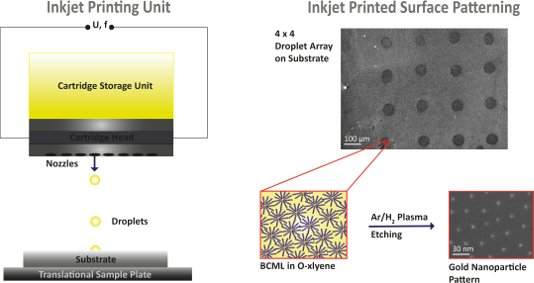
- [9], titania [10], and hybrid nanoparticles [11][12]. If the nanoparticles are intended to provide a chemical contrast for further functionalization, gold nanoparticles are an appropriate choice as they are easily functionalized using thiol chemistry [13]. For example, gold nanoparticles prepared by


Dumbbell gold nanoparticle dimer antennas with advanced optical properties
Beilstein J. Nanotechnol. 2018, 9, 2188–2197, doi:10.3762/bjnano.9.205
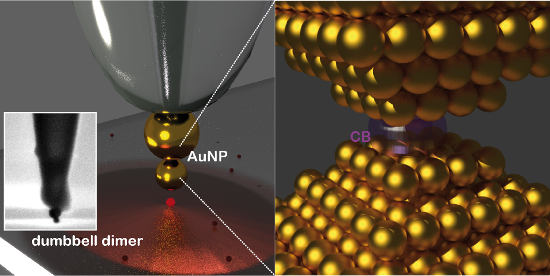
- . Utilizing the capabilities of an AFM to manipulate such structures with sub-nanometer precision in space enables to add a smaller 40 nm AuNP to the larger one. Even though, shorter linker thiol molecules could be used instead, in principle, the high mobility of these linker molecules on the AuNP surface
- expected cascade of the electromagnetic field towards the intermediate points of these gap structures. Figure 2D indicates that the CB[8] antenna provides similar light confinement capabilities than the thiol trimer. Most strikingly, the electromagnetic field enhancement of this dimer antenna reaches the
- a high reproducibility of these antennas and a low influence of deviations from the sphere geometry on the enhancement factor. The enhancement factor is further increased by utilizing the gap mode. In this case the average fluorescence enhancement factor for the thiol-mediated gap antennas is


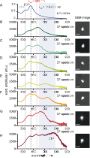


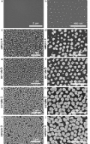
Self-assembled quasi-hexagonal arrays of gold nanoparticles with small gaps for surface-enhanced Raman spectroscopy
Beilstein J. Nanotechnol. 2018, 9, 1977–1985, doi:10.3762/bjnano.9.188
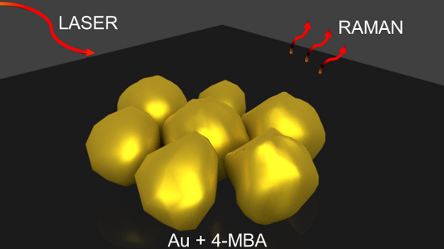
- features. To measure the SERS signal, the gold nanoparticles were covered with a self-assembled monolayer of 4-MBA. Because the thiol-group of the 4-MBA molecules has a very high affinity for gold [27], and the samples were rinsed thoroughly with ethanol to remove any unbound molecules, we can assume that



Tuning adhesion forces between functionalized gold colloidal nanoparticles and silicon AFM tips: role of ligands and capillary forces
Beilstein J. Nanotechnol. 2018, 9, 660–670, doi:10.3762/bjnano.9.61
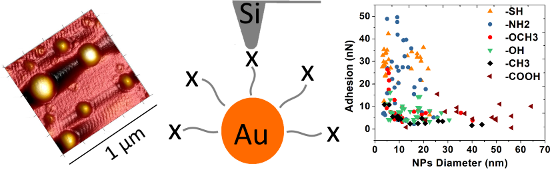
- ) equipped with PeakForce QNM (Quantitative Nanoscale Mechanics) module. Au NPs were synthesized by a seed-mediated process and then functionalized with thiols containing different functional groups: amino, hydroxy, methoxy, carboxy, methyl, and thiol. Adhesion measurements showed strong differences between
- (–COOH), methyl (–CH3), methoxy (–OCH3) or thiol (–SH). The adhesion was measured by atomic force microscope (AFM) equipped with a PeakForce QNM module. The results were also compared to additional adhesion measurements performed on flat Au films functionalized with the same molecular thin film to
- organosulfur (thiol) molecules having different tail groups ranging from a highly hydrophilic (–OH, –COOH, –SH, –NH2) to a partially hydrophilic (–O–CH3) and to a more hydrophobic group (–CH3). A covalent bond between the sulfur head group (–SH) and the Au atoms ensured the strong anchorage of the organosulfur


Facile phase transfer of gold nanorods and nanospheres stabilized with block copolymers
Beilstein J. Nanotechnol. 2018, 9, 616–627, doi:10.3762/bjnano.9.58
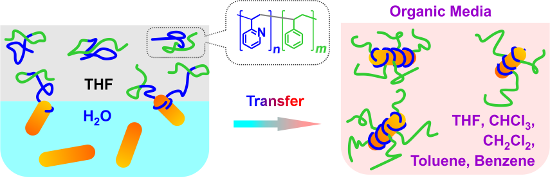
- the use of strong thiol and amine surfactants. Keywords: Au nanorods; block copolymers; optical absorbance spectroscopy; phase transfer; seeded growth method; Introduction The size effects that determine the functional characteristics of nanoparticles are no less important than their precise
- or cetyl trimethylammonium bromide-stabilized Au nanorods with a solution of thiol- [18] or amine-terminated [19] surfactants in organic solvent. With a strong affinity to gold, thiols and amines replace nanoparticle shells via ligand exchange, while the tails of these molecules provide miscibility
- propose that P2VP blocks wrap around nanoparticles preventing their aggregation, while PS blocks form an organophilic corona that provides dispersability of the nanoparticles in organic media. Compared to thiol- and amine-functionalized stabilizers that form strong covalent bonds with Au, the interaction


Wafer-scale bioactive substrate patterning by chemical lift-off lithography
Beilstein J. Nanotechnol. 2018, 9, 311–320, doi:10.3762/bjnano.9.31
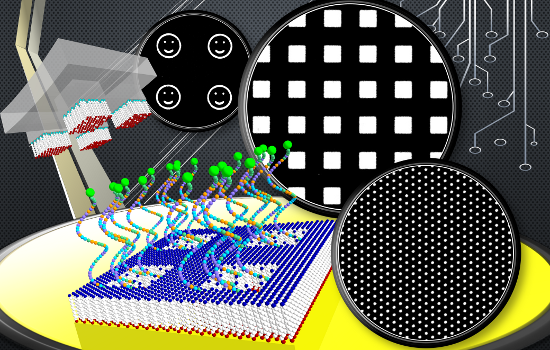
- -arrangement of silane or thiol molecules on silica or Au surfaces, which has been proven as a convenient route for the fabrication of functional surfaces toward versatile targets [12][13][14][15][16]. In addition to direct surface modification, the versatility of anchoring molecule tail groups provides
- washed with ethanol to remove excess thiol molecules, and blown dry with nitrogen gas. Polydimethylsiloxane (PDMS) stamps with various patterns were fabricated by standard photolithography-created masters. A 10:1 mass ratio of SYLGARD 184 silicone elastomer base and curing agent (Dow Corning, Midland, MI
- TRIS buffer (150 mM NaCl, pH 7.4) in advance. Target DNA solutions in 25 mM TRIS buffer (150 mM NaCl, pH 7.4) was thereafter dropped onto the target DNA-specific probe-modified substrates for a 5 min incubation period. For sandwich-like array signal reporting, biotinylated thiol-patterned substrates


Patterning of supported gold monolayers via chemical lift-off lithography
Beilstein J. Nanotechnol. 2017, 8, 2648–2661, doi:10.3762/bjnano.8.265
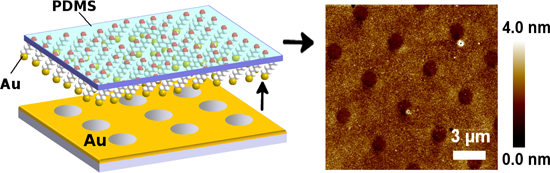
- found to be consistent with molecular dynamics simulations that predicted the removal of no more than 1.5 Au atoms per thiol, thus presenting a monolayer-like structure. Keywords: chemical patterning; hybrid material; monolayer; soft lithography; two-dimensional material; Introduction Chemical lift
- orientation and each thiol removes one Au atom. Nonetheless, we know that the Au–alkanethiolate monolayers on PDMS resulting from typical CLL experiments are indicative of incomplete lift-off [1][10][31]. Moreover, the dimensions of the Au–alkanethiol complexes that compose the lifted-off monolayer on PDMS
- structures that are still able to bond to additional Au atoms. Before complete separation, a chain consisting of two or three Au atoms between each thiol and the Au surface is formed and finally ruptures, usually after the first or second Au atom has attached to each sulfur atom. As a consequence of lift-off


The role of ligands in coinage-metal nanoparticles for electronics
Beilstein J. Nanotechnol. 2017, 8, 2625–2639, doi:10.3762/bjnano.8.263
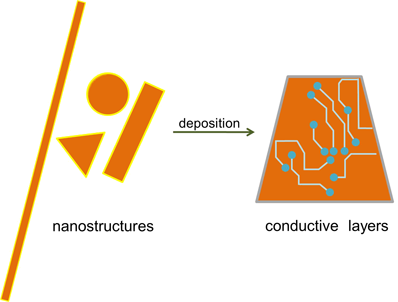
- substituents (Me, MeO, Cl, or Br) in para-position to the thiol group reduced the conductivity compared to films of triphenylphosphine (PPh3) (Figure 3) and thiophenol (H)-capped gold nanocrystals. The electron-withdrawing nitro group (NO2) caused an increase in conductivity from 30 S/cm (PPh3-capped Au NPs
- transformation temperatures (Tp) are desirable for applications on plastic films with low glass-transition temperatures (Tg) [33][44]. The required annealing temperature is correlated with the length of the capping agents as reported by Gupta and co-workers. Inks of thiol-functionalized gold nanoparticles having
- thiols with eight, six, or four carbon atoms in their alkyl chains exhibited descending sintering temperatures from the longer thiol (204 °C) to the shorter (155 °C). The layer prepared from the C4-thiol-functionalized gold nanoparticles could be annealed at 160 °C, a temperature sufficiently low to





