Search results
Search for "transformation" in Full Text gives 426 result(s) in Beilstein Journal of Nanotechnology. Showing first 200.
Synthesis and the impact of hydroxyapatite nanoparticles on the viability and activity of rhizobacteria
Beilstein J. Nanotechnol. 2025, 16, 216–228, doi:10.3762/bjnano.16.17
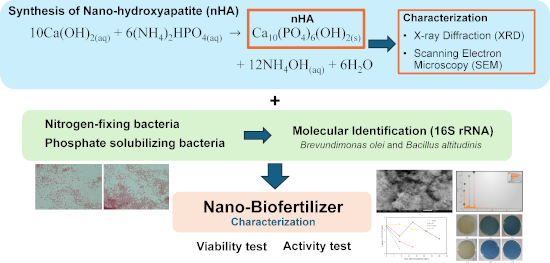
- gradually through a solvothermal reaction, driven by the chemical transformation represented by the following equation: Nanohydroxyapatite characterization The structural analysis of nHA was performed using X-ray diffraction (XRD). The diffraction pattern of nHA standard is given in Figure 1, while that of


Recent advances in photothermal nanomaterials for ophthalmic applications
Beilstein J. Nanotechnol. 2025, 16, 195–215, doi:10.3762/bjnano.16.16
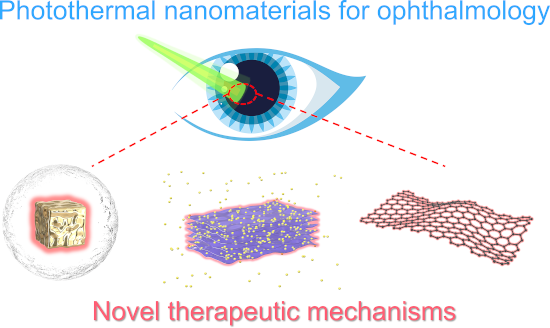
- effectively absorb NIR radiation and convert it into heat, thus activating the hydrogel to generate sol–gel transformation, and achieving on-demand drug release. Drugs such as timolol maleate and levofloxacin were encapsulated within separate layers of the hydrogel, facilitating a sustained, stepwise release


TiO2 immobilized on 2D mordenite: effect of hydrolysis conditions on structural, textural, and optical characteristics of the nanocomposites
Beilstein J. Nanotechnol. 2025, 16, 128–140, doi:10.3762/bjnano.16.12
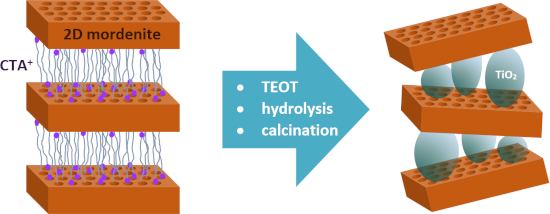
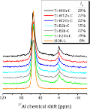
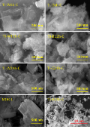
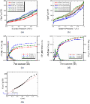
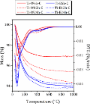
- . For a correct transformation of relative pressure (P/P0) to t, we used the formulas proposed in [38][39] for hierarchical microporous/mesoporous zeolites. In this method, a linear fit at low thickness of adsorbate film (low relative pressure) provides the micropore volume Vmicro (the intercept) and



Characterization of ZnO nanoparticles synthesized using probiotic Lactiplantibacillus plantarum GP258
Beilstein J. Nanotechnol. 2025, 16, 78–89, doi:10.3762/bjnano.16.8
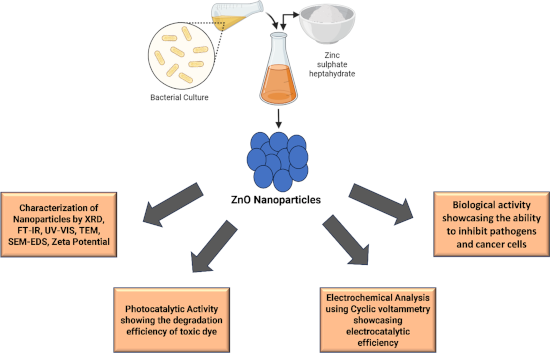
- 0.1 M ZnSO4·7H2O was added, and the flask was heated to 80 °C for 10 min. The continuous process of transformation could be confirmed by the development of white precipitate at the bottom of the flask. After that, the flask was incubated for a further 12 h at 37 °C to ensure complete particle



Instance maps as an organising concept for complex experimental workflows as demonstrated for (nano)material safety research
Beilstein J. Nanotechnol. 2025, 16, 57–77, doi:10.3762/bjnano.16.7

- for specific purposes and can modulate toxicity endpoints. Ideally, a nomenclature would include details on chemical identities of the nanoparticle’s core and surface, its transformation, where it is the transformed form of the nanomaterial that is evaluated, any impurities, and physical descriptors
- of the material’s morphology, as well as the nature of the bonds between the surface and core. This level of detail can only be gained by understanding how the nanomaterial is synthesised, which is where instance maps will be a critical tool. Example 2: Monitoring nanomaterial transformation in
- /samples (instances), characteristics and endpoints to be collected (experimentally and via text/database mining), and nodes describing modification steps applied to materials and samples (transformation protocols) and testing SOPs (sample preparation, measurement, and data processing), as described in the



Mechanistic insights into endosomal escape by sodium oleate-modified liposomes
Beilstein J. Nanotechnol. 2024, 15, 1667–1685, doi:10.3762/bjnano.15.131
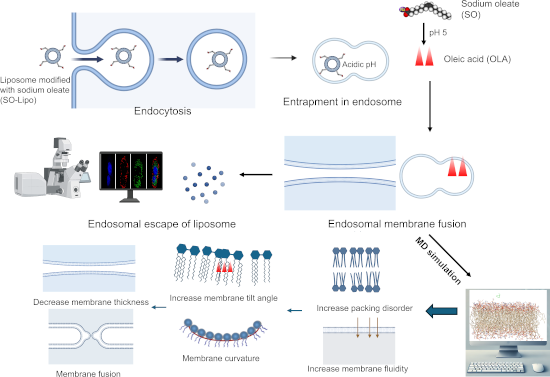
- transformation of resazurin (initially blue and non-fluorescent) into resorufin (pink and fluorescent) by metabolically active cells, facilitating the measurement of cell viability [35][36]. Briefly, 4T1 cells were cultured in DMEM supplemented with 10% FBS and 1% penicillin–streptomycin in a humidified





Facile synthesis of size-tunable L-carnosine-capped silver nanoparticles and their role in metal ion sensing and catalytic degradation of p-nitrophenol
Beilstein J. Nanotechnol. 2024, 15, 1576–1592, doi:10.3762/bjnano.15.124
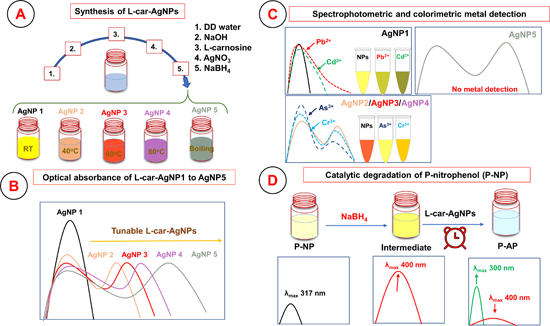
- degradation of P-NP and the formation of P-AP as a model reaction. This transformation, catalyzed by noble metal nanoparticles in the presence of NaBH4 as reducing agent, is widely utilized to assess the catalytic performance of nanomaterials [14]. All catalytic experiments were performed in a standard quartz





The round-robin approach applied to nanoinformatics: consensus prediction of nanomaterials zeta potential
Beilstein J. Nanotechnol. 2024, 15, 1536–1553, doi:10.3762/bjnano.15.121
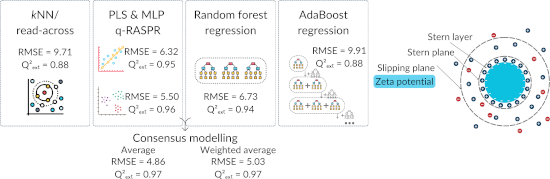
- ., chemical formula, shape group, and coating). The collection of descriptors characterised by continuous numerical values was subsequently delineated as the “continuous set” for clarity purposes. The transformation of the descriptive category of descriptors into binary representations was carried out to
- facilitate the inclusion of these qualitative descriptors in ML algorithms. Binary encoding allows for the representation of categorical variables as binary vectors, where each category variant is encoded as 0 or 1, respectively. This transformation is essential because many ML algorithms require input data


Integrating high-performance computing, machine learning, data management workflows, and infrastructures for multiscale simulations and nanomaterials technologies
Beilstein J. Nanotechnol. 2024, 15, 1498–1521, doi:10.3762/bjnano.15.119



Effect of radiation-induced vacancy saturation on the first-order phase transformation in nanoparticles: insights from a model
Beilstein J. Nanotechnol. 2024, 15, 1453–1472, doi:10.3762/bjnano.15.117

- are stable) because of surface effects. There is an intermediate zone of sizes and parameters where radiation-induced defects become important so that the α-phase particle is unstable without irradiation but becomes stable under irradiation. For large sizes and low temperatures, the α→β transformation
- . For example, a two-phase TiCr alloy undergoes phase transformation when irradiated with Kr+ ions with an energy of 1 MeV [13]. In another study, a bcc→fcc phase transition was observed in an α-FeNi alloy due to radiation of self-ions at 673 K and a dose of approximately 1.2 dpa [14]. Furthermore
- . However, in cases where the structure is rebuilt, the role of vacancies becomes less obvious. This suggests that other factors must be considered to better understand the transformations in HDCMs under irradiation. A recent study reported a phase transformation in a 25 nm thick nanocrystalline Au thin


Hymenoptera and biomimetic surfaces: insights and innovations
Beilstein J. Nanotechnol. 2024, 15, 1333–1352, doi:10.3762/bjnano.15.107
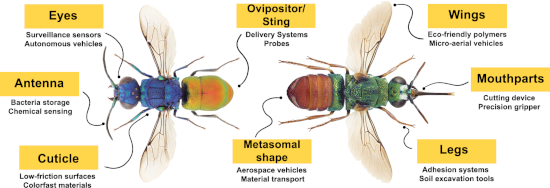
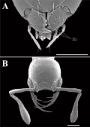
- vaccines and treatments for chronic conditions, providing a less invasive and more patient-friendly alternative to traditional methods. The Aculeata sting represents a remarkable evolutionary transformation of the ovipositor. It has lost its original function of egg-laying to serve as a potent venom







Introducing third-generation periodic table descriptors for nano-qRASTR modeling of zebrafish toxicity of metal oxide nanoparticles
Beilstein J. Nanotechnol. 2024, 15, 1142–1152, doi:10.3762/bjnano.15.93
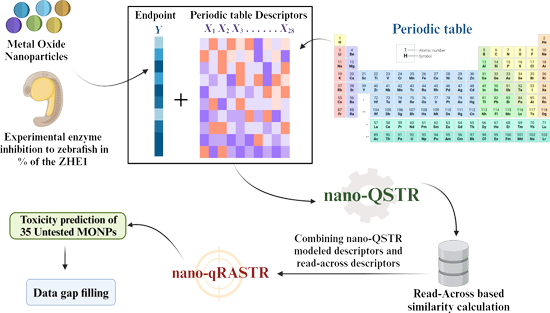
- ’ kinetics, migration, and transformation than in vitro cell culture assays [14]. Meanwhile, it is considered an equivalent model for investigating developmental toxicity and genotoxicity because around 85% of its genes are comparable to those found in humans [15]. The potential harm to human health posed by


Recent updates in applications of nanomedicine for the treatment of hepatic fibrosis
Beilstein J. Nanotechnol. 2024, 15, 1105–1116, doi:10.3762/bjnano.15.89
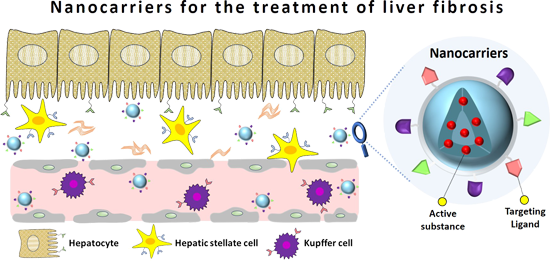
- overexpressed in activated HSCs and strongly related to the transformation of HSCs into matrix-producing myofibroblasts during liver fibrinogenesis [68][69]. The HSC-mediated antifibrotic drugs work through several mechanisms, including inhibition of fibrogenesis (ECM synthesis), inhibition of HSC proliferation


Atomistic insights into the morphological dynamics of gold and platinum nanoparticles: MD simulations in vacuum and aqueous media
Beilstein J. Nanotechnol. 2024, 15, 995–1009, doi:10.3762/bjnano.15.81
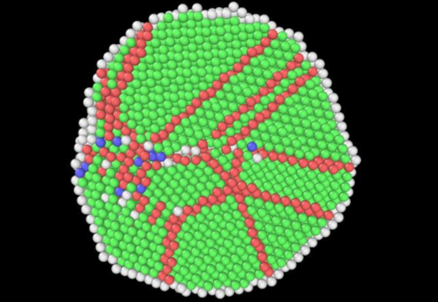
- adapting theories suitable for bulk materials to NPs; examples include the classical nucleation theory [33], phenomenological models [34][35][36], as well as molecular simulations [37][38][39][40]. A molecular dynamics (MD) study of shape transformation and melting of tetrahexahedral Pt NPs has been


Effects of cutting tool geometry on material removal of a gradient nanograined CoCrNi medium entropy alloy
Beilstein J. Nanotechnol. 2024, 15, 925–940, doi:10.3762/bjnano.15.76
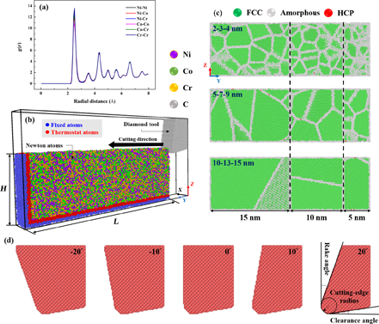
- in CoCrNi MEAs with various grain size gradients during the cutting process. CNA was used to identify the structural phase transformation and amorphization processes of CoCrNi MEAs during cutting. The subsurface damage mechanism was investigated through the structural transformation of surface atoms
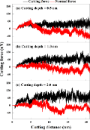
- structure evolution results show that the mixed phase of FCC and HCP is maintained in the chip after cutting. The internal crystal structure undergoes a phase transformation from FCC to HCP during cutting. Stacking faults, twins, and grain boundary slips inside the grains affect the plastic deformation










Exploring surface charge dynamics: implications for AFM height measurements in 2D materials
Beilstein J. Nanotechnol. 2024, 15, 767–780, doi:10.3762/bjnano.15.64
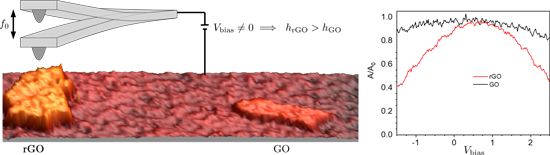
- ] for details). After Fourier transformation and taking the limit a→0, Equation 1 becomes [78]: where , τ0 = (ε1 + ε2)/(σ1 + σ2), and It should be noted that Equation 6 only depends on k = |k| since radial symmetry is assumed. For a non-oscillating tip (z0 and V constant), this equation can be solved


Elastic modulus of β-Ga2O3 nanowires measured by resonance and three-point bending techniques
Beilstein J. Nanotechnol. 2024, 15, 704–712, doi:10.3762/bjnano.15.58
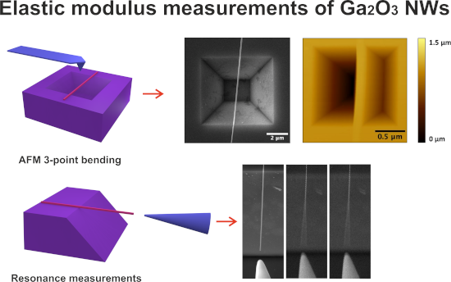
- individual NWs (see Figure 1b and Figure 1c). The as-grown NWs typically are single crystalline without any distinguishable planar structural defects, such as twin boundaries or stacking faults. Fast Fourier transformation (FFT) was performed on the TEM images to ascribe the crystalline planes and determine
- information on the crystalline structure of NWs. Fast Fourier transformation was performed on the obtained TEM images to determine crystalline orientations. The structure was also analysed using XRD on a Rigaku MiniFlex 600 X-ray powder diffractometer. The measurements were conducted in Bragg–Brentano θ/2θ


Exfoliation of titanium nitride using a non-thermal plasma process
Beilstein J. Nanotechnol. 2024, 15, 631–637, doi:10.3762/bjnano.15.53
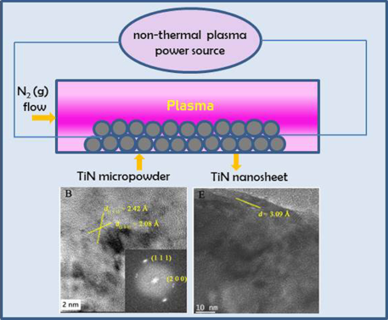
- the same exfoliation method. These combined findings highlight the structural changes during the non-thermal plasma exfoliation process, further supporting the successful transformation of bulk TiN into nanosheets. Figure 3 shows high-resolution transmission electron microscopy (HRTEM) images of TiN
- higher transparency to the microscope beam is observed, indicating fewer scattering centers. When comparing Figure 3a and Figure 3d, it is clear that the initial compact 3D TiN blocks underwent a transformation and evolved into plate-like thin layers. The high-resolution image in Figure 3f shows a



Aero-ZnS prepared by physical vapor transport on three-dimensional networks of sacrificial ZnO microtetrapods
Beilstein J. Nanotechnol. 2024, 15, 490–499, doi:10.3762/bjnano.15.44
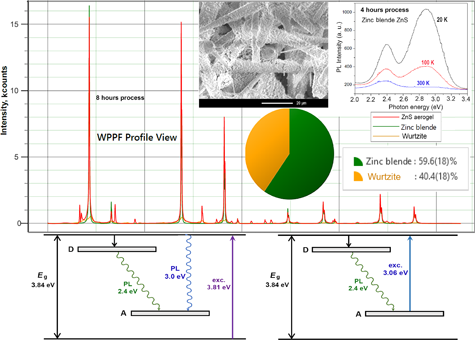
- properties when compressed against water was fabricated using HVPE of CdS on sacrificial ZnO microtetrapods through the simultaneous or subsequent transformation of CdS into ZnS and the removal of the sacrificial ZnO crystals [16]. Self-propelled liquid marbles have been demonstrated on the basis of this
- of a major zinc blende ZnS phase with some content of a tetragonal rutile SnO2 phase. The content of the SnO2 phase decreases with increasing the duration of the technological procedure with a concomitant transformation of the zinc blende phase to the wurtzite phase. The high crystalline quality of



Photocatalytic degradation of methylene blue under visible light by cobalt ferrite nanoparticles/graphene quantum dots
Beilstein J. Nanotechnol. 2024, 15, 475–489, doi:10.3762/bjnano.15.43
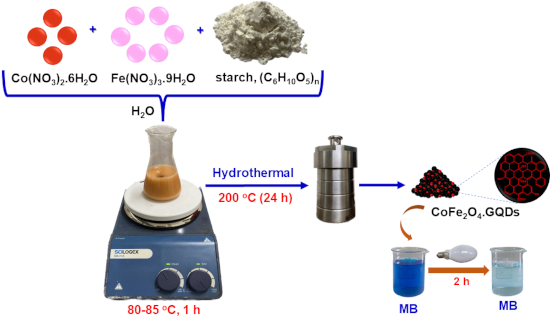
- and the easy movement of the domain walls can result in a decrease in coercivity. The reduced particle size leads to reduced coercivity, which could be expressed as a transformation from a ferrimagnetic to a superparamagnetic state [15]. Figure 6d presents the nitrogen adsorption/desorption isotherms




Quantitative wear evaluation of tips based on sharp structures
Beilstein J. Nanotechnol. 2024, 15, 230–241, doi:10.3762/bjnano.15.22
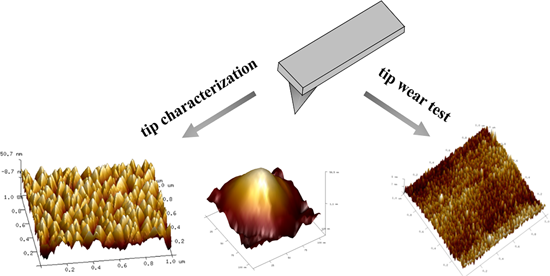
- considers both the expansion of the probe and the sample [21], Here, P represents the inversion transformation of the topography curve of the probe centered on the origin, denotes the expansion operator in mathematical morphology, I represents the image topography obtained by scanning the sample with AFM




Multiscale modelling of biomolecular corona formation on metallic surfaces
Beilstein J. Nanotechnol. 2024, 15, 215–229, doi:10.3762/bjnano.15.21
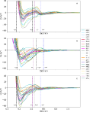
- the protein’s initial orientation. This initial orientation is set by performing a principle axis transformation such that the axis associated with the smallest moment of inertia is aligned to the z axis and the second smallest to the y axis, that is, the z axis is now typically associated with the
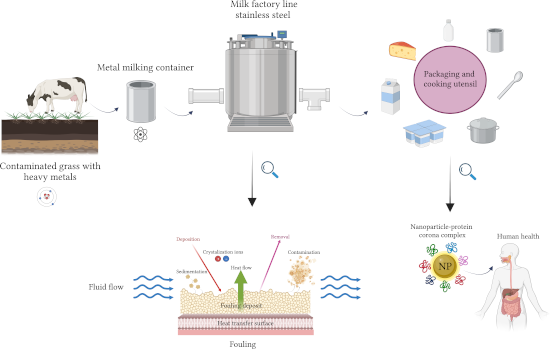
- cycle of dairy products, showcasing potential sources and pathways of contamination. It features the stages of grazing, collection, processing, and packaging. The relevant processes include surface fouling and milk contamination during food transformation as well as the formation of a protein corona on





Ion beam processing of DNA origami nanostructures
Beilstein J. Nanotechnol. 2024, 15, 207–214, doi:10.3762/bjnano.15.20
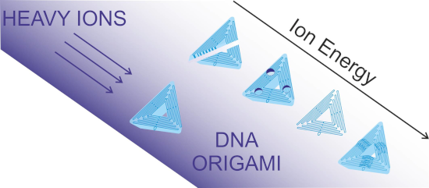
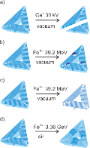
- origami but also their transformation upon irradiation. FIB processing Inspired by the shape preservation of DNA origami nanostructures under ion beam irradiation, we explored the damage response under a conventional focused ion beam typically used in lithography. Lines of about ∼140 nm in width ∼40 nm in


Assessing phytotoxicity and tolerance levels of ZnO nanoparticles on Raphanus sativus: implications for widespread adoptions
Beilstein J. Nanotechnol. 2024, 15, 115–125, doi:10.3762/bjnano.15.11
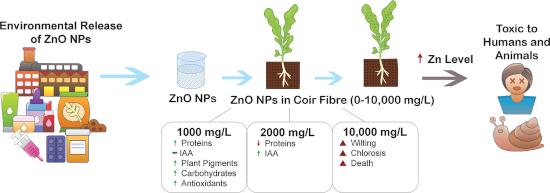
- . The concentration ratio between zinc chloride and sodium hydroxide was assessed utilizing the chemical equation formula provided below: Upon drying, the transformation of Zn(OH)2 into ZnO was elucidated by the following equation. Characterization of ZnO NPs Then ZnO NPs were characterized using PXRD


unDrift: A versatile software for fast offline SPM image drift correction
Beilstein J. Nanotechnol. 2023, 14, 1225–1237, doi:10.3762/bjnano.14.101
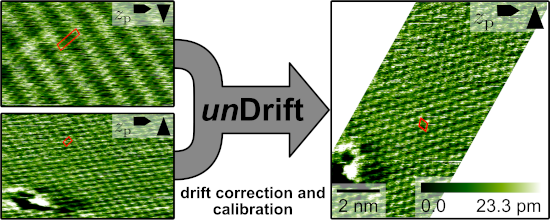
- autocorrelation is superior for images containing very few unit cells. In between these extremes, there is a range where both methods work well as shown in our examples in Figure 2. The dependence of the optimal transformation for peak extraction on the image size is caused by the finite resolution of the