


Search results
Search for "transition metal dichalcogenides" in Full Text gives 53 result(s) in Beilstein Journal of Nanotechnology.
Two-dimensional silicon and carbon monochalcogenides with the structure of phosphorene
Beilstein J. Nanotechnol. 2017, 8, 1338–1344, doi:10.3762/bjnano.8.135
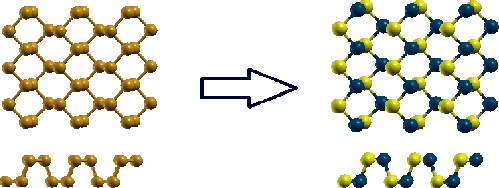
- [10][11], one of the many phases of crystalline phosphorus. Among other properties [12][13][14][15], the values of the carrier mobility and of the on–off ratio of transistors made from phosphorene are intermediate between the values of graphene and those of transition metal dichalcogenides, making


In-situ monitoring by Raman spectroscopy of the thermal doping of graphene and MoS2 in O2-controlled atmosphere
Beilstein J. Nanotechnol. 2017, 8, 418–424, doi:10.3762/bjnano.8.44
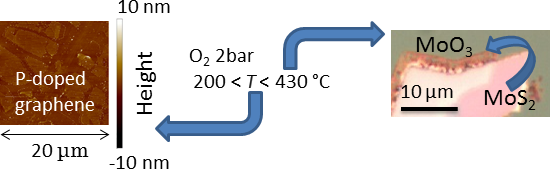
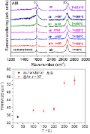
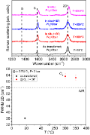
- clearly seen. This finding suggests that the observed erosion of the flakes is driven by the formation of oxidized regions at the borders of the MoS2 flakes that gradually convert them to MoO3, before completely destroying them. Similar effects have been suggested for other transition metal
- dichalcogenides and show that the thermal processes could be driven by analogous reactions [32]. In particular, these effects are of relevance for the application of 2D materials in ambient environments where the temperature could be increased during their use. Finally, the possibility that doping of central
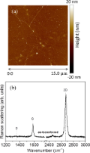


Impact of contact resistance on the electrical properties of MoS2 transistors at practical operating temperatures
Beilstein J. Nanotechnol. 2017, 8, 254–263, doi:10.3762/bjnano.8.28
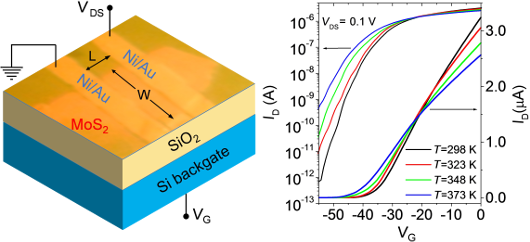
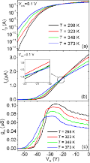
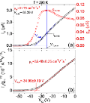
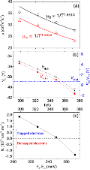
- 373 K, which was explained in terms of electron trapping at MoS2/SiO2 interface states. Keywords: contact resistance; mobility; MoS2; temperature dependence; threshold voltage; Introduction Transition metal dichalcogenides (TMDs) are compound materials formed by the Van der Waals stacking of MX2




Other Beilstein-Institut Open Science Activities



