Search results
Search for "EIS" in Full Text gives 86 result(s) in Beilstein Journal of Nanotechnology.
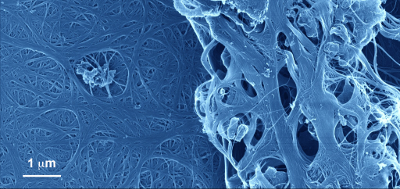
Synthesis and applications of carbon nanomaterials for energy generation and storage
Beilstein J. Nanotechnol. 2016, 7, 149–196, doi:10.3762/bjnano.7.17


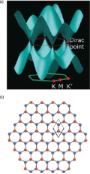













Calculations of helium separation via uniform pores of stanene-based membranes
Beilstein J. Nanotechnol. 2015, 6, 2470–2476, doi:10.3762/bjnano.6.256
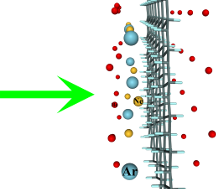
- is calculated by: where the ETS and EIS are the total energy of the saddle point and initial state, respectively. The diffusion rate, k, is estimated based on the penetration barrier, Eb, through the Arrhenius equation, as in previous works [12][22]: Here, the diffusion prefactor, A, is set to 1011 s


Electrochemical behavior of polypyrrol/AuNP composites deposited by different electrochemical methods: sensing properties towards catechol
Beilstein J. Nanotechnol. 2015, 6, 2052–2061, doi:10.3762/bjnano.6.209
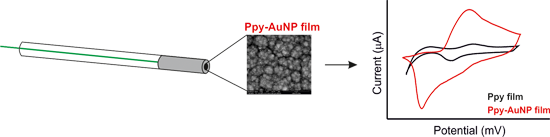
- incorporated in the Ppy films was higher when using CP than that when using CA. In turn, using cogeneration, the amount of nanoparticles incorporated was higher than using trapping. Electrochemical impedance spectroscopy Electrochemical impedance spectroscopy (EIS) can provide information about the
- drastic decrease in the resistance. This is in good agreement with previous published results that indicated that the presence of AuNPs in the polymer matrix resulted in an increase in conductivity [31]. EIS results of Ppy/AuNPs films deposited by CP showed similar trends, but resistance and impedance
- . It is important to point out, that EIS measurements carried out in films deposited on SS by CA where irreproducible, indicating that the films obtained were unstable. Films deposited on SS by CP produced reproducible results but with higher Rct and impedance values than those found on the platinum


Optimized design of a nanostructured SPCE-based multipurpose biosensing platform formed by ferrocene-tethered electrochemically-deposited cauliflower-shaped gold nanoparticles
Beilstein J. Nanotechnol. 2015, 6, 1840–1852, doi:10.3762/bjnano.6.187
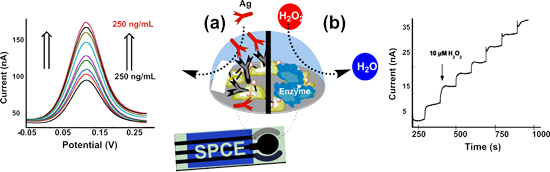
- and concentration of the ferrocene derivatives have been studied using cyclic voltammetry (CV), electrochemical impedance spectroscopy (EIS) and scanning electron microscopy (SEM). Selectivity and specificity tests have been also performed in the presence of potentially interfering substances to
- competitive proteins using a panel of electrochemical techniques such as cyclic voltammetry (CV), differential pulse voltammetry (DPV) and electrochemical impedance spectroscopy (EIS). Application of the two platforms for the detection of hIgG and H2O2 respectively in human serum and in honey are presented
- voltamperometric deposition of gold onto the carbon surface is expected to drastically alter its conductivity, which could be easily monitored using faradaic EIS measurements. This is clearly depicted in the Nyquist plots (inset in Figure 3a) of the different electrodes, recorded in the presence of a 5 mM [Fe(CN)6


Surface engineering of nanoporous substrate for solid oxide fuel cells with atomic layer-deposited electrolyte
Beilstein J. Nanotechnol. 2015, 6, 1805–1810, doi:10.3762/bjnano.6.184
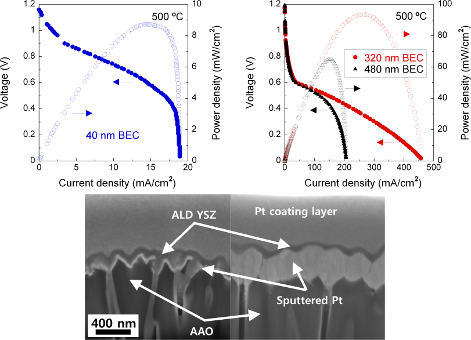
- via impedance spectroscopy To investigate the effects of BEC thickness on the individual resistances, electrochemical impedance spectroscopy (EIS) data were obtained for the Cell-A and Cell-B. Before comparing the EIS data for two kinds of cells, the EIS curves obtained under different direct current
- inset of Figure 4 [20]. The comparison result indicates that all of the semicircles are relevant to the activation process, i.e., electrode–electrolyte interfacial resistance, not to the ohmic process, i.e., electrolytic resistance, because there are no overlapping semicircles. Figure 4 shows EIS curves
- obtained under a DC bias voltage of 0.1 V for the Cell-A and Cell-B. The EIS curve for the Cell-B contains two predominant semicircles with peak imaginary values at 1 kHz and at 20 Hz by a non-linear least square fitting to the equivalent circuit consisting of one resistance (related to ohmic resistance


Optical modeling-assisted characterization of dye-sensitized solar cells using TiO2 nanotube arrays as photoanodes
Beilstein J. Nanotechnol. 2014, 5, 895–902, doi:10.3762/bjnano.5.102
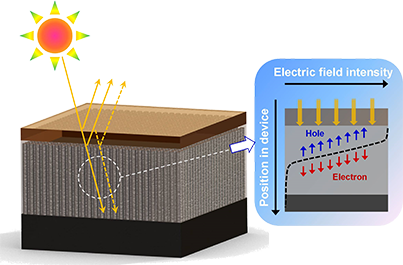
- parameters of the DSSCs, electrochemical impedance spectroscopy (EIS) offers valuable information. Figure 4 shows the Bode phase plots and the Nyquist plots obtained from electron transfer at the TiO2 and electrolyte interface under a solar simulator of AM 1.5. Figure 4a shows the negative shift of the
- DSSCs using 3.3, 11.5, and 20.6 μm long TNT arrays were 5.48, 5.86, and 6.51 Ω, respectively, indicating the series resistance obtained from EIS analysis is closely related to the thickness of the TiO2 films. It is clear that the series resistance increases with the increase in the length of the TNT
- arrays. This is confirmed by the result that the low Voc value observed for the DSSC, which uses the long TNT array, shown in Figure 2, was due to the high series resistance. From the EIS results, furthermore, the electron lifetime of the 20.6 μm long TNT-based DSSCs with a lower peak frequency was


Enhancement of photocatalytic H2 evolution of eosin Y-sensitized reduced graphene oxide through a simple photoreaction
Beilstein J. Nanotechnol. 2014, 5, 801–811, doi:10.3762/bjnano.5.92
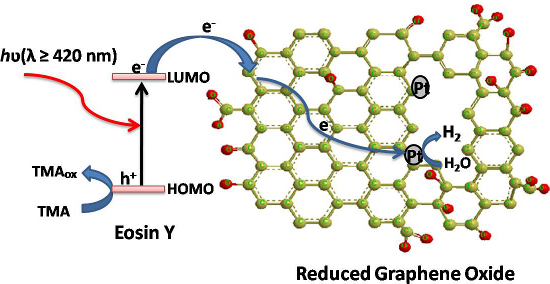
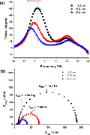
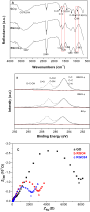
- photoreaction. This further indicates the restoration of the sp2 π-conjugated network for RGO after the photoreaction. Due to restoration of the sp2 π-conjugated network in RGOx, its conductivity is expected to increase [42]. To verify this enhancement, the electrochemical impedance spectroscopy (EIS) of GO
- -resolution TEM (HRTEM) images were taken on a JEOL JEM-2010 (TEM) equipped with an energy dispersive spectrometer (EDS). Electrochemical impedance spectroscopy (EIS) was measured on an IVIUMSTAT electrochemical workstation (Netherlands). The electrochemical experiments were performed in a 3-compartment cell





Electrochemical and electron microscopic characterization of Super-P based cathodes for Li–O2 batteries
Beilstein J. Nanotechnol. 2013, 4, 665–670, doi:10.3762/bjnano.4.74
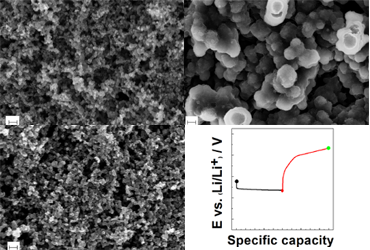
- ·(g carbon)−1. Electrochemical impedance spectroscopy (EIS) measurements have been carried out in the frequency range between 200 kHz and 5 mHz superimposing a sinusoidal potential oscillation of ±2.5 mV. Electrochemical measurements have been carried out using a vmp 2/z (Bio-Logic, France). All
- the charge at ≈4.3 V. In order to investigate the cathode/electrolyte interface, we examined the evolution of the cell impedance during the first cycle. Electrochemical impedance spectra have therefore been collected from fresh, once discharged and re-charged electrodes, as shown in Figure 2. The EIS


Novel composite Zr/PBI-O-PhT membranes for HT-PEFC applications
Beilstein J. Nanotechnol. 2013, 4, 481–492, doi:10.3762/bjnano.4.57
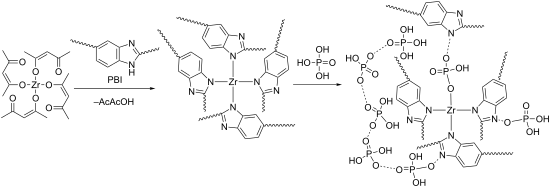
- cells with different composite membranes demonstrate a similar behaviour. More detailed analysis has been performed by means of EIS by using an equivalent circuit with a transmission line for the approximation of impedance spectra. According to the impedance data, using zirconium as a crosslinking agent


A facile approach to nanoarchitectured three-dimensional graphene-based Li–Mn–O composite as high-power cathodes for Li-ion batteries
Beilstein J. Nanotechnol. 2012, 3, 513–523, doi:10.3762/bjnano.3.59
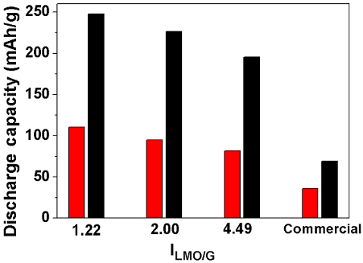
- theoretical capacity of 148 mAh·g−1. The electrochemical impedance was performed on the aforementioned CR2032 coin cells with lithium foil as the counter and reference electrode. All cells were measured at the fifth fully discharged state. INPHAZETM EIS system was employed to measure the electrochemical




Reduced electron recombination of dye-sensitized solar cells based on TiO2 spheres consisting of ultrathin nanosheets with [001] facet exposed
Beilstein J. Nanotechnol. 2012, 3, 378–387, doi:10.3762/bjnano.3.44
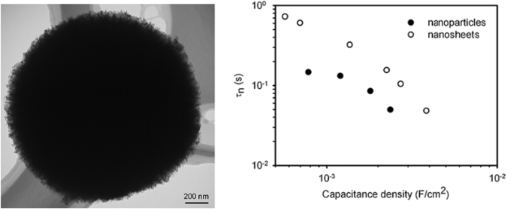
- spectroscopy (EIS) of the DSCs was measured in the frequency range of 50,000–0.1 Hz at room temperature by a Versa-stat 3 electrochemical workstation (Princeton Applied Research). The EIS measurement was carried out under illumination, which was provided by a light emitting diode (LED, 627 nm) at open-circuit
- . The intensity of the incident illumination on the front side of the DSC (TiO2 side) was adjusted by using a combination of neutral density filters. The EIS spectrum was analyzed with a Zview software, by using a transmission-line-based equivalent circuit to obtain the information of chemical
- -transfer and charge-transport process in DSCs can be measured by small-perturbation-based transient methods, such as electrochemical impedance spectroscopy (EIS) or intensity modulated photocurrent spectroscopy (IMPS) and intensity modulated photovoltage spectroscopy (IMVS) [13][15]. Compared to IMPS and