Search results
Search for "TGA" in Full Text gives 149 result(s) in Beilstein Journal of Nanotechnology.
Nanocomposites comprised of homogeneously dispersed magnetic iron-oxide nanoparticles and poly(methyl methacrylate)
Beilstein J. Nanotechnol. 2018, 9, 1613–1622, doi:10.3762/bjnano.9.153
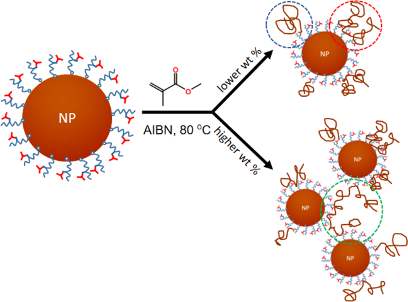
- mRA/mp = 0.53 [27]. The synthesized nanoparticles were dispersed in toluene and the suspension was centrifuged at a relative centrifugal force (RCF) of 5000g for 5 min. The colloidal suspension was decanted from the centrifuge tube and analyzed using thermogravimetric analysis (TGA). The colloidal
- 5000g for 5 min. The colloidal suspension was decanted from the centrifuge tube and analyzed using TGA. The colloidal suspension contained 38.0 wt % nanoparticles (NPs). For further analyses, a small amount of the functionalized NP-MMA was isolated from the suspension by flocculating them with a large
- -shift standard. The diffuse reflectance infrared Fourier transform spectra (DRIFT, Perkin Elmer Spectrum 400 equipped with DRIFT accessory) were recorded in KBr. The weight fraction of nanoparticles in the nanocomposites was determined with a Mettler Toledo thermogravimetric analysis (TGA) instrument


Closed polymer containers based on phenylboronic esters of resorcinarenes
Beilstein J. Nanotechnol. 2018, 9, 1594–1601, doi:10.3762/bjnano.9.151
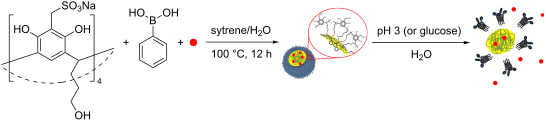
- pulsed gradient unit capable of producing magnetic-field pulse gradients in the z-direction of about 56 G/cm. D2O was used as solvent in all experiments. Chemical shifts were reported relative to H2O (δ = 4.7 ppm) as an internal standard. Measurements by the DSC and TGA methods were carried out with a
- -B) (0.27 mg/mL) at pH 3 (universal buffer), and after addition of glucose (0.4 mM), 25 °C. Supporting Information Supporting Information features data for SRA and p(SRA-B): size distribution diagram, DLS and SLS data, IR spectra, NMR spectra, TGA and DSC data, acid-base titration curves; UV- and


Electrodeposition of reduced graphene oxide with chitosan based on the coordination deposition method
Beilstein J. Nanotechnol. 2018, 9, 1200–1210, doi:10.3762/bjnano.9.111
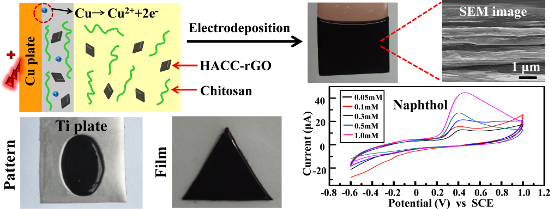
- pattern of the HACC-rGO/CS film shows a diffraction peak at 22.1°, which is attributed to the HACC-rGO in the deposited film. Additionally, the HACC-rGO/CS film presents another diffraction peak at 10.8°, which corresponds to the diffraction peak of chitosan [34][35]. The thermogravimetric analysis (TGA


Understanding the performance and mechanism of Mg-containing oxides as support catalysts in the thermal dry reforming of methane
Beilstein J. Nanotechnol. 2018, 9, 1162–1183, doi:10.3762/bjnano.9.108
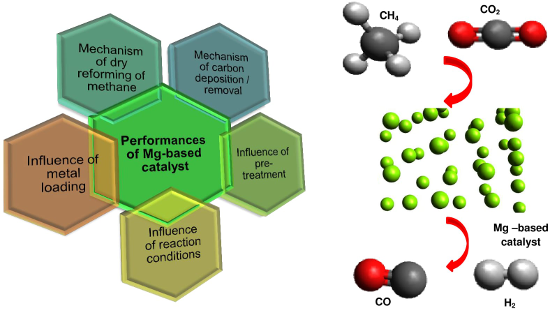
- co-precipitation methods for the preparation of a Ni–MgO–Al2O3 catalyst. The Ni particle size was uniformly distributed in the catalysts prepared via sol–gel. TGA results clearly showed that 13% and 7.7% carbon was deposited on the catalysts prepared via the sol–gel method and the co-precipitation






Single-crystalline FeCo nanoparticle-filled carbon nanotubes: synthesis, structural characterization and magnetic properties
Beilstein J. Nanotechnol. 2018, 9, 1024–1034, doi:10.3762/bjnano.9.95
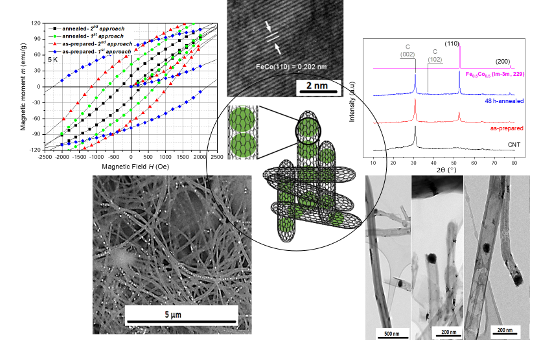
- of the filling particles, and therefore, the magnetic properties. The samples were analyzed by scanning electron microscopy (SEM), transmission electron microscopy (TEM), X-ray diffraction (XRD), superconducting quantum interference device (SQUID) and thermogravimetric analysis (TGA). The Fe–Co
- -ray diffractometer (XRD) (Panlytical) with Co Kα radiation (λ = 1.79278 Å) in reflection geometry at a scanning rate of 0.05° s−1 in the 2θ range from 10° to 80°. Thermogravimetric measurements (TGA) were performed with a SDT-Q600 (TA Instruments) instrument. A few milligrams of the material (≈5 mg
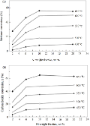
- of the filling inside the CNTs and was confirmed by quantitative measurements performed by TGA as will be shown later (see Figure 6). It is important to emphasize the effect of annealing on the growth of the particles. For the as-prepared samples (i.e., only reduced, Figure 1a and 1b), different


Enzymatically promoted release of organic molecules linked to magnetic nanoparticles
Beilstein J. Nanotechnol. 2018, 9, 986–999, doi:10.3762/bjnano.9.92
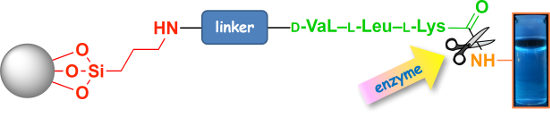
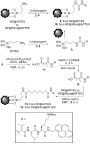
- quantity of APTES incorporated into the NPs and the loaded amount of 6 or 12 into 9 and 13 was determined by thermogravimetric analysis (TGA) (Figure 2). The amount of APTES resulted to be 9.5%. TGA results for 9 and 13 showed a weight loss of 14.3% and 23.5%, respectively. Considering the initial amount
- pyrenylmethylamine to be determined. From these data, and from the loading determined by TGA, we calculated the conversions of the enzymatic reactions, which were 7.1% and 5.8% for the urea spacer and for the azelate spacer, respectively. Thus, although we have demonstrated that the enzymatic reaction was actually
- to ultrasonic vibrations to decrease the aggregation, and deposited on a lacey carbon copper grid. TGA was performed using a Labsys EVO Setaram instrument. Approximately 5 mg of sample was weighed in an open alumina crucible and heated from 50 °C to 1000 °C in He flux (20 mL/min) with a heating rate




A review of carbon-based and non-carbon-based catalyst supports for the selective catalytic reduction of nitric oxide
Beilstein J. Nanotechnol. 2018, 9, 740–761, doi:10.3762/bjnano.9.68

- chemisorption The behaviour of the SCR-NH3 catalyst deposition is typically characterised by: temperature-programmed surface reaction (TPSR) mass spectroscopy (MS) differential thermal analysis (DTA) thermogravimetric analysis (TGA) temperature-programmed hydrogenation (TPH) temperature-programmed oxidation
Cyclodextrin-assisted synthesis of tailored mesoporous silica nanoparticles
Beilstein J. Nanotechnol. 2018, 9, 693–703, doi:10.3762/bjnano.9.64
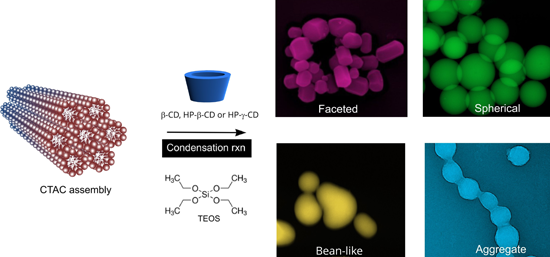
- smaller particle size than those produced with HP-functional CDs. FTIR, TGA and solid-state 13C NMR demonstrated the adsorption of CDs on the particle surfaces. The proposed concept allows for the synthesis of silica nanoparticles with control over particle shape and size by adjusting the concentration of
- , chemical analysis by FTIR and solid state 13C NMR, thermal properties and composition by TGA, and pore structure by WAXS. Results and Discussion Figure 2 shows the silica particles produced at β-CD concentrations of 0.5 and 1% (w/v) and constant tetraethoxysilane (TEOS) concentration of 1% (v/v). At these
- (TGA) of the particles revealed a small mass loss (ca. 2% (w/v)) above 300 °C due to adsorbed CD moieties (Figure S2, Supporting Information File 1). For further confirmation of shape transformation of the particles from round to multifaceted ones with HP-functional CDs, MSNs were also synthesized


Perovskite-structured CaTiO3 coupled with g-C3N4 as a heterojunction photocatalyst for organic pollutant degradation
Beilstein J. Nanotechnol. 2018, 9, 671–685, doi:10.3762/bjnano.9.62
- 45 kV and 100 mA. The scans were collected over a 2θ range of 10–90° with a scan rate of 2° per minute. Fourier transform infrared (FTIR) spectra were recorded for functional group analysis by using an Agilent K8002AA Carry 660 instrument. Thermogravimetric analysis (TGA) was carried out in order to
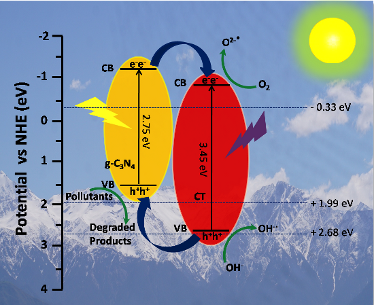
- comprises of all the peaks of g-C3N4 and CT, indicating that the addition of g-C3N4 has not altered the structural properties of CT, which is in agreement with the XRD results. Thermogravimetric studies To investigate the thermal stability of g-C3N4, CT and CTCN heterojunction, thermogravimetric (TGA
- ) analysis was carried out from ambient temperature to 800 °C, at a heating rate of 10 °C min−1 under nitrogen atmosphere. The corresponding results are presented in Figure 3. For pure g-C3N4 nanosheets, the rapid decay of the TGA curve from 520 °C to 740 °C represents the typical thermal decomposition and


Ultralight super-hydrophobic carbon aerogels based on cellulose nanofibers/poly(vinyl alcohol)/graphene oxide (CNFs/PVA/GO) for highly effective oil–water separation
Beilstein J. Nanotechnol. 2018, 9, 508–519, doi:10.3762/bjnano.9.49
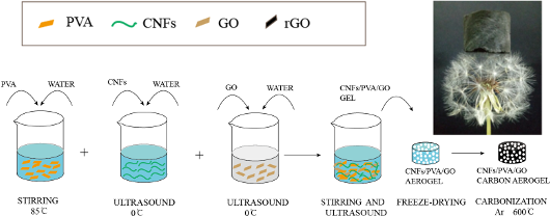
- analysis (TGA) in nitrogen from 30 to 600 °C. In addition to the CNF/PVA/GO carbon aerogels, the other three samples showed three different stages of weight loss: the water decomposition stage, polymer decomposition stage, and residual substance decomposition stage. The thermal stability of the aerogel was
- thermal decomposition of the aerogels. As shown in the TGA curves of the CNF/PVA/GO carbon aerogels, no weight loss occurred, indicating that carbonation was complete. Hydrophobicity is an important parameter that influences the absorption capability for organic solvents and oils. Besides, it is reported
- ) of the carbon aerogels was obtained using an optical contact angle meter (OCA, Data Physics) with 4 μL water droplets. Raman spectra results were measured using a DXR Raman spectrophotometer (Thermo Scientific, USA). Thermal stability measurements were measured using a thermogravimetric analyzer (TGA


Photocatalytic and adsorption properties of TiO2-pillared montmorillonite obtained by hydrothermally activated intercalation of titanium polyhydroxo complexes
Beilstein J. Nanotechnol. 2018, 9, 364–378, doi:10.3762/bjnano.9.36
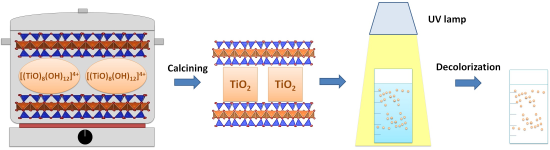
- close to the sol formation limit. The materials, produced at various annealing temperatures from the intercalated samples, were characterized by infrared spectroscopy, differential scanning calorimetry (DSC)/thermogravimetric analysis (TGA), X-ray diffraction, dynamic light scattering (DLS) measurements
- titanium dioxide. The results of a synchronous (thermogravimetric analysis (TGA) and differential scanning calorimetry (DSC)) thermal analysis of the samples are shown in Figure 4. As seen in Figure 4, the MM, Ti-MM and Ti-MMH samples yield similar thermogravimetric curves, in which the loss of mass for
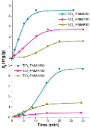
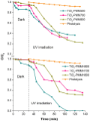
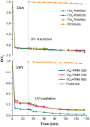
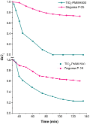
- analysis (TGA)/differential scanning calorimetry (DSC) curves of the raw MM, Ti-MM, and Ti-MMH. SEM images and EDS spectra of the surface of (a) TiO2-PMM500, and (b) TiO2-PMMH500. Nitrogen adsorption/desorption isotherms (а) and pore size distribution (b) of the raw MM, TiO2-PMMx, and TiO2-PMMHx. Kinetic






Bombyx mori silk/titania/gold hybrid materials for photocatalytic water splitting: combining renewable raw materials with clean fuels
Beilstein J. Nanotechnol. 2018, 9, 187–204, doi:10.3762/bjnano.9.21
- . Data analysis was done with the WITec Control FOUR 4.1 software. Thermogravimetric analysis (TGA) was done on a Netzsch TG 209F1 from 30 °C to 1000 °C with a heating rate of 10 K/min in synthetic air. To evaluate the reproducibility of the measurements, one sample was analyzed three times. All data
- phase (anatase, rutile, brookite) is, however, not possible because of the breadth of these bands. Figure S7, Supporting Information File 1 shows thermogravimetric analysis (TGA) data. The TGA curves of the pure silk show two steps. The first step which spans up to 105 °C with a 4% weight loss, can be
- °C [82]. No further weight loss is observed up to 1000 °C and the residual 68% can be assigned to TiO2. Like the TPS materials, the TS materials essentially exhibit identical TGA curves irrespective of the presence or absence of Au. Again, the first weight loss of 10% up to 120 °C is due to the loss




One-step chemical vapor deposition synthesis and supercapacitor performance of nitrogen-doped porous carbon–carbon nanotube hybrids
Beilstein J. Nanotechnol. 2017, 8, 2669–2679, doi:10.3762/bjnano.8.267
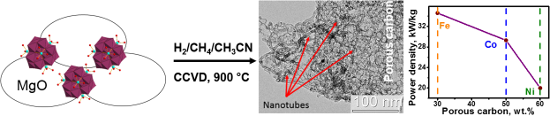
- at 700 °C. The catalysts were activated in a CH3CN/CH4/H2 flow with a slow heating ramp from room temperature to 900 °C. This resulted in the growth of MWCNTs on in situ generated metal catalytic nanoparticles, and formation of porous carbon over the MgO support. TGA analysis of the materials


Synthesis of [{AgO2CCH2OMe(PPh3)}n] and theoretical study of its use in focused electron beam induced deposition
Beilstein J. Nanotechnol. 2017, 8, 2615–2624, doi:10.3762/bjnano.8.262
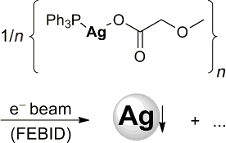
- O2CCH2OMe− is generated, further following the first fragmentation route. However, at 1.3 eV the initial step is decarboxylation giving [AgCH2OMe(PPh3)], followed by Ag–P and Ag–C bond cleavages. Keywords: DFT; DSC; FEBID; silver(I) carboxylate; solid-state structure; TGA; Introduction Focused electron
- (1H NMR, CDCl3 δ = 7.26; 13C{1H} NMR, CDCl3 δ = 77.16 ppm) or by external standards (31P{1H} NMR relative to 85% H3PO4 0.0 ppm and P(OMe)3 139.0 ppm). The FTIR spectra were recorded using a Thermo Nicolet IR 200 instrument. Vapor pressure experiments were performed with a Mettler Toledo TGA/DSC1 1100
- system with a UMX1 balance. The TG, DSC and TG–MS experiments were performed with a Mettler Toledo TGA/DSC1 1600 system with a MX1 balance coupled with a Pfeiffer Vacuum MS Thermostar GSD 301 T2 mass spectrometer. EI and high-resolution ESI mass spectra were recorded with a Finnigan MAT 8230 SQ


Preparation and characterization of polycarbonate/multiwalled carbon nanotube nanocomposites
Beilstein J. Nanotechnol. 2017, 8, 2026–2031, doi:10.3762/bjnano.8.203
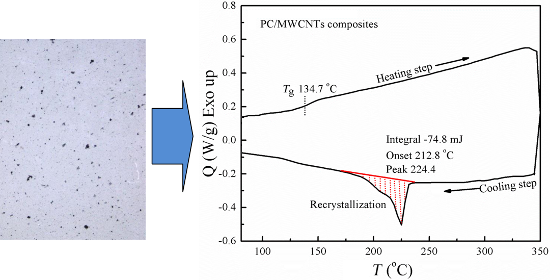
- of MWCNTs on the structure and properties of the composites. The nanocomposites were characterized by DSC, DTA, TGA, UV–vis, FTIR and Raman spectroscopy to evaluate the changes induced by the filler in the polymer matrix. UV–vis, FTIR and Raman spectroscopy measurements confirmed the presence of the
- dispersed phase in the composite films, while TGA and DSC analysis of the nanocomposites revealed enhanced thermal stability and decreased crystallinity, respectively, as compared to the neat polymer. The proposed composites can find application in a number of everyday products where polycarbonate is the
- . Instrument calibration was performed using silicon samples. To investigate the stability, purity and thermal resistance of the materials, thermogravimetric analysis (TGA) was used [11][12][13][14] (TGA/DSC-1, Mettler-Toledo, Italy). Simultaneous differential thermal analysis (DTA) was used to characterize


Carbon nano-onions as fluorescent on/off modulated nanoprobes for diagnostics
Beilstein J. Nanotechnol. 2017, 8, 1878–1888, doi:10.3762/bjnano.8.188
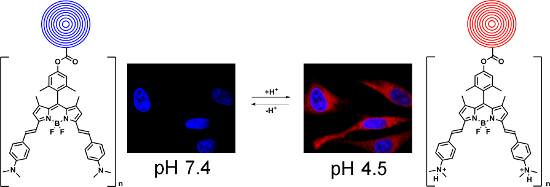
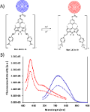
- -CNOs-1b had a λem of 633 upon photoexcitation of 600 nm in DMSO. Hence, the ICT characteristics of the dye are preserved on the CNOs. Characterization of CNOs Oxi- and fluo-CNOs were characterized by thermogravimetric analysis (TGA) and Raman spectroscopy to prove the successful surface
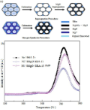
- functionalization of the CNOs. The high degree of surface functionalization of the oxi-CNOs and the successful attachment of the dye molecules on the oxi-CNOs was observed by TGA analysis. The TGA spectrum of the oxi-CNOs performed in air (Figure 3, blue) showed a decrease in decomposition temperature from 686 °C
- to 668 °C, with a weight loss of 7.70% compared to the p-CNOs. From the TGA weight loss at 450 °C, a total of 122 carboxylic groups per CNO were estimated. The functionalization of oxi-CNOs with the dye molecules causes a further weight loss of the fluo-CNOs of 3.2% compared to the oxi-CNOs, with a




Oxidative stabilization of polyacrylonitrile nanofibers and carbon nanofibers containing graphene oxide (GO): a spectroscopic and electrochemical study
Beilstein J. Nanotechnol. 2017, 8, 1616–1628, doi:10.3762/bjnano.8.161
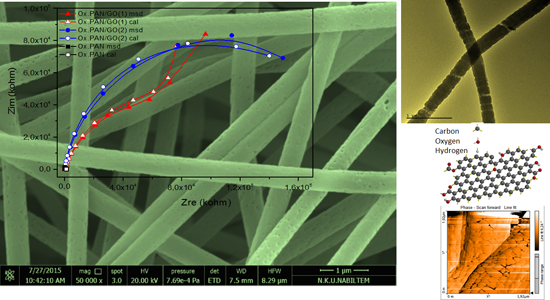
- nanofiber webs were characterized by using a dynamic mechanical analyzer (DMA) (TA Q800 Dynamic Mechanical Analyser). Thermal behavior of nanofiber webs was examined with thermogravimetric analysis (TGA, Q 50 from TA instruments). The structure of the nanofiber webs was characterized by attenuated total
- temperatures [38][45]. Weight loss starts at around 100 °C with the removal of moisture and continues with increasing duration and temperature. However, it is not much significant for the oxidation process [12][18][46]. Weight loss as a function of temperature and time was recorded with TGA. There is a region
- in which there is no weight loss, and this region can be explained by cyclization reactions [37]. Both TGA curves (in N2 and in O2 atmosphere) exhibit the same trend. However, the region with no weight loss is shifted in N2 atmosphere because of N2 suppresses the reactions compared to O2, according


Low-temperature CO oxidation over Cu/Pt co-doped ZrO2 nanoparticles synthesized by solution combustion
Beilstein J. Nanotechnol. 2017, 8, 1546–1552, doi:10.3762/bjnano.8.156

- %)–ZrO2 particles showed an average size of 10.7 nm. These results are similar to those obtained in XRD (Table 2). Figure 4 shows a TGA measurement of the synthesized Pt(1%)–Cu(1%)–ZrO2 nanoparticles in an inert atmosphere. No mass loss is seen in the tested temperature range (100–750 °C). The Raman
- nanoparticles were dispersed in 2-propanol and ultrasonicated for about 30 min and finally deposited on carbon-coated Cu grids for TEM analysis. Thermal analysis of the synthesized Cu/Pt co-doped ZrO2 nanoparticles was done on TGA thermal analyzer (STA-1500 Model) instrument at a heating rate of 10 °C/min in
- CO conversion was measured as follows: Powder XRD pattern of (a) ZrO2, (b) Pt(1%)–ZrO2, and (c) Pt(1%)–Cu(1%)–ZrO2. Expanded region of XRD between 29° and 37° of (a) ZrO2, (b) Pt(1%)–ZrO2 and (c) Pt(1%)–Cu(1%)–ZrO2. HRTEM micrograph of Pt(1%)–Cu(1%)–ZrO2. TGA measurement of Pt(1%)–Cu(1%)–ZrO2. Raman




Synthesis, spectroscopic characterization and thermogravimetric analysis of two series of substituted (metallo)tetraphenylporphyrins
Beilstein J. Nanotechnol. 2017, 8, 1191–1204, doi:10.3762/bjnano.8.121
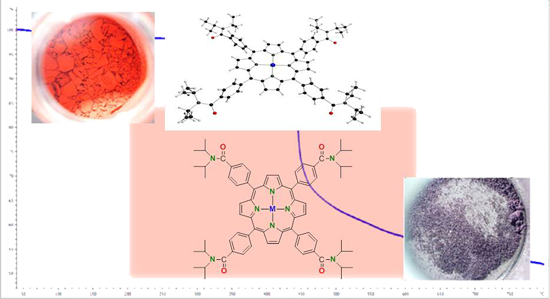
- recorded with a Spectronic GENESYS 6 UV–visible spectrophotometer (Thermo Electron Corporation) between 200–800 nm. TG experiments were performed using a Mettler Toledo TGA/DSC1 1600 system with an MX1 balance. Synthesis of 2 To a suspension of 1 (1.00 g, 1.26 mmol) in dichloromethane (140 mL


Preparation of thick silica coatings on carbon fibers with fine-structured silica nanotubes induced by a self-assembly process
Beilstein J. Nanotechnol. 2017, 8, 1145–1155, doi:10.3762/bjnano.8.116
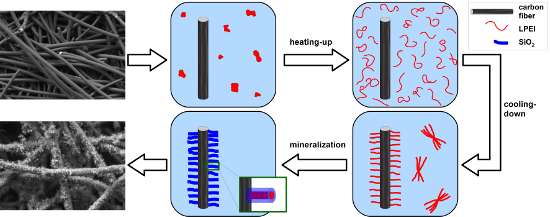
- with silica (Figure 3). The absence of silica in the polyamine-free system can be further confirmed by means of EDX and TGA analysis revealing no evidence for silica being present on the fiber surface. This proves the importance and necessity of polyamine presence on the fiber surface for the proposed
- of silica deposited on the fiber surface, as can be seen from TGA. Hence the deposition route via TEPA modified fibers makes only thin silica coatings in the nanometer range possible, while preventing the formation of separate silica particles in the dispersing phase. Silicification of carbon fibers
- analysis (TGA) was performed with a TA Instruments Q500 Thermogravimetric Analyzer. Nitrogen gas sorption isotherms of LPEI/silica composite particles at 77 K were recorded with a Quantachrome NOVA 2000 Series instrument. Prior to measurements, the samples were heated for 2 h in vacuum at 110 °C (LPEI


Hierarchically structured nanoporous carbon tubes for high pressure carbon dioxide adsorption
Beilstein J. Nanotechnol. 2017, 8, 1135–1144, doi:10.3762/bjnano.8.115
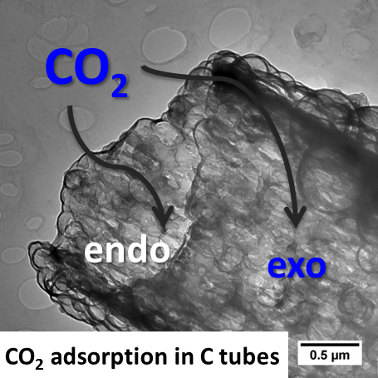
- nitrogen adsorption at 77 K, Raman spectroscopy, infrared spectroscopy, thermal gravimetric analysis (TGA), scanning electron microscopy (SEM) as well as transmission electron microscopy (TEM). The adsorption of carbon dioxide on the carbon tubes at 25 °C at pressures of up to 30 bar was studied using a


Fully scalable one-pot method for the production of phosphonic graphene derivatives
Beilstein J. Nanotechnol. 2017, 8, 1094–1103, doi:10.3762/bjnano.8.111
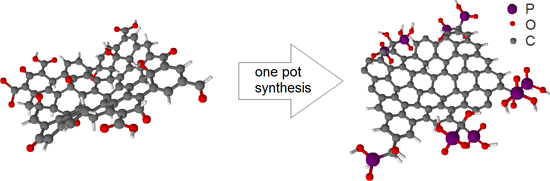
- the emitted photoelectrons. The binding energies were corrected using the background C 1s line (285.0 eV) as a reference [29]. XPS spectra were analysed with Casa-XPS software using a Shirley background subtraction and Gaussian–Lorentzian fits. Simultaneous thermogravimetric analysis (TGA) and
- first derivatives of TGA and DSC, denoted as DTG and DDSC, respectively, were calculated using Netzsch Proteus Thermal Analysis program. In order to investigate the electrical properties of obtained GO structures, the total surface conductivity (σ) was measured by a conventional DC four-wire method with


Structural properties and thermal stability of cobalt- and chromium-doped α-MnO2 nanorods
Beilstein J. Nanotechnol. 2017, 8, 1032–1042, doi:10.3762/bjnano.8.104
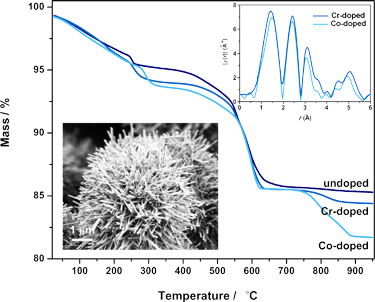
- using a C3/C5 Nion USTEM spherical aberration-corrected microscope working at 100 keV. Electron energy loss spectra (EELS) were recorded with a modified GATAN EELS system with a back-illuminated charge coupled device camera. Thermogravimetric measurements were performed on a Mettler Toledo TGA/DSC1
- by coupling the TGA/DSC1 Instrument with a quadrupole mass spectrometer Thermostar (Balzers). In this case, the initial mass of the sample was around 5 mg. Evolved gases were transferred via heated quartz capillary (T = 190 °C) to the entrance of the mass spectrometer. X-ray diffractograms of the


Bio-inspired micro-to-nanoporous polymers with tunable stiffness
Beilstein J. Nanotechnol. 2017, 8, 906–914, doi:10.3762/bjnano.8.92
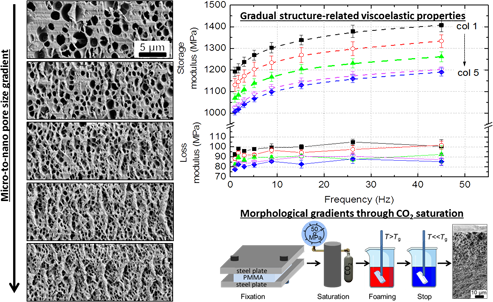
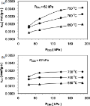
- , Switzerland) sheets of 500 μm thickness, with a glass-transition temperature (Tg) of 105 °C (measured by thermogravimetric analysis (TGA) for the PMMA sheets) and a bulk elastic modulus of 3300 MPa. The as-purchased PMMA films were cut to 20 mm × 20 mm chips and clamped between two flat metal plates with four
- into the sample and to employ a temperature gradient during the pore growth. The foaming process is schematically shown in Figure 1. The glass-transition temperature (Tg) of the utilized 500 μm thick PMMA sheets is 105 °C at atmospheric pressure (measured by TGA). However, because of a great


Recombinant DNA technology and click chemistry: a powerful combination for generating a hybrid elastin-like-statherin hydrogel to control calcium phosphate mineralization
Beilstein J. Nanotechnol. 2017, 8, 772–783, doi:10.3762/bjnano.8.80
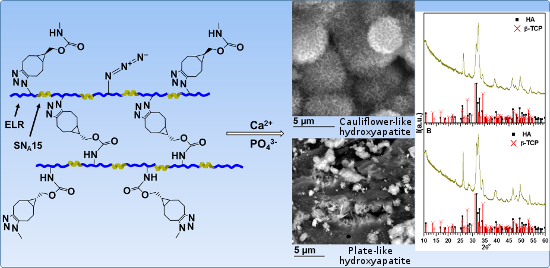
- Instruments, Inc.). 6.5 Thermogravimetric analysis (TGA) Dry samples were ground in an agate mortar prior to TGA analysis. TGA experiments were performed using a Mettler-Toledo thermo-balance S.A.E instrument with a horizontal furnace and an automatic gas flow controller. Samples were weighed in a 70 µL
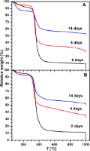
- band at around 881 cm−1 is assigned to HPO42−, most likely due to the presence of DCPD. The bands at around 600 and 550 cm−1 are assigned to ν4(PO4)3− bending mode. Figure 5 shows the thermogravimetric analysis (TGA) curves obtained for the ELR hydrogels after mineralization and drying. The first
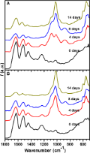
- spectra of the mineralized hydrogels: (A) IK24 hydrogel, and (B) H3AH3 hydrogel after different incubation times. TGA curves for (A) IK24 hydrogels mineralized for 0, 4, and 14 days, respectively, and (B) H3AH3 hydrogels mineralized for 0, 4, and 14 days, respectively. SEM images of the hydrogels after