


Search results
Search for "anisotropic" in Full Text gives 246 result(s) in Beilstein Journal of Nanotechnology. Showing first 200.
The nanomorphology of cell surfaces of adhered osteoblasts
Beilstein J. Nanotechnol. 2021, 12, 242–256, doi:10.3762/bjnano.12.20
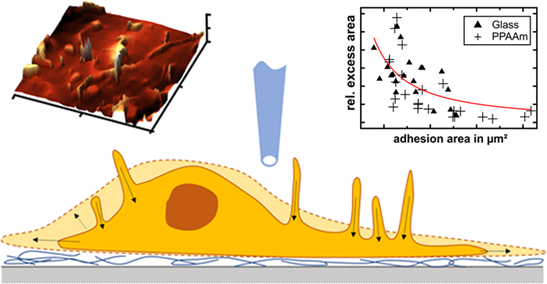
- that excess membrane was “consumed” in more anisotropic or spread cell shapes to compensate for the increased surface-to-volume ratio in the course of spreading. Ruffles could serve as a membrane reserve prior to formation of large adhesion interfaces. This would be compatible with the observation that
- cells or on larger extensions of them (Figure 7a). Since they come along with anisotropic shapes and the wrinkles are usually aligned parallel to the long side of the cell or its extension, we suspect that they are related to the cytoskeleton underneath, that is, the membrane may cling to the proximate


A review on the green and sustainable synthesis of silver nanoparticles and one-dimensional silver nanostructures
Beilstein J. Nanotechnol. 2021, 12, 102–136, doi:10.3762/bjnano.12.9


Bulk chemical composition contrast from attractive forces in AFM force spectroscopy
Beilstein J. Nanotechnol. 2021, 12, 58–71, doi:10.3762/bjnano.12.5
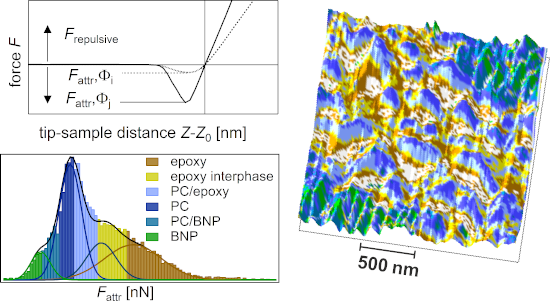
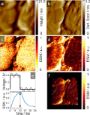
- shows the property domain of the measurements. On the top left, the histogram of the stiffness kr, acquired from glass (grey bars), neat epoxy (yellow bars), and boehmite (green bars) is shown. Boehmite shows a wide range of kr values (0.2 < kr < 0.4), which is due to its anisotropic ductility caused by


Absorption and photoconductivity spectra of amorphous multilayer structures
Beilstein J. Nanotechnol. 2020, 11, 1757–1763, doi:10.3762/bjnano.11.158
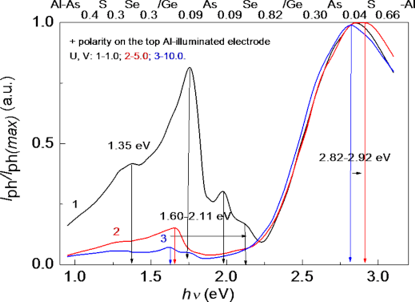
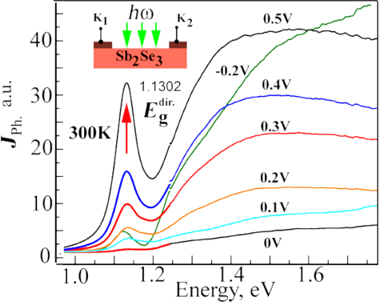
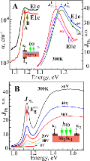
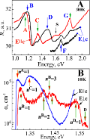
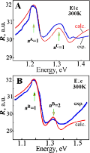
- build photodetectors with different signs of the photocurrent. This phenomenon of photocurrent sign inversion through polarization was also observed for photodetectors based on ZnAs2 anisotropic crystals [18]. Figure 8 shows that, besides the main peaks in the spectral distribution of the photocurrent


Electrokinetic characterization of synthetic protein nanoparticles
Beilstein J. Nanotechnol. 2020, 11, 1556–1567, doi:10.3762/bjnano.11.138
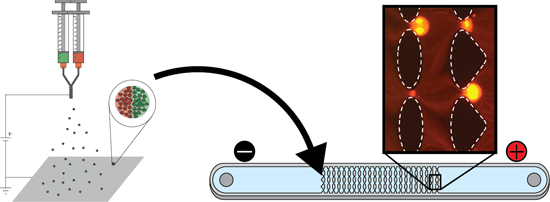
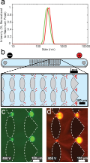
- treatment of a wide variety of diseases. However, the slow progress in the field has resulted in relatively few therapies being translated into the clinic. Anisotropic synthetic protein nanoparticles (ASPNPs) show potential as a next-generation drug-delivery technology, due to their biocompatibility
- -based electrokinetic (EK) microdevices to characterize ASPNPs. We found that anisotropy strongly influences electrokinetic particle behavior by comparing compositionally identical anisotropic and non-anisotropic SPNPs. Additionally, we were able to estimate the empirical electrokinetic equilibrium
- pressure-driven techniques, allow for intraparticle spatial control of the material composition through layer-by-layer techniques, no previous synthetic schemes were able to synthesize anisotropic protein nanoparticles with distinct hemispheres [5][11][12]. To address this issue, we have adapted



Magnetic-field-assisted synthesis of anisotropic iron oxide particles: Effect of pH
Beilstein J. Nanotechnol. 2020, 11, 1230–1241, doi:10.3762/bjnano.11.107
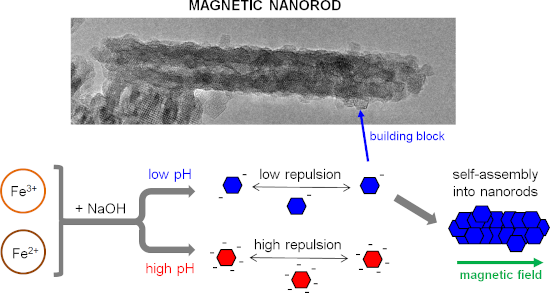
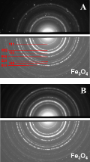
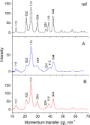
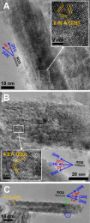
- the dipole–dipole interaction between their building blocks (small hexagonal faceted magnetite nanocrystals), which are formed during the first step of the reaction. The study suggests a facile, green and controllable method for synthesizing anisotropic magnetic nanoparticles in the absence of
- stabilizers, which is important for further modification of their surfaces and/or incorporation of the nanoparticles into different media. Keywords: anisotropic nanoparticles; magnetic nanoparticles; magnetite; nanorods; transmission electron microscopy; Introduction The research field dedicated to the
- synthesis and investigation of anisotropic magnetic nanomaterials has received much attention in the last years [1][2][3]. Among different magnetic nanomaterials, iron oxides and hydroxides are of particular interest because of their high magnetization capability, availability, low toxicity and





Photothermally active nanoparticles as a promising tool for eliminating bacteria and biofilms
Beilstein J. Nanotechnol. 2020, 11, 1134–1146, doi:10.3762/bjnano.11.98
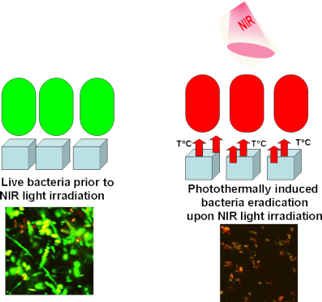
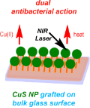
- of Ag+ and by the so-called nanomechanical effect (i.e., a disruptive phenomenon that is generated by the high NP surface energy at the bacterial membrane) [69]. A reproducible synthetic method was developed to grow anisotropic silver nanoplates on glass with a LSPR absorption tunable in the NIR


Excitonic and electronic transitions in Me–Sb2Se3 structures
Beilstein J. Nanotechnol. 2020, 11, 1045–1053, doi:10.3762/bjnano.11.89
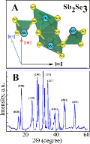
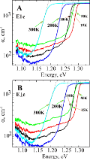
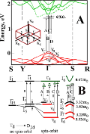
- costs [3][4][5][6][7][8][9][10]. It has been shown that Sb2Se3 has many applications in photovoltaic devices and thermoelectric systems where it can be used as a thin film [11], in thermovoltaic and switch devices [12], in optical data storage [13] and in optoelectronics as a 2D anisotropic material [14


Electrochemical nanostructuring of (111) oriented GaAs crystals: from porous structures to nanowires
Beilstein J. Nanotechnol. 2020, 11, 966–975, doi:10.3762/bjnano.11.81
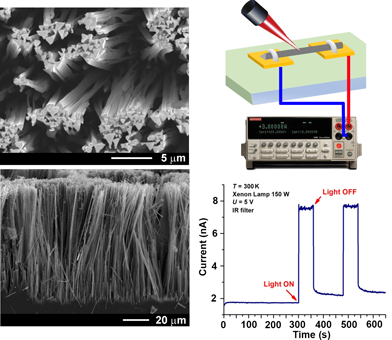
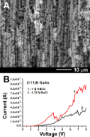
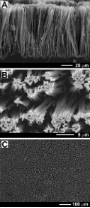
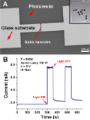
- templating, anisotropic chemical etching, localized anodic etching, and isotropic anodic oxidation [15][16]. However, this is a complex multistep technology. A more simple and cost-effective technology was applied for obtaining triangular GaAs nanowires through electrochemical etching of GaAs(100) surfaces
- -ratio arrays of spatially ordered triangular GaAs nanopillars with diameters of about 1.5 µm were previously fabricated by a combination of electrochemical etching in HCl electrolyte of a pre-etched GaAs(111) substrate and anisotropic chemical etching [15][16]. However, this is a multistep process





Integrated photonics multi-waveguide devices for optical trapping and Raman spectroscopy: design, fabrication and performance demonstration
Beilstein J. Nanotechnol. 2020, 11, 829–842, doi:10.3762/bjnano.11.68
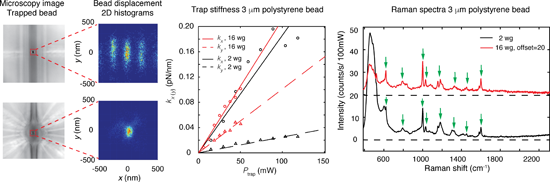
- (compare Figure 4b) using deep reactive ion etching (DRIE). This is a critical step, since the etch goes 14.3 µm deep down to the substrate, through all the device layers, including the waveguide circuitry at two levels. The etch is highly anisotropic and produces smooth walls of the microbath and thus
- structures is seen to be highly anisotropic, while giving smooth sidewalls. The facets of the excitation and detection waveguides are part of the cylindrical walls of the microbath and cannot be seen here. The surface adjacent to the microbath and the side channels is slightly angled. This feature occurs


Hexagonal boron nitride: a review of the emerging material platform for single-photon sources and the spin–photon interface
Beilstein J. Nanotechnol. 2020, 11, 740–769, doi:10.3762/bjnano.11.61




Comparison of fresh and aged lithium iron phosphate cathodes using a tailored electrochemical strain microscopy technique
Beilstein J. Nanotechnol. 2020, 11, 583–596, doi:10.3762/bjnano.11.46
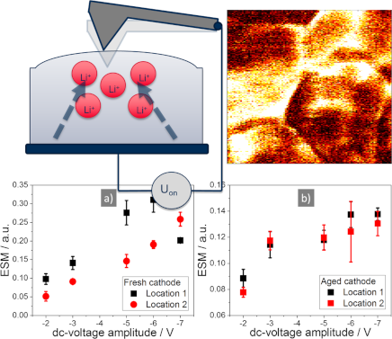
- a homogeneous high signal on planar locations inside the particle. The variation of the ESM signal inside the particle is most likely caused by the anisotropic ionic mobility of the olivine structure of LFP. The olivine structure exhibits preferential lithium-ion transport along the [10] channel of



Multilayer capsules made of weak polyelectrolytes: a review on the preparation, functionalization and applications in drug delivery
Beilstein J. Nanotechnol. 2020, 11, 508–532, doi:10.3762/bjnano.11.41




An advanced structural characterization of templated meso-macroporous carbon monoliths by small- and wide-angle scattering techniques
Beilstein J. Nanotechnol. 2020, 11, 310–322, doi:10.3762/bjnano.11.23
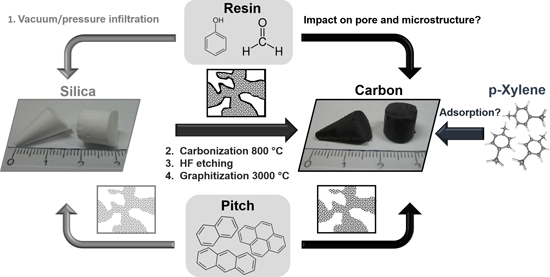
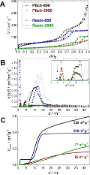
- the resin stacks compared to the anisotropic arrangement of the pitch stacks. Furthermore, the condensation of the resin precursor molecules generates water, which might contribute to the formation of closed voids. However, surprisingly even the pitch-based carbon does not form graphite, which is




Influence of the epitaxial composition on N-face GaN KOH etch kinetics determined by ICP-OES
Beilstein J. Nanotechnol. 2020, 11, 41–50, doi:10.3762/bjnano.11.4
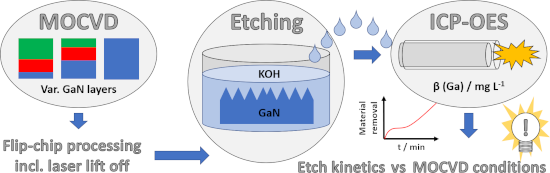
- , Spain 10.3762/bjnano.11.4 Abstract Roughening by anisotropic etching of N-face gallium nitride is the key aspect in today’s production of blue and white light emitting diodes (LEDs). Both surface area and number of surface angles are increased, facilitating light outcoupling from the LED chip. The
- , surface roughening is an integral part of flip-chip processing. The two approaches towards surface roughening are wet- and dry-chemical etching [11][12]. During wet etching, aqueous KOH and other alkaline or acidic solutions are commonly used to remove GaN from the N-polar surface in an anisotropic manner


Self-assembly of a terbium(III) 1D coordination polymer on mica
Beilstein J. Nanotechnol. 2019, 10, 2440–2448, doi:10.3762/bjnano.10.234
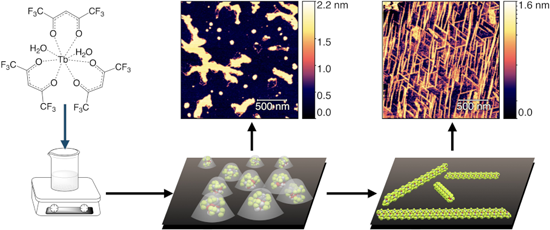
- could not be measured because of the geometry of the sample (large anisotropic plates) and the weakness of the emission signal. The excitation spectrum of the bulk is similar to the one already reported in the literature [31] with a main band at 339 nm and three small shoulders around 378 nm (5G6←7F6




Semitransparent Sb2S3 thin film solar cells by ultrasonic spray pyrolysis for use in solar windows
Beilstein J. Nanotechnol. 2019, 10, 2396–2409, doi:10.3762/bjnano.10.230
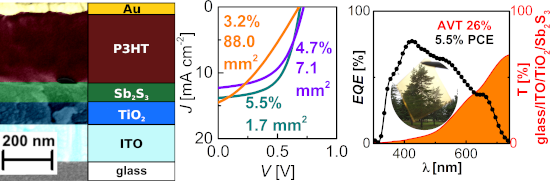
- moisture and air as well as sunlight. Sb2S3 has attractive properties (Eg ≈ 1.7 eV, absorption coefficient α ≈ 1.8 × 105 cm−1 at 450 nm, anisotropic structure, inorganic) as a light absorber for conventional and semitransparent photovoltaic use [12][13][14]. Sb2S3 has been incorporated as a solar absorber



Integration of sharp silicon nitride tips into high-speed SU8 cantilevers in a batch fabrication process
Beilstein J. Nanotechnol. 2019, 10, 2357–2363, doi:10.3762/bjnano.10.226
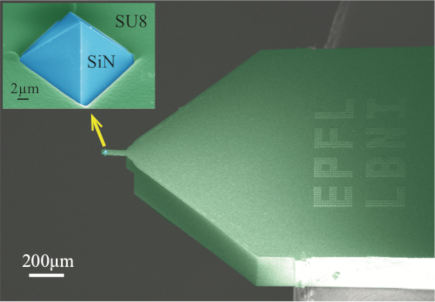
- by low-pressure chemical vapor deposition. Circular openings (20 µm diameter) are then cut into the layer by electron-beam lithography. The LSNT mask is dry-etched before the moulds are structured by anisotropic KOH (40% at 60 °C) etching. The formation of {111} facets results in four-sided pyramidal


Improved adsorption and degradation performance by S-doping of (001)-TiO2
Beilstein J. Nanotechnol. 2019, 10, 2116–2127, doi:10.3762/bjnano.10.206
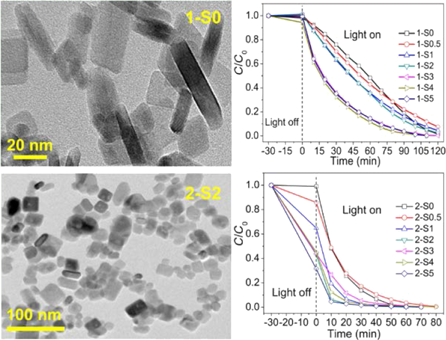
- pollutants, as well as in electrocatalysis, solar cells and self-cleaning applications. Its wide use is based on its physicochemical properties, abundance, nontoxicity, environment-friendliness and low cost [1][2][3][4][5][6][7]. The photocatalytic properties of anatase TiO2 crystals are anisotropic since




The importance of design in nanoarchitectonics: multifractality in MACE silicon nanowires
Beilstein J. Nanotechnol. 2019, 10, 2094–2102, doi:10.3762/bjnano.10.204
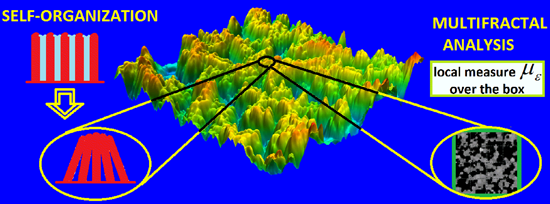
- anisotropic wet etching technique where the sculpting of the nanostructures is catalyzed by a discontinuous thin film of noble metal deposited on a substrate. The metal works as a local cathode where the reduction of oxidants occurs. The underneath semiconductor is the local anode where a charge-mediated




Improvement of the thermoelectric properties of a MoO3 monolayer through oxygen vacancies
Beilstein J. Nanotechnol. 2019, 10, 2031–2038, doi:10.3762/bjnano.10.199
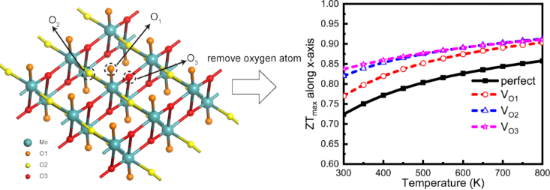
- of the MoO3 monolayer exhibit an evident anisotropic behavior which is caused by the similar anisotropy of the electrical and thermal conductivity. The thermoelectric materials figure of merit (ZT) value along the x- and the y-axis is 0.72 and 0.08 at 300 K, respectively. Moreover, the creation of
- direction is larger than that along the Γ–X direction, which is an indication of anisotropic phonon transport. The thermal conductivity of the lattice, κph, along different directions as a function of temperature is depicted in Figure 1d. It is obvious that the thermal transport properties of the MoO3
- monolayer show an anisotropic behavior, where the thermal conductivity of the lattice along the x-axis is higher than that along the y-axis. At room temperature, κph is 5.38 and 3.07 W·mK−1 along the x- and y-direction, respectively. As a result of the intrinsic enhancement of the phonon–phonon scattering


First principles modeling of pure black phosphorus devices under pressure
Beilstein J. Nanotechnol. 2019, 10, 1943–1951, doi:10.3762/bjnano.10.190
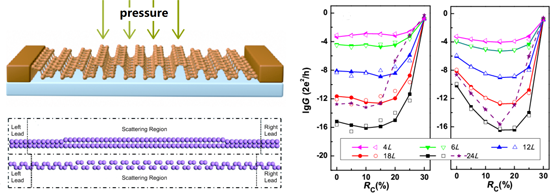
- the magnitude and the orientation of the applied strain due to the strong anisotropic atomic structure of BP. Based on first principles calculations, Koda et al. studied the electric behavior of BP-MoSe2 and BP-WSe2 heterobilayers, and analyzed the effect of long-range structural bending on the




Correction: Remarkable electronic and optical anisotropy of layered 1T’-WTe2 2D materials
Beilstein J. Nanotechnol. 2019, 10, 1922–1922, doi:10.3762/bjnano.10.187

- and Opto-Electronics Engineering, Tianjin University, 92 Weijin road, Tianjin 300072, China 10.3762/bjnano.10.187 Keywords: 1T'-WTe2; 2D material; anisotropic; light polarization; optoelectrical; The authors wish to add the following sentence to the Acknowledgement section: The optical anisotropic
- Key Laboratory of Precision Measurement Technology and Instruments (Pilt No. 1710), Tianjin research program of application foundation and advanced technology (15JCZJC31600). The optical anisotropic analysis of WTe2 was performed on the ADRDM system developed in Prof. Chunguang Hu’s group at Tianjin
Nanoarchitectonics meets cell surface engineering: shape recognition of human cells by halloysite-doped silica cell imprints
Beilstein J. Nanotechnol. 2019, 10, 1818–1825, doi:10.3762/bjnano.10.176
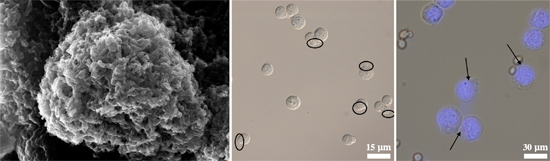
- of various functional composite materials [26]. The anisotropic shape (hollow tubules having lengths from 300 nm to 1–2 µm, 50–70 nm diameter, and 20 nm lumen) and surface chemistry (outer surface of SiO2, inner surface of Al2O3) make these nanotubes ideal carriers for novel catalysts, polymer


Remarkable electronic and optical anisotropy of layered 1T’-WTe2 2D materials
Beilstein J. Nanotechnol. 2019, 10, 1745–1753, doi:10.3762/bjnano.10.170
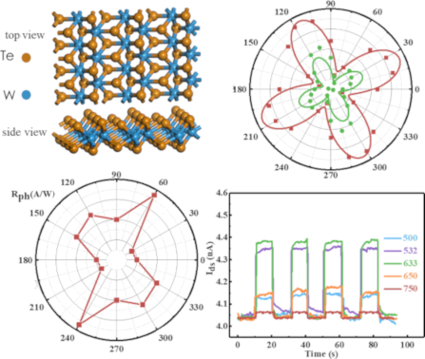
- and Opto-Electronics Engineering, Tianjin University, 92 Weijin road, Tianjin 300072, China 10.3762/bjnano.10.170 Abstract Anisotropic 2D materials exhibit novel optical, electrical and thermoelectric properties that open possibilities for a great variety of angle-dependent devices. Recently
- , quantitative research on 1T’-WTe2 has been reported, revealing its fascinating physical properties such as non-saturating magnetoresistance, highly anisotropic crystalline structure and anisotropic optical/electrical response. Especially for its anisotropic properties, surging research interest devoted solely
- to understanding its structural and optical properties has been undertaken. Here we report quantitative, comprehensive work on the highly anisotropic, optical, electrical and optoelectronic properties of few-layer 1T’-WTe2 by azimuth-dependent reflectance difference microscopy, DC conductance





