


Search results
Search for "assembly" in Full Text gives 575 result(s) in Beilstein Journal of Nanotechnology. Showing first 200.
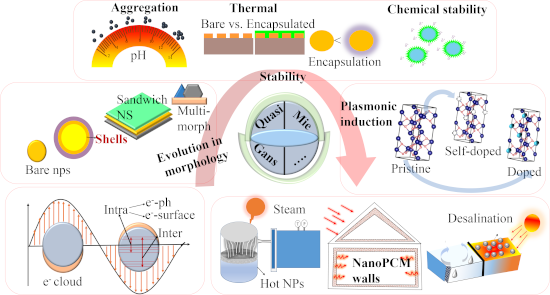
Plasmonic nanotechnology for photothermal applications – an evaluation
Beilstein J. Nanotechnol. 2023, 14, 380–419, doi:10.3762/bjnano.14.33


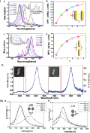


New trends in nanobiotechnology
Beilstein J. Nanotechnol. 2023, 14, 377–379, doi:10.3762/bjnano.14.32

- -assembly; wet chemical reduction; The widespread use of nanotechnology has reached almost every sector in our daily lives and amazed the world by offering various potential applications in these sectors. The uprising wave of nanotechnology and its application are now prominent in the fields of chemistry
- biocompatibility of the nanomaterials is also discussed. The thematic issue also recorded a work on the topic of “Self-assembly of amino acids toward functional biomaterials” [5], where the role of biomaterials in nanobiotechnology is discussed. In this review, the latest advances in amino acid self-assembly and
- properties associated with the process and yielded products are highlighted. The self-assembly methods in focus included single amino acid self-assembly, functional amino acid self-assembly, amino acid and metal ion coordination self-assembly, and amino acid regulatory functional molecule self-assembly. Many
Biocatalytic synthesis and ordered self-assembly of silica nanoparticles via a silica-binding peptide
Beilstein J. Nanotechnol. 2023, 14, 280–290, doi:10.3762/bjnano.14.25
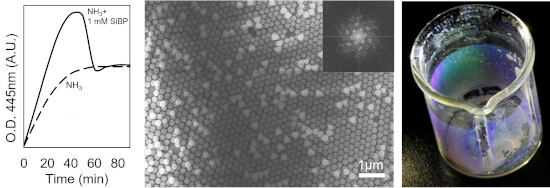
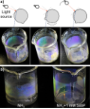
- and proteins, have been demonstrated to be useful in the synthesis and self-assembly of inorganic nanostructures. Herein, we describe a simple Stöber-based method wherein both the synthesis and the self-assembly of SiO2 nanoparticles can be facilitated by a silica-binding peptide (SiBP). We
- with NH3, the SiBP produces smaller and more uniformly distributed submicrometer particles. The SiBP also improves the long-range self-assembly of the as-grown particles into an opal-like structure by changing the surface charge, without any need for further modification or processing of the particles
- . The results presented here provide a biomimetic route to the single-step synthesis and assembly of SiO2 nanoparticles into colloidal gels or opal-like structures. Keywords: biocatalysis; biomimetics; nanoparticle; peptide; self-assembly; silica; Introduction Ordered structures of nanoparticles have


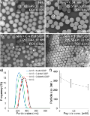


Nanotechnology – a robust tool for fighting the challenges of drug resistance in non-small cell lung cancer
Beilstein J. Nanotechnol. 2023, 14, 240–261, doi:10.3762/bjnano.14.23
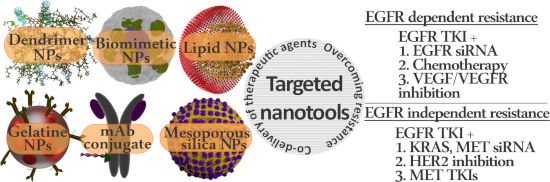
- subcellular targeting, were synthesized by click coupling reactions or arranged by self-assembly and co-assembly of block copolymers. These carriers may challenge different barriers after bioresponsive cleavage of the above functionalities. One recently published example involves a micellar structure composed


Cyclodextrins as eminent constituents in nanoarchitectonics for drug delivery systems
Beilstein J. Nanotechnol. 2023, 14, 218–232, doi:10.3762/bjnano.14.21
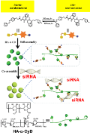
- inclusion complex (thus, the ternary assembly is also disassembled). As the result, the siRNA cargo is released and shows excellent cytotoxicity against cancer cells. In Figure 5, NIR light is used (instead of UV in Figure 4) to release siRNA at the target site. As described in section 2.3, the NIR
- inclusion complexes with β-CyD. Hence, the whole assembly spontaneously dissociated (Figure 5b). Furthermore, the azo groups were exposed to cytoplasm during the dissociation of nanoparticles and digested by the enzyme azoreductase. This unique enzyme is abundant in the cells of eukaryotes and degrades azo
- , this method is less affected by drug resistance and side-effects. A hydrogel was prepared by using both the electrostatic self-assembly between graphene oxide and a quaternized polymer and the formation of a pseudopolyrotaxane between α-CyD and poly(ethylene glycol) monomethyl ether (many α-CyD




A novel approach to pulsed laser deposition of platinum catalyst on carbon particles for use in polymer electrolyte membrane fuel cells
Beilstein J. Nanotechnol. 2023, 14, 190–204, doi:10.3762/bjnano.14.19
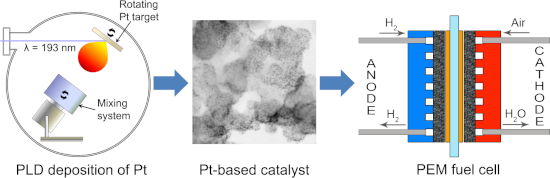
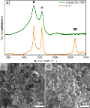
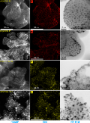
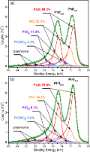
- graphitization were used as carbon supports. The best electrochemical measurement results were obtained for Pt deposited on Vulcan XC-72R. The peak power density measured for this material in a membrane electrode assembly (MEA) of a PEMFC (fed with H2/Air) was 0.41 W/cm2, which is a good result compared to 0.57
- catalysts in a membrane electrode assembly (MEA) of PEMFCs fed with H2/air. The materials with Pt deposited on Vulcan XC-72R (samples A and B), like commercial catalysts, formed a good quality catalyst layer on the Nafion membranes. However, we encountered some issues during electrode preparation from the
- the amount of Pt deposited by PLD. The results of performance tests of Pt-based catalysts conducted in a membrane electrode assembly are shown in Figure 7. Polarization curves shown in Figure 7a are used to assess the influence of cell construction on the value of activation, resistance, and transport



Formation of nanoflowers: Au and Ni silicide cores surrounded by SiOx branches
Beilstein J. Nanotechnol. 2023, 14, 133–140, doi:10.3762/bjnano.14.14
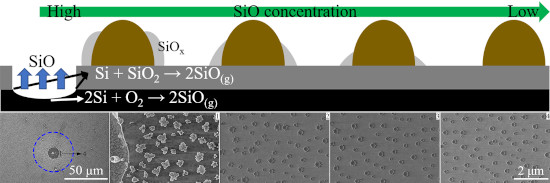
- areas consist of more Si and Ni in 5Au15Ni and 10Au10Ni but less Ni in 15Au5Ni, which has the lowest Ni concentration (Supporting Information File 1, Figure S5). The line structures show epitaxial self-assembly growth and their EDS results show a comparatively high content of Ni apart from Si, which may


Antimicrobial and mechanical properties of functionalized textile by nanoarchitectured photoinduced Ag@polymer coating
Beilstein J. Nanotechnol. 2023, 14, 95–109, doi:10.3762/bjnano.14.11
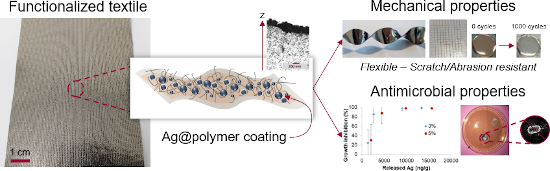
- properties exhibited by the Ag@polymer-functionalized textiles (Figure 1a and 1b) were then investigated via reflectance measurements. As shown in Figure 3, the Ag@PEG600DA coating is more reflective than the Ag@PEG600DA/PETIA sample (97% and 68% at 650 nm, respectively). Particle assembly and distribution



Solvent-induced assembly of mono- and divalent silica nanoparticles
Beilstein J. Nanotechnol. 2023, 14, 52–60, doi:10.3762/bjnano.14.6
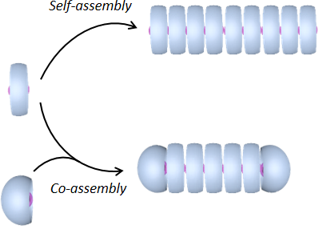
- Particles with attractive patches are appealing candidates to be used as building units to fabricate novel colloidal architectures by self-assembly. Here, we report the synthesis of one-patch silica nanoparticles, which consist of silica half-spheres whose concave face carries in its center a polymeric
- patch made of grafted polystyrene chains. The multistage synthesis allows for a fine control of the patch-to-particle size ratio from 0.23 to 0.57. The assembly of the patchy nanoparticles can be triggered by reducing the solvent quality for the polystyrene chains. Dimers or trimers can be obtained by
- tuning the patch-to-particle size ratio. When mixed with two-patch nanoparticles, one-patch nanoparticles control the length of the resulting chains by behaving as colloidal chain stoppers. The present strategy allows for future elaboration of novel colloidal structures by controlled assembly of


Single-step extraction of small-diameter single-walled carbon nanotubes in the presence of riboflavin
Beilstein J. Nanotechnol. 2022, 13, 1564–1571, doi:10.3762/bjnano.13.130
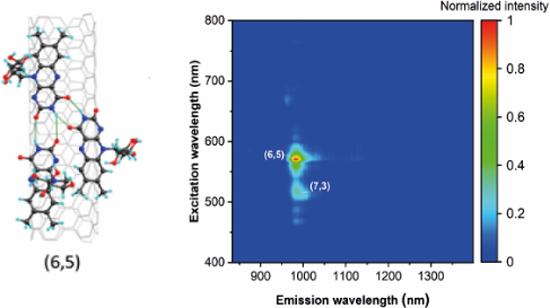
- through π–π interaction and with neighboring isoalloxazine groups via hydrogen bonding, promotes the ordered assembly of riboflavin molecules on the surface of SWCNTs [9][17]. Papadimitrakopoulos et al. described the helical wrapping of flavin mononucleotide through π–π interaction between the
- adjacent riboflavin molecules (Figure 5b). As the riboflavin–dextran complex was relaxed, the binding energy between the riboflavin assembly and the dextran molecule was calculated. It was found that in the case of dextran in the top position (Figure 5a), weak van der Waals interactions do not depend
- riboflavin assembly (Figure 5b), different bonding patterns are observed depending on the mutual orientation of the adjacent isoalloxazine moieties. The strength of bonding between neighboring riboflavin molecules is proportional to the type of riboflavin helix around a particular SWCNT. The yield of


Supramolecular assembly of pentamidine and polymeric cyclodextrin bimetallic core–shell nanoarchitectures
Beilstein J. Nanotechnol. 2022, 13, 1361–1369, doi:10.3762/bjnano.13.112
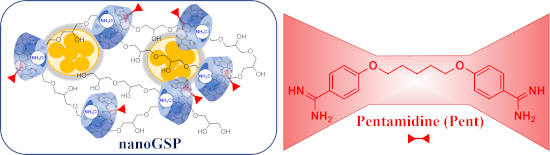
- monometallic (nanoG) structures or core–shell bimetallic (nanoGS) architectures with an external silver layer. Here, we describe the preparation of a supramolecular assembly between nanoGS and pentamidine, an antileishmanial drug endowed with a wide range of therapeutic properties (i.e., antimicrobial, anti
- -inflammatory, and anticancer). The physicochemical characterization of the supramolecular assembly (nanoGSP) in terms of size and colloidal stability was investigated by complementary spectroscopic techniques, such as UV–vis, ζ-potential, and dynamic light scattering (DLS). Furthermore, the role of PolyCD
- , Figure 1) achieved by supramolecular assembly of the components as well as their physicochemical characterization in terms of size and colloidal stability. The drug binding ability of nanoGS with Pent has been investigated by complementary spectroscopic techniques such as UV–vis, zeta potential (ζ


Near-infrared photoactive Ag-Zn-Ga-S-Se quantum dots for high-performance quantum dot-sensitized solar cells
Beilstein J. Nanotechnol. 2022, 13, 1337–1344, doi:10.3762/bjnano.13.110
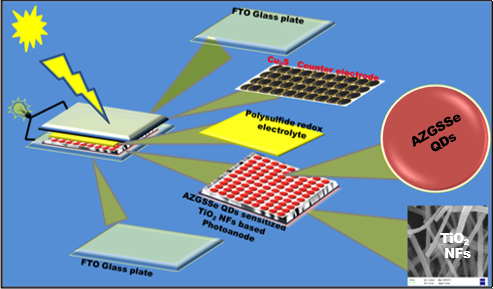
- 24 h with a MPA/acetonitrile solution 3:7 (v/v). This substrate was then immersed into the colloidal AZGSSe QD solution for 48 h to obtain the AZGSSe-sensitized TiO2 NF-based photoanode. Assembly of QDSCs Earlier reports revealed that Cu2S is a low-cost and efficient counter electrode (CE) for QDSCs


Studies of probe tip materials by atomic force microscopy: a review
Beilstein J. Nanotechnol. 2022, 13, 1256–1267, doi:10.3762/bjnano.13.104
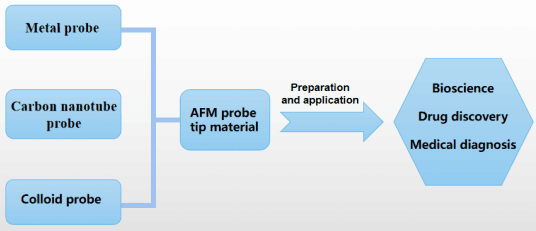
- et al. [39] proposed a multistep assembly method to fabricate carbon nanotube tips by developing a well-controlled procedure to fabricate scanning probe carbon nanotube tip microscopes. The process consists of three steps: purification and alignment of nanotubes using electrophoresis; transfer of
- assembly methods, direct growth of carbon nanotubes by chemical vapor deposition (CVD) allows for increased bond strength between CNT tips and AFM probes. A pore growth method was used by Hafner et al. [42]. The method uses AFM imaging in contact mode to flatten the silicon tip, followed by hydrogen
- ethanol solvent. The colloidal particles in the suspension can self-assemble into two- and three-dimensional colloidal crystals of various shapes under certain conditions. In the process of self-assembly, such fibrous colloidal crystals are small in size and usually micrometer in length due to the weak
Design of surface nanostructures for chirality sensing based on quartz crystal microbalance
Beilstein J. Nanotechnol. 2022, 13, 1201–1219, doi:10.3762/bjnano.13.100
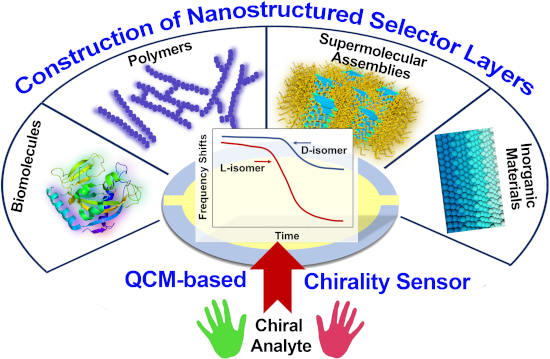
- are a type of simple natural molecule which is widely applied for the specific recognition of chiral analytes in QCM. The molecular layers of amino acids may be immobilized on the surface of electrodes by chemical modification and self-assembly. Mandelic acid (MA) is an important chiral intermediate
- in the pharmaceutical industry. It has been taken as a model molecule to verify the “proof-of-principle” concept for chiral recognition [28]. Kim and co-workers fabricated ʟ-phenylalanine (ʟ-Phe)-modified QCM sensor and used vapor diffusion molecular assembly (VDMA) to study the chiral adsorption of
- modified QCM sensors [29]. The sensor layers were constructed by self-assembly of ʟ(ᴅ)-Val monolayers or comb-teeth-type grafted polymer brushes with ʟ(ᴅ)-Val. According to the frequency shifts upon bovine serum albumin (BSA) adsorption, ʟ-Val-modified sensors were shown to have a stronger binding to BSA


A cantilever-based, ultrahigh-vacuum, low-temperature scanning probe instrument for multidimensional scanning force microscopy
Beilstein J. Nanotechnol. 2022, 13, 1120–1140, doi:10.3762/bjnano.13.95
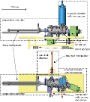
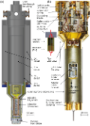
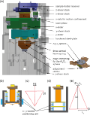
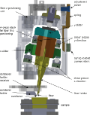
- containing the xy-positioning unit and the xyz-scan piezo carrying the sample receiver. While four of the six shear piezo stacks are glued to the z-slider unit, the two remaining stacks are glued to a leaf-spring assembly depicted in Figure 4a,b. The central screw (red arrow) pushes the leaf spring against
- the x- and y-sliders, facilitating the setting of a force sufficiently large to have a rigid assembly, but small enough to move the sliders at low temperatures, where the range of the shear stacks is significantly reduced. With this concentric design, dimensional changes in the height of the shear
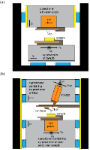
- , however, are complex, and their fabrication and assembly typically require considerable efforts. For this reason, all our sample/cantilever holders use the same four laser-cut metal parts as base plates (m1–m4) connected via a simple ceramic center piece (Figure 7f), on top of which different assemblies





Biomimetic chitosan with biocomposite nanomaterials for bone tissue repair and regeneration
Beilstein J. Nanotechnol. 2022, 13, 1051–1067, doi:10.3762/bjnano.13.92
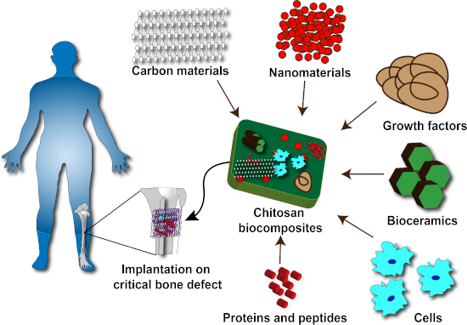
- composite using a self-assembly method. The osteoblasts obtained from newborn rat calvaria bones were subjected to biological tests. Cells were viable and proliferating with the produced composite material. In addition, there was an increase in alkaline phosphatase activity. Aside from that, exceptional
- . Through cell viability, porosity measurements, in vitro degradation, and degradation tests, researchers determined that the composites showed increased biocompatibility and promoted cell proliferation and growth, in addition to having a steady degradation rate [61]. In addition, a layer-by-layer assembly
Spindle-like MIL101(Fe) decorated with Bi2O3 nanoparticles for enhanced degradation of chlortetracycline under visible-light irradiation
Beilstein J. Nanotechnol. 2022, 13, 1038–1050, doi:10.3762/bjnano.13.91
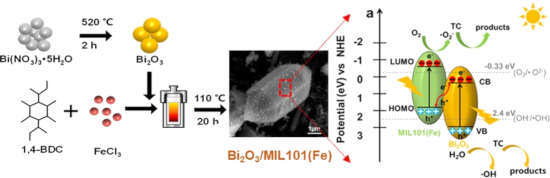
- efficient photocatalysts for CTC degradation. Metal–organic frameworks (MOFs) are a kind of micro- or mesoporous materials established by the self-assembly of organic linkers and metal-cluster or metal-ion nodes [19]. The MOF materials possess large surface areas, high pore volume, tunability, uniform
- photocatalyst under UV light irradiation [30]. So far, a large number of MOFs have been shown to exhibit photocatalytic activity in H2 production, organic pollutant degradation, and Cr(VI) and CO2 reduction [26][27][31][32][33]. Among MOF catalysts, MIL101(Fe) is a cage-like structure formed by self-assembly of


Electrocatalytic oxygen reduction activity of AgCoCu oxides on reduced graphene oxide in alkaline media
Beilstein J. Nanotechnol. 2022, 13, 1020–1029, doi:10.3762/bjnano.13.89
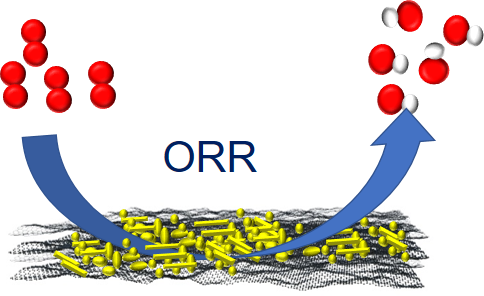
- atomic-level manipulation using established materials chemistry concepts towards the assembly of functional nanoarchitectonics [25][26][27]. The assembly of nanoscale objects through combination and in situ growth routes, leading to high-performance nanoarchitectonics, is an interesting strategy. An
- interesting choice could be the support/assembly of trimetallic AgCuCo particles via in situ formation integrated with conductive (graphitic) supports to further enhance the electrocatalytic properties regarding the ORR in alkaline medium. We designed trimetallic AgCuCo oxide NPs supported on rGO using a
- nanostructures. Also, upon increasing the Ag fraction in the sample, the dispersion of the trimetallic assembly considerably increases, which is clearly reflected in Figure S3c–e, Supporting Information File 1. The importance of the rGO support is further evident from the imaging of supportless the ACC-2* sample


Design of a biomimetic, small-scale artificial leaf surface for the study of environmental interactions
Beilstein J. Nanotechnol. 2022, 13, 944–957, doi:10.3762/bjnano.13.83
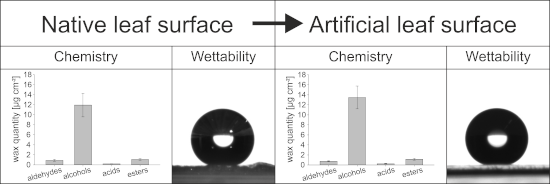
- composition play significant roles. Here, the ability of self-assembly of wax after isolation from the leaves was used to develop a small-scale wax-coated artificial leaf surface with the chemical composition and wettability of wheat (Triticum aestivum) leaves. By thermal evaporation of extracted plant waxes
- extracted plant waxes has shown that the diverse microstructures of epicuticular waxes arise by self-assembly and that the micromorphology of wax structures is largely determined by their chemical composition [15][17][18][19][20][21][22][23]. Platelets, which mostly have a high primary alcohol content, are
Bioselectivity of silk protein-based materials and their bio-inspired applications
Beilstein J. Nanotechnol. 2022, 13, 902–921, doi:10.3762/bjnano.13.81
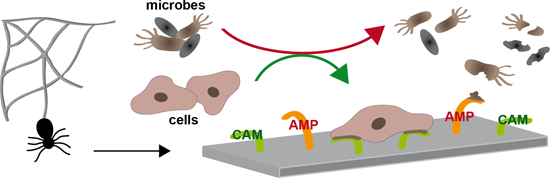
- species [119]. These globular domains fulfill important control functions concerning protein solubility in the gland reservoir and in the assembly of spidroins into silk threads. The various spidroins of spiders differ in their amino acid sequences to yield the specific properties and functions of the
- coatings, recombinant spider silk proteins based on eADF4 can be processed into 3D scaffolds, such as foams or hydrogels due to their self-assembly properties [169][171][172][173][174]. Balb 3T3 fibroblasts adhered to porous foams made of eADF4(C16)-RGD and showed spreading and cell elongation along the


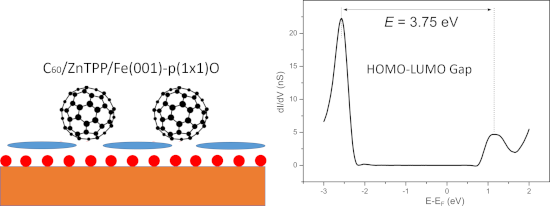
Self-assembly of C60 on a ZnTPP/Fe(001)–p(1 × 1)O substrate: observation of a quasi-freestanding C60 monolayer
Beilstein J. Nanotechnol. 2022, 13, 857–864, doi:10.3762/bjnano.13.76


Recent advances in nanoarchitectures of monocrystalline coordination polymers through confined assembly
Beilstein J. Nanotechnol. 2022, 13, 763–777, doi:10.3762/bjnano.13.67
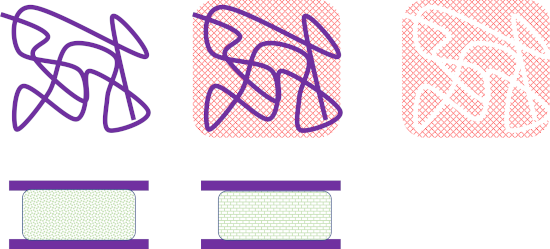
- blocks with other components. Recently, nanoarchitectonics has started to play a significant role in the field of coordination polymers. In this short review, we summarize recent advances in nanoarchitectures based on monocrystalline coordination polymers that are formed through confined assembly. We
- first discuss the crystallization of coordination polymer single crystals inside confined liquid networks or on substrates through assembly of nodes and ligands. Then, we discuss assembly of preformed coordination polymer single crystals inside confined liquid networks or on substrates. In each part, we
- discuss the properties of the coordination polymer single crystals as well as their performance in energy, environmental, and biomedical applications. Keywords: applications; assembly; coordination polymer; metal-organic frameworks; nanoarchitectonics; Introduction Coordination polymers are hybrid





Hierarchical Bi2WO6/TiO2-nanotube composites derived from natural cellulose for visible-light photocatalytic treatment of pollutants
Beilstein J. Nanotechnol. 2022, 13, 745–762, doi:10.3762/bjnano.13.66
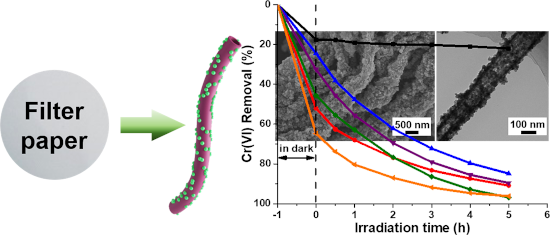
- -responsive semiconductors with suitable band structures provides a pathway for the advancement of highly efficient photocatalysts [9]. It has been demonstrated that the assembly of various nanoscale building blocks to form the corresponding nanoarchitectonics provides an ideal pathway for the syntheses of a


Reliable fabrication of transparent conducting films by cascade centrifugation and Langmuir–Blodgett deposition of electrochemically exfoliated graphene
Beilstein J. Nanotechnol. 2022, 13, 666–674, doi:10.3762/bjnano.13.58
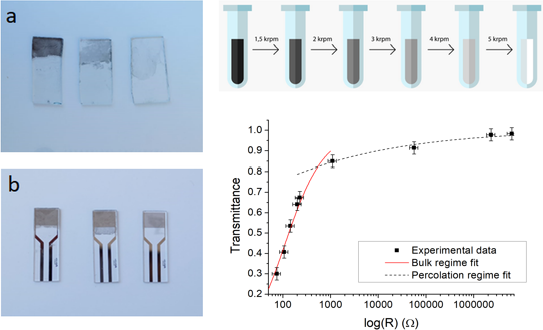
- typically polydisperse, containing particles of various sizes, which is not optimal for applications. We employed cascade centrifugation to select specific particle sizes in solution and prepared thin films from those graphene particles using the Langmuir–Blodgett assembly. Employing centrifugation speeds
- achievable with LB assembly of graphene films made from solution-dispersed material, for a reasonable electrical conductivity. Comparisons of our obtained percolative figure of merit and percolation exponent with those observed in literature reveal that the quality of the films obtained with our demonstrated
- equivalent to films which have a thickness of 7.6 layers of graphene, which is 2.6 nm. It is likely that reliably conducting films thinner than this cannot be achieved with Langmuir–Blodgett assembly of graphene nanoplatelets. Compared to the work in which the exfoliation time is controlled in the same lab


Quantitative dynamic force microscopy with inclined tip oscillation
Beilstein J. Nanotechnol. 2022, 13, 610–619, doi:10.3762/bjnano.13.53
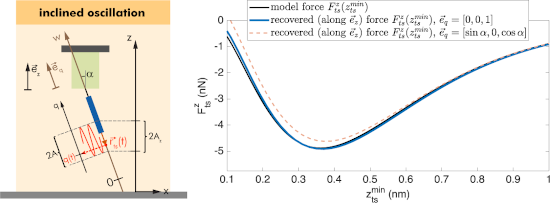
- –surface force are illustrated in the sketches of Figure 1 for the case of parallel tip sampling and data recording paths. Initially, the sensor assembly is moved towards the surface by the coarse positioning system so that the relaxed piezo rests at position zcrs and the tip at its starting position z0


![[Graphic 38]](/bjnano/content/inline/2190-4286-13-53-i79.svg?max-width=637&scale=1.18182) and the axis w....
and the axis w....





