Search results
Search for "calibration" in Full Text gives 358 result(s) in Beilstein Journal of Nanotechnology. Showing first 200.
Ethosomal (−)-epigallocatechin-3-gallate as a novel approach to enhance antioxidant, anti-collagenase and anti-elastase effects
Beilstein J. Nanotechnol. 2022, 13, 491–502, doi:10.3762/bjnano.13.41
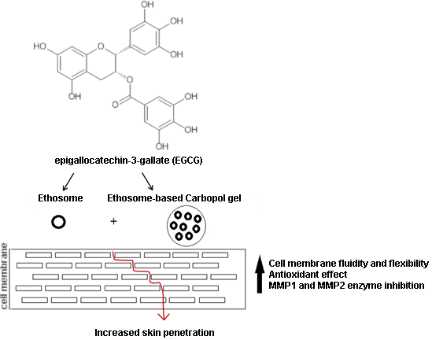
- liquid chromatography assay For the quantitative determination of EGCG, the optimal wavelength of 292 nm was used. The calibration curve obtained from high-performance liquid chromatography (HPLC) was linear between 15.625 to 1000 µg/mL with a high correlation coefficient (y = 1.0548x + 4.7737, r2



A non-enzymatic electrochemical hydrogen peroxide sensor based on copper oxide nanostructures
Beilstein J. Nanotechnol. 2022, 13, 424–436, doi:10.3762/bjnano.13.35
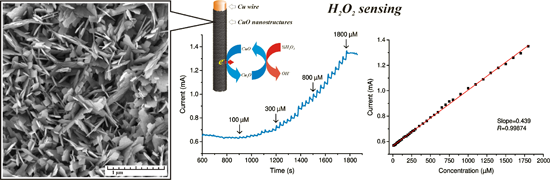
- calibration curve for the dependence of the catalytic current values on the concentration of H2O2. A linear relationship was obtained in the range from 10 to 1800 µM (R = 0.99874). The sensitivity of the obtained CuO electrode is 439.19 μA·mM−1. The calculated limit of detection (LOD) is 1.34 μM, assuming
- frequences. Measurements were carried out in 0.1 M NaOH solution containing 500 µM H2O2. (a) Amperometric response of the nanostructured CuO electrode in 0.1 M NaOH with stepwise addition of H2O2 at concentrations from 10 to 1800 μM and (b) the corresponding calibration curve (SD = 3.5%, n = 5). (a




Effects of drug concentration and PLGA addition on the properties of electrospun ampicillin trihydrate-loaded PLA nanofibers
Beilstein J. Nanotechnol. 2022, 13, 245–254, doi:10.3762/bjnano.13.19
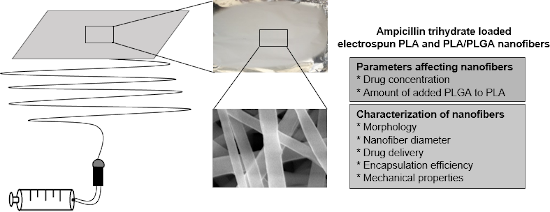
- ) at 37 °C (n = 3). All of the released medium was removed and 5 mL of fresh solution was added at predetermined time intervals. The amount of drug released was assayed using a UV spectrophotometer. For calibration and validation of ampicillin trihydrate release, solutions were prepared at 2.5–30 µg/mL


Theranostic potential of self-luminescent branched polyethyleneimine-coated superparamagnetic iron oxide nanoparticles
Beilstein J. Nanotechnol. 2022, 13, 82–95, doi:10.3762/bjnano.13.6
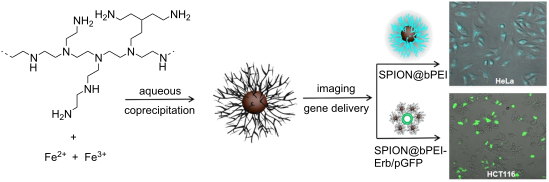
- was recorded using a UV–vis spectrophotometer (Shimadzu UV-3600 UV–vis–NIR spectrophotometer). A calibration curve was prepared with bovine serum albumin (BSA) at concentration values of 0, 1, 2, 4, 6, 8, and 10 µg/mL in PBS to enable a correlation between the measured absorbance and protein
- concentration. Then, the concentration of unbound Erb was calculated from its absorbance at 595 nm using the BSA calibration curve. The concentration of bound Erb was calculated by subtracting the unbound amount from the Erb added to the nanoparticles during synthesis. According to this, SPION@bPEI-Erb




Cantilever signature of tip detachment during contact resonance AFM
Beilstein J. Nanotechnol. 2021, 12, 1286–1296, doi:10.3762/bjnano.12.96
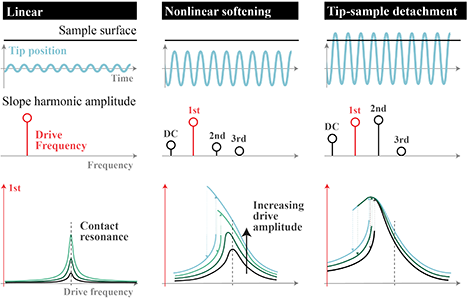
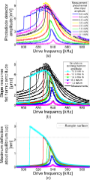
- position was recorded with an optical lever system consisting of a detection laser and a quadrant photodiode. The photodiode signal was converted into amplitude and phase at the drive frequency using a lock-in amplifier. The OLS resulting from the above calibration procedure is only valid for quasistatic
- shape during the OLS calibration, it is only a matter of multiplying the observed OLS by a ratio of the deflection to slope for a cantilever deforming under a point load applied at the location of the probe tip (assumed from manufacturer specifications) to extract a calibration parameter that can
- convert between photodiode voltage and cantilever slope. This provides a calibration parameter that remains valid in all measurement circumstances. Analytical model The core of the computational exploration is the partial differential equation (PDE) governing the dynamics of the AFM cantilever. At rest


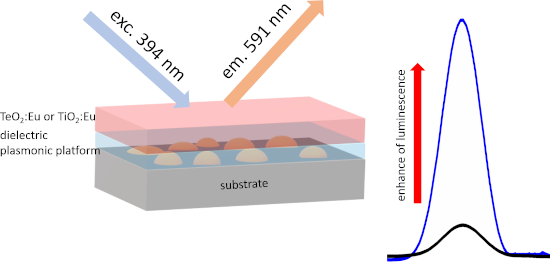
Plasmon-enhanced photoluminescence from TiO2 and TeO2 thin films doped by Eu3+ for optoelectronic applications
Beilstein J. Nanotechnol. 2021, 12, 1271–1278, doi:10.3762/bjnano.12.94
- background subtraction and the least-square Gaussian–Lorentzian – GL(30) curve fitting algorithm. Calibration of obtained spectra to the binding energy of 285 eV for C 1s was conducted. Additionally, a built-in Ar ion gun was used to etch the surface of the films. To obtain depth profiles of the chemical


Enhancement of the piezoelectric coefficient in PVDF-TrFe/CoFe2O4 nanocomposites through DC magnetic poling
Beilstein J. Nanotechnol. 2021, 12, 1262–1270, doi:10.3762/bjnano.12.93
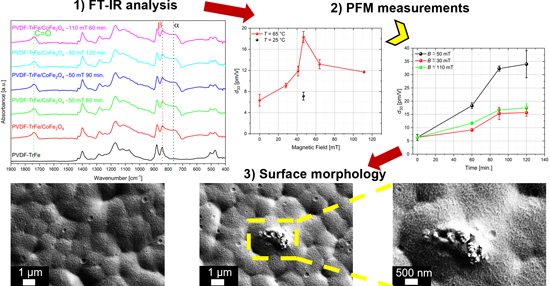
- using a scan rate of 0.5 Hz. An alternating voltage with a frequency of 15 kHz was applied to the tip. In order to obtain a quantitative evaluation of d33, the amplitude of the PFM signal is measured as function of the applied voltage Vac in the selected range of 1–5 V. First, a calibration sample of
- periodically poled lithium niobate (PPLN), with a known value of the piezoelectric coefficient (d33PPLN = 7.5 pm/V), is measured. Then, the sample under investigation is tested and the PPLN is measured again. The two piezoelectric calibration signals of PPLN are compared for each value of the applied voltage
- Vac. If the difference between them is less than 20%, the measurement of the sample under test is considered reliable [2][3]. The calibration factor ξ = mPPLN/d33PPLN (in which mPPLN is the slope of the straight line of the amplitude of the PFM signal vs Vac, and d33PPLN is the known piezoelectric


Self-assembly of amino acids toward functional biomaterials
Beilstein J. Nanotechnol. 2021, 12, 1140–1150, doi:10.3762/bjnano.12.85
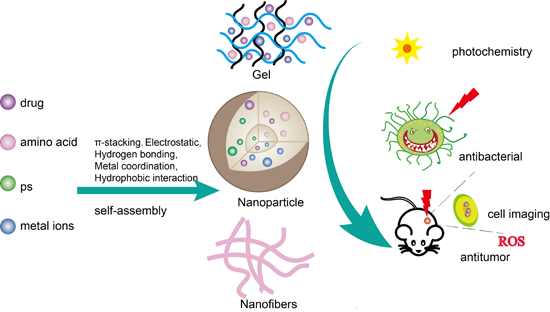
- product, easy assembly, self-calibration, and no defects [55]. The prepared components may further be used as modular “building blocks” for building higher-order upper structures with increased complexity and functionality [56]. Metal coordination can become a strong interaction due to its near-covalent

Open-loop amplitude-modulation Kelvin probe force microscopy operated in single-pass PeakForce tapping mode
Beilstein J. Nanotechnol. 2021, 12, 1115–1126, doi:10.3762/bjnano.12.83
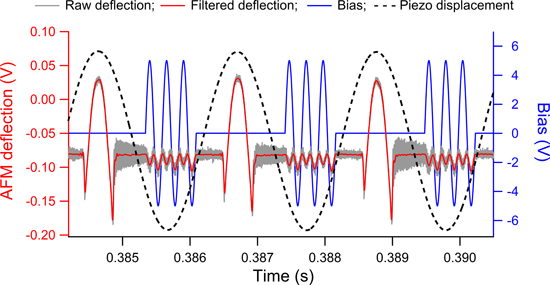
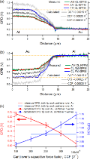
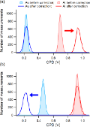
- calibration for the gain of the cantilever’s transfer function. DH-KPFM has found applications on sensitive materials and solid–liquid interfaces where conventional CL KPFM does not perform very well [43]. CPD measurements in an OL operation have also been demonstrated in more inclusive scanning probe modes





In situ transport characterization of magnetic states in Nb/Co superconductor/ferromagnet heterostructures
Beilstein J. Nanotechnol. 2021, 12, 913–923, doi:10.3762/bjnano.12.68
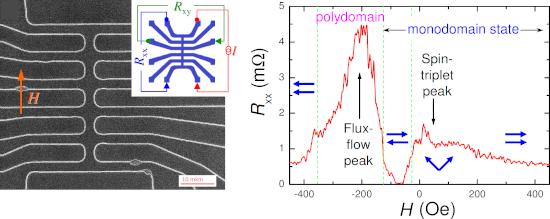
- were used for the calibration of the etching rates of the films. MLs are patterned into micrometer-scale bridges with multiple contacts using photolithography and reactive ion etching. A scanning electron microscopy (SEM) image of one of the studied samples is shown in Figure 1a. Control of the


Fate and transformation of silver nanoparticles in different biological conditions
Beilstein J. Nanotechnol. 2021, 12, 665–679, doi:10.3762/bjnano.12.53
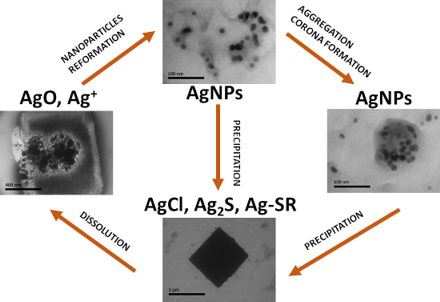
- , Perkin Elmer, Shelton, USA). The silver standard solution (1000 mg/L in 5% HNO3) from Merck (Darmstadt, Germany) was used for calibration. All prepared AgNPs were characterized by means of shape, primary size, size distribution, and surface charge in UPW. The particle visualization was performed by TEM




On the stability of microwave-fabricated SERS substrates – chemical and morphological considerations
Beilstein J. Nanotechnol. 2021, 12, 541–551, doi:10.3762/bjnano.12.44
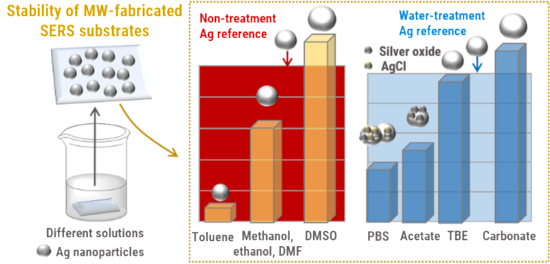
- calibration curve to obtain a monolayer of 4-ATP (Figure S4), a reference Raman spectrum of 4-ATP self-assembled on a non-treated substrate (Figure S5), a table indicating the corresponding peak assignment (Table S1), a reference Raman spectrum of 4-ATP acquired on a water-treated substrate (Figure S6), EDX


Determining amplitude and tilt of a lateral force microscopy sensor
Beilstein J. Nanotechnol. 2021, 12, 517–524, doi:10.3762/bjnano.12.42
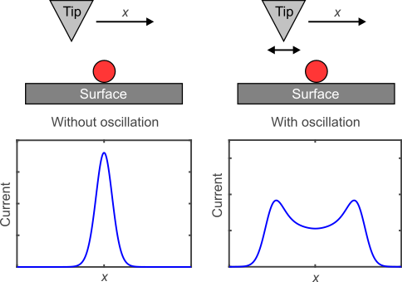
- frequency-modulation atomic force microscopy, the tip oscillates parallel to the surface. Existing amplitude calibration methods are not applicable for mechanically excited LFM sensors at low temperature. Moreover, a slight angular offset of the oscillation direction (tilt) has a significant influence on
- for a given amplitude and tilt. Finally, the amplitude and tilt are determined by fitting the simulation output to the data with oscillation. Keywords: frequency-modulation atomic force microscopy; lateral force microscopy; amplitude calibration; tilt estimation; Introduction Frequency-modulation
- calibration factor that relates the recorded amplitude signal of the oscillation in volts to the real oscillation amplitude in meters. At room temperature the thermal excitation of the sensor can be used to calibrate the amplitude [18]. For low temperatures, another method has to be used since the thermal


Surface-enhanced Raman scattering of water in aqueous dispersions of silver nanoparticles
Beilstein J. Nanotechnol. 2021, 12, 497–506, doi:10.3762/bjnano.12.40
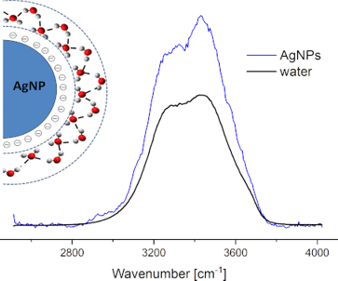
- as the reference sample. The TEM images were obtained by using a Jeol ARM 200F high-resolution transmission electron microscope. The silver concentration in the AgNP dispersion was determined by FAAS using the GBC 932 plus instrument. The calibration was made using the silver standard solution


Structural and optical characteristics determined by the sputtering deposition conditions of oxide thin films
Beilstein J. Nanotechnol. 2021, 12, 354–365, doi:10.3762/bjnano.12.29
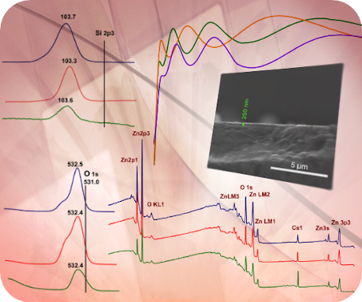
- 284.8 eV in the inherently contaminated film are observed. The carbon peak represents the carbon absorbed at the surface, after which the energy calibration of the other spectra was done [47][48]. The contaminated carbon layer in the atmosphere becomes increasingly thinner with increasing film thickness


Characterization, bio-uptake and toxicity of polymer-coated silver nanoparticles and their interaction with human peripheral blood mononuclear cells
Beilstein J. Nanotechnol. 2021, 12, 282–294, doi:10.3762/bjnano.12.23
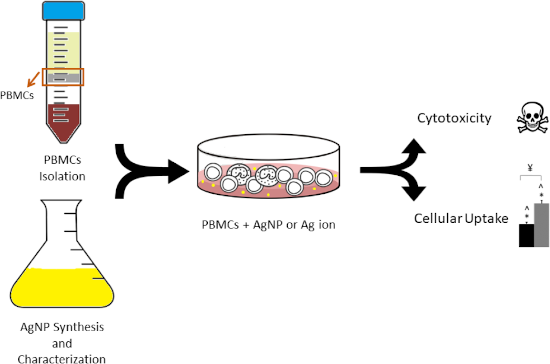
- solution (1000 µg·mL−1, VWR analytical, USA) was used for the calibration curve. To measure and compare the loss of Ag (dissolved or PVP-AgNPs) on the ultrafilter membrane or sorption to the exposure tube, 500 and 1000 µg·L−1 concentrations of Ag (as AgNO3) was prepared in UHPW and RPMI medium. Samples



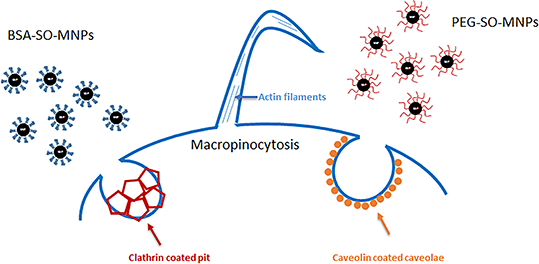
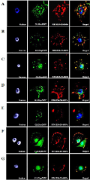
Differences in surface chemistry of iron oxide nanoparticles result in different routes of internalization
Beilstein J. Nanotechnol. 2021, 12, 270–281, doi:10.3762/bjnano.12.22
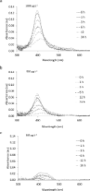
- parameters for Fe determination were set as follows: wavelength 248.3 nm, slit width 0.2 nm, flame type: acetylene–air, flow: 2.0 L/min for acetylene and 13.5 L/min for air, deuterium background correction, method of the calibration curve in the range 0.1–10 mg/L. The limit of detection (LOD) and limit of



TiOx/Pt3Ti(111) surface-directed formation of electronically responsive supramolecular assemblies of tungsten oxide clusters
Beilstein J. Nanotechnol. 2021, 12, 203–212, doi:10.3762/bjnano.12.16
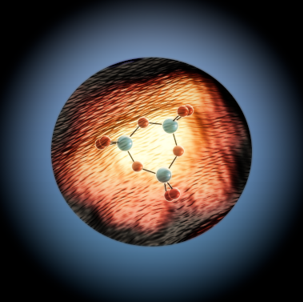
- monolayer/s. The deposition rate was obtained by previously performed calibration measurements using a quartz microbalance, which was positioned in the same direction and distance toward the evaporation source as the sample in order to obtain comparable results. The surface coverages shown herein represent



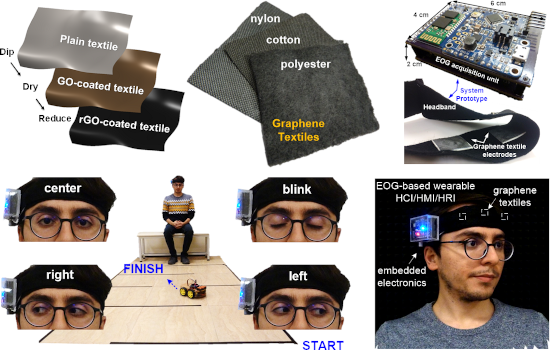
Toward graphene textiles in wearable eye tracking systems for human–machine interaction
Beilstein J. Nanotechnol. 2021, 12, 180–189, doi:10.3762/bjnano.12.14
- Instruments, USA) was implemented at the receiver end, enabling user-friendly operation, calibration, gain adjustment, and event monitoring. In the current version of the embedded system, the Bluetooth coverage is ca. 5 m. The power consumption of the circuitry is ca. 80 mW when the Bluetooth device is not


Bulk chemical composition contrast from attractive forces in AFM force spectroscopy
Beilstein J. Nanotechnol. 2021, 12, 58–71, doi:10.3762/bjnano.12.5
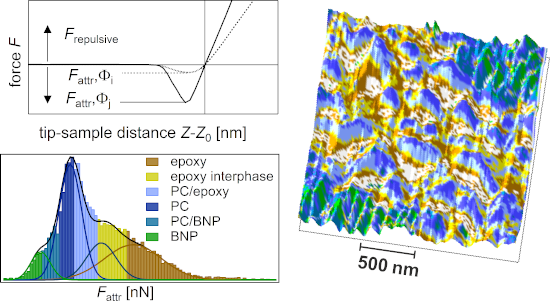
- of the tip that contributes to the van der Waals forces is indeed much larger than that interacting mechanical forces and can be described by the effective radius Reff. Reff is deduced by the calibration of the system with a tip–sample pairing with known Hamaker constants [35]. With Reff and ζ


Mapping of integrated PIN diodes with a 3D architecture by scanning microwave impedance microscopy and dynamic spectroscopy
Beilstein J. Nanotechnol. 2020, 11, 1764–1775, doi:10.3762/bjnano.11.159
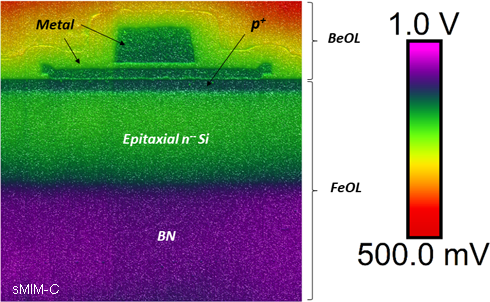
- capacitor in parallel with a resistance (Figure 1). The incident microwave signal interacts with the sample resulting in a transmitted wave and a reflected wave. Since the probe is shielded, the stray capacitance formed by the cantilever and the sample can be neglected. After a calibration step and


Application of contact-resonance AFM methods to polymer samples
Beilstein J. Nanotechnol. 2020, 11, 1714–1727, doi:10.3762/bjnano.11.154
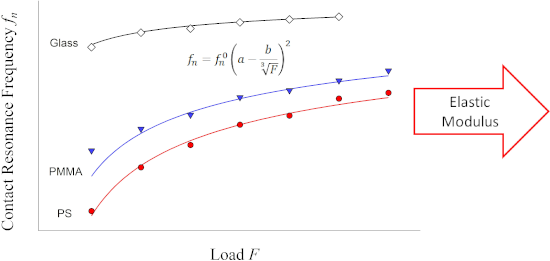
- underlying physical phenomena and of factors influencing the measurements. A commonly used method to analyze CR data requires the determination of the relative position of the tip, the calculation of the normalized contact stiffness, and the use of a calibration sample for the calculation of the elastic
- values [16]. This is a major weakness of current analysis methods. Additionally, as in other techniques dealing with mechanical properties, the radius of the tip needs to be known. Alternatively, a calibration sample can be used [16]. Yet, this presupposes the exact measurement of the elastic modulus of
- the calibration sample. These requirements have prompted several alternative theoretical approaches [17][18][19], in some cases based on finite element analysis [13][20][21], as well as modifications of the measurement procedure [22]. In addition to the aforementioned critical points in quantitative


The influence of an interfacial hBN layer on the fluorescence of an organic molecule
Beilstein J. Nanotechnol. 2020, 11, 1663–1684, doi:10.3762/bjnano.11.149
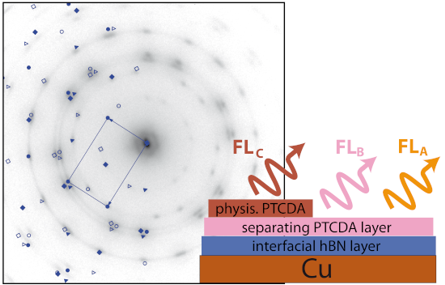
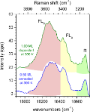
- layer of close-packed, flat-lying PTCDA molecules. After every experiment, the exact coverage was determined by a thermally programmed desorption (TPD) experiment with a margin of error of ±0.05 ML. The calibration for PTCDA/hBN/Cu(111) was derived from the TPD data shown in [32]. Since the packing
- densities of PTCDA on hBN/Cu(111) and on Cu(111) are within a few percent of each other (see Appendix A), this calibration is also valid for PTCDA/Cu(111) within the noted margin of error. For the optical experiments, the sample was transferred into a glass tube, standing out from the end of the chamber. In





Selective detection of complex gas mixtures using point contacts: concept, method and tools
Beilstein J. Nanotechnol. 2020, 11, 1631–1643, doi:10.3762/bjnano.11.146
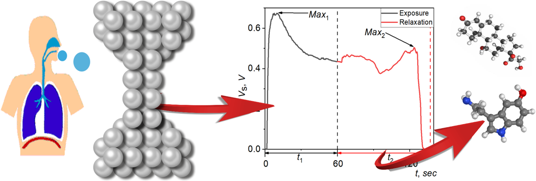
- the concentrations of serotonin and cortisol in the body of each patient. The obtained results demonstrate that the proposed methodology allows one to get an effective calibration function for a non-invasive analysis of the level of serotonin and cortisol in the human body using the point-contact
- voltage on the concentration of a specific target substance. The dependence of the response voltage, for a period of maximum correlation with the analyte concentration, in a studied patient group allows us to obtain a linear regression equation. This equation can serve as a characteristic calibration
- straight line through the obtained points using the least-squares method: This is a characteristic calibration line for estimating the serotonin concentration using the sensor method based on the breath test. Statistical analysis showed that the standard deviation of the medical analysis data from the


![[Graphic 4]](/bjnano/content/inline/2190-4286-11-146-i8.svg?max-width=637&scale=1.18182) in th...
in th...

![[Graphic 7]](/bjnano/content/inline/2190-4286-11-146-i11.svg?max-width=637&scale=1.18182) in the...
in the...
High-responsivity hybrid α-Ag2S/Si photodetector prepared by pulsed laser ablation in liquid
Beilstein J. Nanotechnol. 2020, 11, 1596–1607, doi:10.3762/bjnano.11.142
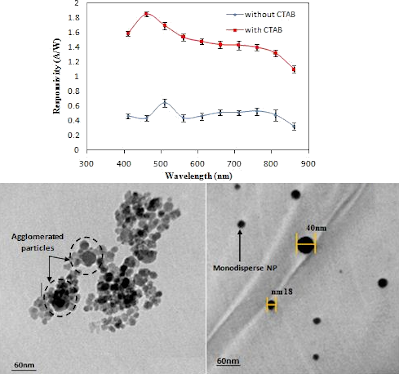
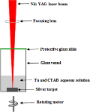
- spectral region of 350–900 nm. The power calibration was performed using accurate silicon power meter (Sanwa). Results and Discussion The formation of Ag2S NPs can be described as follows: When the high intensity of the laser beam irradiates the silver target, the absorbed energy results in lattice