


Search results
Search for "characterization" in Full Text gives 1432 result(s) in Beilstein Journal of Nanotechnology. Showing first 200.
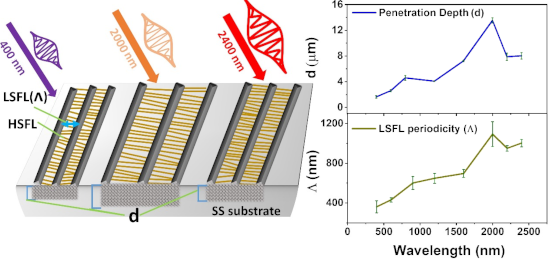
Wavelength-dependent correlation of LIPSS periodicity and laser penetration depth in stainless steel
Beilstein J. Nanotechnol. 2025, 16, 1302–1315, doi:10.3762/bjnano.16.95
- voltage of 10 kV. In this procedure, a steel plate served as the cathode and was submerged in the oxalic acid solution, while the steel sample acted as the anode and was also immersed in the solution. Etching was carried out for 80 s to unveil the microstructure. Characterization and measurements High




Enhancing the photoelectrochemical performance of BiOI-derived BiVO4 films by controlled-intensity current electrodeposition
Beilstein J. Nanotechnol. 2025, 16, 1289–1301, doi:10.3762/bjnano.16.94
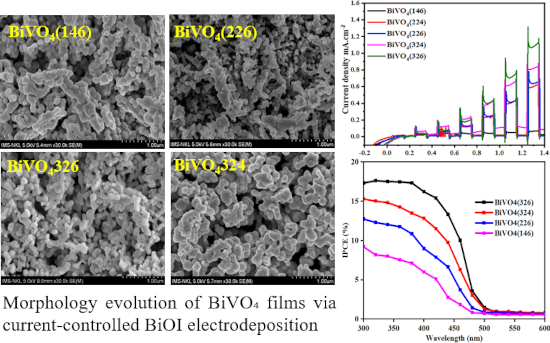
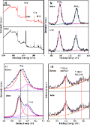
- sizes, indicating an improved crystalline quality. BiVO4(326) exhibited the largest average crystallite size (≈40 nm), consistent with the enhanced PEC performance and reduced lattice strain observed in the Raman analysis. Morphological characterization (FESEM) Field-emission scanning electron



Acrocomia aculeata oil-loaded nanoemulsion: development, anti-inflammatory properties, and cytotoxicity evaluation
Beilstein J. Nanotechnol. 2025, 16, 1277–1288, doi:10.3762/bjnano.16.93
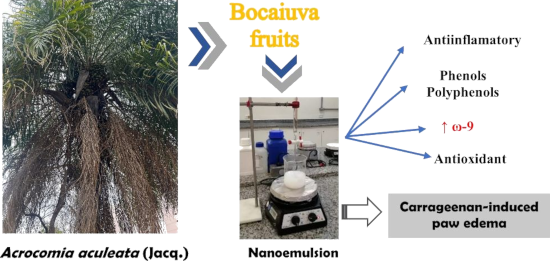
- , the non-hemolytic and cytotoxic activity of the nanoformulation was determined to assess its safety. The nanoemulsion loaded with Acrocomia aculeata fruit pulp oil was shown to have parameters suitable for its characterization, impressive anti-inflammatory activity, and a safe profile. Keywords
- ]. Physicochemical characterization of Acrocomia aculeata fruit pulp oil The physicochemical parameters of bocaiúva oil, such as acidity index, iodine index, and refractive index, were analyzed. The acidity index indicates the state of conservation of oils and fats and is related to the oxidation process. Our
- nitrogen for 24 h to obtain the solvent-free oil. Physicochemical characterization of Acrocomia aculeata oil Relative density and refractive index of Acrocomia aculeata oil (AAO) were evaluated according to the American Pharmacopoeia [58]. Iodine value, peroxide value, acid value, and saponification index


Functional bio-packaging enhanced with nanocellulose from rice straw and cinnamon essential oil Pickering emulsion for fruit preservation
Beilstein J. Nanotechnol. 2025, 16, 1234–1245, doi:10.3762/bjnano.16.91
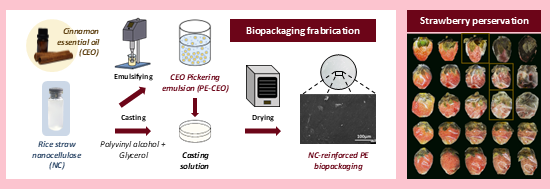
- cast onto a mold and dried at 70 °C for 12 h. All concentrations were based on the mass of PVA. Characterization Physicochemical properties Fourier transform infrared spectroscopy (FTIR) spectra were recorded in the range of 4000–500 cm−1 using a Bruker ALPHA II spectrometer (Germany) at a spectral



Chitosan nanocomposite containing rotenoids: an alternative bioinsecticidal approach for the management of Aedes aegypti
Beilstein J. Nanotechnol. 2025, 16, 1197–1208, doi:10.3762/bjnano.16.88
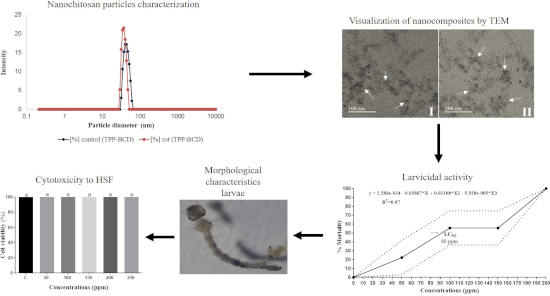
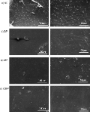
- into the chitosan-based nanocomposite and suggest molecular interactions that may contribute to the enhanced stability and bioactivity of the formulation. To complement the physicochemical characterization and confirm the efficiency of rotenoid encapsulation within the nanoparticles, a calibration
- (CBB) of the State University of North Fluminense Darcy Ribeiro (UENF), where they were raised at room temperature between 20 and 30 °C and fed with fish food. Production and characterization of nanocomposites Method of production of chitosan nanocomposites The nanocomposites for use as a vehicle of



Mechanical stability of individual bacterial cells under different osmotic pressure conditions: a nanoindentation study of Pseudomonas aeruginosa
Beilstein J. Nanotechnol. 2025, 16, 1171–1183, doi:10.3762/bjnano.16.86
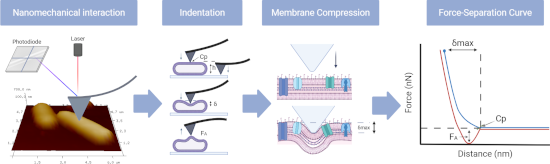
- . Following this, the FV mode was used to create maps, and indentations at higher force loads were also performed using the point-and-shoot tool. Atomic force microscopy measurements The surface analysis and mechanical characterization of living bacteria was performed with an AFM Multimode 8 from Bruker with


Crystalline and amorphous structure selectivity of ignoble high-entropy alloy nanoparticles during laser ablation in organic liquids is set by pulse duration
Beilstein J. Nanotechnol. 2025, 16, 1141–1159, doi:10.3762/bjnano.16.84
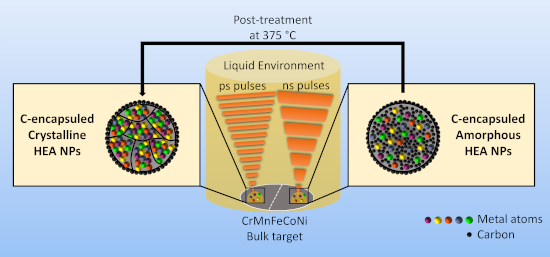
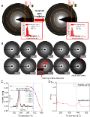
- . Nanoparticle characterization is done by high-resolution transmission electron microscopy (HRTEM), energy-dispersive X-ray spectroscopy (STEM-EDX), selected-area electron diffraction (SAED), X-ray diffraction (XRD), and electron energy loss spectroscopy (EELS), complemented by tempering and laser post
- characterization The elemental distribution on a single-particle level may still be different between NPs from ns- and ps-LAL. To this end, the formed HEA NPs were examined by STEM-EDX analysis. A homogeneous element distribution confirmed by EDX maps and representative EDX line scans is observed for both




Deep learning for enhancement of low-resolution and noisy scanning probe microscopy images
Beilstein J. Nanotechnol. 2025, 16, 1129–1140, doi:10.3762/bjnano.16.83
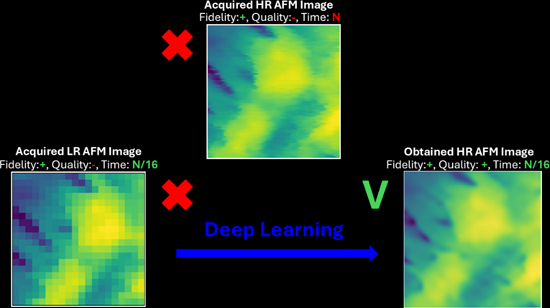
- . Results and Discussion In this study, 4× upscaled images were obtained from real measured low-resolution AFM images of Celgard® 2400 membrane and high-roughness titanium film used for tip characterization (Figure 1 and Figure 2, respectively). 4× upscaling means upscaling both the x and y directions and
- described in [39]. Scans were made with a silicon tip on a silicon nitride cantilever (FASTSCANC, Bruker). The second set is composed of 25 pairs of low- and high-resolution images of a titanium film, which is used for AFM tip characterization (TipCheck, Aurora Nanodevices, BC, Canada). Images of 5 μm × 5


Towards a quantitative theory for transmission X-ray microscopy
Beilstein J. Nanotechnol. 2025, 16, 1113–1128, doi:10.3762/bjnano.16.82



Influence of ion beam current on the structural, optical, and mechanical properties of TiO2 coatings: ion beam-assisted vs conventional electron beam evaporation
Beilstein J. Nanotechnol. 2025, 16, 1097–1112, doi:10.3762/bjnano.16.81
- Professor Jarosław Domaradzki from Wrocław University of Science and Technology for their support in thin films manufacturing and their characterization and the valuable discussion and constructive feedback regarding the analysis and interpretation of the investigation results. Funding This work was co




Fabrication of metal complex phthalocyanine and porphyrin nanoparticle aqueous colloids by pulsed laser fragmentation in liquid and their potential application to a photosensitizer for photodynamic therapy
Beilstein J. Nanotechnol. 2025, 16, 1088–1096, doi:10.3762/bjnano.16.80
- characterization of nanoparticles Different concentrations of MPcs and PtOEP (0.020 wt % and 0.005 wt %) were prepared as aqueous suspensions in F-127 solutions (0, 0.1, and 5 wt %). The suspensions were sonicated for 20 min with an ultrasonic cleaner (ASU CLEANER, ASONE), then 2 mL of a suspension was placed in a


Single-layer graphene oxide film grown on α-Al2O3(0001) for use as an adsorbent
Beilstein J. Nanotechnol. 2025, 16, 1082–1087, doi:10.3762/bjnano.16.79
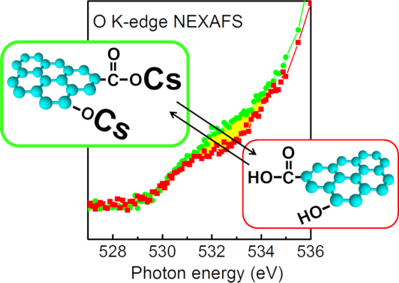
- adsorption, the CsCl solution was removed with a water rinse for 5 min. Characterization The electronic structure of Cs-adsorbed SLGO was investigated by NEXAFS. The C and O K-edge NEXAFS measurements were carried out at the BL-8 station in the Ritsumeikan Synchrotron Radiation Center. The partial electron


Piezoelectricity of hexagonal boron nitrides improves bone tissue generation as tested on osteoblasts
Beilstein J. Nanotechnol. 2025, 16, 1068–1081, doi:10.3762/bjnano.16.78
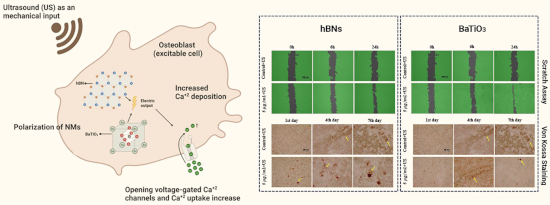
- evaluated. The synthesized hBNs and purchased BaTiO3 were used after their full characterization by imaging and spectroscopic techniques. The piezoelectric behavior of both NMs was evaluated using piezoresponse force microscopy (PRFM). During in vitro studies, the piezoelectricity of the NMs was stimulated
- uptake, ROS levels, noncytotoxic dosing, and migration capacity. Additionally, osteoblastic differentiation and calcium deposition, as markers of end-stage osteoblast differentiation, were evaluated. Materials and Methods Synthesis and characterization of hexagonal boron nitrides Hexagonal boron nitride
- –600 nm via a microplate reader (Tecan, Switzerland) to determine cell viability. Results and Discussion Characterization of hexagonal boron nitrides and BaTiO3 While hBNs were synthesized with a CVD method in house, BaTiO3 with an average size of 50 nm was purchased. Both were thoroughly characterized


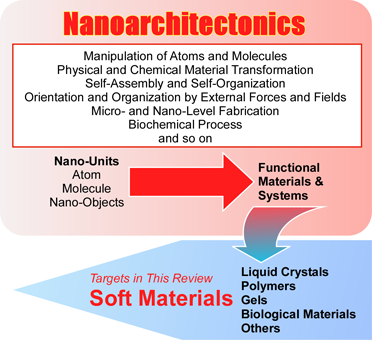
Soft materials nanoarchitectonics: liquid crystals, polymers, gels, biomaterials, and others
Beilstein J. Nanotechnol. 2025, 16, 1025–1067, doi:10.3762/bjnano.16.77






Synthesis of biowaste-derived carbon-dot-mediated silver nanoparticles and the evaluation of electrochemical properties for supercapacitor electrodes
Beilstein J. Nanotechnol. 2025, 16, 933–943, doi:10.3762/bjnano.16.71
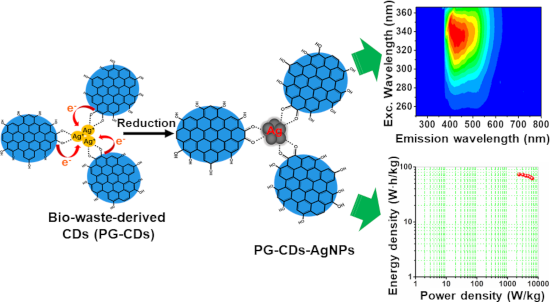
- using UV–vis spectroscopy. Supporting Information File 1, section S1 contains the details of the material characterization techniques. Results and Discussion Plant extract-mediated production of nanoparticles from noble metal precursors are well reported. In the present work, waste P. pinnata leaf
- activity, which can then optimize the capacitive response. Supporting Information File 1, section S1 contains the details of the electrochemical characterization techniques. Figure 5a depicts the CV plot of PG-CDs-AgNPs electrode at various scan rates (5–200 mV/s). It is evident through the PG-CDs-AgNPs CV


Structural and magnetic properties of microwave-synthesized reduced graphene oxide/VO2/Fe2O3 nanocomposite
Beilstein J. Nanotechnol. 2025, 16, 921–932, doi:10.3762/bjnano.16.70
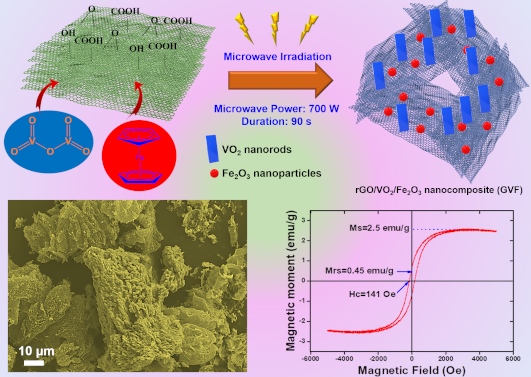
- , the approach was also able to convert V2O5 to form VO2 and synthesize Fe2O3 from ferrocene. The structure and properties of the NC were examined through various characterization techniques. Lastly, the magnetic properties of Fe-containing ternary NCs were also evaluated for their possible biomedical
- . nitric acid (HNO3), and ethanol were obtained from Duksan Pure Chemicals Co. Ltd. Graphite powder was supplied by Sigma-Aldrich. Instrumentation and characterization techniques The “PANalytical, X’Pert-PRO MPD” instrument (Cu Kα line; λ = 1.5406 Å) was utilized to carry out the XRD analyses of rGO and



Focused ion beam-induced platinum deposition with a low-temperature cesium ion source
Beilstein J. Nanotechnol. 2025, 16, 910–920, doi:10.3762/bjnano.16.69
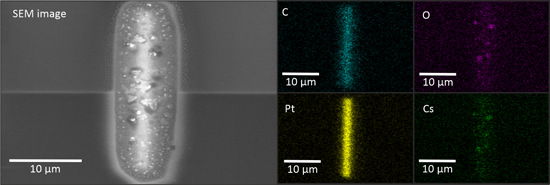
- avoid, for example, any inhomogeneous ripple structures. The dwell time was always 200 ns. For growth rate characterization, Pt layers with a length of 20 μm and a width of 1 μm were deposited on silicon (Si). The ion beam currents were changed, while the pattern size was kept constant. With the Cs+ FIB
- characterization in terms of elemental composition and structure was done with a JEOL ARM 200F (S)TEM system equipped with an Oxford EDS detector. Results and Discussion Deposit surface First, to reveal possible surface modifications, Pt layers were deposited with Cs+ ions at 16, 8, 5, and 2 kV with a current


Characterization of ion track-etched conical nanopores in thermal and PECVD SiO2 using small angle X-ray scattering
Beilstein J. Nanotechnol. 2025, 16, 899–909, doi:10.3762/bjnano.16.68
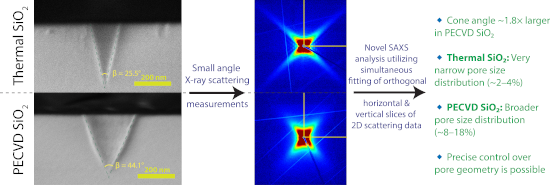
- , and nanofluidic applications. The characterization of the pore morphology and size distribution, along with its dependence on the material properties and fabrication parameters, is crucial to designing nanopore systems for specific applications. Here, we present a comprehensive study of track-etched
- dioxide [29][40][30]. Amorphous silicon dioxide (SiO2) has excellent chemical stability, well-understood surface chemistry, and compatibility with semiconductor processing, opening up new applications for track-etched nanopores in this material [30]. In this study, we report the characterization of track
- with the estimates from scanning electron microscopy analysis. It is important to emphasize that SAXS analysis provides a statistically robust characterization of polydispersity, radius, and cone angle values by sampling over 106 nanopores – a population size unattainable through microscopy analysis. A


Insights into the electronic and atomic structures of cerium oxide-based ultrathin films and nanostructures using high-brilliance light sources
Beilstein J. Nanotechnol. 2025, 16, 860–871, doi:10.3762/bjnano.16.65

- sensitivity, atomic selectivity, spatial and energy resolution, synchrotron radiation-based techniques, which utilize high-brilliance photon beams, have enabled refined characterization of the electronic, structural, and morphological properties of these materials, as well as the modifications they undergo
- under operating conditions. Furthermore, free-electron lasers (FELs), with orders-of-magnitude higher peak brilliance than synchrotrons, have made it possible to achieve temporal resolution of the order of a few tens of femtoseconds, facilitating an ultrafast, element-sensitive characterization of the
- spectroscopy (XPS) has significantly advanced the characterization of low-dimensional cerium oxide structures by offering much higher sensitivity and energy resolution than conventional XPS [21][22][23][24]. In addition, the possibility to select photon energies in a broad range permits to tune the depth


Facile one-step radio frequency magnetron sputtering of Ni/NiO on stainless steel for an efficient electrode for hydrogen evolution reaction
Beilstein J. Nanotechnol. 2025, 16, 837–846, doi:10.3762/bjnano.16.63
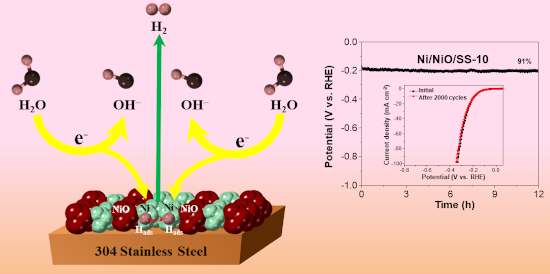
- . Materials characterization The crystal structure of materials was confirmed by XRD using Cu Kα radiation with a wavelength of 0.154 nm on a X-ray diffractometer (D8 Advance, Bruker). The morphology of the obtained products was analyzed utilizing SEM on an S-4800 Hitachi. Chemical components and element


Synthesis and magnetic transitions of rare-earth-free Fe–Mn–Ni–Si-based compositionally complex alloys at bulk and nanoscale
Beilstein J. Nanotechnol. 2025, 16, 823–836, doi:10.3762/bjnano.16.62
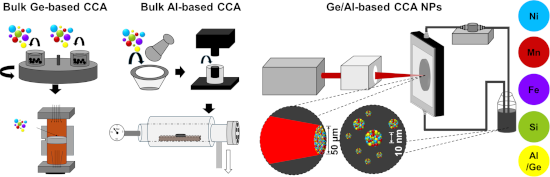
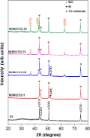
- diffractograms. EDX data was processed using AZtec software. Results and Discussion Microstructural characterization of bulk CCAs The SEM images and EDX elemental maps of the polished surface of the Ge-based CCA (Figure 2a) revealed a homogeneous microstructure, with no significant elemental segregation on the
- hexagonal (P63/mmc) structure, while a cubic (Fm−3m) structure was observed in Ni2MnAl and elemental Al. The hexagonal structure was also found in the Al-based CCA produced by Biswas and colleagues [24]. The elemental characterization by SEM/EDX from different surface positions (see Figure S2 and Table S2
- components that can be later in-situ alloyed during PLAL to generate compositionally controlled CCA NPs. CCA NP synthesis and characterization Particle size distribution The NPs synthesized by pulsed laser ablation in ethanol exhibit a log–normal particle size distribution ranging from 2 to 130 nm for both


Supramolecular hydration structure of graphene-based hydrogels: density functional theory, green chemistry and interface application
Beilstein J. Nanotechnol. 2025, 16, 806–822, doi:10.3762/bjnano.16.61
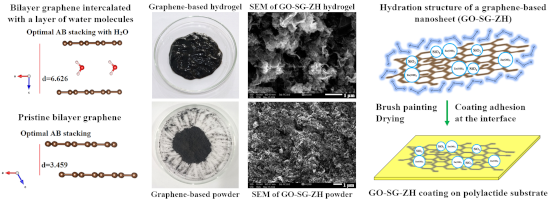
- coated with nanosilica. The nanosilica-coated films were denoted as SG/PLA. Materials characterization Materials weight and moisture values were measured using a laboratory balance (Ohaus Pioneer, 220 g/0.0001 g) and a moisture analyzer (A&D Weighing MX-50, 51 g/0.001 g), respectively. Scanning electron


Morphology and properties of pyrite nanoparticles obtained by pulsed laser ablation in liquid and thin films for photodetection
Beilstein J. Nanotechnol. 2025, 16, 785–805, doi:10.3762/bjnano.16.60
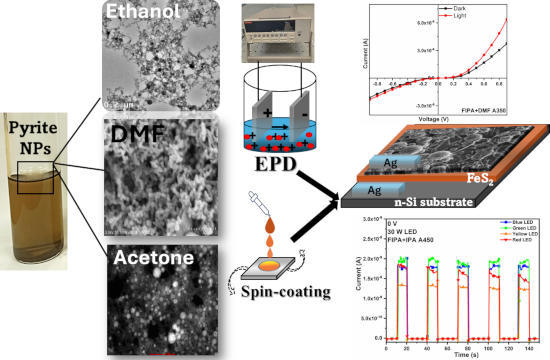
- nanocolloid in this work. The optical properties of nanocolloids and their thin films were evaluated using UV–visible (UV–vis) spectroscopy. The nanoparticle characterization and surface morphology were studied using transmission electron microscopy (TEM), scanning electron microscopy (SEM), and the
- nanocolloids can be operated in self-powered mode. Synthesis and Characterization Synthesis of FeS2 nanoparticles The schematic representation of the methodology utilized is given in Figure 1. FeS2 nanoparticles were synthesized using pulsed laser ablation in liquid. For laser ablation, the FeS2 target (99.9
- temperatures and amounts of sulfur. Characterization The morphological analyses of pyrite NPs were recorded using the FEI Titan G2 80–300 for TEM, high-angle annular dark-field scanning transmission electron microscopy (HAADF-STEM), high-resolution TEM (HRTEM) and selected area electron diffraction (SAED). The


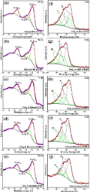


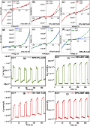


Changes of structural, magnetic and spectroscopic properties of microencapsulated iron sucrose nanoparticles in saline
Beilstein J. Nanotechnol. 2025, 16, 762–784, doi:10.3762/bjnano.16.59
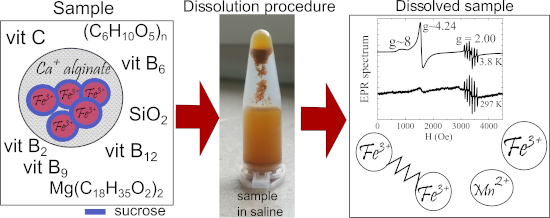


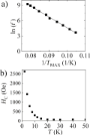



Serum heat inactivation diminishes ApoE-mediated uptake of D-Lin-MC3-DMA lipid nanoparticles
Beilstein J. Nanotechnol. 2025, 16, 740–748, doi:10.3762/bjnano.16.57
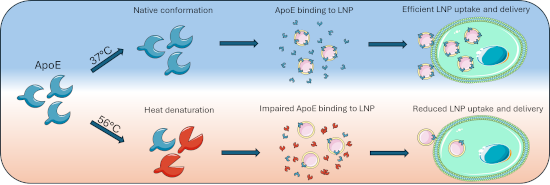
- nanoparticle, reviewed by [6][7][8], as well as the protein source of the corona [9][10][11]. Ultimately, the protein corona can change the uptake [12][13][14], biodistribution [15][16][17][18], immunological responses [19][20] and toxicity [6][21][22] of nanoparticles and its characterization should thus play
- Slide-A-Lyzer, MWCO 20,000, 0.5–3 mL, dark, 4 °C). LNP stocks were stored at 4 °C in the dark. LNP characterization The hydrodynamic diameter of LNPs was determined via dynamic light scattering (DLS). LNP stocks were diluted 1:20 in PBS and analyzed at 25 °C using a ZetaSizer Nano ZS 90 (Malvern





