


Search results
Search for "database" in Full Text gives 129 result(s) in Beilstein Journal of Nanotechnology.
ZnO-nanostructure-based electrochemical sensor: Effect of nanostructure morphology on the sensing of heavy metal ions
Beilstein J. Nanotechnol. 2018, 9, 2421–2431, doi:10.3762/bjnano.9.227
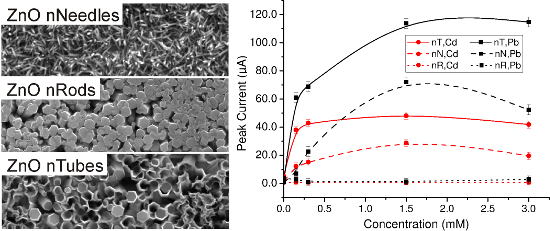
- (RIGAKU, Japan) with parallel beam geometry using an additional Ge(220)×2 monochromator. The obtained X-ray pattern peaks were analysed by the PDXL program and compared to a database [23]. Electrochemical studies The electrochemical measurements were performed on the Versa Stat 3 potentiostat supplemented


Performance analysis of rigorous coupled-wave analysis and its integration in a coupled modeling approach for optical simulation of complete heterojunction silicon solar cells
Beilstein J. Nanotechnol. 2018, 9, 2315–2329, doi:10.3762/bjnano.9.216
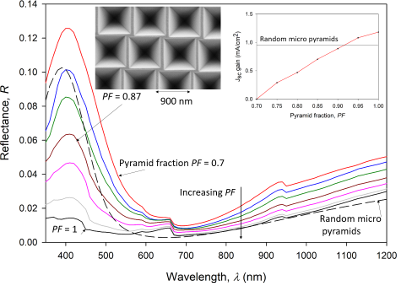
- taken from the PV Lighthouse database [32] and correspond to measurements of realistic layers [18][33][34][35]. In our analysis, two types of textures were included and applied to either the front or rear interfaces: periodic inverted pyramids or random pyramids. We intentionally focus on the two


Lead-free hybrid perovskites for photovoltaics
Beilstein J. Nanotechnol. 2018, 9, 2209–2235, doi:10.3762/bjnano.9.207


Synthesis of hafnium nanoparticles and hafnium nanoparticle films by gas condensation and energetic deposition
Beilstein J. Nanotechnol. 2018, 9, 1868–1880, doi:10.3762/bjnano.9.179
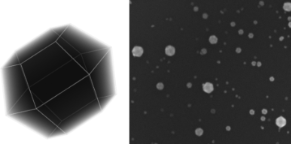
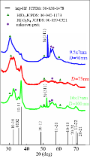
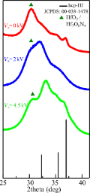
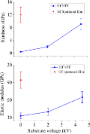
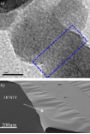
- database. All NTFs characterized with X-ray diffraction had a thickness of ca. 120 nm. Structural studies with TEM were conducted ex situ, after growth by using an FEI CM20 TEM operating at 200 kV. For TEM analysis the nanoparticles were deposited on carbon-coated Cu grids. Morphological characterizations






Chemistry for electron-induced nanofabrication
Beilstein J. Nanotechnol. 2018, 9, 1317–1320, doi:10.3762/bjnano.9.124

- excitation in the precursor as a consequence of its interaction with an impinging electron. Consequently, fundamental studies on chromium hexacarbonyl [22] and tungsten hexacarbonyl [23] included in this Thematic Series contribute to the important task of building a comprehensive database on the electron
Facile chemical routes to mesoporous silver substrates for SERS analysis
Beilstein J. Nanotechnol. 2018, 9, 880–889, doi:10.3762/bjnano.9.82
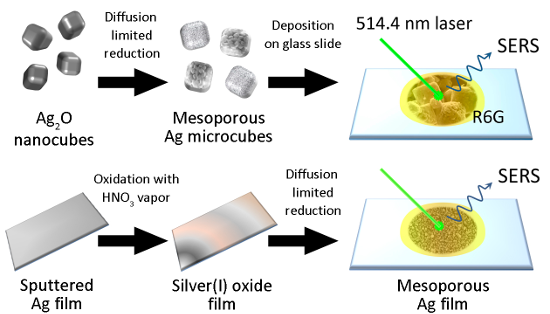
- valence state of the silver at the surface of the mp-Ag (Figure 1f) obtained in 1:10 Ag2O/NaBH4 molar ratio. The binding energies at 368.3(2) eV and 374.2(2) eV are related to Ag 3d5/2 and Ag 3d3/2 binding energies, respectively. According to the NIST database (CAS registry No 7440-22-4) these bands
- the compounds was carried out using WinXPow software and the ICDD PDF2 database. X-ray photoelectron spectroscopy analysis was performed using an electron spectroscopy for chemical analysis (ESCA) setup at the Laboratory of Industrial Chemistry of Ruhr University at Bochum equipped with the X-ray


Towards 3D crystal orientation reconstruction using automated crystal orientation mapping transmission electron microscopy (ACOM-TEM)
Beilstein J. Nanotechnol. 2018, 9, 602–607, doi:10.3762/bjnano.9.56
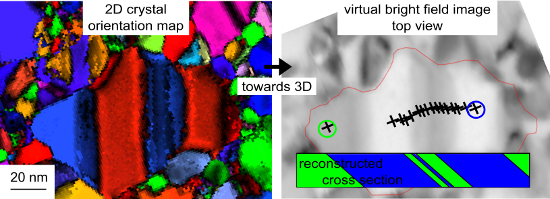
- experimental diffraction pattern with a database of simulated diffraction patterns covering all crystal orientations and phases for the investigated material, is a fast and robust evaluation routine. Moreover, ACOM-TEM is a quantitative method with respect to sample parameters like grain size, twin density

Synthesis of [{AgO2CCH2OMe(PPh3)}n] and theoretical study of its use in focused electron beam induced deposition
Beilstein J. Nanotechnol. 2017, 8, 2615–2624, doi:10.3762/bjnano.8.262
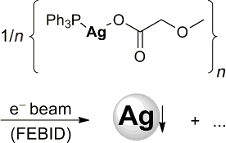
- . Data have been deposited with the Cambridge Structural Database under CCDC 1552018. Synthesis of [{AgO2CCH2OMe}n] (1) [11]. Silver(I) nitrate (0.5 g (2.94 mmol)) was dissolved in a mixture of 20 mL of ethanol and 0.25 mL of acetonitrile at 25 °C. To this solution a mixture of 0.26 g (2.89 mmol, 0.22 mL


Amplified cross-linking efficiency of self-assembled monolayers through targeted dissociative electron attachment for the production of carbon nanomembranes
Beilstein J. Nanotechnol. 2017, 8, 2562–2571, doi:10.3762/bjnano.8.256
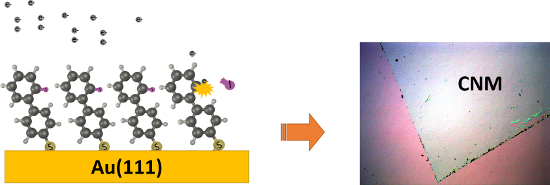
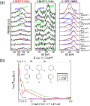
- . In a control experiment, DEA to 2-bromobiphenyl-4-thiol was also studied. The effect of the 4-thiol group was found to be insignificant. For comparison, we have recorded positive ion mass spectra at 70 eV (not shown here), and we find that these agree well with those available in the NIST database


Synthesis of metal-fluoride nanoparticles supported on thermally reduced graphite oxide
Beilstein J. Nanotechnol. 2017, 8, 2474–2483, doi:10.3762/bjnano.8.247
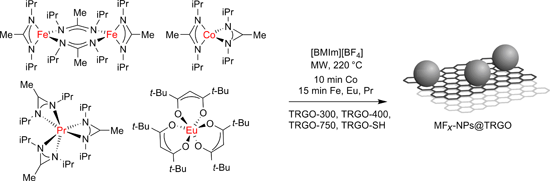
- deposited in the crystallographic open database (COD) (Figures S4–S19, Supporting Information File 1). For example, for PrF3 the PXRD matches the hexagonal close-packed (hcp) structure of praseodymium metal trifluoride with space group P63/mcm (Figure 1). The formation of metal fluorides instead of metal


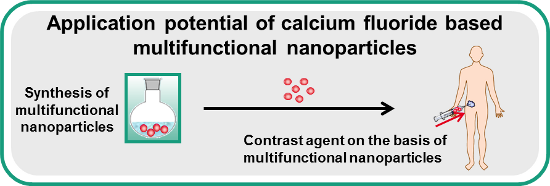
Calcium fluoride based multifunctional nanoparticles for multimodal imaging
Beilstein J. Nanotechnol. 2017, 8, 1484–1493, doi:10.3762/bjnano.8.148
- part, the XRD pattern of the CaF2:(Tb3+,Gd3+) NPs (d = 5–10 nm, doping concentration of Tb3+ and Gd3+: 1 mol %) is plotted. Below a reference spectrum from the database JCPDS (Joint Committee on Powder Diffraction Standards, Powder Diffraction File: 035-0816) is shown. The reflexes of both spectra


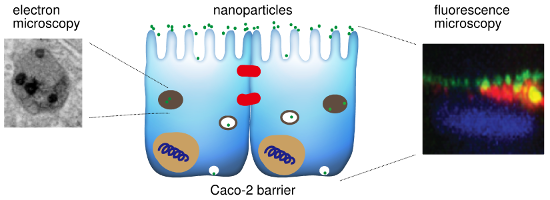
Low uptake of silica nanoparticles in Caco-2 intestinal epithelial barriers
Beilstein J. Nanotechnol. 2017, 8, 1396–1406, doi:10.3762/bjnano.8.141
- optimized for size range analysis 0.03–1 µm). A 476 nm polyvinyl chloride (PVC; Analytik UK) commercial standard was used to calibrate the instrument before each measurement. Each gradient was checked by running the PVC standard as a sample and comparing to a database control. 100 µL of standard was



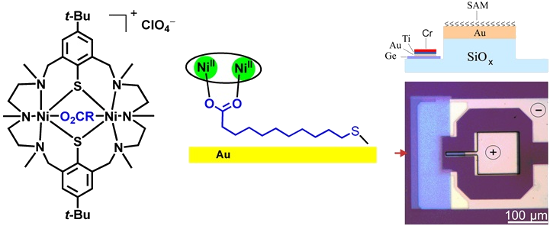
Deposition of exchange-coupled dinickel complexes on gold substrates utilizing ambidentate mercapto-carboxylato ligands
Beilstein J. Nanotechnol. 2017, 8, 1375–1387, doi:10.3762/bjnano.8.139
- with absolute ethanol and dried in a stream of ultrahigh purity nitrogen. The modelling environments CompleteEASE and WVASE32 (both J. A. Woollam Co., Inc.) were used for data evaluation. The dielectric function of a pristine gold substrate, measured and modelled in agreement with database values, was


Hierarchically structured nanoporous carbon tubes for high pressure carbon dioxide adsorption
Beilstein J. Nanotechnol. 2017, 8, 1135–1144, doi:10.3762/bjnano.8.115
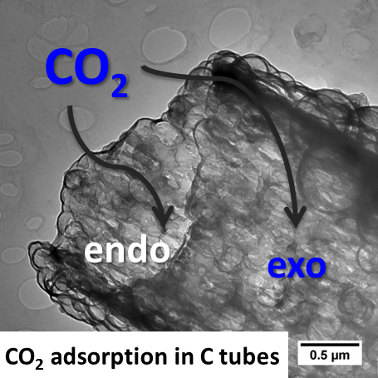
- storage vessel as well as in the adsorption chamber. The setup was calibrated at 25 °C using high purity N2 (99.999%) and the density values were obtained from the NIST database. The calibration values were validated by measuring CO2 (99.998%) adsorption on a Norit R1 extra™ device at 25 °C following the
- was further subjected to an in situ activation process by overnight heating in vacuum at a temperature of 150 °C. CO2 adsorption measurements were carried out at 25 °C and CO2 density values, for a given pressure and temperature, were obtained from the NIST database. As the errors tend to accumulate


Triptycene-terminated thiolate and selenolate monolayers on Au(111)
Beilstein J. Nanotechnol. 2017, 8, 892–905, doi:10.3762/bjnano.8.91
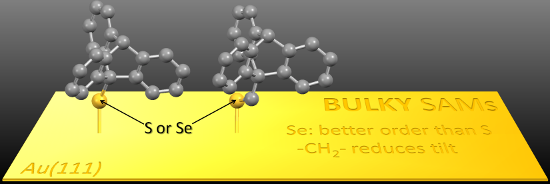
- , experimentally found: 1452 cm−1). The triptycene spectrum was taken from the NIST database [60]. The calculated spectra were used to aid the assignment of the vibrational bands and to estimate the direction of the corresponding transition dipole moments (TDMs). XPS Note that due to the limitations of the




Association of aescin with β- and γ-cyclodextrins studied by DFT calculations and spectroscopic methods
Beilstein J. Nanotechnol. 2017, 8, 348–357, doi:10.3762/bjnano.8.37
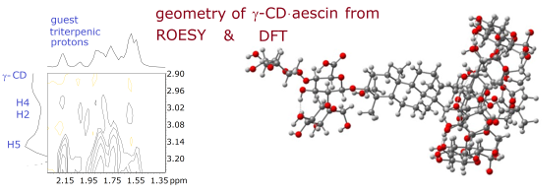
- taken from structures available in the Cambridge Structural Database (CSD) [35]. For β-CD, the coordinates were procured from the structure of inclusion complex β-cyclodextrin·S-(+)-ibuprofen chlathrate hydrate (refcode TUXKUS) [36]; for γ-CD data was taken from the inclusion complex γ


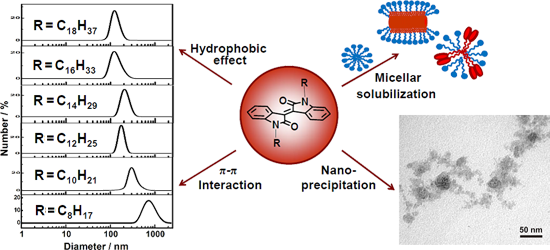
Nanoscale isoindigo-carriers: self-assembly and tunable properties
Beilstein J. Nanotechnol. 2017, 8, 313–324, doi:10.3762/bjnano.8.34
- pentagons based on the XRD data for isoindigo derivatives available in the Cambridge Structural Database. As seen in Figure S8 (Supporting Information File 1), the surface of the oxindole fragment of isoindigo derivatives, for which the crystal structure is currently known is in the range of 0.84–0.87 nm2




From iron coordination compounds to metal oxide nanoparticles
Beilstein J. Nanotechnol. 2016, 7, 2074–2087, doi:10.3762/bjnano.7.198
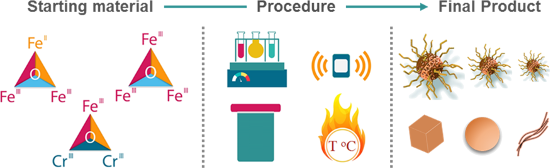
- present any peaks, indicating that both samples are amorphous, while the diffractogram of sample NPT2 (Supporting Information File 1, Figure S9) shows diffraction peaks, which coincide with those from the JCPDS 04-0755 database and are characteristic for maghemite (γ-Fe2O3). The morphology of the
- nm). Comparing the diffraction peaks identified in the WAXD patterns of NPC1–NPC3 samples (Supporting Information File 1, Figure S21) with those from the ICDD database for different oxides, it was determined that the peaks in the NPC1 and NPC3 spectra coincide with those of the well-established


Effect of nanostructured carbon coatings on the electrochemical performance of Li1.4Ni0.5Mn0.5O2+x-based cathode materials
Beilstein J. Nanotechnol. 2016, 7, 1960–1970, doi:10.3762/bjnano.7.187
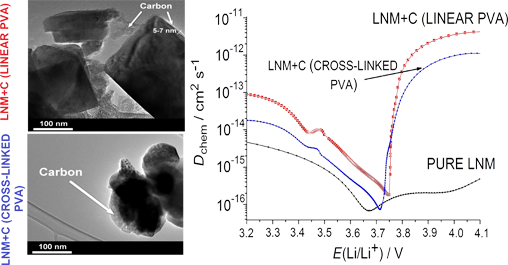
- diffractometer (Rigaku) in the reflection mode with Cu Kα radiation and a curved-graphite [2] monochromator placed in the reflected beam (2θ range 10–90°, step 0.02°, acquisition time 3 s per step).The analysis of diffraction patterns was performed by using WinXPow software and PDF-2 powder diffraction database



Nanostructured TiO2-based gas sensors with enhanced sensitivity to reducing gases
Beilstein J. Nanotechnol. 2016, 7, 1718–1726, doi:10.3762/bjnano.7.164
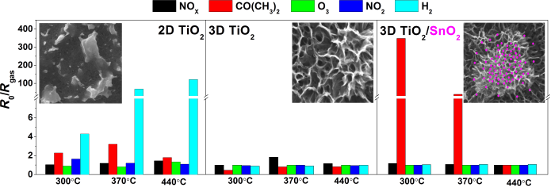
- the PDF-2 database. Scanning electron microscopy (SEM) images of top- and side-view of the samples were obtained with a NOVA NANO SEM 200 (FEI) instrument. Gas sensitivity measurements For gas sensitivity measurements, a custom-made apparatus, presented in Figure 1, was used. The sensors were placed


Influence of synthesis conditions on microstructure and phase transformations of annealed Sr2FeMoO6−x nanopowders formed by the citrate–gel method
Beilstein J. Nanotechnol. 2016, 7, 1202–1207, doi:10.3762/bjnano.7.111
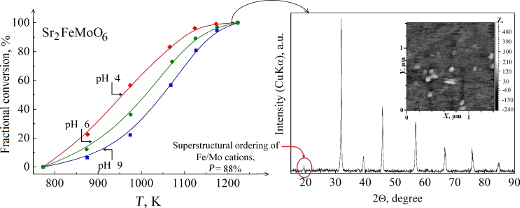
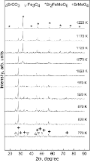
- collected with an angular step of 0.05° at 5 s per step. The XRD patterns were refined using the ICSD-PDF2 (Release 2000) database and the FULLPROF [19] and PowderCell [25] Rietveld refinement programs. The heat capacity of the nanopowders of SFMO-4, SFMO-6, and SFMO-9 were measured in the temperature range



High antiviral effect of TiO2·PL–DNA nanocomposites targeted to conservative regions of (−)RNA and (+)RNA of influenza A virus in cell culture
Beilstein J. Nanotechnol. 2016, 7, 1166–1173, doi:10.3762/bjnano.7.108
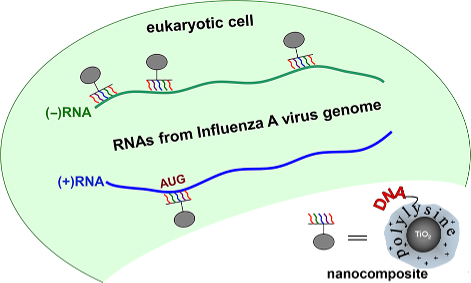
- replication. To find the most conservative regions of segment 5, we analyzed nucleotide sequences of various subtypes of IAV available in the NCBI Influenza Virus Resource database (http://www.ncbi.nlm.nih.gov). We have chosen the four most conservative regions, i.e. the noncoding region located on the 3’-end


Manufacturing and investigation of physical properties of polyacrylonitrile nanofibre composites with SiO2, TiO2 and Bi2O3 nanoparticles
Beilstein J. Nanotechnol. 2016, 7, 1141–1155, doi:10.3762/bjnano.7.106
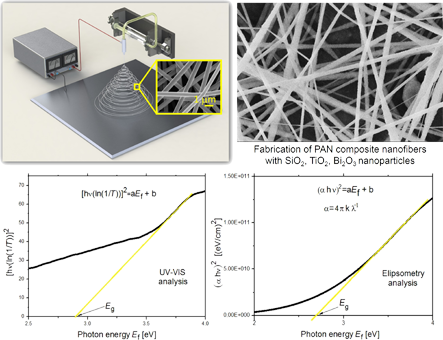
- dedicated database of PAN-ICSD files was used. The resulting polymer composite nanofibres were quantitatively and qualitatively analysed using EDX microanalysis and surface topography imaging using a Zeiss Supra 35 SEM, with a Trident XM4 X-ray spectrometer supplied by EDAX. Based on the SEM micrographs
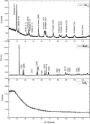
- line was observed, the so-called widening of the liquid, which indicates an amorphous crystal structure (Figure 2). The angular position of the diffraction line was, according to data contained in the ICDD JCPDS database, that of amorphous SiO2. Figure 3 shows TEM images of the studied nanopowders



Characterisation of thin films of graphene–surfactant composites produced through a novel semi-automated method
Beilstein J. Nanotechnol. 2016, 7, 209–219, doi:10.3762/bjnano.7.19
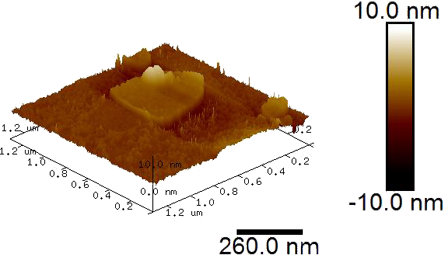
- oxide (SiO2) which is typically present on the surface of Si; (3) the deposited layer of PAH/graphene(−)SDS. The ambient was air. Optical parameters for Si and SiO2 were taken from the J. A. Woollam database. The fitting was first performed for ellipsometric spectra of the Si/SiO2 substrate. For the set




Single-molecule magnet behavior in 2,2’-bipyrimidine-bridged dilanthanide complexes
Beilstein J. Nanotechnol. 2016, 7, 126–137, doi:10.3762/bjnano.7.15
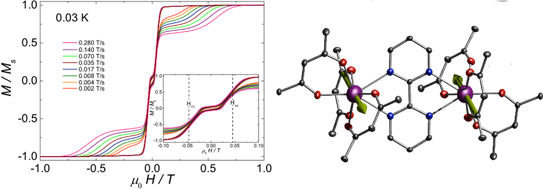
- atoms. Full crystallographic details can be found in CIF format (see the Cambridge Crystallographic Data Centre database, 1427566, 1419831–1419834). These data can be obtained free of charge via http://www.ccdc.cam.ac.uk/conts/retrieving.html (or from Cambridge Crystallographic Data Centre, 12 Union





