Search results
Search for "high-speed" in Full Text gives 122 result(s) in Beilstein Journal of Nanotechnology.
Lyapunov estimation for high-speed demodulation in multifrequency atomic force microscopy
Beilstein J. Nanotechnol. 2018, 9, 490–498, doi:10.3762/bjnano.9.47
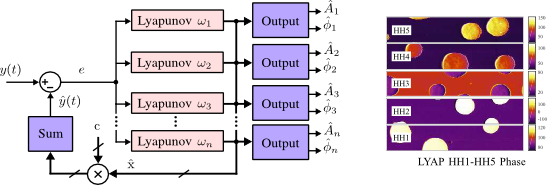
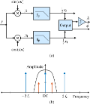
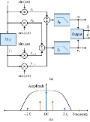
- , enabling both z-axis feedback and phase contrast imaging to be achieved. This article proposes a model-based multifrequency Lyapunov filter implemented on a field-programmable gate array (FPGA) for high-speed MF-AFM demodulation. System descriptions and simulations are verified by experimental results
- ; digital signal processing; field-programmable gate array (FPGA); high-speed; Lyapunov filter; multifrequency; Introduction Atomic force microscopy (AFM) [1] has been integral in the field of nanoscale engineering since its invention in 1986 by Binnig et al. By sensing microcantilever tip–sample
- has been shown that conventional high-speed demodulation techniques are incompatible with MF-AFM, due to the lack of sensitivity to multiple frequency components [19]. These include the peak detector [20], peak-hold [21] and RMS-to-DC [22] conversion methods. A typical MF-AFM demodulator employs





Electrical properties of a liquid crystal dispersed in an electrospun cellulose acetate network
Beilstein J. Nanotechnol. 2018, 9, 155–163, doi:10.3762/bjnano.9.18
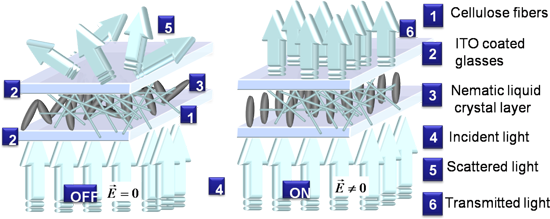
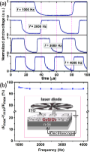
- . A He–Ne laser beam (wavelength 623.8 nm) passes through the sample, which is modulated by an ac voltage provided by a function generator–amplifier system. The laser beam is detected by a high-speed photodiode with adjustable gain (Thorlabs). The electrical signal generated by the photodiode was


Beyond Moore’s technologies: operation principles of a superconductor alternative
Beilstein J. Nanotechnol. 2017, 8, 2689–2710, doi:10.3762/bjnano.8.269



Localized growth of carbon nanotubes via lithographic fabrication of metallic deposits
Beilstein J. Nanotechnol. 2017, 8, 2592–2605, doi:10.3762/bjnano.8.260
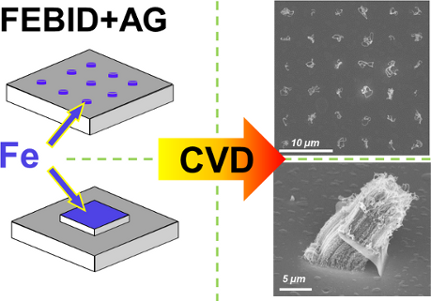
- electron exposures for SEM and lithography were performed at a beam energy of 15 keV and a probe current of 400 pA. The lithographic processes were realized via a self-developed lithography application based on LabView 8.6 (National Instruments) and a high speed DAC PCIe-card (M2i.6021-exp, Spectrum GmbH




High-speed dynamic-mode atomic force microscopy imaging of polymers: an adaptive multiloop-mode approach
Beilstein J. Nanotechnol. 2017, 8, 1563–1570, doi:10.3762/bjnano.8.158
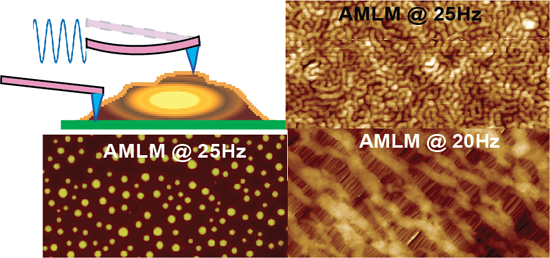
- control techniques, is promising to achieve high-speed dynamic-mode atomic force microscopy imaging. The performance, usability, and robustness of the AMLM in various imaging applications, however, is yet to be assessed. In this work, three benchmark polymer samples, including a PS–LDPE sample, an SBS
- ) while preserving the advantages of TM imaging over contact mode (CM) imaging [1]. Although TM imaging is the de facto most widely used imaging technique of AFM [2][3], the slow speed (throughput) of TM imaging has become its major limit and bottleneck [4][5]. It is challenging to achieve high-speed TM
- imaging because an increase of the speed can cause a loss of the tip–sample interaction and/or the annihilation of the cantilever tapping vibration, particularly when the imaging size is large. Existing efforts on high-speed TM imaging [6][7][8][9] only led to a speed increase up to three times at the




Calcium fluoride based multifunctional nanoparticles for multimodal imaging
Beilstein J. Nanotechnol. 2017, 8, 1484–1493, doi:10.3762/bjnano.8.148

- with a high-speed silicon CCD camera (Princeton Instruments PIXIS256). The spectra were not corrected for the spectral sensitivity of the experimental setup. MRI measurements To guarantee a homogenous distribution within each sample, all tubes were sonicated for five minutes and vortexed afterwards


A review of demodulation techniques for amplitude-modulation atomic force microscopy
Beilstein J. Nanotechnol. 2017, 8, 1407–1426, doi:10.3762/bjnano.8.142
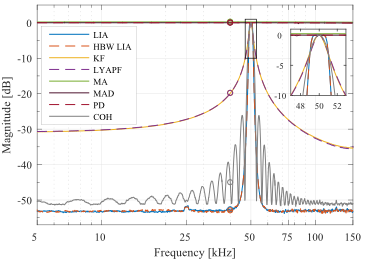
- performance metrics tracking bandwidth, implementation complexity and sensitivity to other frequency components are experimentally evaluated for each method. Finally, the significance of an adequate demodulator bandwidth is highlighted during high-speed tapping-mode atomic force microscopy experiments in
- commercial AFM systems. The performance metrics, tracking bandwidth and sensitivity to other frequency components, are especially important in high-speed [15][16][17][18] and multifrequency AFM [19] applications. As the tracking bandwidth directly affects the achievable scan rate, it should be maximized
- improve upon this constraint [35]. However, the method is still ultimately limited by the low-pass filters that are required to account for residual phase mismatches. For high-speed AFM applications, as required for the study of fast biological processes [36][37], the above methods are not suitable and




AgCl-doped CdSe quantum dots with near-IR photoluminescence
Beilstein J. Nanotechnol. 2017, 8, 1156–1166, doi:10.3762/bjnano.8.117
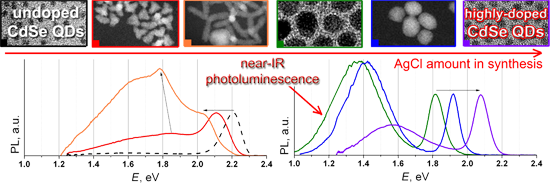
- use of a high-speed centrifuge (21000g). The details of this separation are presented in Supporting Information File 1 (the procedure of separation between different fractions). PL spectra of the heavy fractions are presented in Figure 7. It was observed that their PL extends deep in the low-energy


Photo-ignition process of multiwall carbon nanotubes and ferrocene by continuous wave Xe lamp illumination
Beilstein J. Nanotechnol. 2017, 8, 134–144, doi:10.3762/bjnano.8.14
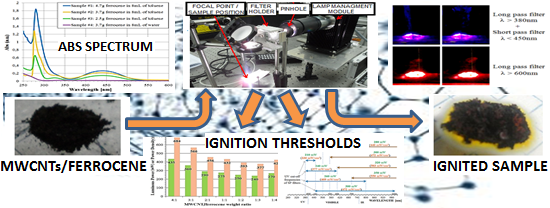
- mixture triggered by MWCNTs determines a higher combustion pressure gradient and a higher peak pressure with respect to spark-induced ignition for all the tested methane/air ratios. In addition, the high-speed camera images showed that the light-induced ignition using MWCNT/ferrocene mixtures as ignition




Sub-nanosecond light-pulse generation with waveguide-coupled carbon nanotube transducers
Beilstein J. Nanotechnol. 2017, 8, 38–44, doi:10.3762/bjnano.8.5
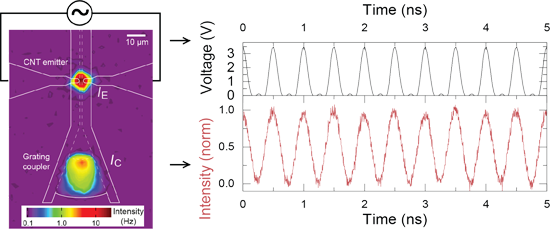
- electrical signals into optical ones within a nanophotonic circuit. Here, we demonstrate that waveguide-integrated single-walled CNTs are promising high-speed transducers for light-pulse generation in the gigahertz range. Using a scalable fabrication approach we realize hybrid CNT-based nanophotonic devices


Nanostructured germanium deposited on heated substrates with enhanced photoelectric properties
Beilstein J. Nanotechnol. 2016, 7, 1492–1500, doi:10.3762/bjnano.7.142
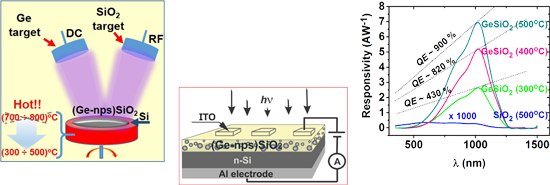
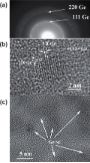
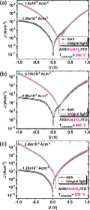
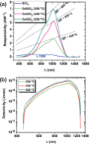
- . This is closely related to the increase of high-speed operation, good reliability, low power consumption and the decrease of unit price that led to the rapid development of the semiconductor device market and to the continuous downscaling of devices. Regarding the downscaling process, high mobility




Adiabatic superconducting cells for ultra-low-power artificial neural networks
Beilstein J. Nanotechnol. 2016, 7, 1397–1403, doi:10.3762/bjnano.7.130
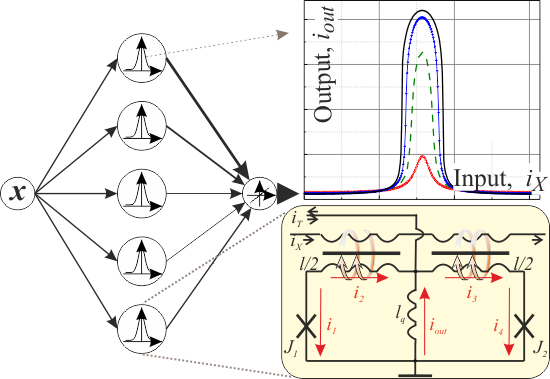
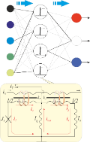
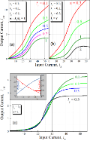
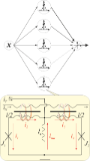
- receiving and computing are emerging technologies in high-speed/high-frequency electronic applications markets [7]. The advantages of a superconducting digital RF receiver [8] are high sampling rate and quantum precision of quantization, allowing direct digitization of incoming wideband RF signals without


Functional diversity of resilin in Arthropoda
Beilstein J. Nanotechnol. 2016, 7, 1241–1259, doi:10.3762/bjnano.7.115


Reasons and remedies for the agglomeration of multilayered graphene and carbon nanotubes in polymers
Beilstein J. Nanotechnol. 2016, 7, 1174–1196, doi:10.3762/bjnano.7.109
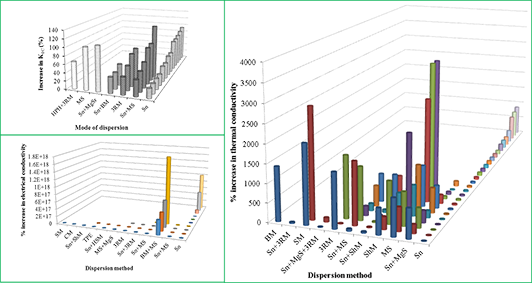
- , as shown in Figure 7. The thermoplastic pellets mixed with CNTs are fed through an extruder hopper. The CNT agglomerates are dispersed by shear flow created by twin screws rotating at high speed [35]. Abdalla et al. dispersed CNTs by extrusion into EPIKOTE resin EPON 815C (bisphenol A with n-butyl


Advanced atomic force microscopy techniques III
Beilstein J. Nanotechnol. 2016, 7, 1052–1054, doi:10.3762/bjnano.7.98

- developed an advanced microscope capable of obtaining nanoscale topography as well as mechanical properties by multifrequency AFM at high speed. They combined recent progress in increased imaging speed and photothermal actuation in a unique and versatile AFM head using ultrasmall cantilevers [18]. Single
The hydraulic mechanism in the hind wing veins of Cybister japonicus Sharp (order: Coleoptera)
Beilstein J. Nanotechnol. 2016, 7, 904–913, doi:10.3762/bjnano.7.82
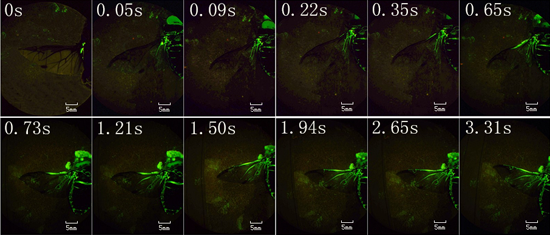
- of 488 nm in the retinal camera. The unfolding hind wings process of the hind wings of a flying beetle was photographed with a high-speed camera (OLYMPUS, i-SPEED 3, camera speed of 400 frames/s). The beetle was suspended in front of the camera. A biological pressure sensor and dynamic signal
- the object and the internal deformation does not affect the whole movement, then the object can be simplified as a rigid body with no penetration of the wall [21]. Results and Discussion Experimental The deployment process of the hind wings of C. japonicus was recorded using a high-speed camera, as
- , for the realization of the hind wing exercise, torsion was created in the folded position so that the fixed part and moving part of the costa veins were not in a plane (RA vein). Figure 1F and Figure 1G show the vein movement diagram. By using a high-speed camera to observe the folding/unfolding



Comparative kinematical analyses of Venus flytrap (Dionaea muscipula) snap traps
Beilstein J. Nanotechnol. 2016, 7, 664–674, doi:10.3762/bjnano.7.59

- Freiburg. General cinematographic analyses For filming fast closure motions, traps were stimulated with a nylon thread on the trigger hairs of one lobe and recorded with a high-speed camera (Motion Scope Y4, Redlake, USA, recording speed 100 fps) in combination with a macro objective lens (Zeiss Makro
- recorded as described above. Video analyses were performed with Fiji/ImageJ. Comparative kinematical analyses of seedling and adult traps Movements of 12 traps from different seedlings were recorded by using the high-speed-equipment described above and analyzed with Fiji/ImageJ. Trap closure durations in
- and snapping durations of seedlings and the above mentioned adult traps for significant differences, and additionally analyzed the correlation between seedling trap length and snapping duration. From the high-speed-videos of one additional seedling trap and from an additional adult trap we measured in


Active multi-point microrheology of cytoskeletal networks
Beilstein J. Nanotechnol. 2016, 7, 484–491, doi:10.3762/bjnano.7.42

- the motion of the excited particle and the particles in the surrounding is captured by a high speed camera and the positions of each particle over time are determined. In a group of particles, one particle – the reference particle R – is excited to sinusoidal oscillations at a specific frequency ω
- laser beam with its pivot in the back focal plane of the objective. The CCD high-speed camera records the motion of the microspheres embedded in the examined medium. An additional photodiode is used for the calibration of the trap. C) Image of a microrheology measurement. The white lines show the


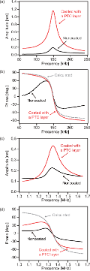
Efficiency improvement in the cantilever photothermal excitation method using a photothermal conversion layer
Beilstein J. Nanotechnol. 2016, 7, 409–417, doi:10.3762/bjnano.7.36
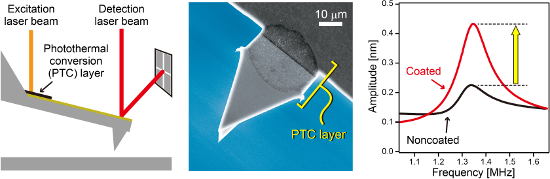
- due to its great potential for many applications. For example, recent advancements in instrumentation of dynamic-mode AFM have enabled atomic-resolution imaging not only in vacuum [2][3][4] but also in liquid [5][6]. In addition, other advanced AFM techniques such as high-speed AFM [7][8][9] and



Counterion effects on nano-confined metal–drug–DNA complexes
Beilstein J. Nanotechnol. 2016, 7, 62–67, doi:10.3762/bjnano.7.7
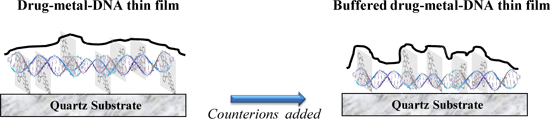
- sonication in acetone and ethanol respectively, then rinsing by Millipore water (resistivity ≈ 18.2 MΩ·cm) and subsequent removal of water by spinning the substrate at high speed (4000 rpm). To extract out-of-plane information specular X-ray reflectivity profiles of these thin films were recorded with step


Sonochemical co-deposition of antibacterial nanoparticles and dyes on textiles
Beilstein J. Nanotechnol. 2016, 7, 1–8, doi:10.3762/bjnano.7.1
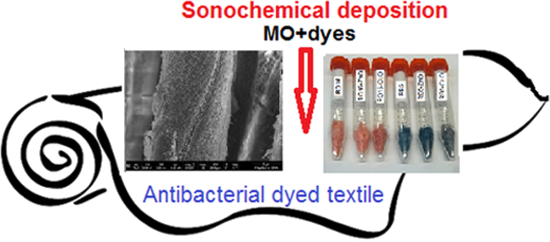
- coating technique guarantees a very good adherence of the deposited NPs to the substrate resulting from the high speed (>500 m/s) at which the NPs are thrown at the substrate by microjets created after the collapse of the acoustic bubbles near a solid surface [8]. The excellent adherence is reflected in
- synthesized as a result of hydrolysis reaction of metal acetate. The coating is an in situ process which takes place subsequently to the formation of the nanoparticles. High-speed jets that are generated due to the bubble collapse, throw the newly created NPs of MO and the dye, at high speed toward the




Blue and white light emission from zinc oxide nanoforests
Beilstein J. Nanotechnol. 2015, 6, 2463–2469, doi:10.3762/bjnano.6.255
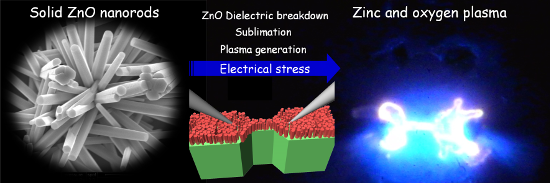
- electrical contact (Figure 1c). The probe separation for all electrical measurements was ≈10–15 µm. Either a high-sensitivity 1080p HD camcorder with a frame rate of 60 fps (Sony, HDR-CX160) or a high-speed camera with a maximum of 1200 fps (Casio, EX-F1) was connected to the microscope head for imaging
- to a probe arm and was aligned to the test area using a micromanipulator. A high-speed PIN diode with built-in amplifier was attached to another micromanipulator and was positioned to face the test area in order to detect the emitted light intensity with better time resolution. The distance from the
- arrangement. The schematics of a typical measurement setup with a pulse generating unit (PGU). An optical spectrometer was used to perform spectral analysis with time resolution of ≥1 ms in the 200–1100 nm range. Frames extracted from high-speed videos showing light emission and changing percolation paths


Self-organization of gold nanoparticles on silanated surfaces
Beilstein J. Nanotechnol. 2015, 6, 2345–2353, doi:10.3762/bjnano.6.242
- Nanotechnolgy at Sultan Qaboos University and SQU-UAE 2013 funding project (Study of graphene field effect transistors for high speed applications).


Mapping bound plasmon propagation on a nanoscale stripe waveguide using quantum dots: influence of spacer layer thickness
Beilstein J. Nanotechnol. 2015, 6, 2046–2051, doi:10.3762/bjnano.6.208
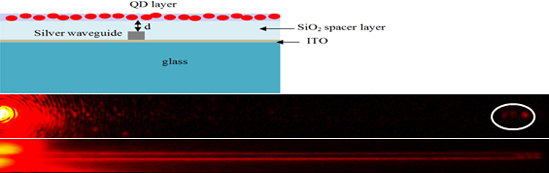
- are a coherent oscillation of electrons in a metal [1]. Loosely bound electrons can combine with incoming photons and propagate along the metal/dielectric interface. These charge density waves create a strong near-field [1]. There is increasing demand for high speed data communication as well as
- miniaturised devices, and plasmonics is a possible solution that can provide both the high speed and miniaturisation [2][3]. Plasmonics enables the squeezing of optical waves into miniscule structures and manipulating these waves to achieve all-optical circuits. Metal waveguides are a popular method to route



Possibilities and limitations of advanced transmission electron microscopy for carbon-based nanomaterials
Beilstein J. Nanotechnol. 2015, 6, 1541–1557, doi:10.3762/bjnano.6.158
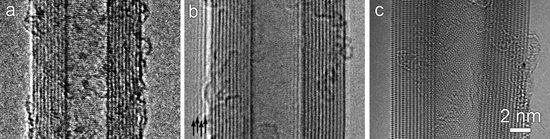
- thus provide a HRTEM image with an acceptable signal to noise ratio with only limited damage to the sample. The introduction of a high-speed detector may also have an impact on increasing the time resolution. In a molecular dynamics simulations on the reconstruction of vacancies, the time scale is
- often restricted to picoseconds [45], whereas in TEM the time resolution is at the order of 1 s [51] or 80 ms [52]. Under these conditions, it is more likely that the resulting image shows the time-relaxed state of the sample. A high-speed detector may facilitate the imaging of more intermediate states