


Search results
Search for "laser irradiation" in Full Text gives 94 result(s) in Beilstein Journal of Nanotechnology.
Nonlinear optical properties of near-infrared region Ag2S quantum dots pumped by nanosecond laser pulses
Beilstein J. Nanotechnol. 2015, 6, 1781–1787, doi:10.3762/bjnano.6.182
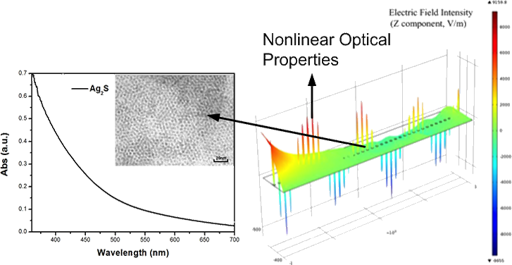
- the rectangle represent the Ag2S QDs. One can see that the Ag2S QDs can show nonlinear optical phenomena under 532 nm laser irradiation. The intensity of the electric field changes drastically when the laser passes through the quantum dots. Previous research attributed the nonlinear optical behavior



Improved optical limiting performance of laser-ablation-generated metal nanoparticles due to silica-microsphere-induced local field enhancement
Beilstein J. Nanotechnol. 2015, 6, 1199–1204, doi:10.3762/bjnano.6.122
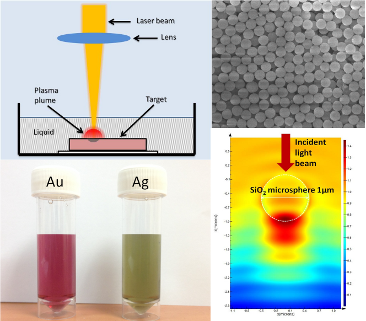
- duration, and laser fluence) and the properties of the environment (e.g., surfactant concentration, pH value, or size and length of ligands) [1][2][3][4][5][6]. Laser ablation is an explosive material removal process using strong pulsed-laser irradiation. The LAL process causes the ejection of nanoclusters
- and gold/silica nanocomposites and (c,d) silver nanoparticles and silver/silica nanocomposites. (a) SEM image of silica microspheres and (b) FDTD simulation result for a silica microsphere with a diameter of 1 µm under 1064 nm laser irradiation. Field enhancement by microspheres of different sizes


Nanostructuring of GeTiO amorphous films by pulsed laser irradiation
Beilstein J. Nanotechnol. 2015, 6, 893–900, doi:10.3762/bjnano.6.92
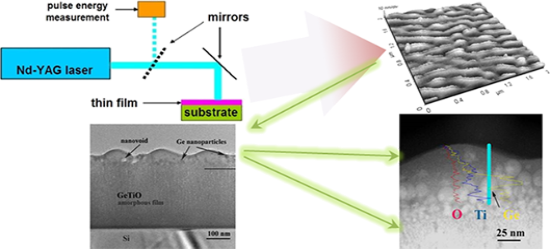
- obtained by RF magnetron sputtering with 50:50 initial atomic ratio of Ge:TiO2. Laser irradiation was performed by using the fourth harmonic (266 nm) of a Nd:YAG laser. The laser-induced nanostructuring results in two effects, the first one is the appearance of a wave-like topography at the film surface
- the formation of amorphous Ge nanoparticles through the segregation of Ge atoms in the GeTiO matrix. The nanostructuring effects induced by the laser irradiation can be used in functionalizing the surface of the films. Keywords: fast diffusion; GeTiO film; nanostructuring; pulsed laser annealing
- morphology cannot be considered as a sign of melting. All laser treatments were conducted at low fluences, so that the films remain practically in the solid state phase, as the surface temperature estimation shows. Before and after laser irradiation, the nanostructure of the film surfaces was observed by


Raman spectroscopy as a tool to investigate the structure and electronic properties of carbon-atom wires
Beilstein J. Nanotechnol. 2015, 6, 480–491, doi:10.3762/bjnano.6.49
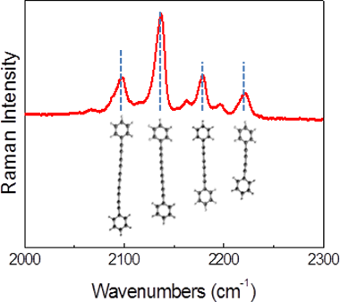
- (fs) laser irradiation of a graphite target [50]. fs laser pulses were used to produce amorphous carbon films containing sp, sp2 and sp3 fractions, however control over their relative quantities was not demonstrated [51]. Isolated wires can be produced by laser ablation (with both fs and ns pulses) of


SERS and DFT study of copper surfaces coated with corrosion inhibitor
Beilstein J. Nanotechnol. 2014, 5, 2489–2497, doi:10.3762/bjnano.5.258
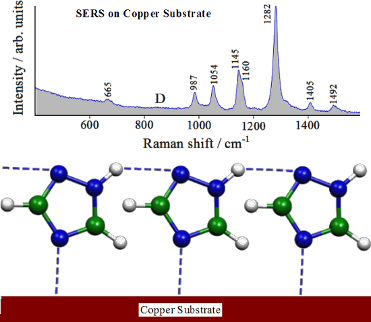
- substrate must exhibit a surface roughness at the nanometer level. In these nanoscale structures, the excitation of electrons from the metal surface by laser irradiation can be confined, resulting in plasmon resonance [16]. The existence of this resonance is a necessary condition to observe a SERS signal by


Properties of plasmonic arrays produced by pulsed-laser nanostructuring of thin Au films
Beilstein J. Nanotechnol. 2014, 5, 2102–2112, doi:10.3762/bjnano.5.219
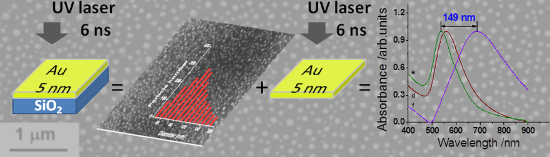
- (instability driven) separation [1]. They are both dependent on the laser irradiation conditions. From time-resolved studies of the transport phenomena, droplet formation and dynamics of the thermocapillary effect in Al, Au and Co films, thermal gradients of about 109 K/m were concluded [2][3][4]. This was
- nanostructuring by nanosecond laser irradiation of thin metal films is a simple and cost-effective approach, providing a reasonable alternative to the relatively expensive and time-consuming fabrication of NP arrays of regular geometries with the use of ion beam and plasma techniques [26][27]. In this paper, the
- ]. Results of this work confirm that semi-regular Au NP arrays produced by short-pulse laser irradiation of thin metal films represent cost-effective and relatively unexplored fabrication route for nanomaterials of the required structural and chemical stability, which is of crucial importance for industrial


Controlling the optical and structural properties of ZnS–AgInS2 nanocrystals by using a photo-induced process
Beilstein J. Nanotechnol. 2014, 5, 1767–1773, doi:10.3762/bjnano.5.187
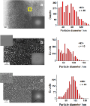
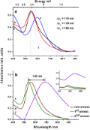
- 2b show the excitation spectra of fabricated ZAIS without laser irradiation during step (2), in which ZAIS nanocrystals were synthesized in t = 60 min. Figure 2c shows a typical emission spectrum obtained after excitation at 440 nm. This spectrum had a broad spectral width, with several emission
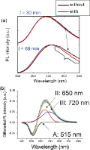
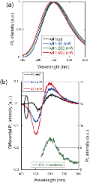
- decrease in the PL intensity of ZAIS nanocrystals synthesized with laser irradiation. Because the peak wavelength (600 nm) corresponded to the peak PL wavelength for ZAIS nanocrystals synthesized without laser irradiation, using an excitation wavelength of 532 nm (solid green line in Figure 4b), the
- obtained with and without irradiation. (Right vertical axis) PL spectrum of ZAIS nanocrystals grown without laser irradiation. The PL spectrum was obtained by using 532 nm light. TEM images of ZAIS nanocrystals grown without irradiation, t = 60 min; (a) low (2,000,000×) and (b–f) high (4,000,000


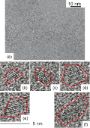


Non-covalent and reversible functionalization of carbon nanotubes
Beilstein J. Nanotechnol. 2014, 5, 1675–1690, doi:10.3762/bjnano.5.178
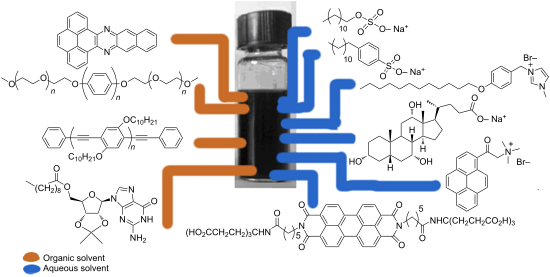
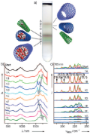
- the polymer conformation from a wrapping to an unwrapping state [98]. Shiraki et al. have shown that NIR laser irradiation coagulates a modified helical polysaccharide/SWCNT complex [99]. Recently, a UV-responsive supra-amphiphile based on the host–guest complexation of a water-soluble pillar[6]arene



Current state of laser synthesis of metal and alloy nanoparticles as ligand-free reference materials for nano-toxicological assays
Beilstein J. Nanotechnol. 2014, 5, 1523–1541, doi:10.3762/bjnano.5.165
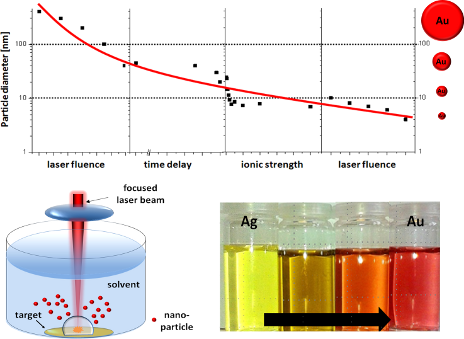
- formation of ZnO-SMS [71]. However, the reader should note that in case of ZnO, biocompatibility of these SMS may be further compromised due to the possibility of elevated Zn2+ ion release upon laser irradiation. Zn2+ ions are known to have adverse effects on biological systems by chelating biomolecules and


Observation and analysis of structural changes in fused silica by continuous irradiation with femtosecond laser light having an energy density below the laser-induced damage threshold
Beilstein J. Nanotechnol. 2014, 5, 1334–1340, doi:10.3762/bjnano.5.146
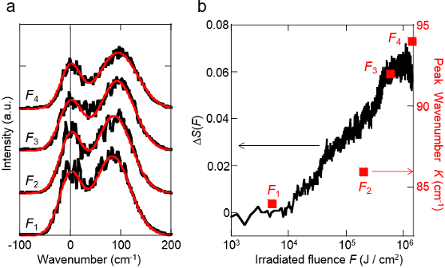
- degradation of fused silica substrates in response to fs laser irradiation and performed an in situ observation of the laser-induced degradation, as well as an analysis of the underlying mechanism. By monitoring the scattered light intensity versus the accumulated irradiation fluence, we succeeded in
- photogenerated carriers in a degraded silica substrate and a damaged silica substrate and observed a Raman signal originating from a specific molecular structure of silica. From these findings, we concluded that compositional changes in the molecular structure occurred during degradation due to femtosecond laser
- irradiation having an energy density below the LIDT. Keywords: compositional change in molecular; femtosecond laser; fused silica; laser-induced damage; laser-induced degradation; Introduction Since the invention of the laser, it has been widely known that damages occur at the surface or interior of optical


Fringe structures and tunable bandgap width of 2D boron nitride nanosheets
Beilstein J. Nanotechnol. 2014, 5, 1186–1192, doi:10.3762/bjnano.5.130
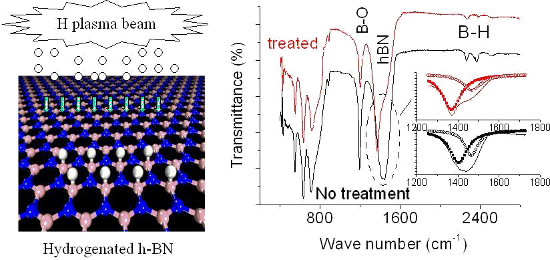
- away from the target. Substrate temperature was controlled by using a thermocouple and heater. Prior to laser irradiation, substrates were rinsed in acetone and methanol in sequence. The duration for each deposition was few minutes. The as-grown samples were then characterized by using SEM, Raman


Optimizing the synthesis of CdS/ZnS core/shell semiconductor nanocrystals for bioimaging applications
Beilstein J. Nanotechnol. 2014, 5, 919–926, doi:10.3762/bjnano.5.105
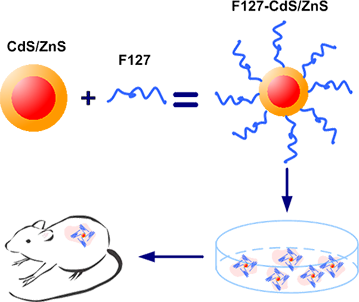
- and CdS/ZnS QDs change less significantly after laser irradiation. This indicates that the bioconjugation with F127 did not affect the stability of the CdS/ZnS QDs. CdS and ZnS are group II–VI semiconductors with a similar crystalline structure and a lattice mismatch of 6.4%. As ZnS is a phosphor


Photoactivation of luminescence in CdS nanocrystals
Beilstein J. Nanotechnol. 2014, 5, 355–359, doi:10.3762/bjnano.5.40
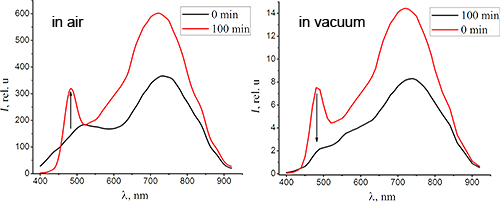
- -wavelength band we have studied the temperature dependence of the luminescence. In order to prevent an exposure of the samples to ambient air at 300 K, the vacuum chamber was vented with vapour from liquid nitrogen. The CdS nanocrystals were photostimulated by laser irradiation at a wavelength of λ = 355 nm


Manipulation of nanoparticles of different shapes inside a scanning electron microscope
Beilstein J. Nanotechnol. 2014, 5, 133–140, doi:10.3762/bjnano.5.13
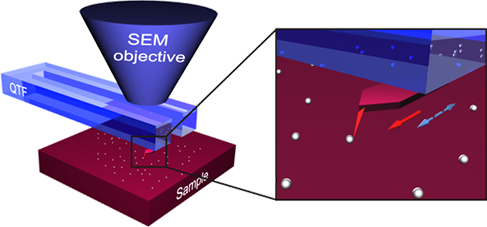
- contacting the substrate again [21]. In this case the particle shape can be close to ideal sphere. According to another scenario Ag nanostructures melt under the laser irradiation for a short period of time (ns) and then solidify again forming “frozen” droplets on a substrate surface. The frozen droplet


Mapping of plasmonic resonances in nanotriangles
Beilstein J. Nanotechnol. 2013, 4, 588–602, doi:10.3762/bjnano.4.66
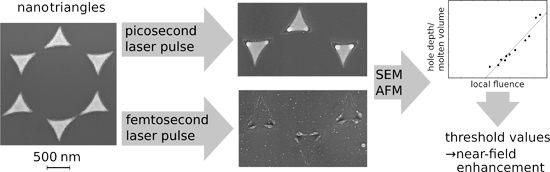
- the potential of these methods for imaging also complex field distributions in fine detail. Experimental Optical set-up In our femtosecond experiments we used laser irradiation provided by a multi-pass Ti:sapphire amplifier system with a maximum pulse energy of up to 8 mJ, a nominal pulse length of
- conductivity; cp: specific heat capacity; ρ: mass density). For higher intensities, larger parts of the triangles melt. In analogous to fs pulses there is an intensity regime where the nanostructures are removed by the laser irradiation without causing major damage on the Si substrate surface. The removal


Femtosecond-resolved ablation dynamics of Si in the near field of a small dielectric particle
Beilstein J. Nanotechnol. 2013, 4, 501–509, doi:10.3762/bjnano.4.59
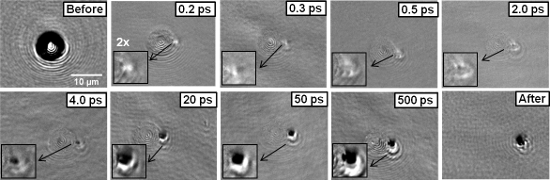
- . Further details regarding the preparation procedure and optical properties of the different substrates and particles used, as well as near field imaging using GST films can be found elsewhere [11]. Femtosecond laser irradiation and time-resolved microscopy Figure 2 shows a scheme of the set-up used for


Functionalization of vertically aligned carbon nanotubes
Beilstein J. Nanotechnol. 2013, 4, 129–152, doi:10.3762/bjnano.4.14
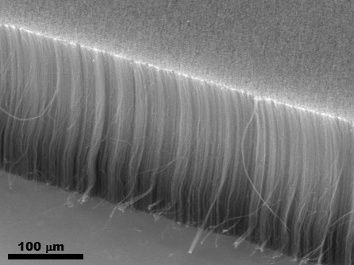
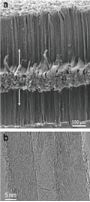
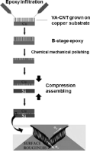
- -MWCNTs with a thin layer of Al for the growth of VA-SWCNTs [72]. Aligned carbon nanotubes can be directly etched by laser irradiation. A pruning method using a focused laser beam can be used to fabricate different 3D architectures. The spread of the beam causes the removal of a thin layer of aligned CNTs
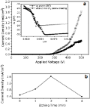
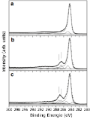
- pulsed direct-current (DC) plasma can modify radically the wettability of VA-CNTs. The plasma treatment allows the grafting of oxygen-containing groups onto the VA-CNTs tips, altering the polarity of the sample and leading to a more hydrophilic surface. Ramos et al. showed that a CO2 laser irradiation








Femtosecond time-resolved photodissociation dynamics of methyl halide molecules on ultrathin gold films
Beilstein J. Nanotechnol. 2011, 2, 618–627, doi:10.3762/bjnano.2.65
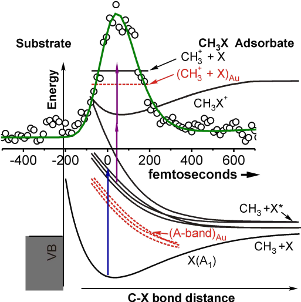
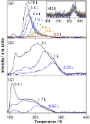
- a new (but already covered with CD3I) surface area, of the same sample, gave a similar exponential rise of the CD3+ signal. Therefore, it must be assumed that the result shown in Figure 3 indicates a change in the nature of the surface during laser irradiation. As discussed in the previous section
- trapping of the iodine atoms at the surface subsequent to CD3I photodissociation. Consequently, during the laser irradiation of the sample an iodine film (or a gold–iodine layer) might be formed between the Au surface and the subsequently adsorbed CD3I molecules. On this iodine film, the photodissociation
- admission was restarted, compared to the one obtained in the beginning of the experiment (see period A in Figure 3), supports the assumption that a change of the surface composition after laser irradiation during continuous methyl iodide admission had occurred. The CD3+ signal in period C is attributed to


Flash laser annealing for controlling size and shape of magnetic alloy nanoparticles
Beilstein J. Nanotechnol. 2010, 1, 55–59, doi:10.3762/bjnano.1.7
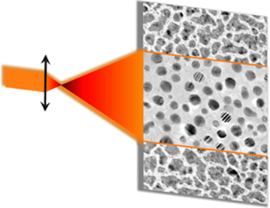
- ONERA / CNRS, BP 72, 92322 Châtillon Cedex, France 10.3762/bjnano.1.7 Abstract We propose an original route to prepare magnetic alloy nanoparticles with uniform size and shape by using nanosecond annealing under pulsed laser irradiation. As demonstrated here on CoPt nanoparticles, flash laser annealing
- laser irradiation. This technique is then very interesting for magnetic alloy nanoparticles studies and applications because it opens up a new way to fabricate size-controlled spherical nanoparticles with narrow size dispersion. Keywords: magnetic alloy nanoparticles; nanoparticle morphology
- -resolution pole piece and a PGT energy dispersive X-Ray (EDX) analyser. The morphology of as-grown CoPt NPs is shown in Figure 2a. NPs have irregular shapes elongated in the substrate plane due to coalescence processes during the synthesis. The morphological changes induced by the laser irradiation as a





