


Search results
Search for "mechanics" in Full Text gives 176 result(s) in Beilstein Journal of Nanotechnology.
Nanoscale mapping of dielectric properties based on surface adhesion force measurements
Beilstein J. Nanotechnol. 2018, 9, 900–906, doi:10.3762/bjnano.9.84
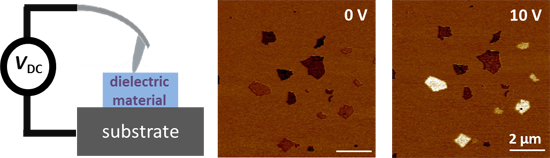
- thicknesses but large differences in their dielectric properties, were studied as model systems. Through direct imaging of the samples with a biased AFM tip in PeakForce Quantitative Nano-Mechanics (PF-QNM) mode, the local dielectric properties of GO and RGO were revealed by mapping their surface adhesion
- achieved with high lateral resolution by combining the advantages of the electrowetting (EW) effect [33] and an AFM imaging mode, PeakForce Quantitative Nano-Mechanics (PF-QNM) [34]. Electrowetting is a phenomenon in which the wetting properties of a dielectric surface are modified using an external
- adhesion mapping were conducted in PeakForce Quantitative Nano-Mechanics (PF-QNM) mode, in which the maximum force (peak force) applied to the sample by the tip was directly regulated through the peak force setpoint and kept constant throughout the whole scan. In this mode, the peak force amplitude was set


Towards the third dimension in direct electron beam writing of silver
Beilstein J. Nanotechnol. 2018, 9, 842–849, doi:10.3762/bjnano.9.78
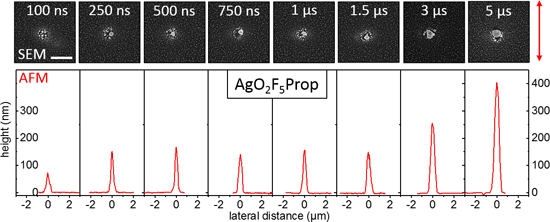
- Katja Hoflich Jakub Mateusz Jurczyk Katarzyna Madajska Maximilian Gotz Luisa Berger Carlos Guerra-Nunez Caspar Haverkamp Iwona Szymanska Ivo Utke Empa - Swiss Federal Laboratories for Materials Science and Technology, Laboratory for Mechanics of Materials and Nanostructures, Feuerwerkerstrasse 39


Tuning adhesion forces between functionalized gold colloidal nanoparticles and silicon AFM tips: role of ligands and capillary forces
Beilstein J. Nanotechnol. 2018, 9, 660–670, doi:10.3762/bjnano.9.61
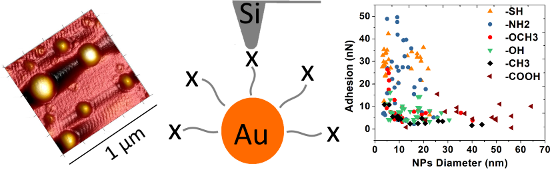
- ) equipped with PeakForce QNM (Quantitative Nanoscale Mechanics) module. Au NPs were synthesized by a seed-mediated process and then functionalized with thiols containing different functional groups: amino, hydroxy, methoxy, carboxy, methyl, and thiol. Adhesion measurements showed strong differences between
- form a highly compact thin film [44]. It is important that although the absolute adhesion values measured on the films are different compared to the particles, the trend from least to most adhesive remains similar. We have estimated the effect of the particle size on adhesion by contact mechanics


Review: Electrostatically actuated nanobeam-based nanoelectromechanical switches – materials solutions and operational conditions
Beilstein J. Nanotechnol. 2018, 9, 271–300, doi:10.3762/bjnano.9.29
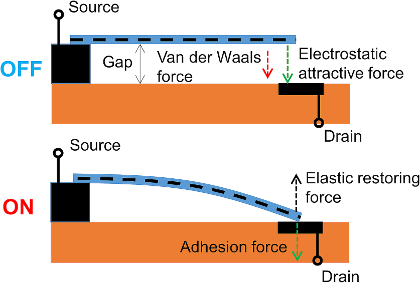
- continuum-based theories may occur. For instance, for cantilevered resonating nanostructures, continuum mechanics predictions fail when the cross-sectional area of the nanostructure is on the order of tens of lattice constants [3]. At this level, quantum effects, crystalline perfection, surface and
- switches is mostly focused on developing experimental approaches for device prototype fabrication and testing in laboratory environment and theoretical modelling based on continuum mechanics and molecular dynamics, allowing simulations to be performed on the processes occurring in NEM switching devices and


Gas-assisted silver deposition with a focused electron beam
Beilstein J. Nanotechnol. 2018, 9, 224–232, doi:10.3762/bjnano.9.24
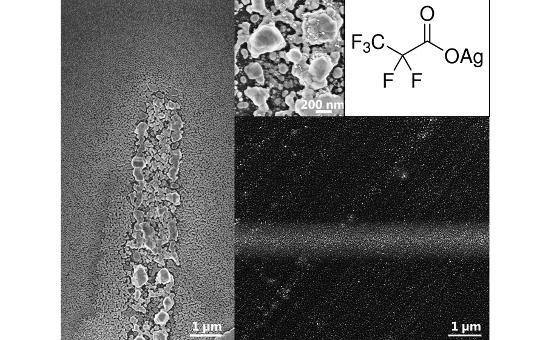
- Luisa Berger Katarzyna Madajska Iwona B. Szymanska Katja Hoflich Mikhail N. Polyakov Jakub Jurczyk Carlos Guerra-Nunez Ivo Utke Empa - Swiss Federal Laboratories for Materials Science and Technology Laboratory for Mechanics of Materials and Nanostructures, Feuerwerkerstrasse 39, 3602 Thun


Comparative study of post-growth annealing of Cu(hfac)2, Co2(CO)8 and Me2Au(acac) metal precursors deposited by FEBID
Beilstein J. Nanotechnol. 2018, 9, 91–101, doi:10.3762/bjnano.9.11
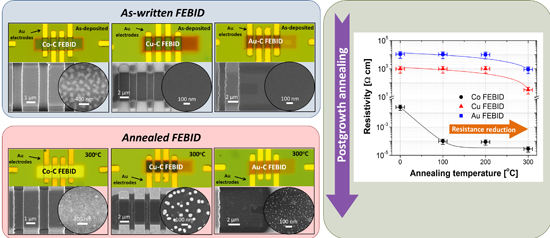
- , Campinas-SP, Brazil Faculty of Electrical and Computing Engineering and Center for Semiconductor Components and Nanotechnologies, University of Campinas, Rua Pandiá Calógeras 90, Cidade Universitária, 13083-870, Campinas-SP, Brazil Laboratory for Mechanics of Materials and Nanostructures, Swiss Federal


Review on optofluidic microreactors for artificial photosynthesis
Beilstein J. Nanotechnol. 2018, 9, 30–41, doi:10.3762/bjnano.9.5
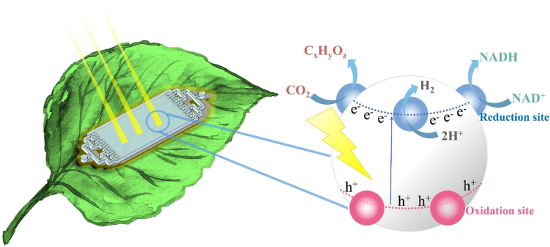
- University Shenzhen Research Institute, Shenzhen 518057, China Key Laboratory of Spectral Imaging Technology, Xi’an Institute of Optics and Precision Mechanics, Chinese Academy of Sciences, Xi’an, Shaanxi 710119, China, Laboratoire de Photonique Quantique et Moléculaire, UMR 8537, Ecole Normale Supérieure de


Inelastic electron tunneling spectroscopy of difurylethene-based photochromic single-molecule junctions
Beilstein J. Nanotechnol. 2017, 8, 2606–2614, doi:10.3762/bjnano.8.261
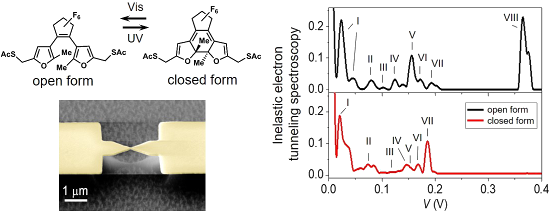
- insert equipped with a MCBJ system [14][15][23]. The sample space of the cryostat is evacuated to 10−5 mbar, and then a small amount of He gas is injected as exchange gas. After cooling down the cryostat, the breaking process of the sample is carried out by the breaking mechanics, controlled by a DC


Au55, a stable glassy cluster: results of ab initio calculations
Beilstein J. Nanotechnol. 2017, 8, 2221–2229, doi:10.3762/bjnano.8.222
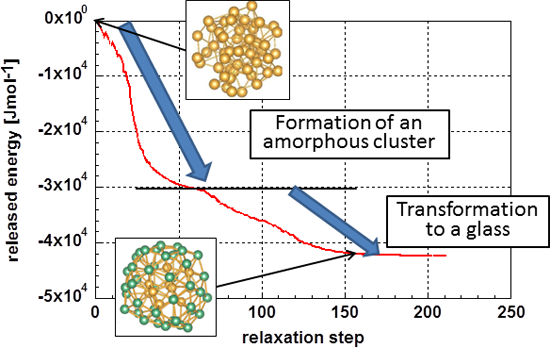
- Dieter Vollath David Holec Franz Dieter Fischer NanoConsulting, Primelweg 3, D-76297 Stutensee, Germany Department of Physical Metallurgy and Materials Testing, Montanuniversität Leoben, A-8700 Leoben, Austria Institute of Mechanics, Montanuniversität Leoben, A-8700 Leoben, Austria 10.3762/bjnano


Stick–slip boundary friction mode as a second-order phase transition with an inhomogeneous distribution of elastic stress in the contact area
Beilstein J. Nanotechnol. 2017, 8, 1889–1896, doi:10.3762/bjnano.8.189
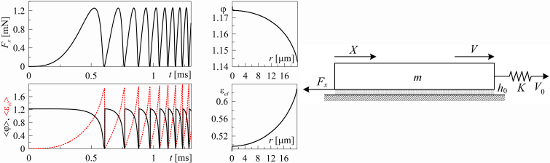
- between the asperities. A specific case of boundary friction is friction between two atomically flat surfaces separated by a layer of lubricant with thickness of a few atomic diameters [1][2], or even monolayers [3]. Such type of friction mode plays an important role in applied mechanics as it often


![[Graphic 15]](/bjnano/content/inline/2190-4286-8-189-i33.png?max-width=637&scale=1.18182) = 1.0, ...
= 1.0, ...


A nanocomplex of C60 fullerene with cisplatin: design, characterization and toxicity
Beilstein J. Nanotechnol. 2017, 8, 1494–1501, doi:10.3762/bjnano.8.149
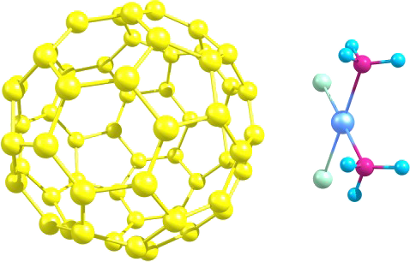
- . 3.4 Å. Geometry optimization of the C60+Cis nanocomplex was accomplished by means of molecular mechanics in X-PLOR. The modeling of the aqueous environment was carried out by water molecules in the form of TIP3P placed in a cubic box with a side length of 35 Å (1423 molecules). DLS study Measurement



Spin-chemistry concepts for spintronics scientists
Beilstein J. Nanotechnol. 2017, 8, 1427–1445, doi:10.3762/bjnano.8.143
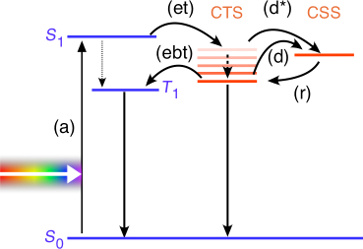
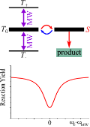
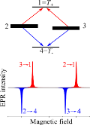
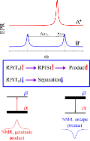
- phenomena in chemistry. The reason, for instance, is that depicting the singlet state by two anti-parallel arrows is an over-simplification, which does not take into account the rules of quantum mechanics. Nonetheless, the vector model provides a reasonable qualitative view on the spin dynamics. MFE, MIE



Scaling law to determine peak forces in tapping-mode AFM experiments on finite elastic soft matter systems
Beilstein J. Nanotechnol. 2017, 8, 968–974, doi:10.3762/bjnano.8.98
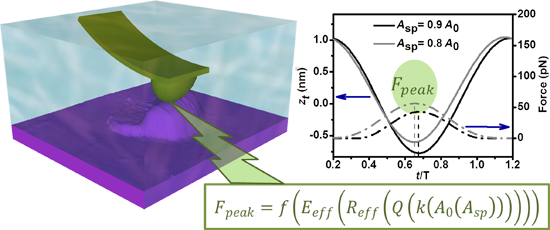
- bidimensional deformation contact mechanics model. The equation enables to estimate the peak force based on the tapping mode observables, probe characteristics and the material properties of the sample. The accuracy of the equation has been verified by comparing it to numerical simulations for the archetypical
- invasiveness of the measurement. The parametrical equation obtained by Raman et al. has been based on the Hertzian mechanics for air and vacuum environments [21]. It has been also adapted to estimate the experimental peak forces of viral capsids (ca. 1 GPa) in liquid [22]. However, those parametrical
- with a certain salt concentration that reduces the electrostatic interactions to a minimum are assumed as medium conditions in this article [33]. The use of Hertzian mechanics has been generalized to model the tip–sample interaction forces for relatively rigid materials [34]. However, for finite soft


Measuring adhesion on rough surfaces using atomic force microscopy with a liquid probe
Beilstein J. Nanotechnol. 2017, 8, 813–825, doi:10.3762/bjnano.8.84
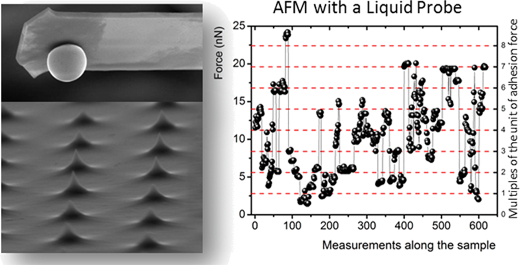
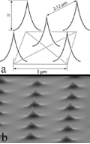
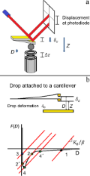
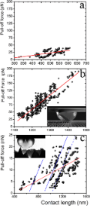
- two solid surfaces (force of adhesion per unit area) that governs contact stresses and strongly influences friction. In such method, the force, Fadh, required to separate a tip from a flat solid sample is measured. Subsequently, a single-asperity continuum contact mechanics model is used to extract
- stability analysis is a simplification of a very complex process happening during the release from contact. In particular, it does not take into account the fact that this is a fracture mechanics problem where stress concentrates at the crack edge. Cantilever force constant: To calculate the force constant

Modeling adsorption of brominated, chlorinated and mixed bromo/chloro-dibenzo-p-dioxins on C60 fullerene using Nano-QSPR
Beilstein J. Nanotechnol. 2017, 8, 752–761, doi:10.3762/bjnano.8.78
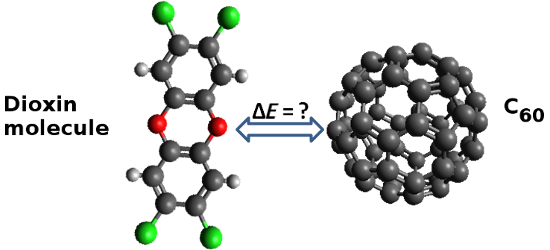
- the C60 structure were examined to verify if the initial dioxin position has an impact on its final placement as well as on the result of the optimization. The influence of the starting position was checked by molecular mechanics calculations. The influence of the initial distance between the dioxin


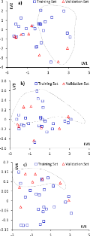

Calculating free energies of organic molecules on insulating substrates
Beilstein J. Nanotechnol. 2017, 8, 667–674, doi:10.3762/bjnano.8.71
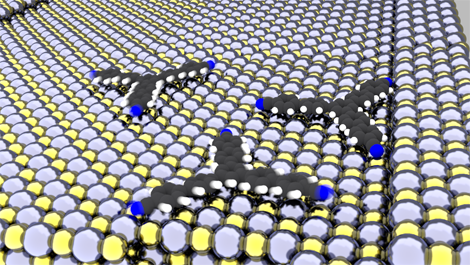
- ]. Previous theoretical studies focussed on modelling adsorption [21][25][26], diffusion [27][28] and simple processes such as the flipping of a molecule [29]. The probability assigned to each of these processes is governed by the change in free energy ΔG, which can be derived from statistical mechanics [30


Optimizing qPlus sensor assemblies for simultaneous scanning tunneling and noncontact atomic force microscopy operation based on finite element method analysis
Beilstein J. Nanotechnol. 2017, 8, 657–666, doi:10.3762/bjnano.8.70
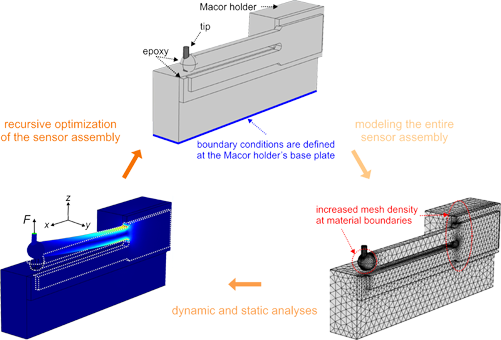
- throughout this work at typical values of ethick = 100 µm and eover = 40 µm to solely focus on the effect the tip attachment has. All calculations were carried out using the COMSOL Multiphysics 4.4 structural mechanics software package (COMSOL Multiphysics GmbH, Berlin, and Germany). Table 1 summarizes the


Diffusion of dilute gas in arrays of randomly distributed, vertically aligned, high-aspect-ratio cylinders
Beilstein J. Nanotechnol. 2017, 8, 64–73, doi:10.3762/bjnano.8.7
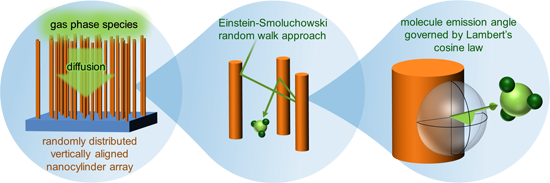
- Wojciech Szmyt Carlos Guerra Ivo Utke Empa, Swiss Federal Laboratories for Materials Science and Technology, Laboratory for Mechanics of Materials and Nanostructures, Feuerwerkerstrasse 39, 3602 Thun, Switzerland AGH University of Science and Technology, Faculty of Physics and Applied Computer


The cleaner, the greener? Product sustainability assessment of the biomimetic façade paint Lotusan® in comparison to the conventional façade paint Jumbosil®
Beilstein J. Nanotechnol. 2016, 7, 2100–2115, doi:10.3762/bjnano.7.200
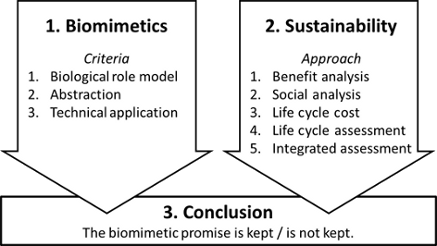
- biomimetic self-cleaning façade paint [8]. The study of morphology and anatomy, mechanics and functional principles in biology has the potential to stimulate architects and engineers to new building solutions in architectural design and technical implementation such as the adaptive façade shading system


Nano- and microstructured materials for in vitro studies of the physiology of vascular cells
Beilstein J. Nanotechnol. 2016, 7, 1620–1641, doi:10.3762/bjnano.7.155
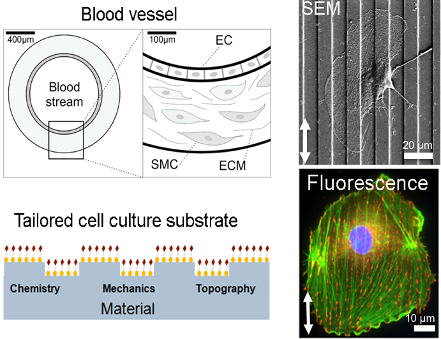
- , PAA gels have found frequent application in cell mechanics studies [50][114][115][116][164][165]. PDMS is an elastomeric material [6][61][103][104][105][106]. Unlike PEG and PAA, PDMS is not a hydrogel but a hydrophobic polymer. Variation in hydrogel stiffness changes usually the meshwork properties



Biomechanics of selected arborescent and shrubby monocotyledons
Beilstein J. Nanotechnol. 2016, 7, 1602–1619, doi:10.3762/bjnano.7.154
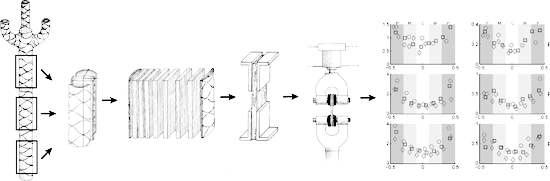
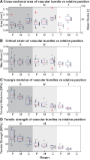
- investigations on the branching mechanics of “woody” monocots. In addition, these data can be incorporated in finite element models at cell and tissue level that mirror the anisotropy and the stress–strain behaviour of the investigated plants at stem level [6][7]. This allows for a deepened understanding of the



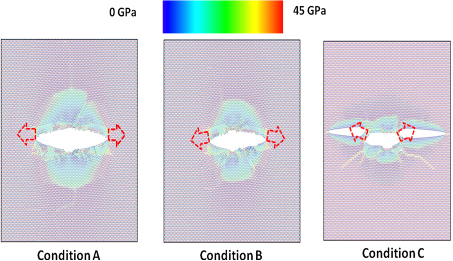
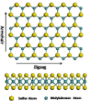
Fracture behaviors of pre-cracked monolayer molybdenum disulfide: A molecular dynamics study
Beilstein J. Nanotechnol. 2016, 7, 1411–1420, doi:10.3762/bjnano.7.132
- Qi-lin Xiong Zhen-huan Li Xiao-geng Tian Department of Mechanics, Huazhong University of Science & Technology, 1037 Luoyu Road, Wuhan 430074, China Hubei Key Laboratory of Engineering Structural Analysis and Safety Assessment, 1037 Luoyu Road, 430074, Wuhan, China State Key Laboratory of Strength
- the predictions of continuum fracture mechanics theories, including Inglis' model, Griffith's model with and without finite size effect, it is found that MDS results agree well with the predictions of Griffith's model with finite size effect, differ from the predictions of Inglis' model and Griffith's
- model without finite size effect. Finally, the MDS results of monolayer MoS2 sheets with different angled crack are also analyzed based on the continuum fracture mechanics model. Keywords: crack propagation; fracture strength; molecular dynamics simulation; monolayer molybdenum disulfide; pre-existing




Role of solvents in the electronic transport properties of single-molecule junctions
Beilstein J. Nanotechnol. 2016, 7, 1055–1067, doi:10.3762/bjnano.7.99
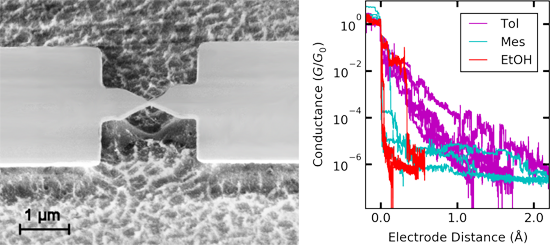
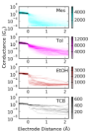
- lowering the spring-borne contacts onto the pads. The droplet, about 1–2 mL, of the respective solvent is injected into the PDMS sealed pipette and carefully lowered onto the electrode device [10][11]. The set-up is installed in a closed metal case for shielding high frequency noise. The breaking mechanics





Generalized Hertz model for bimodal nanomechanical mapping
Beilstein J. Nanotechnol. 2016, 7, 970–982, doi:10.3762/bjnano.7.89
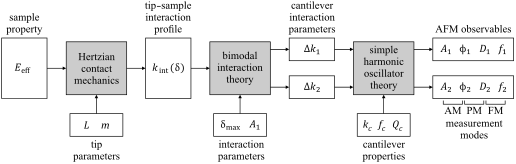
- are sensitive to the tip–sample nanomechanical interaction parameters. To demonstrate this, a generalized theoretical framework for extracting nanomechanical sample properties from bimodal experiments is presented based on Hertzian contact mechanics. Three modes of operation for measuring cantilever
- parameters are considered: amplitude, phase, and frequency modulation. The experimental equivalence of all three modes is demonstrated on measurements of the second eigenmode parameters. The contact mechanics theory is then extended to power-law tip shape geometries, which is applied to analyze the
- experimental data and extract a shape and size of the tip interacting with a polystyrene surface. Keywords: bimodal atomic force microscopy; bimodal spectroscopy; contact mechanics; multifrequency; nanomechanical mapping; nanomechanics; Introduction Over the decades since its invention [1] the atomic force


![[Graphic 4]](/bjnano/content/inline/2190-4286-7-89-i40.png?max-width=637&scale=1.18182) approximation applied to Equation 6 i...
approximation applied to Equation 6 i...


Thermo-voltage measurements of atomic contacts at low temperature
Beilstein J. Nanotechnol. 2016, 7, 767–775, doi:10.3762/bjnano.7.68
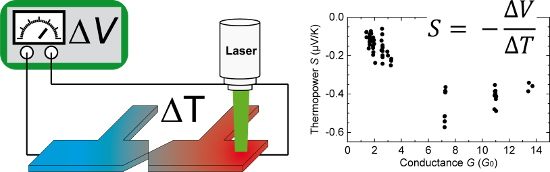
- after the measurements under an angle of 45°. Acknowledgements We are indebted to J. C. Cuevas, A. Erbe, T. Pietsch, Y. Selzer, O. Tal and Y. Dubi for valuable discussions. We thank O. Tal and A. Erbe for sharing their experience regarding low-temperature break-junction mechanics and lithographic





