


Search results
Search for "metal ion" in Full Text gives 99 result(s) in Beilstein Journal of Nanotechnology.
Tunable longitudinal modes in extended silver nanoparticle assemblies
Beilstein J. Nanotechnol. 2016, 7, 1219–1228, doi:10.3762/bjnano.7.113
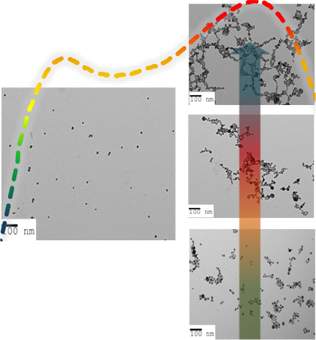
- triggered or directed by solution conditions such as temperature, illumination, pH and metal ion concentration [21]. Amongst the various self-assembled nanostructures, silver nanoparticles (AgNPs) are of great significance due to their sharp plasmon resonance, the antimicrobial function and a distinguished
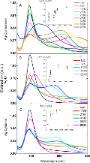
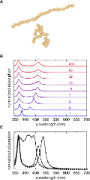


Multiwalled carbon nanotube hybrids as MRI contrast agents
Beilstein J. Nanotechnol. 2016, 7, 1086–1103, doi:10.3762/bjnano.7.102
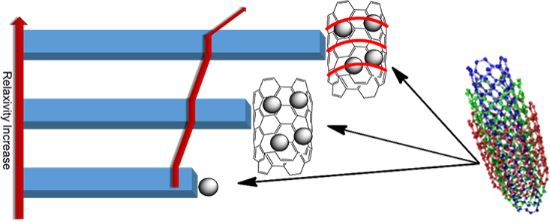
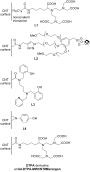
- by reaction of oMWCNT with citric acid (2 h at 80 °C) [33]. The presence of several oxygen groups in the neighborhood, which is a common situation for the disrupted aromatic skeleton, additionally supported by the presence of π-electrons forms a chelating cavity for the metal ion. Lamanna used such a



Phenalenyl-based mononuclear dysprosium complexes
Beilstein J. Nanotechnol. 2016, 7, 995–1009, doi:10.3762/bjnano.7.92
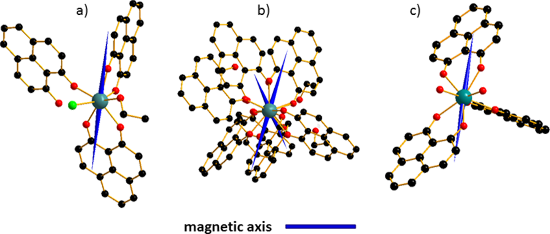
- individual Ln sites along with the nature of the ligand field. Owing to a very strong Ising-type uniaxial anisotropy of the metal ion, dysprosium containing compounds are extensively studied and have been found to have the most promising slow-relaxation behavior. Typical examples are [Dy(acac)3(H2O)2] [8
- 300 K for all three complexes. At 300 K, the product χT of 1–3 is 14.11, 13.56 and 14.19 cm3·K·mol−1, respectively, which are all in good agreement with the expected value of 14.17 cm3·K·mol−1 for one Dy(III) metal ion (S = 5/2, L = 5, 6H15/2, g = 4/3) [40]. Decreasing the temperature, the product χT


Efficient electron-induced removal of oxalate ions and formation of copper nanoparticles from copper(II) oxalate precursor layers
Beilstein J. Nanotechnol. 2016, 7, 852–861, doi:10.3762/bjnano.7.77
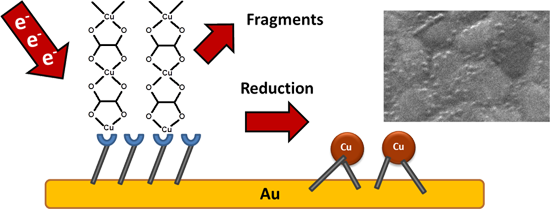
- applications [23]. Layer-by-layer deposition processes employing repeated dipping steps lead to materials of well-defined thickness, an example being surface-mounted metal-organic frameworks (SurMOFs) [24]. In such materials, the metal ion surface density can be precisely controlled [25] which, in turn, should


Facile synthesis of water-soluble carbon nano-onions under alkaline conditions
Beilstein J. Nanotechnol. 2016, 7, 758–766, doi:10.3762/bjnano.7.67
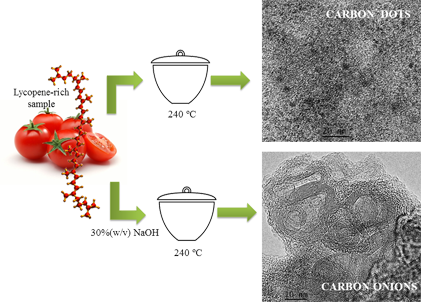
- versatile materials for chemical sensing of metal ions. The high content of lycopene in tomatoes may explain the formation of C-onions in alkaline media and a possible formation mechanism for such structures was outlined. Keywords: carbon dots; carbon onions; metal-ion sensing; photoluminescence; thermal
- with those obtained using C-dots. In Figure 6a, the quenching effect, expressed as ΔF = F0 − F, where F0 and F are the PL of the C-onions in absence and presence of a given metal ion, respectively, is shown. As can be seen, Cu(II), Fe(III) and Hg(II) quenched the PL of the C-onions, Fe(III) being the
- spectra were recorded at 456 nm with excitation at 362 nm for C-dots. For C-onions the PL measurements were taken at 428 nm with excitation at 328 nm. For the detection of metal ions, the reaction mixture was prepared by mixing 200 μL of the corresponding C-nanoparticle solution and 100 μL of metal ion


Single-molecule magnet behavior in 2,2’-bipyrimidine-bridged dilanthanide complexes
Beilstein J. Nanotechnol. 2016, 7, 126–137, doi:10.3762/bjnano.7.15
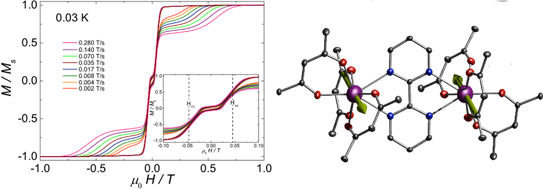
- ). The bpm moiety of the dilanthanide complexes resides on a crystallographic inversion center, whilst the individual ions are localized between the two aromatic rings of the bpm bridging ligand. The two metal centers are equivalent by symmetry. Each metal ion is eight-coordinated by six oxygen atoms


Simultaneous cancer control and diagnosis with magnetic nanohybrid materials
Beilstein J. Nanotechnol. 2016, 7, 121–125, doi:10.3762/bjnano.7.14
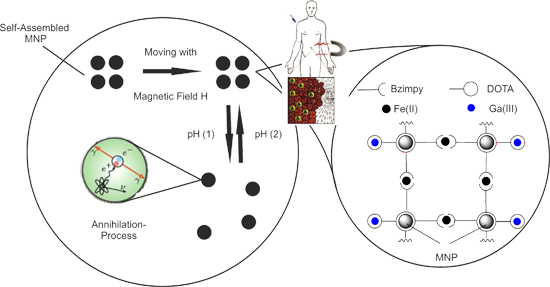
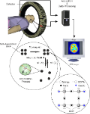
- can be assumed that the organic component bzimpy was linked to the MNP (see Table 2). In order to give the yield PET functionality to the MNP we chose the DOTA chelator. It is highly preferred in medical applications caused by the high stability of various metal ion–DOTA complexes [16]. In this study


Two step formation of metal aggregates by surface X-ray radiolysis under Langmuir monolayers: 2D followed by 3D growth
Beilstein J. Nanotechnol. 2015, 6, 2406–2411, doi:10.3762/bjnano.6.247
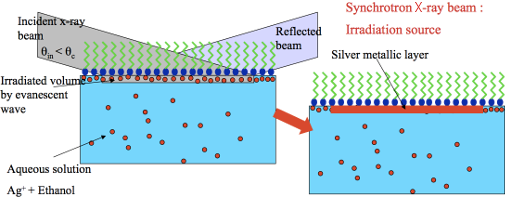
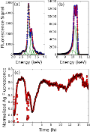
- geometry that we call surface X-ray radiolysis. In this procedure, an X-ray beam produced by a synchrotron beamline intercepts the surface of an aqueous metal-ion solution covered by a Langmuir monolayer at an angle of incidence below the critical angle for total internal reflection. Underneath the organic
- ultrathin metal–organic systems is an active research field. Indeed, due to their adjustable optical, magnetic, electronic, and catalytic properties these systems demonstrate many applications [1][2]. The usual approach for the synthesis of this type of material is the chemical reduction of metal-ion
- precursors. The radiolysis induced by reduction of metal ions is generally considered as an efficient method to control this synthesis in solution as it leads to the formation of monodisperse, tailored, metal nano-objects [3]. The synthesis route involves the irradiation of a metal-ion aqueous solution that


Ultrastructural changes in methicillin-resistant Staphylococcus aureus induced by positively charged silver nanoparticles
Beilstein J. Nanotechnol. 2015, 6, 2396–2405, doi:10.3762/bjnano.6.246
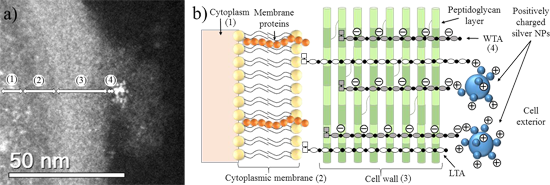
- species interacts with the bacterial cell [42]. The complex action mechanism of silver metals decreases the probability of bacteria developing a resistance against it, even though several resistance mechanisms to metals have been described [43], the most common of which is metal ion efflux. This was


Charge carrier mobility and electronic properties of Al(Op)3: impact of excimer formation
Beilstein J. Nanotechnol. 2015, 6, 1107–1115, doi:10.3762/bjnano.6.112
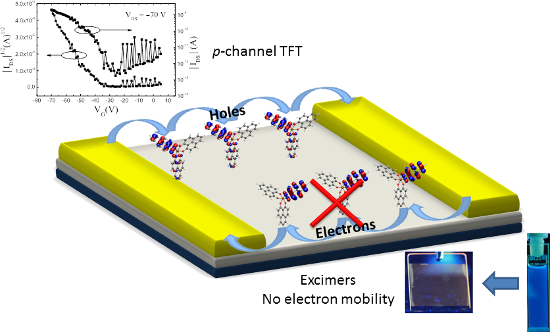
- Al3+ ion via oxygen donor atoms only. As a consequence, the electron density of the HOMO/LUMO levels (shown in Figure 7a) is equally distributed over the three chelating moieties. In contrast, in Alq3 oxygen and nitrogen atoms connect to the metal ion in symmetrically non-equivalent positions. Hence


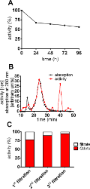
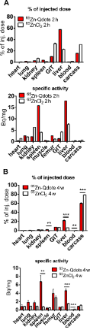
The distribution and degradation of radiolabeled superparamagnetic iron oxide nanoparticles and quantum dots in mice
Beilstein J. Nanotechnol. 2015, 6, 111–123, doi:10.3762/bjnano.6.11
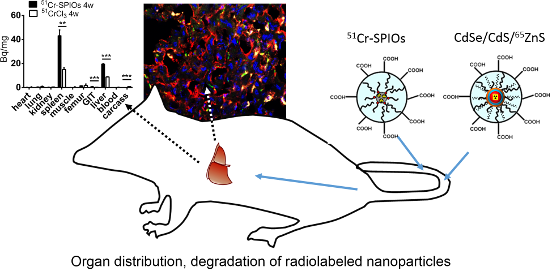
- endosomal membrane by the divalent metal ion transporter, DMT1 [26]. During iron homeostasis, excess iron would then be released by, for example, macrophages via ferroportin, bound to apotransferrin and transported to cells in need for iron. The intracellular processing of Cr3+ is more or less unknown, and





Bright photoluminescence from ordered arrays of SiGe nanowires grown on Si(111)
Beilstein J. Nanotechnol. 2014, 5, 2498–2504, doi:10.3762/bjnano.5.259
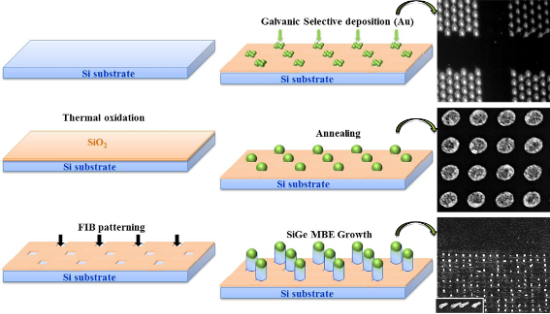
- dioxide prevents further metal ion reduction. Since the gold salt reduction process is not possible on SiO2, the reaction immediately stops after the formation of SiO2 [30]. After the selective galvanic deposition of gold clusters on the substrate, the samples were loaded into the MBE chamber. The phase


Inorganic Janus particles for biomedical applications
Beilstein J. Nanotechnol. 2014, 5, 2346–2362, doi:10.3762/bjnano.5.244
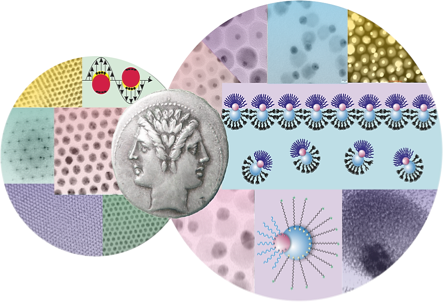
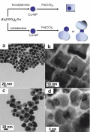
- nanoparticles [75][76][77]. Inspired by the idea of the formation of a complex composed of the metal ion and the ligand, the strategy of direct employment of a metal-surfactant complex was used. For instance, manganese(II)oleate [77] and iron(III)oleate [64][75][78] can be handled easily and safely due to their






Towards bottom-up nanopatterning of Prussian blue analogues
Beilstein J. Nanotechnol. 2014, 5, 1933–1943, doi:10.3762/bjnano.5.204
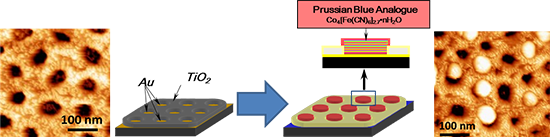
- complexing agent for the transition metal ion seems to play little or no role in the growth process of the PBA particles. Effect of the solvent or of the solvent mixture of the PBA precursors solutions: The TiO2/CoFe PBA nanocomposites synthesized by using alcohol or a water/alcohol mixture for the PBA


Controlling the optical and structural properties of ZnS–AgInS2 nanocrystals by using a photo-induced process
Beilstein J. Nanotechnol. 2014, 5, 1767–1773, doi:10.3762/bjnano.5.187
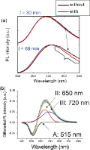
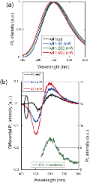
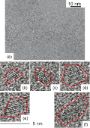
- nanocrystals of ZAIS were synthesized by thermal decomposition of a metal-ion–diethyldithiocarbamate complex of (AgIn)xZn2(1−x)(S2CN(C2H6)2)4. Here, we set x to 0.5 for all experiments. By using 50 mg of the precursor powder, ZAIS nanocrystals were synthesized as follows: Step (1): The precursor was annealed




Functionalized nanostructures for enhanced photocatalytic performance under solar light
Beilstein J. Nanotechnol. 2014, 5, 994–1004, doi:10.3762/bjnano.5.113
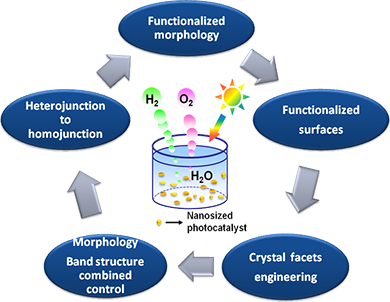
- should be pointed out that TiO2 can only respond to UV light, even metal ion doping can hardly enhance its visible light activity. Sensitization with dyes or nanocrystals is one possible approach to extend the light absorption of TiO2. Sreethawong et al. found that eosin Y-sensitized mesoporous-assembled
- metal ion doped semiconductors. As was found, Cr-Ti-MCM-41 showed much higher activity than Cr-MCM-41 with similar amount of Cr doping for two kinds of MCM-41 material. Due to the presence of Ti, the photocatalytic mechanism of Cr-Ti-MCM-41 is quite different from that of Cr-MCM-41. For the former


Interaction of iron phthalocyanine with the graphene/Ni(111) system
Beilstein J. Nanotechnol. 2014, 5, 308–312, doi:10.3762/bjnano.5.34
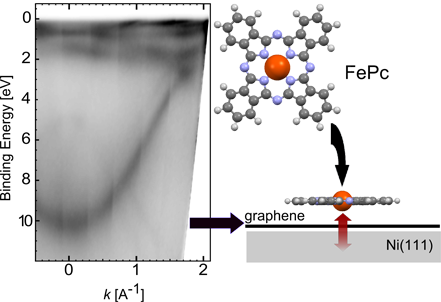
- consist of an organic cage formed by four pyrrole and benzene rings with a central metal ion [4]. They represent a class of molecules with potentially large applications thanks to their easily tunable electronic and magnetic properties, which are basically associated with the electronic configuration of
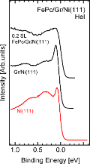
- grows upon increasing the molecular coverage up to completion of the first SL, and starts to decrease at higher thicknesses, a behaviour typical of an interface state. This interface state comes from charge transfer from the Gr/Ni substrate to partially filled d orbitals of the central metal ion [15


Confinement dependence of electro-catalysts for hydrogen evolution from water splitting
Beilstein J. Nanotechnol. 2014, 5, 195–201, doi:10.3762/bjnano.5.21
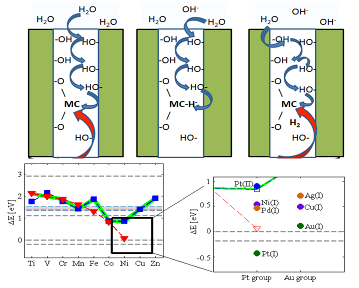
- hydride-proton recombination reactions to demonstrate how it decides which oxidation state X of metal ion M minimizes the overpotential for the HER, as quantified by the reaction Equation 6 (cf. Figure 1d,e). Second, it is shown how the emerging understanding is naturally extended to include electro
- resulting oxy-hydroxy ions coordinating the transition metal ion [4], it is suggested that besides being able to form the hydride intermediate, metals with low oxidation states and large ionic radii should be considered in order to minimize their affinities to the oxide surrounding. This characterization
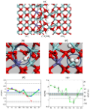


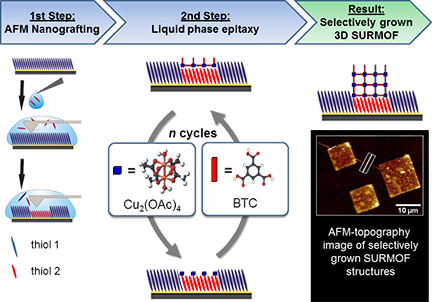
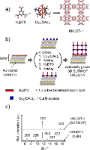
Site-selective growth of surface-anchored metal-organic frameworks on self-assembled monolayer patterns prepared by AFM nanografting
Beilstein J. Nanotechnol. 2013, 4, 638–648, doi:10.3762/bjnano.4.71
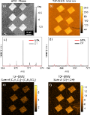
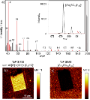
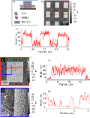
- performed on a TOF-SIMS 5 instrument from ION-TOF GmbH, Münster, Germany. This instrument is equipped with a Bi cluster liquid metal ion source and a reflectron type time-of-flight analyzer. For spectrometry short primary ion pulses (<1 ns) of Bi1+ and Bi3+ at an energy of 25 keV were applied providing high





Continuous parallel ESI-MS analysis of reactions carried out in a bespoke 3D printed device
Beilstein J. Nanotechnol. 2013, 4, 285–291, doi:10.3762/bjnano.4.31
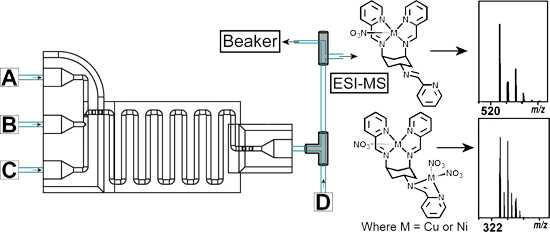
- first due to it being the most energetically favoured site for metal ion coordination. As mentioned previously, ttop (1 × 10⁻⁴ M) was first introduced through the device (with methanol in the three remaining active pumps) at a flow rate of 62.5 µL·min−1 with the product stream then split after a


Nano-structuring, surface and bulk modification with a focused helium ion beam
Beilstein J. Nanotechnol. 2012, 3, 579–585, doi:10.3762/bjnano.3.67
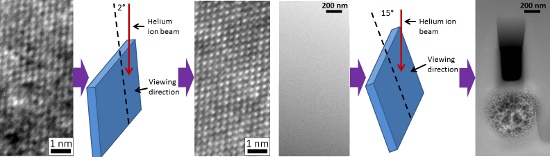
- crystal structure. The resolution of the FIB is limited by the energy spread of the gallium ions generated from the liquid metal ion source (LMIS). The sputter yield is also too large for acute patterning control over very short lateral distances. The recently developed Carl Zeiss Orion Plus helium ion


Parallel- and serial-contact electrochemical metallization of monolayer nanopatterns: A versatile synthetic tool en route to bottom-up assembly of electric nanocircuits
Beilstein J. Nanotechnol. 2012, 3, 134–143, doi:10.3762/bjnano.3.14
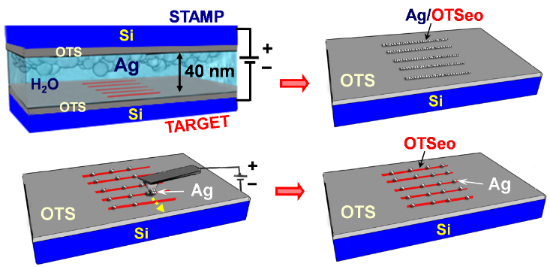
- metal-ion-binding functions (e.g., –COOH, –S–S–, –SH) [31]. Results and Discussion As shown below in Figure 1, Figure 2 and Figure 3, all OTSeo features of a serially inscribed OTSeo@OTS/Si nanopattern can be simultaneously metallized in a parallel CET operation performed with an unpatterned, thin
- silver on monolayer-template features exposing metal-ion-binding functions created by constructive nanolithography offers a versatile and reliable synthetic tool for the deliberate assembly of various metal-on-monolayer nanostructures, to be used as building blocks in the bottom-up fabrication of entire
- arguments raised against the usually adopted model of electron transfer from the electrode to a metal ion in solution as the mechanism of charge transfer across the electrode–solution interface in electrochemical metal deposition [54][55]. Indeed, the exclusive deposition of silver on the Ag+ binding (OTSeo


Electron-beam patterned self-assembled monolayers as templates for Cu electrodeposition and lift-off
Beilstein J. Nanotechnol. 2012, 3, 101–113, doi:10.3762/bjnano.3.11
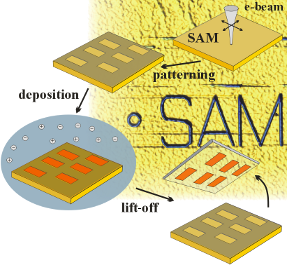
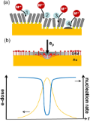
- such as domain boundaries, substrate steps, missing molecules or contaminations can all serve as nucleation sites. Since reduction of the metal ion is determined by tunnelling of the electron, discharge is much more likely to occur close to the Au substrate than at the outer surface of the SAM





Approaches to nanostructure control and functionalizations of polymer@silica hybrid nanograss generated by biomimetic silica mineralization on a self-assembled polyamine layer
Beilstein J. Nanotechnol. 2011, 2, 760–773, doi:10.3762/bjnano.2.84
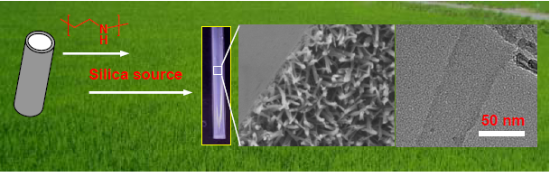
- reduction of a metal ion, we immersed a tube with the inner wall coated with LPEI@silica nanograss (Supporting Information File 1, Figure S3) into an aqueous solution of NaAuCl4. After the reaction at 80 °C for 1 h, the nanograss film had changed to a red color (Figure 8a), indicating the successful





