Search results
Search for "molybdenum" in Full Text gives 88 result(s) in Beilstein Journal of Nanotechnology.
Sublattice asymmetry of impurity doping in graphene: A review
Beilstein J. Nanotechnol. 2014, 5, 1210–1217, doi:10.3762/bjnano.5.133
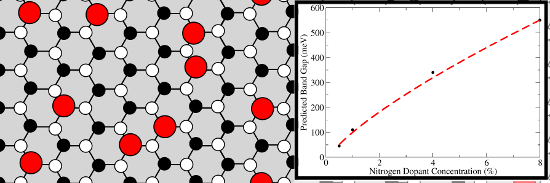
- more recent studies suggest that this could also be possible with other impurities [43]. Whilst it is known experimentally that molybdenum impurities exhibit same sublattice configurations in bilayer epitaxial graphene, the mechanism behind this is not currently understood [60]. Boron has been studied


Fringe structures and tunable bandgap width of 2D boron nitride nanosheets
Beilstein J. Nanotechnol. 2014, 5, 1186–1192, doi:10.3762/bjnano.5.130
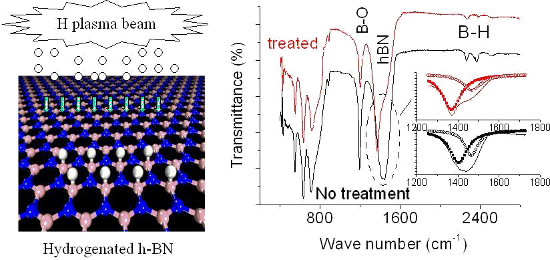
- -produced plasma beams. The diameter of the focus spot of laser beam on the target was about 2 mm and could be varied by shifting focal lens. The power density of the laser on the target was 2 × 10⁸ W/cm2 per pulse. Molybdenum (Mo) and silicon (Si) wafers (1 × 1 cm2) as substrates were used and placed 4 cm


Enhanced photocatalytic hydrogen evolution by combining water soluble graphene with cobalt salts
Beilstein J. Nanotechnol. 2014, 5, 1167–1174, doi:10.3762/bjnano.5.128
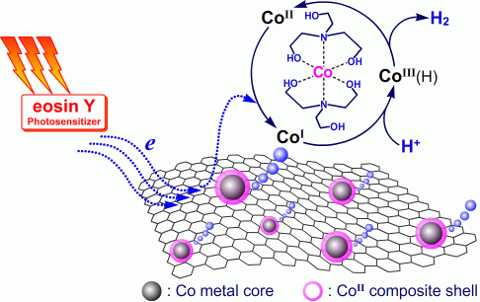
- , which limits its availability [5]. Hence, developing photocatalytic systems that rely only on earth-abundant elements are desired for making hydrogen a competitive alternative energy source. In recent years, systems based on iron complexes, nickel complexes or molybdenum complexes have been reported as


Visible light photooxidative performance of a high-nuclearity molecular bismuth vanadium oxide cluster
Beilstein J. Nanotechnol. 2014, 5, 711–716, doi:10.3762/bjnano.5.83

- ]. POMs are anionic metal oxide clusters formed primarily from early transition metals, mainly vanadium, molybdenum and tungsten [8]. The cluster assembly proceeds in solution by oligo-condensation reactions between reactive fragments, often by using templates to control the final cluster architecture [9


Towards precise defect control in layered oxide structures by using oxide molecular beam epitaxy
Beilstein J. Nanotechnol. 2014, 5, 596–602, doi:10.3762/bjnano.5.70
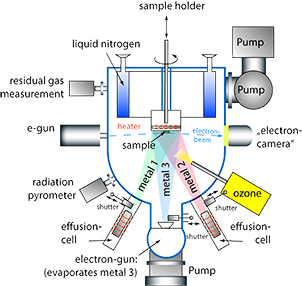
- conditions (high temperature, strongly oxidizing atmosphere), the materials for each component must be chosen extremely carefully. Materials such as molybdenum or PBN, which are often used in standard MBE, are not applicable in the oxide MBE given their tendency to form volatile oxides. Moreover, in order to


DNA origami deposition on native and passivated molybdenum disulfide substrates
Beilstein J. Nanotechnol. 2014, 5, 501–506, doi:10.3762/bjnano.5.58
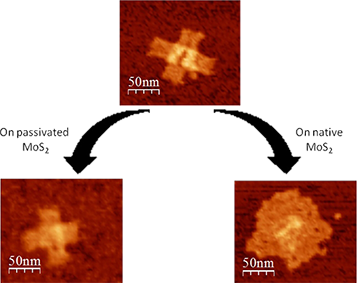
- prerequisite for the successful fabrication of hybrid DNA origami/semiconductor-based biomedical sensor devices. Molybdenum disulfide (MoS2) is an ideal substrate for such future sensors due to its exceptional electrical, mechanical and structural properties. In this work, we performed the first investigations
- significantly longer times. These findings will be beneficial for the fabrication of future DNA origami/MoS2 hybrid electronic structures. Keywords: atomic force microscopy (AFM); DNA origami; molybdenum disulfide (MoS2); pyrene; 1-pyrenemethylamine; surface modification; Introduction Since it was first
- properties, so as to enable complex and diverse circuit designs, thereby providing functionality essential for the construction of sensing biodevices with extraordinary sensitivity, rapid readout and good stability. As a layered two-dimensional (2D) material, molybdenum disulfide (MoS2) exhibits robust


Effect of contaminations and surface preparation on the work function of single layer MoS2
Beilstein J. Nanotechnol. 2014, 5, 291–297, doi:10.3762/bjnano.5.32
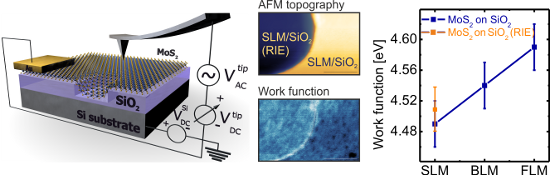
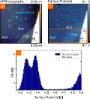
- , two-dimensional materials are being targeted in a variety of research areas like surface physics, electrical engineering, chemistry and biomedical applications [1][2][3][4]. The 2D-material getting the most attention besides graphene are single layers of molybdenum disulfide (SLM) which consist of a
- plane of molybdenum atoms that are sandwiched between sulfur atoms. The main reason for this is the transition from an indirect (bulk MoS2) to a direct (single layer MoS2) band gap semi-conductor [5]. Single layer MoS2 has a strong photoluminescence signal [5][6][7][8][9] and other interesting




The role of oxygen and water on molybdenum nanoclusters for electro catalytic ammonia production
Beilstein J. Nanotechnol. 2014, 5, 111–120, doi:10.3762/bjnano.5.11
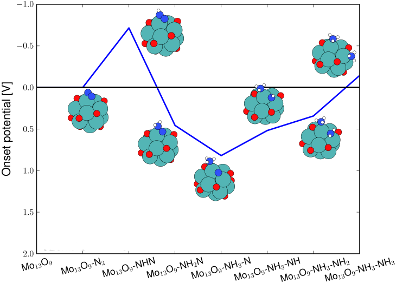
- , we present theoretical investigations of the influence of oxygen adsorption and reduction on pure and nitrogen covered molybdenum nanocluster electro catalysts for electrochemical reduction of N2 to NH3 with the purpose of understanding oxygen and water poisoning of the catalyst. Density functional
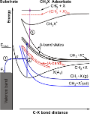
- theory calculations are used in combination with the computational hydrogen electrode approach to calculate the free energy profile for electrochemical protonation of O and N2 species on cuboctahedral Mo13 nanoclusters. The calculations show that the molybdenum nanocluster will preferentially bind oxygen
- electrochemical ammonia production via the associative mechanism is possible at potentials as low as −0.45 V to −0.7 V. Keywords: ammonia; density functional theory; electrocatalysis; nanoparticles; oxygen poisoning; Introduction Molybdenum nanoclusters have been identified as a prime candidate for


Functionalization of vertically aligned carbon nanotubes
Beilstein J. Nanotechnol. 2013, 4, 129–152, doi:10.3762/bjnano.4.14
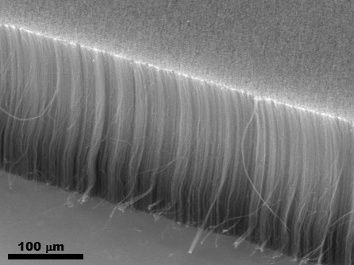
- sites), Kim et al. explained the correspondence between (i) the linear behavior of the structural defect density with time and (ii) the exponential behavior of the resistance. This observation is important for different electrical devices. Ye et al. [99] electrodeposited molybdenum oxide (MoOx) on VA

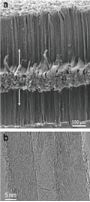


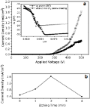

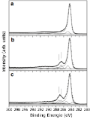


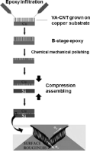


Structural, electronic and photovoltaic characterization of multiwalled carbon nanotubes grown directly on stainless steel
Beilstein J. Nanotechnol. 2012, 3, 360–367, doi:10.3762/bjnano.3.42
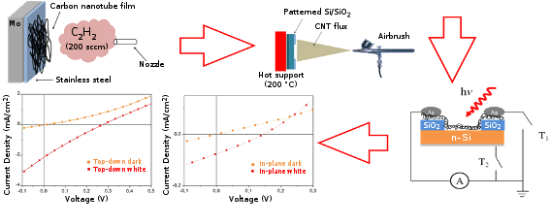
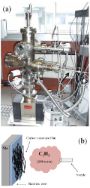
- Goodfellow Cambridge Ltd.) was placed on a molybdenum sample holder, acting as a resistive heater, and inserted into the chemical vapour deposition chamber (see Figure 1). After air was removed by a rotary pump, argon gas (12 torr) was inserted. When the desired temperature was reached (750 °C) acetylene gas
- . Acetylene and argon fluxes, introduced in the chamber through the gas line highlighted by the arrow, are adjusted by means of two suitable valves. (b) Schematics showing the CVD process: The stainless-steel substrate is mounted on a heatable molybdenum sample holder. After a temperature of 750 °C has been


Femtosecond time-resolved photodissociation dynamics of methyl halide molecules on ultrathin gold films
Beilstein J. Nanotechnol. 2011, 2, 618–627, doi:10.3762/bjnano.2.65
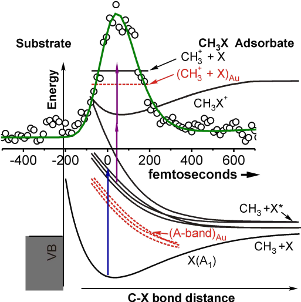
- molybdenum surface. Mass measurements were carried out on a homebuilt time-of-flight mass spectrometer [18][39]. The grounded Au/Mo(100) substrate served as the repeller electrode of a Wiley–McLaren-type acceleration lens arrangement [41]. The pump and probe laser beams collinearly irradiated the surface at


Investigation on structural, thermal, optical and sensing properties of meta-stable hexagonal MoO3 nanocrystals of one dimensional structure
Beilstein J. Nanotechnol. 2011, 2, 585–592, doi:10.3762/bjnano.2.62
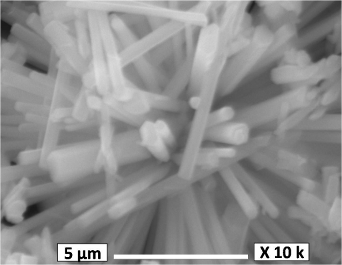
- Angamuthuraj Chithambararaj Arumugam Chandra Bose Nanomaterials Laboratory, Department of Physics, National Institute of Technology, Tiruchirappalli – 620 015, India 10.3762/bjnano.2.62 Abstract Hexagonal molybdenum oxide (h-MoO3) was synthesized by a solution based chemical precipitation
- characteristic peaks of molybdenum and oxygen. Thermogravimetric (TG) analysis on metastable MoO3 revealed that the hexagonal phase was stable up to 430 °C and above this temperature complete transformation into a highly stable orthorhombic phase was achieved. The optical band gap energy was estimated from the
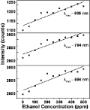
- Kubelka–Munk (K–M) function and was found to be 2.99 eV. Finally, the ethanol vapor-sensing behavior was investigated and the sensing response was found to vary linearly as a function of ethanol concentration in the parts per million (ppm) range. Keywords: fiber optic sensor; hexagonal phase; molybdenum


Switching adhesion forces by crossing the metal–insulator transition in Magnéli-type vanadium oxide crystals
Beilstein J. Nanotechnol. 2011, 2, 59–65, doi:10.3762/bjnano.2.8
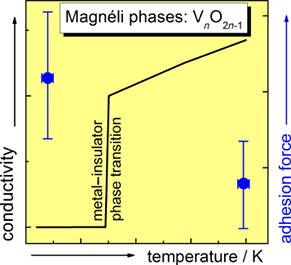
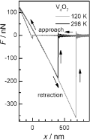
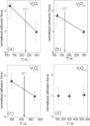
- metal–insulator transition (MIT) is the correlation of d band electrons of opposite spins as explained by the Mott–Hubbard model [3]. It was first recognized by Magnèli et al., that oxides of titanium and vanadium as well as those of molybdenum and tungsten form homologous series with planar faults of