Search results
Search for "monolayers" in Full Text gives 339 result(s) in Beilstein Journal of Nanotechnology. Showing first 200.
Monolayers of MoS2 on Ag(111) as decoupling layers for organic molecules: resolution of electronic and vibronic states of TCNQ
Beilstein J. Nanotechnol. 2020, 11, 1062–1071, doi:10.3762/bjnano.11.91
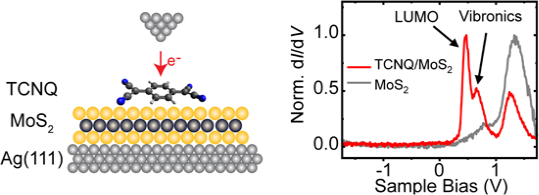
- and K′ by circularly polarized light [32]. The potential as decoupling layer for molecules may become even more appealing by the fact that monolayers of transition metal dichalcogenides can be grown in situ on different metal surfaces, where the precise hybridization and band alignment depend on the


A new photodetector structure based on graphene nanomeshes: an ab initio study
Beilstein J. Nanotechnol. 2020, 11, 1036–1044, doi:10.3762/bjnano.11.88
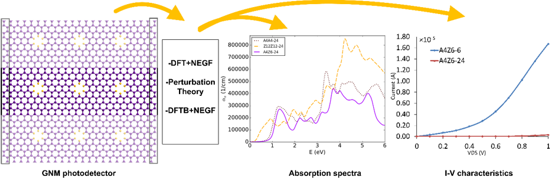
- makes it suitable for optical devices. Keywords: absorption spectra; DFT calculations; graphene nanomesh; graphene nanoribbon; photodetectors; Introduction Graphene monolayers with honeycomb crystal structure have unique electrical and optical properties and have received a lot of attention recently


Adsorption behavior of tin phthalocyanine onto the (110) face of rutile TiO2
Beilstein J. Nanotechnol. 2020, 11, 821–828, doi:10.3762/bjnano.11.67
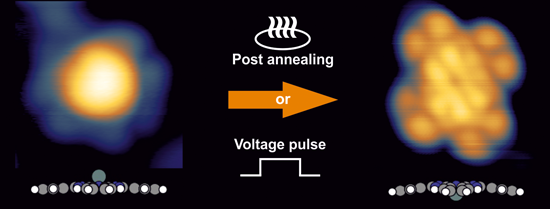
- temperature. The difference in the adsorption process between (110) and (011) surfaces is clear when increasingly more molecules are evaporated onto the surface. After deposition of the equivalent of a few monolayers, the formation of well-ordered phases of non-flat lying molecules is observed on the rutile


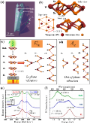
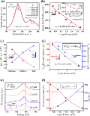
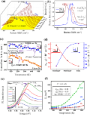
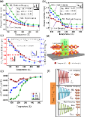
Light–matter interactions in two-dimensional layered WSe2 for gauging evolution of phonon dynamics
Beilstein J. Nanotechnol. 2020, 11, 782–797, doi:10.3762/bjnano.11.63
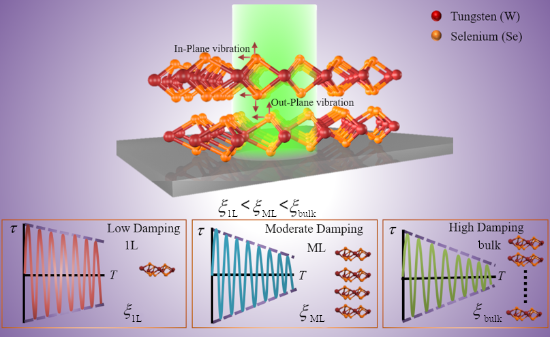
- the damping mechanisms in WSe2 with varying thickness and the increase in energy from external stimuli. The insights from this work reveal the importance of light–matter interactions in 2D WSe2 to alter the phonon spectrum toward the quantum-confined limit of monolayers. These findings can be broadly
Hexagonal boron nitride: a review of the emerging material platform for single-photon sources and the spin–photon interface
Beilstein J. Nanotechnol. 2020, 11, 740–769, doi:10.3762/bjnano.11.61
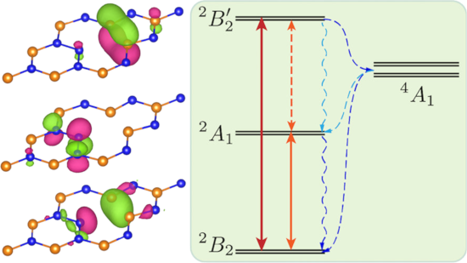
- ]. This has prompted the investigation of SP confocal microscopy to observe SPEs from various h-BN types of materials from bulk to monolayers, however with similar unclear attributions. Despite the PL variability in h-BN, very recently, deep-level, atom-like luminescent defects in h-BN have been
- miscellaneous transition rates for the optical and non-radiative transitions of the emitters. The SPEs show a very good photo-stability under ambient conditions and in monolayers. A correlation between the defect orientation and the h-BN hexagonal structure is observed by studying the excitation polarization
- 442 nm to 780 nm with operation from cryogenic to very high temperatures (1100 K). DFT was used to understand the origin of such broadband emission possible from defect states related to H, O, C, N, and B induced defects in bulk and monolayers indicating the emission-related defects population




Quantitative determination of the interaction potential between two surfaces using frequency-modulated atomic force microscopy
Beilstein J. Nanotechnol. 2020, 11, 729–739, doi:10.3762/bjnano.11.60
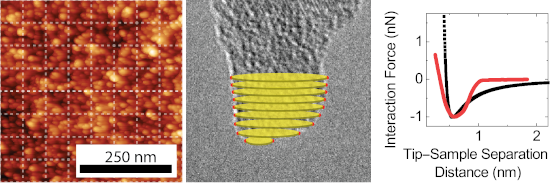
- such issues. For example, the adsorption of self-assembled monolayers on contacting surfaces is one method by which the surface can be modified to reduce the detrimental impacts of adhesion, friction and wear [15][16][17]. The nanometer length scales over which these processes modify surface


Luminescent gold nanoclusters for bioimaging applications
Beilstein J. Nanotechnol. 2020, 11, 533–546, doi:10.3762/bjnano.11.42
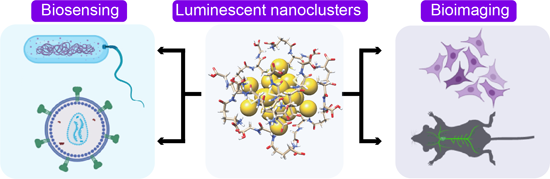
- , semiconductor quantum dots suffer from toxicity and are susceptible to oxidation. In this context, atomically precise gold nanoclusters protected by thiol monolayers have emerged as a new class of luminescent nanomaterials. Low toxicity, bioavailability, photostability as well as tunable size, composition, and


Multilayer capsules made of weak polyelectrolytes: a review on the preparation, functionalization and applications in drug delivery
Beilstein J. Nanotechnol. 2020, 11, 508–532, doi:10.3762/bjnano.11.41
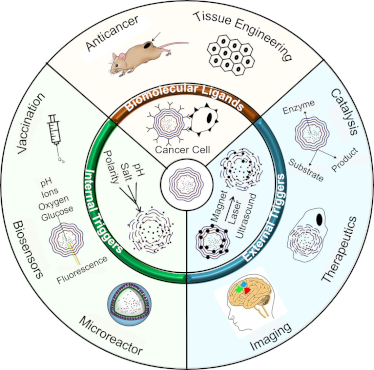
- between β-cyclodextrin monolayers as host and polymers modified with adamantyl groups as guests, which also resulted in stable multilayers [61]. The first stimuli-responsive supramolecular hydrogels films based on these reactions were built in 2006 using β-cyclodextrin and adamantyl modified chitosan



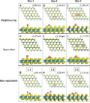
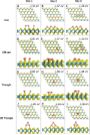
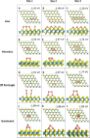
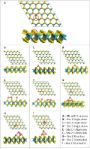
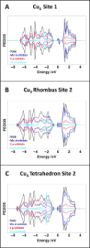
DFT calculations of the structure and stability of copper clusters on MoS2
Beilstein J. Nanotechnol. 2020, 11, 391–406, doi:10.3762/bjnano.11.30
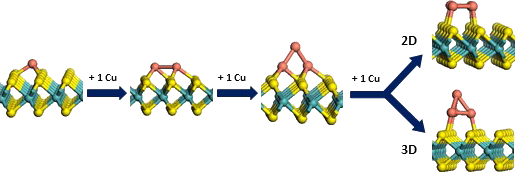
- structures and MoS2 monolayers is therefore of significant importance and first-principles simulations can probe aspects of this interaction not easily accessible to experiment. Previous theoretical studies have focused particularly on the adsorption of a range of metallic elements, including first-row
- character of Cu nanoclusters is preserved. Keywords: copper (Cu); density functional theory (DFT); 2D materials; molybdenum disulfide (MoS2); thin film nucleation; Introduction Since the successful exfoliation of monolayers of graphene by Novoselov et al., 2D materials have gained a large interest in a
- adsorption [26][29][30][31] and adsorption of larger structures such as nanoparticles [25] or metal chains [24]. Studies of single-atom adsorption have focused on screening the stability of a range of elements at TMD monolayers. As an example, Wang et al. [26] studied the adsorption energy, stable geometries

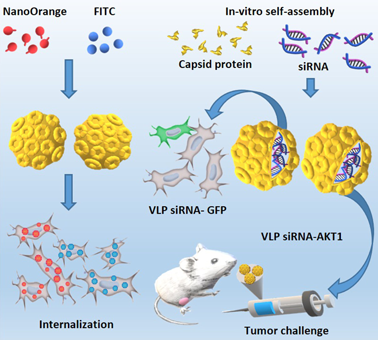
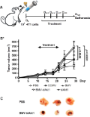
Brome mosaic virus-like particles as siRNA nanocarriers for biomedical purposes
Beilstein J. Nanotechnol. 2020, 11, 372–382, doi:10.3762/bjnano.11.28
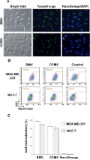
- described previously. When the cell monolayers reached about 70% confluence, the medium was completely removed and cells were synchronized in basal media for 12 h. The cells were then further incubated in the presence of BMV or CCMV (20 µg/mL, 2.6 × 10⁷ virions per cell) or DMSO (20% v/v) as a control for


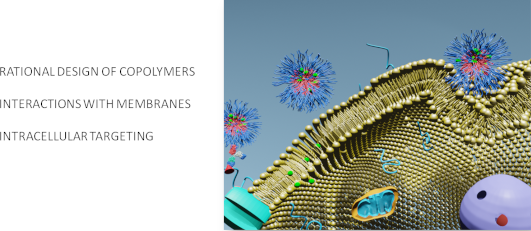
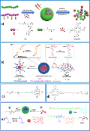
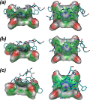
Rational design of block copolymer self-assemblies in photodynamic therapy
Beilstein J. Nanotechnol. 2020, 11, 180–212, doi:10.3762/bjnano.11.15






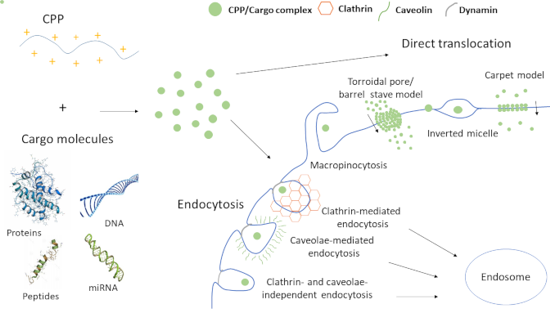
Internalization mechanisms of cell-penetrating peptides
Beilstein J. Nanotechnol. 2020, 11, 101–123, doi:10.3762/bjnano.11.10


Antimony deposition onto Au(111) and insertion of Mg
Beilstein J. Nanotechnol. 2019, 10, 2541–2552, doi:10.3762/bjnano.10.245
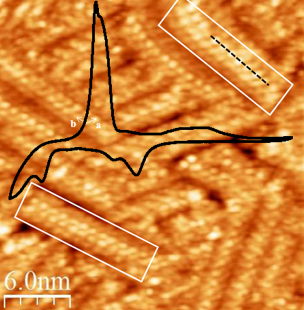
- processes are kinetically slow because of the large ionic radius and high charge density of Mg2+ compared with Li+. In this work, we prepared very thin films of Sb by electrodeposition on a Au(111) substrate. Monolayer and multilayer deposition (up to 20 monolayers) were characterized by cyclic voltammetry
- the potential cycle to more negative potentials, bulk Sb starts around 0.13 V and gives rise to the peak C3 and the corresponding dissolution peak A3. Peak C1 and peak A2 largely decrease after extensive bulk deposition of nearly two monolayers in the fourth cycle. We attribute the decrease of peak A2
- . The reversibility of the magnesium bulk deposition/dissolution is nearly 97%. From the Sb deposition charge (10.36 mC cm−2), the amount of the deposited Sb was calculated to be 20 monolayers, which is comparable to the STM results. The amount of the inserted Mg was 6.39 mC cm−2. The ratio between the







Mobility of charge carriers in self-assembled monolayers
Beilstein J. Nanotechnol. 2019, 10, 2449–2458, doi:10.3762/bjnano.10.235
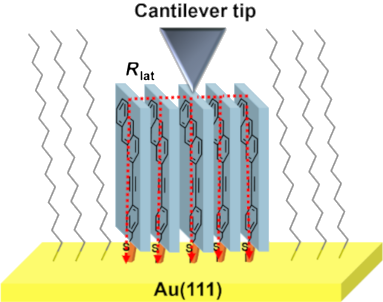
- study charge transport within 2D layers of organic semi-conductors (OSCs) using atomic force microscopy (AFM)-based lithography applied to self-assembled monolayers (SAMs), fabricated from appropriate organothiols. The extent of lateral charge transport was investigated by insulating pre-defined patches
- , using an approach where measurements are carried out for structurally well-defined self-assembled monolayers (SAMs) [9], fabricated from appropriate organothiols. A very large number of organothiolates have been found to form monolayers of high structural quality on Au substrates [10], with a pronounced
- before the SAM preparation. The formation of the PAT monolayers was carried out by immersing the substrates into 0.1 mM absolute ethanolic solution (≥99.8%, AnalaR NORMAPUR® ACS, Reag. Ph. Eur. zur Analyse) of PAT for 24 h at RT and, optionally, at an elevated temperature (70 °C). The samples were


Multiwalled carbon nanotube based aromatic volatile organic compound sensor: sensitivity enhancement through 1-hexadecanethiol functionalisation
Beilstein J. Nanotechnol. 2019, 10, 2364–2373, doi:10.3762/bjnano.10.227
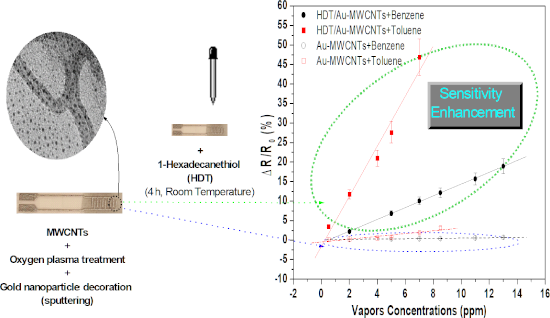
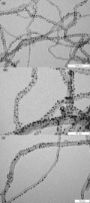
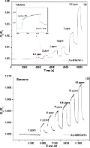
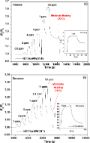
- sensitivity (up to 17 times), selectivity and improves the response dynamics of the sensors. Keywords: gold-decorated MWCNTs; multiwall carbon nanotubes (MWCNTs); self-assembled monolayers (SAMs); sensitivity; selectivity; vapour sensor; Introduction Aromatic volatile organic compounds (VOCs) such as
- effect of nucleation. The power and time required for the plasma beam aperture within the cell were optimized and fixed to 30 W and 10 seconds, respectively. Functionalisation with self-assembled monolayers (SAMs) The Au-decorated MWCNT substrate was further functionalized with an alkanethiol self
- performance [25][26]. FTIR characterisation In order to ensure that the HDT monolayers are formed and well immobilized on the Au-MWCNT layers, we used FTIR spectroscopy. Figure 3 shows the infrared spectra, in absorbance mode, of both Au-MWCNT and HDT/Au-MWCNT layers. When analysing and comparing the infrared


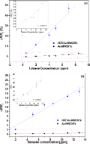


Adsorption and desorption of self-assembled L-cysteine monolayers on nanoporous gold monitored by in situ resistometry
Beilstein J. Nanotechnol. 2019, 10, 2275–2279, doi:10.3762/bjnano.10.219
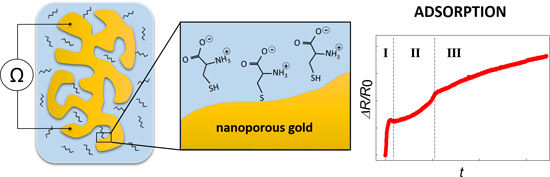
- 12, A-8010 Graz, Austria 10.3762/bjnano.10.219 Abstract Surface modifications of nanoporous metals have become a highly attractive research field as they exhibit great potential for various applications, especially in biotechnology. Using self-assembled monolayers is one of the most promising
- approaches to modify a gold surface. However, only few techniques are capable of characterizing the formation of these monolayers on porous substrates. Here, we present a method to in situ monitor the adsorption and desorption of self-assembled monolayers on nanoporous gold by resistometry, using cysteine as
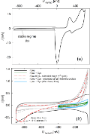
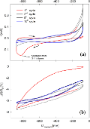
- resistometry. From the desorption peak related to the (111) surface of the structure, which is associated with a resistance change of 4.8%, an initial surface coverage of 0.48 monolayers of cysteine could be estimated. Keywords: L-cysteine; in situ resistometry; nanoporous gold; self-assembled monolayer (SAM

Microbubbles decorated with dendronized magnetic nanoparticles for biomedical imaging: effective stabilization via fluorous interactions
Beilstein J. Nanotechnol. 2019, 10, 2103–2115, doi:10.3762/bjnano.10.205
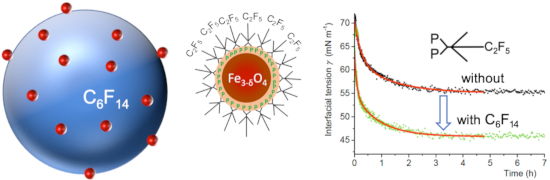
- this case, the domains formed by DPPC bilayers of ≈5 nm in height are omnipresent, while only a few domains of monolayers are observed (Figure 11Ba). It is seen that IONP@C2H5OEG8Den are preferentially located in the regions of the wafer that are devoid of phospholipid domains. The height profile


Ion mobility and material transport on KBr in air as a function of the relative humidity
Beilstein J. Nanotechnol. 2019, 10, 2084–2093, doi:10.3762/bjnano.10.203
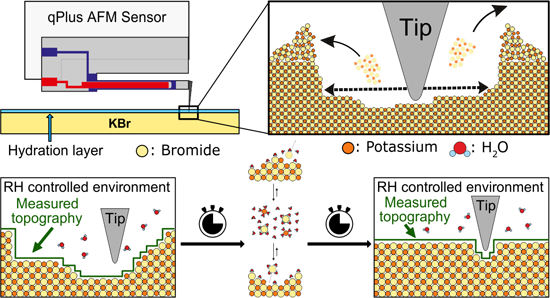
- to be taken into account that measurements at such low pressure rather relate to the outer atmosphere than to ambient conditions. However similar observations have been made by Asay et al. under ambient conditions, who showed on silicon oxide the growth of three monolayers up to RH = 30%, an
- additional layer forming by increasing RH to 60% and further growth of the water film up to 2.7 nm (ca. 10 monolayers) thickness at higher humidities [1]. On the atomic level, water and adsorbed molecules can arrange according to the surface structure and form ordered hydration layers that are also referred


Improvement of the thermoelectric properties of a MoO3 monolayer through oxygen vacancies
Beilstein J. Nanotechnol. 2019, 10, 2031–2038, doi:10.3762/bjnano.10.199
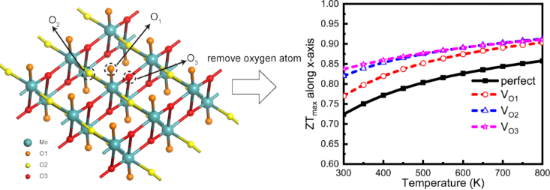
- cm2·V−1·s−1 [17]. Therefore, it is of profound significance to explore the thermoelectric properties of MoO3 monolayers and discuss the effect of O vacancies on it. Computational methods In this work, we evaluate the thermoelectric properties of a MoO3 monolayer by Boltzmann transport theory and first


Review of advanced sensor devices employing nanoarchitectonics concepts
Beilstein J. Nanotechnol. 2019, 10, 2014–2030, doi:10.3762/bjnano.10.198
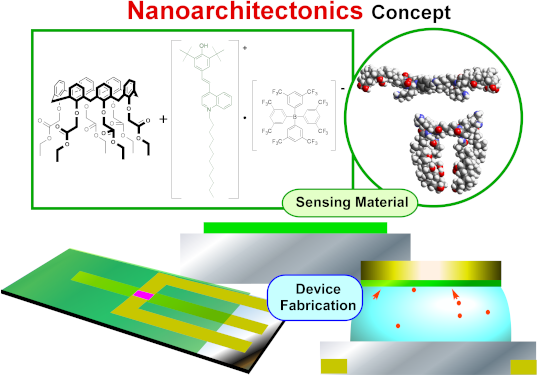
- monolayers [133][134], Langmuir–Blodgett films [135][136][137], and layer-by-layer assembly [138][139][140][141] on sensors and related devices is a key nanoarchitectonics step for sensor fabrication. For example, Furusawa et al. immobilized nickel-nitrilotriacetic acid within a self-assembled monolayer on
- efforts. Guo and co-workers fabricated a field-effect transistor with monolayers and multilayers of pentathiophene-type organic semiconductor for melamine detection [144] (Figure 7). The used dialkoxyphenyl pentathiophene derivative has a semiconductive pentathiophene core sandwiched by two insulating C12
- semiconductive monolayers was also demonstrated by Chan and co-workers who successfully prepared semiconductor monolayer crystals of 2,9-didecyldinaphtho[2,3-b:2’,3’-f]thieno[3,2-b]thiophene on the millimeter scale [145]. The semiconductor crystals encapsulated within poly(methyl methacrylate) exhibited a


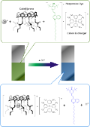

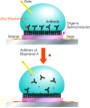


Materials nanoarchitectonics at two-dimensional liquid interfaces
Beilstein J. Nanotechnol. 2019, 10, 1559–1587, doi:10.3762/bjnano.10.153
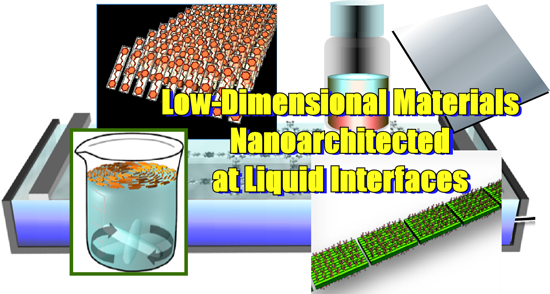
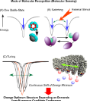
- receptors in monolayers at the air–water interface can be controlled by macroscopic lateral motion such as mechanical compression and expansion of the monolayers. Macroscopic mechanical deformation of the interfacial media at the scale of centimetres or metres can regulate nanometre-scale conformational
- mechanisms of formation and transformation of zero-dimensional structures within two-dimensional media (dot-dispersed monolayers of block copolymers) [200]. Self-assembled monolayers of polystyrene-b-poly(4-vinylpyridine) and its supramolecular complex with 3-n-pentadecylphenol at the air–water interface
- mechanism might be generalized for zero-dimensional dot-dispersed monolayers of block-copolymers. Wen and co-workers reported the drastic modification of two-dimensionally patterned Langmuir–Blodgett (LB) films of polystyrene-b-poly(2-vinylpyridine) transferred from the air–water interface through acetone


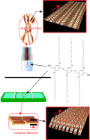

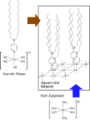

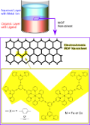









Pure and mixed ordered monolayers of tetracyano-2,6-naphthoquinodimethane and hexathiapentacene on the Ag(100) surface
Beilstein J. Nanotechnol. 2019, 10, 1188–1199, doi:10.3762/bjnano.10.118
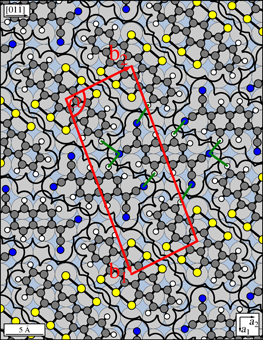
- /bjnano.10.118 Abstract We report on mixed ordered monolayers of the electron acceptor-type molecule tetracyano-2,6-naphthoquinodimethane (TNAP) and the electron donor-type molecule hexathiapentacene (HTPEN). This investigation was motivated by the general question which type of mixed stoichiometric
- formation of the mixed structure occurs spontaneously. An important motif for the structure formation is given by hydrogen bonds between the TNAP molecules. Both molecules, TNAP and HTPEN also form well-ordered monolayers on the Ag(100) surface on their own. In all structures, the molecules are adsorbed in
- Ordered monolayers on surfaces that are stoichiometrically composed of two different organic molecules have attracted strong interest in recent years [1][2][3]. One general motivation is to find out which ordered structures are formed in relation to the compositions of the layers and the different types


Revisiting semicontinuous silver films as surface-enhanced Raman spectroscopy substrates
Beilstein J. Nanotechnol. 2019, 10, 1048–1055, doi:10.3762/bjnano.10.105
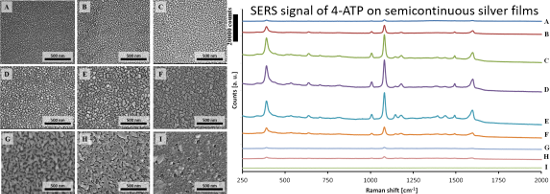
- few examples. Gold and silver nanostructured surfaces on substrates can be fabricated by self-assembly of colloidal particles into monolayers [16], in the form of island films by seeding with nanoparticles followed by a reduction of metal salt [17][18], or in the form of other high surface area




Enhanced inhibition of influenza virus infection by peptide–noble-metal nanoparticle conjugates
Beilstein J. Nanotechnol. 2019, 10, 1038–1047, doi:10.3762/bjnano.10.104
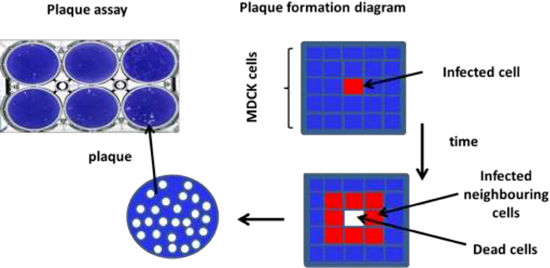
- in 6-well plates (STARLAB international, Hamburg, Germany), 106 cells/well) for two days. At confluence, monolayers of MDCK cells were then infected with a serial dilution of influenza virus inoculum (sufficient to obtain approximately 100 plaques per well) for 1 h at 37 °C on a rocking platform. An




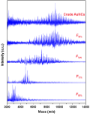
Structural and optical properties of penicillamine-protected gold nanocluster fractions separated by sequential size-selective fractionation
Beilstein J. Nanotechnol. 2019, 10, 955–966, doi:10.3762/bjnano.10.96
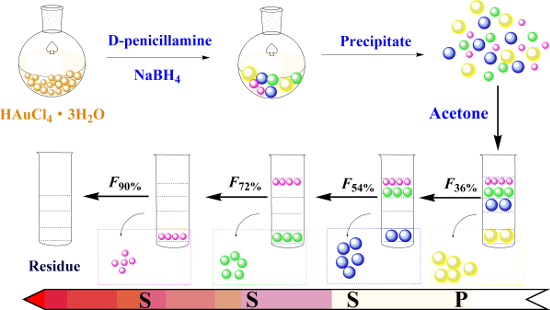
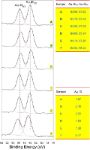
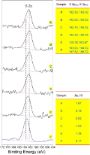
- size and the ratio of Au atoms to ligands of AuNCs. X-ray photoelectron spectroscopy (XPS) has also been applied to observe the molecular dependence on the gold and sulfur chemical state of organosulfur monolayers of the fractions. The photoluminescence spectra of these AuNCs in the range of 900–790 nm
- protective layer of organic molecules [2]. These clusters are considered to be a hybrid system of small molecules and macroscopic materials, and are of great interest to the properties of gold core and organic monolayers [3]. The stable monolayer-protected NCs have enabled experiments to be carried out that