Search results
Search for "narrow size distribution" in Full Text gives 102 result(s) in Beilstein Journal of Nanotechnology.
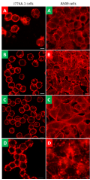
Caveolin-1 and CDC42 mediated endocytosis of silica-coated iron oxide nanoparticles in HeLa cells
Beilstein J. Nanotechnol. 2015, 6, 167–176, doi:10.3762/bjnano.6.16
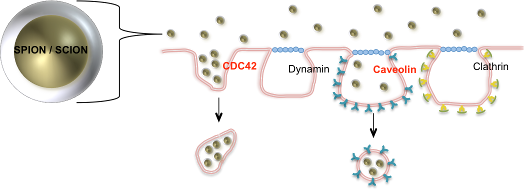
- confirms the previous findings regarding the endocytosis of SPIONs. The effect of Caveolin-1 in the endocytosis of SCIONs is higher compared to SPIONs. On the other hand this is possibly due to the different experimental setups, on the other hand SCIONs provided a narrow size distribution, which could


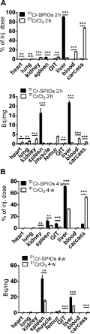
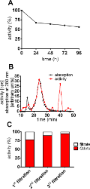
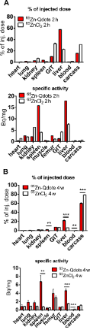
The distribution and degradation of radiolabeled superparamagnetic iron oxide nanoparticles and quantum dots in mice
Beilstein J. Nanotechnol. 2015, 6, 111–123, doi:10.3762/bjnano.6.11
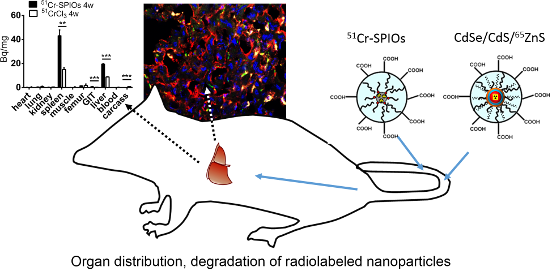
- oleic acid and 22 mL of 1-octadecene was held at 320 °C under nitrogen for about 80 min. The 11 nm core diameter particles showed a narrow size distribution (less than 10% standard deviation) as confirmed by transmission electron microscopy (TEM). Encapsulation with the PMAOD solution was achieved using





Morphology, structural properties and reducibility of size-selected CeO2−x nanoparticle films
Beilstein J. Nanotechnol. 2015, 6, 60–67, doi:10.3762/bjnano.6.7
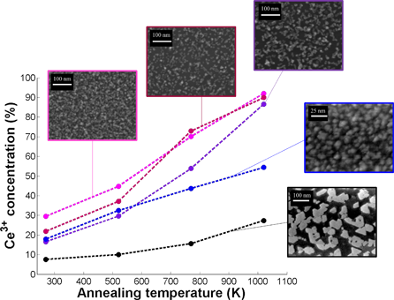
- ]. Conclusion Non-stoichiometric ceria NPs have been synthetized through magnetron sputtering with a gas aggregation source. With a quadrupole filter NPs have been mass-selected obtaining a narrow size distribution, and three different lateral sizes have been selected. The morphology and stoichiometry of the


The fate of a designed protein corona on nanoparticles in vitro and in vivo
Beilstein J. Nanotechnol. 2015, 6, 36–46, doi:10.3762/bjnano.6.5
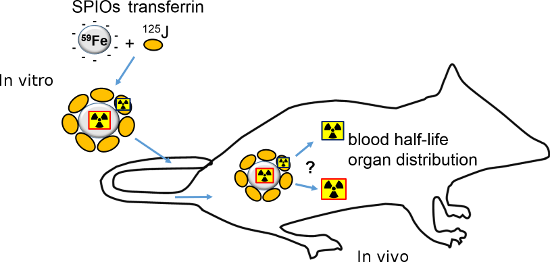
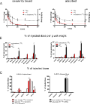
- mmol) and 22 mL 1-octadecene was heated to 320 °C under nitrogen and kept at this temperature for about 80 min. The 11 nm core sized particles showed a narrow size distribution (less than 10% standard deviation) as confirmed by transmission electron microscopy (TEM). Encapsulation with poly(maleic acid


Inorganic Janus particles for biomedical applications
Beilstein J. Nanotechnol. 2014, 5, 2346–2362, doi:10.3762/bjnano.5.244
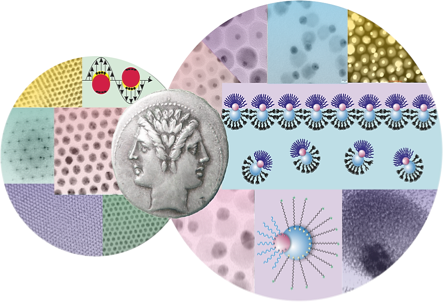
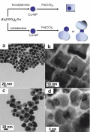
- amphiphilic particle. Kumacheva et al. reported a microfluidic method for fast continuous synthesis of Janus particles as well as three-phase particles with narrow size distribution by emulsification of monomer liquids and in situ photoinitiated polymerization of multiphase droplets (Figure 3e) [27]. Another






Nanoencapsulation of ultra-small superparamagnetic particles of iron oxide into human serum albumin nanoparticles
Beilstein J. Nanotechnol. 2014, 5, 2259–2266, doi:10.3762/bjnano.5.235
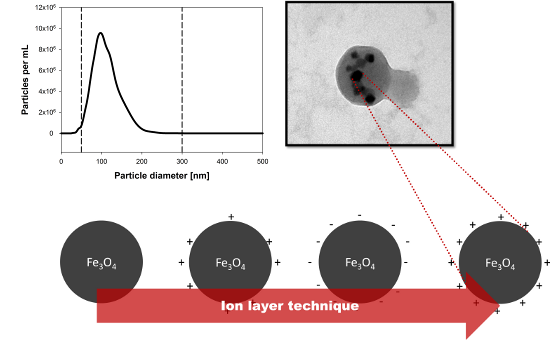
- with the surface modification and nanoencapsulation of USPIO into an albumin matrix by using ethanolic desolvation. Particles of narrow size distribution and with a defined particle structure have been achieved. Keywords: diagnostics; HSA; nanoencapsulation; nanoparticles; USPIO; Introduction Over
- material. USPIO HSA hybrid particles of high iron load and narrow size distribution have been achieved. Results and Discussion Prior to the modification of the particle surface by ion layer technique, the structure and magnetization of USPIO were investigated. Afterwards, the surface-modified positively
- crosslinked with increasing amounts of glutaraldehyde and a dense particle structure was formed to incorporate the contrast agent. A decreasing standard deviation of the polydispersity indicated a narrow size distribution for particles that were crosslinked with higher amounts of glutaraldehyde (Figure 3


The impact of the confinement of reactants on the metal distribution in bimetallic nanoparticles synthesized in reverse micelles
Beilstein J. Nanotechnol. 2014, 5, 1966–1979, doi:10.3762/bjnano.5.206
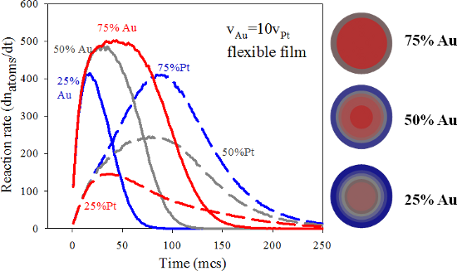
- ][4][5][6][7][8][9][10]. This method offers many advantages with respect to other techniques, specifically, the possibility to prepare different types of materials using simple equipment while obtaining very small particles with a narrow size distribution whose composition is well-controlled. To


Synthesis of Pt nanoparticles and their burrowing into Si due to synergistic effects of ion beam energy losses
Beilstein J. Nanotechnol. 2014, 5, 1864–1872, doi:10.3762/bjnano.5.197
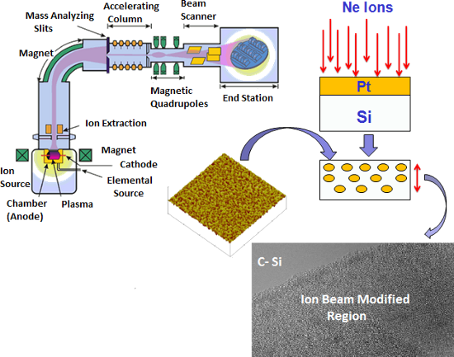
- -dimensional structures of various elements with narrow size distribution is a big challenge for scientists [9][10][11]. Due to certain advantages, namely, the control of growth parameters and spatial distribution, ion beam synthesis of buried nanoparticles (NPs) has received considerable attention in recent



The surface properties of nanoparticles determine the agglomeration state and the size of the particles under physiological conditions
Beilstein J. Nanotechnol. 2014, 5, 1774–1786, doi:10.3762/bjnano.5.188
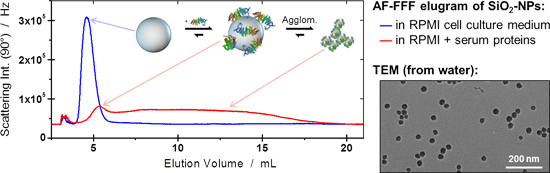
- not disturb the measurement, but rather promotes constant salinity. NexSil20: DLS of NexSil20 yielded a hydrodynamic radius of 17.1 nm. The μ2 value of 0.11 indicates that NexSil20 is not monodisperse but still has a narrow size distribution. The measured hydrodynamic radius is marginally larger
- detection of proteins (lower graph). In absence of serum proteins (blue lines) NexSil20 elutes as a sharp fraction indicating a narrow size distribution. Since scattering of light inside the UV absorbance cell distorts the absorbance detection, the silica particles cause an apparent UV absorbance signal


Different endocytotic uptake mechanisms for nanoparticles in epithelial cells and macrophages
Beilstein J. Nanotechnol. 2014, 5, 1625–1636, doi:10.3762/bjnano.5.174
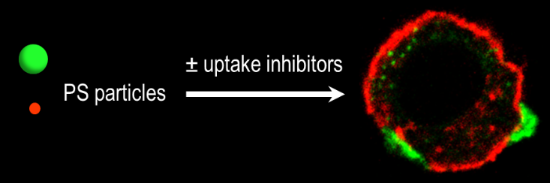
- fluorescently labelled polystyrene particles of significantly different sizes, that is, 40 nm and 1 µm in diameter. These particles were chosen as they are easy to detect by fluorescence methods and available in different sizes [46]. Moreover, they have a narrow size distribution and are considered to be



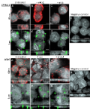
Silica nanoparticles are less toxic to human lung cells when deposited at the air–liquid interface compared to conventional submerged exposure
Beilstein J. Nanotechnol. 2014, 5, 1590–1602, doi:10.3762/bjnano.5.171
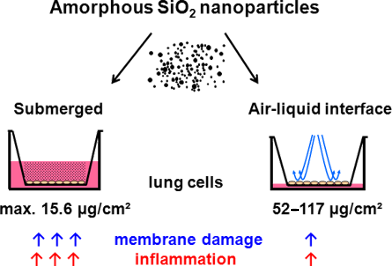
- distributions generated for cell exposure. (A) From an aqueous solution of SiO2-50 nm monomers (Stöber synthesis, Postnova) high number concentrations of airborne SiO2-50 nm monomers with a narrow size distribution were generated by electrospray. The atomizer, however, generated from the same nanoparticle
- . Results and Discussion Aerosols The aerosols were generated by two different methods: an atomizer and electrospray. By using the electrospray method it was possible to generate an aerosol containing monomers and small agglomerates of SiO2-50 nm NPs with a high number concentration and a narrow size
- distribution (Figure 1A). This method was however not applicable for the dispersion of Aerosil200 suspensions which contain aggregates that were too large for a stable operation of the electrospray in the cone jet mode. Therefore, an atomizer was used that delivered a relatively large and broad droplet size


Protein-coated pH-responsive gold nanoparticles: Microwave-assisted synthesis and surface charge-dependent anticancer activity
Beilstein J. Nanotechnol. 2014, 5, 1452–1462, doi:10.3762/bjnano.5.158
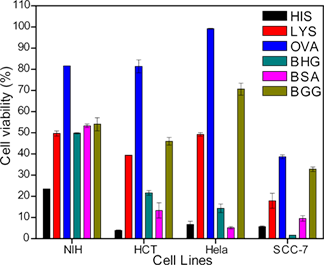
- the optimum amount of AgNO3 was added, the peaks were narrow, indicating that all of the formed AgNPs were consumed at the same time to form AuNPs with a uniform and narrow size distribution. Equal or higher concentrations of Ag ions relative to Au ions resulted in irregularly shaped AuNPs, which


Nanoporous composites prepared by a combination of SBA-15 with Mg–Al mixed oxides. Water vapor sorption properties
Beilstein J. Nanotechnol. 2014, 5, 1226–1234, doi:10.3762/bjnano.5.136

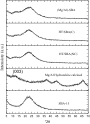
- prepared composites and the SBA-15 show H1 hysteresis loops due to the N2 capillary condensation. It also denotes that the pores present a cylindrical form and narrow size distribution (Figure 1B). Calcined Mg–Al hydrotalcite shows a N2 adsorption–desorption isotherm with a wide hysteresis loop (H3 type



Gas sensing with gold-decorated vertically aligned carbon nanotubes
Beilstein J. Nanotechnol. 2014, 5, 910–918, doi:10.3762/bjnano.5.104
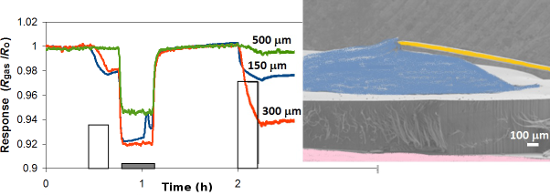
- gas phase by DC magnetron sputtering (with a power of 75 W) from a gold target under Ar atmosphere (180 mTorr). It allows the production of well-dispersed nanoparticles in the gas phase with a narrow size distribution, production independent of the target substrate. The gold nanoparticles synthesized


Optical and structural characterization of oleic acid-stabilized CdTe nanocrystals for solution thin film processing
Beilstein J. Nanotechnol. 2014, 5, 881–886, doi:10.3762/bjnano.5.100
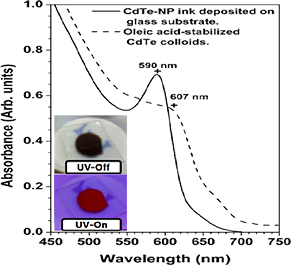
- range. This peak corresponds to the band-to-band transition, since it is the most likely transition under the quantum confinement regime [43]. It is worthy to note that CdTe nanocrystals dispersed in toluene showed a narrow absorption peak (or excitonic peak) around 590 nm, suggesting a narrow size
- distribution for our samples. Nevertheless the exciton peak disappeared once the CdTe colloid was drop-cast on the glass substrates Figure 5 shows the absorbance spectra of CdTe-NC of the colloidal solution and of a liquid sample processed by the size-separation technique. The effect of size-separation can be


Antimicrobial nanospheres thin coatings prepared by advanced pulsed laser technique
Beilstein J. Nanotechnol. 2014, 5, 872–880, doi:10.3762/bjnano.5.99
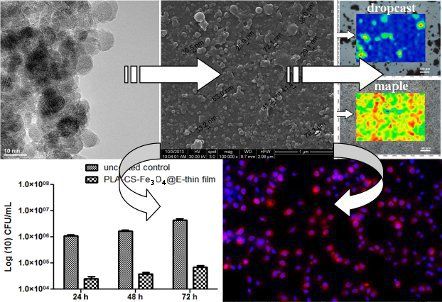
- nanometric dimensions of used powder in order to prepare PLA–CS-Fe3O4@EUG nanospheres. TEM images of Fe3O4@EUG at different magnification (Figure 1) show that the prepared powder has a spherical shape with a narrow size distribution of approximately 7 nm. Infrared microscopy was used to demonstrate the




An ultrasonic technology for production of antibacterial nanomaterials and their coating on textiles
Beilstein J. Nanotechnol. 2014, 5, 532–536, doi:10.3762/bjnano.5.62
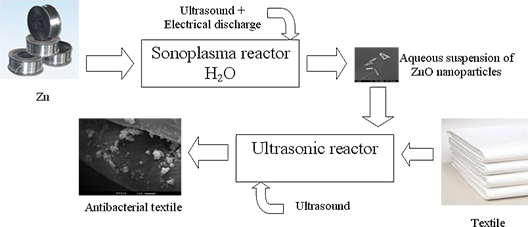
- discharge. A narrow size distribution of particles with an average size of 10 nm is obtained from the DLS measurements, which is in good agreement with the SEM data. It was relevant for the coating process that the suspension produced in the sonoplasma discharge was used for coating immediately after


Plasma-assisted synthesis and high-resolution characterization of anisotropic elemental and bimetallic core–shell magnetic nanoparticles
Beilstein J. Nanotechnol. 2014, 5, 466–475, doi:10.3762/bjnano.5.54
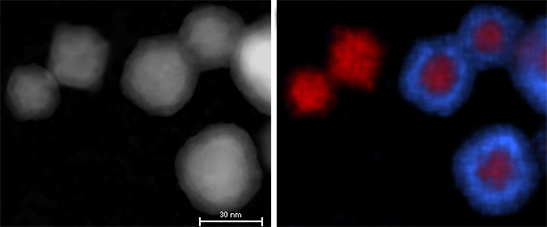
- sputtering at high pressures soon emerged as a superior technique for the production of large amounts of nanoparticles with very narrow size distribution, a unique advantage for further fundamental and applied research [8][9]. Nevertheless, relatively few studies dealing with the precise tailoring of
- and a fast drop below the nucleation barrier, thus a large number of small particles with narrow size distribution. On the other hand, low supersaturation manifests in a low nucleation rate, larger particles and broader distributions. In this scenario, particle growth would be limited by the available


One pot synthesis of silver nanoparticles using a cyclodextrin containing polymer as reductant and stabilizer
Beilstein J. Nanotechnol. 2014, 5, 380–385, doi:10.3762/bjnano.5.44
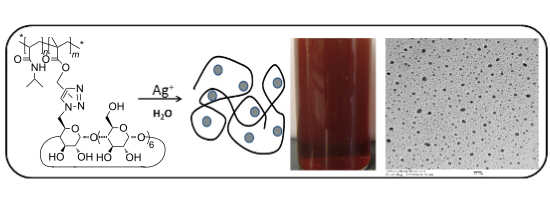
- -centered cubic (fcc) structure (Figure 3, inlet). As clearly seen from Figure 4 silver nanoparticles 2 with a spherical morphology were formed. The average size of particles 2a prepared with 1 mM AgNO3 and 10 mM polymer bound CD 1 was determined to be 12.5 ± 2.3 nm with a narrow size distribution. With an


Porous polymer coatings as substrates for the formation of high-fidelity micropatterns by quill-like pens
Beilstein J. Nanotechnol. 2013, 4, 377–384, doi:10.3762/bjnano.4.44
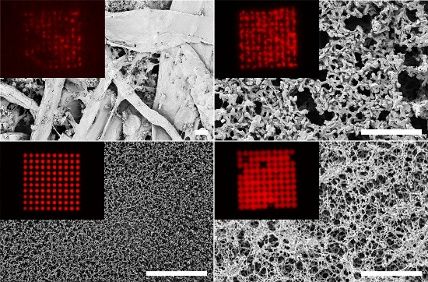
- possess very high hydrophilicity due to the combination of the porous structure with the hydrophilic nature of the 2-hydroxyethyl methacrylate used as a monomer [5]. The small size and narrow size distribution of both pores and polymer globules (about 20–200 nm) resulted in high transparency of the


Near-field effects and energy transfer in hybrid metal-oxide nanostructures
Beilstein J. Nanotechnol. 2013, 4, 306–317, doi:10.3762/bjnano.4.34
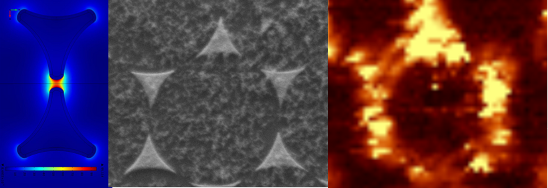
- fluorescent nanosuspension with narrow size distribution and similar optical properties. Quenching of the Eu fluorescence at the Ag nanoantennas has been observed by confocal microscopy of the fluorescent emission. The quenching can be reduced by deposition of a 10 nm thick SiOx spacer layer. In the systems








Magnetic-Fe/Fe3O4-nanoparticle-bound SN38 as carboxylesterase-cleavable prodrug for the delivery to tumors within monocytes/macrophages
Beilstein J. Nanotechnol. 2012, 3, 444–455, doi:10.3762/bjnano.3.51
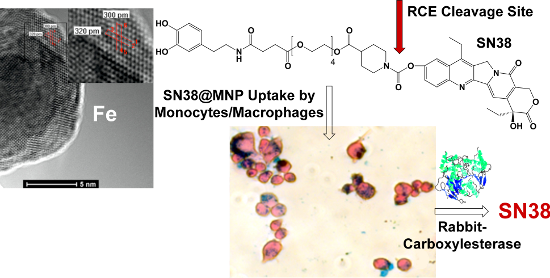
- nanoparticles in water is about 95 nm, indicating that some level of aggregation occurred in the aqueous media, but overall the nanoparticles are monodisperse with a narrow size distribution (polydispersity <0.20) (Supporting Information File 1, Figure S1). Since the MNP-SN38 platform will be loaded on Mo/Ma


Ceria/silicon carbide core–shell materials prepared by miniemulsion technique
Beilstein J. Nanotechnol. 2011, 2, 638–644, doi:10.3762/bjnano.2.67
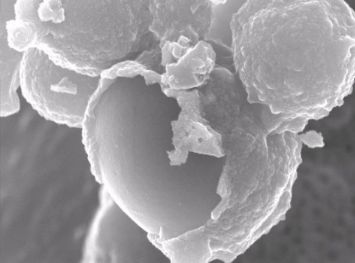
- approach. The size of the generated particles can easily be controlled [11][12] through the amount of surfactant added to the system, allowing particle sizes usually in the range of 50–500 nm and with a narrow size distribution. Hydrophobic polymeric particles are usually prepared from a direct (oil-in


Organic–inorganic nanosystems
Beilstein J. Nanotechnol. 2011, 2, 363–364, doi:10.3762/bjnano.2.41

- strength for a given analysis technique, in most cases ensembles of nanoobjects are needed. However, this immediately results in the requirement for a narrow size distribution of the nanoobjects, else their desired new size dependent properties will be completely smeared out. Additional conditions such as
Magnetic nanoparticles for biomedical NMR-based diagnostics
Beilstein J. Nanotechnol. 2010, 1, 142–154, doi:10.3762/bjnano.1.17
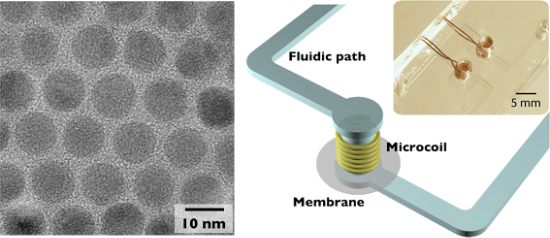
- ferrite nanoparticles (MnFe2O4). These nanoparticles have narrow size distribution and high crystallinity, and were synthesized by a seed-growth method to produce 10, 12, 16, and 22 nm nanoparticles. (b) TEM image of elemental iron (Fe) core/ferrite shell magnetic nanoparticles (CB; cannonballs). These