


Search results
Search for "photocatalytic performance" in Full Text gives 79 result(s) in Beilstein Journal of Nanotechnology.
Dye-sensitized Pt@TiO2 core–shell nanostructures for the efficient photocatalytic generation of hydrogen
Beilstein J. Nanotechnol. 2014, 5, 360–364, doi:10.3762/bjnano.5.41
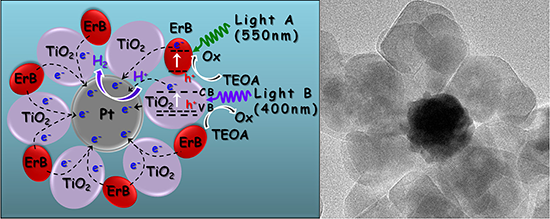
- recombination rate of photogenerated electrons and holes often leads to low quantum yields and a poor photocatalytic activity [6]. Tremendous efforts have been made to improve the photocatalytic performance of TiO2. One typical strategy is prolonging the lifetime of the electron–hole pair through deposition of


Preparation of NiS/ZnIn2S4 as a superior photocatalyst for hydrogen evolution under visible light irradiation
Beilstein J. Nanotechnol. 2013, 4, 949–955, doi:10.3762/bjnano.4.107
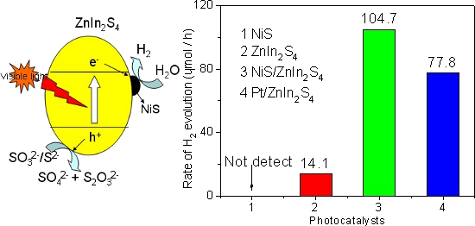
- successfully prepared via a facile two-step hydrothermal process. The as-prepared samples were characterized by X-ray diffraction (XRD), X-ray photoelectron spectroscopy (XPS), transmission electron microscopy (TEM) and high-resolution transmission electron microscopy (HRTEM). Their photocatalytic performance
- the poor separation efficiency and migration ability of the photo-excited charge carriers. A variety of effects have been made to enhance the photocatalytic performance of ZnIn2S4. For example, by size control on ZnIn2S4 [20], doping with transition metals [21] and incorporation of metal sulfides [22
- ] or RGO [23] into ZnIn2S4 nanostructures, the photocatalytic performance for hydrogen evolution over ZnIn2S4 have been enhanced to a certain degree. Studies on semiconductor-based photocatalysts revealed that the deposition of a suitable co-catalyst on the semiconductor photocatalysts can play


Structural, optical and photocatalytic properties of flower-like ZnO nanostructures prepared by a facile wet chemical method
Beilstein J. Nanotechnol. 2013, 4, 763–770, doi:10.3762/bjnano.4.87
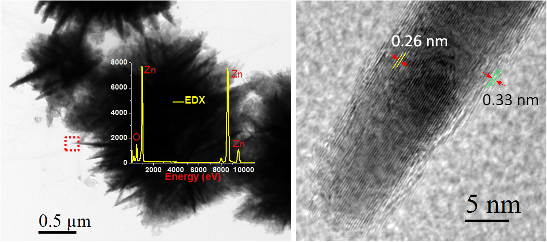
- optical properties were studied by UV–vis absorption spectroscopy in the wavelength range from 200 to 800 nm using a HITACHI U3900 spectrophotometer with doubly distilled water as the reference medium. Photocatalytic measurements The photocatalytic performance of the ZnO nanostructures were evaluated by


Mesoporous MgTa2O6 thin films with enhanced photocatalytic activity: On the interplay between crystallinity and mesostructure
Beilstein J. Nanotechnol. 2012, 3, 123–133, doi:10.3762/bjnano.3.13
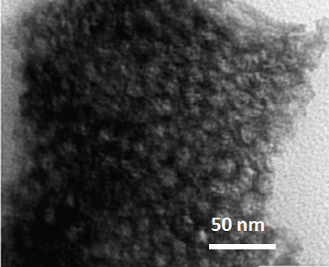
- impact of the ordered mesoporous structure on the photocatalytic activity is reinforced by the significantly higher photocatalytic performance of the mesoporous MgTa2O6 film compared to the nonporous one (Figure 9). In addition, the KLE-templated mesoporous MgTa2O6 film exhibited higher photocatalytic
- enhanced ability to assist photodegradation of rhodamine B in water under UV irradiation. The optimal photocatalytic activity, when evaluated in terms of turnover frequency, was about four times that of previously reported anatase films with ordered mesopores [15] and even exceeded the photocatalytic
- performance of such films doped with other elements (see, e.g., [30] and references therein). In conclusion, our work represents a show-case study regarding the interplay of crystallinity/crystallite size and mesoscopic order. The combination of photocatalytical characterization with comprehensive






Other Beilstein-Institut Open Science Activities



