


Search results
Search for "polymerization" in Full Text gives 224 result(s) in Beilstein Journal of Nanotechnology. Showing first 200.
High permittivity, breakdown strength, and energy storage density of polythiophene-encapsulated BaTiO3 nanoparticles
Beilstein J. Nanotechnol. 2020, 11, 1190–1197, doi:10.3762/bjnano.11.103
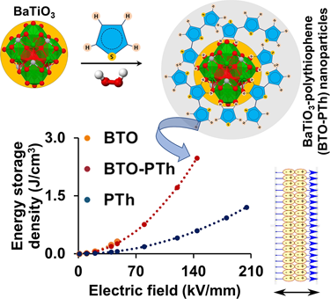
- . This article presents the synthesis of polythiophene-encapsulated BaTiO3 (BTO-PTh) nanoparticles via an in situ Cu(II)-catalyzed chemical oxidative polymerization of thiophene monomer on hydrothermally obtained tetragonal BTO nanocrystals. The formed core–shell-type BTO-PTh nanoparticles exhibit
- )-encapsulated BaTiO3 nanoparticles with a 9:1 mass ratio of BTO/PTh, and a facile method for the synthesis of inverted [11] core–shell-type BTO-PTh nanostructures, which yields a uniform PTh coating on the BTO surface. BTO-PTh nanoparticles are prepared by Cu(II)-catalyzed oxidative polymerization of PTh on the
- to dissolve and remove impurities and is dried in an oven at 120 °C. The obtained dried product is pulverized to get BTO nanoparticles. In the next step, core–shell BTO-PTh nanoparticles are synthesized via in situ chemical oxidative polymerization of thiophene on hydrothermally produced BTO




A 3D-polyphenylalanine network inside porous alumina: Synthesis and characterization of an inorganic–organic composite membrane
Beilstein J. Nanotechnol. 2020, 11, 938–951, doi:10.3762/bjnano.11.78
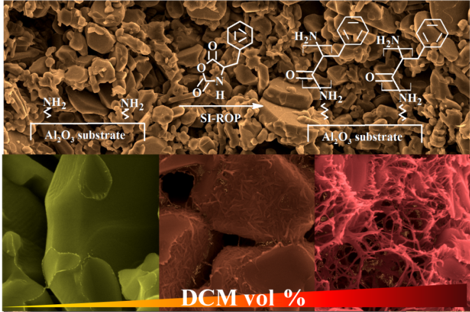
- Abstract Surface functionalization of porous materials allows for the introduction of additional functionality coupled with high mechanical stability of functionalized inner pores. Herein, we investigate the surface-initiated ring-opening polymerization (SI-ROP) of phenylalanine-N-carboxyanhydride (PA-NCA
- ; polyphenylalanine; porous alumina membranes; surface-initiated ring-opening polymerization (SI-ROP); Introduction Porous materials with functional surfaces are a topic of immense interest in science and technology. The high surface area and high mechanical stability of such materials allows for applications in
- applications. The most common route to graft polypeptides on surfaces is the surface-initiated ring-opening polymerization (SI-ROP) of α-aminoacid-N-carboxyanhydrides (NCAs). Dense polypeptide films consisting of poly(γ-benzyl-ʟ-glutamate), polylysine or polyphenylalanine with thickness in the range between


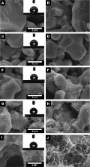


Silver-decorated gel-shell nanobeads: physicochemical characterization and evaluation of antibacterial properties
Beilstein J. Nanotechnol. 2020, 11, 620–630, doi:10.3762/bjnano.11.49
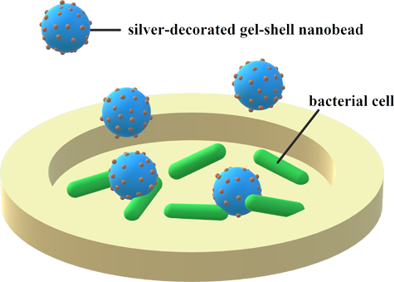
- charged sulfonic groups. The gel shell can be utilized for the accumulation of cationic species, e.g., the accumulation of a monomer followed by further polymerization [2][22]. Polystyrene-based gel-shell particles have been also used for the accumulation of silver ions followed by their reduction to


Multilayer capsules made of weak polyelectrolytes: a review on the preparation, functionalization and applications in drug delivery
Beilstein J. Nanotechnol. 2020, 11, 508–532, doi:10.3762/bjnano.11.41
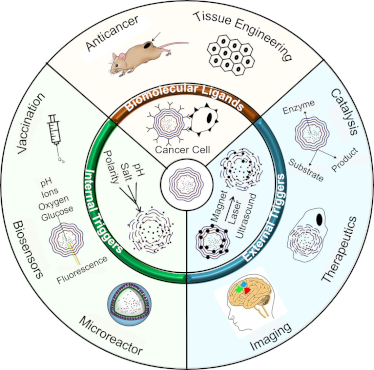
- components have been utilized to functionalize capsules in many ways. Hollow capsules of approximately 400 nm in size with negligible toxicity to cells were reported by the oxidative self-polymerization of dopamine solution onto silica particles [114]. The thickness of multilayer films is comparable to the
- LbL multistep technique and can be easily controlled by varying the polymerization time. This single-step technique resulted in a wall thickness similar to the LbL multistep technique and was applicable to other particles of different size and porosity. Because of the broad absorption and interesting


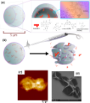

Poly(1-vinylimidazole) polyplexes as novel therapeutic gene carriers for lung cancer therapy
Beilstein J. Nanotechnol. 2020, 11, 354–369, doi:10.3762/bjnano.11.26
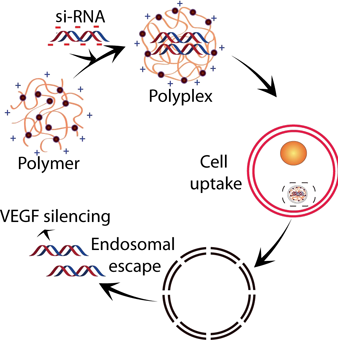
- was obtained via the polymerization of a 30% ethanolic solution of 1-vinylimidazole in the presence of 2% (by monomer mass) of 2,2-azobis(isobutyronitrile) in argon atmosphere at 60 °C by Prof. Annenkov’s group and the polymer fraction with a molecular weight of 35,000 Da was used for the study


Interactions at the cell membrane and pathways of internalization of nano-sized materials for nanomedicine
Beilstein J. Nanotechnol. 2020, 11, 338–353, doi:10.3762/bjnano.11.25
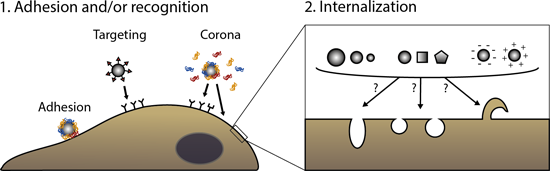
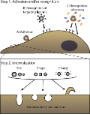
- results. As an example of this, cytochalasin D, an inhibitor of actin polymerization [211], has often been used to test the involvement of macropinocytosis and phagocytosis in the uptake of nanomaterials. However, actin has been shown to be important also for other mechanisms, including clathrin-mediated


Using gold nanoparticles to detect single-nucleotide polymorphisms: toward liquid biopsy
Beilstein J. Nanotechnol. 2020, 11, 263–284, doi:10.3762/bjnano.11.20
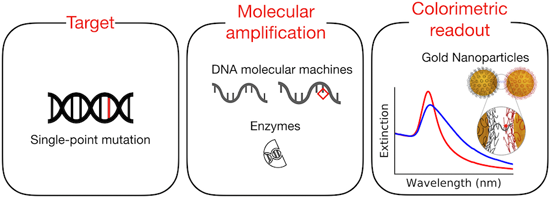
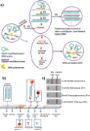
- to a conformational change, and stem separation (step 1), followed by polymerization reaction by the polymerase (step 2), forming biotin- and digoxin-attached duplex DNA (step 3). The process was further amplified through the next cycle (step 4). Overall, by the cyclic process, a large number of
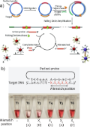
- luminescence was recovered after adding target DNA, causing a conformational transition from hairpin to linear DNA. This opening initiated polymerization of DNA (Figure 11C), which in turn displaced previously hybridized target DNA (Figure 11D). In such a design, one target DNA strand could open many hairpin
- DNA strands, increasing the fluoresce signal. An additional increase of the fluorescence signal was achieved by the action of NEase that nicked an extended double helix strand, allowing for a subsequent polymerization process and displacement of the DNA trigger. The authors estimated that the presence




Rational design of block copolymer self-assemblies in photodynamic therapy
Beilstein J. Nanotechnol. 2020, 11, 180–212, doi:10.3762/bjnano.11.15
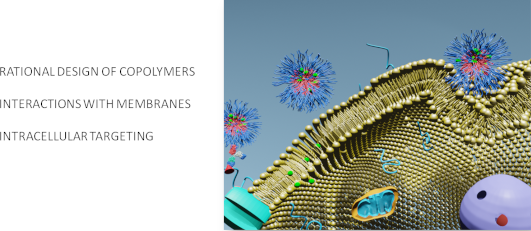
- parallel to this development of stealth nanocarriers, polymer chemistry had progressed strongly with the emergence of controlled polymerization. After the discovery of so-called living polymerization (polymerization without any transfer nor any termination reaction) in the 1950’s, the development of
- controlled radical polymerization in the 1990’s provided polymer scientists with a range of chemical tools to synthesize polymers and copolymers exhibiting various architectures, from block and gradient to grafted polymers [7]. Designing new nanocarriers exhibiting an external shell based on PEG and a core






Molecular architectonics of DNA for functional nanoarchitectures
Beilstein J. Nanotechnol. 2020, 11, 124–140, doi:10.3762/bjnano.11.11
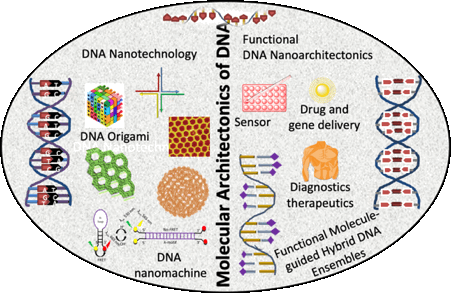
- from DNA block copolymer micelles [100]. The block copolymer micelles were synthesized through ring-opening polymerization, followed by the integration of DNA oligonucleotides in a postpolymerization modification process. The DNA acted as a polar head group, while the whole polymer system acted as a


Internalization mechanisms of cell-penetrating peptides
Beilstein J. Nanotechnol. 2020, 11, 101–123, doi:10.3762/bjnano.11.10
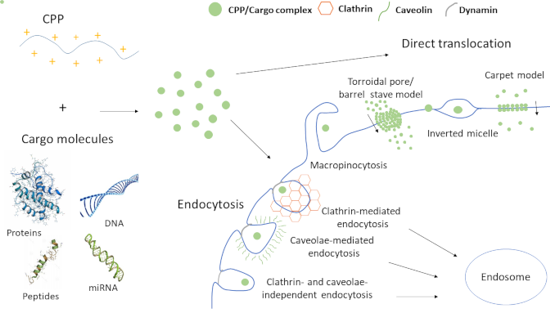
- in the initiation of macropinocytosis. After the interaction with extracellular ligands, multimerization of syndecans is thought to occur, which in turn induces actin polymerization. Arginine-rich peptides have shown to have this effect on the cellular signal transduction via syndecan multimerization
- . When it binds to the adaptor protein complex on the plasma membrane, clathrin rapidly assembles into icosahedral cages. It is thought that the polymerization of clathrin could be responsible for the membrane curvature. The actin cytoskeleton also contributes to membrane bending during CME. There is
- evidence that rapid actin polymerization occurs in the region surrounding the coat and the base of the growing membrane invagination. After vesicle scission, actin filaments depolymerize in seconds [79][82]. Vesicle scission is the process where the CCV is separated from the donor membrane. This step is


pH-Controlled fluorescence switching in water-dispersed polymer brushes grafted to modified boron nitride nanotubes for cellular imaging
Beilstein J. Nanotechnol. 2019, 10, 2428–2439, doi:10.3762/bjnano.10.233
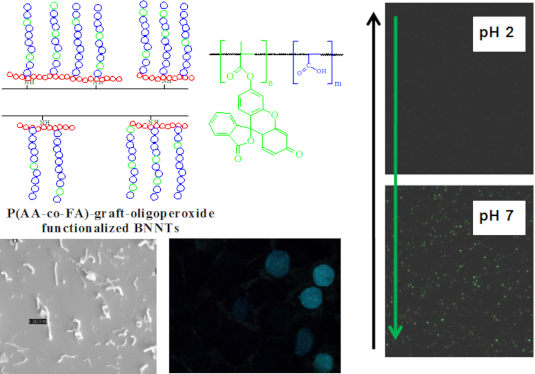
- polymer brushes via polymerization initiated from their surface [12][28]. In particular, BNNTs were covalently modified with hydrophobic polystyrene or poly(glycidyl methacrylate) polymer brushes [28]. The modified nanotubes demonstrated high dispersibility in a large number of organic solvents. In our
- irradiation [43], by mechanical milling [44] or with the iminoborane treatment [45]. The first step in covalent bonding of oligoperoxide to BNNT surfaces is to bind pyromellitic chloroanhydride moieties through available amino groups. The second step involves the grafting polymerization “from the surface” of
- -functionalized BNNTs were dried and used for grafting polymerization (2). Fabrication of P(AA-co-FA)-grafted brushes BNNTs with grafted oligoperoxide [(2) below in Scheme 1] were placed in a container with 0.1 М of AA and 0.01 M FA aqueous solution and sonicated for 20 min. Then, the mixture was heated under


Atomic force acoustic microscopy reveals the influence of substrate stiffness and topography on cell behavior
Beilstein J. Nanotechnol. 2019, 10, 2329–2337, doi:10.3762/bjnano.10.223
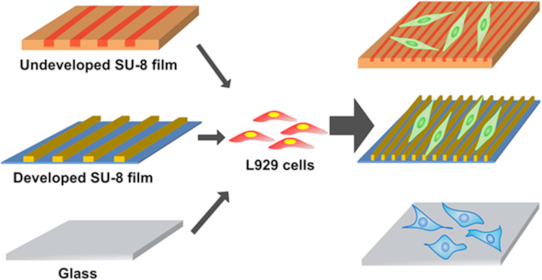
- surfaces. Even at unsuitable exposure doses at 200 and 500 μC·cm−2 which polymerization of the SU-8 resist cannot be completed, the pattern of stiffness is still enhanced. In the next step, after the SU-8 film had developed for 1 min, we chose the optimum exposure dose of 1000 μC∙cm−2 to obtain strip


Mannosylated brush copolymers based on poly(ethylene glycol) and poly(ε-caprolactone) as multivalent lectin-binding nanomaterials
Beilstein J. Nanotechnol. 2019, 10, 2192–2206, doi:10.3762/bjnano.10.212
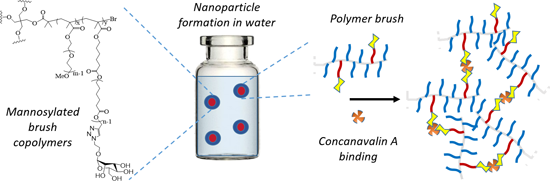
- polymerizations provided high control over molecular weight and functionality. A post-polymerization azide–alkyne cycloaddition allowed for the formation of glycopolymers with different mannose valencies (1, 2, 4, and 8). In aqueous media, these macromolecules formed nanoparticles that were able to bind lectins
- : atom transfer radical polymerization (ATRP); glycopolymer; lectin; poly(ethylene glycol); poly(ε-caprolactone); ring-opening polymerization (ROP); Introduction Carbohydrate–protein interactions are involved in many biological processes, including cell recognition and cell–cell adhesion. These
- functionality can influence the macromolecule bioactivity [8]. Controlled radical polymerization (CRP) techniques, such as atom transfer radical polymerization (ATRP), reversible addition fragmentation chain transfer (RAFT) polymerization, single-electron transfer living radical polymerization (SET-LRP) and



Synthesis of highly active ETS-10-based titanosilicate for heterogeneously catalyzed transesterification of triglycerides
Beilstein J. Nanotechnol. 2019, 10, 2039–2061, doi:10.3762/bjnano.10.200
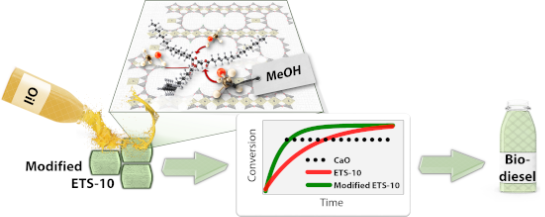
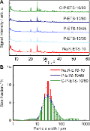
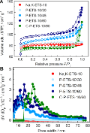
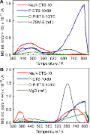
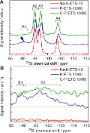
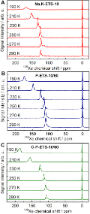
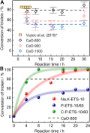
- polymerization to obtain –[–Ti–O–Ti–]–, –[–Si–O–Si–]–, and –[–Ti–O–Si–]– containing seeds. After aging, the 90 mL solution was divided into two 45 mL parts, each of which was placed into the 70 mL polytetrafluoroethylene (PTFE) reactor. The reactor was closed with a PTFE cap and inserted into a homemade








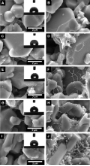
Nanostructured and oriented metal–organic framework films enabling extreme surface wetting properties
Beilstein J. Nanotechnol. 2019, 10, 1994–2003, doi:10.3762/bjnano.10.196
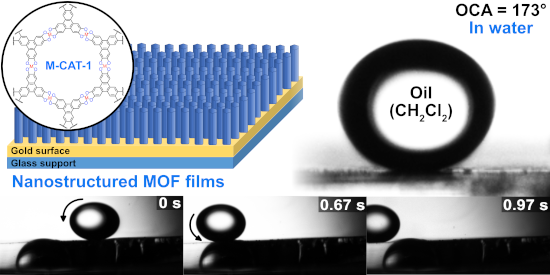
- example, sol–gel synthesis, electrochemical deposition, anodization, electrochemical polymerization, electrospinning, plasma treatment, chemical or hydrothermal methods, vapor deposition, layer-by-layer assembly or laser ablation [19][27][28][29][30][31][32][33][34][35][36][37][38][39]. However, the


Porous silver-coated pNIPAM-co-AAc hydrogel nanocapsules
Beilstein J. Nanotechnol. 2019, 10, 1973–1982, doi:10.3762/bjnano.10.194
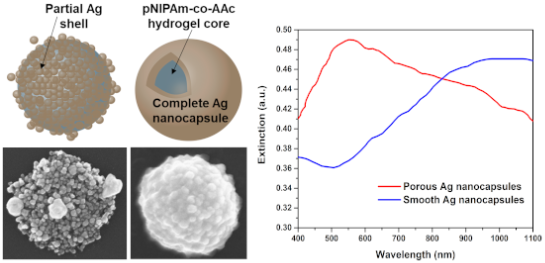
- describes the preparation and characterization of a new type of core–shell nanoparticle in which the structure consists of a hydrogel core encapsulated within a porous silver shell. The thermo-responsive hydrogel cores were prepared by surfactant-free emulsion polymerization of a selected mixture of N
- encapsulation of thermo-responsive pNIPAM-co-AAc hydrogel cores within porous silver nanoshells, and for the purpose of comparison, within a complete nonporous silver nanoshell. We adopt a simple surfactant-free emulsion polymerization (SFEP) technique to grow the initial hydrogel core templates [74][75][76
- -growth method and surfactant-free emulsion polymerization, we demonstrated a reliable synthesis of silver nanocapsules encapsulating thermo-responsive pNIPAM-co-AAc hydrogel cores. The 800 nm silver nanocapsules with a capsule thickness of ≈50 nm were characterized by SEM, TEM, and UV–vis spectroscopy


Processing nanoporous organic polymers in liquid amines
Beilstein J. Nanotechnol. 2019, 10, 1844–1850, doi:10.3762/bjnano.10.179
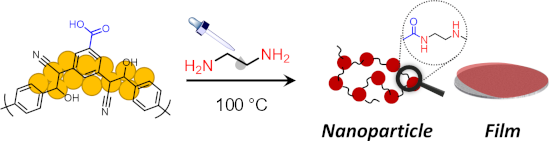
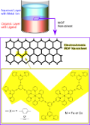
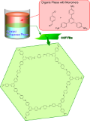
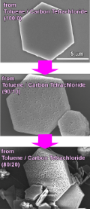
- polymerization [14], ionic complexation [15], and electrochemical polymerization [16], which require sophisticated techniques. There are only a few reports that show the processing of nanoporous polymers into the desired morphologies, for instance, the nanoporous polymers were directly processed into



Nanoarchitectonics meets cell surface engineering: shape recognition of human cells by halloysite-doped silica cell imprints
Beilstein J. Nanotechnol. 2019, 10, 1818–1825, doi:10.3762/bjnano.10.176
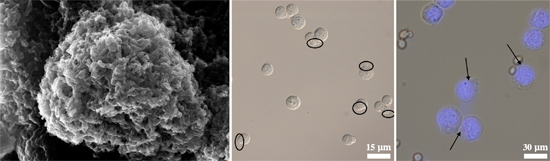
- radical polymerization [13]. The versatility of cell surface engineering methods has led to intersections between these routes yielding functionalised cells with multiple functionalities [14]. Relatively solid microbial cells with cell walls as well as soft mammal cells (including human cells) were used


Biocatalytic oligomerization-induced self-assembly of crystalline cellulose oligomers into nanoribbon networks assisted by organic solvents
Beilstein J. Nanotechnol. 2019, 10, 1778–1788, doi:10.3762/bjnano.10.173
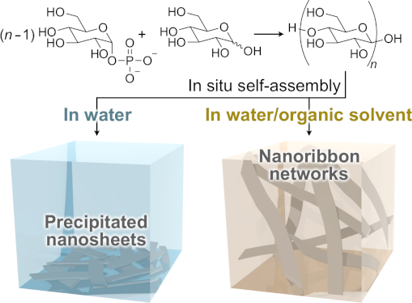
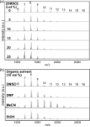
- to a reduction in the conversion of αG1P monomer into insoluble products (Figure 3), which was estimated from the insoluble product weights and the average degree of polymerization () values calculated from the matrix-assisted laser desorption/ionization time-of-flight (MALDI–TOF) mass spectra (see





Synthesis of nickel/gallium nanoalloys using a dual-source approach in 1-alkyl-3-methylimidazole ionic liquids
Beilstein J. Nanotechnol. 2019, 10, 1754–1767, doi:10.3762/bjnano.10.171
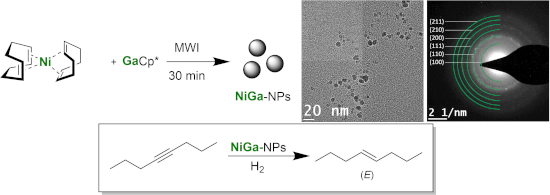
- hydrogenation reactions [6]. The catalytic activity of Ni nanoparticles can be used in hydrogenation reactions of alkenes [7], styrene [8], and quinoline [9]. Semihydrogenation reactions of alkynes lead to overhydrogenation [10] or polymerization in the case of acetylene to form oligomers [11]. One can
- induced by microwave heating [21] as well as through ligand hydrogenation [22]. The complete removal of alkynes from alkenes is very important in industrial olefin polymerization reactions. Examples are the separation of acetylene from ethylene [22][23] or of phenylacetylene from styrene [24]. The
- presence of small quantities of alkynes significantly reduces the efficiency of catalysts in the subsequent polymerization reactions. Semihydrogenation reactions are an interesting way not only to remove but also to convert the alkynes to the respective polymerizable alkenes [25]. The addition of main




Upcycling of polyurethane waste by mechanochemistry: synthesis of N-doped porous carbon materials for supercapacitor applications
Beilstein J. Nanotechnol. 2019, 10, 1618–1627, doi:10.3762/bjnano.10.157
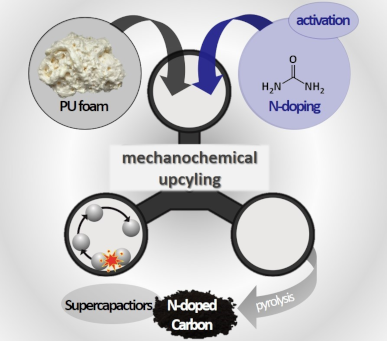
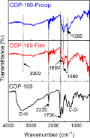
- 1). The IR spectra reveal that polymerization reactions occur during ball milling (Figure S1B, Supporting Information File 1). In particular, the condensation of urea with the urethane group is initiated during the milling process shown by the disappearing peaks of NH2 (3335 cm−1) and of C=O (1715


Materials nanoarchitectonics at two-dimensional liquid interfaces
Beilstein J. Nanotechnol. 2019, 10, 1559–1587, doi:10.3762/bjnano.10.153
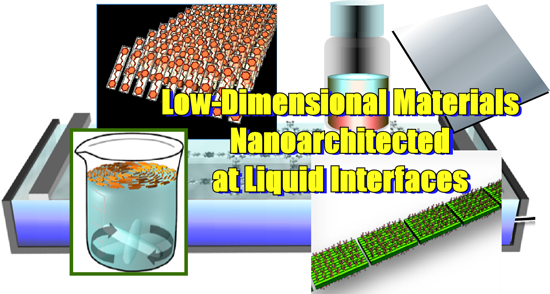
- nontrivial fundamental challenges, which are actively studied using the quantitative analysis of self-assembly processes proposed by Hiraoka [76] and the temporal control of supramolecular polymerization by Dhiman and George [77]. Shimizu summarized various parameters regulating the self-assembly of lipid
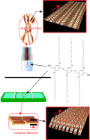
- materials for the fabrication of two-dimensionally structures. As depicted in Figure 8, Yonamine et al. successfully demonstrated the one-dimensional supramolecular polymerization of DNA origami pieces upon repeated mechanical compression and expansion of the two-dimensional air–water interface [219]. The
- indispensable for the formation of these supramolecular polymers of DNA origami. A simple application of high pressure is not enough to obtain supramolecular polymerization of DNA origami pieces at the air–water interface. 3 Interfacial nanoarchitectonics for MOF and COF Interfaces are attractive platforms to













Synthesis of P- and N-doped carbon catalysts for the oxygen reduction reaction via controlled phosphoric acid treatment of folic acid
Beilstein J. Nanotechnol. 2019, 10, 1497–1510, doi:10.3762/bjnano.10.148
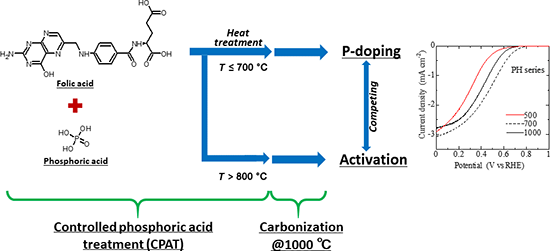
- ) (PFA). Two types of PFA-based carbon materials were prepared by using hydrochloric acid or phosphoric acid as polymerization initiators (non-doped and P-doped PFA carbon materials, respectively). Electrochemical methods The ORR activity of carbon materials was probed by rotating disk electrode





A biomimetic nanofluidic diode based on surface-modified polymeric carbon nitride nanotubes
Beilstein J. Nanotechnol. 2019, 10, 1316–1323, doi:10.3762/bjnano.10.130
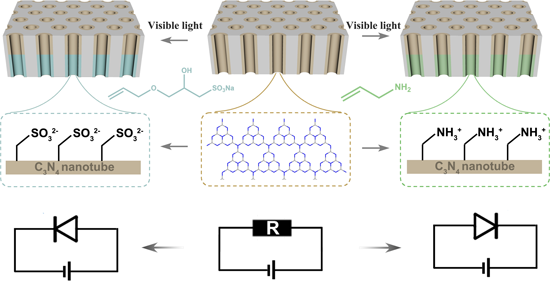
- systems and the generation of blue energy from salinity gradients [23][24]. We fabricated a carbon nitride nanotube membrane (CNNM) via an anodic aluminium oxide (AAO)-templated vapor deposition–polymerization process. Subsequently, the CNNMs were modified with 3-allyloxy-2-hydroxy-1-propanesulfonic acid
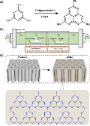
- nitrogen. Moreover, it meets our requirements to fabricate negatively charged carbon nitride nanotubes and a fully condensed conjugated structure that stabilizes the π-electron system for a high charge mobility [25]. The g-CN nanotube membrane (CNNM) was fabricated through vapor deposition–polymerization
- polymerization temperature was set to 773 K. Then, the evaporated precursor was deposited and polymerized in the porous AAO membrane, generating carbon nitride nanotubes. Figure 1c shows a schematic of a bare AAO membrane and the carbon nitride nanotubes formed in the AAO membrane. Similar to bulk g-CN


Glucose-derived carbon materials with tailored properties as electrocatalysts for the oxygen reduction reaction
Beilstein J. Nanotechnol. 2019, 10, 1089–1102, doi:10.3762/bjnano.10.109
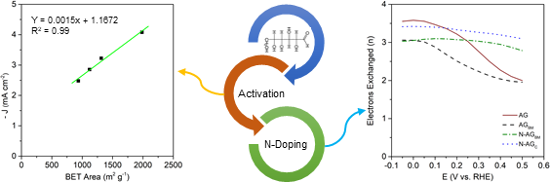
- in conventionally doped materials (N-AGC and N-CGC) is more pronounced than that of their doped ball-milled counterparts. This peak can be assigned to sp2-hybridized carbons in a triazine aromatic ring (N–C=N) [30], which may result from the polymerization of melamine during the subsequent thermal





