


Search results
Search for "resolution" in Full Text gives 1325 result(s) in Beilstein Journal of Nanotechnology. Showing first 200.
Tendency in tip polarity changes in non-contact atomic force microscopy imaging on a fluorite surface
Beilstein J. Nanotechnol. 2025, 16, 944–950, doi:10.3762/bjnano.16.72
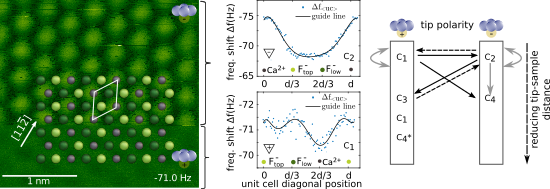
- . Keywords: atomic resolution imaging; calcium fluoride surface; interaction force; non-contact atomic force microscopy (NC-AFM); tip change; Introduction Non-contact atomic force microscopy (NC-AFM) [1] is a surface science tool that has been used to atomically resolve surfaces of semiconductor and
- insulator materials in real space with unprecedented spatial resolution [2][3][4][5][6]. Besides high-resolution imaging of molecular structures [7], NC-AFM has demonstrated its ability to identify sublattices of atomic surfaces [8][9][10]. In these studies, the knowledge of the tip’s atomic structure plays


Synthesis of biowaste-derived carbon-dot-mediated silver nanoparticles and the evaluation of electrochemical properties for supercapacitor electrodes
Beilstein J. Nanotechnol. 2025, 16, 933–943, doi:10.3762/bjnano.16.71
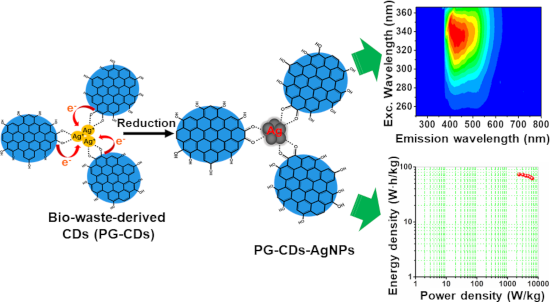
- energies of 285 and 368 eV, respectively. The high-resolution individual elemental XPS spectra of C 1s and Ag 3d are exhibited in Figure 2c–d. As shown in Figure 2d, the C 1s spectrum of the PG-CDs-AgNPs composite exhibited four primary peaks at binding energies of 282.9, 285.3, 287.1, and 288.5 eV. These


Structural and magnetic properties of microwave-synthesized reduced graphene oxide/VO2/Fe2O3 nanocomposite
Beilstein J. Nanotechnol. 2025, 16, 921–932, doi:10.3762/bjnano.16.70
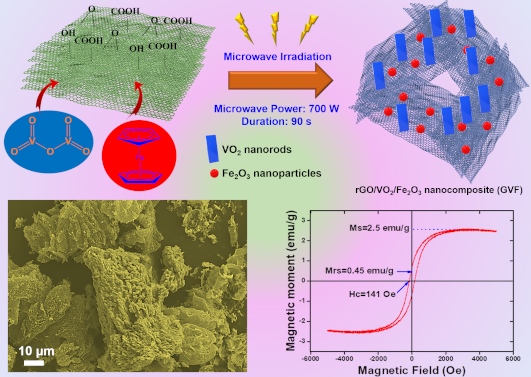
- and 6.50 mA using an Al Kα. The morphologies and elemental analyses of rGO and the NCs were analyzed through scanning electron microscopy (SEM, Hitachi, S-4800). The structural analysis of these fabricated NCs was examined using high-resolution transmission electron microscopy (HRTEM, FEI Tecnai G2
- element (derived from rGO). The data thus obtained was in coherence with the reported results from XRD and EDX analysis. Additionally, the high-resolution XPS spectrum of V 2p designates two major peaks at 516.5 and 523.3 eV, which can be ascribed to the V 2p3/2 and V 2p1/2, respectively (Figure 7b) [40
- ]. On the other hand, the high-resolution XPS spectrum of Fe 2p reveals two XPS peaks centered at ≈710.8 and ≈724.5 eV, which correspond to Fe 2p3/2 and Fe 2p1/2 levels, respectively (Figure 7c). It is noteworthy to mention that the weak satellite peak at ≈719.5 eV indicates the formation of iron oxide



Focused ion beam-induced platinum deposition with a low-temperature cesium ion source
Beilstein J. Nanotechnol. 2025, 16, 910–920, doi:10.3762/bjnano.16.69
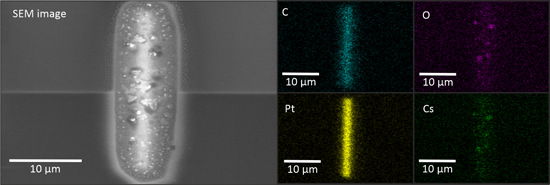
- . Compared to a standard Ga+ FIB, the Cs+ FIB can produce images with higher resolution and a larger depth of focus. Furthermore, the material contrast is greater in images acquired with Cs+ compared to images acquired with Ga+. For milling applications, Cs+ can deliver more evenly etched pattern floors than


Heat-induced transformation of nickel-coated polycrystalline diamond film studied in situ by XPS and NEXAFS
Beilstein J. Nanotechnol. 2025, 16, 887–898, doi:10.3762/bjnano.16.67
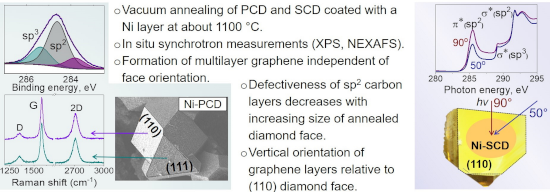
- process occurring at the interface between diamond and Ni nanoparticles was revealed using high-resolution transmission electron microscopy (HRTEM) [19][24]. During annealing, Ni nanoparticles etch the diamond surface, resulting in the formation of a narrow interdiffusion zone. The carbon atoms released
- . Element mapping analysis based on energy-dispersive X-ray (EDX) spectroscopy revealed a uniform distribution of nickel particles in the top layers of all diamond faces after annealing (Supporting Information File 1, Figure S4). The low resolution of the EDX instrument used did not allow the detection of


Insights into the electronic and atomic structures of cerium oxide-based ultrathin films and nanostructures using high-brilliance light sources
Beilstein J. Nanotechnol. 2025, 16, 860–871, doi:10.3762/bjnano.16.65

- applications, examining the application of high-brilliance light sources on model systems such as supported thin films and epitaxial nanostructures. We review selected studies exploiting the high energy resolution and sensitivity of synchrotron radiation-based X-ray photoelectron spectroscopy and X-ray
- sensitivity, atomic selectivity, spatial and energy resolution, synchrotron radiation-based techniques, which utilize high-brilliance photon beams, have enabled refined characterization of the electronic, structural, and morphological properties of these materials, as well as the modifications they undergo
- under operating conditions. Furthermore, free-electron lasers (FELs), with orders-of-magnitude higher peak brilliance than synchrotrons, have made it possible to achieve temporal resolution of the order of a few tens of femtoseconds, facilitating an ultrafast, element-sensitive characterization of the


Facile one-step radio frequency magnetron sputtering of Ni/NiO on stainless steel for an efficient electrode for hydrogen evolution reaction
Beilstein J. Nanotechnol. 2025, 16, 837–846, doi:10.3762/bjnano.16.63
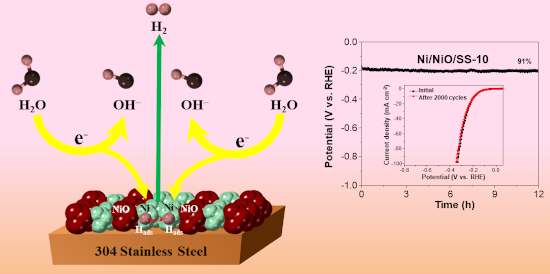
- attributed to a satellite peak. The presence of Ni3+ can be ascribed to the formation of NiOOH species originating from water adsorption on the surface of NiO. The high-resolution O 1s spectrum can be deconvoluted into three peaks, namely, O–Ni2+ (528.9 eV), O–Ni3+ (530.5 eV), and O–H (531.4 eV) [39]. To
- mapping of the Ni/NiO/SS-10 sample. (a) Survey XPS spectrum of Ni/NiO/SS-10. High-resolution XPS spectra of (b) Ni 2p3/2 and (c) O 1s. (a) Polarization curves of SS, Ni/NiO/SS-5, Ni/NiO/SS-10, Ni/NiO/SS-15, and Ni/NiO/SS-20 electrodes. (b) Corresponding Tafel slopes of electrodes. (c) Nyquist plots of
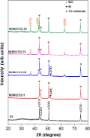


Synthesis and magnetic transitions of rare-earth-free Fe–Mn–Ni–Si-based compositionally complex alloys at bulk and nanoscale
Beilstein J. Nanotechnol. 2025, 16, 823–836, doi:10.3762/bjnano.16.62
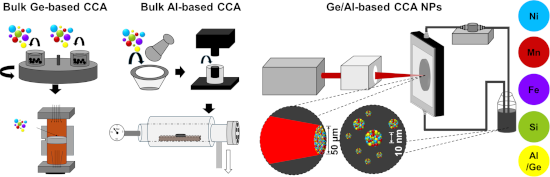
- from the Al-based CCA target. High-resolution TEM images and diffractograms of PLAL-generated CCA NPs. (a) Ge-based CCA NP and (b) Al-based CCA NP. (a) ZFC-FC temperature-dependent magnetization (M–T curve) of the bulk Ge-based CCA. (b) Field-dependent magnetization curve at 5 and 300 K for the Ge


Supramolecular hydration structure of graphene-based hydrogels: density functional theory, green chemistry and interface application
Beilstein J. Nanotechnol. 2025, 16, 806–822, doi:10.3762/bjnano.16.61
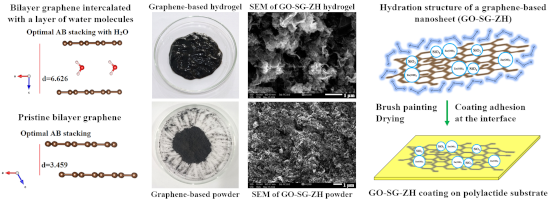
- characteristics of the GO-SG-ZH hydrogel were recorded and analyzed during drying processes in the moisture analyzer (MX-50, resolution of 0.01%). Figure 5a describes the moisture curves during the drying process at 70, 85, and 100 °C, corresponding to the drying times of 170, 100, and 70 min, respectively
- GO nanosheets are visualized. In Figure 8d–f, SEM provided high-resolution images of the GO-SG-ZH/PLA film. The brush-coated layer of the GO-SG-ZH nanocomposite was not completely uniform since rough coating morphology was observed on the substrate surface. Two-dimensional graphene-based sheets


Morphology and properties of pyrite nanoparticles obtained by pulsed laser ablation in liquid and thin films for photodetection
Beilstein J. Nanotechnol. 2025, 16, 785–805, doi:10.3762/bjnano.16.60
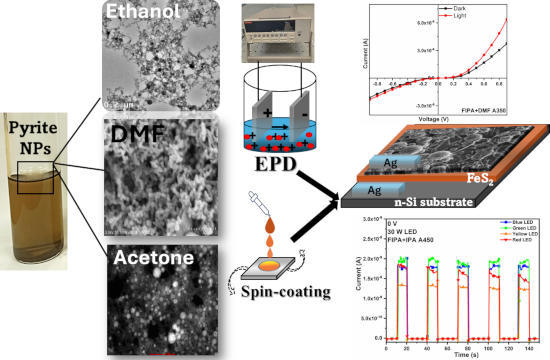
- temperatures and amounts of sulfur. Characterization The morphological analyses of pyrite NPs were recorded using the FEI Titan G2 80–300 for TEM, high-angle annular dark-field scanning transmission electron microscopy (HAADF-STEM), high-resolution TEM (HRTEM) and selected area electron diffraction (SAED). The
- all the samples, the peak position corresponding to the adventitious carbon value was fixed at 284.6 eV. A Shirley-type background baseline was used, and the Gaussian–Lorentzian sum function was applied for peak fitting. The high-resolution spectra of Fe 2p and S 2p after soft surface etching using
- exact binding energy values detected for Fe and S identified from high resolution spectra of Fe 2p and S 2p are given in Supporting Information File 1, Table S2. Optical properties of NPs and thin films Supporting Information File 1, Figure S2a shows the UV–vis spectra of FeS2 nanoparticles in different






Changes of structural, magnetic and spectroscopic properties of microencapsulated iron sucrose nanoparticles in saline
Beilstein J. Nanotechnol. 2025, 16, 762–784, doi:10.3762/bjnano.16.59
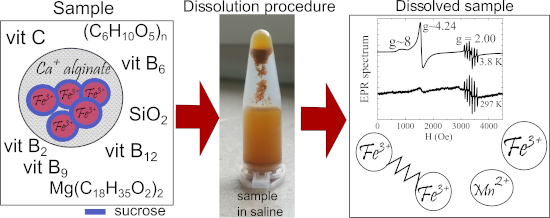
- microcapsules. The resolution of the SEM technique is insufficient to recognize iron sucrose nanoparticles. Therefore, it is impossible to determine whether calcium alginate uniformly covers all iron sucrose nanoparticles or if some nanoparticles are on the microcapsule surface. Furthermore, it remains unclear
- nm, cores, while the thickness of the shell seems constant ≈10 nm. The sucrose shell is homogenous; thus the individual cores appear to be well separated from each other. In Figure 3c, the high-resolution transmission electron microscopy (HRTEM) image presents a single crystalline nanoparticle. The
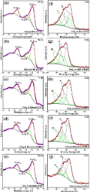
- contamination from physiological saline, which was also proved by the XRD results. In Figure 11, for all the distinguished states, the high-resolution XPS measurements were performed, the results of which will be further analyzed. Figure 12 presents the spectra for FS0, while the results obtained for FST, due




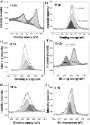

Thickness dependent oxidation in CrCl3: a scanning X-ray photoemission and Kelvin probe microscopies study
Beilstein J. Nanotechnol. 2025, 16, 749–761, doi:10.3762/bjnano.16.58
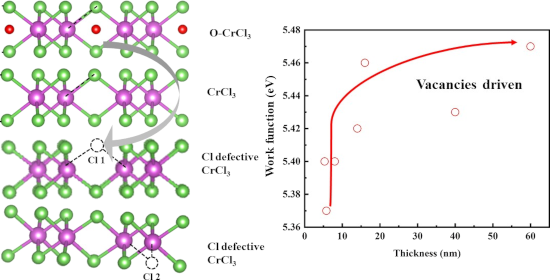
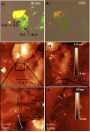
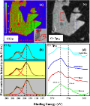
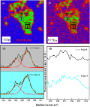
- particular technological interest, even more in the case of chromium trihalides (CrX3, X = Cl, Br, and I), whose longer lifetime under ambient conditions is particularly intriguing. By using synchrotron-based scanning photoelectron microscopy with a resolution of 0.1 μm and Kelvin probe force microscopy, we
- [2][11][8][10], focusing on thin layered flakes and the role of the layer thicknesses obtained by spectro- and scanning microscopy with a lateral resolution of a few tens of nanometers. The interaction with the supporting substrate is a crucial factor [3][12] regarding the properties of the flakes
- showed that oxygen adsorption on cleaved surfaces facilitates the formation of a stable structure with charge transfer signatures, as identified by high-resolution photoemission spectroscopy [8]. It remains unclear whether similar effects occur in exfoliated thin flakes. Like in other materials, the





Nanostructured materials characterized by scanning photoelectron spectromicroscopy
Beilstein J. Nanotechnol. 2025, 16, 700–710, doi:10.3762/bjnano.16.54
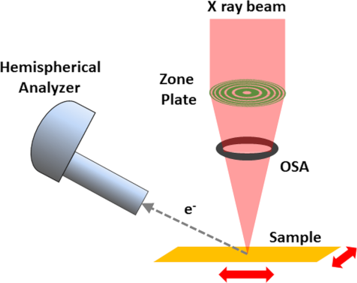
- current and future applications. Due to their nature resulting in diffused heterogeneous structures (chemical and electronic composition typically organized in phases or building blocks) characterizing these materials needs state of the art technologies which combine nanometer spatial resolution
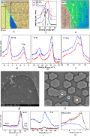
- , environmental reliability, and operando capabilities. Scanning photoelectron spectromicroscopy (SPEM) is one of the characterization tools that combine high spectral resolution X-ray photoelectron spectroscopy with submicron spatial resolution. In particular, the SPEM equipment hosted at the ESCA microscopy
- four decades, several important upgrades have spread the original ability of XPS of chemical analysis to include, for instance, band mapping through angle resolved measurements (ARPES), spin detection, and imaging or spectromicroscopy at a nanoscale spatial resolution [9][10]. It is worth noting that


High-temperature epitaxial growth of tantalum nitride thin films on MgO: structural evolution and potential for SQUID applications
Beilstein J. Nanotechnol. 2025, 16, 690–699, doi:10.3762/bjnano.16.53
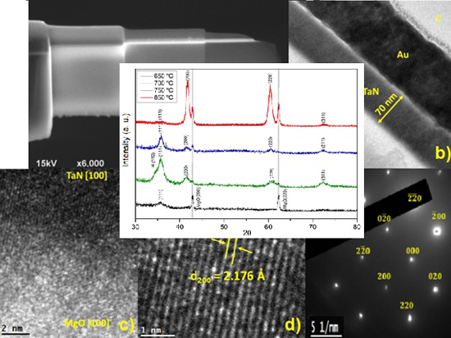
- undergo during the ablation process. Figure 1 presents the deconvolution of high-resolution XPS peaks for Ta 4f, shown both before (Figure 1a,b) and after (Figure 1c,d) heating the substrate. The peaks were fitted using Gaussian functions. The relative atomic concentrations of Ta and N were calculated


The impact of tris(pentafluorophenyl)borane hole transport layer doping on interfacial charge extraction and recombination
Beilstein J. Nanotechnol. 2025, 16, 678–689, doi:10.3762/bjnano.16.52
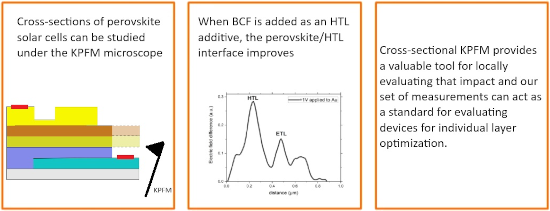
- scanning electron microscopy (SEM) and atomic force microscopy (AFM) images (See Supporting Information File 1, Section 4). The lateral resolution for both AFM and SEM measurements is a few nanometers. The AFM channel that exhibited the clearest contrast between the layers was the amplitude error signal
- mobile iodide defects that have diffused towards the hole extracting interface. On the contrary, the devices that incorporated BCF do not exhibit such shift, which suggests the successful passivation of iodide defects by the Lewis acid. We note that the spatial resolution of cross-sectional KPFM is


Colloidal few layered graphene–tannic acid preserves the biocompatibility of periodontal ligament cells
Beilstein J. Nanotechnol. 2025, 16, 664–677, doi:10.3762/bjnano.16.51
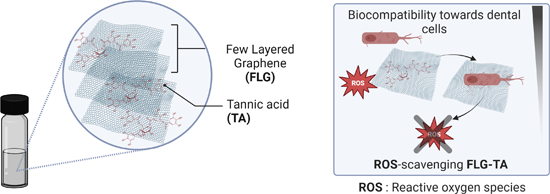
- , rising from 0.17 in graphite to 0.45 in the FLG–TA material. In addition, the high-resolution C 1s and O 1s spectra of the FLG–TA composite show the presence of carbonyl, ether, and hydroxy groups (Figure 2C,D). The percentage of those moieties in the FLG–TA material increases significantly with respect
- settle for 24 h. Physicochemical characterizations SEM images were obtained using a high-resolution scanning electron microscope (JEOL JSM 5600, France) operating at 10 kV with a working distance of 10 mm. FLG sheets were individually dispersed in water, and a few drops of the resulting solution were
- electron analyzer and a dual-anode source (Mg/Al). Samples were mounted on holders using conductive double-sided carbon adhesive tapes. XPS measurements utilized the monochromatic Al Kα line at 1486.6 eV. An initial survey scan identified elements present in each sample, followed by high-resolution scans





Nanoscale capacitance spectroscopy based on multifrequency electrostatic force microscopy
Beilstein J. Nanotechnol. 2025, 16, 637–651, doi:10.3762/bjnano.16.49

- method for nanoscale capacitance characterization at arbitrary frequencies above the second cantilever resonance. Besides a high spatial resolution, the key advantage of the multifrequency approach of MFH-EFM is that it measures the second-order capacitance gradient at almost arbitrary frequencies
- difference (CPD) [18]. Its exceptional spatial resolution, ranging from sub-micrometer [24][26] to atomic scales [27][28], makes AFM a powerful tool for nanoscale analysis. Scanning probe-based capacitance mapping methods can be divided into two categories: Methods measuring the tip–sample capacitance
- ][56][57][58][59][60][61][62][63][64][65][66][67][68][69][70][71][72][73]. Compared to optical ellipsometry or reflectance spectroscopy, SCM and SCFM can map surface properties such as film thickness [35][39] and dielectric constants [35][74], with superior spatial resolution. However, in particular




A formulation containing Cymbopogon flexuosus essential oil: improvement of biochemical parameters and oxidative stress in diabetic rats
Beilstein J. Nanotechnol. 2025, 16, 617–636, doi:10.3762/bjnano.16.48
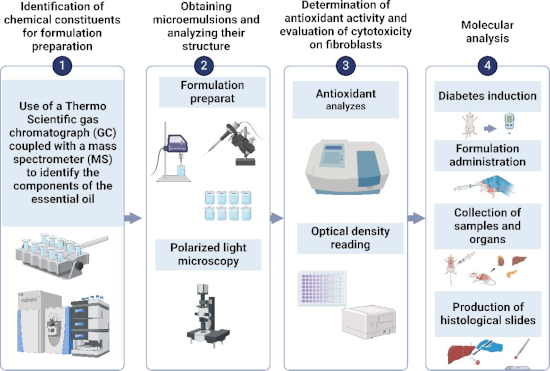
- /dark cycle, providing 300 lux of light. They had free access to specific rodent food (Labina®) and water ad libitum and were kept in suitable conditions for 30 days of the experiment, respecting the guidelines of CONCEA – National Council for the Control of Animal Experimentation (Normative Resolution




Focused ion and electron beams for synthesis and characterization of nanomaterials
Beilstein J. Nanotechnol. 2025, 16, 613–616, doi:10.3762/bjnano.16.47

- unrivaled spatial resolution and 3D capabilities, focused ion and electron beams technologies face challenges in reproducibility and scalability, hindering their commercial applications. Hence, these techniques require better understanding of the atomistic mechanisms involving ions, electrons, adsorbates

Retrieval of B1 phase from high-pressure B2 phase for CdO nanoparticles by electronic excitations in CdxZn1−xO composite thin films
Beilstein J. Nanotechnol. 2025, 16, 551–560, doi:10.3762/bjnano.16.43

- film prior to further irradiation. The characterization of the thin films was performed using X-ray diffraction (XRD) on a Bruker high-resolution X-ray diffractometer, employing a Cu Kα beam over a 2θ range of 30–50°. Raman spectroscopic measurements were conducted at room temperature with a SENTERRA


Functionalized gold nanoflowers on carbon screen-printed electrodes: an electrochemical platform for biosensing hemagglutinin protein of influenza A H1N1 virus
Beilstein J. Nanotechnol. 2025, 16, 540–550, doi:10.3762/bjnano.16.42
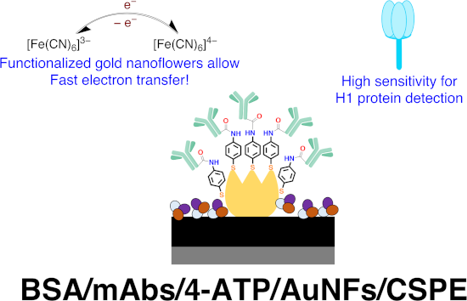
- generate measurable signals that reflect the concentration of the analyte [7]. Among different types of biosensors, electrochemical biosensors are particularly advantageous, since they can be built from low-cost components, designed to be compact and portable, while preserving high resolution, accuracy


Electron beam-based direct writing of nanostructures using a palladium β-ketoesterate complex
Beilstein J. Nanotechnol. 2025, 16, 530–539, doi:10.3762/bjnano.16.41
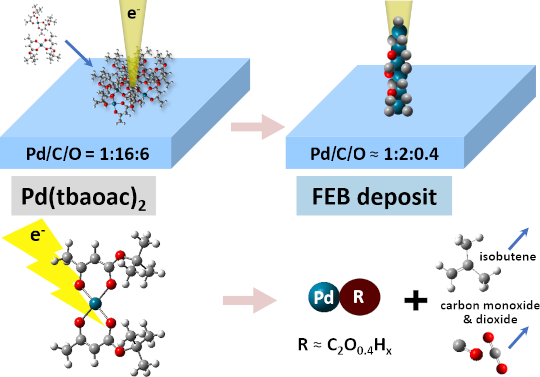
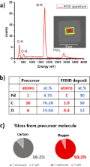
- effective dwell time with a 600 nm FWHM of the electron beam), and 2000 cycles. For deposit morphology observation, a high-resolution Hitachi S4800 FESEM was used. The chemical composition of the deposits was confirmed through energy-dispersive X-ray spectroscopy (EDX) using a silicon drift detector from
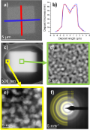
- prepared on an ultrathin carbon support film spanning a lacey carbon membrane (Figure 2c). The deposit appears smeared because of drift caused by charging effects during the deposition process. High-resolution STEM imaging (Figure 2d,e) revealed a granular nanostructure with nanograins of around 2 nm in
- profiles along vertical and horizontal directions. (c) STEM image of the FEB deposit on a carbon membrane. (d) High-resolution STEM image from the center of the deposit. (e) High-resolution STEM image from the edge of the deposit. (f) SAED pattern from the edge of the deposit. Enlarged version of the


Performance optimization of a microwave-coupled plasma-based ultralow-energy ECR ion source for silicon nanostructuring
Beilstein J. Nanotechnol. 2025, 16, 484–494, doi:10.3762/bjnano.16.37

- context of optimization of inert Ar-ion beam and subsequent ion-induced silicon nanopatterning. The TEM used for this work is a FEI Tecnai G2 12 Twin model, which operates at a voltage range of 20–120 kV. It employs a LaB6 emitter as the electron source and offers a line resolution of 0.2 nm with a


Quantification of lead through rod-shaped silver-doped zinc oxide nanoparticles using an electrochemical approach
Beilstein J. Nanotechnol. 2025, 16, 422–434, doi:10.3762/bjnano.16.33
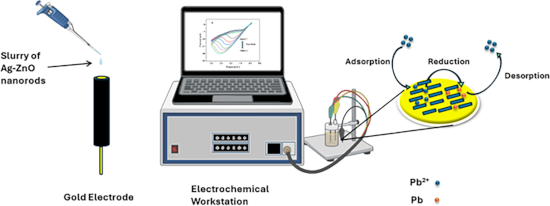
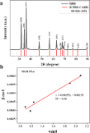
- 90°. The elemental compositions were analyzed using EDS and XPS (Model PHI 5000 Versaprobe III). The chemical states were assessed using FTIR spectroscopy with a Perkin Elmer spectrometer model. The spectrum data was acquired between the frequency range of 450 to 4000 cm−1 (resolution of 0.5 cm−1


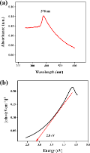


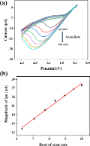
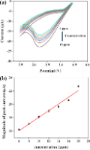

Size control of nanoparticles synthesized by pulsed laser ablation in liquids using donut-shaped beams
Beilstein J. Nanotechnol. 2025, 16, 407–417, doi:10.3762/bjnano.16.31
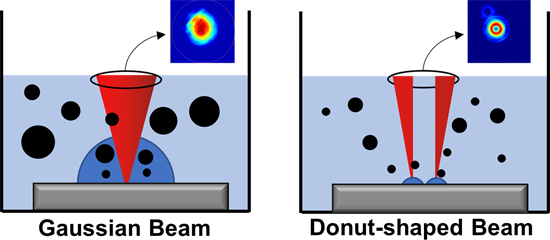
- this pioneering study, further investigation with higher temporal and spatial resolution are warranted. Keywords: beam shaping; cavitation bubble; donut beam; gold nanoparticles; high-entropy alloy nanoparticles; nanoparticle size analysis; yttrium oxide nanoparticles; Introduction The demand for





