Search results
Search for "response" in Full Text gives 1009 result(s) in Beilstein Journal of Nanotechnology. Showing first 200.
Acrocomia aculeata oil-loaded nanoemulsion: development, anti-inflammatory properties, and cytotoxicity evaluation
Beilstein J. Nanotechnol. 2025, 16, 1277–1288, doi:10.3762/bjnano.16.93
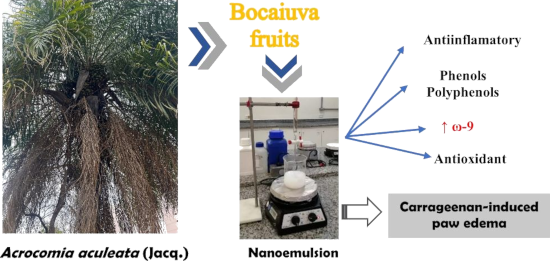
- predominantly [9]. These compounds have the potential to enhance immune response, reduce the risk of degenerative diseases, and contribute to anti-inflammatory activity [10][11], reducing the indiscriminate use of non-steroidal anti-inflammatory drugs (NSAIDs) and corticosteroids in the population [12][13
- counterpart [47]. The superior pharmacological response of the nanoemulsion may be attributed to the nanoscale droplet size, which increases the surface area-to-volume ratio, enhances solubility and stability, and promotes rapid absorption and cellular uptake [56]. The nanometric scale facilitates more
- -inflammatory response than diclofenac. At 6 h post-treatment, the nanoemulsion maintained a comparable effect to diclofenac at the same dose levels (Figure 6). These results further substantiate the enhanced efficacy of the oil in the form of nanoemulsion in modulating acute inflammation in rats. Conclusion


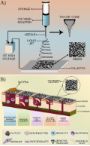
Better together: biomimetic nanomedicines for high performance tumor therapy
Beilstein J. Nanotechnol. 2025, 16, 1246–1276, doi:10.3762/bjnano.16.92
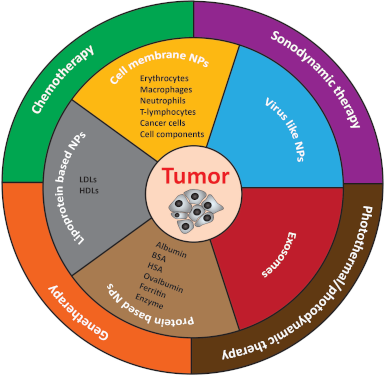
- combination of near-IR imaging and photodynamic therapy of hepatocellular carcinoma [37]. 1.1.4 T lymphocytes (T cells). T cells are highly specific and more actively identify foreign bodies, including cancer cells. In addition to directly killing cancer cells, T cells organize the immune response by
- recruiting other immune cells and also prevent the immune response from overreacting [38]. Therefore, T cells are the most extensively studied immune cells in cancer immunotherapy [39]. Kang et al. have developed T lymphocyte membrane-coated nanoparticles that can target cancer by T cell-associated proteins
- [41]. Wayteck et al. have prepared liposomes that can hitchhike on cells to the tumor site and get separated to perform their cytotoxic activity [42]. 1.1.5 Cancer cells. Cancer cells establish their own mechanism to escape immune response [43]. They are tightly bound by surface proteins to hinder the






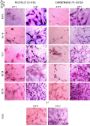
Chitosan nanocomposite containing rotenoids: an alternative bioinsecticidal approach for the management of Aedes aegypti
Beilstein J. Nanotechnol. 2025, 16, 1197–1208, doi:10.3762/bjnano.16.88
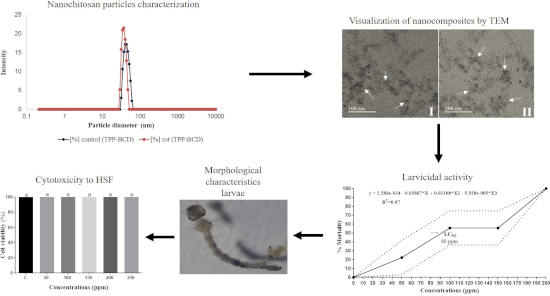
- and PM disruption [33]. Notably, from 100 ppm onwards, larvae exhibited melanized nodular structures interpreted as pseudotumors (Figure 6, white arrow head), a typical outcome of the activation of the phenoloxidase cascade. This immune response is frequently triggered by gut damage, epithelial



Electronic and optical properties of chloropicrin adsorbed ZnS nanotubes: first principle analysis
Beilstein J. Nanotechnol. 2025, 16, 1184–1196, doi:10.3762/bjnano.16.87
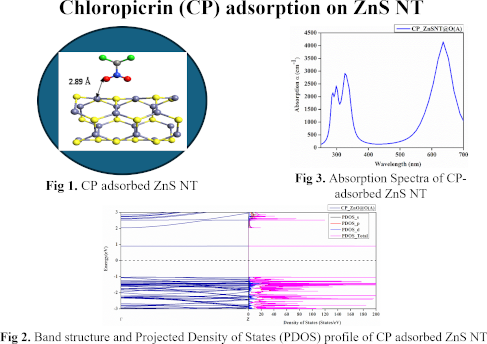
- hours of exposure, with studies reporting that 99% of individuals exposed to CP experience ocular symptoms, including inflammation, corneal edema, tissue damage, and potential visual impairment [6][7][8]. Developing portable, sensitive, rapid-response, and reliable sensors for detecting chemical warfare
- . Semiconductor nanomaterials such as graphene, B12N12, fullerene C60, carbon nanotubes, WO₃, ZnO, ZnS, ZnSe, ZnTe, SnO₂, TiO₂, MoS₂, and NiO have been widely employed in gas sensor applications due to their superior selectivity, sensitivity, and response characteristics [20][21][22][23][24][25][26][27][28][29
- humidity sensing performance compared to that of ZnO/ZnS nanorod arrays and ZnO nanorod arrays, with enhanced response, faster recovery, good linearity, and reliable reproducibility across a wide range of relative humidity conditions at room temperature. Giri et al. [48] demonstrated that phase-selective


Mechanical stability of individual bacterial cells under different osmotic pressure conditions: a nanoindentation study of Pseudomonas aeruginosa
Beilstein J. Nanotechnol. 2025, 16, 1171–1183, doi:10.3762/bjnano.16.86
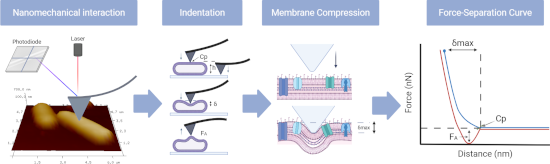
- , S.L.P. México 10.3762/bjnano.16.86 Abstract Nanomechanical maps to test the mechanical response of the outer envelope of Pseudomonas aeruginosa were obtained utilizing atomic force microscopy in force–volume mode in the low range of loading forces when exposed to hypotonic (Milli-Q water), isotonic
- (PBS), and hypertonic (0.5 M NaCl) solutions. Imaging and mechanical testing showed that bacteria are highly resilient to deformation and can withstand repetitive indentations in the range of 500 pN. Analysis of force spectra revealed that although there are differences in the mechanical response
- membrane tension and rigidity are two intertwined physical parameters with a dynamic behavior dictated by the internal turgor pressure of the bacteria during swelling or plasmolysis. Therefore, understanding the dynamics of their mechanical response due to changes in external conditions or exposure to


Transfer function of an asymmetric superconducting Gauss neuron
Beilstein J. Nanotechnol. 2025, 16, 1160–1170, doi:10.3762/bjnano.16.85
- ] describe neuromorphic elements based on superconducting interferometers that emulate the signal response of biological neurons in various real-world scenarios. In [1][7][8][9][10][11][12][13][14][15], adiabatic neuromorphic interferometers were presented, whose energy consumption can be reduced to the
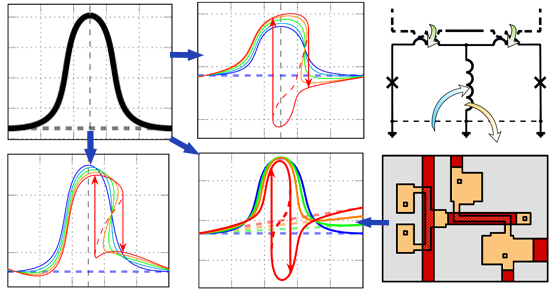
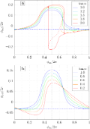
- Gauss Neuron and Results (C)). The black dashed line shows the secondary solution that does not provide a bell-shaped response. Transfer function of the Gauss neuron according to Equation 26–Equation 28 at different values of the Josephson asymmetry parameter tanα = IcA/IcB for tanα ≥ 1 (panel a) and



Piezoelectricity of hexagonal boron nitrides improves bone tissue generation as tested on osteoblasts
Beilstein J. Nanotechnol. 2025, 16, 1068–1081, doi:10.3762/bjnano.16.78
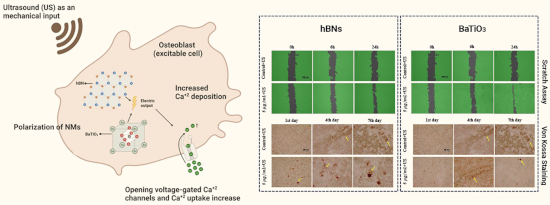
- stimulate electrically excitable cells without requiring an external power source, making them highly attractive for biomedical applications such as treating cardiac arrhythmias and promoting bone regeneration [17][18]. Mechanical stimulation, notably ultrasound (US), can induce a piezoelectric response in
- amplitude and PRFM phase images of hBNs. The amplitude image presents the strength of hBNs piezoelectric response, which was recorded as 2 mV. This acquired amplitude response measures the effective piezoelectric coefficient, which can be correlated with the polarization magnitude. The observed PRFM
- amplitude contrast showed that grains have different piezo responses. According to the applied electric field, bright areas correspond to regions with active piezoelectric response, while dark regions indicate piezoelectric activities in the opposite direction of the applied electric field on the surface


Soft materials nanoarchitectonics: liquid crystals, polymers, gels, biomaterials, and others
Beilstein J. Nanotechnol. 2025, 16, 1025–1067, doi:10.3762/bjnano.16.77
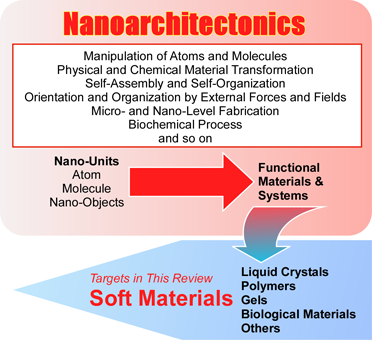
- , largely due to the slow thermodynamic equilibrium. In response, Li and colleagues published a research paper entitled “Nanoarchitectonics on Electrosynthesis and Assembly of Conjugated Metallopolymers." In this method, they achieved nanoarchitectonics of end-on conjugated metallopolymers through surface
- on/off response of the fabricated structures is length-dependent. For example, the switching current under light illumination increases with increasing molecular length and monolayer thickness. Furthermore, the technique has the potential to be automated, which would facilitate its use as an assembly
- display optical changes in response to mechanical stress, is expected to have a substantial influence across multiple fields. Mechanical forces applied to materials can be visualized using these tools, and they can also be employed to aid in detecting damage, thus preventing significant harm to materials






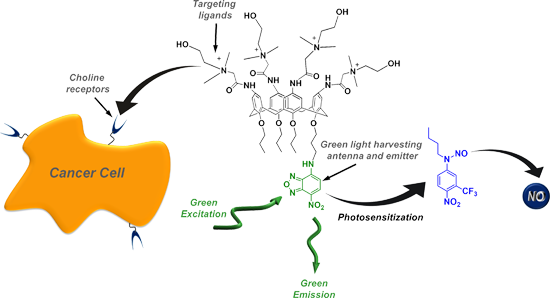
A calix[4]arene-based supramolecular nanoassembly targeting cancer cells and triggering the release of nitric oxide with green light
Beilstein J. Nanotechnol. 2025, 16, 1003–1013, doi:10.3762/bjnano.16.75
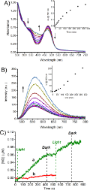
- healthy HuDe cells, a primary dermal human cell line, and on tumor MCF7 cells, a breast adenocarcinoma cell line, by MTS assay. Dose-response experiments were performed. Cells were incubated with increasing concentrations of 1 (0.25, 0.5, 1.0, 3.1, and 6.2 μM) for 24 h. As shown in Figure 2A,B, no
- amperometric detection with a World Precision Instrument, ISO-NO meter, equipped with a data acquisition system, and based on direct amperometric detection of NO with a short response time (<5 s) and sensitivity range from 1 nM to 20 mM. The analog signal was digitalized with a four-channel recording system


Time-resolved probing of laser-induced nanostructuring processes in liquids
Beilstein J. Nanotechnol. 2025, 16, 968–1002, doi:10.3762/bjnano.16.74
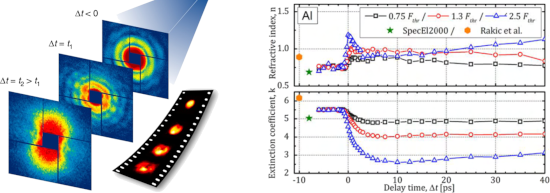
- laser-excited NPs. While the TAS technique provides insight into the electronic properties of the NPs, it is, however, unable to reveal the response of the surrounding liquid to the excitation. To this end, the time-resolved scattering techniques based on X-rays and electrons are more appropriate
- within a liquid environment. Potential applications of UED include investigating the non-thermal heating of water molecules surrounding NPs, which occurs on femtosecond to picosecond timescales, as well as examining the response of the water environment to heat transfer and the mechanical work performed
- understanding of the optical response of the SPR helped to clarify specifics of electron dynamics and coupling to the phonons and close boundaries. Valleé and Del Fatti et al. [117][118] and others [119][120] addressed size effects of electron dynamics as well structural relaxations by these model systems


Shape, membrane morphology, and morphodynamic response of metabolically active human mitochondria revealed by scanning ion conductance microscopy
Beilstein J. Nanotechnol. 2025, 16, 951–967, doi:10.3762/bjnano.16.73
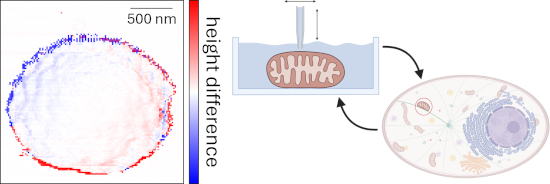
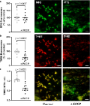
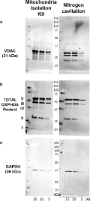
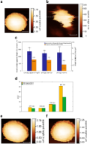
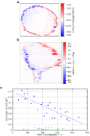
- SPM techniques, the time constant is sufficiently large to allow a morphodynamic response. Morphodynamic effects are particularly pronounced at the edges of mitochondria. When a mitochondrion adopts a more spherical shape through morphodynamic activity, the maximum apparent height increases slightly
- morphodynamic response of mitochondria. Figure 5c illustrates the correlation between the measured TEV and the time elapsed since sample preparation tP. The time elapsed since sample preparation begins after the thawing of the isolated mitochondria. The observed time dependence of TEV(tP) (blue markers) follows
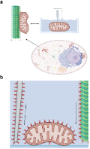
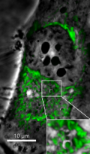
- , with response times of the order of seconds or less [6][41][50]. The binding process between microtubules and mitochondria is well known [40][41]. The precise mechanism by which mitochondria and microtubules locate each other remains unclear, but their interaction is too directional to be coincidental



Tendency in tip polarity changes in non-contact atomic force microscopy imaging on a fluorite surface
Beilstein J. Nanotechnol. 2025, 16, 944–950, doi:10.3762/bjnano.16.72
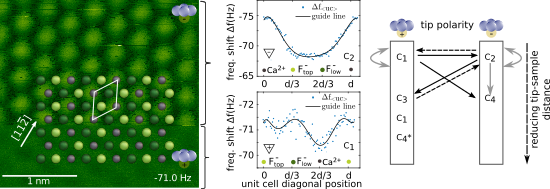
- foremost tip atom may rearrange to minimize the tip surface energy in response to increasing tip–sample interaction forces. Here, we perform an experimental investigation of tip changes during NC-AFM imaging of a CaF2(111) surface with non-functionalized tips at both room temperature (RT) and low


Synthesis of biowaste-derived carbon-dot-mediated silver nanoparticles and the evaluation of electrochemical properties for supercapacitor electrodes
Beilstein J. Nanotechnol. 2025, 16, 933–943, doi:10.3762/bjnano.16.71
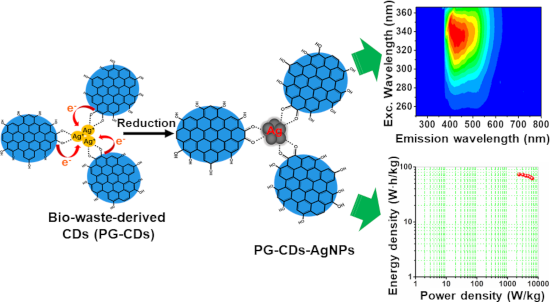
- activity, which can then optimize the capacitive response. Supporting Information File 1, section S1 contains the details of the electrochemical characterization techniques. Figure 5a depicts the CV plot of PG-CDs-AgNPs electrode at various scan rates (5–200 mV/s). It is evident through the PG-CDs-AgNPs CV


Ar+ implantation-induced tailoring of RF-sputtered ZnO films: structural, morphological, and optical properties
Beilstein J. Nanotechnol. 2025, 16, 872–886, doi:10.3762/bjnano.16.66
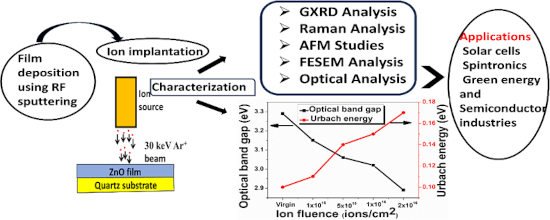
- response to a rise in ion fluence. The ion implantation-induced lattice disorder and lattice damage as functions of the ion fluence were studied in terms of displacement produced per atom in the host lattice calculated using TRIM simulations [19] and were correlated with changes in Urbach energy. The films
- with an increase in ion fluence, which is coherent with a decrease in particle size. This depicts the effect of the surface morphology on the optical response of implanted films [44]. The intensity of these absorption peaks rises with the increase in ion fluence, which points towards an increase in




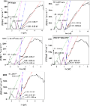


Facile one-step radio frequency magnetron sputtering of Ni/NiO on stainless steel for an efficient electrode for hydrogen evolution reaction
Beilstein J. Nanotechnol. 2025, 16, 837–846, doi:10.3762/bjnano.16.63
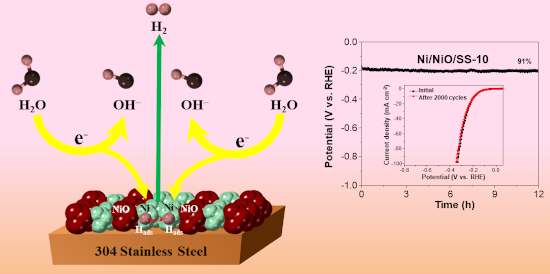
- long-term electrochemical stability of the Ni/NiO/SS-10 electrode via three methods, that is, chronopotentiometry, CV, and chronoamperometry. The potential–time response revealed that approximately 91% of the initial voltage is retained after 12 h of continuous hydrogen production at a cathodic current
- /NiO/SS-20 electrodes at an overpotential of 200 mV. (c) Potential–time response of the Ni/NiO/SS-10 electrode measured over a period of 12 h. Inset: Polarization curves recorded initially and after 2000 CV cycles of the Ni/NiO/SS-10 electrode. (d) Chronoamperometric curve of Ni/NiO/SS-10 electrode
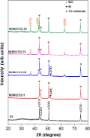


Synthesis and magnetic transitions of rare-earth-free Fe–Mn–Ni–Si-based compositionally complex alloys at bulk and nanoscale
Beilstein J. Nanotechnol. 2025, 16, 823–836, doi:10.3762/bjnano.16.62
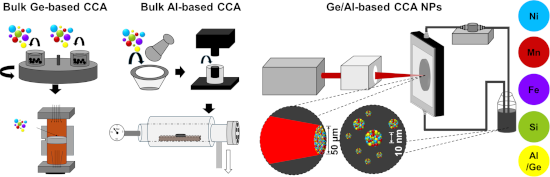
- ablation in liquid; rare-earth free; Introduction Magnetic phase transitions are characterized by changes in the material’s magnetic properties in response to varying conditions such as applied magnetic or electric fields, temperature, and/or pressure. In particular, the magnetic phase transition at the
- Ni55.2Mn18.6Ga26.2, a giant magnetocaloric response with a ΔS of −20.4 J·kg−1·K−1 at 317 K in a 5 T field can be achieved compared to Ni57.2Mn15.9Ga27.0 where a ΔS of just −2 J·kg−1·K−1 at 310 K was witnessed. Within the myriad of material systems exhibiting magnetic transitions, compositionally complex alloys (CCAs
- , regardless of the target preparation technique. Additionally Gatsa et al. [49] provide a realistic perspective that the CCA NPs production using a multibeam PLAL approach can be scaled up to ca. 3 g·h−1. The CCA NPs produced by PLAL have shown a promising response as catalysts for oxygen reduction reactions


Morphology and properties of pyrite nanoparticles obtained by pulsed laser ablation in liquid and thin films for photodetection
Beilstein J. Nanotechnol. 2025, 16, 785–805, doi:10.3762/bjnano.16.60
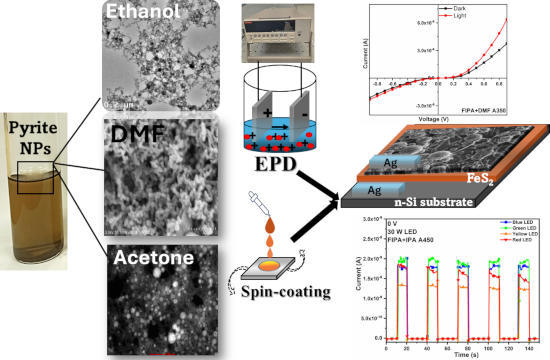
- number of benefits, including small size, light weight, affordable price, low power consumption, high photoresponsivity, quick response, and most importantly, it independently operates without an external power supply and relies on the built-in potential, which helps to save energy [33]. Moreover, self
- LEDs were 465, 520, 590, and 620 nm for blue, green, yellow, and red LEDs, respectively. In the self-powered mode, spikes and overshoots can be seen in the transient photocurrent response of FIPA+IPA A350 film (Figure 11b and Supporting Information File 1, Figure S6b), which are typically interpreted
- as indicators of surface recombination. Peter et al. have explained this mechanism in semiconductor photoanodes [63]. When light is turned on, an immediate photocurrent appears due to the rapid separation of electron–hole pairs in the space charge region. This initial response is followed by a decay






Serum heat inactivation diminishes ApoE-mediated uptake of D-Lin-MC3-DMA lipid nanoparticles
Beilstein J. Nanotechnol. 2025, 16, 740–748, doi:10.3762/bjnano.16.57
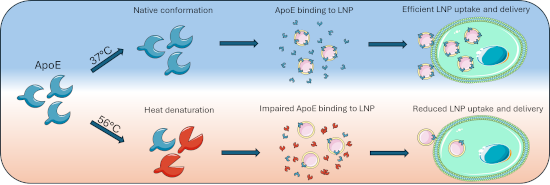
- Biosciences). Cell mean fluorescence intensity (MFI) was analyzed with FACS Diva software. ApoE dose response LNP uptake A day before the experiment, HMEC-1 were seeded in a gelatin coated 48-well plate (5 × 10⁴ cells/well) and allowed to adhere overnight. The next day, serum-free medium was supplemented with


Synthesis of a multicomponent cellulose-based adsorbent for tetracycline removal from aquaculture water
Beilstein J. Nanotechnol. 2025, 16, 728–739, doi:10.3762/bjnano.16.56
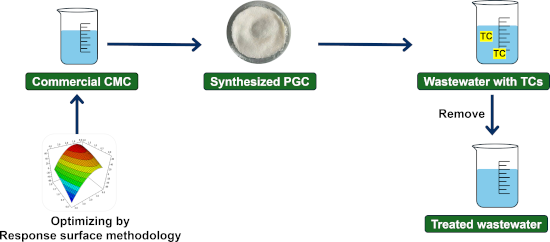
- -based multicomponent adsorbent material (PGC) synthesized from sodium carboxymethyl cellulose and investigated factors influencing its TC adsorption capacity. The synthesis process was optimized using parameters derived from the response surface methodology. The surface and structural properties of PGC
- effective adsorbent for the removal of average 70% TC antibiotic residues, particularly oxytetracycline, chlortetracycline, TC, and doxycycline. Keywords: adsorption; aquaculture water; removal efficiency; response surface methodology; tetracycline antibiotic; Introduction The aquaculture industry plays a
- ) and polyvinyl alcohol (PVA); and cationized with Ca2+ and Zn2+ for the removal of TC from aquaculture effluents. Our approach involves optimizing the material’s synthesis using the response surface methodology, and a wide range of characterization methods was performed to assess the surface


Nanostructured materials characterized by scanning photoelectron spectromicroscopy
Beilstein J. Nanotechnol. 2025, 16, 700–710, doi:10.3762/bjnano.16.54
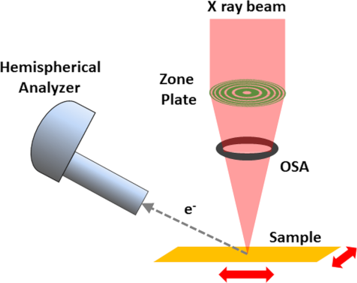
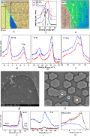
- spectroscopy can provide an elemental, chemical, and electronic mapping of sample surfaces in the pristine form or after/during their response to external stimuli such as temperature changes, electric and magnetic fields, and light and gas exposure. In the first example chemical heterogeneous layered


The impact of tris(pentafluorophenyl)borane hole transport layer doping on interfacial charge extraction and recombination
Beilstein J. Nanotechnol. 2025, 16, 678–689, doi:10.3762/bjnano.16.52
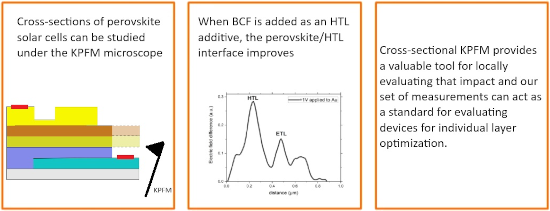
- for static KPFM, which allows us to evaluate the response of our cells under both applied voltages and under illumination. Kelvin probe force microscopy characterization with an applied voltage When charges get generated, they drift to the sides of the device to externally recombine, or in the case of


Colloidal few layered graphene–tannic acid preserves the biocompatibility of periodontal ligament cells
Beilstein J. Nanotechnol. 2025, 16, 664–677, doi:10.3762/bjnano.16.51
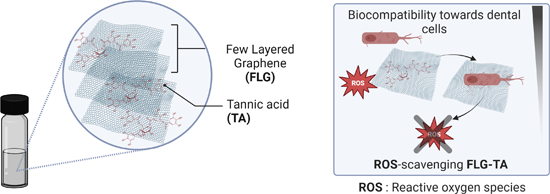
- . The cellular response on different graphene surfaces was previously studied, and it was demonstrated that substrate characteristics such as surface roughness, surface chemistry, and electronic properties can influence cell response [38]. The implications of these results are particularly significant




Nanoscale capacitance spectroscopy based on multifrequency electrostatic force microscopy
Beilstein J. Nanotechnol. 2025, 16, 637–651, doi:10.3762/bjnano.16.49

- frequency space. Single-pass second-harmonic EFM in the attractive regime has been used to detect the cantilever response at the second harmonic of the electrostatic force (2ω) [68][69][70][72] generated when Δωe spans the range from 8 kHz to 2 MHz [70]. SCFM in the megahertz regime has been implemented [70
- ][71] as well as a heterodyne-based EFM mode [59][72][73][78]. By using a low-frequency modulation of a high-frequency electrostatic drive, the response can be picked up either via a frequency shift or by an electrostatic response at one of the cantilever’s resonance frequencies. Thus, the dielectric
- response can be studied at almost arbitrary frequencies. Using this method, Gramse et al. have demonstrated broadband spectroscopy of dielectric layers in air [72] and water [59]. Building on this idea, we propose a novel, multifrequency AFM-based method for nanoscale capacitance characterization at




A formulation containing Cymbopogon flexuosus essential oil: improvement of biochemical parameters and oxidative stress in diabetic rats
Beilstein J. Nanotechnol. 2025, 16, 617–636, doi:10.3762/bjnano.16.48
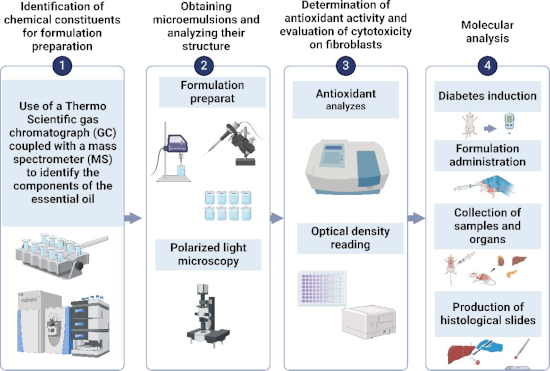
- prescribed in DM therapy, they can result in limited efficacy and cause various adverse reactions such as dyspepsia, abdominal pain, nausea, and lactic acidosis [3], which vary according to the hypoglycemic agent used and the patient’s individual response. As an alternative to conventional DM treatments
- cytoplasmic vesicles, indicating dysfunction in metabolization and impaired cell metabolism. This finding, associated with necrosis and inflammation, suggests an exacerbated cellular response to an aggressive agent, leading to structural collapse of the liver tissue. These histopathological changes indicate
- . The structural alteration observed, marked by the separation of cells and loss of cohesion between them, compromised the integrity of the pancreatic parenchyma, which may indicate dysfunction in enzyme production and secretion, as well as an exacerbated inflammatory response. In addition, cell




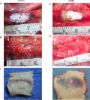
Polyurethane/silk fibroin-based electrospun membranes for wound healing and skin substitute applications
Beilstein J. Nanotechnol. 2025, 16, 591–612, doi:10.3762/bjnano.16.46
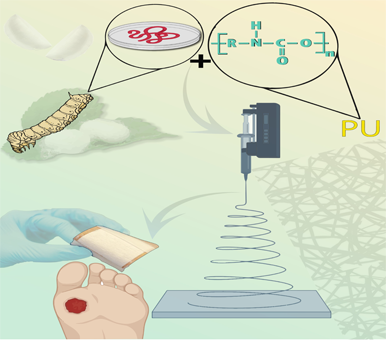
- response, is extensively investigated by addressing its molecular structure, composition, and medical uses. PU is a candidate for potential biomedical applications because of its strength, flexibility, biocompatibility, cell-adhesive properties, and high resistance to biodegradation. PU combined with silk
- remodeling of tissues or maturation [32]. Hemostasis After an injury, the first response is contraction blood vessels and coagulation of blood to reduce blood and fluid loss. Platelets play a key role in hemostasis function. Platelet receptors interact with ECM proteins, such as collagen, fibronectin, and
- wound from infection, and clears the debris [38]. Necrotic cells and injured tissue release signals that trigger the immune response. The resident immune cells such as Langerhans cells, mast cells, T cells, and macrophages respond to the injury-induced signals. Pro-inflammatory molecules, chemokines