


Search results
Search for "solar cells" in Full Text gives 274 result(s) in Beilstein Journal of Nanotechnology. Showing first 200.
Polyvinylpyrrolidone as additive for perovskite solar cells with water and isopropanol as solvents
Beilstein J. Nanotechnol. 2019, 10, 2374–2382, doi:10.3762/bjnano.10.228
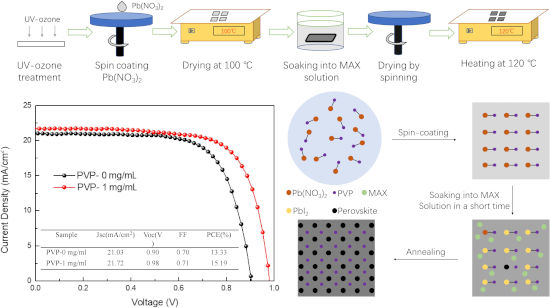
- and Technology Beijing, Beijing 100083, PR China Beijing Key Laboratory of Special Melting and Preparation of High-End Metal Materials, Beijing 100083, PR China 10.3762/bjnano.10.228 Abstract The recent years have witnessed a fast-paced development of perovskite solar cells (PSCs). Unfortunately, the
- 0.1 cm2. The PCE continued to be over 80% of the initial PCE after 60 days of storage. FInally, the introduced PVP-doped PSCs present a low-cost and low-toxicity way to commercialize perovskite solar cells. Keywords: additive; lead nitrate aqueous solution; low-toxicity process; perovskite solar
- photoanode and CH3NH3PbX3 (X = I, Br) as light absorbing material to derive perovskite dye-sensitized solar cells with conversion efficiencies of 3.81% (X = I) and 3.13% (X = Br). However, the corrosion of the perovskite material used in the electrolyte results in a poor stability of the devices [5]. In July




Nontoxic pyrite iron sulfide nanocrystals as second electron acceptor in PTB7:PC71BM-based organic photovoltaic cells
Beilstein J. Nanotechnol. 2019, 10, 2238–2250, doi:10.3762/bjnano.10.216
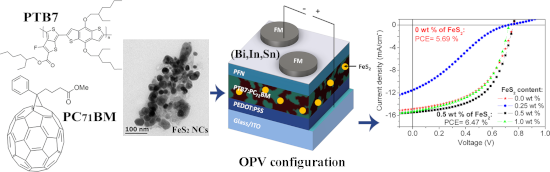
- ]. According to the analysis carried out by Wadia et al. [3], among 23 semiconducting materials, FeS2 is the best candidate for the development of large-scale solar cells at low cost (<2 × 10⁻⁶ ¢/W). Furthermore, FeS2 exhibits excellent optoelectronic properties such as a band gap of 0.8 to 1.38 eV [4][5][6][7
- electrodes in dye-sensitized solar cells (DSSCs) [9][12][13], as electron acceptors or donors in inorganic or hybrid solar cells [10][14][15][16][17] and as second electron acceptors in organic photovoltaic cells (OPVs) [18]. An iron pyrite thin film used as a counter electrode showed a conversion efficiency
- inside the CdS/CdTe inorganic heterojunction improved the conversion efficiency of the PV device by up to 8% [19]. Moreover, FeS2 has also been used in perovskite solar cells as a hole transport layer (HTL) to reduce the fabrication cost, reaching efficiencies of up to 11.2% [20]. On the other hand, OPVs


Improved adsorption and degradation performance by S-doping of (001)-TiO2
Beilstein J. Nanotechnol. 2019, 10, 2116–2127, doi:10.3762/bjnano.10.206
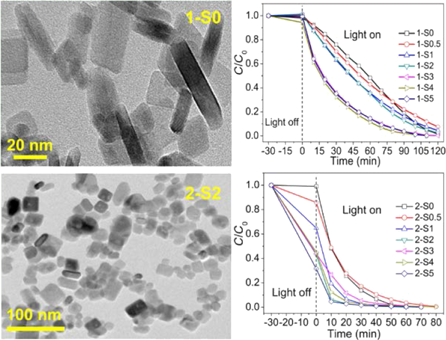
- pollutants, as well as in electrocatalysis, solar cells and self-cleaning applications. Its wide use is based on its physicochemical properties, abundance, nontoxicity, environment-friendliness and low cost [1][2][3][4][5][6][7]. The photocatalytic properties of anatase TiO2 crystals are anisotropic since





Green and scalable synthesis of nanocrystalline kuramite
Beilstein J. Nanotechnol. 2019, 10, 2073–2083, doi:10.3762/bjnano.10.202
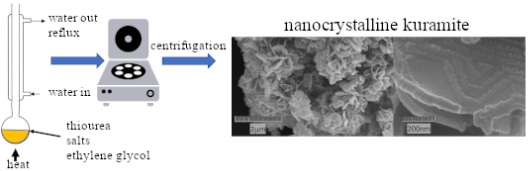
- Naturale, Sistema Museale di Ateneo dell’Università degli Studi di Firenze, Via La Pira 4, 50121 Firenze, Italy 10.3762/bjnano.10.202 Abstract The new generation of solar cells aims to overcome many of the issues created by silicon-based devices (e.g., decommissioning, flexibility and high-energy


Charge-transfer interactions between fullerenes and a mesoporous tetrathiafulvalene-based metal–organic framework
Beilstein J. Nanotechnol. 2019, 10, 1883–1893, doi:10.3762/bjnano.10.183
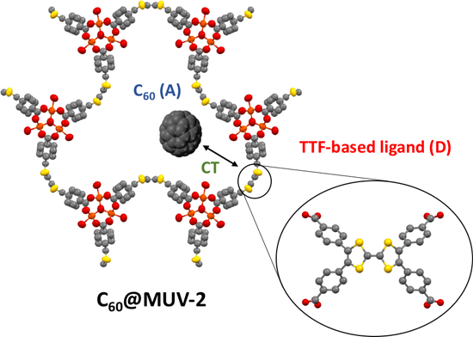
- , understanding the CT processes between the electron-acceptor C60 and the electron-donor molecules is fundamental in order to optimise photovoltaics and develop efficient solar cells [28]. The encapsulation of C60 in MOFs [29] has become a very interesting strategy for the purification of fullerenes [30][31][32





Novel hollow titanium dioxide nanospheres with antimicrobial activity against resistant bacteria
Beilstein J. Nanotechnol. 2019, 10, 1716–1725, doi:10.3762/bjnano.10.167
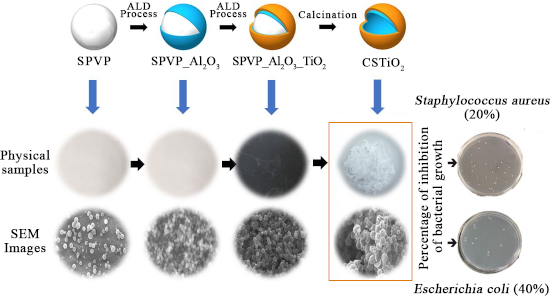
- their high stability, low cost, reusability, and high photocatalytic activity [6][7][8]. These excellent properties have been applied in many products such as foods, catalyst support, air purification, water disinfection, antibacterial, cosmetics and solar cells [9][10]. Photocatalytic TiO2 favors the


Kelvin probe force microscopy work function characterization of transition metal oxide crystals under ongoing reduction and oxidation
Beilstein J. Nanotechnol. 2019, 10, 1596–1607, doi:10.3762/bjnano.10.155
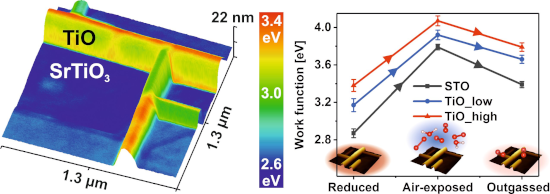
- superior for many cases in both fundamental research and applications, such as the identification of adsorption geometries of molecules on oxide surfaces [7], probing energetics of electron transfer within single molecules [8] and operation of prototypical electronic devices, such as perovskite solar cells


Materials nanoarchitectonics at two-dimensional liquid interfaces
Beilstein J. Nanotechnol. 2019, 10, 1559–1587, doi:10.3762/bjnano.10.153
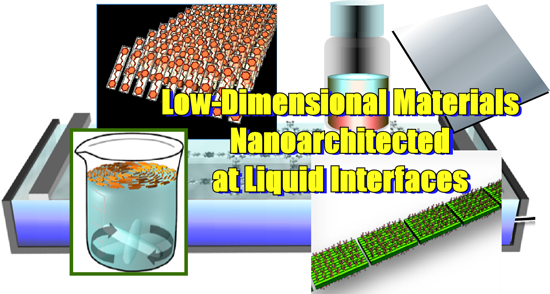
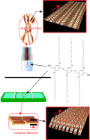
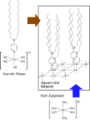
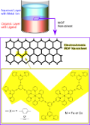
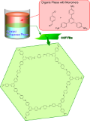
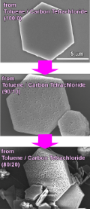
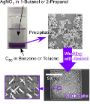
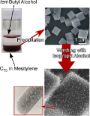
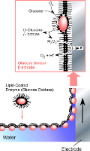
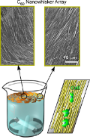
- nanosheets. At 90% carbon tetrachloride content, the average pore size became ca. 400 nm. These integrated two-dimensional structures would be nanoarchitectonics pieces for the fabrication of sensitive sensors, organic solar cells, and miniaturized organic superconductors. As a functional development of two













Rapid thermal annealing for high-quality ITO thin films deposited by radio-frequency magnetron sputtering
Beilstein J. Nanotechnol. 2019, 10, 1511–1522, doi:10.3762/bjnano.10.149
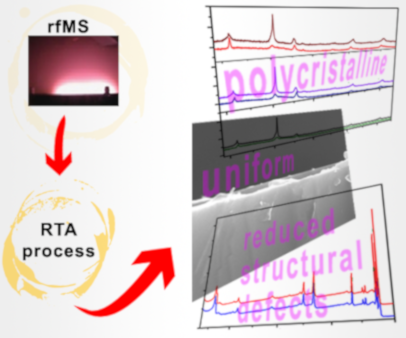
- treatment in an open atmosphere. Such films could be used to manufacture transparent contact electrodes for solar cells. Keywords: conductive transparent electrodes; indium tin oxide (ITO) films; optical properties; radio-frequency magnetron sputtering (rfMS); rapid thermal annealing (RTA); Introduction
- Thin oxide films, used as contact electrodes [1][2][3][4], are considered to be important components of photovoltaic cells [5][6]. As an electrode candidate for solar cells, an ITO film [7][8] must present excellent optical and electrical properties for increased energy generation. At this time, the
- goal is to obtain high-performance solar cells [6][9][10] but at a cost as low as possible. ITO is an attractive material because it exhibits excellent properties as a transparent conductive oxide (TCO) material that can be tuned during deposition in order to obtain materials for specific applications


Pure and mixed ordered monolayers of tetracyano-2,6-naphthoquinodimethane and hexathiapentacene on the Ag(100) surface
Beilstein J. Nanotechnol. 2019, 10, 1188–1199, doi:10.3762/bjnano.10.118
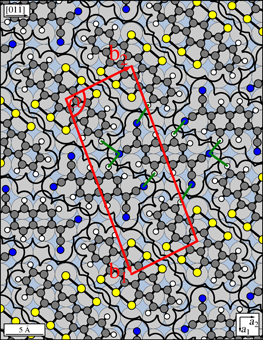
- have a “great potential for use in next-generation textile and wearable electronics” [22]. HTPEN was investigated as a material for organic solar cells [23], for which purpose it was combined with lead(II) phthalocyanine and pentacene. These heterostructures exhibit a greater range of photosensitivity


Photoactive nanoarchitectures based on clays incorporating TiO2 and ZnO nanoparticles
Beilstein J. Nanotechnol. 2019, 10, 1140–1156, doi:10.3762/bjnano.10.114
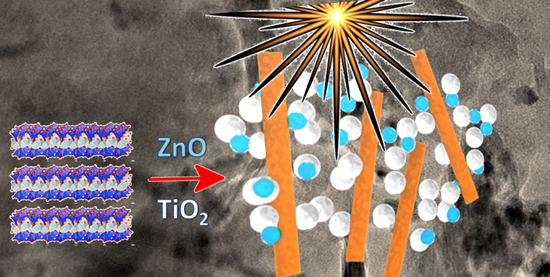
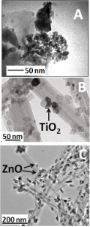
- for the incorporation of additional active species, e.g, NPs or organic and biological species, for the production of multifunctional nanoplatforms as components of sensing devices and solar cells. Schematic representation of the crystal structures of the following clay minerals: kaolinite (A



CuInSe2 quantum dots grown by molecular beam epitaxy on amorphous SiO2 surfaces
Beilstein J. Nanotechnol. 2019, 10, 1103–1111, doi:10.3762/bjnano.10.110
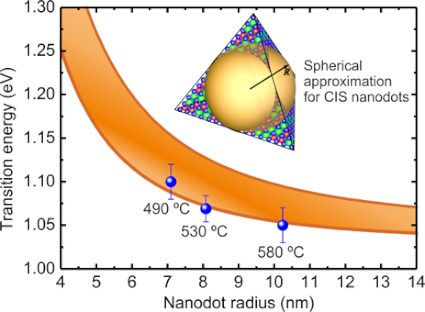
- , 20663 Casablanca, Morocco 10.3762/bjnano.10.110 Abstract The currently most efficient polycrystalline solar cells are based on the Cu(In,Ga)Se2 compound as a light absorption layer. However, in view of new concepts of nanostructured solar cells, CuInSe2 nanostructures are of high interest. In this work
- with the average size of the nanodots. Keywords: copper indium gallium selenide (CuInSe2); quantum dots; Introduction The chalcopyrite compound Cu(In,Ga)Se2 (CIGS) is used as the light absorber layer in thin film solar cells that typically consist of a glass substrate, a Mo back contact, the CIGS
- layer, and a CdS/i-ZnO/ZnO:Al front contact. The maximum power conversion efficiency achieved by this type of solar cells has recently achieved a world record of 23.35%, which outperforms all other multi-crystalline solar cells, including multi-crystalline silicon with 22.3% [1][2]. The CIGS layer in


Comparing a porphyrin- and a coumarin-based dye adsorbed on NiO(001)
Beilstein J. Nanotechnol. 2019, 10, 874–881, doi:10.3762/bjnano.10.88
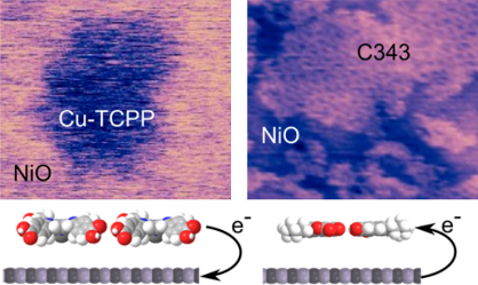
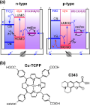
- technologies such as dye-sensitized solar cells. A key optimization parameter for such devices is the choice of the compounds in order to control the direction and the intensity of charge transfer across the interface. Here, the deposition of two different molecular dyes, porphyrin and coumarin, as single
- Kelvin probe force microscopy measurements. Keywords: coumarin; Kelvin probe force microscopy; metal oxide; molecular resolution; nickel oxide (NiO); non-contact atomic force microscopy; porphyrin; Introduction With regard to its use in dye-sensitized solar cells (DSSCs), the wide-bandgap n-type
- first step towards the design of tandem solar cells with two photoactive electrodes [17][18]. In p-type DSSCs, the charge transfer is in the opposite direction to that in n-type devices. Holes are injected from the highest occupied molecular orbital (HOMO) of the dye to the valence band (VB) of the



Renewable energy conversion using nano- and microstructured materials
Beilstein J. Nanotechnol. 2019, 10, 771–773, doi:10.3762/bjnano.10.76

- ; energy storage; light harvesting; renewable energy; solar cells; The imposing environmental and economic challenges due to climate change have become a major topic of discussion on the global political agenda. Effectively reducing greenhouse gases in the atmosphere and decreasing air pollution in
- scattering can be tailored to give rise to field enhancement, path-length enhancement and finally increased absorption. Nano- and microtextures in Si heterojunction solar cells are addressed from a theoretical point of view in [3], whereas [5] additionally presents an experimental verification of the
- benefits arising from core–shell nanowire arrays for Si heterojunction solar cells. Contacts with a high surface-to-volume ratio can clearly be seen. Particularly in photovoltaics, they may be prone to increased recombination losses. For other applications, such as water splitting, porous materials may
Ultrasonication-assisted synthesis of CsPbBr3 and Cs4PbBr6 perovskite nanocrystals and their reversible transformation
Beilstein J. Nanotechnol. 2019, 10, 666–676, doi:10.3762/bjnano.10.66
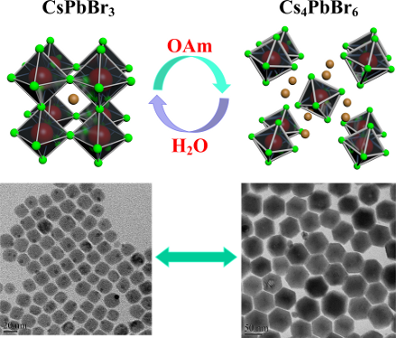
- ; ultrasonication; Introduction Metal halide perovskite nanocrystals (PNCs) are promising candidates for application in the fields of light-emitting diodes (LEDs) [1][2], high-efficiency solar cells [3], low-threshold lasers [4], and photodetectors [5]. Compared to traditional semiconductors, colloidal PNCs



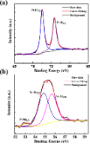
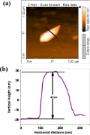
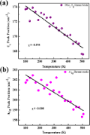
Temperature-dependent Raman spectroscopy and sensor applications of PtSe2 nanosheets synthesized by wet chemistry
Beilstein J. Nanotechnol. 2019, 10, 467–474, doi:10.3762/bjnano.10.46
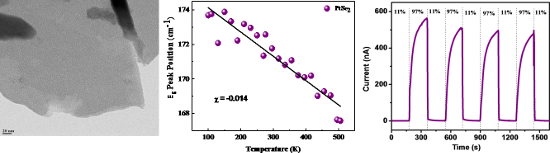
- due to its extraordinary optical, electrical, mechanical, magnetic and chemical properties [2][3][4][5]. Like graphene and its organic analogues [6], inorganic 2D metal dichalcogenides also exhibit outstanding performance in many applications including transistors, sensors, photodetectors, solar cells



Ultraviolet patterns of flowers revealed in polymer replica – caused by surface architecture
Beilstein J. Nanotechnol. 2019, 10, 459–466, doi:10.3762/bjnano.10.45
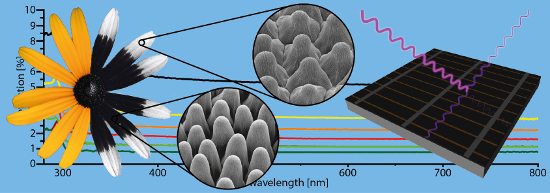
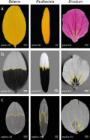
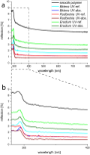
- , for solar cells with a low reflectivity and a low scattering angle, meaning that the light moves along a nearly straight path through the material [34][35]. For this reason the results of this study are interesting not only for a basic understanding of the occurrence of UV-patterns in plants, but they


Geometrical optimisation of core–shell nanowire arrays for enhanced absorption in thin crystalline silicon heterojunction solar cells
Beilstein J. Nanotechnol. 2019, 10, 322–331, doi:10.3762/bjnano.10.31
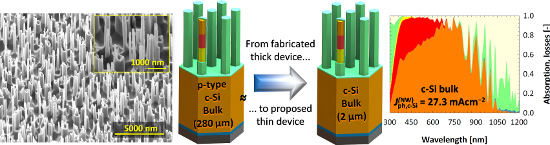
- Thin Film Electronic Laboratory (PV-Lab), Rue de la Maladière 71b, 2002 Neuchâtel, Switzerland 10.3762/bjnano.10.31 Abstract Background: Elongated nanostructures, such as nanowires, have attracted significant attention for application in silicon-based solar cells. The high aspect ratio and
- characteristic radial junction configuration can lead to higher device performance, by increasing light absorption and, at the same time, improving the collection efficiency of photo-generated charge carriers. This work investigates the performance of ultra-thin solar cells characterised by nanowire arrays on a
- dependence of absorption on the nanowire cross section, a weaker effect of the nanowire height and good resilience for angles of incidence of light up to 60°. Conclusion: The presence of a nanowire array increases the optical performance of ultra-thin crystalline silicon solar cells in a wide range of


Site-specific growth of oriented ZnO nanocrystal arrays
Beilstein J. Nanotechnol. 2019, 10, 274–280, doi:10.3762/bjnano.10.26
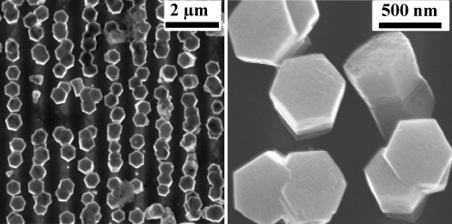
- collected on the substrate. However, in applications like solar cells based on core/shell ZnO nanocrystals, site-specific growth of the well-aligned nanocrystals is quite important. Therefore, the position-controlled oriented growth of ZnO NC array architectures is highly desirable for practical


Raman study of flash-lamp annealed aqueous Cu2ZnSnS4 nanocrystals
Beilstein J. Nanotechnol. 2019, 10, 222–227, doi:10.3762/bjnano.10.20
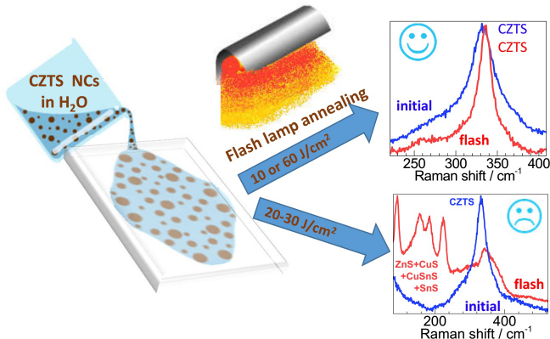
- field. Among them are kesterite Cu2ZnSnS4 (CZTS) and related compounds [1][2][3]. This class of compounds can be used in the promising technology of “printing” solar cells using inks based on CZTS nanocrystals (NCs) [4][5][6][7]. However, the structural complexity of these compounds results in numerous
- latter was proposed by the authors of [18] for processing CZTS in the production of solar cells. For colloidal CZTS NCs FLA was applied only in [19]. However, the NCs employed in the latter work were synthesized (using the protocol from [20]) at high temperatures around 340 °C and had a relatively large


Uniform Sb2S3 optical coatings by chemical spray method
Beilstein J. Nanotechnol. 2019, 10, 198–210, doi:10.3762/bjnano.10.18
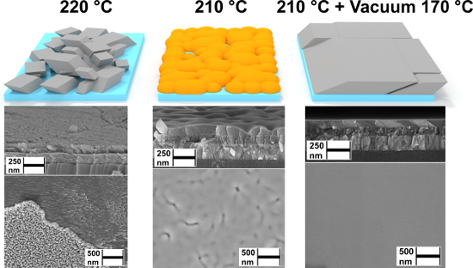
- environmentally benign material. As Sb and S are abundant elements in the Earth’s crust, enough raw materials can be supplied to manufacture large quantities of Sb2S3 in the long term. Sb2S3 can be applied as the inorganic absorber in solar cells due to its direct band gap of ≈1.7 eV [1][2]. Sb2S3, prepared by a
- chemical bath deposition (CBD) [3][4], spin coating [5], atomic layer deposition (ALD) [6] or chemical spray pyrolysis (CSP) [7] method, has been applied in extremely thin absorber (ETA) solar cells due to its excellent absorption coefficient in the visible light spectrum (1.8 × 105 cm−1 at 450 nm) [1][2
- (structured) window layer, Sb2S3 absorber layer, and hole transport material layer, and their respective interfaces, is a tremendous undertaking [4]. Attention has surged toward planar heterojunction Sb2S3 solar cells due to their simpler structure, less intricate production, and enhanced repeatability vs




Scanning probe microscopy for energy-related materials
Beilstein J. Nanotechnol. 2019, 10, 132–134, doi:10.3762/bjnano.10.12
- beyond the scope of solar cells. Katherine Atamanuk and co-workers impressively demonstrate that SPM methods can also be used to perform tomography [7]. They apply photoconducting scanning force microscopy for mapping the open-circuit voltage of cadmium telluride (CdTe) polycrystalline thin film solar
- cells. Tomography is achieved by gradually removing surface material during continuous high-load topographic imaging. For photovoltaic materials, the interface between materials accepting electrons or holes is of crucial importance. Laurie Letertre and co-workers study a nanocolumnar TiO2 surface
Electrolyte tuning in dye-sensitized solar cells with N-heterocyclic carbene (NHC) iron(II) sensitizers
Beilstein J. Nanotechnol. 2018, 9, 3069–3078, doi:10.3762/bjnano.9.285
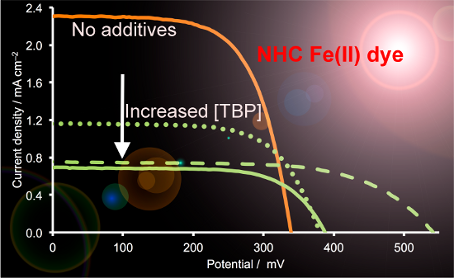
- Mariia Karpacheva Catherine E. Housecroft Edwin C. Constable Department of Chemistry, University Basel, BPR 1096, Mattenstrasse 24a, CH-4058 Basel, Switzerland 10.3762/bjnano.9.285 Abstract We demonstrate that the performances of dye-sensitized solar cells (DSCs) sensitized with a previously
- ; N-heterocyclic carbene iron(II) complex; solar energy conversion; sustainable energy; Introduction The field of dye sensitized solar cells (DSCs) has developed significantly [1][2][3] since the pioneering publication of O’Regan and Grätzel [4]. Photoconversion efficiencies (η) of ≈11–14% have been



Femtosecond laser-assisted fabrication of chalcopyrite micro-concentrator photovoltaics
Beilstein J. Nanotechnol. 2018, 9, 3025–3038, doi:10.3762/bjnano.9.281
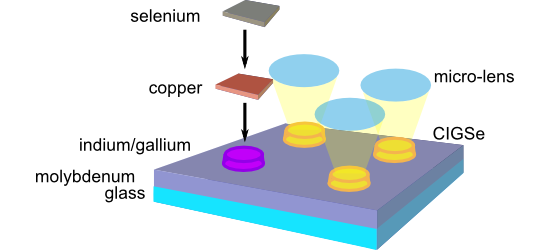
- , Germany Helmholtz-Zentrum Berlin für Materialien und Energie, Hahn-Meitner-Platz 1, D-14109 Berlin, Germany Fakultät für Physik und CENIDE, Universität Duisburg-Essen, Lotharstr. 1, D-47057 Duisburg, Germany 10.3762/bjnano.9.281 Abstract Micro-concentrator solar cells offer an attractive way to further
- transfer. Additionally, a procedure for processing these microabsorbers to functioning micro solar cells connected in parallel is demonstrated. The resulting cells show up to 2.9% efficiency and a significant efficiency enhancement under concentrated illumination. Keywords: chalcopyrite; femtosecond laser
- for low-cost solar power. In the present review, we provide an overview about research carried out on micro-concentrator solar cells – a new cell concept that has been emerging in recent years – using Cu(In,Ga)Se2 (CIGSe) as absorber material. The review focuses on two different laser-based


Ternary nanocomposites of reduced graphene oxide, polyaniline and hexaniobate: hierarchical architecture and high polaron formation
Beilstein J. Nanotechnol. 2018, 9, 2936–2946, doi:10.3762/bjnano.9.272
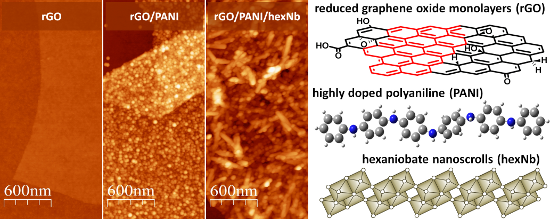
- applied, for instance, as supercapacitors, sensing materials, solar cells, electrochromic devices, anticorrosion coatings or as materials for carbon dioxide capture [8]. The layered inorganic phase offers a high surface area for PANI deposition and increases its thermal stability with regard to





